Cod liver oil is a popular supplement for dogs, known for its high amounts of omega-3 fatty acids, especially EPA and DHA, and vitamins A and D. The oil is extracted from the liver of cod fish living in the Atlantic and Pacific Oceans and is obtained by heating the liver and skimming the oil off the top. However safe COD liver oil dosage for dogs is essential to avoid any complications.
It’s often used by owners to promote optimal function of various parts of the body, such as the skin and coat, brain and eyes, and cardiovascular system. It can also be beneficial in relieving inflammation, pain and swelling, thanks to its fatty acid content.
So, how much cod liver oil can dogs have? Does it really help with dry skin or health? And when shouldn’t you use it? So, in this comprehensive guide to cod liver oil for dogs, we’ll cover all you need to know about the benefits, risks, safe use, and expert recommendations, so you can decide what’s best for your dog.
Disclaimer: This guide is for informational purposes only and is not a substitute for professional veterinary advice. Always consult your veterinarian before giving Cod Liver Oil or any medication to your dog.
🐾 Cod Liver Oil Dosage Calculator for Dogs


Paid Links - As an Amazon Associate, I earn from qualifying purchases.
Estimate a safe daily cod liver oil dose based on your dog’s weight, age, and health condition.
Recommended Daily Dose
This calculator provides a general estimate only and is not a substitute for professional veterinary advice. Always consult your veterinarian before starting any new supplement.
Key Takeaways
- Cod liver oil Dosage for Dogs can support the health of dogs, but other supplements – particularly plain fish oils – are better supported by research.
- Cod liver oil for dogs is safe for dogs if it is human grade, but only if used under the supervision of a veterinarian for correct dosage.
- Fish oil Dosage for dogs may be a better choice than cod liver oil for dogs.
- It can cause vomiting, burping, and loss of appetite, and if used in excess, be toxic via vitamin A and vitamin D toxicity.
What Is Cod Liver Oil?
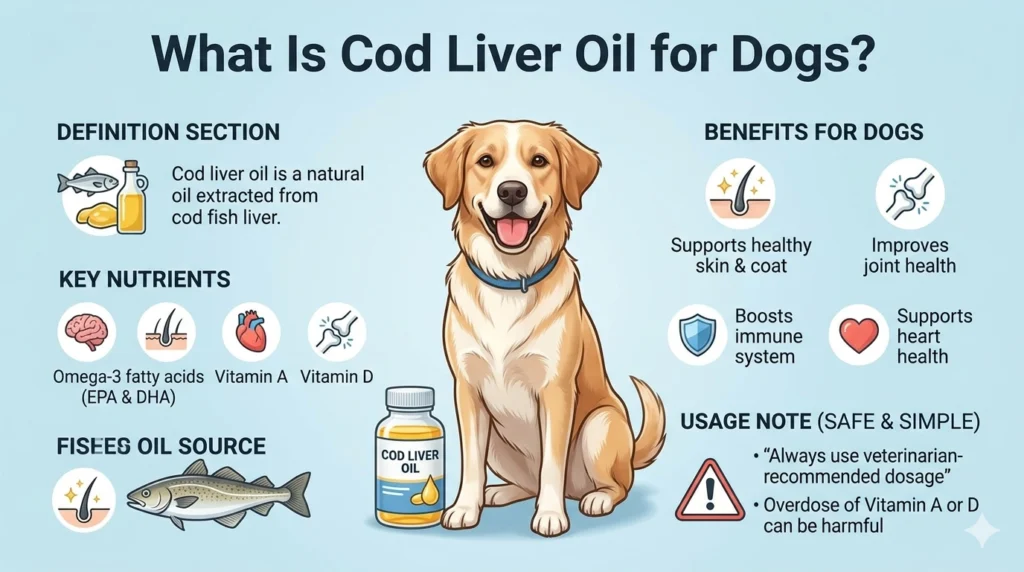
Cod liver oil for dogs is a dietary supplement originating from the liver of the codfish, which is often extracted by pressing or heat. It can be taken as a liquid supplement, in capsules, or even directly from fresh cod liver and has a long history of use for promoting health.
The oil is rich in essential fatty acids (EFAs), which dogs can only get from their diet and cannot manufacture themselves.
Essentially, it’s rich in important omega-3 fatty acids (particularly EPA or eicosapentaenoic acid and DHA or docosahexaenoic acid) and omega-6 fatty acids.
These nutrients are well-known for their anti-inflammatory properties, which are involved in various diseases like cardiovascular disease and arthritis.
Cod liver oil for pets is also rich in vitamins A and D, usually in higher concentrations than regular fish oils, and is therefore a high-impact supplement for promoting good health in the long r
What is Cod Liver Oil Dosage For Dogs?
Cod liver oil dosage for dogs depends on your dog’s body weight, age, and overall health condition. A general guideline is to provide approximately ¼ teaspoon for small dogs weighing 10–15 lbs, ½ teaspoon for dogs between 20–25 lbs, 1 teaspoon for dogs weighing 40–50 lbs, 1–1.5 teaspoons for dogs between 60–75 lbs, and up to 2 teaspoons for larger dogs weighing 80–100 lbs.
Before deciding for cod liver oil for dogs dosage, make sure use a high-quality cod liver oil product made for pets and consult your veterinarian before adding supplements to your dog’s diet, especially if your dog has existing health conditions or is taking medications.
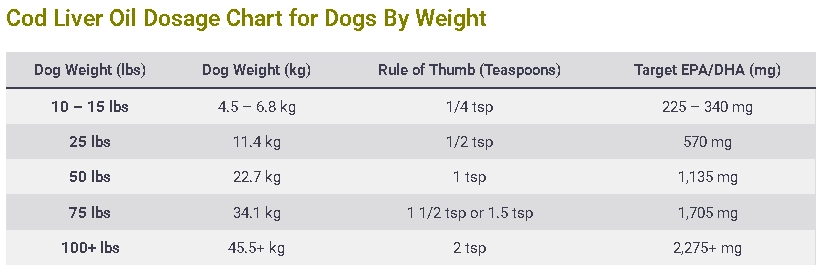
Cod Liver Oil Dosage Chart for Dogs By Weight
Below is a comprehensive dosage table based on the guidelines provided. This table includes the General Rule of Thumb (volume-based) and the Scientific Target (50 mg EPA/DHA per kg) for reference.
| Dog Weight (lbs) | Dog Weight (kg) | Rule of Thumb (Teaspoons) | Target EPA/DHA (mg) |
| 10 – 15 lbs | 4.5 – 6.8 kg | 1/4 tsp | 225 – 340 mg |
| 25 lbs | 11.4 kg | 1/2 tsp | 570 mg |
| 50 lbs | 22.7 kg | 1 tsp | 1,135 mg |
| 75 lbs | 34.1 kg | 1 1/2 tsp or 1.5 tsp | 1,705 mg |
| 100+ lbs | 45.5+ kg | 2 tsp | 2,275+ mg |
Critical Safety Limits & Factors
When using the table above, keep these calculations and safety checks in mind to prevent vitamin toxicity:


Paid Links - As an Amazon Associate, I earn from qualifying purchases.
- The 50 mg Rule: For a precise dose, calculate Weight in kg times 50 mg of combined EPA/DHA.
- Vitamin A & D Limits: Because cod liver oil is very high in fat-soluble vitamins, ensure your dog does not exceed:
- Vitamin A: ~5,000 IU per kg of dry food consumed.
- Vitamin D: ~500 IU per kg of dry food consumed.
- The “Kibble” Factor: If your dog eats commercial “complete and balanced” kibble, they are likely already at their Vitamin A and D limit. Do not add cod liver oil without a veterinarian’s approval in these cases.
- Fat Absorption: For best results, mix the oil into the meal with an equal amount of saturated fat (like coconut oil) to help the body process the vitamins.
- Surgical Warning: Stop all fish oil supplementation 7 days prior to any surgery, as it can act as a blood thinner.
Note: Always check the concentration on your specific bottle (mg per mL), as different brands vary significantly in strength.
What Is Cod Liver Oil?
Cod liver oil dosage for dogs is a dietary supplement originating from the liver of the codfish, which is often extracted by pressing or heat. It can be taken as a liquid supplement, in capsules, or even directly from fresh cod liver and has a long history of use for promoting health.
The oil is rich in essential fatty acids (EFAs), which dogs can only get from their diet and cannot manufacture themselves.
Essentially, it’s rich in important omega-3 fatty acids (particularly EPA or eicosapentaenoic acid and DHA or docosahexaenoic acid) and omega-6 fatty acids.
These nutrients are well-known for their anti-inflammatory properties, which are involved in various diseases like cardiovascular disease and arthritis.
Cod liver oil for pets is also rich in vitamins A and D, usually in higher concentrations than regular fish oils, and is therefore a high-impact supplement for promoting good health in the long run.
Health Benefits of Cod Liver Oil for Dogs
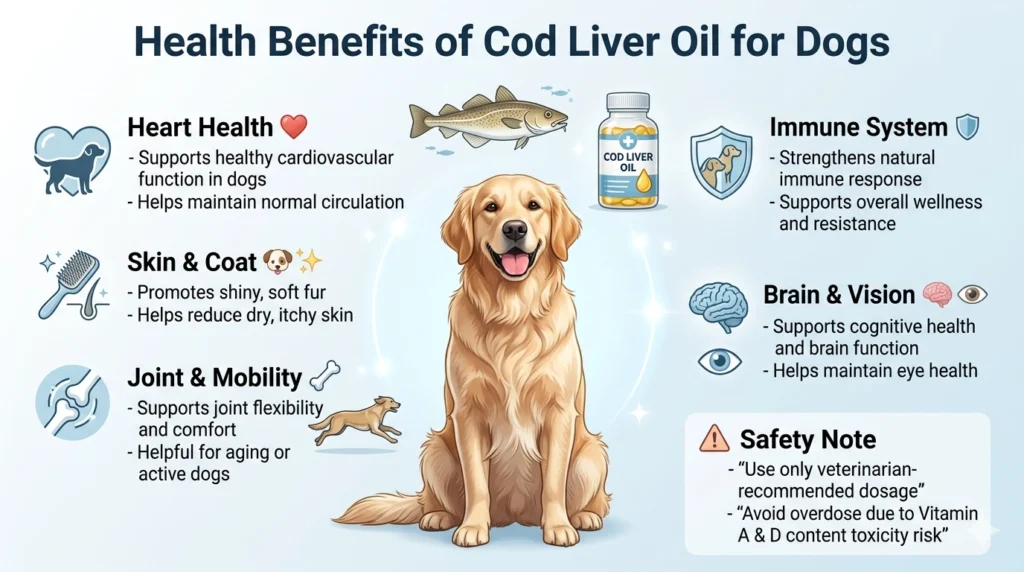
Cod liver oil is a superfood supplement rich in omega-3 fatty acids (EPA and DHA) and vitamins A and D, which has a broad range of benefits for dogs. Although research in dogs is limited, studies and nutritional science suggest it may have a number of benefits:
- Fights Inflammation: Omega-3s reduce COX-2, a protein responsible for inflammation and associated with arthritis, heart failure and certain cancers.
- Improves Cardiovascular Function: May enhance heart function, reduce triglycerides, lower blood pressure, and promote artery health.
- Joint & Arthritis Relief: May slow down or prevent joint pain and stiffness.
- Memory & Cognitive Support: May enhance memory and improve brain function.
- Immune System Boost: Enhances immunity and helps fight infections.
- Blood Sugar & Metabolism: Reduces diabetes indicators.
- Skin, Vision & Healing: Vitamin A is good for skin, eyes, and wound repair.
- Bone & Hormonal Health: Vitamin D supports bone health, calcium, metabolism and thyroid.
Possibly Cancer-Related (Evidence is Inconclusive):
- May help to inhibit cancer cell growth and induce cell death (apoptosis)
- May decrease blood flow and inflammation in tumors
- May help prevent weight and muscle loss
- Different studies have found that omega-3s can lower cancer risk and improve survival, but others report the opposite
Important Considerations:
- Omega-3s dosage for dogs may slightly thin blood
- Purity of product is critical to prevent contaminants
- Rare fish allergies may occur
In summary, cod liver oil dose for dogs has several potential benefits, but there is little research (particularly in dogs), and some conflicting evidence.
Common Uses for Cod Liver Oil for Dogs
Cod liver oil Dosage for dogs is widely used as a natural supplement to promote a range of canine health benefits, primarily for its vitamin D and omega-3 fatty acids:
- Vitamin D Supplementation: Historically used as a source of vitamin D, particularly in cases where there is low exposure to sunlight, to support healthy bone development.
- Healthy Bones: Vitamin D is important for bone development and health.
- Heart Health: Omega-3 fatty acids may help prevent and manage heart disease.
- Joint & Arthritis Support: Widely used to help alleviate inflammation and arthritis symptoms.
- Cancer Support (Studies Incomplete): Ongoing research – primarily in humans – is investigating its use in breast, colon, prostate, lung and esophageal cancer, but results are mixed.
Usage & Administration Guidelines:
- Dogs on complete diets: up to 75 IU of vitamin D per 10 lbs (4.5 kg) daily
- Dogs fed a home-cooked diet: up to 300 IU per 10 lbs daily (recommended to have diet tested by lab)
- Typically: 500 IU vitamin D per teaspoon (5 ml) (varies between batches)
- Can be added directly to food or treats (e.g. enrichment mats)
- Ideally, use every day for best results
- Keep in a dark, cool place
Safety and Side Effects of Cod Liver Oil for Dogs
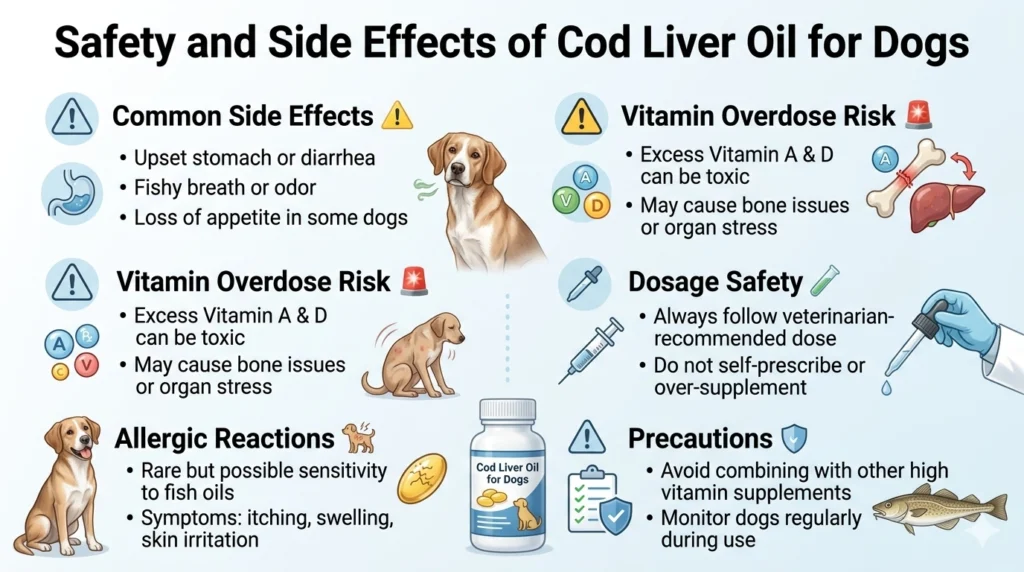
Cod liver oil can be beneficial, but should be used carefully to avoid side effects and toxicity:
- Mild Side Effects: Diarrhea, belching, heartburn, nausea, fishy taste
- Risk of Bleeding: Large doses of omega-3 fatty acids can decrease blood clotting and lead to a higher risk of bleeding
- Vitamin D Toxicity Risks: Vomiting, diarrhea, loss of appetite, thirst and hypercalcemia (excess calcium in the bloodstream) that can damage organs and soft tissues
- Risks of Vitamin A Toxicity: Vomiting, loss of appetite, lethargy, skin peeling, weight loss, vision loss, and birth defects in pregnant dogs
- High Vitamin Content: Cod liver oil contains very high levels of vitamins A and D (approx. 13,600 IU vitamin A and 1,360 IU vitamin D per tablespoon), increasing the risk of overdose if not carefully dosed
- Risk of Overdose: Over-supplementation can upset the diet, result in gastrointestinal problems, kidney disease (from excess vitamin D) and eye damage (from excess vitamin A)
- Risk of Pancreatitis: The high fat content could increase the risk of pancreatitis
- Potential Contaminants: Poor quality or untrustworthy sources can be contaminated, so it’s important to use quality products
- Not Always Pet-Specific: Supplements not made for pets can pose other risks, so consult the vet
In summary, cod liver oil for dogs can be dangerous if used incorrectly or in excess, so use only the right dose and consult the veterinarian.
How Often Should I Give My Dog Cod Liver Oil?
Most dogs can take cod liver oil once daily with their regular meal to support overall health, but the ideal frequency depends on your dog’s weight, diet, and health needs. According to general pet supplement guidelines, cod liver oil should be given in the recommended amount on the product label or as advised by a veterinarian.
Avoid giving excessive amounts, as too much vitamin A and vitamin D from cod liver oil may cause health problems in dogs.
How Much Cod Liver Oil For Dogs Per Day?
Approximately ¼ teaspoon per day for small dogs weighing 10–15 lbs, ½ teaspoon per day for dogs between 20–25 lbs, 1 teaspoon for dogs weighing 40–50 lbs, 1–1.5 teaspoons for dogs between 60–75 lbs per day, and up to 2 teaspoons for larger dogs weighing 80–100 lbs.
What Happens If Dogs Eat Cod Liver Oil?
When used in suitable quantities with the advice of a veterinarian, cod liver oil offers a range of potential benefits for dogs thanks to the omega fatty acids, vitamins A and D it contains:
- Healthy Skin & Coat: Supports healthy, moisturised skin and can alleviate dry skin, itchiness and inflammation. Omega-3s can help manage canine atopic dermatitis (CAD) in the long term, with anti-inflammatory effects and improved coat and hair.
- Joint & Arthritis Support: EPA and DHA can lower joint inflammation, alleviating arthritis symptoms (pain, stiffness, lameness) to improve mobility, activity and quality of life.
- Bone Development: Vitamins A and D are important for bone growth and development.
- Vision: Vitamin A is important in eye development and DHA supplementation in pregnant dogs has been shown to enhance puppy vision.
- Kidney Health: There is some evidence omega-3 fatty acids may slow down kidney disease, but more work is required.
- Cardiovascular Health: Omega-3s can help promote cardiovascular health by regulating cholesterol levels, reducing inflammation, and maintaining heart health.
- Mood & Behavior: Some studies indicate omega-3 fatty acids may help decrease aggression and anxiety, although research is ongoing.
Although cod liver oil may assist with conditions such as dry skin and arthritis, it’s not a treatment for other conditions such as infections and chronic diseases, and veterinary advice can help diagnose and manage these conditions.
Cod Liver Oil Dosage & Administration for Dogs
The dose and administration of cod liver oil varies according to your dog’s weight, diet, health and other nutrients consumed. Due to the potential for vitamin A and D toxicity, it’s important to dose consistently:
General Dosing Guidelines (Daily Use):
- 10–15 lbs: ¼ teaspoon
- 20–25 lbs: ½ teaspoon
- 40–50 lbs: 1 teaspoon
- 60–75 lbs: 1–1.5 teaspoons
- 80–100 lbs: up to 2 teaspoons
- (Variations may be required, depending on your dog’s individual needs and your vet’s recommendations)
Administration Methods:
- Admix liquid cod liver oil into dog’s food
- The oil can be mixed into food as capsules
- Can be administered on its own or with food; some claim combining with saturated fat helps vitamin absorption
Frequency & Consistency:
- Ideally, should be given every day
- EPA will build up (28 days to reach peak) and DHA needs to be taken regularly as it does not accumulate
- Best given daily for optimal results
Important Safety Guidelines:
- Always follow recommended doses, unless advised by your veterinarian
- Do not supplement if dog’s diet already contains adequate vitamins A and D
- High doses, particularly long-term, can be toxic
- High doses can lead to gastrointestinal upset as it is high in fat
Additional Considerations:
- Use with caution based on weight, previous diet and health conditions
- Vitamin D requirements may differ for dogs in different environments
- Complete rations (e.g. AAFCO-compliant diets) may contain adequate amounts
Key Recommendation:
Before using cod liver oil, talk to your veterinarian to determine the correct dose, method of administration and whether it is appropriate for your dog’s particular health condition.
Healthy Alternatives to Cod Liver Oil for Dogs
There are plenty of safer alternatives to Safe cod liver oil dose for dogs, particularly for dogs that already eat a diet with vitamins A and D. Fish oil is a common and effective alternative, with many of the same benefits, but less risk of vitamin toxicity:
- High in Omega-3 Fatty Acids: Helps reduce inflammation, improve circulation and overall well-being
- Reduces Joint Pain: Reduces joint stiffness and pain, as well as itchy or dry skin
- Immune Support: Helps build up the immune system
- Vision & Cognitive Development: DHA promotes healthy eye and brain development in puppies
- Cognitive Function: Can improve symptoms of canine cognitive dysfunction in senior dogs
Fish oil dosage for dogs is generally recommended over cod liver oil if the dog has adequate levels of vitamin A and D.
You May Also Like to Read:
- Hydrogen Peroxide Dosage For Dogs Calculator: Safe Guide
- 4CYTE Dosage For Dogs Calculator: Safe Dosage Guide & Chart
FAQs
Can dogs have cod liver oil Medication?
Yes, but it must be administered in the right amount and with a vet’s approval. Too much can cause vitamin A and D toxicity and other problems.
What are the benefits of cod liver oil for dogs?
It may help with skin, joint, heart, immune and brain health as well as inflammation when it comes to omega-3 fatty acids and vitamins A and D.
Is it OK for dogs to have human cod liver oil?
Human cod liver oil can be administered but must be dosed and approved by a vet.
What if I accidentally overdose my dog on cod liver oil dose?
Too much can lead to vomiting, diarrhea, loss of appetite, excessive thirst, increased risk of bleeding, and vitamin A and D toxicity.
How is cod liver oil given to dogs?
You can add it to the dog’s diet, or administer it in liquid or tablet form. It is typically given daily in small doses.
Which is better, cod liver oil or fish oil?
Generally, fish oil is safer because it contains omega-3 fatty acids without a large amount of the vitamins A and D, which can be toxic.
Does cod liver oil help dogs with arthritis and skin conditions?
Yes, it can have anti-inflammatory properties, improve joint function in dogs with arthritis, and promote a healthy skin and coat.
When is it not suitable for my dog?
Don’t use it if your dog is already taking vitamin A or D supplements, or is on blood thinners or steroids, or has clotting issues or is at risk of surgery.
Final Thoughts
Properly administered cod liver oil Dosage For Dogs can provide a variety of health benefits for dogs, such as improving skin, joint health, and general well-being.
The omega-3 fatty acids, as well as vitamins A and D, found in cod liver oil have been associated with benefits for heart health, reducing inflammation and promoting overall well-being.
But while it has potential health benefits, cod liver oil Dosage for dogs per pound or kg should be used with caution and in moderation because of the potential for vitamin toxicity and other adverse effects.
When used responsibly and under veterinary supervision, it can be a valuable addition to promote long-term health and well-being in dogs.