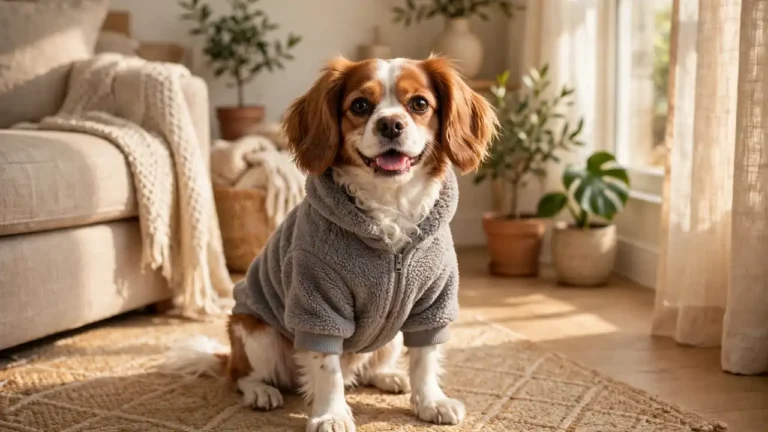
A cold morning walk can turn into a shivering stop at the door. Your dog hesitates on the step, tucks its tail, and looks back at you for help. A shop sweater can fix that, but the sizes run odd, the prices add up, and the one that fits your dog is often out of stock.
These no-sew DIY dog sweaters use clothes you already own. An old sweatshirt, a spare fleece blanket, or a baby onesie can become a warm layer in under an hour, with scissors as the only tool you really need. No machine, no needle, and no pattern to print.
Below are 14 ideas that work for tiny pups, broad chested dogs, and wiggly puppies that will not stand still for a fitting. Each one tells you what to cut, where the leg holes go, and how to check the fit, so your dog stays warm and free to move.
1. Old Sweatshirt Sleeve Sweater: The Five Minute Fix
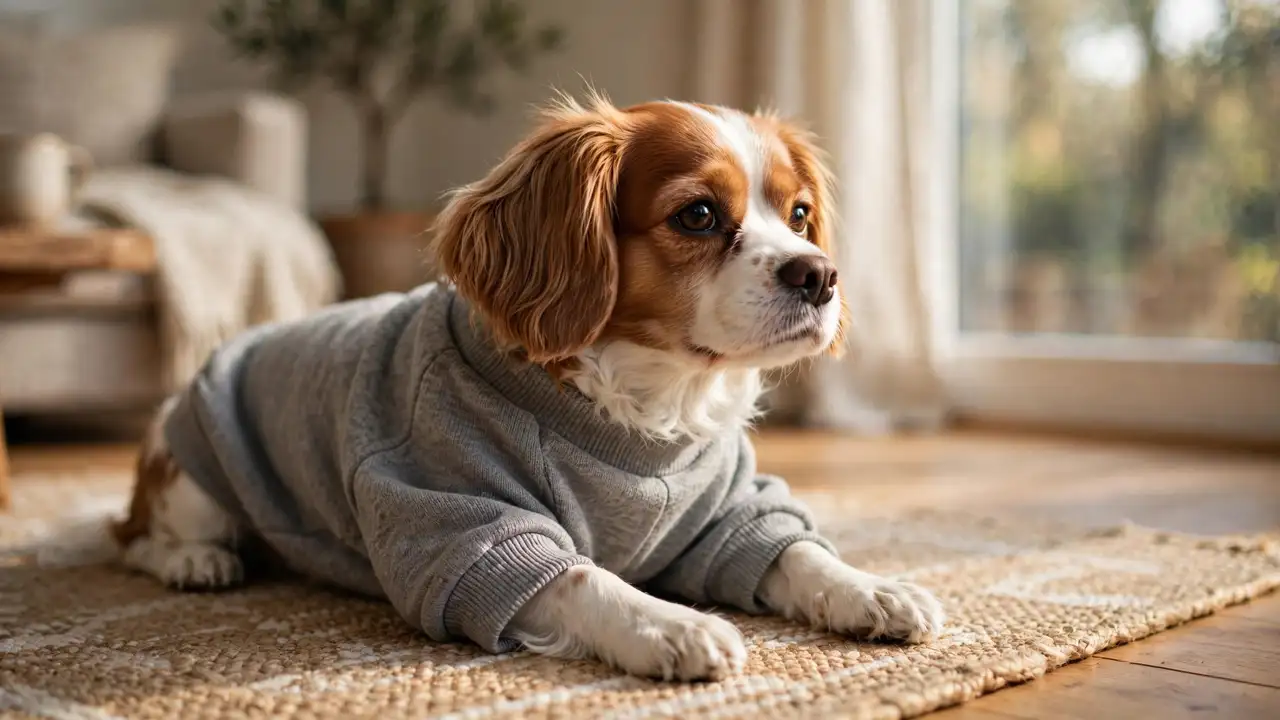
Cut the sleeve from an old sweatshirt and you already have most of a sweater. The cuff becomes a snug neck band, the wide end sits over the chest, and the thick fabric holds heat on a short walk. This works best for small and medium dogs, since a sleeve matches their body length without much trimming.
- Lay the sleeve flat and measure it against your dog.
- Cut two small leg holes on the underside, well back from the cuff.
- Slip it on, then check that two fingers fit under the neck band.
2. Fleece Blanket Tie Wrap: Warmth Without Any Cutting
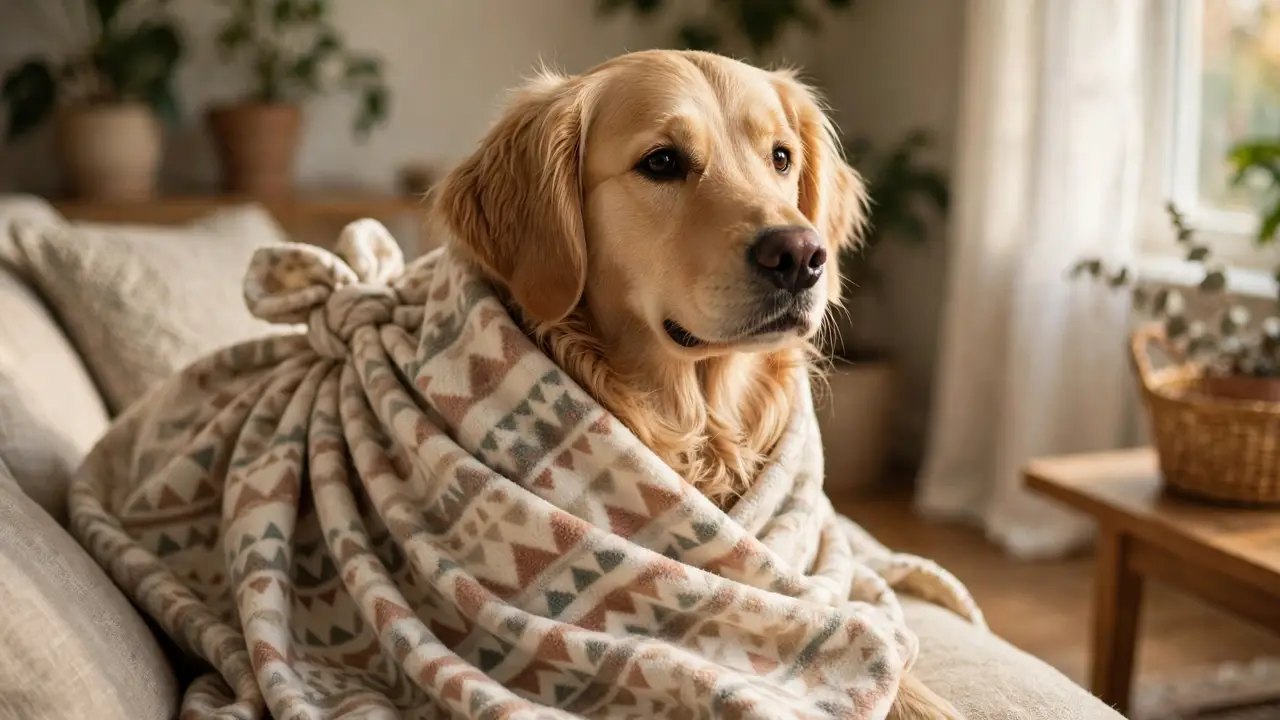
Some dogs will not sit still for scissors and measuring, and this wrap respects that. Fold a soft fleece blanket into a wide band, lay it over the back, and bring the ends under the belly. Tie it loosely on top of the back, away from the legs, so nothing pulls when your dog runs.
A blanket wrap suits indoor warmth, car rides, and calm dogs that rest near you. It is not a good choice for off lead play, since a loose tie can slip. Keep the knot on the back, keep it flat, and redo it if your dog shakes it loose.
What to grab first
3. Baby Onesie Sweater: A Ready Made Fit for Tiny Pups
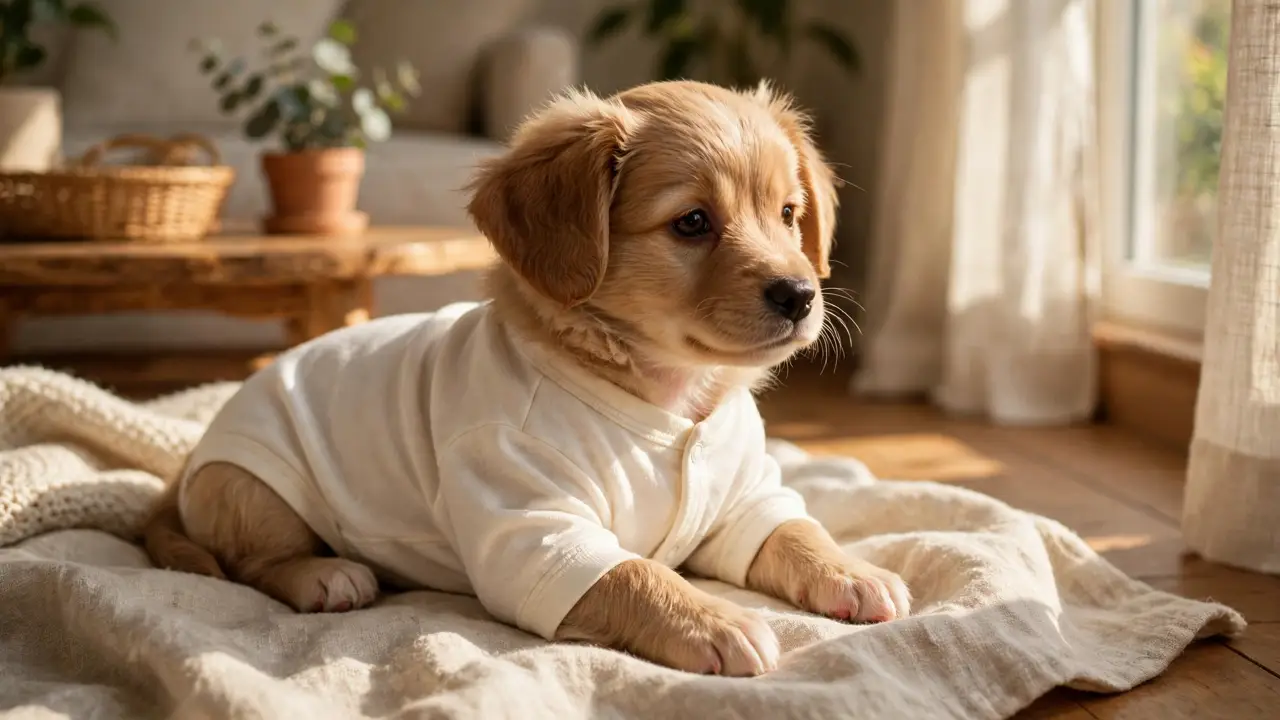
A baby onesie already has a neck hole, arm holes, and snap fasteners, which is why it fits a tiny pup so well. Pick a soft cotton onesie in a size that matches your dog’s chest, pop the front legs through the arm holes, and snap it under the belly. The tail goes through the gap at the back, or you can cut a small tail hole.
- Choose a size up if your dog is between sizes, since a tight onesie rubs at the armpits.
- Remove any loose buttons or bows before the first wear.
- Check the belly snaps after a walk, since they can work loose on a wiggly pup.
4. Tiny Sock Sweater: A Warm Layer for the Smallest Dogs
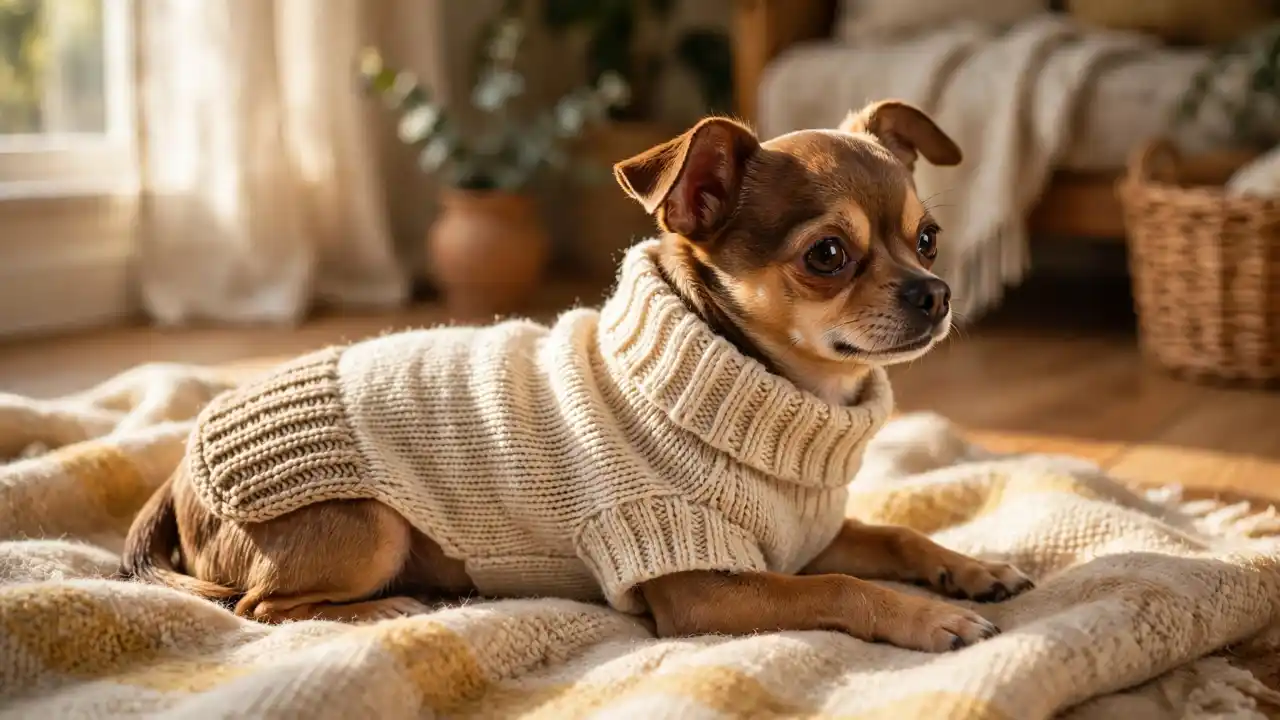
Do not dismiss a thick sock. For a teacup pup or a new puppy, a clean adult sock has the right stretch and the right size, and it costs nothing. Cut a small heel opening for the tail if needed, then cut two leg holes near the toe end. The ribbed cuff sits at the neck and keeps drafts out.
Watch the fit closely here. A sock stretches, so it can look fine and still be tight across the chest. If your dog freezes, paws at it, or breathes faster, take it off and try a larger sock. This is a short wear idea for indoors, not an all day coat.
💡 Quick Tip
Use a sock without holes or thin spots. A worn heel tears at the leg hole on the first wear, and a hole near the neck lets cold air straight in.
5. Old T-Shirt Tie Vest: Cool Weather Cover for Broad Chests
Broad chested dogs often swim in shop sweaters that fit their length but pinch at the shoulders. An old t-shirt solves that, because you cut it to the dog in front of you. Lay the shirt flat, cut up each side seam to make tie strips, and cut leg holes near the bottom hem. Tie the strips loosely over the back.
- Use a soft cotton shirt with some stretch, not a stiff dress shirt.
- Cut the ties wide, about two fingers across, so they do not dig in.
- Knot on the back, never under the belly, where a knot can press while lying down.

Tie the vest after your dog stands normally, not while it sits.
Trim the ties short so they cannot catch on furniture.
Tying the vest tight to make it look neat.
Leaving long ties dangling near the legs.
6. Flannel Shirt Button Coat: A Sturdy Layer for Cold Mornings
A soft flannel shirt gives a dog more cover than a thin tee, and the button front makes fitting simple. Put the shirt on your dog with the buttons on top of the back, mark where the front legs fall, and cut two leg holes. Button it loosely, then check that your dog can sit, lie down, and walk without the fabric pulling.
Buttons are the one risk here. A dog that chews fabric can pop a button off, so use this coat only with calm dogs, and take it off for unsupervised time. If the shirt has a chest pocket, check it is empty and flat before the first wear.

Lay the shirt flat, buttons up, and measure it against your dog.


Paid Links - As an Amazon Associate, I earn from qualifying purchases.
Cut small leg holes first, then widen them a little at a time.
Button it loosely, watch your dog walk, and adjust the fit.
7. Fleece Poncho: One Hole, No Leg Fuss
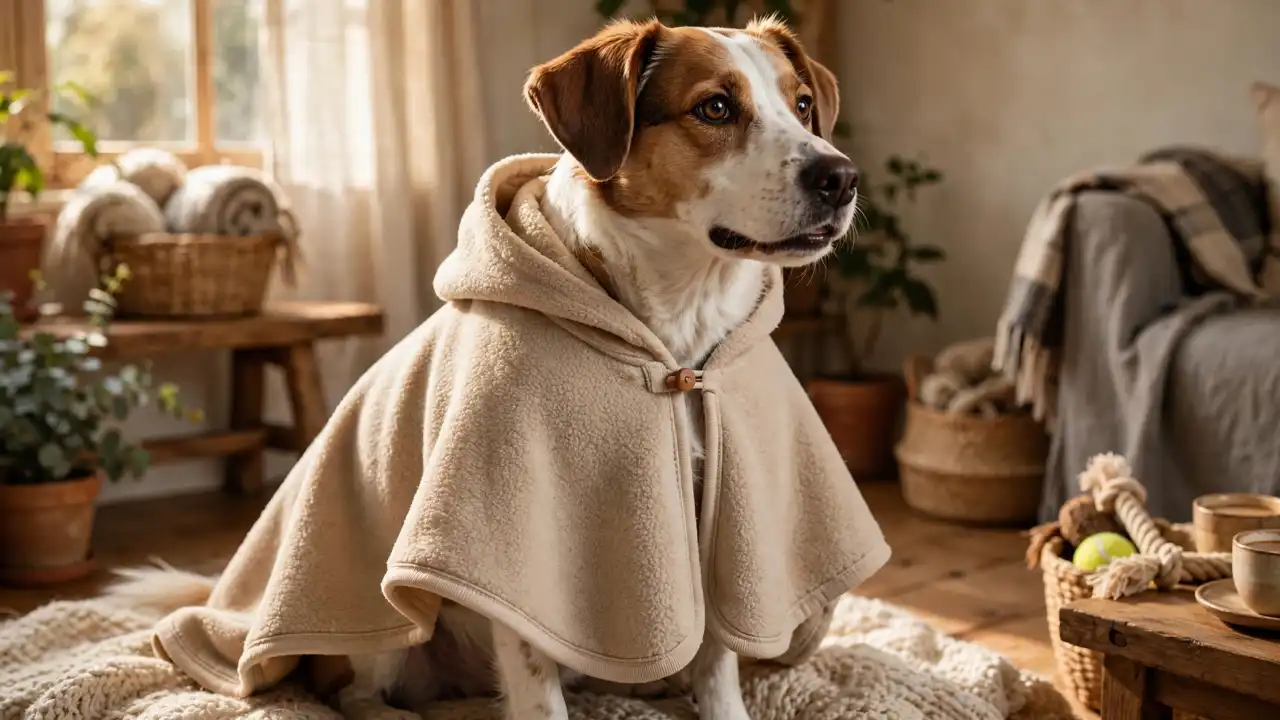
Leg holes are where most no-sew sweaters go wrong, so skip them. Cut a square of fleece, fold it in half, and cut a head hole in the fold. The poncho drapes over the back and chest, keeps the core warm, and leaves the legs free. It suits dogs that hate having their paws handled.
- Cut the head hole smaller than you think, then widen it slowly.
- Round the corners of the fleece so the edges do not curl up.
- Use it for short walks and garden trips, not for running games.
A dog that freezes when you try to push a paw through a leg hole, and a walk that never starts.
A poncho slipped over the head in seconds, with legs free and the walk already under way.
8. Towel Bathrobe: Dry and Warm After a Bath
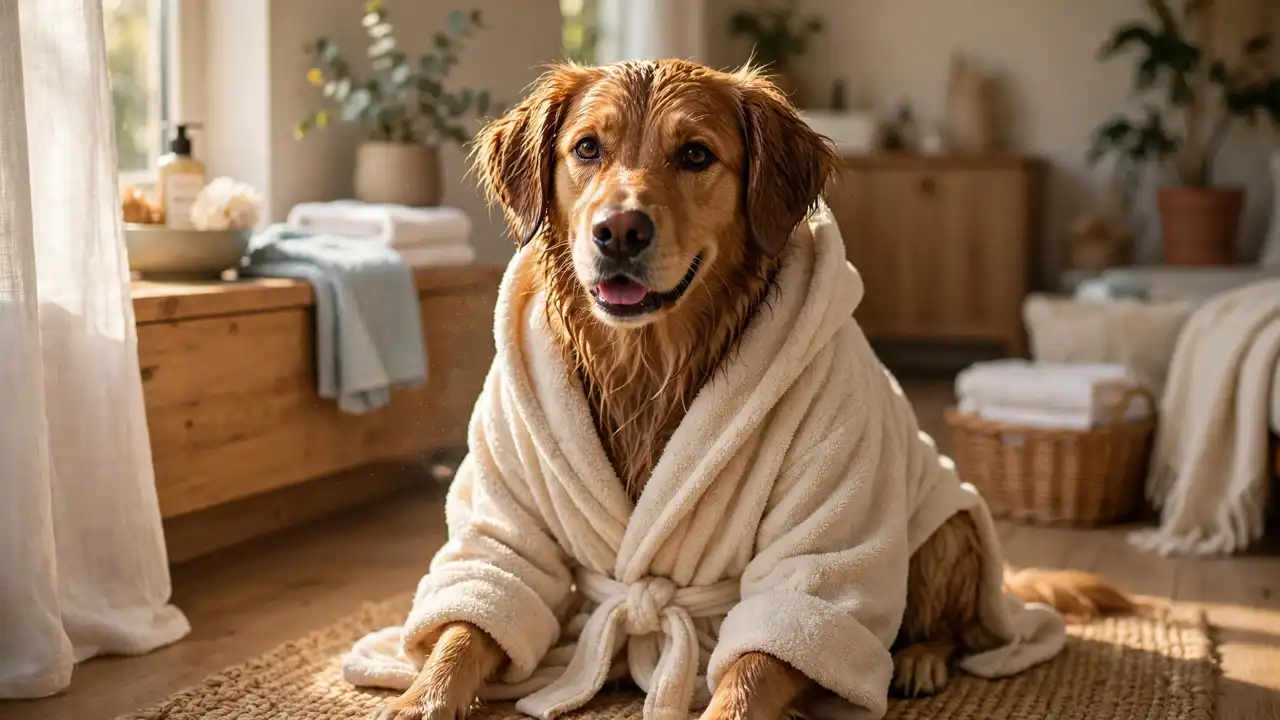
Wet dogs lose heat fast, and a towel robe helps them dry without a long rub down. Cut a small hand towel or a thin bath towel into a back panel, cut two leg holes near one end, and wrap it around the chest. The towel soaks up water while the dog rests, which suits bath days in winter.
Take the robe off once the fur feels damp rather than wet. A towel left on too long stays cold against the skin and can chill a small dog. Swap to a dry blanket after ten minutes or so, and keep the dog indoors until fully dry.
| Towel robe | Normal towel rub |
|---|---|
| Hands free drying while the dog rests. | Faster, but many dogs squirm through it. |
| Covers the chest and back at once. | Misses the chest unless you hold it there. |
9. Knit Scarf Tube Sweater: Stretch That Forgives a Rough Cut
An old knit scarf is forgiving. Its stretch hides a wobbly cut, and its knit holds warmth even when the shape is simple. Sew the ends together in your mind only: fold the scarf into a loop, cut two leg holes near one edge, and slip it over your dog like a tube. The ribbed knit grips gently without a fastener.
- Pick a scarf wide enough to cover from neck to belly, not a thin fashion scarf.
- Cut leg holes at least a hand width apart, so the front legs move freely.
- Fold the top edge down once for a soft neck band.
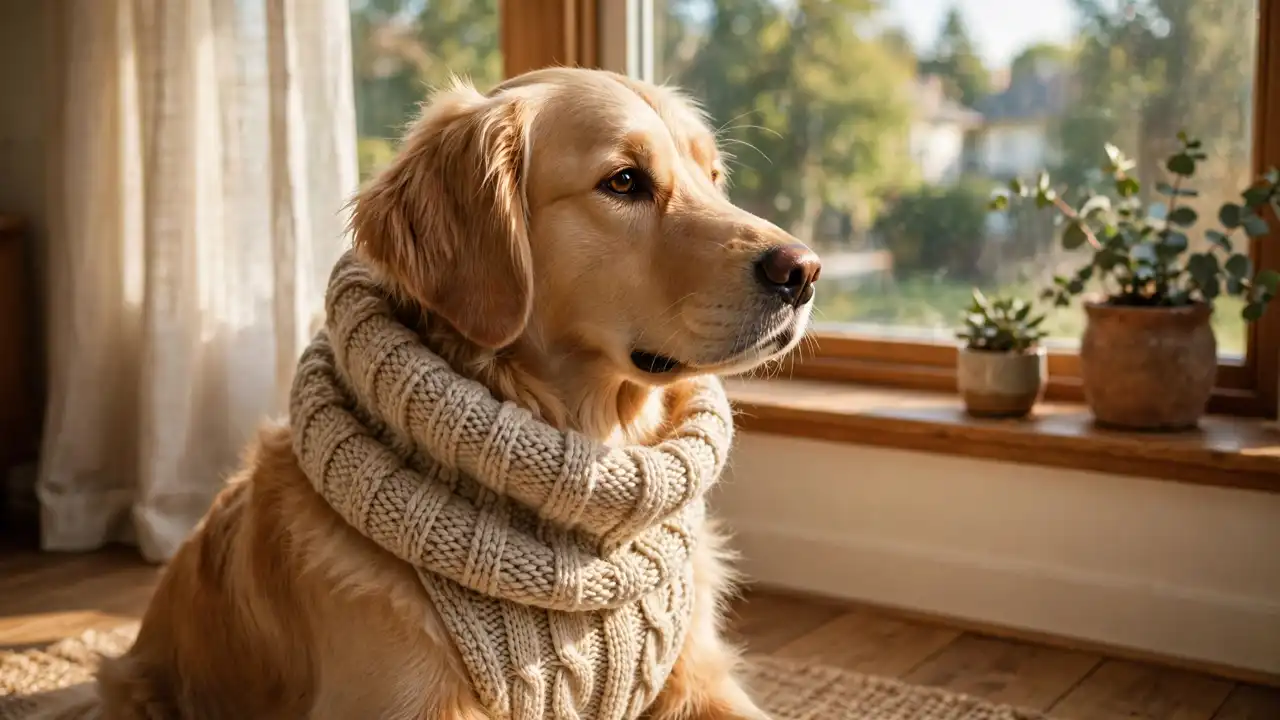
If the tube slides back over the hips, it is too loose. Take it in by folding the top edge down one more time.
10. Leg Warmer Sweater: A Striped Layer for Small Breeds
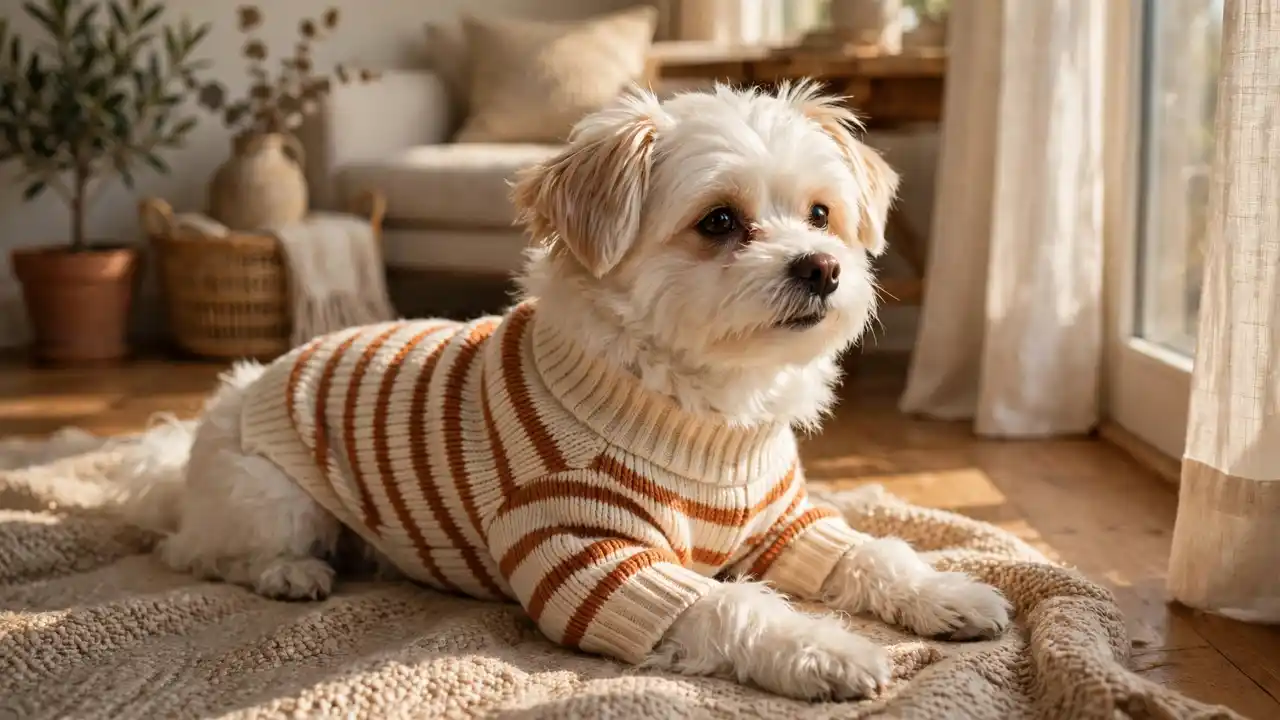
A pair of thick leg warmers gives you two small sweaters in one drawer find. Each warmer already forms a tube, so you only need to cut a head hole at one end and two leg holes near the other. Striped or patterned warmers look cheerful on a small dog, and the stretch fits a range of chest sizes.
Check the elastic at the top of the warmer before you cut. Old elastic can grip too tight at the neck, even when the rest feels loose. If the band leaves a mark after a few minutes, cut that band off and use the softer middle section instead.
What to grab first
11. Child Hoodie Sweater: A Hood Down Layer for Medium Dogs
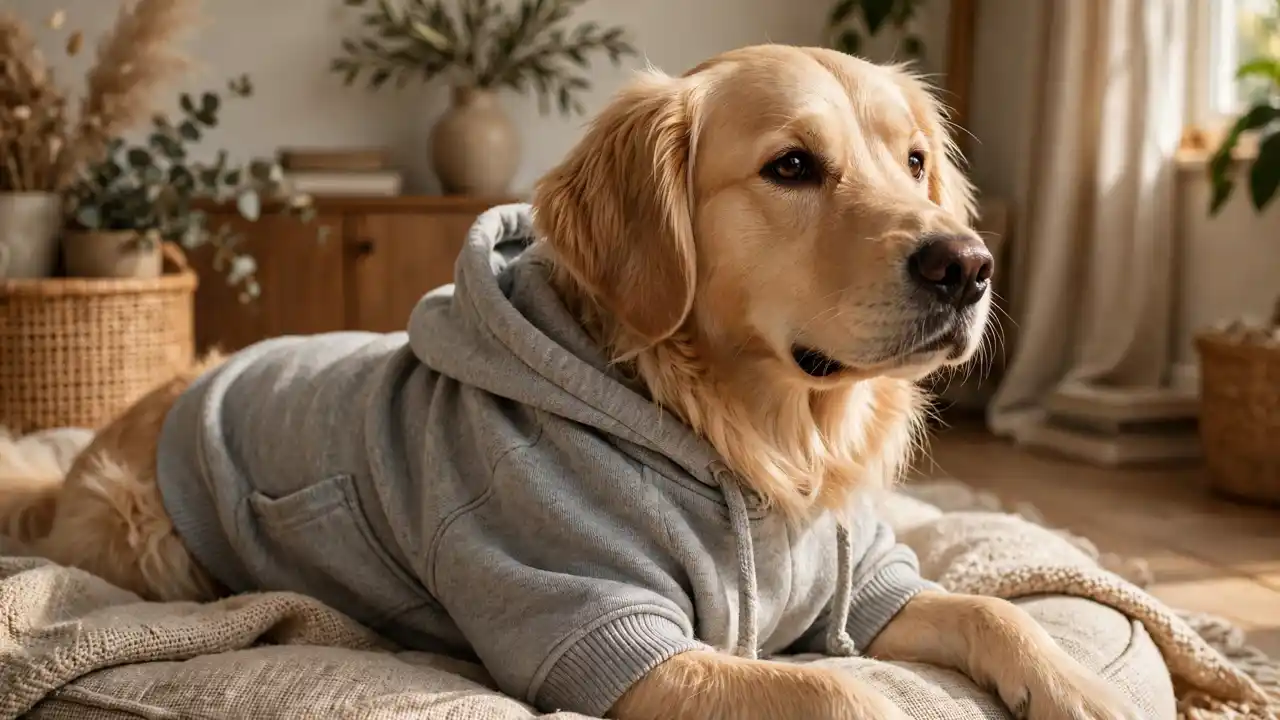
A child hoodie that no longer fits its owner often fits a medium dog well. The sleeves give you ready made leg holes if you cut them short, and the body covers the chest. Keep the hood down and flat on the back, never up over the ears, since a hood over the head blocks hearing and sight on a walk.
- Cut the sleeves to front leg length, then check the paws move freely.
- Remove drawstrings at the hood, since a chewing dog can pull them loose.
- Use the front pocket only if it lies flat and holds nothing.
12. Pillowcase Slip-On Sweater: Light Cover for Mild Days
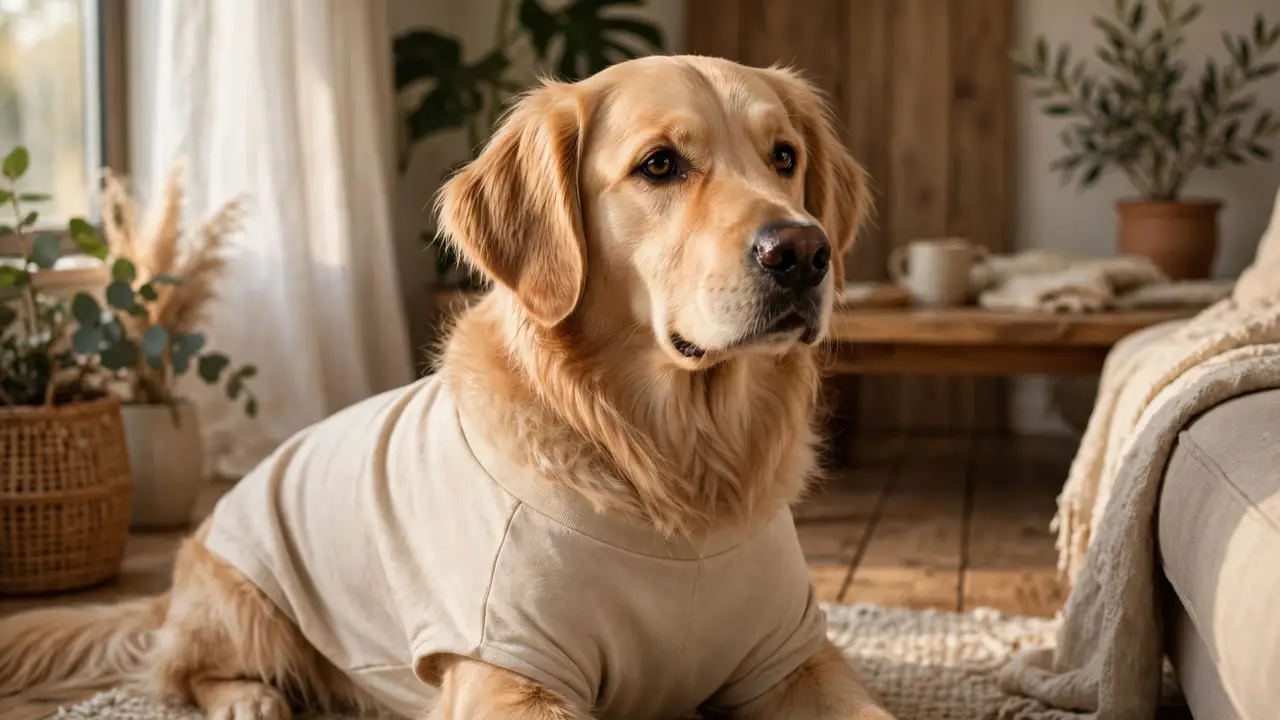
A soft cotton pillowcase makes a light sweater for mild days, when a dog needs a little cover but not a thick coat. Cut a head hole in the closed end, cut two leg holes near the sides, and slip it on. The cotton breathes, so it suits dogs that overheat in fleece but still shiver in a cold wind.
Do not expect this one to survive rough play. Cotton tears at the leg holes if a dog pulls hard, so keep it for garden time, porch sitting, and calm walks. Wash it after a few wears, since cotton holds garden smells fast.
📌 Good To Know
A patterned pillowcase looks fun, but check the print is on the outside only. Dye on the inside can rub onto light fur when the fabric gets damp.
13. Stick-On Velcro Fleece Wrap: Adjustable Warmth for Growing Puppies
Growing puppies outgrow a fixed sweater in weeks, which is why an adjustable wrap helps. Cut a wide fleece panel, stick self adhesive velcro tabs on the ends, and fasten it around the chest. As the puppy grows, move the tabs out a little, and the same wrap keeps fitting.
- Stick the velcro on the outside of the fleece, so the rough side never touches fur.
- Press the tabs firmly, then test them with a gentle tug before a walk.
- Check the wrap after play, since velcro can pick up fur and lose grip.
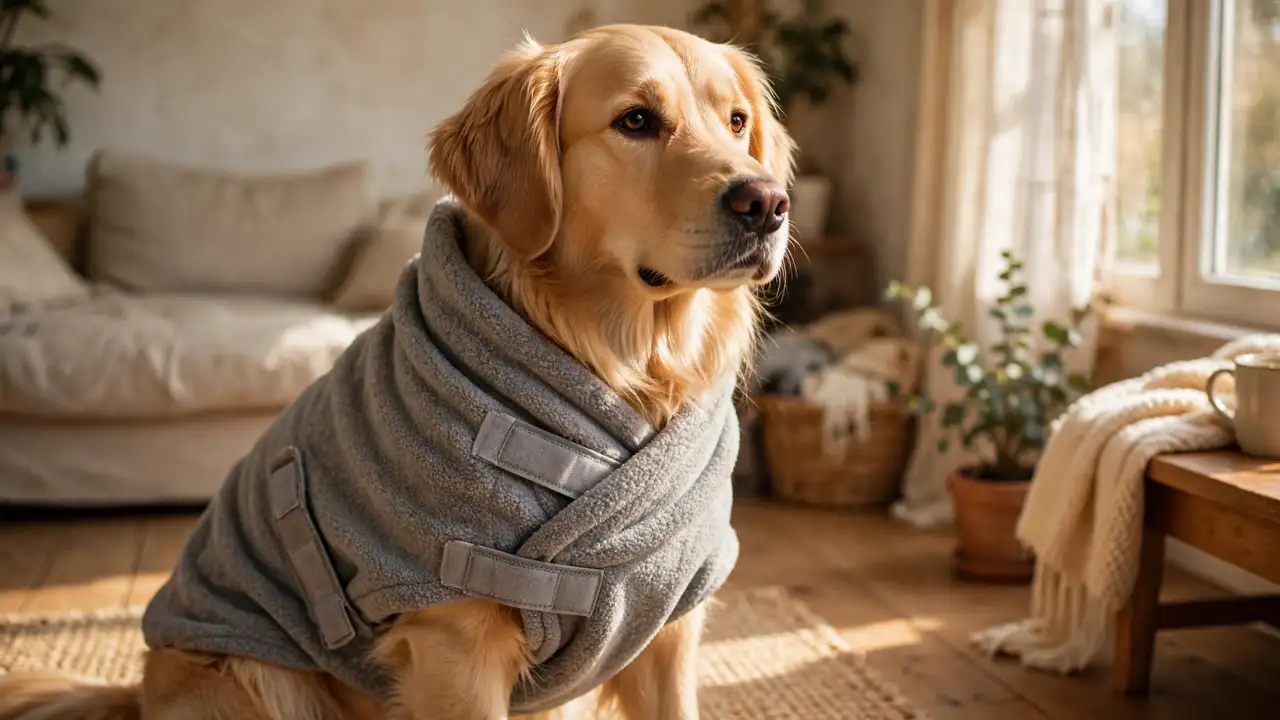
Fasten the wrap snug enough to stay put, loose enough for two fingers underneath.
Brush fur away from the tabs before each fastening.
Sticking velcro where it rubs the armpits.
Leaving the wrap on a puppy overnight.
14. Adult Sweater Body Cut-Down: Real Warmth for Larger Dogs
Large dogs need more fabric than a sleeve can give, and an old adult sweater has it. Cut across the body below the sleeves, keep the bottom hem as the neck edge, and cut two leg holes near the hem end. The thick knit covers a broad chest, and the hem gives a finished edge without any sewing.
Fit matters most here, because a heavy knit pulls if it is too long. Trim the body so it ends before the tail base, and check that your dog can squat and sit without the fabric bunching under the belly. If it bunches, trim a little more from the back edge only.
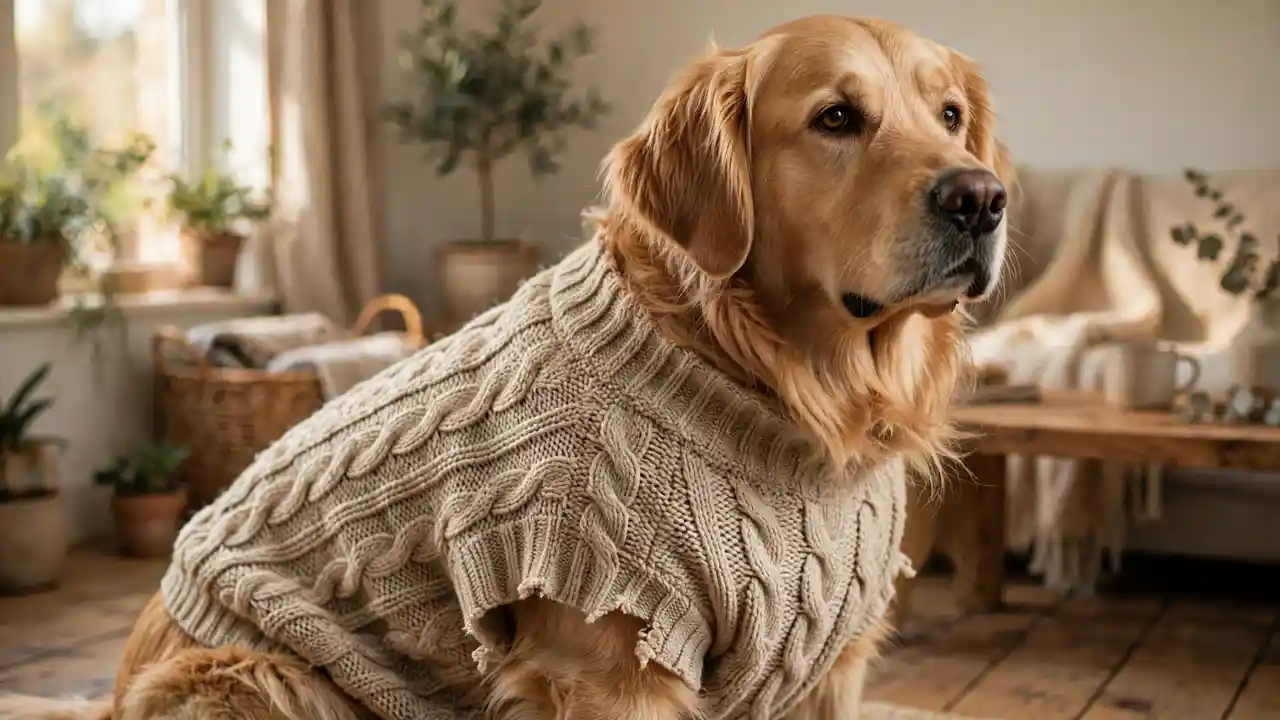
Measure your dog’s back length, then cut the sweater body to that length.
Cut leg holes small first, then widen them until the legs move freely.
Walk your dog indoors first, watch the fit, and trim the back edge if it bunches.
Start with the idea that matches what you already have in a drawer. A fleece blanket wrap suits a first try, while a cut down adult sweater suits a larger dog that needs warmth on winter walks. Check the fit each time, watch how your dog moves, and take the sweater off if it gets wet or your dog starts to chew at it.
Warm layers do not need to cost much. With one cut, one fold, and a quick fit check, an old shirt can give your dog a second job as winter wear. Save this list on Pinterest for the next cold snap, and try the next idea when the first one wears out.