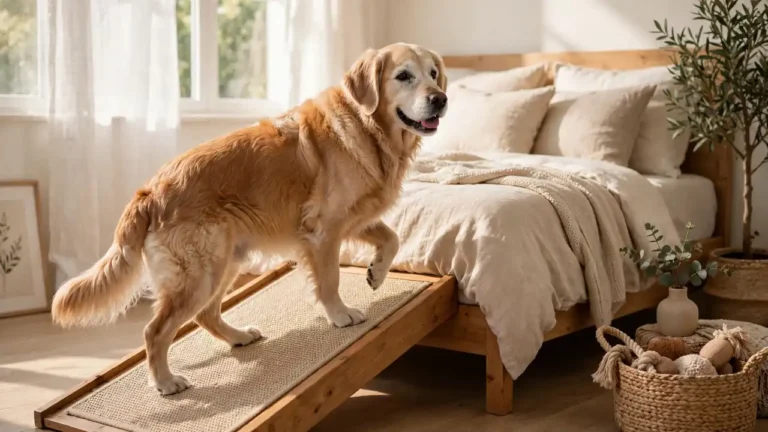
Your dog eats from the same bowl twice a day, every day, and most of us never give that bowl a second thought. Then the kibble slides across the floor, the water bowl tips over, or your fast eater finishes dinner in forty seconds and looks at you like you forgot something.
A better bowl fixes small daily problems. The right height eases a stiff neck, the right shape slows a gulper, and the right material stays clean and steady on the floor. You do not need to spend a lot, and you do not need to replace everything at once.
This list gathers 14 dog bowl ideas your pup will actually love, from raised feeders and slow feeders to bowls you can paint yourself. Pick the one that fits your dog, your kitchen, and your budget, then save this list for the next time a bowl cracks, tips, or just looks tired.
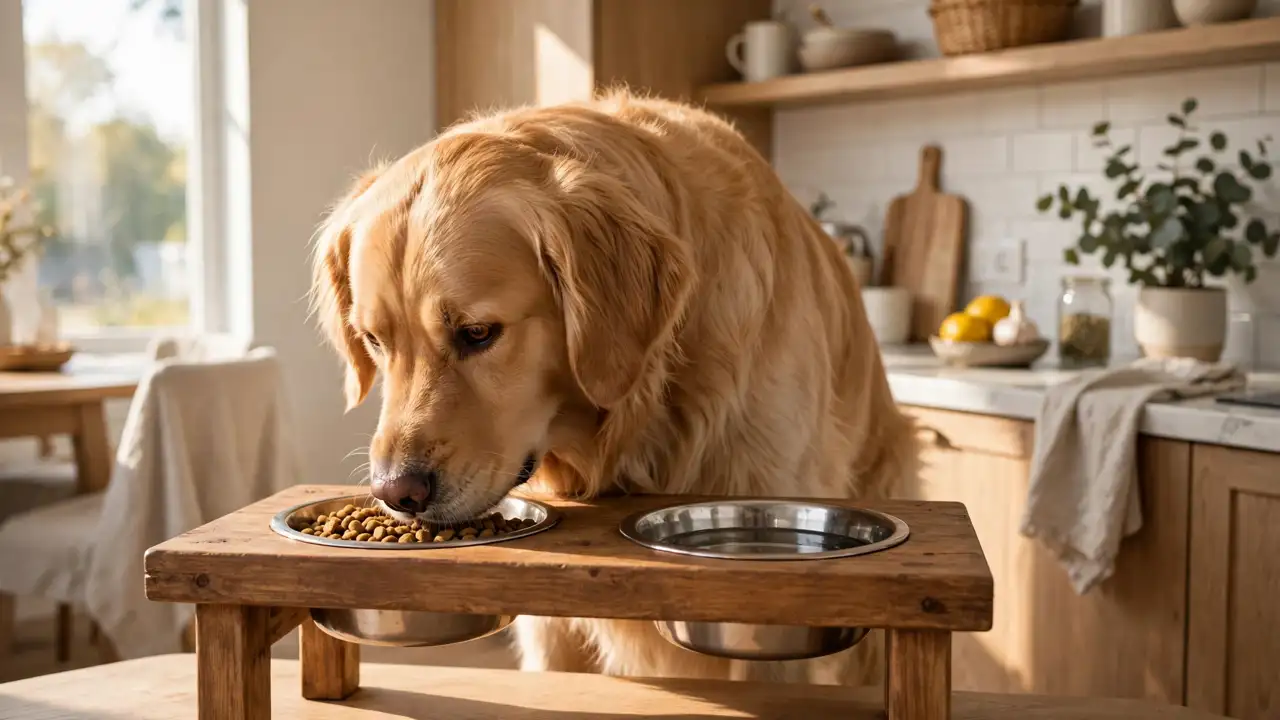
1. Raised Wooden Feeder: A Dog Bowl Idea Your Pup Will Actually Love
A tall dog bends low for every bite, and that bend adds up over years. A raised feeder lifts the bowl to chest height, so your dog eats with a straighter neck and swallows with less effort. Older dogs and big breeds notice the difference first.
Look for solid wood with a sealed finish, since water and food spills happen daily. The bowls should lift out for washing, and the base should sit flat without rocking.
- Match the height to your dog’s chest, not its head.
- Pick a feeder that holds the bowl snugly, so it cannot slide.
- Wipe the wood dry after spills to keep the finish clean.
2. Slow Feeder Bowl for Dogs Who Inhale Dinner
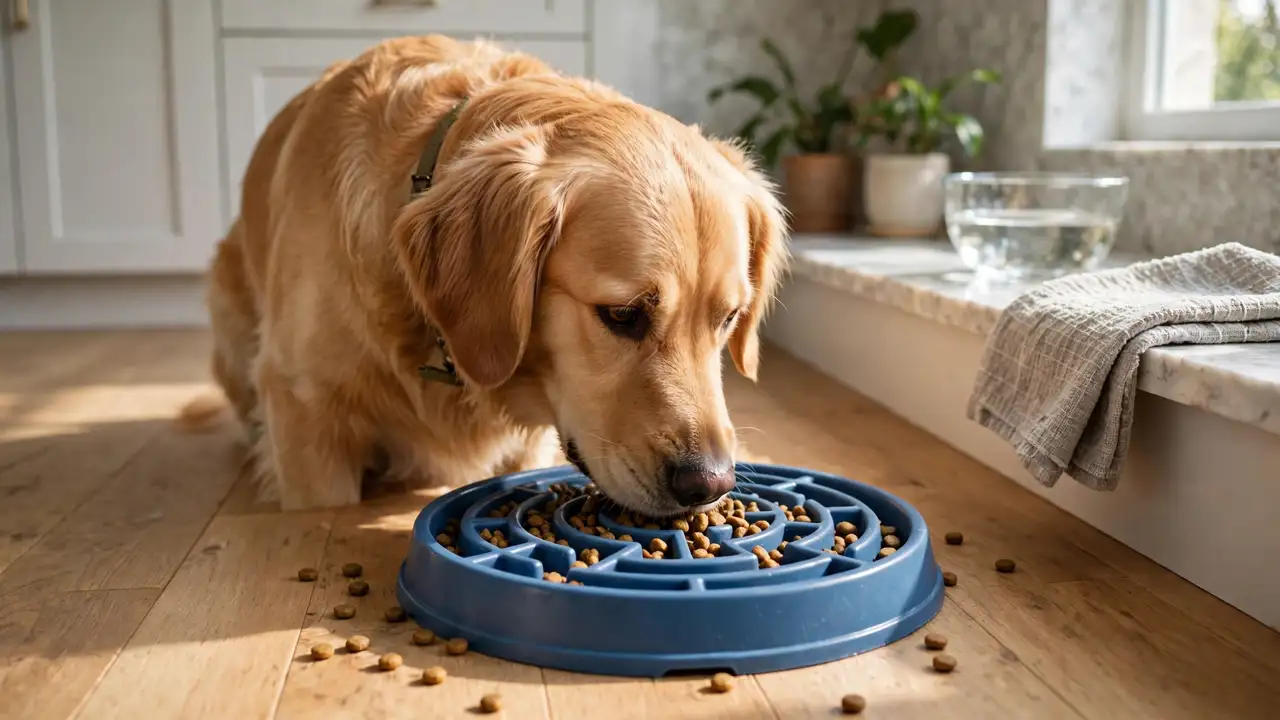
Some dogs treat dinner like a race. A slow feeder bowl has ridges and maze walls inside, so your dog has to work around them to reach the food. Meals take longer, and the frantic gulping slows down.
This helps dogs that burp, choke, or vomit after eating too fast. Start with a shallow maze, since a deep one can frustrate a new user. Wash it well, because food hides in the grooves.
- Use it for dry kibble first, then try wet food.
- Watch the first few meals to check your dog stays calm.
- Soak the bowl after dinner so dried food rinses off.
💡 Quick Tip
If your dog flips the bowl, press it onto a non-slip mat, or pick a heavier ceramic slow feeder.
3. Ceramic Bowl That Stays Put and Cleans Easy
Ceramic bowls look good on a kitchen floor and stay put while a dog eats. Their weight keeps them from sliding, and the smooth glaze wipes clean in seconds. Pick a heavy one, since a light ceramic bowl can still tip.
Check the glaze for chips before every wash. A cracked glaze can hold germs, and a chipped rim can scratch a tongue. Swap the bowl out as soon as you spot damage.
- Choose a lead-free, food-safe glaze.
- Run it through the dishwasher when the label allows it.
- Keep a spare bowl for wash days.

4. Stainless Steel Bowl in a Spill-Proof Stand
Stainless steel is the workhorse of dog bowls. It does not hold smells, it survives drops, and it goes straight into the dishwasher. A stand with a wide base keeps it from sliding across the floor.
Look for food-grade steel with no sharp rim. Thin steel dents and wobbles, so pick a gauge that feels solid in your hand. The stand should grip the floor, even when the floor is wet.
- Rinse the bowl daily, since a film builds up fast.
- Check the rubber feet now and then, since they wear down.
- Buy the next size up if your dog pushes food over the rim.

What to check before you buy
5. Personalized Bowl With Your Dog’s Name on It
A bowl with your dog’s name on it feels like it belongs to them, and it looks like it belongs in your kitchen. Painted ceramic and engraved steel both hold up well, as long as the finish is food safe. Guests notice it, and kids love it.
Order the name in a clear, simple font. Fancy script looks sweet in the shop listing and reads poorly from across the room. Ask the seller how the lettering holds up to washing before you buy.
- Measure your dog’s daily food amount before picking a size.
- Match the bowl color to your kitchen, not the other way round.
- Keep one plain spare for travel and wash days.
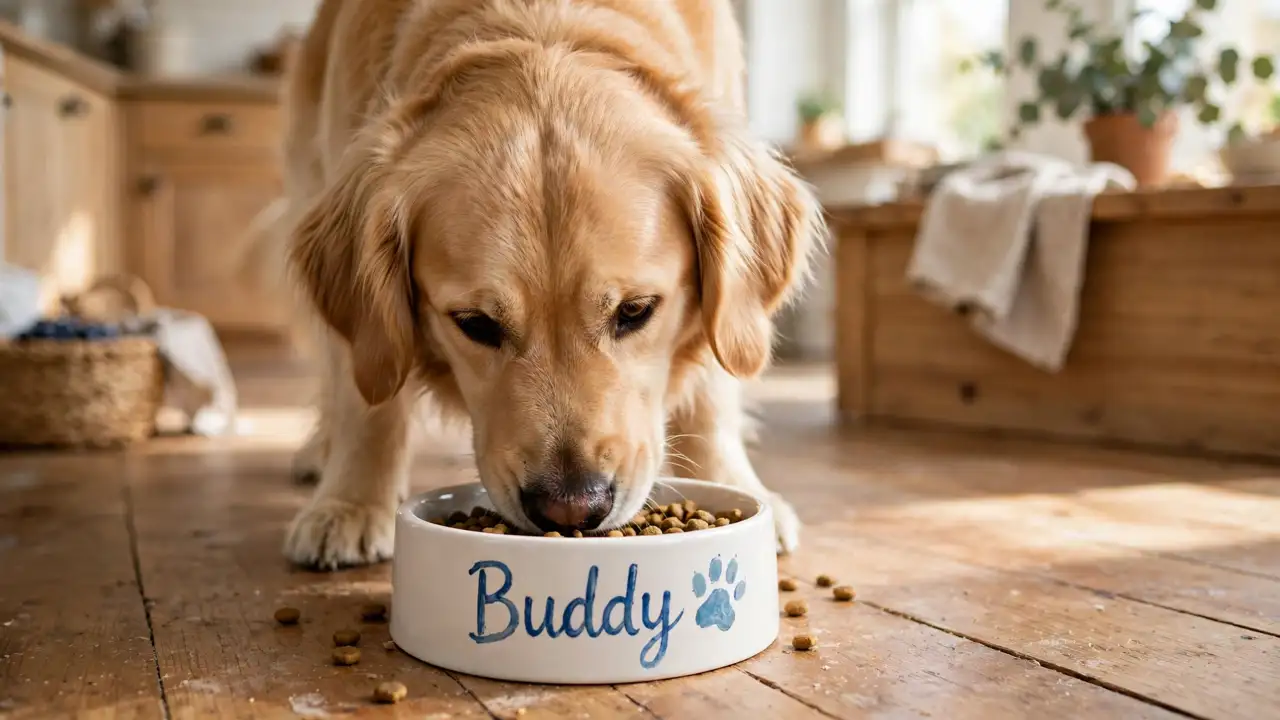
A plain bowl that looks like every other bowl on the shelf.
A named bowl that marks your dog’s spot and suits your kitchen.
6. Travel Bowl That Folds Flat in Your Bag
Walks, car rides, and park visits all need water, and a folding bowl packs flat in a pocket or bag. Silicone bowls open with one hand and rinse clean at any tap. Keep one clipped to the leash and one in the car.
Pick a bowl that holds its shape when full. Thin silicone can fold under the weight of water, and a wobbly bowl spills on the trail. A wide base and a stiff rim fix that.


Paid Links - As an Amazon Associate, I earn from qualifying purchases.
- Clip the folded bowl to your leash before you leave.
- Fill it halfway first, then top it up if your dog wants more.
- Rinse it and shake it dry before folding it back.

Clip the folded bowl to your leash before you leave.
Pop it open at the tap and fill it halfway first.
Rinse it and shake it dry before folding it back.
7. Feeder Stand With Built-In Storage Below
Bags of kibble end up on the floor, in the pantry, or stuffed behind the bin. A feeder with storage below keeps the food in the same spot as the bowl, so feeding time takes one trip instead of three. The bins stay sealed, so the food stays fresh.
Check that the storage lid closes tight and the bowls lift out for washing. A feeder that holds a full bag saves you from pouring kibble into a second tub every week.
- Measure your kibble bag before buying, since sizes vary.
- Label the bins if you store food and treats apart.
- Wipe the bins out between bags to stop stale smells.
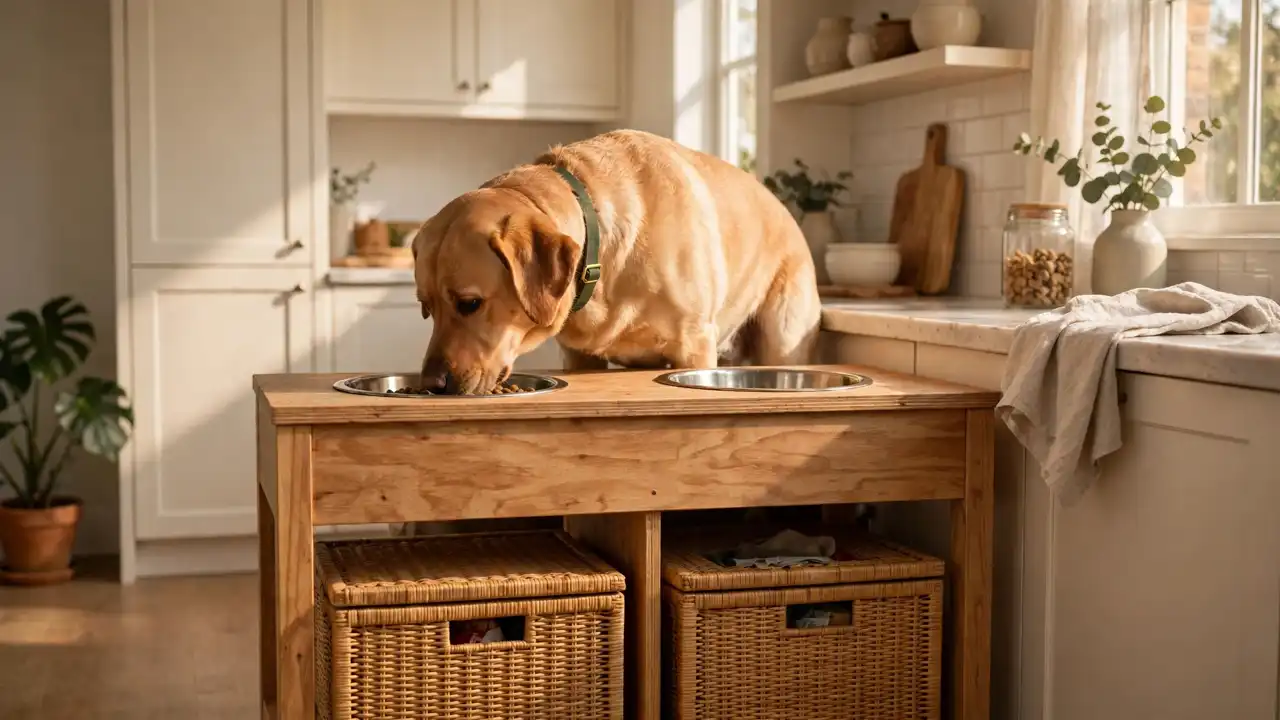
Store the full bag inside the feeder.
Wash the bins between bags.
Leaving kibble in an open bag on the floor.
Storing treats in the same bin as food.
8. Puzzle Bowl That Turns Meals Into a Game
A bored dog eats fast and then looks for trouble. A puzzle bowl hides kibble behind sliders and flaps, so dinner becomes a small job that uses the nose and the brain. Ten minutes of thinking can tire a dog out more than ten minutes of pacing.
Start easy. Put a few treats in the open slots first, and let your dog learn the trick before you hide the whole meal. A puzzle that is too hard on day one just teaches your dog to chew the bowl.
- Rotate two puzzles so neither gets boring.
- Supervise the first week, since strong chewers can crack plastic.
- Wash the moving parts well, since crumbs jam them.

| Puzzle bowl | Plain bowl |
|---|---|
| Meal time: longer and slower | Meal time: gone in a minute |
| Mental work: nose and brain | Mental work: none at all |
| Best for: bored, fast eaters | Best for: calm, slow eaters |
9. Non-Slip Silicone Mat Bowl Set for Messy Eaters
Some dogs eat like a storm, and the floor shows it. A bowl set on a silicone mat catches splashes, and the mat grips the floor so the bowls stay where you put them. The whole set lifts off the floor for a quick rinse.
Pick a mat wider than the bowls by a few inches on each side. A mat that is too small just moves the mess to its edge. Rinse it daily, since dried food sticks to silicone fast.
- Choose a raised lip to catch water.
- Match the mat size to your dog’s reach, not the bowl.
- Shake crumbs outside before rinsing.
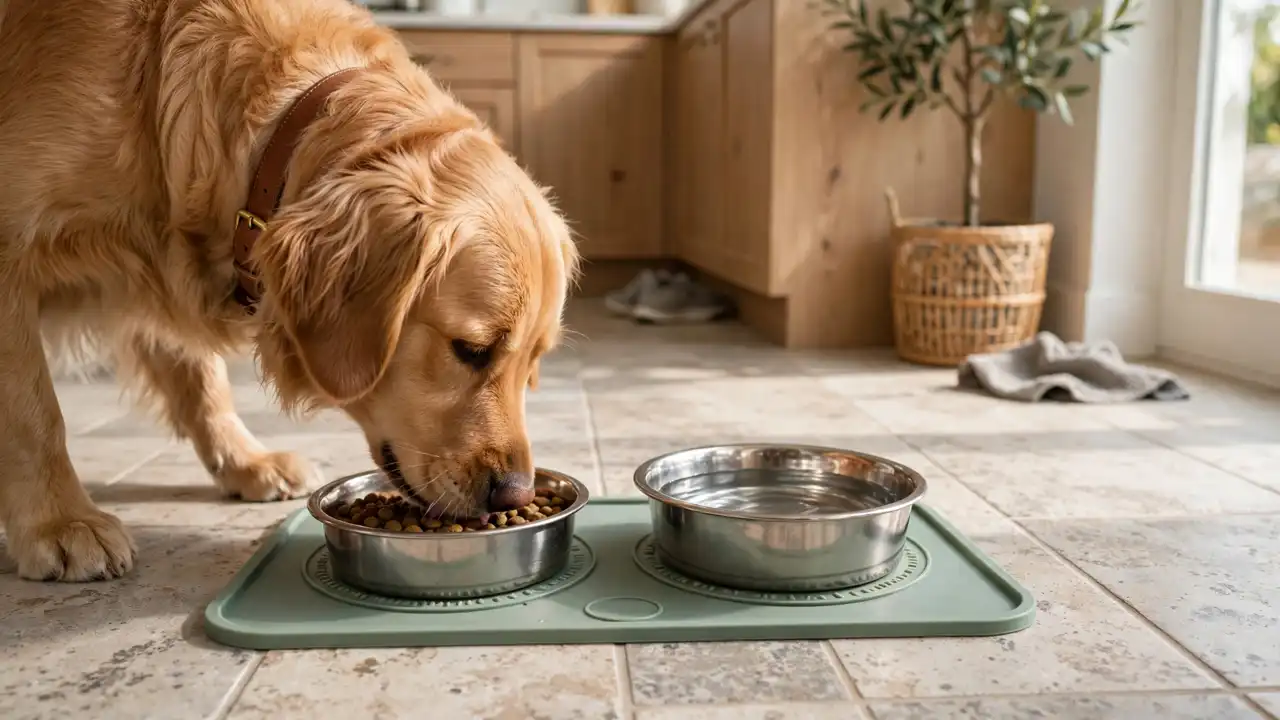
A mat that grips the floor saves more cleaning time than any fancy bowl shape.
10. Vintage Enamel Bowl With Farmhouse Charm
Enamel bowls carry a farmhouse look that suits a country kitchen. The white coating with a colored rim looks cheerful next to wooden floors and old cabinets. They are light to carry and easy to wash, and they stack neatly in a cupboard.
Watch for chips in the coating. Bare metal under the enamel can rust, and a rusty bowl belongs in the bin, not on the floor. Buy from a seller that states the coating is food safe.
- Hand wash enamel to keep the coating intact.
- Keep a spare, since chipped enamel cannot be fixed.
- Pair it with a mat if your dog nudges bowls around.

📌 Good To Know
Enamel suits light eaters best. A strong chewer can chip the coating, so pick steel for dogs that bite their bowls.
11. Double Bowl Station for Food and Water in One
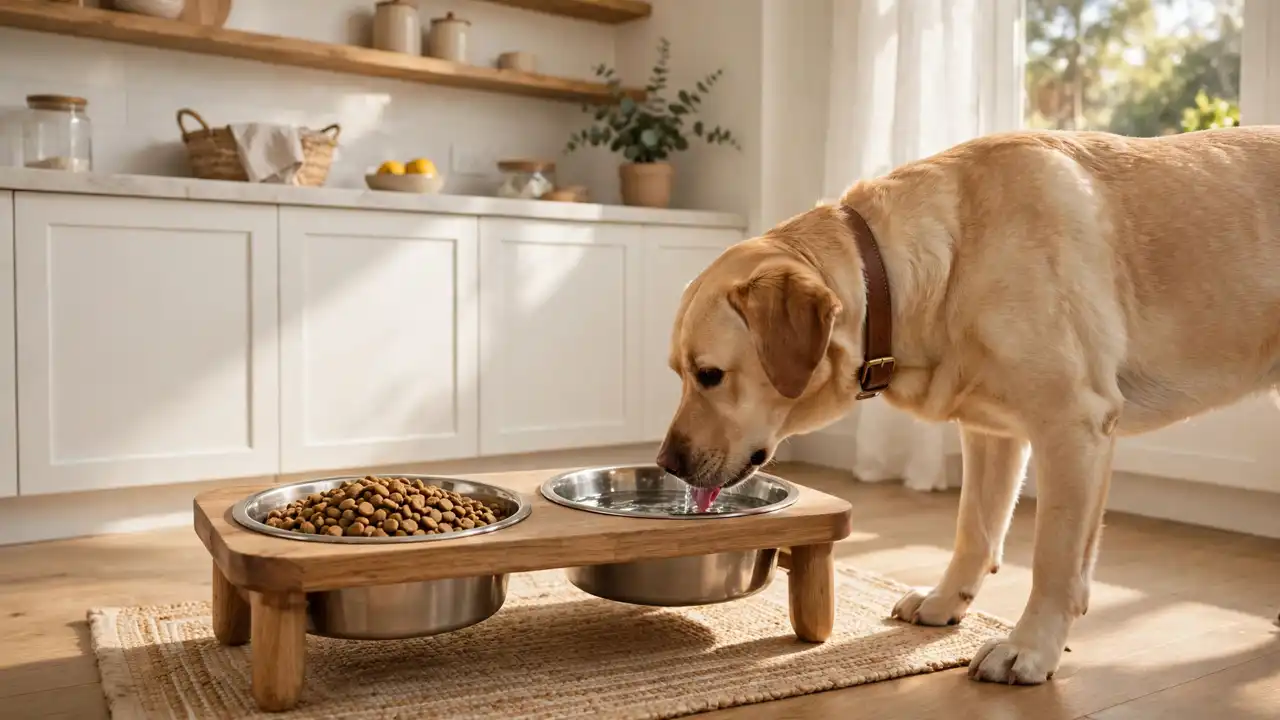
Food and water in one unit keeps the feeding corner tidy. A double station holds both bowls at the same height, so your dog does not walk across the kitchen between bites and drinks. One wipe cleans the whole corner.
Pick a station with a water bowl that lifts out on its own. You will refill water far more often than food, and you should not have to move the food bowl each time. A raised lip around the base catches drips.
- Refill water at least once a day, more in summer.
- Wash the water bowl daily, since slime builds up fast.
- Put the station where your dog already eats.
12. Heated Bowl for Cold Mornings and Outdoor Dogs
Winter turns an outdoor water bowl into a block of ice by morning. A heated bowl keeps the water liquid, so an outdoor dog can drink through a cold night. The cord needs a safe route, away from chewing teeth and paws.
Buy a bowl made for outdoor use, with a chew-resistant cord and a thermostat that switches off when the water is warm enough. A kitchen bowl with a heater taped on is not a safe swap.
- Check the cord each morning for chew marks.
- Place the bowl on a flat, dry surface under cover.
- Unplug and store it indoors when spring arrives.

| Heated bowl | Plain outdoor bowl |
|---|---|
| Cold morning water: stays liquid | Cold morning water: freezes solid |
| Cord: needs a safe route | Cord: none |
| Best for: outdoor dogs in winter | Best for: mild weather only |
13. DIY Painted Bowl That Matches Your Kitchen
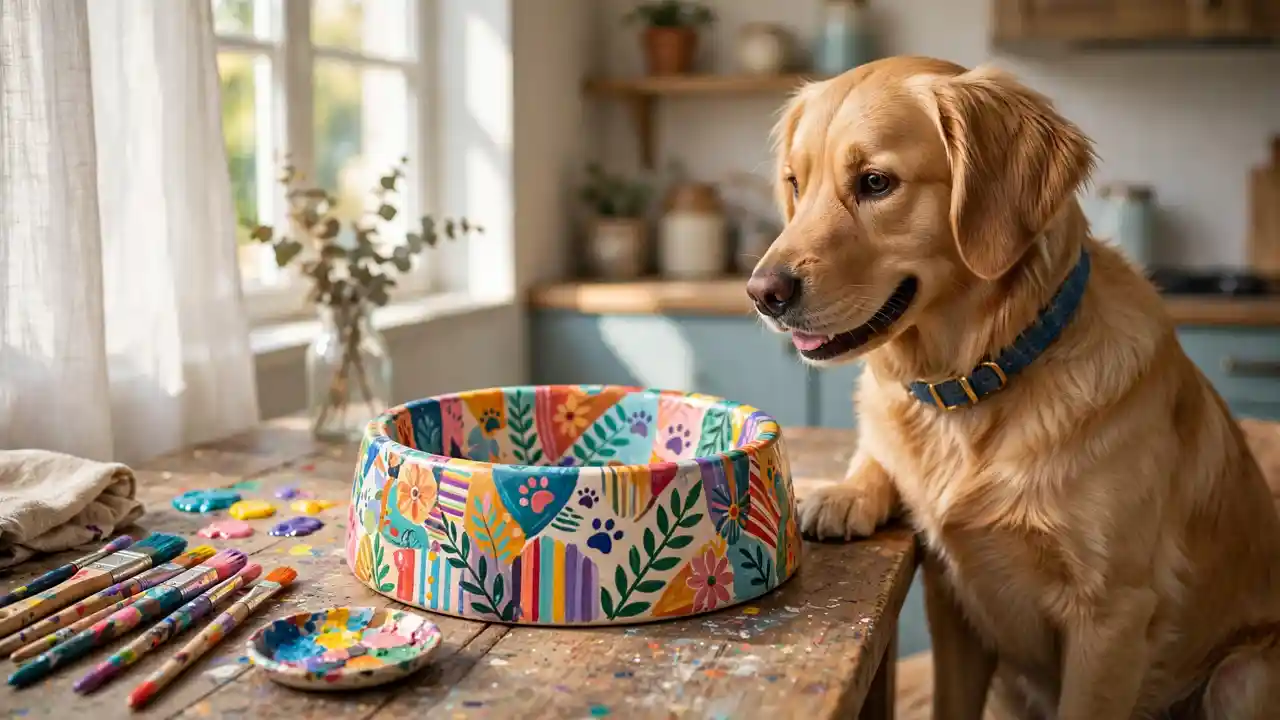
A plain bowl plus food-safe paint gives you a bowl no one else has. Paint paw prints, stripes, or your dog’s name, then seal it so the design survives washing. The fun part is that a child can help with the painting.
Use paint made for food contact, and seal the inside where the food sits. Craft paint from a hobby shelf is not safe for a food bowl, even if the color looks right. Let it cure fully before the first meal.
- Clean and dry the bowl before you paint.
- Paint the outside first, then the rim.
- Seal it, cure it, and wash it before use.
14. Wide Flat Bowl for Flat-Faced Breeds
Pugs, bulldogs, and other flat-faced breeds struggle with deep, narrow bowls. Their short snouts cannot reach the food at the bottom, so they push kibble out or give up halfway. A wide, shallow bowl lets them eat without pressing their face into the sides.
Pick a bowl with a low rim and a heavy base. A light bowl slides while a flat-faced dog eats, and a tall rim blocks their nose. Wash it after every meal, since flat faces leave more mess behind.
- Try a tilted bowl if the flat one still causes trouble.
- Watch for noisy breathing at meals and ask your vet.
- Keep the water bowl wide and shallow too.
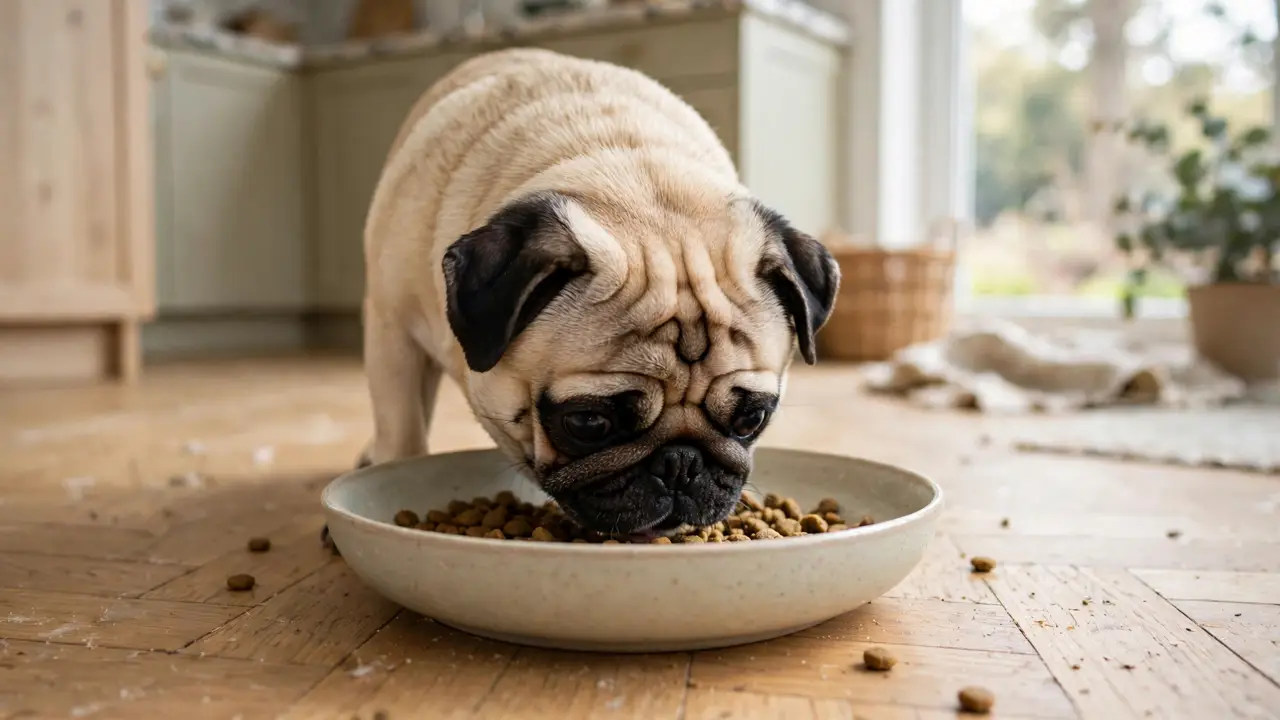
Fill the wide bowl halfway, so food stays in reach.
Set it on a mat, so it cannot slide.
Wash it after the meal, since flat faces make a mess.
Fourteen bowls, one goal: meals that suit your dog instead of fighting them. Start with the problem you see every day, the tipping, the gulping, or the cold water, and pick the bowl that fixes that one thing first.
Your dog will not care about the color or the brand, but they will notice a bowl that is easier to eat from. Save this list of dog bowl ideas your pup will actually love for the next time you shop for your kitchen, and pin the one you want to try first.