Reviewed By: Medsdog Team
Last Updated: September 2026
When your dog is scratching, sneezing or has an itchy skin, and particularly when it is allergy season, you may be asking, can Piriton be given to dogs safely and what is the safe Piriton dosage for dogs?
Piriton for dogs is one of the most searched pet-owner questions, and for good reason chlorphenamine maleate (the active ingredient in Piriton) is a human antihistamine that vets do sometimes recommend off-label for dogs with mild, histamine-driven allergic symptoms.
This guide gives you a single, consistent Piriton for dogs dosage chart based on published veterinary dosing standards, a free calculator, and everything else you need to use it safely frequency, duration, side effects, drug interactions, and when to reach for something else entirely.


Paid Links - As an Amazon Associate, I earn from qualifying purchases.
Disclaimer:All information in this guide is provided for educational purposes only and should never replace professional veterinary advice.
How Much Piriton Can I Give My Dog?
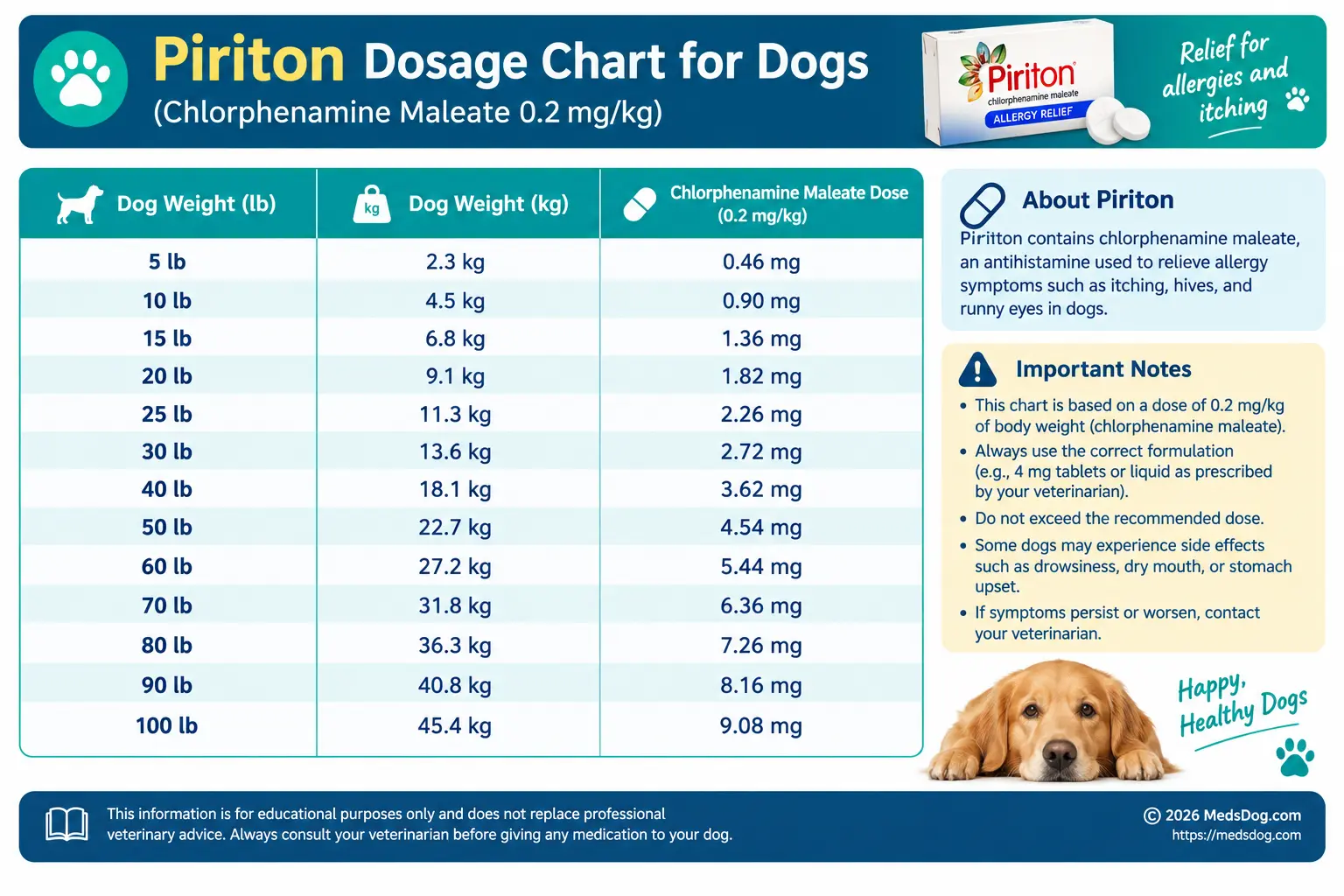
The standard veterinary-recommended chlorphenamine maleate (Piriton) dosage for treating allergies in dogs is 0.2 mg/kg (0.1 mg/lb), given once or twice a day as prescribed by your vet.
In certain conditions, some dogs may need chlorphenamine maleate up to three times a day. Your vet will advise you on the most suitable dosage and schedule for your dog.
Use the interactive calculator on this page to get an estimated starting figure based on your dog’s exact weight, then double-check it with your vet.
Piriton Dosage Calculator for Dogs
Calculate the vet-recommended chlorphenamine maleate (Piriton) dose based on your dog’s weight.
Recommended Piriton Dose
Piriton® (Chlorphenamine Maleate) For Dogs Overview
- Piriton (chlorphenamine maleate) used in dogs to manage mild, short-term allergic symptoms such as itching, hives, and hay-fever-type reactions.
- It is not licensed as a veterinary medicine, it should only be given under veterinary guidance.
- The standard piriton dose for dogs per kg is based on body weight, but your vet should confirm the exact amount for your dog.
- It does not treat the underlying cause of chronic allergies like atopic dermatitis.
- Never substitute Piriton for Piriteze, Benadryl, or another antihistamine using the same tablet count they contain different active ingredients at different strengths.
What Is Piriton and How Does It Work in Dogs?
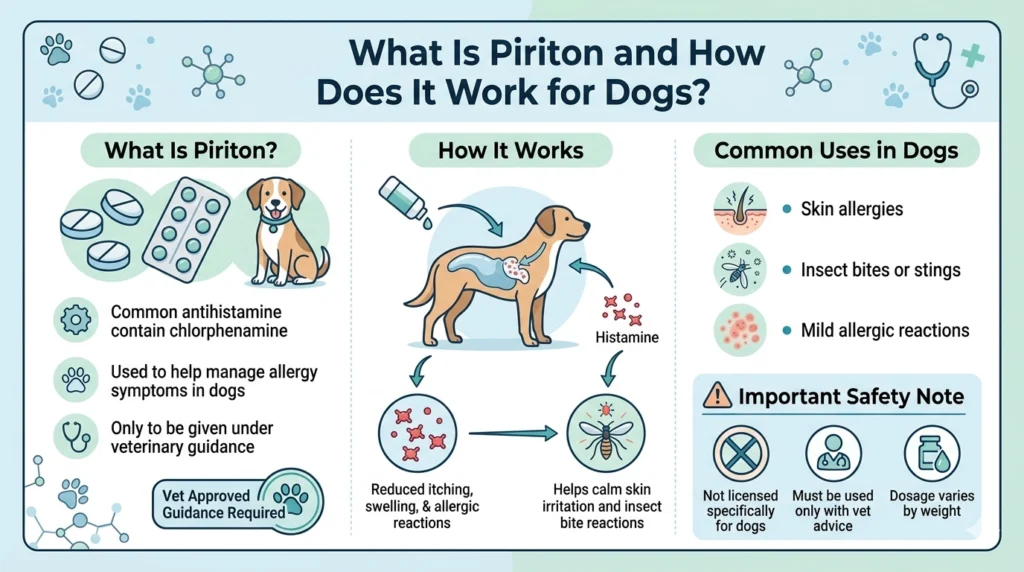
Piriton's active ingredient, chlorphenamine maleate (also written chlorpheniramine), is a first-generation, sedating antihistamine. It works by blocking histamine receptors histamine is the chemical your dog's immune system releases in response to allergens like pollen, dust mites, insect bites, or certain foods, and it's responsible for the itching, redness, swelling, and sneezing you're trying to treat.
Because it's a sedating antihistamine, drowsiness is a genuinely common and expected effect, not just a side effect it's part of how the drug works. It's licensed for human use, and a vet may use it in dogs under what's known as the veterinary "prescribing cascade": using an appropriately licensed human medicine, at the vet's discretion, when no suitable licensed veterinary alternative exists for that specific situation.
Piriton Dosage Chart for Dogs by Weight
| Dog Weight (lb) | Dog Weight (kg) | Chlorphenamine Maleate Dose (0.2 mg/kg) |
|---|---|---|
| 5 lb | 2.3 kg | 0.46 mg |
| 10 lb | 4.5 kg | 0.90 mg |
| 15 lb | 6.8 kg | 1.36 mg |
| 20 lb | 9.1 kg | 1.82 mg |
| 25 lb | 11.3 kg | 2.26 mg |
| 30 lb | 13.6 kg | 2.72 mg |
| 40 lb | 18.1 kg | 3.62 mg |
| 50 lb | 22.7 kg | 4.54 mg |
| 60 lb | 27.2 kg | 5.44 mg |
| 70 lb | 31.8 kg | 6.36 mg |
| 80 lb | 36.3 kg | 7.26 mg |
| 90 lb | 40.8 kg | 8.16 mg |
| 100 lb | 45.4 kg | 9.08 mg |
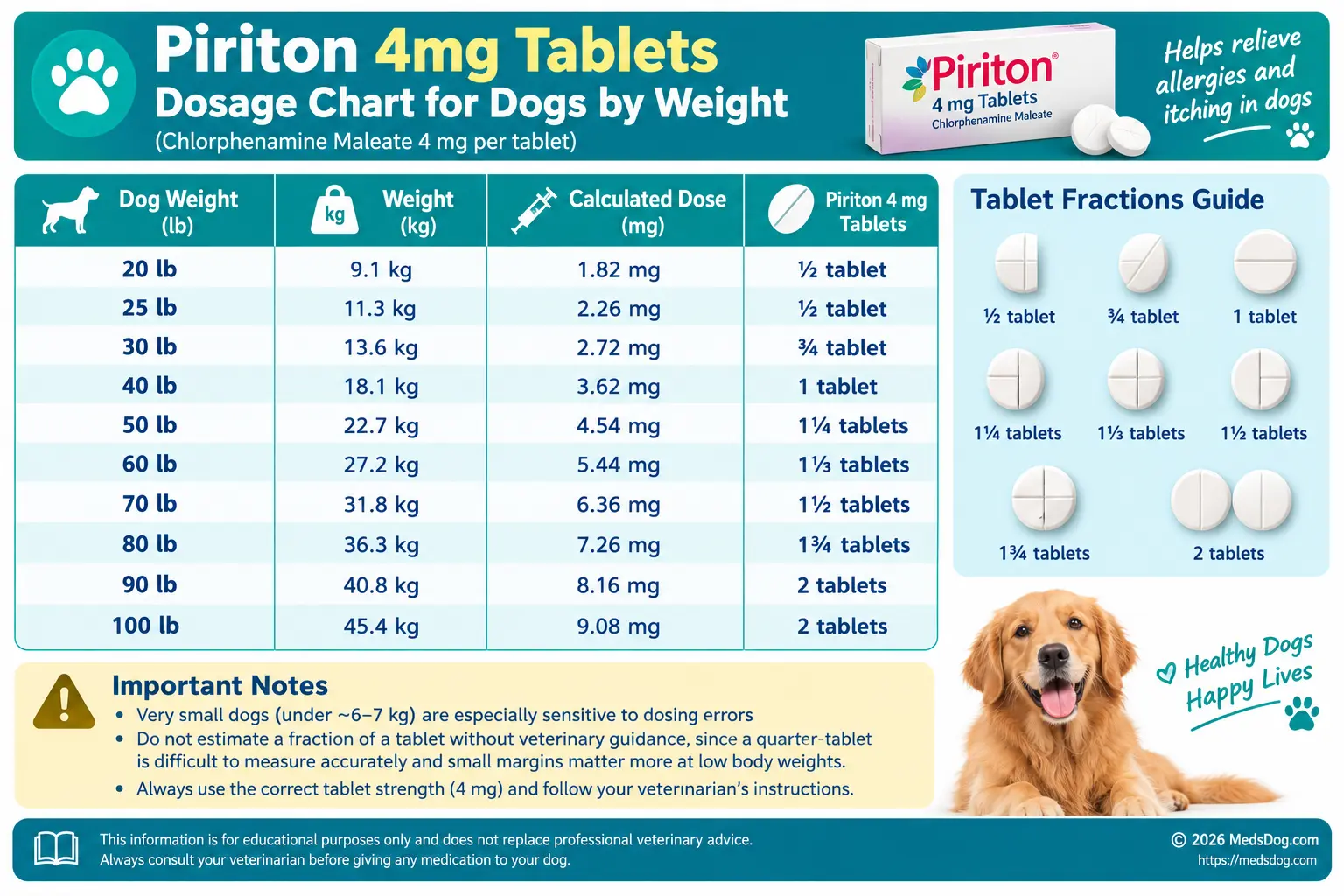
Piriton 4mg Tablets Dosage Chart for Dogs by Weight
| Dog Weight | Weight (kg) | Calculated Dose | Piriton 4 mg Tablets |
|---|---|---|---|
| 20 lb | 9.1 kg | 1.82 mg | ½ tablet |
| 25 lb | 11.3 kg | 2.26 mg | ½ tablet |
| 30 lb | 13.6 kg | 2.72 mg | ¾ tablet |
| 40 lb | 18.1 kg | 3.62 mg | 1 tablet |
| 50 lb | 22.7 kg | 4.54 mg | 1¼ tablets |
| 60 lb | 27.2 kg | 5.44 mg | 1⅓ tablets |
| 70 lb | 31.8 kg | 6.36 mg | 1½ tablets |
| 80 lb | 36.3 kg | 7.26 mg | 1¾ tablets |
| 90 lb | 40.8 kg | 8.16 mg | 2 tablets |
| 100 lb | 45.4 kg | 9.08 mg | 2 tablets |
Very small dogs (under ~6–7 kg) are especially sensitive to dosing errors do not estimate a fraction of a tablet without veterinary guidance, since a quarter-tablet is difficult to measure accurately and small margins matter more at low body weights.
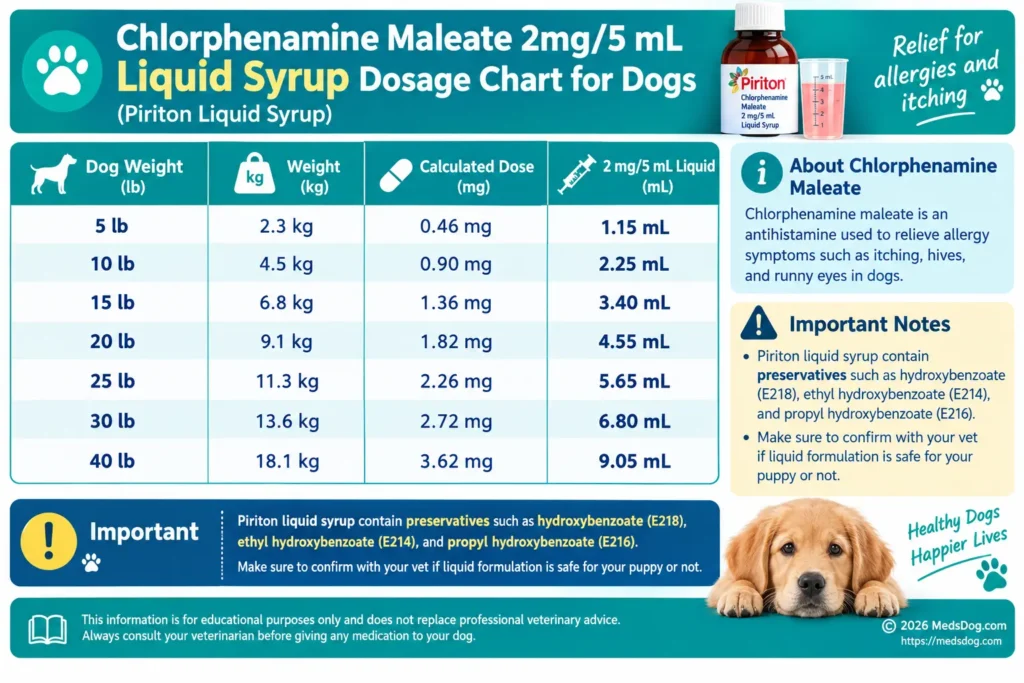
Chlorphenamine Maleate 2mg/5 mL Liquid Syrup Dosage Chart for Dogs
| Dog Weight | Weight (kg) | Calculated Dose | 2 mg/5 mL Liquid |
|---|---|---|---|
| 5 lb | 2.3 kg | 0.46 mg | 1.15 mL |
| 10 lb | 4.5 kg | 0.90 mg | 2.25 mL |
| 15 lb | 6.8 kg | 1.36 mg | 3.40 mL |
| 20 lb | 9.1 kg | 1.82 mg | 4.55 mL |
| 25 lb | 11.3 kg | 2.26 mg | 5.65 mL |
| 30 lb | 13.6 kg | 2.72 mg | 6.80 mL |
| 40 lb | 18.1 kg | 3.62 mg | 9.05 mL |
Important: Piriton liquid syrup contain preservatives such as hydroxybenzoate (E218), ethyl hydroxybenzoate (E214), and propyl hydroxybenzoate (E216), Make sure to confirm with your vet if liquid formulation is safe for your puppy or not.
Benefits and Risks of Piriton Dosage for Dogs
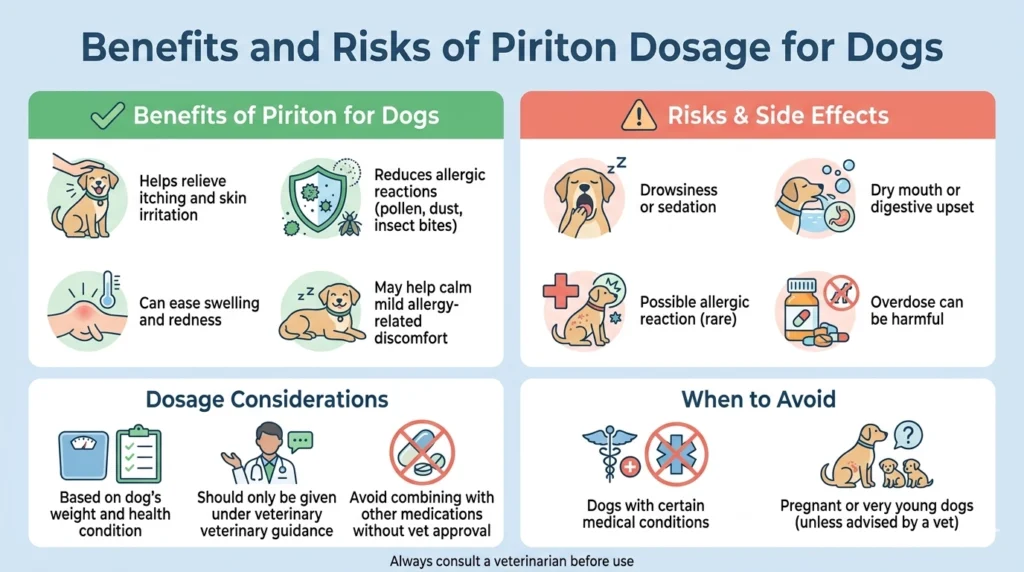
Piriton dosage for dogs is an antihistamine that has a number of advantages in dogs, such as being available over the counter, being cheaper than prescription drugs and having a lengthy history of use in humans and animals. It is available as a tablet and syrup, so it is easier to give it to your dog depending on his or her preference. Properly used, it can be of help in eliminating allergies like itching and discomfort.
Nevertheless, notable risks should be taken into consideration. Piriton dosage is not licensed to be used as an animal (off-licence) and as such, should be administered under strict veterinary advice and prescription.
It is not always effective and not all dogs are responsive and some might need different treatments. Possible side effects involve drowsiness, dry mouth, diarrhea, vomiting, loss of appetite, urinary retention and behavioral changes and the more severe effect may be seen in seizures.
The liver processes piriton, therefore it might be incompatible with other dogs that have liver problems. It may also be used with other drugs, e.g., antidepressants (e.g., Prozac), sedatives (e.g., Valium), and painkillers (e.g., Tramadol).
Overdose can be caused by incorrect dosing or overuse and it results in extreme complications such as seizures, coma and even death. Owing to these reasons, correct dosage, observation and veterinary control are important in order to keep your dog safe.


Paid Links - As an Amazon Associate, I earn from qualifying purchases.
Are There Any Side Effects of Piriton for Dogs?
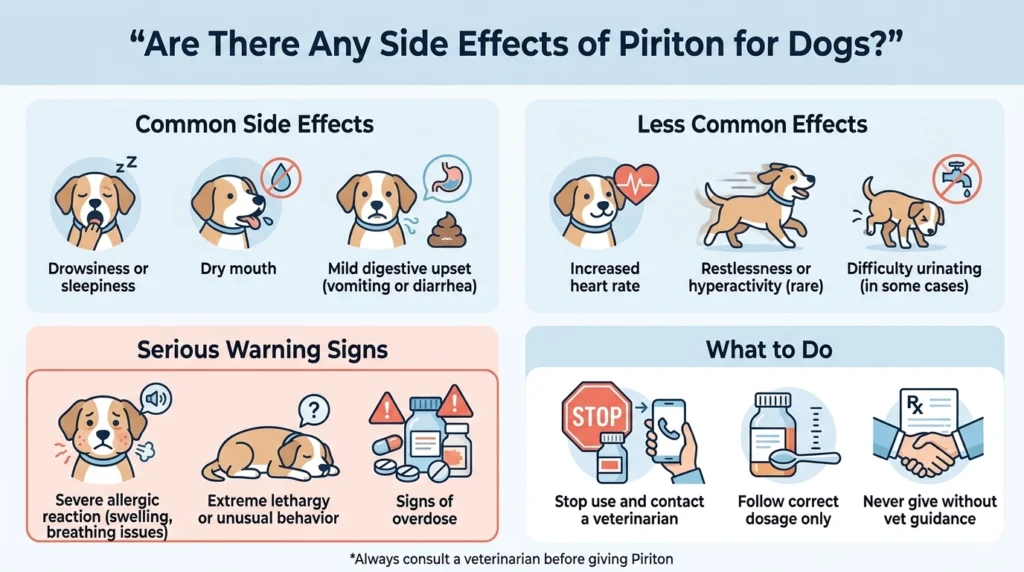
Side effects are possible in dogs taking Piriton, but occur infrequently. The most frequent side effect is drowsiness (lethargy) because it has a sedative effect, which can make dogs seem less itchy or agitated. Less common side effects include vomiting, diarrhea or constipation, nausea, dry mouth, thirstiness, and stomach upset. It can also cause urinary retention or rarely, changes in mood which should be watched for.
- Sleepy/lethargic: most common and generally not problematic unless severe or an overdose
- Gastrointestinal: vomiting, diarrhea, constipation or nausea from upset stomach
- Dry mouth & thirsty: keep drinking water available
- Urinary retention: some require help to urinate
- Alterations in behaviour: occasional but needs veterinary care if severe
If vomiting, diarrhoea or changes in behaviour occur, seek veterinary advice. Make sure your dog has swallowed the medication (hasn't just left it in their mouth) and consider administering with food if necessary. Special care should be taken to ensure the medication is free of harmful ingredients such as caffeine, pseudoephedrine, amphetamines or alcohol, which can be toxic to dogs.
Overdosing or using the product for too long can increase side effects, and may result in more severe symptoms, particularly in dogs with underlying conditions (such as liver disease). Regular monitoring and veterinary advice is important.
How to Give Piriton to Your Dog Safely and Effectively
Piriton (chlorphenamine) dosage for pets can only be administered to dogs under the supervision of the veterinary as part of a well-defined treatment procedure depending upon the condition of your dog and its weight. Nevertheless, precise dosing should never be done without a vet.
- Frequency: once or twice a day, and every 8 to 12 hours (3 times a day at most) in response to severity.
- Use period: can be short-term or seasonal, particularly in case of spring/summer allergies due to pollen and other environmental allergens.
Piriton may be administered with food or without food, although administration with some food or water could be beneficial in preventing stomach upset in sensitive dogs. Tablets must never be crushed or broken because the coating is made in such a way that it will be absorbed in the intestine and not irritated in the mouth or throat.
The pollen, dust mites, grass, fleas, insect bites and hives are the common allergy triggers in dogs and may lead to symptoms of itching and runny nose red or swollen eyes, paw licking, nausea, vomiting, fatigue and behavioral changes such as anxiety and depression.
With the possibility of identifying and eliminating the allergen, it may not be necessary to take long-term medication, yet in most situations allergens are hard to avoid, necessitating seasonal or regular treatment.
Piriton for pets could be administered on a daily basis as prescribed by a vet, however long term or continuous use should be on a veterinary approved plan. It is also essential to store properly, store tablets in a cool and dry environment with no access to sunlight, heat, kids and other pets to avoid accidental ingestion or overdose.
What Are the Alternatives to Piriton for Dogs?
Piriton dose is not the only medication that can be used to treat allergies in dogs. Itching, inflammation, and allergic reactions can be managed with a number of medical and natural options, depending on the level of severity of symptoms and the advice of your vet.
- Other Antihistamines
Some antihistamines which may be more effective than Piriton in some dogs may be prescribed by veterinarians, such as:
- Benadryl (diphenhydramine)
- Zyrtec (cetirizine)
- Claritin (loratadine)
- Telfast (fexofenadine)
- Chlortimeton
- Atarax - prescription
All these alternatives have mild side effects like drowsiness and all of them should be administered under the supervision of a veterinarian.
- Prescription Allergy Medications
To treat more serious or chronic allergies, vets can prescribe more potent treatments including:
- Apoquel
- Steroids (anti-inflammatory drugs)
- Ciclosporin
Having a veterinary prescription, these drugs are effective in the management of immune responses, but should be used with caution in view of side effects and they are only used under veterinary prescription.
- Immunotherapy (Allergy Desensitization)
Immunotherapy slowly introduces dogs to low doses of allergens in injections or oral drops and assists them to become tolerant to these substances. It is commonly prescribed in case of chronic or long term allergies, although the effects might require months or even years.
- Natural Alternatives
Long-term allergy management can be achieved with the help of natural options and decreased use of medications:
- Omega-3 fatty acids (fish oil / EPA) - decrease inflammation and enhance the skin.
- Aloe vera gel - calms swollen inflamed skin.
- Oatmeal baths -soothes irritation.
- Coconut oil and honey- help the healing of the skin.
- Apple cider vinegar - occasionally applied topically.
- Calendula, clary sage serums (e.g., skin barrier support products) - aid in the recovery and healing of irritated skin.
Although these remedies can be effective in treating itching, dry skin and minor irritation, they are not heavily regulated, so they should only be used under veterinary supervision.
Dogs That Need Extra Caution with Piriton
Chlorphenamine may be unsuitable, or need a carefully adjusted dose, in dogs with:
- Glaucoma
- An enlarged prostate or difficulty urinating
- Heart disease or high blood pressure
- Liver or kidney disease (chlorphenamine is processed by the liver)
- Overactive thyroid
- Obstructive respiratory disease
Extra caution also applies to puppies, senior dogs, and pregnant or nursing dogs. Always disclose every existing condition to your vet before starting an antihistamine.
Piriton vs. Piriteze vs. Benadryl: Don't Mix Them Up
This trips up a huge number of dog owners, so it's worth being explicit: Piriton, Piriteze, and Benadryl are different medicines with different active ingredients, strengths, and dosing rules. Never substitute one for another using "the same number of tablets."
| Brand | Active Ingredient | Sedation Level | Notes for Dogs |
|---|---|---|---|
| Piriton | Chlorphenamine maleate | High (first-generation) | The subject of this guide; 4 mg standard UK tablet |
| Piriteze | Cetirizine hydrochloride | Low (second-generation) | A completely different drug see our cetirizine dosing breakdown for piriteze for dogs dosage by weight chart guidance |
| Benadryl (UK) | Acrivastine or cetirizine (varies by product) | Low–moderate | UK Benadryl products often differ from US Benadryl — check the active ingredient on the box |
| Benadryl (US) | Diphenhydramine | High | Not the same drug as UK Benadryl; see this diphenhydramine guide if this is what you actually have |
If you're not sure which product is in your hand, photograph the ingredients panel and send it to your vet before giving anything brand names change formulation more often than owners expect.
Piriton Drug Interactions to Flag With Your Vet
| Medication Type | Example | Why It Matters |
|---|---|---|
| Sedatives | Diazepam, Valium | Additive sedation risk |
| Antidepressants | Fluoxetine (Prozac), amitriptyline | Can intensify sedative/anticholinergic effects |
| Painkillers | Tramadol | Combined CNS depression |
| MAOIs | Selegiline | Can cause serious interactions |
| Anticoagulants | — | May affect clotting response |
Never combine Piriton with another sedating antihistamine or with any of the above without explicit veterinary sign-off.
Missed Dose and Accidental Overdose: What to Do
Missed a dose? Don't double up — give the next dose at its normal scheduled time unless your vet tells you otherwise.
Suspect an overdose or accidental ingestion (e.g., your dog got into the packet)? Contact your vet or an emergency vet immediately don't wait for symptoms to appear. Take the packaging with you and be ready to tell them:
- The product name and strength (e.g., "4 mg Piriton tablets")
- Approximately how much may have been swallowed
- Your dog's weight
- The time it happened
Signs of overdose can include severe drowsiness or, paradoxically, agitation, tremors, an abnormal heart rate, seizures, or loss of coordination.
Alternatives Allergy Medications
Piriton isn't the only option, and it isn't always the right one particularly for chronic or severe allergies. Depending on your dog's diagnosis, your vet may suggest:
| Option | Type | Best For |
|---|---|---|
| Cetirizine (Piriteze) | Second-gen antihistamine, less sedating | Mild-moderate allergies, longer-term use |
| Loratadine (Claritin) | Second-gen antihistamine | Similar profile to cetirizine |
| Hydroxyzine | Sedating antihistamine | Itch relief, sometimes combined with other treatment |
| Apoquel (oclacitinib) | Prescription-only, targeted | Moderate-severe allergic itching |
| Steroids (e.g. prednisone) | Prescription anti-inflammatory | Short-term flare control |
| Immunotherapy | Allergy vaccine/drops | Long-term, chronic environmental allergies |
| Omega-3 fatty acids | Natural, supportive | General skin/coat support alongside other treatment |
A few worth knowing more about:
- Cetirizine, the active ingredient in Piriteze, is often better tolerated long-term than Piriton you can work out an appropriate starting point using this Zyrtec dosing calculator before checking with your vet.
- Loratadine is another lower-sedation option some vets prefer for daytime use see this loratadine dosage breakdown by weight for reference figures.
- Hydroxyzine is sometimes used alongside a treatment plan for more persistent itching — this hydroxyzine guide breaks down typical amounts by weight.
- For dogs with more serious flare-ups, your vet might prescribe a short, tapering course of prednisone dosed according to their instructions and this prednisone dosage reference.
- Apoquel (oclacitinib) is a common next step for chronic allergic itching that doesn't respond well to antihistamines see the full oclacitinib dosing guide for how it's typically dosed.
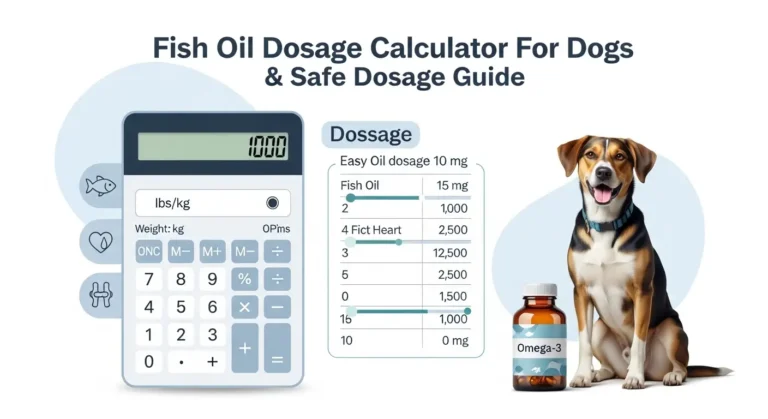
- On the natural-support side, many vets recommend omega-3 fatty acids as a long-term skin-health addition you can calculate an appropriate daily amount using this fish oil dosage calculator for dogs.
FAQs
Is Piriton medication safe to dogs?
Piriton (chlorphenamine) is usually safe in dogs, provided it is prescribed and given by a veterinarian and depends on the health, weight and medical history of the dog.
What is the proper Piriton dosage of dogs?
The general rule is 0.5 -1 mg per kilogram of body mass, typically administered 2-3 times a day, although the specific dosage should never be forgotten by a veterinarian.
What is the frequency of administering Piriton to my dog?
It is usually administered once or twice a day, and sometimes every 812 hours, based on the severity of symptoms and the instructions of the veterinary.
Is it possible to feed Piriton to my dog every day?
Short-term or seasonal allergies may be used daily, however, only under the close supervision of the veterinarian, especially in chronic cases.
What are the side effects of Piriton on dogs?
The most frequent among the side effects are drowsiness, dry mouth, vomiting, diarrhea, constipation, thirst, increase, urinary withholding, and sometimes behavioral changes.
Does Piriton work with all dog allergies?
No, it is used primarily to treat mild or acute allergies such as insect bites or seasonal allergies, but not chronic diseases such as atopic dermatitis.
What is the precaution in administering Piriton medication to my dog?
Do not overdose, use continuously, or take concurrently with some medicines such as sedatives, antidepressants, or painkillers without a veterinarian recommendation.
What are the substitutes of Piriton in dogs?
Other antihistamines (Zyrtec, Benadryl, Claritin), prescription drugs such as Apoquel or steroids, immunotherapy, and natural remedies such as omega-3 oils, aloe vera, and skin relaxations are also possible.
Final Thoughts
Piriton (chlorphenamine) for pets is a popular antihistamine drug that may be used to treat allergy symptoms in dogs, such as itching, swelling and discomfort due to the release of histamine. It might be an option for temporary or mild allergies, like seasonal allergies and insect bites, and can offer rapid relief in certain instances.
But Piriton dose is not an approved veterinary medicine, and should only be administered to dogs by a veterinarian's prescription and under their supervision.
It's not appropriate for every dog or every allergy, particularly chronic allergies such as atopic dermatitis, in which case long-term and more specific medications like Apoquel or Atopica are likely to be more successful.
Piriton (and any medication) can have side effects or drug interactions, so appropriate dosing and monitoring are crucial. Be sure to follow your vet's directions for dose, frequency and duration, and monitor for any side effects.
And in many cases, other medications, steroids, allergies shots or supplements may be recommended by your veterinarian. So while Piriton dosage may provide some short-term relief, it should only be used as part of a treatment protocol under the supervision of a veterinarian.