Your veterinarian might prescribe Firocoxib for your dog, also known by the brand name Previcox, when your dog is suffering from arthritis pain, joint stiffness, or if they’re recovering from surgery.
Firocoxib for dogs is a prescription coxib NSAID (Non Steroidal Anti-Inflammatory Drug) that belongs to a class of drugs approved by the Food and Drug Administration (FDA) to help relieve pain, inflammation and discomfort in dogs.
The most common indications are for the management of osteoarthritis pain and as an adjunct to control postoperative pain and inflammation following soft-tissue or orthopedic surgery.
As a prescription-based medicine, it is important to get the dosage right, to ensure that your dog is safe and effective treatment is achieved. The correct dosage typically is based on your dog’s weight, health, history, and condition.


Paid Links - As an Amazon Associate, I earn from qualifying purchases.
Most dogs do not have any side effects from Firocoxib, but side effects may occur if the dosage is incorrect or if it is not used properly over a period of time, including vomiting, diarrhea, inappetence, stomach ulcers, kidney issues, or liver issues.
This comprehensive guide will provide you with all the information you need to know about Firocoxib Dosage For Dogs by weight, such as dosage charts, how the drug works, benefits, potential side effects, precautions, risks of overdose, and usage tips approved by vets.
Disclaimer: This guide is for informational purposes only and is not a substitute for professional veterinary advice. Always consult your veterinarian before giving Firocoxib or any medication to your dog. Puppies younger than 7 months have had serious adverse reactions and can be fatal.
Firocoxib Dosage Calculator for Dogs
Based on the recommended dose of 5.0 mg/kg (2.27 mg/lb)
Important: Puppies younger than 7 months have had serious adverse reactions to Firocoxib (Previcox), including death.
Dogs under 12.5 lb (5.7 kg) cannot be dosed accurately because of tablet sizes and scoring.
Always consult your veterinarian before giving Firocoxib to your dog.
We will also outline the difference between brand name and generic Firocoxib chewable tablets and explain some off-label uses veterinarians sometimes recommend and when it may or may not be appropriate for you to use it for your dog.
Key Takeaways
- Firocoxib is a prescription nonsteroidal anti-inflammatory (NSAID) drug marketed as Previcox for the treatment of acute and chronic pain, inflammation, and discomfort associated with osteoarthritis in dogs.
- In healthy dogs, firocoxib (Previcox) is very well accepted by most canine patients when administered at the proper veterinarian prescribed dosage, and causes relatively few side effects.
- Caution must be taken with dogs taking Firocoxib or Previcox for prolonged periods of time, for arthritis or chronic joint pain, and regular veterinary examinations and yearly internal organ function monitoring should be performed to check for kidney and liver damage.
How Much Firocoxib Can I Give My Dog?
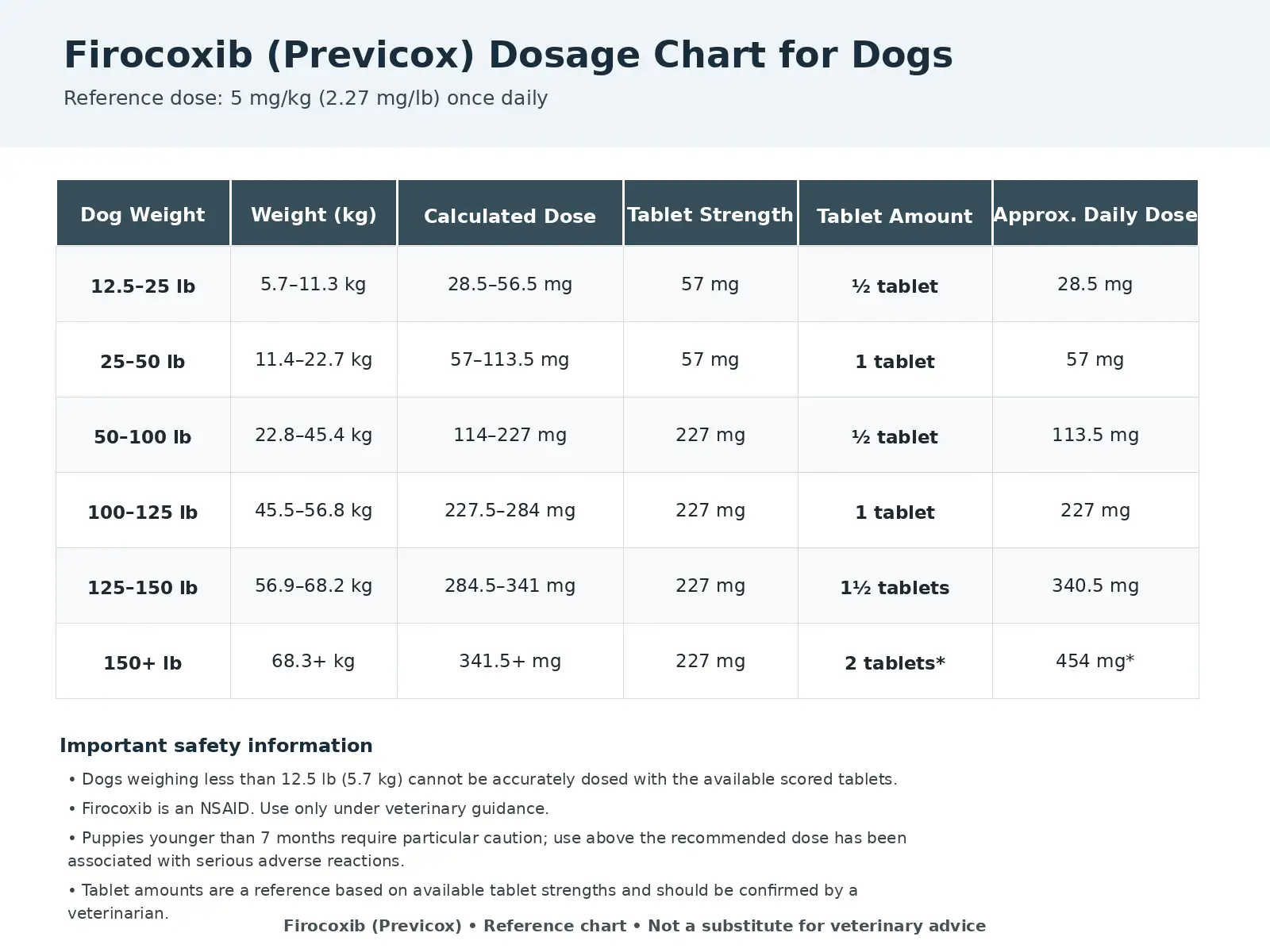
The recommended dose of firocoxib (Previcox) for dogs is 5.0 mg/kg (2.27 mg/lb). The use of firocoxib in puppies younger than 7 months has been associated with serious adverse reactions, including death. Always consult your veterinarian before administering firocoxib to your dog.


Paid Links - As an Amazon Associate, I earn from qualifying purchases.
Due to available tablet strengths and scoring, dogs weighing less than 12.5 lb (5.7 kg) cannot be accurately dosed with firocoxib tablets.
Firocoxib Dosage Chart for Dogs by Weight
| Dog Weight | Dog Weight | Calculated Dose at 5 mg/kg | Tablet Strength | Approx. Tablet Amount | Approx. Daily Dose |
|---|---|---|---|---|---|
| 12.5–25 lb | 5.7–11.3 kg | 28.5–56.5 mg | 57 mg | ½ tablet | 28.5 mg |
| 25–50 lb | 11.4–22.7 kg | 57–113.5 mg | 57 mg | 1 tablet | 57 mg |
| 50–100 lb | 22.8–45.4 kg | 114–227 mg | 227 mg | ½ tablet | 113.5 mg |
| 100–125 lb | 45.5–56.8 kg | 227.5–284 mg | 227 mg | 1 tablet | 227 mg |
| 125–150 lb | 56.9–68.2 kg | 284.5–341 mg | 227 mg | 1½ tablets | 340.5 mg |
| 150+ lb | 68.3+ kg | 341.5+ mg | 227 mg | 2 tablets | 454 mg* |
Important Clinical Reminders
- The No-Loading Dose Advantage: Unlike some older veterinary anti-inflammatories, Firocoxib does not require a double “loading dose” on day one. Start with the standard table dose.
- Score-Line Splitting: The tablets are specially scored to split cleanly into halves. Do not attempt to split them into uneven quarters unless specifically directed by your veterinarian using a precision pill cutter.
- Washout Periods: If you are switching a dog to Firocoxib from another NSAID (like Carprofen or Meloxicam) or a steroid (like Prednisone), veterinarians always recommend a 5 to 7 day washout period to clear the old medication from the system and prevent severe gastrointestinal side effects.
What Is Firocoxib for Dogs?
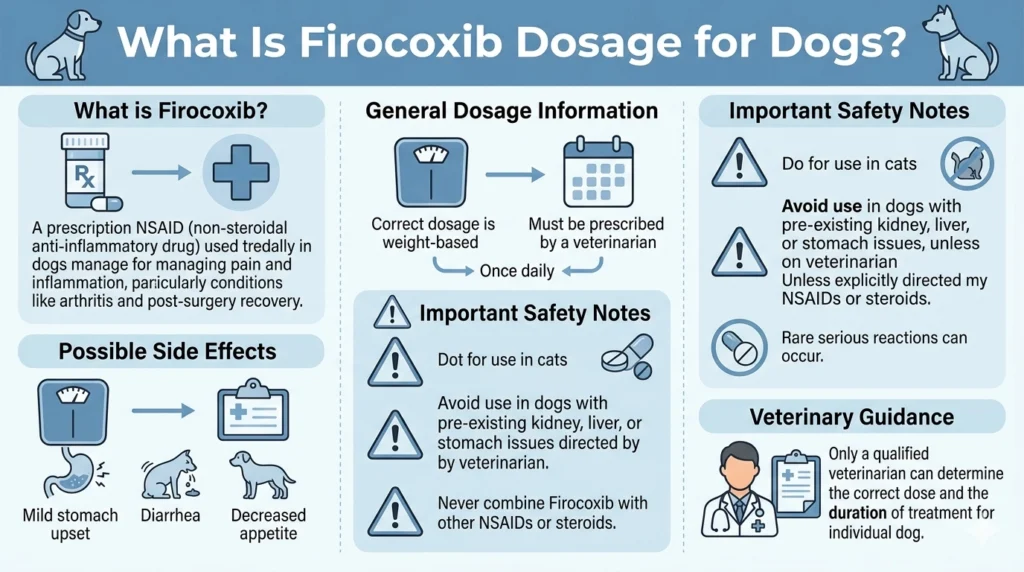
Firocoxib, more popularly known as Previcox dosage for dogs, is a prescription non-steroidal anti-inflammatory drug (NSAID) that is prescribed to help alleviate pain, inflammation, swelling and stiffness in the dog. It is FDA-approved for treating osteoarthritis pain and for controlling postoperative pain and inflammation after certain soft-tissue and orthopedic surgeries.
Firocoxib dosage for dogs is effective because it inhibits an enzyme, called cyclooxygenase-2 (COX-2), that helps make chemicals that cause inflammation (prostaglandins).
These chemicals are responsible for the swelling, inflammation and pain messages in damaged and arthritic tissues. Firocoxib is a selective inhibitor of COX-2 and is relatively inactive at COX-1, which might lead to a reduction in some of the digestive side effects and might be kinder to the stomach and intestines than some traditional NSAIDs.
Most dogs do well on Firocoxib dose for dogs when used properly, both for short term and long term pain management. It can also be used off-label by veterinarians for inflammation or pain associated with other diseases such as some skin diseases, colorectal polyps and some cancers.
It is prescription-only medicine and is usually marketed as chewable tablets in various strengths from vets and veterinary pharmacies. Not approved or recommended for use in cats.
How Is Firocoxib Used in Dogs?
Previcox (firocoxib) is a prescription NSAID medication that is used to treat pain, inflammation and swelling in dogs. It is approved by FDA for the treatment of osteoarthritis pain and postoperative pain after soft tissue surgery and orthopedic surgery.
Firocoxib is used to treat:
- Arthritis (chronic) with joint pain relief.
- Post-operative pain and swelling.
- Treatment of acute pain due to injury.
- Some off-label uses for pain associated with fever, inflammation or cancer
Medication is typically taken orally once a day either with or without food as a chewable tablet. Stomach upset may occur; it may be better given with a small meal or treat.
Firocoxib is a prescription drug, so it is important that pet owners always follow their veterinarian’s directions for administration and that they discuss all other medications, supplements, and herbs their dog is taking with their veterinarian before beginning treatment.
What Are the Benefits of Firocoxib for Dogs
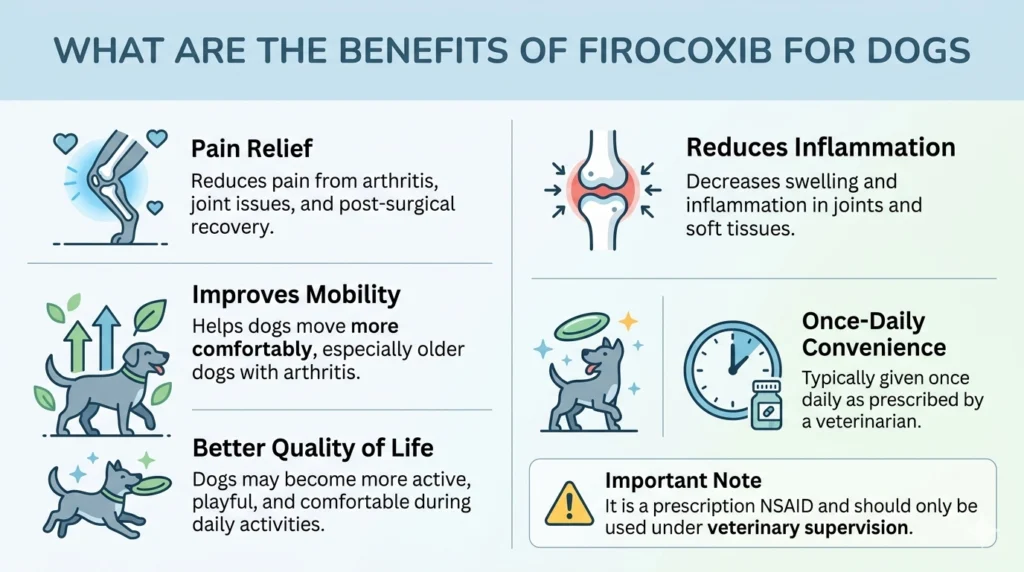
Previcox (firocoxib) is useful for dogs that suffer from pain and inflammation for a few reasons. It is an FDA approved veterinary NSAID that is widely used due to its effectiveness, convenience, and most dogs are quite tolerant of it.
Firocoxib has some important advantages, such as:
- Assists to alleviate pain, inflammation and stiffness from osteoarthritis and other painful conditions
- Well tolerated at normal veterinarian recommended doses
- Selective COX-2 activity may make selective COX-2 inhibitors less likely to irritate the stomach or intestines than some traditional NSAIDs.
- Easy to administer with an easy chewable tablet, for convenient daily dosing
- May be used as a short-term postoperative pain reliever or as a long-term arthritis treatment when the veterinarian prescribes it.
Does Firocoxib Have Warnings or Side Effects in Dogs?
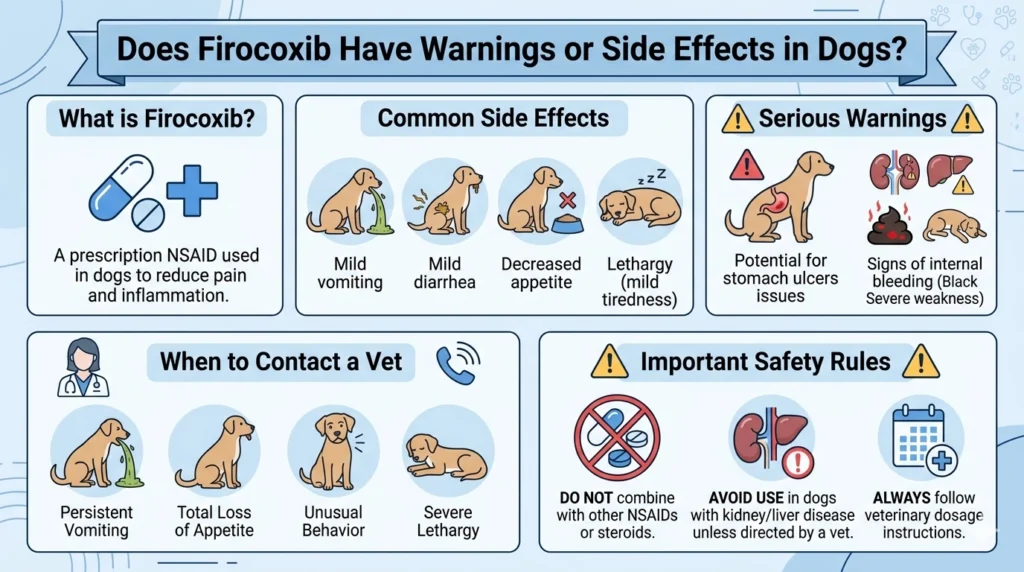
Firocoxib drugs for dogs is a prescription non-steroidal anti-inflammatory drug (NSAID) that treats inflammation and pain in dogs; however, it may have side effects and should only be administered with caution as it may not suit every dog.
It should only be administered under veterinary supervision, to minimise the risk of complications.
Important Warnings
- Not to be used in the dog that is allergic to Firocoxib or other NSAIDs
- Do not use on puppies less than 7 months old.
- Do not use if the dog has stomach or intestinal ulcers.
- Caution should be used in dogs with kidney, liver or heart disease.
- Special care should be taken with patients who are dehydrated, debilitated or with low blood pressure.
- Safety in pregnant, breeding or nursing dogs has not been completely documented
- Not recommended for dogs that have a bleeding disorder or who are on some interacting medications.
- Tablet limitations may mean that very small dogs (<12.5 lb / 5.7 kg) may not be dosed accurately.
Common Side Effects
- Throwing up or slight stomach upset
- Loss of appetite
- Stools that are loose or soft
- sluggishness, loss of interest or drive
- A need for more urination or drinking.
- Mild behavioral changes
The following items are capable of causing serious side effects and should be taken to a veterinarian for immediate attention.
- Vomiting, severe or persistent (including blood)
- Black, tarry or bloody stools
- Yellowing of gums, eyes, or skin (jaundice)
- Feeling very tired or weak
- Alterations in the kidney or liver function tests
- Swelling, hives or difficulty breathing
- A seizure or severe neurologic symptoms (rarely).
- The heart is beating out of control or there are big changes in behavior.
Safety Guidance
- If worrisome symptoms occur, discontinue the drug and call a veterinarian right away.
- In severe reactions or overdose, emergency care might be necessary.
- Side effects are quickly identified and treatment is initiated in time, most dogs recover.
- Remember to keep medicine locked up away from pets and children.
While Firocoxib can be a valuable aid in managing pain and inflammation in dogs, it is important to use it safely by adhering to proper dosage instructions, monitoring for side effects, and consulting a veterinarian.
Does Firocoxib Interact With Other Medicines in Dogs?
Firocoxib medication for dogs by weight may interact with other medicines, making them less effective or causing serious side effects.
Before beginning treatment, you should make your veterinarian aware of any prescription or over-the-counter medications, vitamins, supplements, and herbal medications your dog is taking.
Medicines That May Interact With Firocoxib
- Other NSAIDs (pain relievers): NSAIDs including meloxicam, deracoxib, or carprofen — may cause more side effects
- Aspirin: increased risk for stomach or intestinal bleeding
- Corticosteroids (prednisone, dexamethasone, or cortisone): may have gastrointestinal and other side effects
- ACE inhibitors (such as enalapril or benazepril) – may decrease the effectiveness of controlling heart or blood pressure.
- Angiotensin receptor blockers (ARBs): Telmisartan can affect how well the blood pressure is controlled or the amount of protein in the urine.
- Diuretics: Diuretics like furosemide or hydrochlorothiazide can decrease kidney function and fluid balance regulation.
- Digoxin: may raise the level of digoxin and lead to toxicity.
- Anticoagulants / blood thinners: medications like warfarin or clopidogrel may have a risk of bleeding
- Antifungal drugs (e.g fluconazole): May have interaction effects
- Radiation therapy drugs: radiation therapy may increase the toxicity of chemotherapy drugs, such as methotrexate.
- Increased blood levels of protein-bound drugs (like phenytoin or valproic acid) which means that the effects of these drugs are increased.
- Other medications that act on the kidneys or blood pressure: can increase risk for adverse reactions.
Important Safety Advice
- Do not co-administer Firocoxib with other NSAIDs or steroids unless otherwise directed by a veterinarian.
- Allow adequate washout period between pain medications.
- Use with caution when combined with heart, kidney or blood pressure medicines.
- Make sure to give your veterinarian a complete list of all of the medications you are giving your dog, including supplements and herbal products.
To prevent possible drug interactions and to ensure that firocoxib is used safely, it should only be used under the guidance of a veterinarian.
You May Also Like to Read:
- Cefpodoxime Dosage For Dogs: Calculator, Chart & Safe Guide
- NexGard Dosage For Dogs Calculator: Safe Dosage Guide & Chart
FAQs
What are the conditions for storage of Firocoxib dosage for dogs?
Store Firocoxib at room temperature (59° to 86°F or 15° to 30°C) in a tightly closed container out of the sight and reach of children and pets, and protected from moisture and light.
If you forget a dose, what do you do?
In the event of missing a dose, take as soon as remembered unless it is near the time of the next dose. When it is close to the next dose, skip the dose and resume normal dose schedule. Never double the dose.
If my dog takes too much Firocoxib drug, what will happen?
Chewable tablets can be tempting to dogs if not safely stored so dogs may accidentally eat them. Call a Vet or Emergency Clinic immediately if an overdose is suspected.
When does Firocoxib work?
Firocoxib begins to work in 1 to 7 hours, with improvement in pain and inflammation occurring over time.
How long does Firocoxib stay in a dog’s system?
It stays in the body for several days, and has a half-life of approximately 7.8 hours, which can be longer in dogs with liver or kidney disease.
Is it safe to take Firocoxib for a long time?
It can be used for long term pain management in dogs with a veterinarian’s supervision and guidance.
If my dog shows signs of a side effect, what should I do?
Discontinue if any unwanted effects are noted and consult your veterinarian promptly for advice and alternative treatments.
Is Firocoxib safe for all dogs?
No, it should be used with caution in dogs with kidney, liver or heart disease, in very young puppies and dehydration and should only be used under veterinary supervision.
Final Thoughts
Firocoxib for dogs is a popular prescription NSAID that helps with pain, inflammation and mobility problems in dogs, particularly when suffering from arthritis or post-surgical recovery. Under the guidance of a veterinarian, it can be a game-changer for many pets, enhancing their comfort and quality of life when used correctly.
As with any NSAID, however, careful dosing and monitoring is important to minimize side effects, especially in dogs with underlying health issues. Regular veterinary checkups, proper storage, and strict adherence to dosing instructions are essential for safe and effective use.