Entederm Ointment Dosage & Administration Calculator
For Canine (Dog) Use Only
© medsdog.com
EnteDerm® Ointment is a topical prescription preparation that is commonly used for many bacterial, fungal (yeast) and inflammatory skin and ear diseases in dogs. When looking for the right EnteDerm Dosage For Dogs, it should be recognized that this medicine is not dosed based on dog weight, as oral medications are. The volume and frequency are rather based on the place of the infection, the severity of the situation and your vet’s treatment plan.
EnteDerm medication can be used to control infection, reduce inflammation and relieve itching on areas of the skin, within the external ear canal, between the toes, around the anal glands or on other areas of the body.

Paid Links - As an Amazon Associate, I earn from qualifying purchases.
It is regularly used by veterinarians for superficial bacterial skin infections, ear infections, yeast infections, hot spots and other localized inflammatory skin issues. When used as directed, EnteDerm can help alleviate discomfort and promote rapid healing, by addressing both the infection and inflammation.
This comprehensive guide provides information on the correct EnteDerm dosage for dogs, entederm ointment for dogs without vet prescription, how often to apply it, dosage charts, treatment length, EnteDerm calculators, uses, ingredients, benefits, potential side effects, safety guidelines, and answers to common questions. If your dog is suffering from an ear infection, a hot spot or another localized skin infection, this article will help you understand the proper use of EnteDerm, and the safety of using it as directed by your vet.
What is Entederm Dosage For Dogs?
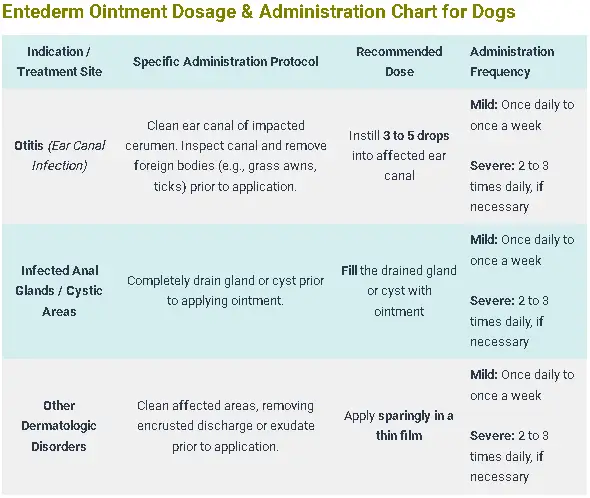
The dosage of Entederm for dogs depends on the condition and does not consider the dog’s weight. Entederm is a topical ointment that contains nystatin, neomycin sulfate, thiostrepton, and triamcinolone acetonide, and is often used for ear infections (otitis), infected anal glands, and a variety of dermatologic conditions.
The recommended dose for ear infections in dogs is 3 to 5 drops into a clean, debris-free ear canal. If the infection or cyst is in the anal glands, the area needs to be drained before it is packed with ointment. In general skin conditions, apply sparingly, and in a thin layer, on clean skin.
The frequency of application varies with the severity of the inflammation, from once a day or a week for mild inflammation to two to three times daily as needed for severe inflammation, to decreasing as clinical improvement occurs. Always seek the advice of a veterinarian for proper diagnosis and safe handling procedures.
Entederm Ointment Dosage & Administration Chart for Dogs
Active Ingredients: Nystatin, neomycin sulfate, thiostrepton, and triamcinolone acetonide ointment.
Dosage & Protocol Summary
| Indication / Treatment Site | Specific Administration Protocol | Recommended Dose | Administration Frequency |
| Otitis (Ear Canal Infection) | Clean ear canal of impacted cerumen. Inspect canal and remove foreign bodies (e.g., grass awns, ticks) prior to application. | Instill 3 to 5 drops into affected ear canal | Mild: Once daily to once a week Severe: 2 to 3 times daily, if necessary |
| Infected Anal Glands / Cystic Areas | Completely drain gland or cyst prior to applying ointment. | Fill the drained gland or cyst with ointment | Mild: Once daily to once a week Severe: 2 to 3 times daily, if necessary |
| Other Dermatologic Disorders | Clean affected areas, removing encrusted discharge or exudate prior to application. | Apply sparingly in a thin film | Mild: Once daily to once a week Severe: 2 to 3 times daily, if necessary |
Important Usage Notes & Safety Guidelines
- Treatment Duration: Frequency of treatment should be decreased as clinical improvement occurs.
- Handling Precautions: Always wear gloves during application or wash hands thoroughly immediately after applying the ointment.
- Anesthetic Option: If using for treatment of the ear canal (Otitis), it may be advisable to use a local anesthetic first, e.g., Proparacaine Hydrochloride Ophthalmic Solution.
What Is EnteDerm?
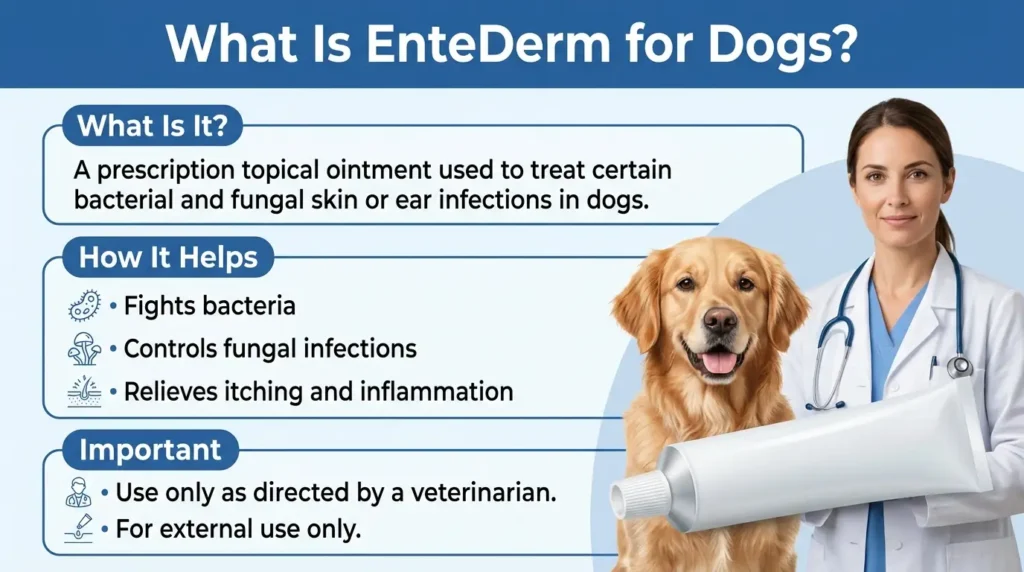
EnteDerm is a prescription topical ointment for dogs and cats, which treats a variety of bacterial, fungal (yeast) and inflammatory skin and ear conditions. Commonly used by veterinarians for ear infections, dermatitis, dermatitis hot spots, minor skin infections, infected cuts and skin irritation. It is used on the skin, in the ear canal, between the toes and around the anal glands and can be used as a treatment for many localised infections.
EnteDerm medicine is a gel base with polyethylene and mineral oil containing nystatin, neomycin sulfate, thiostrepton and triamcinolone acetonide. These active ingredients combine to offer anti-bacterial and anti-fungal, anti-inflammatory and anti-itch properties. EnteDerm speeds up healing of irritated skin and reduces inflammation, swelling, itching and discomfort upon use, targeting bacteria and fungi.
EnteDerm dog dosage is designed to be applied to the skin and ears, but not the eyes. While sometimes it can only irritate the eye, it can also cause a corneal ulcer if exposed to the eye accidentally, and as it is a corticosteroid, it is absorbed more easily through the eye, which may cause temporary steriod-related symptoms such as changes in appetite, increased thirst, and increased urination.
In the event that the ointment does accidentally enter a pet’s eye, it is important to rinse the eye thoroughly with sterile saline, keep a close eye on the eye, and seek veterinary advice if squinting, rubbing the eye or persistent discomfort occurs.
What Is EnteDerm Used for in Dogs?
EnteDerm is a topical prescription ointment that treats many bacterial, fungal (including Candida albicans) and inflammatory skin and ear diseases in dogs. It is also often used to alleviate itching, redness and discomfort and provide treatment for the underlying infection. The topical ointment is applied directly to the affected area and should be entederm ointment use as directed by a vet.
Entederm Ointment For Dogs Uses
- The treatment of acute and chronic otitis (ear infections) which comes from other causes.
- Treating bacterial infections of the skin.
- Treatment of fungal and yeast (Candida albicans) infections of the skin.
- To decrease inflammation, itch and irritation caused by skin conditions.
- Treating ear, paw and skin fold infections and irritation.
- Helping heal paw lesions and localized skin problems.
- Treatment for anal gland infection.
- Treatment of dry/discharge dermatitis due to inflammatory skin conditions.
- Treatment of dermatologic conditions associated with, complicated by or predisposing to bacterial and/or yeast infections.
- As a supplement treatment for dermatitis in parasitic infestation.
- Relieving dogs that suffer from symptoms of allergies, including itchy skin and ears, and promoting comfort and healing.
- Helping to control chronic ear infections (when used as directed by a veterinarian) especially in dogs that are prone to recurrent ear problems.
Benefits of EnteDerm For Dogs
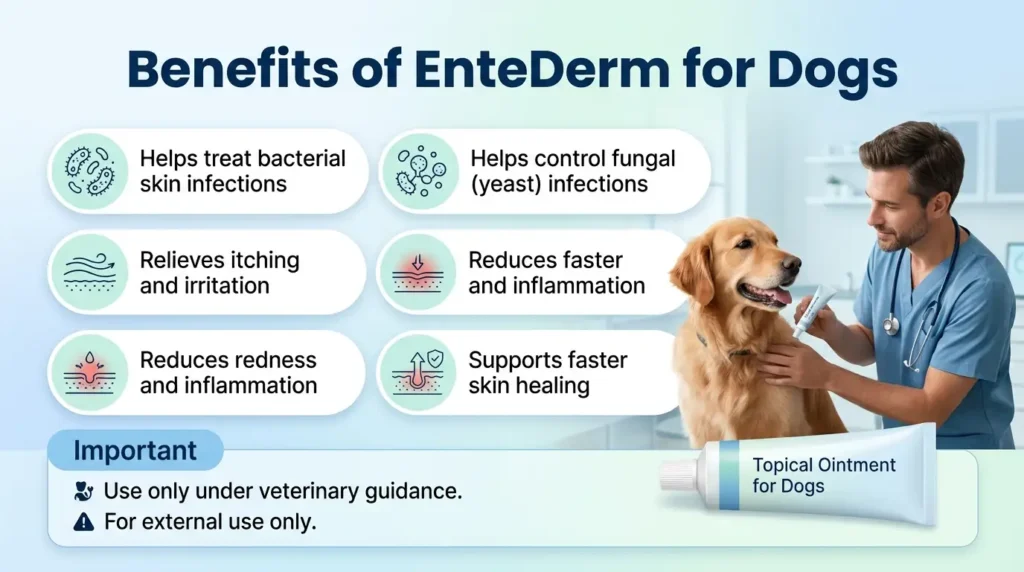
EnteDerm dosage for dogs offers four-in-one activity in order to treat a variety of skin and ear conditions in both dogs and cats. Resistant to discomfort, it has a mix of ingredients that will provide anti-itch, anti-inflammatory, anti-fungal, and antibacterial benefits, all in one.
EnteDerm offers several benefits, such as:
- Gives protection against bacterial skin and ear infections.
- It has antifungal properties that can combat fungal and Candida albicans (yeast) infections.
- It has anti-inflammatory properties that help to reduce inflammation, redness and swelling.
- Helps relieve itching and irritation for improved pet comfort.
- Useful for acute and chronic otitis (ear infections) due to a variety of factors.
- Helps to control dermatitis for dryness and discharge for inflammatory skin conditions.
- Great for skin irritation and paw problems.
- Helps treat anal glands infections.
- Helps manage dermatologic disorders caused by, complicated by, or at risk of bacterial or yeast infections.
- Can be used as an adjunct treatment for dermatitis from parasitic infestation.
- Can be used for both pets and dogs.
- Four active ingredients that work in synergy for topical action against several skin and ear diseases.
EnteDerm Side Effects
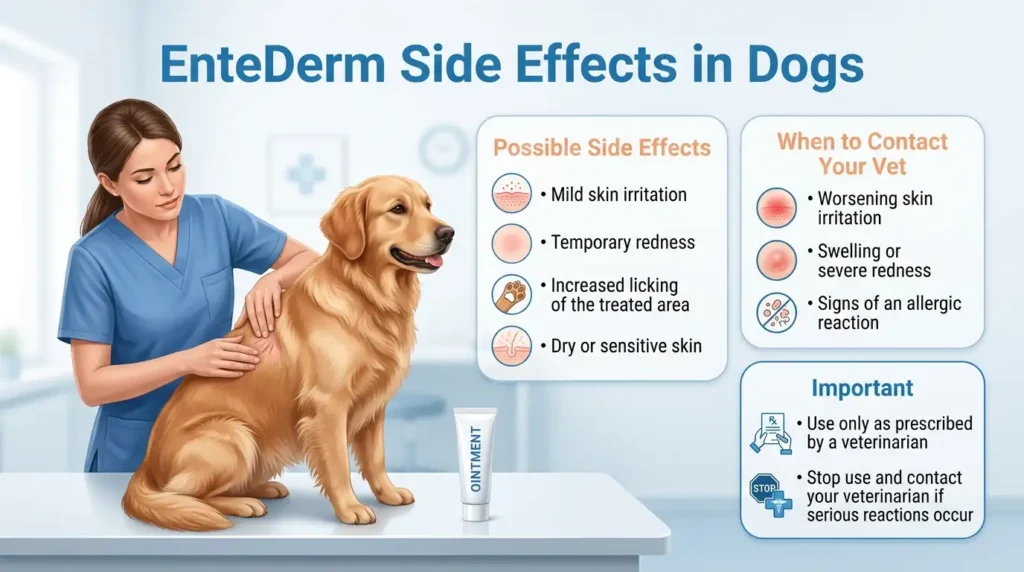
EnteDerm is well tolerated when used as directed, but as with all drugs with a corticosteroid content, some dogs may experience side effects. The majority of side effects come with long or multiple steroid administration and pets should be monitored for side effects during treatment. If you notice any unusual symptoms, contact your vet as soon as possible.
Some side effects of EnteDerm are:
- Increased thirst (polydipsia).
- Excessive dilute urine or increased urination (polyuria).
- Vomiting.
- Diarrhea sometimes with blood.
- High liver enzymes (SAP, SGPT/ALT).
- Temporary hearing loss, especially when treated with products containing steroids for otitis (ear infections).
- Cushing’s syndrome, which is associated with the use of steroids for a long time or in high doses.
There are certain situations in which you need to get help from your veterinarian.


Paid Links - As an Amazon Associate, I earn from qualifying purchases.
If your dog develops: Stop using EnteDerm and contact your veterinarian:
- Change or loss of hearing while on treatment.
- Persistent vomiting or diarrhea, especially if it is bloody.
- Frequent and excessive thirst or urination, becoming more severe and persistent.
- Other unusual or progressive signs or symptoms.
Hearing has been known to improve when the medication has been removed in some instances of temporary hearing loss, but veterinary evaluation is recommended if hearing dysfunction happens.
EnteDerm Cautions
Do not use EnteDerm other than as directed by your veterinarian. It is important to make sure that your animal is not in a condition where the drug is not suitable for them, before beginning treatment, to minimize the risk of complications.
When using EnteDerm, remember:
- Before use, check the ear canal for any ruptured eardrum (tympanic membrane).
- Avoid use if your pet has a ruptured eardrum, because this will allow you to be at risk of spreading infection to the middle ear, which may result in damage to the cochlea or the vestibular apparatus.
- Stop treatment right away if your pet shows any signs of hearing loss or signs of vestibular dysfunction (balance problems) while on treatment and contact your veterinarian.
- Avoid use in pets with a history of allergy to nystatin, neomycin sulfate, thiostrepton, triamcinolone acetonide or any component of the ointment.
- Apply topically only – not via the oral route.
- Against animals with deep skin infections except as directed by the veterinarian.
- Use with caution in pregnant or lactating pets, and only if recommended by a veterinarian.
- Gloves should be worn by pregnant people when using the ointment.
- For allergic reactions, epinephrine might be needed under veterinary care.
- In case of accidental exposure to a human, get medical advice or contact a physician immediately.
EnteDerm Precautions
EnteDerm is considered to be generally well tolerated when used as directed with skin reactions and systemic side effects being rare. Because it does have a corticosteroid however, pets should be monitored during treatment, particularly if using for long periods of time and/or applied over large areas.
Some of the key precautions to take are:
- Not for use in the treatment of deep abscesses, deep seated infections or inflammation of the lymphatic vessels; these often require parenteral (injectable) antibiotic treatment.
- Not recommended for deep wounds, puncture wounds, or serious burns.
- Systemic effects can be produced by topically applied cortisol steroids, although this is rare.
- Watch your pet for signs of weight gain, polyuria and polydipsia as these can be signs of corticosteroid absorption.
- A few pets may become sensitive to neomycin. If redness, irritation or swelling continues or becomes more pronounced, discontinue the ointment and consult the veterinarian.
- Avoid using the ointment if there is pus because this can help the infection to spread.
- Do not take orally or inject, because use of any steroids, either cortisone or other, can cause the body to stop producing its own corticosteroids after treatment.
- Store EnteDerm and all medicines out of your children’s reach.
- Keep an eye on your pet while treatment is in progress and ask your vet if the symptoms get worse or new symptoms appear.
EnteDerm Storage Instructions
Store EnteDerm according to the packaging to help maintain its safety and effectiveness.
- 240 mL bottle: Keep at a temperature less than 86°F (30°C).
- 7.5 mL, 15 mL and 30 mL tubes: Keep at room temperature.
- Do not use excessive heat (over 104°F / 40°C).
- Keep the medication tightly closed when not in use.
- Keep out of the reach of children and pets and store in a cool, dry place.
You May Also Like to Read:
- Eradimite Dosage For Dogs: Calculator, Chart & Safe Guide
- Effitix Dosage For Dogs: Calculator, Chart & Safe Guide
FAQs
Is it okay to use EnteDerm Ointment on open wounds?
EnteDerm is not suitable for deep wounds, puncture wounds, severe burns or deep abscesses. For use on surface conditions of the skin and ears only, as directed by your veterinarian.
What should I do in preparation to using EnteDerm on the affected area?
Gently clean and ensure that the affected area is completely dry before using EnteDerm. Trim or remove any excess hair around the lesion to enhance contact with the skin, which will help medication to work effectively.
Do I need to discourage my pet from licking EnteDerm after it is applied?
Yes. Avoid letting your pet lick the area, for the next 20-30 minutes or so, to ensure the ointment is absorbed correctly and to minimize the chance of your pet ingesting it.
Is it safe to use EnteDerm while pregnant?
EnteDerm medication should not be used in pregnant animals unless it is considered by your veterinarian to be of greater benefit than risk. Some studies in animals have linked birth defects and pregnancy problems to corticosteroid use.
If my pet has an allergic reaction to EnteDerm, what should I do?
Stop using the ointment at once if your pet becomes unwell, develops hives, facial swelling or other severe redness and swelling after using it, and consult a veterinarian as soon as possible.
If my pet gets excessive amounts (overdose) of EnteDerm what should I do?
If you think your pet has had an overdose, or it has ingested a large amount of the ointment, contact your veterinarian or the nearest emergency animal hospital immediately for advice.
Why should the entire course of EnteDerm treatment be followed?
If your pet starts to look better, treating with EnteDerm for the complete period as prescribed by your veterinarian helps ensure that the infection has been treated and may minimise the risk of antibiotic resistance.
Is EnteDerm a prescription only medicine?
Yes. EnteDerm is a prescription veterinary product and should only be used under the supervision of a licensed veterinarian to ensure that it is suitable for your pet.
Key Takeaways
- EnteDerm is a topical ointment prescription product for dogs and cats that is indicated to treat bacterial, fungal (yeast) and inflammatory skin and ear diseases.
- It is formulated with 4 active ingredients, nystatin, neomycin sulfate, thiostrepton and triamcinolone acetonide.
- EnteDerm for pets offers one medicine, with antibacterial, antifungal, anti-inflammatory and anti-itch benefits.
- It is frequently applied to hot spots, paw lesions, anal gland infections, localized skin infections, acute and chronic otitis.
- Clean and dry affected area before application and avoid letting your pet lick treated area for 20-30 minutes after.
- If your pet has a ruptured eardrum, deep abscesses, deep puncture wounds or serious burns, do not use unless directed by your veterinarian.
- Watch your pet to see if they have any side effects including increased thirst, increased urination, vomiting, diarrhea, or hearing changes, and report them to your vet.
- Store EnteDerm at the recommended temperature and keep it out of the reach of children and pets. Always finish the course of treatment as prescribed by your vet.
Final Thoughts
EnteDerm Ointment Dosage For Dogs is a prescription topical ointment that can be used for a variety of bacterial, fungal and inflammatory skin and ear diseases in dogs and cats. When used under veterinary supervision, it could be effective in treating various conditions like dermatitis, ear infections, paw lesions and localized skin infections due to its antibacterial, antifungal, anti-inflammatory and anti-itch properties.
Always use the ointment as your veterinarian instructs, apply the ointment only to the affected area, use the entire amount of ointment and watch your pet for any abnormal reactions. Discontinue use and ask your veterinarian for advice immediately if symptoms become more severe, do not improve, or if side effects (including any changes in hearing or any signs of allergic reaction) occur.
If used and stored correctly, EnteDerm can aid in a healthy recovery and help make your pet more comfortable and healthier.