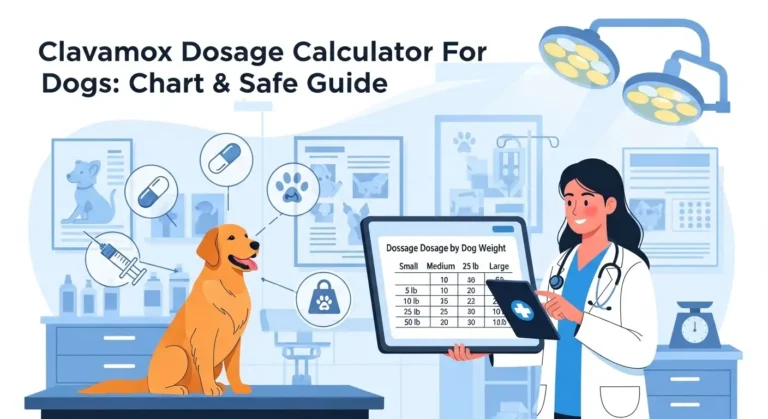
Enrofloxacin for dogs is a fluoroquinolone antibiotic that is commonly used in the veterinary profession to treat bacterial infections in dogs.
It is often prescribed under the brand name of Baytril although there are also generic versions.
Veterinarians rely on this medication as its effectiveness is demonstrated against a wide range of Gram-negative and Gram-positive bacteria and therefore, it is useful in cases where the infection involves many body systems.
Some of the infections treated with enrofloxacin include:

Paid Links - As an Amazon Associate, I earn from qualifying purchases.
- Skin infections
- Urinary tract infections
- Respiratory infections
- Wound infections
- Ear infections
- Specific gastrointestinal infections
This medication works by preventing the DNA replication of the bacteria, which prevents the bacteria from multiplying and gives the immune system the chance to destroy the infection.
Disclaimer: All information in this guide is provided for educational purposes only and should never replace professional veterinary advice.
Enrofloxacin For Dogs Dosage Calculator
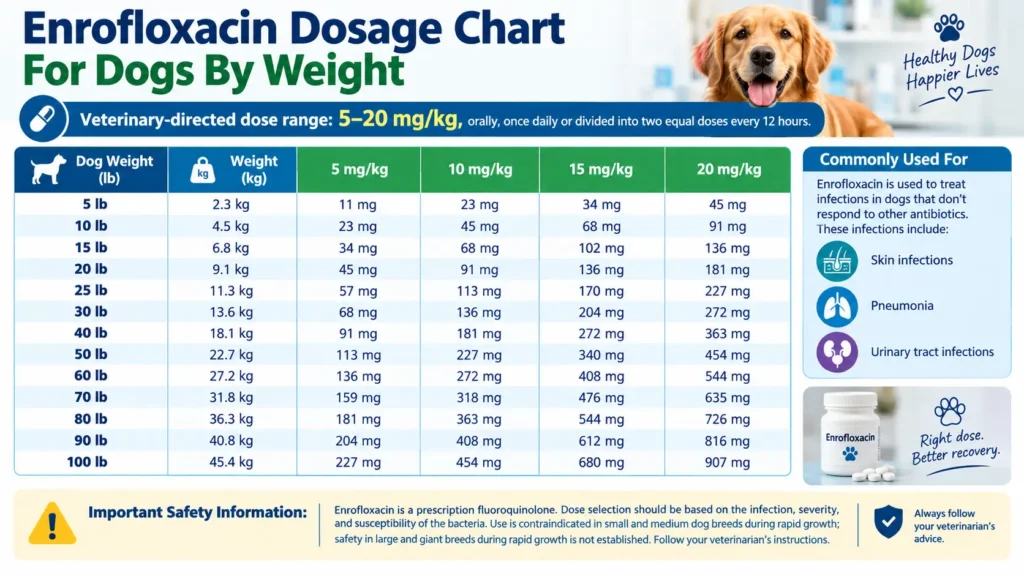
Recommended dose range: 5–20 mg/kg for infections that don’t respond to other antibiotics.
Enrofloxacin dosage for dogs is determined primarily by the size of the dog and the condition that is being treated.
Veterinarians usually prescribe the antibiotic in a dosage range of 5-20 mg/kg of body weight per day, depending on the severity of infection and take medical advice.
An Enrofloxacin for dogs' dosage chart & calculator by weight is helpful for pet owners to roughly know how much dose to give to their dog depending on its weight of the pet to ensure safer and accurate administration under a vet supervision.
Because enrofloxacin dosage for dogs is a powerful prescription antibiotic, it should always be used according to a veterinarian's instructions in order to avoid overdose, side effects or antibiotic resistance.
Key Takeaways
| Key Point | Summary |
|---|---|
| What it is | Enrofloxacin dosage is a broad-spectrum veterinary antibiotic used to treat bacterial infections in dogs. |
| Typical dosage | Most veterinary guidelines suggest 5–20 mg per kg of body weight once daily, depending on the condition. |
| Calculator purpose | A Enrofloxacin for Dogs dosage calculator estimates the dose based on weight to improve accuracy. |
| Veterinary supervision | This medication should only be used under veterinary guidance. |
| Safety | Overdosing can cause side effects such as vomiting, diarrhea, or neurological symptoms. |
How Much Enrofloxacin Can I Give My Dog?
The recommended Enrofloxacin dosage for dogs is 5-20 mg/kg for the treatment of infections in dogs that don’t respond to other antibiotics. These infections include skin infections, pneumonia, and urinary tract infections.
Enrofloxacin Dosage for Dogs by Weight
The appropriate dose of enrofloxacin depends on a number of factors:
- Dog’s body weight
- Severity of infection
- Overall health condition
- Veterinarian recommendations
Most vet references state a dosage amount of 5-20 mg /kg once daily or separate in two doses.
Dosage Formula
To be able to estimate dosage, veterinarians tend to use a weight-based formula.
Dose (mg) = Dog weight (kg) * Prescribed mg/kg
This is simply a multiplication of the dog's weight by the dosage level prescribed.
For example:


Paid Links - As an Amazon Associate, I earn from qualifying purchases.
- Dog weight: 10 kg
- Prescribed dose: 10 mg/kg
Total daily dose = 100 mg
However, this calculation should always be verified by a vet before medication is given.
Enrofloxacin For Dogs Dosage Chart By Weight
| Dog Weight | Weight (kg) | 5 mg/kg | 10 mg/kg | 15 mg/kg | 20 mg/kg |
|---|---|---|---|---|---|
| 5 lb | 2.3 kg | 11 mg | 23 mg | 34 mg | 45 mg |
| 10 lb | 4.5 kg | 23 mg | 45 mg | 68 mg | 91 mg |
| 15 lb | 6.8 kg | 34 mg | 68 mg | 102 mg | 136 mg |
| 20 lb | 9.1 kg | 45 mg | 91 mg | 136 mg | 181 mg |
| 25 lb | 11.3 kg | 57 mg | 113 mg | 170 mg | 227 mg |
| 30 lb | 13.6 kg | 68 mg | 136 mg | 204 mg | 272 mg |
| 40 lb | 18.1 kg | 91 mg | 181 mg | 272 mg | 363 mg |
| 50 lb | 22.7 kg | 113 mg | 227 mg | 340 mg | 454 mg |
| 60 lb | 27.2 kg | 136 mg | 272 mg | 408 mg | 544 mg |
| 70 lb | 31.8 kg | 159 mg | 318 mg | 476 mg | 635 mg |
| 80 lb | 36.3 kg | 181 mg | 363 mg | 544 mg | 726 mg |
| 90 lb | 40.8 kg | 204 mg | 408 mg | 612 mg | 816 mg |
| 100 lb | 45.4 kg | 227 mg | 454 mg | 680 mg | 907 mg |
Important: Enrofloxacin is a prescription fluoroquinolone. The appropriate dose should be selected by a veterinarian. The labeling also warns against use in small- and medium-breed dogs during rapid growth and says safety in large and giant breeds during rapid growth has not been established.
Enrofloxacin Dosage Calculator For Dogs
A Enrofloxacin For Dogs Dosage makes it easy to estimate the amount of medications according to weight.
How a Calculator Works
Most veterinary dosage calculators involve three steps:
- Enter the weight of the dog (kilograms or pounds)
- Choose the range of dosages recommended by a veterinarian.
- The calculator takes the weight and multiplies it by mg/kg dosage to estimate the daily dose.
Advantages of Enrofloxacin For Dogs Dosage Calculator
- Mitigates Risk of Calculations Errors
- Helps pet owners to understand veterinary instructions
- Helps to provide quick weight based estimates
- Useful in planning of medication
However, having a calculator or computer should never replace professional veterinary advice.
Common Uses of Enrofloxacin for Dogs
Veterinarians prescribe enrofloxacin for all kinds of bacterial infections.
- Urinary Tract Infections
Dogs affected by bacterial UTIs may be treated with enrofloxacin as it penetrates urinary tissues well.
- Skin and Soft Tissue Infections
Some common uses of this antibiotic include:
- infected wounds
- abscesses
- dermatitis by bacteria
- Respiratory Infections
Enrofloxacin may be helpful in treating infections which affect:
- lungs
- bronchial tubes
- upper respiratory tract
- Ear Infections
Some bacterial ear infections are well treated with fluoroquinolone antibiotics.
How Enrofloxacin Works
Enrofloxacin is a fluoroquinolone antibiotic drug. These drugs disrupt the function of bacterial enzymes such as DNA gyrase and topoisomerase that are required for DNA replication in bacteria.
When these enzymes are inhibited:
- Bacteria cannot reproduce
- Infection growth stops
- The remaining bacteria are destroyed by the immune system
Because of this mechanism, enrofloxacin is said to be bactericidal, meaning that it actually kills bacteria rather than slowing their growth.
Side Effects of Enrofloxacin For Dogs
Although generally safe if prescribed correctly, there are some dogs which may experience side effects.
Common side effects include:
- Vomiting
- Diarrhea
- Loss of appetite
- Lethargy
Less common but more serious effects can be:
- Neurological symptoms
- Joint Problems in Growing Puppies
- Hypersensitivity reactions
Because fluoroquinolone antibiotics can have an effect on the development of cartilage, veterinarians generally do not want to use these antibiotics in the young, growing dog, unless required.
Safety Precautions and Veterinary Advice
Before administering enrofloxacin to your dog, there are a number of safety considerations that should be made.
Always Follow Veterinary Instructions
Never accelerate or decelerate dosage without veterinary approval.
Avoid Use in Certain Dogs
Veterinarians may not use enrofloxacin in:
- very young puppies
- dogs with seizure disorders
- dogs that are known to be sensitive to fluoroquinolones
Complete the Entire Course of Treatment
Early termination of antibiotics may cause:
- infection relapse
- antibiotic resistance
Drug Interactions
Enrofloxacin drug interactions are possible.
The following are possible interactions:
- antacids that contain aluminum or magnesium
- some anti-inflammatory medications
- other antibiotics
Always tell your veterinarian about all medication/supplements that your dog is taking.
Storage and Administration Tips
Proper storage helps in retaining the efficacy of the drug medication.
Examples of recommended practices are:
- store at room temperature
- avoid exposure to moisture and heat
- follow expiration dates
In administering the medication:
- give with food in case of stomach upset
- measure doses carefully
- go according to the prescribed schedule
You May Also Like to Read:
- Imodium Dosage For Dogs By Weight Calculator & Safe Guide
- Penicillin Dosage For Dogs By Weight Calculator & Safe Guide
FAQs
What is the dosage of enrofloxacin for dogs Dosage?
Most veterinary guidelines suggest 5-20 mg per kilogram of body weight per day depending upon the infection and veterinarian instructions.
Can I work out dosage of enrofloxacin at home?
A enrofloxacin for dogs dosage calculator can be used to estimate the proper dosage based on the weight of the dog and the mg/kg amount to be dosed.
However, the final dosage should always be checked with a veterinarian.
Is enrofloxacin safe for all dogs?
While generally safe if prescribed correctly, veterinarians may not want to use it in young puppies, dogs with seizure disorders and may not want to use it in dogs sensitive to fluoroquinolone antibiotics.
How long does it take for dogs to take enrofloxacin?
Treatment time varies according to the infection but is often anywhere from 5 to 14 days or more as recommended by a doctor.
What if the dog gets too much enrofloxacin?
Overdosing may create some of the following symptoms: vomiting, diarrhea, lack of appetite, or neurological effects. If an overdose is suspected then the veterinarian should be contacted immediately.
Final Thoughts
An Enrofloxacin for dogs dosage chart may be a useful tool for learning weight-based dosages and medication amounts.
However, due to the fact that enrofloxacin is a prescription antibiotic it should always be used according to veterinary supervision.
By following veterinary guidelines, ensuring accurate dosage charts are used, and completing the full treatment course, pet owners can help ensure that safe and effective treatment is provided for bacterial infections in dogs.
If you are uncertain of proper dosage or symptoms of your dog become worse on treatment, then please consult with a qualified veterinarian right away.