Oxytetracycline Dosage Calculator For Dogs
Calculate safe dosage guidelines for canine treatment options.
Medication should never be administered without first consulting your veterinarian. The duration of administration depends on the condition being treated, response to the medication, and the development of any adverse effects. Be certain to complete the prescription unless specifically directed by your veterinarian. Even if your pet feels better, the entire treatment plan should be completed to prevent relapse or the development of resistance.
© medsdog.com
Oxytetracycline, commonly marketed as Terramycin®, Liquamycin®, Engemycin®, Oxytetrin®, and Engemycin LA® prevents bacteria that are susceptible to it from growing and multiplying by binding to the 30S ribosomal subunit and inhibiting protein synthesis.

Paid Links - As an Amazon Associate, I earn from qualifying purchases.
Oxytetracycline dosage for dogs is active against many Gram-positive and Gram-negative bacteria as well as some Mycoplasma, Chlamydia, Rickettsia, Borrelia, Leptospira, Anaplasma, Ehrlichia and some protozoal organisms. It may be indicated by laboratory testing or clinical judgment for use in the treatment of various bacterial infections affecting the respiratory tract, eyes, oral cavity, skin, urinary tract, bones, wounds and blood cells under the advice of a veterinarian.
Oxytetracycline medication is a commonly used medication in veterinary medicine, which has been approved for multiple livestock species, but does not have FDA approval for use in dogs. It may, however, be used as an extra-label (off-label) medication by licensed veterinarians in situations where they deem it to be the best treatment. It should not be administered without veterinary advice or a prescription as it may not be effective if dosed incorrectly, and may lead to antibiotic resistance or side effects.
This ultimate guide covers the recommended oxytetracycline dosing rate for dogs by weight, the oxytetracycline dosage chart by weight for dogs, how to calculate oxytetracycline dosage for dogs, oxytetracycline formulations for dogs, its common applications, potential side effects, precautions, and tips on how to ensure it is administered safely under the supervision of your veterinarian.
What is Oxytetracycline Dosage For Dogs?
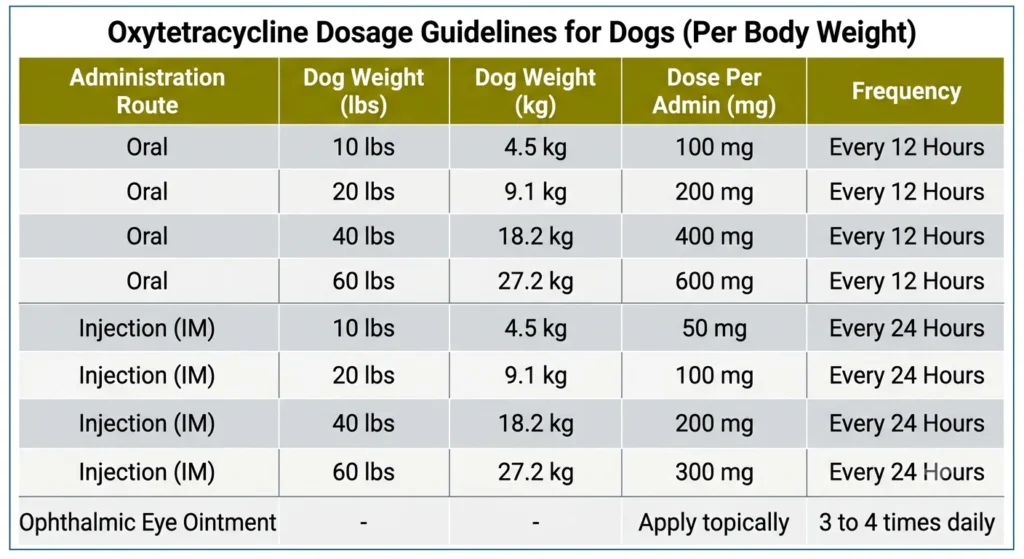
The typical dose of oxytetracycline for dogs is 10 mg/lb (20 mg/kg) orally every 12 hours or 5 mg/lb (10 mg/kg) intramuscularly every 24 hours, depending on the route of administration and severity of the infection. A broad-spectrum antibiotic commonly used for bacterial infections, respiratory problems, and eye problems, it needs to be adjusted for your pet’s specific weight, condition and veterinarian’s instructions.
Always finish the full course of treatment prescribed by a licensed veterinarian to avoid antibiotic resistance and to make sure your animal gets completely better.
Oxytetracycline Dosage Guidelines for Dogs
| Administration Route | Standard Dosage (Imperial) | Standard Dosage (Metric) | Frequency |
| Oral | 10 mg per lb | 20 mg per kg | Every 12 hours |
| Injectable (IM) | 5 mg per lb | 10 mg per kg | Every 24 hours |
| Eye Ointment | Apply topically to affected eye(s) | Apply topically to affected eye(s) | 3 to 4 times daily |
Oxytetracycline Dosage Chart for Dogs By Weight
| Dog Weight (lbs / kg) | Oral Dose (per administration) | Injectable Dose (per administration) |
| 10 lbs (4.5 kg) | 100 mg | 50 mg |
| 20 lbs (9.1 kg) | 200 mg | 100 mg |
| 30 lbs (13.6 kg) | 300 mg | 150 mg |
| 40 lbs (18.1 kg) | 400 mg | 200 mg |
| 50 lbs (22.7 kg) | 500 mg | 250 mg |
| 60 lbs (27.2 kg) | 600 mg | 300 mg |
| 70 lbs (31.8 kg) | 700 mg | 350 mg |
| 80 lbs (36.3 kg) | 800 mg | 400 mg |
Important Notes:
- Duration: Treatment duration depends on the underlying condition, response to medication, and any observed side effects.
- Compliance: Complete the full prescribed course of treatment even if symptoms improve early to avoid relapse or antibiotic resistance.
- Consultation: Always confirm dosage and administration methods with a licensed veterinarian prior to giving medication.
What Is Oxytetracycline?
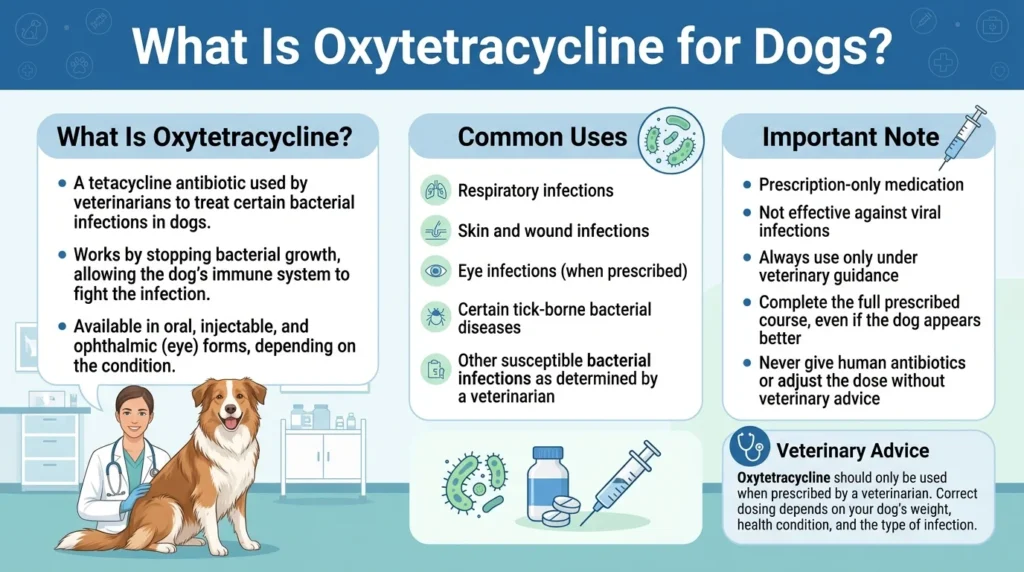
Oxytetracycline (also known as Terramycin®, Engemycin®, Oxytetrin®, Engemycin LA® or Terramycin LA®) is a broad-spectrum tetracycline antibiotic licensed for veterinary use to treat a wide range of bacterial infections in dogs, cats, cattle, sheep and horses. It was first isolated from Streptomyces rimosus in 1948, and binds to the 30S ribosomal subunit of susceptible bacteria, inhibiting bacterial protein synthesis and stopping bacteria from growing and multiplying.
Oxytetracycline dose has activity against a wide range of Gram positive and Gram negative bacteria, including anaerobes and aerobic bacteria, Mycoplasma, Chlamydia, Rickettsia, Borrelia, Leptospira, Anaplasma, Ehrlichia and some intracellular protozoa. In dogs and cats, it can be used to treat a number of bacterial infections, such as eye infections. Terramycin® ophthalmic ointment is an FDA-approved prescription eye ointment that is used to treat certain bacterial eye infections, including conjunctivitis (pink eye), corneal ulcers, keratitis (inflamed cornea), eyelid infections, and some types of eye infections caused by canine distemper.
Oxytetracycline is labeled for certain veterinary purposes, but is often used extra-label (off-label) in some animals when a veterinarian considers it the best available treatment. Remember that not all eye problems are caused by bacteria, and some are caused by viral infection, inflammation or glaucoma; therefore, oxytetracycline should be used under veterinary supervision and in accordance with your vet’s instructions.
How Do I Give My Pet Oxytetracycline?
Oxytetracycline medicine for dogs is available as an oral tablet, and can also be compounded into a liquid if required. Oral oxytetracycline is best absorbed when given on an empty stomach, 1-2 hours before or after feeding. Do not administer it at the same time as milk or other milk based foods or supplements that contain calcium or iron because these can diminish the effectiveness of the medicine.
If your pet has been given a compounded liquid, use the dosing syringe or dosing device that your veterinarian and/or pharmacist has provided to measure each dose for accuracy. Always follow prescription directions and finish the course of treatment; don’t stop when your pet seems better to help clear up the infection and prevent antibiotic resistance.
Uses of Oxytetracycline for Dogs
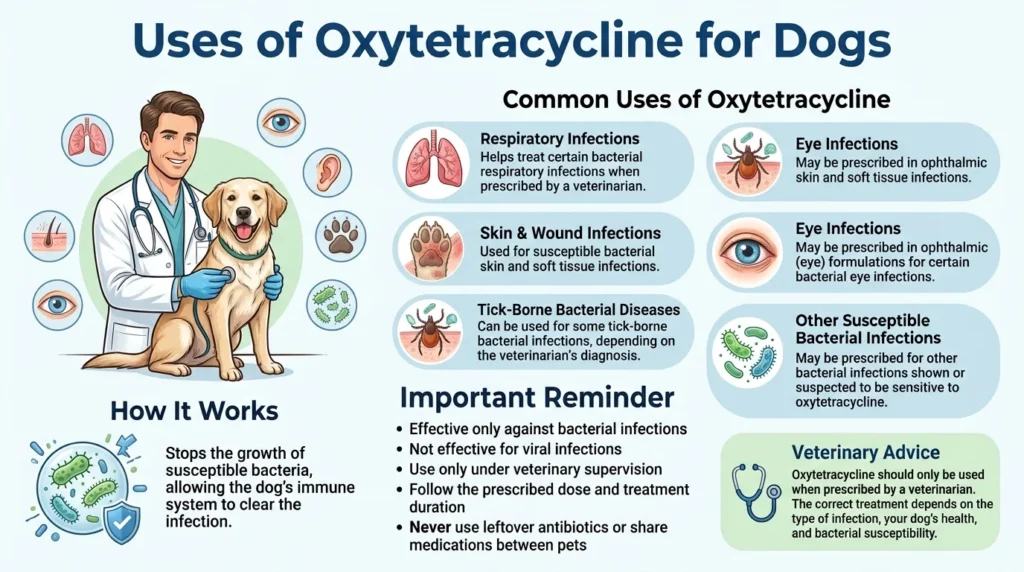
Oxytetracycline is a multi-spectrum tetracycline antibiotic that treats various bacterial infections that are susceptible to it in a dog. It can also be used for some infections caused by protozoa (one cell organisms). Doxycycline can be effective in some cases of tick-borne and blood-borne disease, but is generally the first choice of tetracycline for such disease.
Common uses include:
- Sinus infections, pneumonia
- Infections of the wound, oral cavity and blood cells.
- Some diseases transmitted by ticks, including Rocky Mountain spotted fever, Lyme disease and ehrlichiosis
- Some protozoal infections
- When appropriate, bacterial conjunctivitis (eye infections)
Oxytetracycline will not work on viruses, fungi, mites or intestinal worms and should only be used if a vet has determined that the infection is likely to respond to this antibiotic.
Are There Any Potential Side Effects of Oxytetracycline?
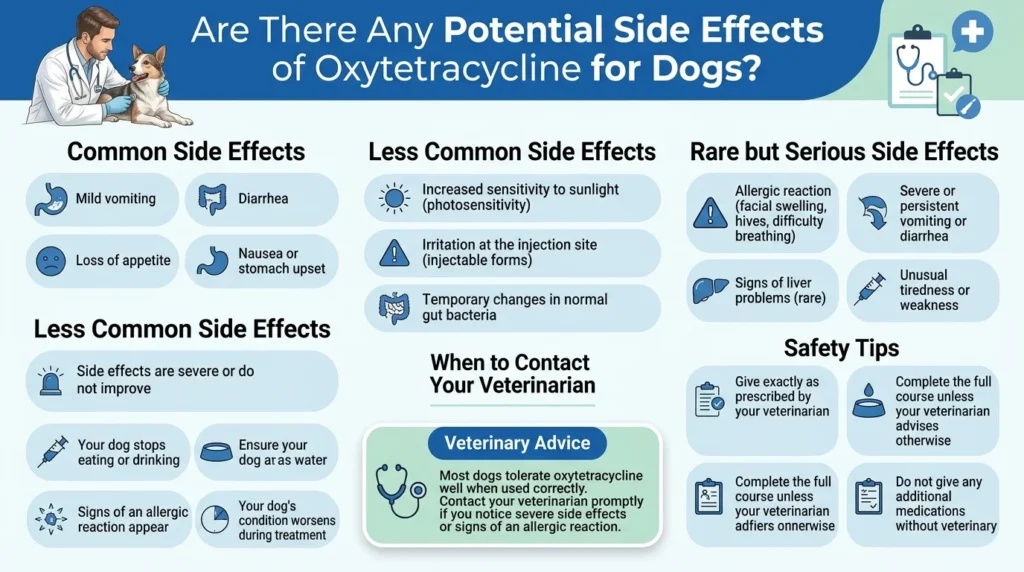
When used by a veterinarian, oxytetracycline dog dosage is safe and effective, however, as with any antibiotic it can have side effects. The reactions are usually mild, affecting the digestive system only, and severe reactions are rare but do need veterinary care.
Side effects are:
- Stomach upset, diarrhea or vomiting
- Loss of appetite (anorexia)
- Redness or photosensitivity (sun sensitivity) of the skin
- Mild eye irritation, mild eye redness (ophthalmic ointment)
- Pain, swelling or sterile abscess at the injection site (long-term injectable preparations)
There are potential serious side effects, although these are rare, including:


Paid Links - As an Amazon Associate, I earn from qualifying purchases.
- Allergic reactions including facial swelling, itching, rash, fever, irregular breathing, weakness or difficulty breathing.
- Liver damage (may lead to jaundice, abdominal pain, severe vomiting or diarrhea, seizures, bleeding, or loss of appetite)
- Damage to the kidneys, particularly with high doses or in dehydrated animals
- Severe hypotension or cardiovascular collapse after rapid IV injection.
- Bacterial or fungal (Candida) superinfection in the event of prolonged use.
- Increased intracranial pressure (very rare)
Important precautions:
- Not for use in animals that are known to be allergic to oxytetracycline or other tetracyclines.
- Use with caution if the animal suffers with liver or kidney disease.
- Do not use in young, growing animals until adult teeth have erupted because tetracyclines can cause permanent yellow-brown discoloration of the teeth, defects in the enamel, and decreased bone growth.
- Do not use during pregnancy as it may lead to increased risk of liver disease and influence development of bones and teeth in the fetus.
- Excessive doses and long-term use can slow down the natural healing process and growth.
- Some medications, such as oral antacids, may interact with the Oxytetracycline so be sure to tell your veterinarian if your pet is taking any other medicines or supplements.
Your dog can develop drug sensitivity after several doses, so be sure to watch your dog during the entire course of treatment. However, if you do see any abnormal reactions or allergic symptoms, discontinue the medication and reach out to your Vet right away.
What are the risk factors for Oxytetracycline?
While oxytetracycline therapy itself is relatively safe under the care of a veterinarian, some dogs are more susceptible to potential side effects and may need to be treated with another medication or closer care.
Avoid using Oxytetracycline in:
- Dogs that have been known to be allergic or sensitive to tetracycline antibiotics
- Pregnant animals, except when the possible gain to the mother is clearly greater than to the developing puppies
Caution in:
- Dogs that have kidney disease
- Dogs suffering from liver disease.
- Growing puppies, especially young ones, as tetracyclines can interfere with normal bone and tooth development.
Check with your veterinarian before beginning oxytetracycline to make sure it is the safest treatment for your dog, especially if your pet is pregnant, has any medical conditions, or is taking any other medications.
Are There Any Drug Interactions with Oxytetracycline?
Oxytetracycline dosage for animals may not work as well or may have more side effects when given together with certain medications or food supplements. Before your dog is started on oxytetracycline, be sure to let your veterinarian know if your dog is taking any other medications (prescription or over-the-counter), vitamins, supplements, or herbal remedies.
Use oxytetracycline with caution if your dog is receiving:
- Beta-lactam antibiotics
- Aminoglycoside antibiotics
- Digoxin
- Furosemide
- Oral antacids or aluminium containing products.
- Retinoid medications
- Warfarin
- Atovaquone
Your veterinarian might want to make changes to the treatment plan, recommend spacing the drugs or watch your dog more closely to avoid possible drug interactions.
You May Also Like to Read:
- Thyro-Tabs dosage For Dogs: Calculator & Complete Guide
- Lidocaine Dosage For Dogs: Calculator & Safe Dosage Guide
FAQs
What should I do if my dog misses a dose of oxytetracycline?
If dose is missed, give it as soon as it is remembered. If it is almost time for the next scheduled dose, skip the missed dose and continue with the regular schedule. Never give two doses at the same time.
Does my dog need monitoring while taking oxytetracycline?
Usually, there is no necessity for special monitoring but your veterinarian may suggest follow-up examinations or lab tests depending on your pet’s condition, use of other medications and infection type.
What if the medicine doesn’t seem to be working?
Your veterinarian may want to see you again after treatment to ensure that the infection is resolved or further tests are required. Vet’s advice should always be followed.
How should I store oxytetracycline medicine?
Oxytetracycline dosage should be kept in its original container in a room temperature away from light. If compounded, read storage instructions and expiration date from your veterinarian or pharmacist. Store away from children and pets.
If my dog accidentally gets too much oxytetracycline, what do I do?
If you think your dog has been overdosed or if your dog has an adverse reaction, you should contact your veterinarian immediately. If you don’t have the ability to take your animal to your regular veterinarian, contact an emergency veterinary hospital or animal poison control center.
When is it time to contact my veterinarian while being treated?
If a side effect occurs, the infection gets worse, your dog doesn’t seem to be getting better, or you are unsure whether your dog is overdosed or if you have any questions about giving the medication, contact your veterinarian.
How much time to give the dog oxytetracycline dosage?
Be sure to administer oxytetracycline for the length of time suggested by your veterinarian, even if your dog starts to feel better before the course is complete. Stopping treatment early may allow the infection to return.
Are there any injectable forms of oxytetracycline that I can give my dog at home?
No. Only a veterinarian should give an injection of oxytetracycline unless you have been expressly directed and trained to do so. Livestock formulations and improper injection methods may be hazardous to dogs.
Do I need a prescription to buy oxytetracycline for my dog?
Yes. Oxytetracycline is a prescription-only drug and should only be used in your dog after proper evaluation by your veterinarian or a licensed veterinary pharmacy.
Key Takeaways
- Oxytetracycline dosage for dogs is a broad-spectrum antibiotics that belongs to the tetracycline family and treats susceptible bacterial infections in dogs.
- This is used off label in dogs and should only be used under veterinary supervision.
- Dogs should be prescribed the correct dosage of oxytetracycline based on their weight, health condition and type of infection.
- Administer oral oxytetracycline on an empty stomach and do not give with dairy products, calcium, iron or antacids.
- Follow the entire length of the course – even if your dog looks better before the course ends.
- Symptoms include vomiting, diarrhea, loss of appetite and photosensitivity; serious reactions need to be treated immediately by a vet.
- Care should be used when using oxytetracycline in young puppies, pregnant dogs and dogs with liver or kidney disease.
- To prevent drug interactions, be sure to let your veterinarian know of all of the medications and supplements your dog is receiving.
- Keep the medication in a secure location and call the vet right away if you think your dog might have taken too much or if the dog’s condition deteriorates.
Final Thoughts
Oxytetracycline dosage for dogs can be an effective treatment for a variety of bacterial infections in dogs when it is prescribed and used correctly. Because the appropriate dosage depends on your dog’s weight, medical condition, and the type of infection, it should always be given exactly as directed by your veterinarian. Treatment success and the prevention of antibiotic resistance can be improved by completing the full course of treatment, administering as directed and observing your dog for any side effects.
Please consult your veterinarian if you are unsure about how to dose your dog with oxytetracycline or if you notice any symptoms that are out of the ordinary, so they can advise you.