Denosyl® Dosage Calculator for dogs
📌 Recommended Dosage
Denosyl Dosage for dogs is based on your dog’s weight, the strength of the tablet prescribed and your vet’s instructions. As a natural constituent of liver tissue, S-adenosylmethionine (SAMe) is a key part of liver function, cellular metabolism and antioxidant production, and is the basis for Denosyl, a high quality, all-natural veterinary liver support supplement produced by Nutramax Laboratories. It’s suggested to support dogs with liver diseases or elevated liver enzymes, and might improve cognitive function in older dogs where it has a role as a neuroprotective agent.
Denosyl comes in enteric-coated tablets in a variety of strengths, it’s best to take the tablets on an empty stomach, at least an hour before or 2 hours after eating. It is important to note that the tablets should never be split, crushed or chewed as to do so will lead to breakdown of the enteric coating, which would decrease the stability and effectiveness of SAMe. The stabilized form of SAMe that is found in Denosyl is known to be bioavailable, or capable of being absorbed into the blood stream to support the liver and brain.
Under the guidance of your veterinarian, use this supplement safely and effectively with the recommended Denosyl dosage for your dogs based on their weight, the tablet strengths, administration of the tablets, side effects associated with the product, safety precautions, and frequently asked questions.


Paid Links - As an Amazon Associate, I earn from qualifying purchases.
What is Denosyl Dosage For Dogs?
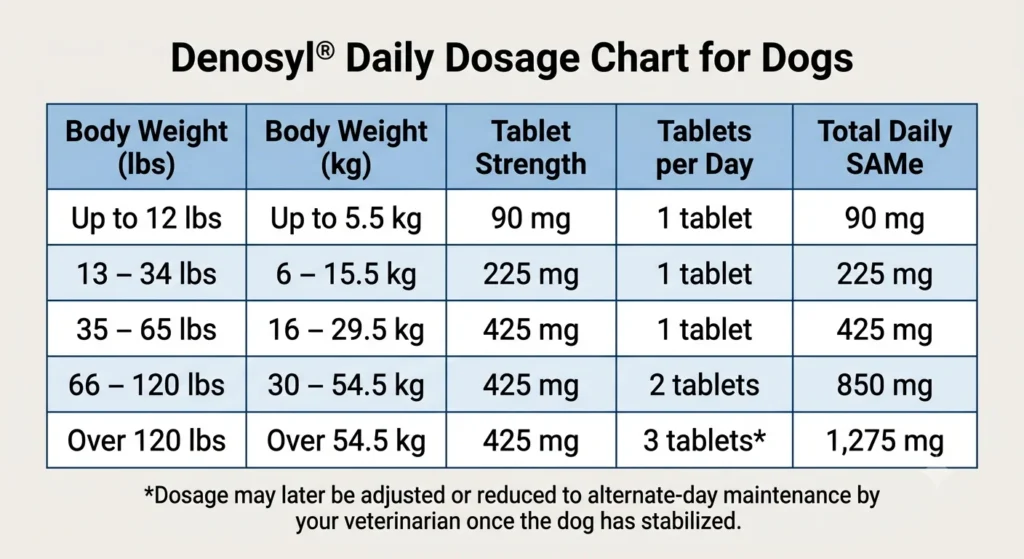
The Denosyl dosing for dogs is a weight-based treatment that provides an active ingredient called SAMe (S-Adenosylmethionine) to aid with liver health and cognitive function. Standard veterinary advice says that the dosage is simple: small dogs up to 12 lbs should take one 90 mg tablet a day, medium dogs (13-34 lbs) should take a 225 mg tablet daily. In dogs that weigh from 35 to 65 lbs, the usual dose of Denosyl is one 425 mg tablet and extra-large dogs weighing 66 to 120 lbs typically take two Denosyl 425 mg tablets each day.
This nutritional supplement should be taken 1 hour before meals or on an empty stomach to ensure maximum absorption; the enteric-coated tablets should never be crushed or broken. Denosyl should be used in dogs after consultation with your vet, as some dogs may require an every other day dosing regime once stabilized.
Denosyl Dosage Chart For Dogs By Weight
| Dog Size | Weight (lb) | Weight (kg) | Daily Dosage | Tablet Strength |
|---|---|---|---|---|
| Small Dogs | Up to 12 lbs | Up to 5.5 kg | 1 tablet daily | 90 mg |
| Medium Dogs | 13 – 34 lbs | 6 – 15.5 kg | 1 tablet daily | 225 mg |
| Large Dogs | 35 – 65 lbs | 16 – 29.5 kg | 1 tablet daily | 425 mg |
| Extra Large Dogs | 66 – 120 lbs | 30 – 54.5 kg | 2 tablets daily | 425 mg (each) |
| Giant Dogs | Over 120 lbs | Over 54.5 kg | 3 tablets daily | 425 mg (each) |
Important Administration Notes
- Timing: Standard enteric-coated tablets must be given on an empty stomach, at least one hour before or two hours after a meal.
- Integrity: Tablets should never be broken or crushed, as moisture damages the active ingredient.
- Maintenance: After an initial stabilization period, a veterinarian may adjust the dosage. Some dogs are maintained on dosing every other day or every third day.
- Formulations: Chewable tablets are also available and follow the same weight-based dosing schedule.
What is Denosyl for Dogs?
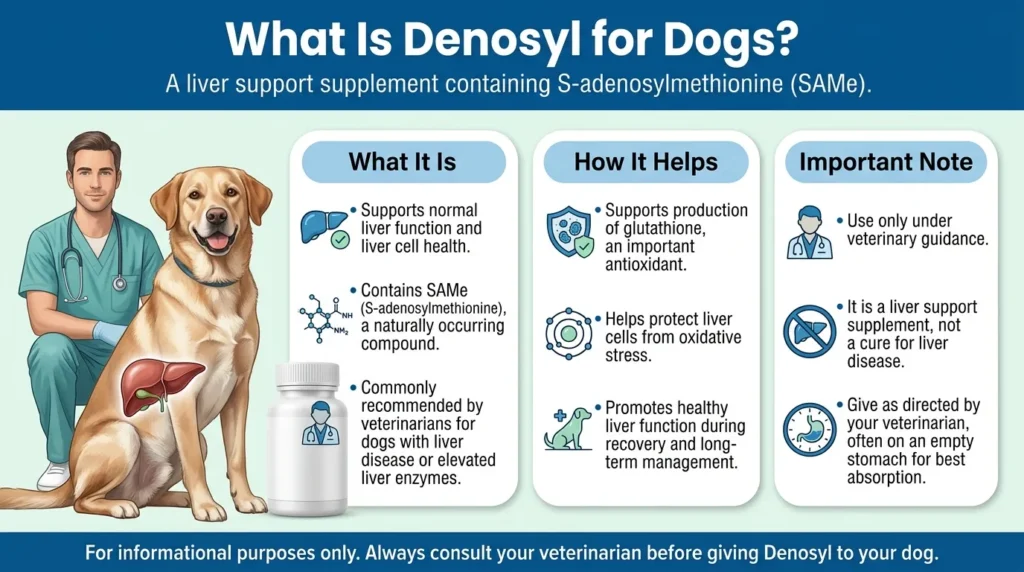
Denosyl supplement is a veterinary nutritional supplement produced by Nutramax Laboratories, which contains S-adenosylmethionine (SAMe), a naturally occurring compound that is beneficial for healthy liver and may benefit brain and cognitive function in dogs as well. Denosyl medication has enteric-coated, stabilized tablets that ensure optimal bioavailability in the bloodstream by protecting SAMe until it reaches the intestines.
The main advantage of Denosyl is that it helps to enhance the amount of glutathione (GSH), which is one of the most critical antioxidants and detoxifiers in the liver. An increase in the amount of glutathione may reduce the amount of oxidative damage to liver cells, assist in the liver’s natural process of detoxification, and contribute to the regeneration and repair of healthy liver cells.
Since there are a number of causes of liver disease, liver function support is an essential component of liver health management. A healthy liver also helps to eliminate toxins, stores energy, helps to digest food, and improves immunity.
Besides the liver support, studies indicate that the SAMe contained in Denosyl can help support cognitive function and mental alertness in aging dogs and be a neuroprotective agent. As a result, Denosyl is a favourite supplement for dogs suffering from liver disease as well as for older dogs that are suffering cognitive decline with age.
Denosyl supplement generally is safe and well tolerated; some dogs may develop slight gastrointestinal upset (nausea, vomiting or diarrhea). As with all medications, there can be rare allergic reactions, and if there are any changes in appetite, behaviour, or gastrointestinal health, owners should consult their veterinarian if they have concerns. With long-term use, periodic exams and liver function tests with the veterinarian can help keep the supplement safe and effective.
How Does Denosyl® Work?
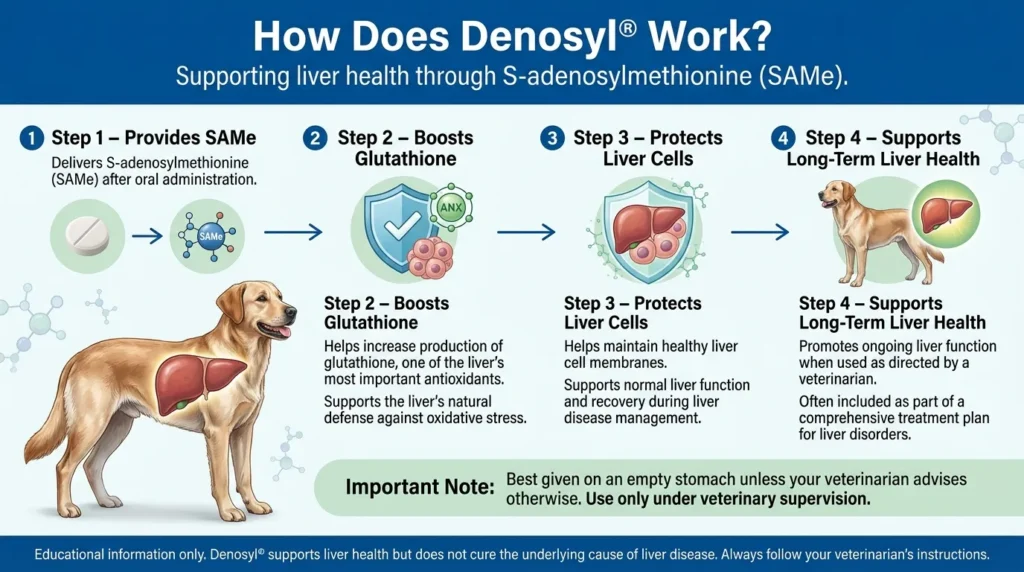
Denosyl® functions by providing S-adenosylmethionine (SAMe), a naturally occurring compound which helps stimulate glutathione production – one of the most important antioxidants and detoxifying agents in the liver. The increased levels of glutathione support the liver’s natural detoxification, protect liver cells from oxidative damage and promote healthy liver function. With the liver being the organ which extracts toxins, stores energy, helps with digestion and supports the immune system, it is vital to keep levels of glutathione in the liver adequate for the health of your dog.
The SAMe in Denosyl® has been proven to help support brain and cognitive function in dogs as well as supporting the liver. It is thought to have neuroprotective properties and aid in proper cognitive function and mental sharpness, especially in older dogs. Denosyl® contains high quality science backed ingredients and comes in an easy to administer tablet form, which is a safe and effective way to support liver and brain health in dogs.
Benefits of Denosyl for Dogs
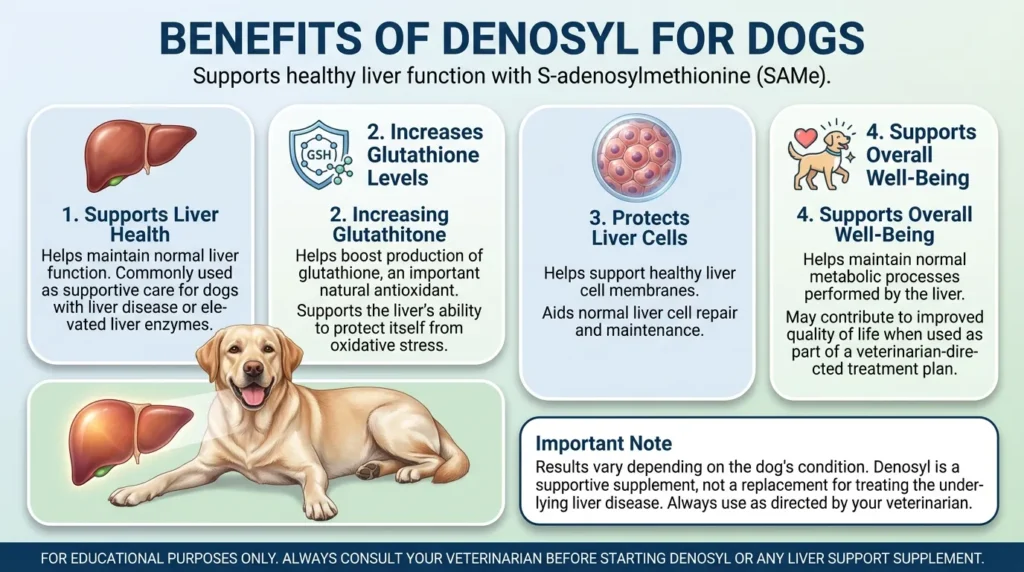
Denosyl dog dosage is a high quality liver and brain health supplement containing a naturally occurring compound called S-adenosylmethionine (SAMe) which supports several important functions within a dog’s body. Denosyl boosts glutathione production, a major liver antioxidant, which promotes liver cell protection, natural detoxification and wellbeing. It can also support healthy cognitive function and serve as a useful supplement for older age dogs who are undergoing age-related changes as well as dogs suffering from liver disease.
Denosyl’s main advantages are:
- Supports Liver Detoxification: Boosts glutathione levels to aid in the elimination of toxins and to maintain liver cells’ protection against oxidative damage.
- Supports Overall Liver Health: Helps to keep the liver functioning normally and healthy.
- Promotes Brain and Cognitive Health: SAMe might help maintain cognitive function, memory and mental alertness as well as offer neuroprotective benefits.
- Stabilized, High-Quality SAMe: It contains stabilized SAMe, which is known to be absorbed, effective and consistent.
- Safe and Trusted Formula: Made with Nutramax Laboratories, a trusted and well-known pet health company with over 30 years of experience in pet supplements.
- Veterinarian-Recommended Brand: Manufactured by one of the premier veterinarian-recommended companion animal supplement companies.
- Promotes Long-Term Wellness: When used as directed, helps promote your dog’s overall health, vitality and quality of life.
- Dogs and Cats: The same SAMe based formula is formulated for use in dogs and cats with species appropriate dosages.
Denosyl Side Effects in Dogs
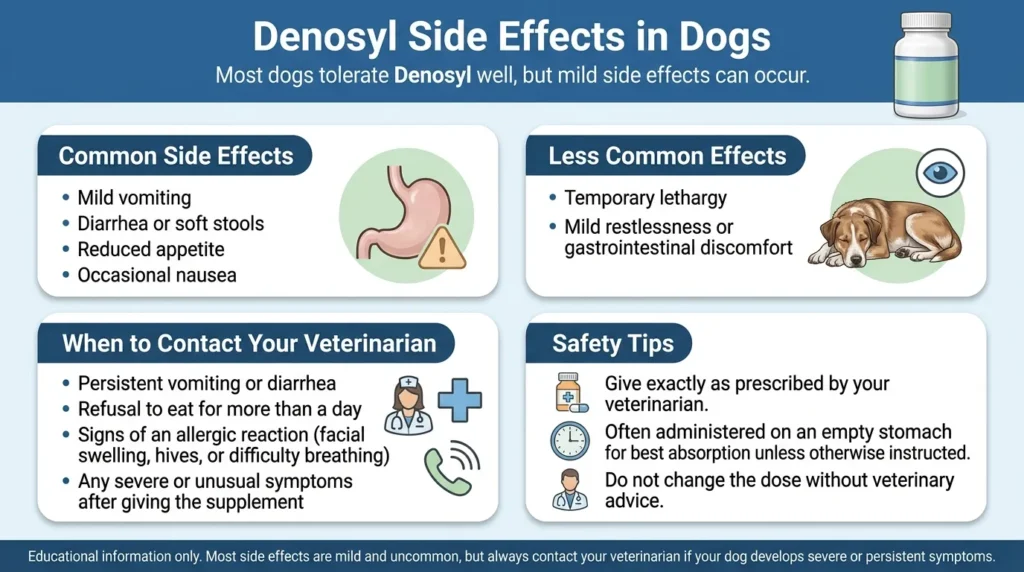
When used as directed, denosyl dose for dogs does not have any serious known side effects and is generally well tolerated by dogs. Most dogs take the supplement without any problems, making it a commonly recommended option for long-term liver support. But as with all supplements, pet owners should watch closely during their dog’s initial use of Denosyl.
Denosyl may have side effects, such as:
- Well tolerated and no serious side effects known.
- Some dogs can be allergic to it, although this is rare, particularly at first use.
- Be alert for any allergic reaction (e.g. rash or other unusual skin changes).
- After beginning the supplement, keep an eye out for any abnormal signs or behavior in your canine.
- If you see any indications of allergic reaction, or changes in health, contact your vet immediately.
Denosyl Cautions for Dogs
While Denosyl is generally safe, it is important to use it under your veterinarian’s supervision, particularly if your dog is currently on other medications or if your dog has experienced any type of allergic reaction to drugs. There is no evidence of documented drug interaction, but Denosyl dog medication could interact with some drugs that impact serotonin or nervous system levels. Be sure to let your vet know if your dog is taking any prescription or over-the-counter medicines or supplements, so your dog’s dose can be adjusted or monitored as necessary.
Important Cautions
- Before beginning Denosyl, be sure to inform your veterinarian if your dog is on any other medications or dietary supplements.
- No known drug interactions have been reported, but Denosyl might interact with:
- Tramadol
- Dextromethorphan
- Meperidine
- Selegiline
- Fluoxetine
- Amitriptyline
- Clomipramine
- Other antidepressant medications
- If more than one medication is prescribed, your veterinarian might need to adjust the dosages or monitor your dog more closely.
- If your dog has any unusual reactions when taking Denosyl with other medicine, contact the veterinarian as soon as possible.
- Prior to any treatment, let your veterinarian know if your dog is sensitive to any medication or has undergone any drug allergies.
Signs of a Serious Allergic Reaction
If your dog displays any of the following symptoms, you should get veterinary help right away:


Paid Links - As an Amazon Associate, I earn from qualifying purchases.
- Swelling of lips, tongue, face or airways
- Difficulty breathing
- Agitation or restlessness
- Drooling (profuse salivation)
- Vomiting
- Extensive hives or intense itching.
Denosyl Ingredients
Denosyl dosage for dogs is formulated with one active ingredient, S-Adenosylmethionine (SAMe), a naturally-occurring compound that helps dogs support liver health and cognitive function. SAMe supports the synthesis of glutathione, a critical antioxidant in the liver that supports detoxification and prevents liver cells from damage caused by oxidation. Denosyl comes in several strengths of tablets for dogs of varying sizes.
Active Ingredient
- S-Adenosylmethionine (SAMe) – Active ingredient that helps support liver care, natural detox and cognition.
Available Tablet Strengths
- 90 mg of SAMe in each tablet.
- Each tablet contains 425 mg of SAMe.
Denosyl tablets contain stabilized S-Adenosylmethionine (SAMe) to ensure quality, stability and effective absorption when used as directed.
Directions for Using Denosyl for Dogs
Denosyl dog dosage should be used as directed by your veterinarian for best results. Dosage is normally about 20 mg/kg daily rounded to the nearest available whole-tablet strength. Due to the moisture sensitivity and enteric coating, Denosyl tablets must not be split, crushed or broken as this may compromise the stability and efficacy of the active ingredient.
To maximize absorption, give Denosyl on an empty stomach, at least one hour before feeding, since food can decrease the absorption of S-Adenosylmethionine (SAMe). Following the tablet, provide 3-6 cc of water to your dog to rapidly move the tablet into the stomach. For more than one tablet per day, doses can be given in the morning and evening to aid in administration.
Some dogs can be kept on an every-other-day or every-third-day dosage and your veterinarian may be able to reduce the dose over time as long as your dog’s response is good.
Administration Guidelines
- Use dosage of about 20mg/kg/day, rounded to the closest whole-tablet dose.
- Do not divide, crush or break Denosyl tablets.
- Feed on an empty stomach at least 1 hour prior to feeding.
- After giving the tablet give 3-6cc of water to help it get to the stomach.
- If more than one tablet is needed a day, take half in the morning and the other half in the evening if not otherwise instructed by your veterinarian.
- Your veterinarian may adjust doses as per your dog’s needs.
- During long-term therapy, some dogs might be kept on every-other-day or every-third-day treatment.
Denosyl Storage Instructions
To ensure the stability and effectiveness of Denosyl tablets, store them properly. The tablets contain the active ingredient S-Adenosylmethionine (SAMe) which is easily damaged by moisture and heat and should be handled carefully and stored in line with the manufacturer’s instructions.
Storage Guidelines
- Keep Denosyl in a cool, dry area (protected from direct heat and moisture).
- Store the tablets in the blister pack until time of administration.
- Split, crush or crumble tablets should not be done as this will make the tablet less stable and effective when exposed to moisture.
- Store the tablets out of direct sunlight and out of excessive moisture.
- Denosyl is also supplied in chewable tablets for dogs (which are used according to the product instructions).
- When in doubt about storage or use, ask your veterinarian or the manufacturer for more information.
You May Also Like to Read:
- Dasuquin Dosage For Dogs: Calculator, Chart & Safe Guide
- Cystorelin Dosage For Dogs: Calculator, Chart & Safe Guide
FAQs
Is Denosyl supplement long term use safe for dogs?
Yes. Denosyl is used for the long-term support of liver function (under veterinary guidance) by many dogs. Your vet might change the schedule over time, and some dogs may eventually take a supplement every other day or every third day as appropriate.
Does Denosyl need to be taken with food?
No. Standard enteric-coated Denosyl tablets should be taken on an empty stomach (at least an hour before or two hours after eating). This will help to promote optimal uptake of S-adenosylmethionine (SAMe).
If my dog misses a dose of Denosyl, what should I do?
In case a dose is missed give it as soon as it is remembered unless it is close to the time of the next dose. Do not give two doses at once. When in doubt ask your vet what to do.
Is it safe for Denosyl to be administered along with other medicines?
There are no known significant drug interactions reported; however, Denosyl may interact with some other drugs, such as certain antidepressant drugs and tramadol. Prior to starting Denosyl, always inform your veterinarian of any medications and supplements your dog may be on.
Are Denosyl tablets to be split or crushed?
Denosyl tablets for dogs must not be split, crushed or crumbled, as the enteric coating protects the active ingredient from the moisture and aids its absorption.
When will Denosyl start to work?
Your dog may not feel better for a while, depending on what is going on and the treatment plan for your dog. Occasionally, some dogs may experience gradual improvement over a period of weeks, and chronic liver diseases may need to be supplemented for a more extended period of time and be monitored by a veterinarian.
Do regular veterinary check-ups need to be performed during Denosyl use?
Yes. Liver function tests can monitor how well your dog is responding to treatment and your veterinarian may need to adjust the dose of treatment or its delivery system.
Are there varying strengths of Denosyl?
Yes. Denosyl is available in various strengths of tablets: 90 mg, 225 mg and 425 mg – enabling vets to choose the right one for the dog’s body weight.
Who manufactures Denosyl?
Denosyl medicine is produced by Nutramax Laboratories Veterinary Sciences, known for its expertise in the veterinary health supplement industry for over 30 years and recommended by professionals.
Key Takeaways
- Denosyl is a liver and brain health supplement for dogs that includes S-adenosylmethionine (SAMe).
- SAMe boosts the levels of glutathione which protects liver cells, aids in detoxification and helps maintain liver health.
- Denosyl can also help your dog’s cognition and have neuroprotective properties, especially in older dogs.
- Dogs will be dosed according to the advice of their veterinarian, based on their body weight.
- Enteric coated tablets should be taken with an empty stomach, 1 hour before or 2 hours after food.
- Denosyl tablets should not be split, crushed or crumbled as this may affect the stability and absorption of SAMe.
- Denosyl is well tolerated and is not likely to have serious side effects, but watch your dog for any allergic reaction or unusual symptoms.
- Before administering Denosyl, inform your veterinarian if your dog is taking any other medications or supplements.
- Keep in the original tablet blister pack, in a cool, dry area protected from moisture and high temperatures.
- By having regular veterinary examinations and monitoring liver function, Denosyl can be used safely and effectively over the long term.
Final Thoughts
Denosyl is a trusted, SAMe-based liver support supplement that can be a vital part of your dog’s liver care plan and may benefit their mental function particularly in older dogs. It can be used as directed by your veterinarian to increase glutathione levels to help the liver’s own detoxification and promote the survival of healthy liver cells.
Denosyl dosage for dogs should always be given on an empty stomach, be sure to use the correct dose for your dog’s weight, and never split or crush the enteric-coated tablets. Denosyl is well tolerated, but routine veterinary examinations and liver function tests are recommended, especially when supplementing long term. Be sure to check with your veterinarian if your dog shows any unusual behavior or if you are concerned about how he reacts to the supplement.
When used correctly and under the guidance of a veterinarian, Denosyl can be a valuable component of your dog’s liver health and overall wellness regimen.