Dexamethasone Dosage Calculator for Dogs
Estimate a dexamethasone dose by your dog’s weight and the condition being treated.
Estimated Dose
Important: This tool is for general information only and is not a substitute for veterinary advice. Dexamethasone must be prescribed and adjusted by a licensed veterinarian, who will also set the tapering schedule needed to avoid adverse effects. Never start, change, or stop the medication on your own.
Dexamethasone is a veterinary prescription drug that treats numerous serious dog medical conditions, suppresses the immune system and helps to reduce inflammation. Dexamethasone Dosage for Dogs is a strong glucocorticoid and is selected for use in conditions requiring rapid anti-inflammatory or immunosuppressive action, such as liver diseases, Addison’s disease, gastrointestinal diseases, skin diseases, certain cancers, cerebral edema, and shock. Additionally, veterinary doctors sometimes use dexamethasone as a diagnostic tool in testing the dogs for Cushing’s disease.


Paid Links - As an Amazon Associate, I earn from qualifying purchases.
In this guide you will find everything you need to know about dosage of dexamethasone for dogs – a dosage calculator based on the weight of the dog, a dosage chart, recommended uses, how the drug works, possible benefits, potential side effects, precautions, and tips for safe administration. However, no matter the reason for your dog’s dexamethasone prescription, this guide will help you better understand how it is used and why it’s important to follow your vet’s directions for your dog’s safety.
What is Dexamethasone Dosage For Dogs?
The dose of dexamethasone for dogs by weight depends on the condition being treated, the formulation, and the weight of the dog.
- For Anti-inflammatory Treatment: 0.2 to 0.5 mg/kg twice daily.
- As Immunosuppressive: 2 to 6 mg/kg) up to three times daily.
- Various other diseases (By Vet prescription) 0.2 to 6 mg/kg).
Always recalibrated by a licensed veterinarian, the structured tapering schedule and precise dosage of dexamethasone is required to ensure safe treatment and to avoid adverse side effects, since dexamethasone is a potent steroid drug and it can only be prescribed by a licensed veterinarian.
Dexamethasone Dosage Chart For Dogs By Weight
| Dog weight (lb) | Weight (kg) | Anti-inflammatory dose (mg/dose)* | Immunosuppressive dose (mg/dose)* |
|---|---|---|---|
| 5 lb | 2.27 kg | 0.45–1.14 mg | 4.54–13.62 mg |
| 10 lb | 4.54 kg | 0.91–2.27 mg | 9.08–27.24 mg |
| 15 lb | 6.80 kg | 1.36–3.40 mg | 13.60–40.80 mg |
| 20 lb | 9.07 kg | 1.81–4.54 mg | 18.14–54.42 mg |
| 25 lb | 11.34 kg | 2.27–5.67 mg | 22.68–68.04 mg |
| 30 lb | 13.61 kg | 2.72–6.80 mg | 27.22–81.66 mg |
| 40 lb | 18.14 kg | 3.63–9.07 mg | 36.28–108.84 mg |
| 50 lb | 22.68 kg | 4.54–11.34 mg | 45.36–136.08 mg |
| 60 lb | 27.22 kg | 5.44–13.61 mg | 54.44–163.32 mg |
| 70 lb | 31.75 kg | 6.35–15.88 mg | 63.50–190.50 mg |
| 80 lb | 36.29 kg | 7.26–18.15 mg | 72.58–217.74 mg |
| 90 lb | 40.82 kg | 8.16–20.41 mg | 81.64–244.92 mg |
| 100 lb | 45.36 kg | 9.07–22.68 mg | 90.72–272.16 mg |
Calculated using the supplied ranges of 0.2–0.5 mg/kg and 2–6 mg/kg, respectively. These ranges have not been validated here as appropriate canine doses. The immunosuppressive figures are especially important to verify before use or publication.
What Is Dexamethasone, and How Does It Work?
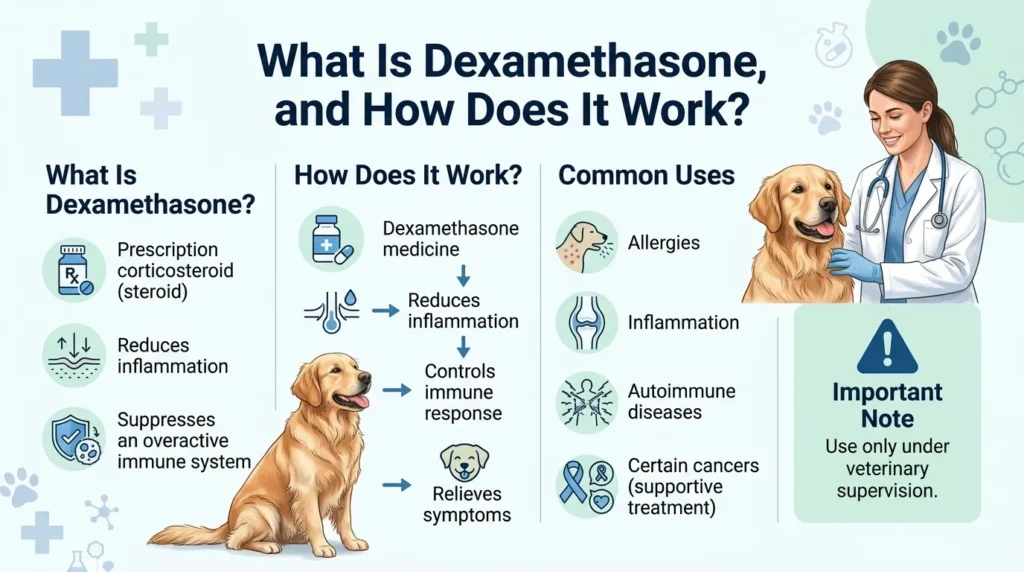
Dexamethasone medicine for dogs is an artificial or synthetic corticosteroid (glucocorticoids) that has the same action as cortisol, a hormone naturally secreted by the adrenal glands. Cortisol plays a role in regulating inflammation, immune function and the stress response. Dexamethasone has anti-inflammatory and anti-allergic properties, and it helps to suppress an overactive immune system, thus helping to treat a wide range of medical conditions in dogs.
This medication is rapid and long-acting, and is about 10 times more potent than prednisone so that veterinarians can get a potent anti-inflammatory and immunosuppressive effect with smaller doses. Glucocorticoids affect almost all cells and organ systems of the body and therefore dexamethasone may have a number of effects on body function and should only be used under veterinary supervision.
Dexamethasone dog dosage is widely used in veterinary medicine for the treatment of inflammatory processes, immune-mediated diseases, allergic reactions, adrenal gland disorders and some neurologic disorders. It can also be used in emergency or critical care situations or as a diagnostic tool for Cushing’s disease via dexamethasone suppression testing.
It is frequently used “off-label” (extra-label) in dogs and many other animals, so carefully follow your veterinarian’s treatment plan and dosage instructions. Because of its effectiveness, dexamethasone is generally administered for brief periods or, if it is required for longer periods, under strict veterinary supervision.
What Is Dexamethasone Used for in Dogs?
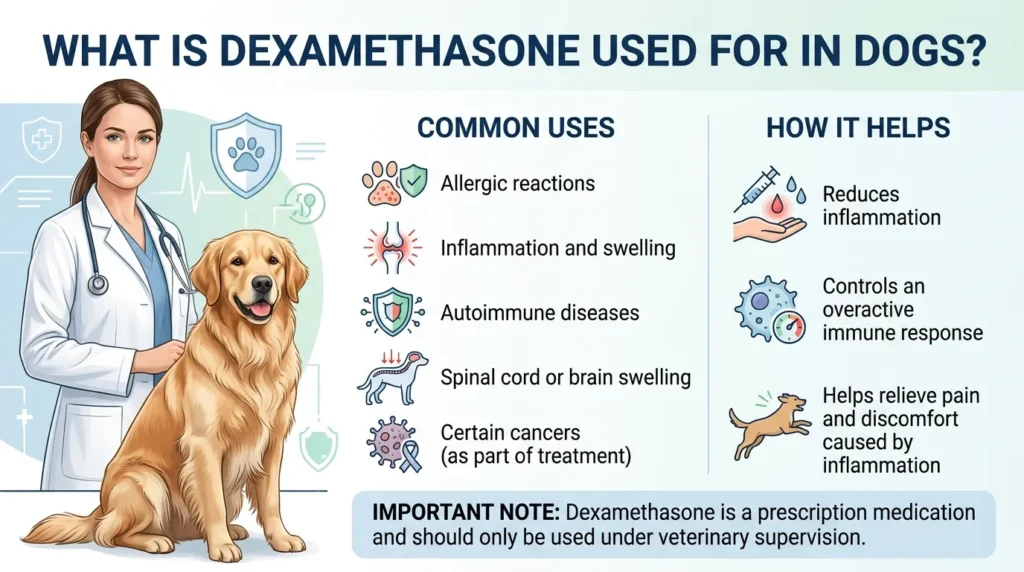
Dexamethasone for dogs is a strong long acting corticosteroid which acts to decrease inflammation and to dampen down an overactive immune system. Vets prefer using it when a quick and potent therapeutic effect is desired, as it is more rapid acting and effective than prednisone and prednisolone.
Common uses of dexamethasone in dogs include:
- Decreasing pain and inflammation
- Treating acute allergic reaction
- Managing autoimmune diseases, such as immune-mediated hemolytic anemia (IMHA)
- Appendix 2: Addisonian crisis – supporting treatment for Addison’s disease
- Dexamethasone suppression test for the diagnosis of Cushing’s disease.
- Helping to treat some forms of cancer
- Treatment of respiratory, liver, gastrointestinal, skin, nervous system and rheumatic diseases.
- Treatment of shock (with severe infections or bacterial endotoxins) and emergency supportive therapy
Dexamethasone dog medication can be administered intravenously in emergencies when a rapid response to a hormonal therapy is needed. It can affect almost every organ system and the dose and length of treatment should always be under veterinarian’s care to ensure the maximum benefit with minimal risk of side effects.
How Is Dexamethasone Given to Dogs?
There are several different ways to give dexamethasone to dogs depending on the condition to be treated and your vet’s advice. It can be given as tablets, liquid, an injection, as an inhaled aerosol medicine (for some lung diseases) and as eye drops.
If the dog is taking the oral dexamethasone, the drug can be administered with or without food, but it is better to do so with food or a treat, to minimize stomach upset. If a dog vomits or seems like they have nausea when the medication is administered on an empty stomach, the next dose should always be administered with food.
If you use the liquid form, carefully measure each dose to make sure that the correct dose is given.
Key administration tips include:
- Administer only as directed by your vet.
- Use the correct liquid formulations using the appropriate dosing device.
- Avoid administering dexamethasone, along with NSAIDs (nonsteroidal anti-inflammatory drugs), because the combination can greatly raise the chances of stomach or intestinal ulcers.
- If your dog has been on dexamethasone for over 2 weeks, weaning the drug is important because of the risk of sudden withdrawal, and should be done based on your veterinarian’s recommendations.
Dexamethasone dosage usually starts to work in 1–2 hours but effects that can be seen on your dog may take longer to appear, depending on the condition it is meant to treat.


Paid Links - As an Amazon Associate, I earn from qualifying purchases.
Precautions and Side Effects of Dexamethasone for Dogs
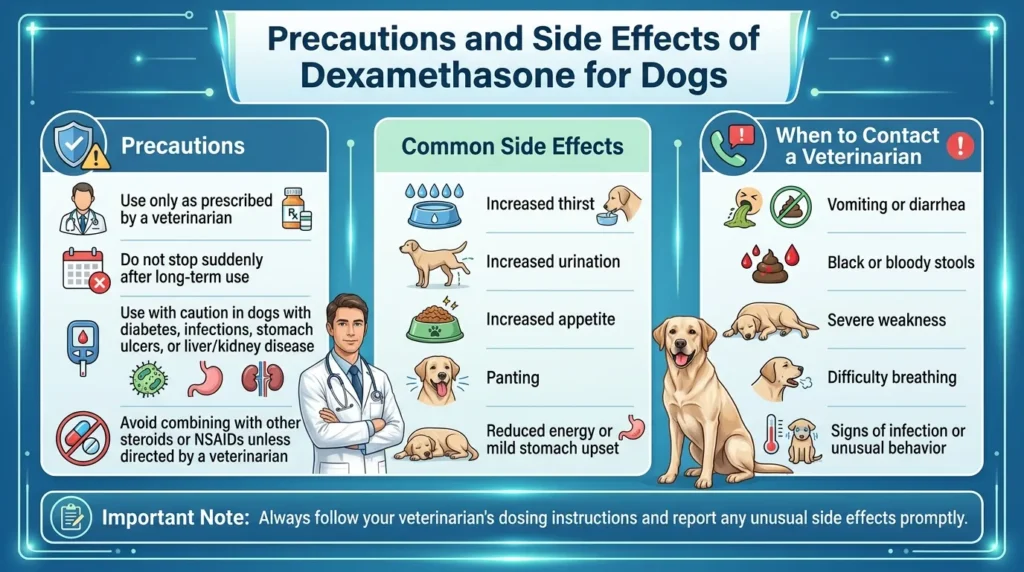
Dexamethasone dose for dogs is a powerful corticosteroid medication and when used under veterinary supervision is generally safe and effective, but it can have short and long term side effects. These effects can be quite serious and are more likely to occur if a dog receives higher doses and for a longer period. Numerous side effects can be reduced with a dosage change or stoppage, under veterinary control.
Common Side Effects
Common side effects are:
- Thirst, frequent urination and increased appetite
- Panting and restlessness
- Vomiting or diarrhea
- Temporary behavior changes
- Lethargy
- Loss of appetite (less common)
Long-Term Side Effects
Dogs that are given dexamethasone daily for weeks or months can develop:
- Gaining weight and having a pot-belly
- Weakness or wasting of muscles
- Dry, thinning skin, balding or dry hair coat.
- Slow wound healing
- Changes in hormones and metabolism
- Suppression of the immune system – this can lead to a higher risk of bacterial, viral, and fungal infections
- High blood pressure
- High cholesterol in the blood
- Changes in the liver such as an increase in liver enzymes or steroid liver disease
- Deposits of plaque on skin.
Serious Side Effects (Seek Veterinary Care Immediately).
Discontinue the medication and talk with your veterinarian if your dog develops:
- Dark black tarry stools or bloody stools
- Bloody vomit or vomit that looks like coffee grounds
- Lack of appetite or fever
- Sadness of stomach or gut ulcers
- Pancreatitis
- Severe behavior changes
- Seizures
- Triggering or exacerbation of diabetes mellitus.
- Severe muscle wasting
Important Precautions
Take the following precautions into account prior to administering dexamethasone:
- Do not use in dogs with a known allergy to dexamethasone.
- Do not use in pregnant women because it could cause labor.
- Do not use to treat fungal infections; not recommended for infectious diseases unless prescribed for specific conditions (e.g., shock).
- Do not use dexamethasone together with NSAID (Non-Steroidal Anti-Inflammatory Drugs) such as Rimadyl® or aspirin as there is a significant risk of stomach ulcers and bleeding.
- Do not give dexamethasone to a dog who is taking any other medications, including over-the-counter drugs or supplements, since it may interact with other drugs such as furosemide, insulin, phenobarbital, amphotericin B, aspirin, cyclosporine, cyclophosphamide, ketoconazole, phenytoin, rifampin, some vaccines, and other NSAID’s.
- Signs of infection can be masked by the use of the steroids, and dogs being treated should be closely monitored.
- Do not discontinue dexamethasone following long-term treatment. To avoid adrenal insufficiency and other complications, the medication needs to be weaned slowly over time.
- Do not administer left over dexamethasone from a previous use, even if your dog has similar symptoms, unless directed by a veterinarian.
Monitoring During Treatment
Dexamethasone may interfere with bloodwork or laboratory test results such as ACTH stimulation tests, cholesterol, alkaline phosphatase (ALP), urine glucose, potassium levels, thyroid hormones, skin tests and white blood cell counts, so frequent veterinary monitoring may be necessary for long-term treatment.
It typically ceases to have an effect within several days of discontinuation, but may persist for longer in dogs with liver and kidney disease.
What Are the Most Serious Risks of Dexamethasone for Dogs?
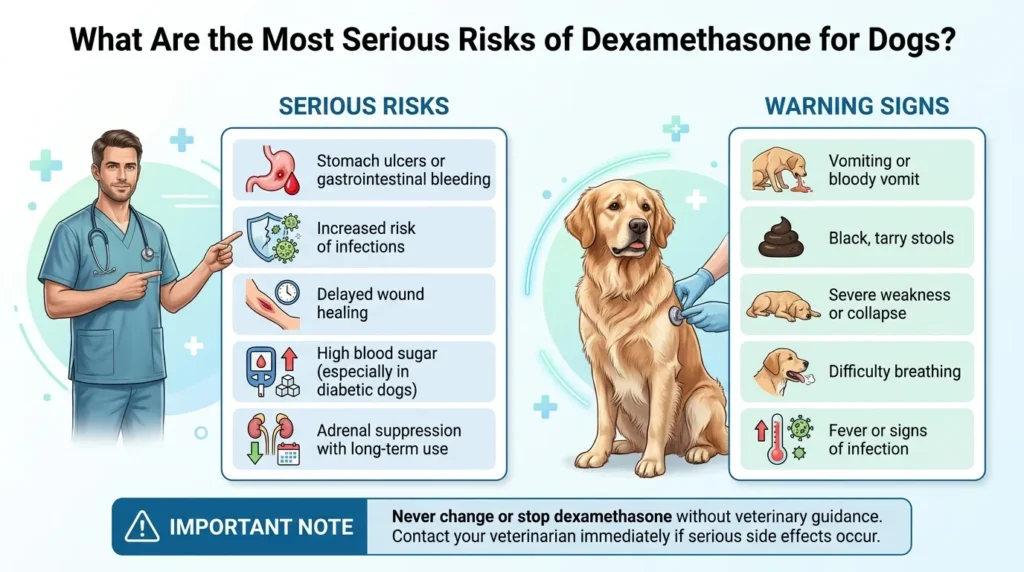
Although dexamethasone dosage for dogs is a very effective corticosteroid, it can lead to severe problems, especially when given in high doses or for long periods. To minimize these risks and catch problems early, careful veterinary supervision is needed.
The major risks of using dexamethasone are:
- Gastric and intestinal ulcers – The most serious risk is the development of gastrointestinal ulcers, which can cause bleeding and in rare cases can have a hole in the stomach or intestinal wall.
- Digestive bleeding – Warning signs include vomiting, bloody vomit or vomiting that looks like coffee grounds, and black, tarry stools (melena) – which should be treated by a vet right away.
- Susceptibility to infections – The use of high doses of these medicines to suppress the immune system may make dogs more susceptible to bacterial and fungal infections. During the treatment period, your vet may want to monitor you closely and take regular blood tests.
- Stunted growth – May cause sluggish growth and development in young dogs when used for extended periods of time.
- Overdose complications – Do not exceed the prescribed dose as there may be risks of serious side effects and this should be treated as a veterinary emergency.
Dogs That Require Extra Caution
Dogs should not use dexamethasone when they:
- Have a pre-existing allergy to the drug.
- Have systemic fungal infections.
- Suffer from stomach/intestinal ulcers.
Should be used with caution in dogs that:
- Have diabetes.
- Have kidney or heart disease.
- Have bacterial or fungal infections.
- Are pregnant or breastfeeding.
- Are in their early stage of development.
- Are having surgery or are recovering from surgery, because they may have to avoid taking steroids.
Important Safety Note
Never discontinue dexamethasone abruptly, if your dog has been taking it for over two weeks. The dose should be slowly reduced with the help of your veterinarian to help avoid severe problems associated with adrenal gland insufficiency.
Does Dexamethasone Interact With Any Other Dog Medications?
Yes. Before treatment with dexamethasone, be sure to inform your veterinarian of any prescription, nonprescription, over-the-counter or vitamin supplement herbal medications your dog is taking. Certain combinations may be safe to use and combined under veterinary supervision, but others can lead to greater potential for side effects, or decrease efficacy of treatment.
Some medicines may interact with dexamethasone
Dexamethasone may interact with:
- NSAIDs (such as aspirin, ibuprofen, indomethacin, carprofen and meloxicam) – These should never be combined with dexamethasone because that combination is highly likely to cause stomach ulcers, gastrointestinal bleeding and other serious gastrointestinal problems.
- Diuretics and particularly K+-depleting diuretics (furosemide)
- Insulin and other diabetes medications
- Antifungals, such as azole antifungals (ketoconazole and fluconazole (Diflucan®))
- Amphotericin B
- Antibiotics (fluoroquinolones): enrofloxacin and marbofloxacin
- Macrolide antibiotics, which include erythromycin
- Barbiturates, including phenobarbital
- Diazepam (Valium®)
- Ephedrine
- Other chemotherapy agents such as cyclophosphamide, doxorubicin and vincristine
- Immunosuppressive drugs, such as cyclosporine.
- Mitotane
- Praziquantel (Biltricide®)
- Quinidine
- Rifampin
- Medications that inhibit the action of the enzyme acetylcholine, for example, pyridostigmine.
- Opioids for pain: Fentanyl, tramadol,
- Iohexol
- Bupropion
- Some other vaccines, such as modified live vaccines
Drug interactions may be different depending on your dog’s condition and the amounts, so never begin, discontinue or combine drugs without veterinarian’s consent. Your veterinarian can advise you if a combination of medications is safe or if dose changes might be required or more monitoring is necessary.
Which Dogs Should Not Take Dexamethasone?
Not all dogs are candidates for taking dexamethasone dosage. Your veterinarian will thoroughly assess whether or not this medication would be beneficial prior to prescription, as it may have serious side effects in certain health conditions.
Dogs That Should Not Take Dexamethasone
Generally, Dexamethasone should NOT be used in:
- Pregnant dogs because it can cause preterm birth or cause the dog to give birth and pregnancy may lead to birth defects in puppies such as cleft palate, forelegs deformities and generalized oedema.
- Dogs known to be sensitive or allergic to the use of steroids.
Dogs That require Additional Care
Dexamethasone should be administered with care to dogs with:
- Systemic fungal infections
- Kidney disease
- Cushing’s disease
- Heart disease
- Diabetes
- Active viral infections
- Digestive sensitivity
- Previous or risk of stomach ulcers
Nursing Dogs
Nursing dogs might be okay with short-term use of dex, as directed by their veterinarian. Long-term treatment, however, can cause the body to produce steroids normally, and consequently slow down the growth of nursing puppies. Use dexamethasone with caution in pregnant and lactating dogs, discuss with your veterinarian.
You May Also Like to Read:
- Denosyl Dosage For Dogs: Calculator, Chart & Safe Guide
- Dasuquin Dosage For Dogs: Calculator, Chart & Safe Guide
FAQs
My dog is taking dexamethasone, do I still need to watch him?
Yes. A veterinarian should monitor dogs that are taking dexamethasone medicine, particularly if they are taking the drug for an extended period of time. Monitoring can include observing body weight, appetite, electrolyte levels, blood proteins, blood glucose and the effectiveness of the medicine. It is also important to observe young dogs for normal growth and development.
If your dog misses a dose of dexamethasone, what should you do?
In case your dog missed a dose, consult your vet for advice. Generally, if you missed a dose, take it as soon as you remember, unless it’s close to the next dose. If the next dose is due in a few minutes, just skip the dose and resume the dosing schedule as usual. Do NOT double dose to catch up.
Is it safe for a dog to take dexamethasone while she is pregnant?
No. Dexamethasone medication should not be given to pregnant dogs because it can lead to miscarriage, foetal death, birth defects (including cleft palate) and early delivery. Prior to treatment, always let your veterinarian know if your dog is pregnant or could be pregnant.
Why do you have to take what’s known as dexamethasone if my dog is panting so much?
One of the most frequent side effects of dexamethasone is panting and this is typically due to the effects of the drug on the body and not an emergency. But if panting is intense, ongoing or if there are other worrying symptoms, get your vet’s attention quickly.
My dog appears to eat more when he is taking dexamethasone. Do I need to increase the feed?
No, because dexamethasone causes an increase in appetite, which can result in unwanted weight gain if too much is fed. Your dog’s daily food regime should remain the same and if they appear to be very hungry, you may want to try feeding them smaller meals at more regular intervals.
Where should I store dexamethasone and what should I do in case of an emergency?
Dexamethasone tablets and liquid should be stored in a dry place, away from moisture, heat and direct light, at a temperature between 15°C and 30°C (59°F and 86°F). Refrigerate or freeze liquid suspensions and after opening, discard oral liquid as directed by your veterinarian or on the label if necessary.
Call your vet or the nearest emergency vet clinic right away if you think your dog may have overdosed or if your dog has a severe reaction.
Key Takeaways
- Dexamethasone tablets is a powerful corticosteroid which is much more potent than prednisone, and is used to treat inflammation, allergy, autoimmune disease, Addison’s disease, and some cancers in dogs.
- It is very fast acting and may start to work in 1-2 hours, but must be administered under a vet’s supervision.
- It is important to get the dose right because over-dosing or using it for too long can have severe consequences, such as immune suppression, hormonal changes, stomach ulcers and muscle wasting.
- Side effects are common, and include increased thirst, urination, appetite, panting, vomiting, diarrhea, and restlessness, which increase with higher doses and/or prolonged treatment.
- Dexamethasone drugs for dogs also interacts with numerous other drugs, particularly NSAIDs like Rimadyl® (carprofen), meloxicam and aspirin, which should generally not be given concurrently due to the higher risk of gastrointestinal bleeding and ulcers.
- If dexamethasone is used for a long period of time, it should not be discontinued suddenly because adrenal complications may occur otherwise.
- It is recommended to monitor dogs regularly during treatment to ensure the drug is not causing problems or to ensure that the dosage is correct, especially if the dog is being treated at high doses or for longer periods.
Final Thoughts
Dexamethasone Dosage For Dogs is a potent, rapid-acting corticosteroid, useful for treating a variety of medical disorders in dogs, such as severe inflammation, allergic reactions, autoimmune diseases, Addison’s disease, and some cancers. This is far more powerful than prednisone and will quickly relieve symptoms if used properly, but it can have more side effects if misused.
Always administer the dose of dexamethasone exactly as your vet has prescribed it, keep an eye on your dog for any unusual changes, and never alter or discontinue the treatment without professional advice. When used properly, with monitoring and proper veterinary care, dexamethasone can be a safe and very useful treatment to help your dog feel better and stay healthy.