Cystorelin Dosage Calculator For Dogs
Off-label Gonadorelin dosage calculation & administration protocol for canine reproduction
- The Progesterone Factor: Administer Cystorelin only when blood progesterone tracking confirms readiness for LH surge. Administering at the incorrect time can disrupt or halt the female’s reproductive cycle.
- Measurement Precision: Because Cystorelin is formulated for cattle (50 mcg/mL), canine dose volumes are very small. Always measure using a 1 mL (100-unit) tuberculin or insulin syringe to ensure exact dosage accuracy.
- Administration Route: Administer via intramuscular (IM) injection into the epaxial or thigh muscle.
© medsdog.com
Cystorelin dosage for dogs is an off-label veterinary topic due to the fact that Cystorelin (gonadorelin diacetate tetrahydrate) is FDA-approved for the treatment of ovarian follicular (cystic) ovaries in cattle, but not approved to use for dogs. It is a member of the gonadotropin-releasing hormone (GnRH) family of drugs, and comes in the form of a sterile injectable solution of 50 mcg/mL gonadorelin. The medication is given by a licensed veterinarian (IM or IV).
Cystorelin medication causes the natural release of luteinizing hormone (LH) in cattle, stimulating the release of ovulation and luteinization, thus normalising the reproductive cycles of cattle exhibiting ovarian follicular cysts. It can also be combined with cloprostenol sodium for use in reproductive synchronisation for planned breeding. The labelled dose for cattle is 100mcg (2mL) per cow, this is not the dose for dogs.


Paid Links - As an Amazon Associate, I earn from qualifying purchases.
A veterinarian might prescribe Cystorelin off-label for certain reproductive- or fertility-related conditions which are clinically appropriate for the dog. Cystorelin is no FDA approved canine dosage for dogs, so the dosage will be determined by the condition, the weight of the dog and the desired treatment. This guide will discuss Cystorelin dosage for dogs by weight, how the medication works, its potential uses, side effects, important safety information as well as provide a dosage calculator to help estimate more accurately a veterinarian-prescribed dose.
What is Cystorelin Dosage For Dogs?
Cystorelin is the off-label use of gonadorelin (50 mcg/mL) by veterinary reproduction specialists to induce an LH surge, ovulation or to treat cystic ovaries in a bitch. As Cystorelin is intended for use in cattle, careful weight-based calculations based on the dose rate for cattle (normally 2.2 mcg/kg; ~1 mcg/lb) or the application of a standardized fixed dose of 50 mcg (1.0 mL) intramuscularly (IM) should be used in dogs.
Due to small size of the dose, a syringe measuring 1 mL (100 units) is required for the measurement and the dose must be given accurately at the right time with respect to the dog’s reproductive cycle, as monitored by blood progesterone levels. Always check with a licensed veterinarian for correct dosage and timing of administration for your dog.
Cystorelin Canine Dosage Chart For Dogs By Weight
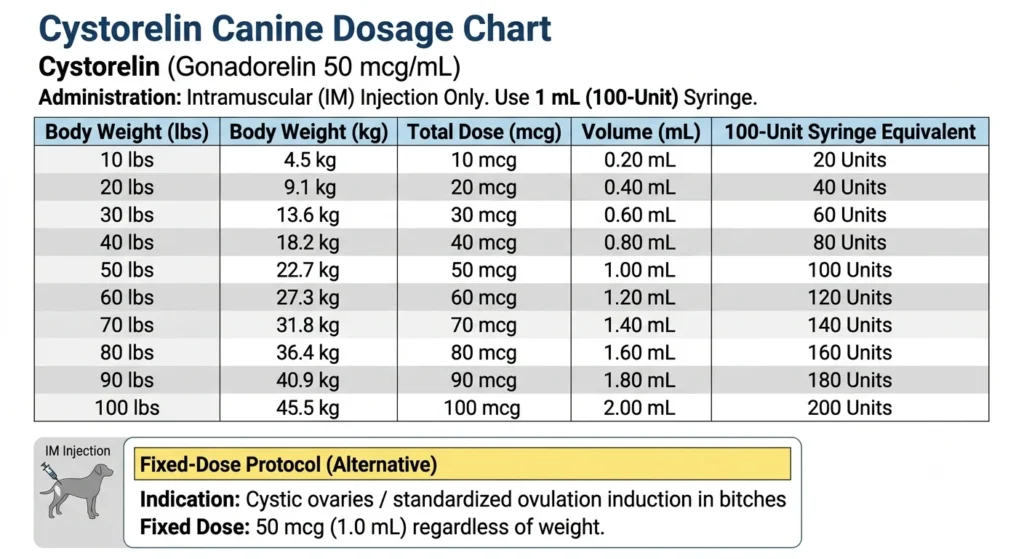
1. Weight-Based Protocol (Standard Off-Label Rate: ~2.2 mcg/kg)
This table calculates the required volume based on body weight at a standard target dose rate of 2.2 mcg/kg (~1 mcg/lb) using Cystorelin (50 mcg/mL).
| Body Weight (lbs) | Body Weight (kg) | Total Dose (mcg) | Volume (mL) | 100-Unit Syringe Equivalent |
| 10 lbs | 4.5 kg | 10 mcg | 0.20 mL | 20 Units |
| 20 lbs | 9.1 kg | 20 mcg | 0.40 mL | 40 Units |
| 30 lbs | 13.6 kg | 30 mcg | 0.60 mL | 60 Units |
| 40 lbs | 18.2 kg | 40 mcg | 0.80 mL | 80 Units |
| 50 lbs | 22.7 kg | 50 mcg | 1.00 mL | 100 Units |
| 60 lbs | 27.3 kg | 60 mcg | 1.20 mL | 120 Units |
| 70 lbs | 31.8 kg | 70 mcg | 1.40 mL | 140 Units |
| 80 lbs | 36.4 kg | 80 mcg | 1.60 mL | 160 Units |
| 90 lbs | 40.9 kg | 90 mcg | 1.80 mL | 180 Units |
| 100 lbs | 45.5 kg | 100 mcg | 2.00 mL | 200 Units |
2. Standardized Fixed-Dose Protocol
- Indication: Treating cystic ovaries / standardized ovulation induction protocols in bitches.
- Fixed Dose: 50 mcg (1.0 mL) via intramuscular (IM) injection regardless of weight.
Key Administration Guidelines
Administration Route: Intramuscular (IM) injection only (typically injected into the thigh or epaxial muscle).
- Syringe Selection: Because dose volumes are small and precise, always use a 1 mL (100-unit) tuberculin or insulin syringe for measurement.
- Timing Warning: When using Cystorelin dose, only give it when you have checked the blood progesterone level and are confident that the cow is ready for an LH surge. Administered at the wrong time of the cycle may lead to disruption or cessation of estrus.
What is Cystorelin For Dogs?
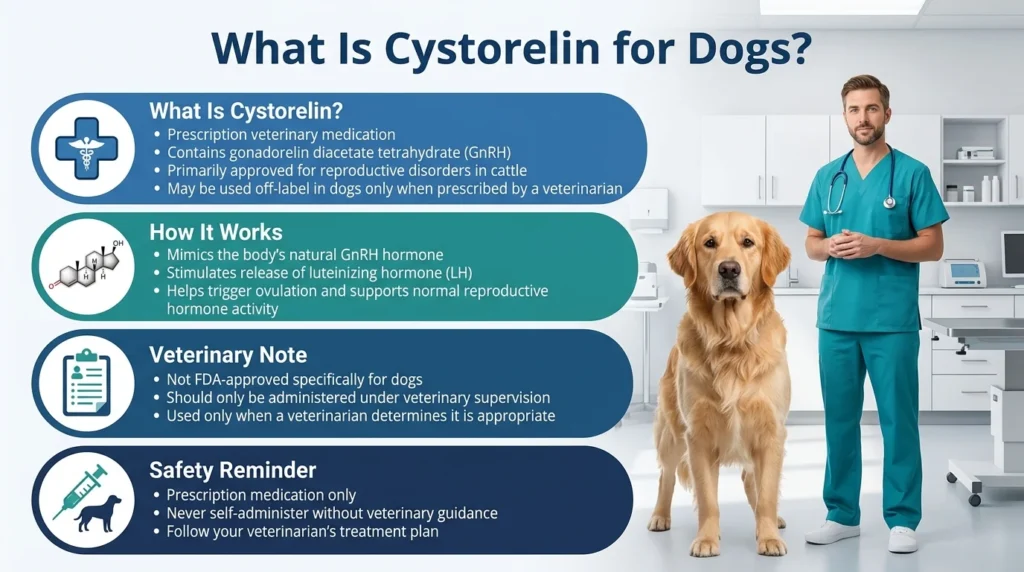
Cystorelin is a veterinarian-prescribed injectable medication that contains gonadorelin (gonadotropin-releasing hormone, GnRH) diacetate tetrahydrate. Supplied as a sterile solution, containing 50mcg/mL gonadorelin, and is given by intramuscular (IM) or intravenous (IV) injection. It is FDA approved to treat the condition of cystic (ovarian follicular) ovaries in cattle and may be used off label in dogs when, in the opinion of the veterinarian, it is indicated for a particular reproductive condition.
Cystorelin dog dosage acts by stimulating the body to produce its own luteinizing hormone (LH) which stimulates ovulation and luteinization. In cattle it is used in the treatment of ovarian follicular cysts, which are follicles that have not ovulated with incomplete luteinization and which may cause problems in reproduction such as irregular estrus. May also be used with cloprostenol sodium in reproductive synchronization programs, to assist with planned, timed breeding and improve reproductive efficiency.
There is no standard canine indication and dosage as Cystorelin is not FDA approved for use in dogs. Use in dogs should be pre-negotiated with a veterinary practitioner, and should be dependent upon the reproductive condition of the dog, and the amount and duration of use should be determined by that.
Benefits of Cystorelin for Dogs
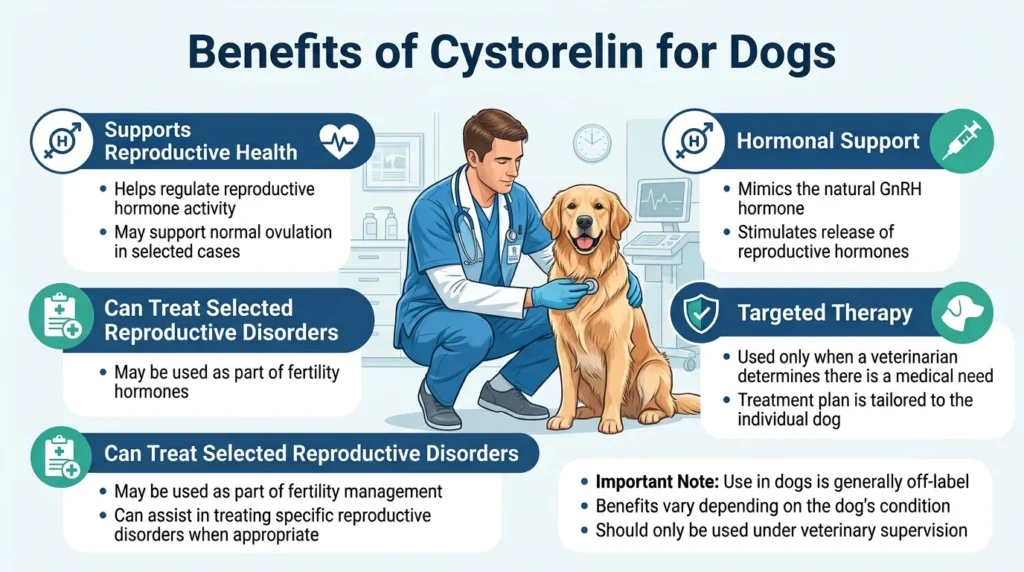
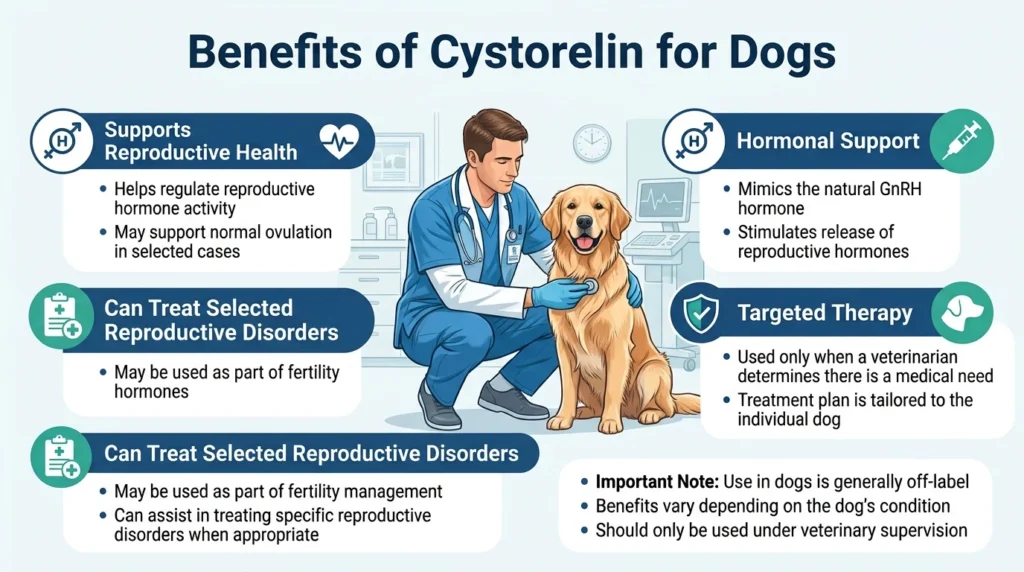
Cystorelin drug is not FDA approved for use in dogs but can be used off label in certain reproductive conditions if clinically indicated. It has gonadorelin diacetate tetrahydrate, gonadotropin-releasing hormone (GnRH), which stimulates the release of luteinizing hormone (LH) to help regulate normal reproductive function. Use in dogs is off-label and so the benefits will vary from dog to dog and should always be assessed by a veterinarian.
Cystorelin may offer several benefits, such as:
- May be able to assist with the treatment of some reproductive conditions, when used off-label.
- Increases the release of luteinizing hormone (LH) from the body.
- Hormone that stimulates and supports ovulation and luteinization.
- Consists of a well-known GnRH hormone, gonadorelin diacetate tetrahydrate.
- Provided in a sterile, ready-to-use injectable product that does not require any mixing.
- May be injected into the muscle (IM) or vein (IV) by a veterinarian.
- It is FDA registered for cattle to treat ovarian follicular (cystic) ovaries and has shown efficacy in reproductive hormone therapy.
- Only to be used under veterinary supervision and with the dose and treatment plan customized to the individual dog.
How Cystorelin Works for Dogs
Cystorelin medication is approved for use in cattle and is used off label in dogs, but its mechanism of action is the same. It is a gonadotropin-releasing hormone (GnRH) called gonadorelin diacetate tetrahydrate, which increases the production of the hormone, luteinizing hormone (LH), in the body which is released from the pituitary gland. The rise in LH facilitates the process of ovulation and luteinization essential for normal reproductive function.
Cystorelin dog dose is used for the treatment of ovarian follicular (cystic) ovaries, which are a reproductive abnormality caused by failure of the follicles to ovulate and by a failure of these follicles to completely luteinize resulting in irregular estrus. Veterinarians use the same hormonal mechanism, when used off label in dogs, to control specific reproductive conditions in order to address the individual dog’s clinical situation and diagnosis.
Cystorelin Indications for Dogs
Cystorelin has in its composition the gonadotropin-releasing hormone (GnRH), gonadorelin diacetate tetrahydrate, which acts on the body’s own luteinizing hormone (LH) to release it to stimulate ovulation and luteinization. It is FDA approved for cattle, but can be prescribed off label in dogs for some reproductive issues when clinically indicated.
Approved Indications (Cattle)
- Treatment of ovarian follicular (cystic) ovaries in dairy cows.
- Does not develop into ovulation becomes non-ovulated follicles with incomplete luteinization, causing irregular estrus.
- Provokes the release of endogenous LH and induces ovulation and luteinization.
- In combination with cloprostenol sodium for the synchronisation of estrous cycles for fixed-time artificial insemination (FTAI) in lactating dairy cows and beef cows.
Indications in Dogs
- There are no FDA approved indications for dogs.
- Cystorelin can be used off-label for certain reproductive or fertility-related conditions at a veterinarian’s discretion for the individual dog.
Cautions When Using Cystorelin for Dogs
Cystorelin medication for dogs is a prescription veterinary drug and its use is limited to or on the order of a licensed veterinarian as per U.S. federal law. It should only be given under veterinary supervision, and should never be given by owners without veterinary prescription or instructions.
Cystorelin is not FDA approved for use in dogs, so any use in dogs is off-label and should be based on a veterinarian’s clinical judgment and the dosage and treatment plan should be adjusted to the individual dog.


Paid Links - As an Amazon Associate, I earn from qualifying purchases.
Warnings and Precautions for Cystorelin in Dogs
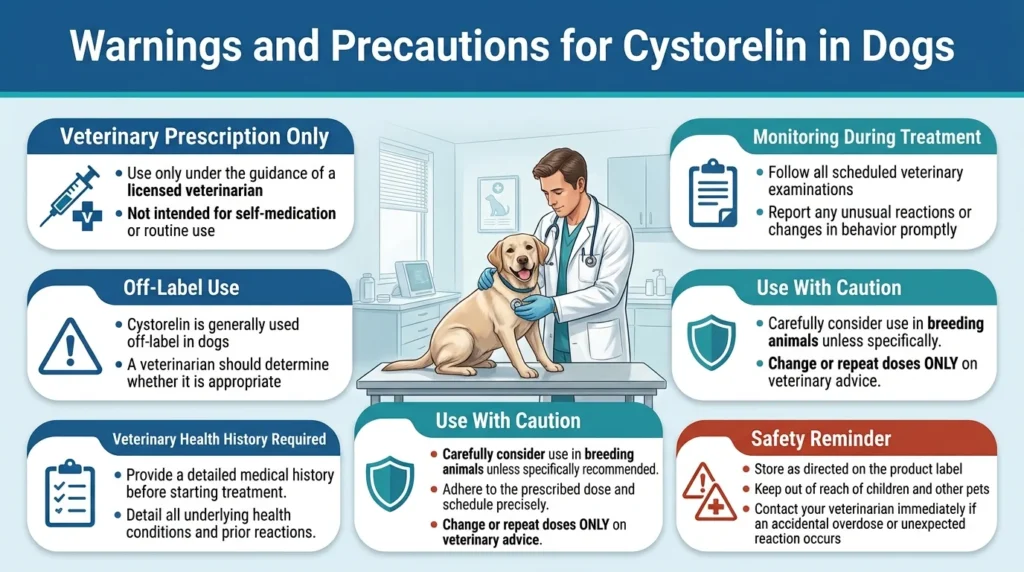
Cystorelin is an off-label medication, so when using it for dogs, follow all of your veterinarian’s instructions. Keep these important safety precautions in mind:
- Not for use in humans.
- Ensure that Cystorelin and all medications are kept where children cannot reach them.
- Do not deviate from your veterinarian’s treatment plan, such as dosage or treatment schedule.
- If a dose or time for a treatment is missed, contact your veterinarian right away, who will be able to tell you what to do.
- Before using, see the product label or package for more safety information.
How to Store Cystorelin for Dogs
To maintain the medication’s quality and effectiveness, store Cystorelin medicine at or below 77°F (25°C). Short duration of temperatures up to 86°F (30°C) are acceptable, but extended exposures to higher temperatures should be avoided. Once the vial has been first punctured, it should be used within 6 months. Always keep in mind the instructions on the medication label and store the medications in a safe place away from children.
You May Also Like to Read:
- K9 Advantix II Dosage For Dogs: Calculator & Safe Guide
- Betagen Dosage For Dogs: Calculator & Safe Guide
FAQs
For what is Cystorelin medication prescribed to a dog?
Cystorelin is not approved by the FDA for use in dogs, but it can be used off-label for some reproductive conditions. It is used for the regulation of reproductive function containing a hormone called gonadorelin and should only be used under veterinary supervision.
How does Cystorelin dosage work?
Cystorelin drug is made up of the gonadotropin releasing hormone (GnRH) called gonadorelin, which stimulates the release of luteinizing hormone (LH). This hormone is used for certain reproductive disorders as it promotes ovulation and luteinization.
Is Cystorelin FDA approved for dogs?
No. It is FDA approved treatment for ovarian follicular cysts in cattle. All uses in dogs are off-label and must be at the veterinary surgeon’s discretion.
What are the possible side effects of Cystorelin in dogs?
There is limited published information available on side effects in the dog because it is off label. Call your veterinarian right away if your dog shows any unusual symptoms after treatment, including allergic reactions, swelling or changes in behavior.
What do I need to know about precautions for using Cystorelin?
Cystorelin dosage for dogs is not for human use and should be kept out of the reach of children. Medication should be handled with caution by those with asthma or other respiratory disorders, and women of child bearing age. In case of accidental skin contact, thoroughly wash the affected area with soap and water.
What should I do if I miss a dose of Cystorelin?
In the event of your dog missing a scheduled dose, please consult your veterinarian for advice. Avoid administering an additional dose or altering the dose times unless directed to do so by your veterinarian.
If my dog gets too much Cystorelin what do I do?
Call your veterinarian or local emergency animal hospital right away if you suspect your dog of being overdosed! If there is no obvious clinical sign, then immediate veterinary evaluation is recommended.
Is it possible to use Cystorelin at home?
Cystorelin is a prescription medicine that is injected into a horse and only should be administered with your veterinarian’s instructions. Being used off-label in dogs, dosage, timing and administration should always be left to a licensed veterinarian.
Key Takeaways
- Cystorelin (gonadorelin diacetate tetrahydrate) is a prescription GnRH injectable medicine, approved by the FDA in cattle, not dogs.
- Cystorelin medicine for dogs is not FDA-approved for use in dogs and is only used off-label when a veterinarian deems it fit for certain reproductive issues.
- The drug’s action is to stimulate the release of luteinizing hormone (LH), which stimulates ovulation and luteinization.
- No FDA recommended dosage for dogs, always follow veterinarians recommended dosage and schedule.
- Cystorelin is given as an intramuscular (IM) or intravenous (IV) injection by a veterinarian.
- Store between 77°F (25°C) or below, and briefly at up to 86°F (30°C); use the vial within 6 months of the first puncture.
- Do not use Cystorelin on humans, do not let children have access to Cystorelin and follow any handling and safety guidelines.
- If any doses are missed or if an overdose is suspected or unusual reactions occur after administration, contact your veterinarian immediately.
Final Thoughts
Cystorelin for dogs should only be used under the care of a licensed veterinarian since it is not FDA approved for use in dogs but is prescribed off label in certain reproductive conditions. There is no standard dosage for dogs, so proper dosage and treatment schedule should be determined for each dog. By following your veterinarian’s advice, proper storage, and monitoring your dog while he or she is taking the medication, you can help to ensure that the treatment is as safe and effective as possible.
Should there be any questions about the dosage of Cystorelin for dogs or suspected unusual reactions to the treatment, it is important to consult the veterinarian as soon as possible.