DL-Methionine Dosage Calculator For Dogs
Based on strict biomedical protocols for 500 mg strength tablets.
Veterinarians may recommend adding an essential amino acid supplement, such as DL-Methionine, to acidify the urine in dogs with some urinary tract diseases. DL-Methionine dosage for dogs is commonly used to assist with the treatment and prevention of struvite bladder stones and struvite crystals, which normally occur in alkaline urine and are often related to urinary tract infection (UTI). In addition to providing a comprehensive treatment plan, DL-Methionine lowers urine pH, thereby decreasing the pH of the urinary environment and reducing new struvite crystals from forming and helping to dissolve pre-formed crystals.
DL-Methionine is not labeled as a veterinary drug, but may be administered safely under the prescription of a veterinarian when extra urine acidification is desired or when a prescription urinary diet is not indicated. It comes in several formulations for vet use including Methio-Form®, Ammonil®, generic DL-Methionine tablets and in some over-the-counter products like Methigel®. It’s also used in some pet foods and nutritional supplements because of its important role in normal growth and metabolism.


Paid Links - As an Amazon Associate, I earn from qualifying purchases.
DL-Methionine medication should never be used as an alternative therapy for the underlying cause of the urinary disease. Dogs that have struvite stones may need antibiotics to treat any bacterial infections, a urinary diet prescribed by the veterinarian, plenty of water and frequent urinary checks of the pH and the health in general. In this guide, you’ll learn the recommended DL-Methionine dosage for dogs, how it works, dosage charts, potential benefits, side effects, precautions, and important safety tips to help you use this supplement responsibly under veterinary guidance.
What is DL-Methionine Dosage For Dogs?
Using DL-Methionine medication to dose dogs is a veterinary supportive care approach that is used to help reduce the urinary pH of a dog, and is specifically used to help manage or prevent the formation of struvite crystals and bladder stones. The starting dose of DL-methionine for dogs is 25 mg per kg of body weight, often given as 500mg scored tablets so that it can be given in fractional doses.
This urinary acidifier’s clinical goal is to keep dog urine in a narrow pH range of 6.0 to 6.5. Since it is important to maintain urinary chemistry, dosage should only be determined by regular veterinary urinalysis, and should not be used in dogs with kidney failure, liver disease, pancreatic disorders, or dogs already on a prescription urinary diet.
DL-Methionine Dosage Chart For Dogs By Weight
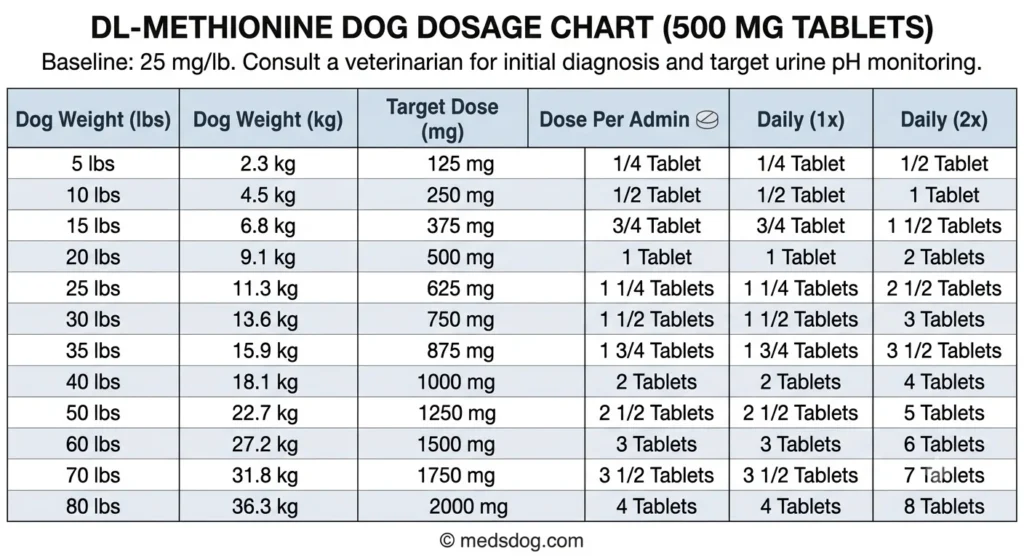
Here is the quick-reference dosage table for DL-Methionine (500 mg tablets) based on a baseline dose of 25 mg per pound of body weight, rounded to the nearest practical tablet fraction.
| Dog Weight (lbs) | Dog Weight (kg) | Target Dose (mg) | Dose Per Administration | Total Daily (Once Daily) | Total Daily (Twice Daily) |
| 5 lbs | 2.3 kg | 125 mg | ¼ Tablet | ¼ Tablet | ½ Tablet |
| 10 lbs | 4.5 kg | 250 mg | ½ Tablet | ½ Tablet | 1 Tablet |
| 15 lbs | 6.8 kg | 375 mg | ¾ Tablet | ¾ Tablet | 1 ½ Tablets |
| 20 lbs | 9.1 kg | 500 mg | 1 Tablet | 1 Tablet | 2 Tablets |
| 25 lbs | 11.3 kg | 625 mg | 1 ¼ Tablets | 1 ¼ Tablets | 2 ½ Tablets |
| 30 lbs | 13.6 kg | 750 mg | 1 ½ Tablets | 1 ½ Tablets | 3 Tablets |
| 35 lbs | 15.9 kg | 875 mg | 1 ¾ Tablets | 1 ¾ Tablets | 3 ½ Tablets |
| 40 lbs | 18.1 kg | 1000 mg | 2 Tablets | 2 Tablets | 4 Tablets |
| 50 lbs | 22.7 kg | 1250 mg | 2 ½ Tablets | 2 ½ Tablets | 5 Tablets |
| 60 lbs | 27.2 kg | 1500 mg | 3 Tablets | 3 Tablets | 6 Tablets |
| 70 lbs | 31.8 kg | 1750 mg | 3 ½ Tablets | 3 ½ Tablets | 7 Tablets |
| 80 lbs | 36.3 kg | 2000 mg | 4 Tablets | 4 Tablets | 8 Tablets |
Important Clinical Reminders:
- Urinary pH Target: This matrix aims to assist in achieving a strict urine pH baseline between 6.0 and 6.5.
- Urinalysis Required: Do not modify or scale these standard thresholds without active monitoring via veterinary urinalysis.
- Contraindications: Absolutely contraindicated in cases involving canine pancreatic disorders, severe liver disease, advanced kidney failure, or when the dog is already consuming a prescription urinary acidifying diet.
What Is DL-Methionine?
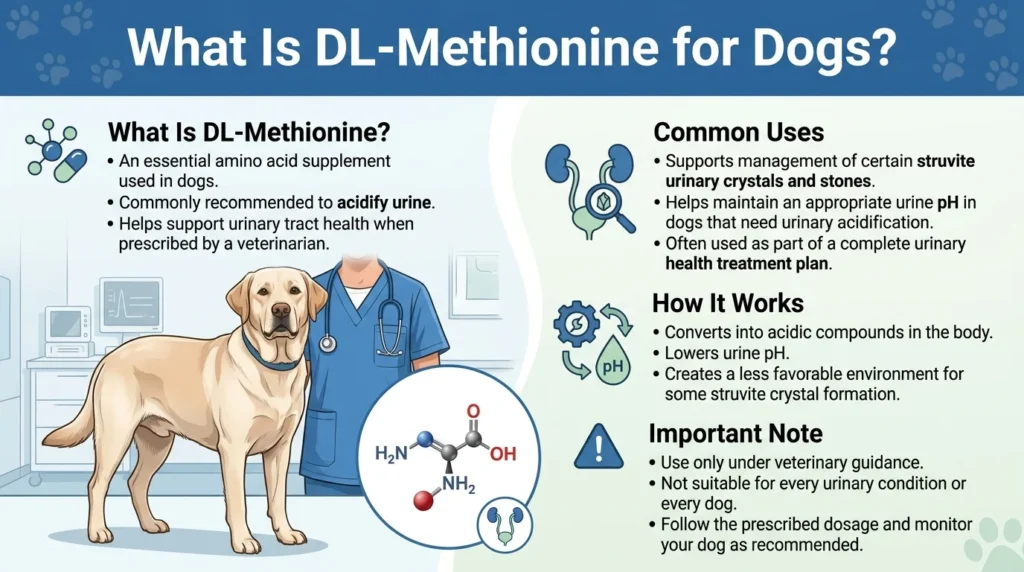
DL-Methionine is a synthetic methionine (essential amino acid) often used as a urinary acidifier in dogs and cats. The body is unable to synthesize this essential amino acid, so it must be consumed through the diet or supplemented. DL-Methionine in veterinary medicine is mainly employed to reduce urine pH to prevent and treat struvite (magnesium ammonium phosphate) bladder stones and crystals (which are more likely to develop in an alkaline urine environment). It can also help decrease the tendency of recurrent urinary tract issues when used as directed by a veterinarian as it creates a more acidic urinary environment.
While DL-Methionine is not approved by FDA as a veterinary drug, DL-Methionine dosage has been used safely, for decades, under veterinary supervision. Generally given when a dog needs extra acidification of the urine other than from a therapeutic urinary diet, and/or when a therapeutic urinary diet is not appropriate. Antibiotics for any underlying urinary tract infections, increased water intake, diagnostic testing and regular follow-up to assure that treatment is effective, are also often a part of treatment of struvite stones.
There are a variety of veterinary preparations that contain DL-Methionine, such as the chewable tablets Methio-Form®, generic prescription tablets, Ammonil® tablets, or some over-the-counter products, such as Methigel®. It also works its way into some commercial pet foods, urinary health supplements, and some grass-saving treats to help keep the odor down and to lessen damage to the lawn. DL-Methionine is only to be administered as a supplement per veterinarian’s direction or as part of a complete urinary health program.
How DL-Methionine Works
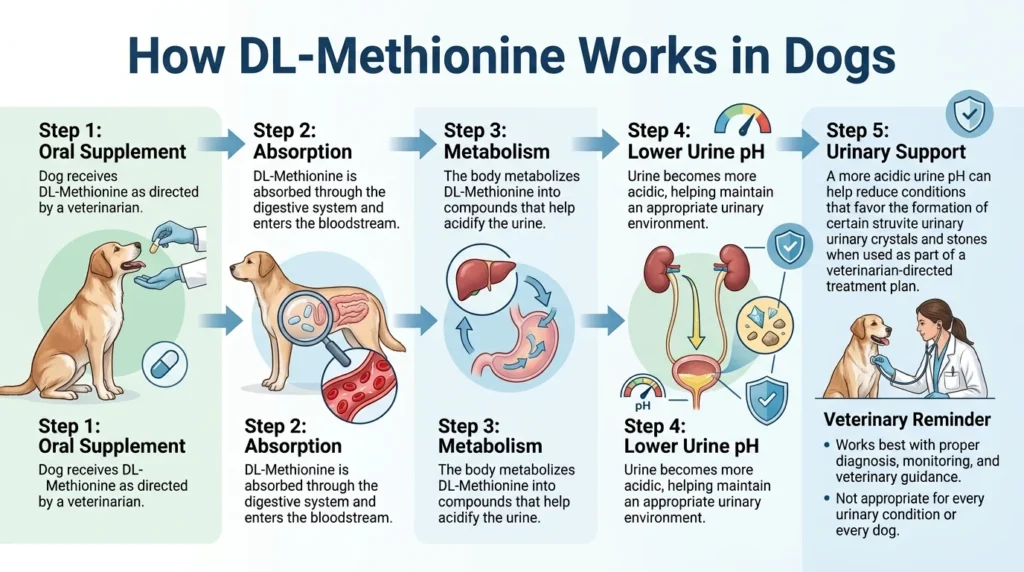
DL-Methionine is a urinary acidification supplement which is used to treat some urinary tract disorders by reducing the pH of urine. Once ingested and metabolized, the amino acid produces sulfuric acid which promotes increased acidity in the urine. The change in urinary pH makes it more difficult for struvite (magnesium ammonium phosphate) crystals and urinary stones to form and can help dissolve any struvite stones (as part of a veterinarian designed treatment program).
Since the stones form with alkaline (basic) urine, acidifying the urine will help to reduce the conditions that allow the stones to grow. Due to this, DL-Methionine dosage is often utilized for the treatment and prevention of some types of bladder stones, and for urinary health, where extra acidification of the urine is needed.
DL-Methionine is not a general urinary supplement, and should only be used under the advice of a veterinarian. It is recommended after proper diagnosis only, and should be used in conjunction with a full treatment plan to treat specific urinary conditions with careful and appropriate changes in urine pH as based on a dog’s individual needs.
Benefits of DL-Methionine for Dogs
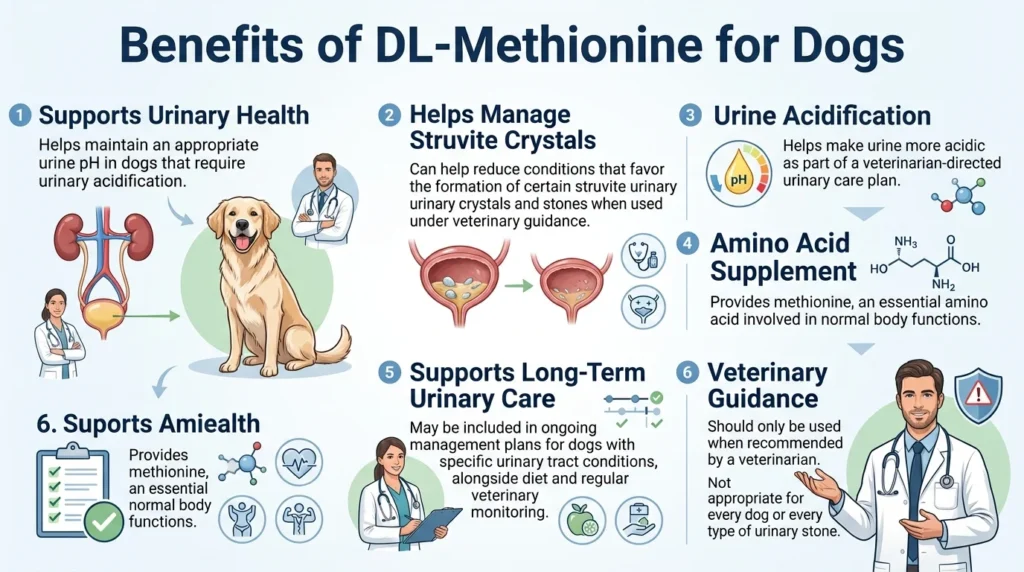
DL-Methionine dog dosage provides several benefits for dogs, especially those that need additional urinary support. The main function is to increase the acidity of the urine, which provides an environment that is not conducive to the formation of struvite crystals and bladder stones. If under veterinary care, it can be a beneficial component in an ongoing urinary health program.
The possible advantages of DL Methionine for dogs are:
- Helps to make urine more acid, and therefore to lower urine pH.
- Helps to stop formation of Struvite bladder stones.
- Helps treat and prevent some urinary problems.
- May assist in management of bladder infections under veterinarian’s direction.
- May help prevent some alkaline type kidney and bladder stones.
- Helps to eliminate excessive odors of urine or foul urine odors.
- May decrease nitrogen levels in urine, which reduces the amount of damage to lawns from dog urine.
- Functions as an antioxidant to protect cells against oxidative stresses.
- Helps to maintain normal immune response and a healthy immune system.
- May alleviate some seasonal allergies in dogs.
- Easy to administer, many are able to be mixed with food or given in tablet, chewable, or gel form.
These benefits can be great, but using DL-Methionine should only be done as directed by your vet for the right purpose.
DL-Methionine Possible Side Effects
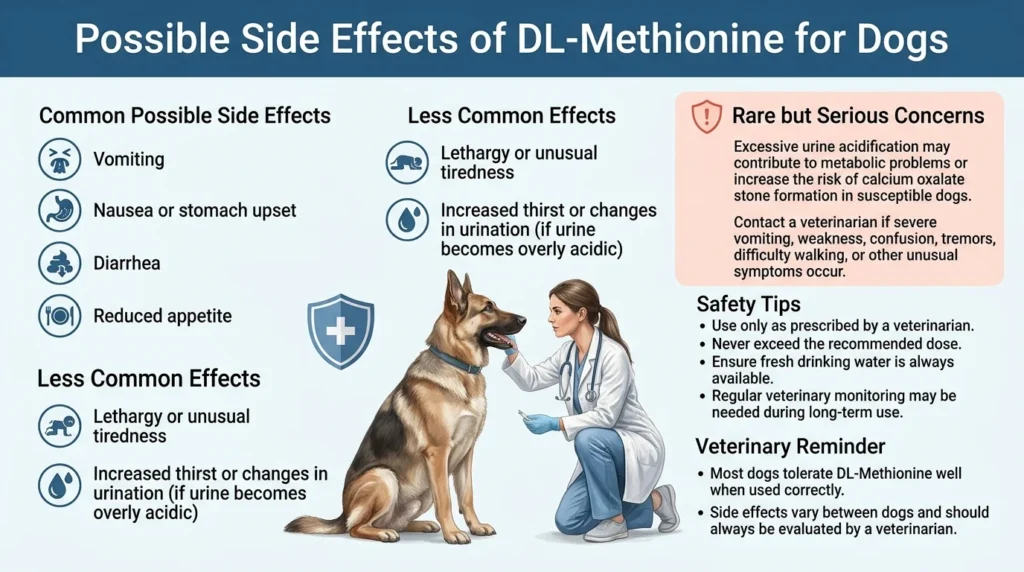
DL-Methionine is generally well tolerated when prescribed by a veterinarian, but side effects may occur if the supplement is over dosed, or given when medically not indicated. Most side effects are minor, affecting the digestive system, and over acidification of the urine may cause more serious health issues. Veterinary monitoring and following the prescribed dosage are important to ensure safe use.


Paid Links - As an Amazon Associate, I earn from qualifying purchases.
The side effects of DL-Methionine are:
- Decreased appetite or loss of appetite
- Nausea
- Vomiting
- Diarrhea
- Unsteadiness, a lack of coordination (ataxia)
Side effects of an overdose or long-term use may be:
- Acidosis due to over acidification of the urine
- Low levels of potassium (hypokalemia).
- Osteoporosis with long-term excessive use
- Hemolytic anemia
- Lethargy
- Weakness
- Muscle cramps
- Tremors
- Seizures
- Bluish gums or tongue (cyanosis)
In a retrospective review of 1,525 dogs exposed to methionine-containing urinary acidifying products, 47% developed clinical signs, with vomiting and ataxia being the most commonly reported. Symptoms generally appeared within a few hours of exposure and resolved within 48 hours, with no fatalities reported. Chronic or unnecessary use can lead to excessive urine acidification and metabolic acidosis, making veterinary supervision essential.
If your dog develops unusual, severe, or persistent side effects—especially neurological signs, severe weakness, difficulty walking, seizures, or blue-colored gums—contact your veterinarian immediately or seek emergency veterinary care.
DL-Methionine Precautions for Dogs
DL-methionine medication is not suitable for all dogs, and should only be given on veterinary advice. It can be helpful in some urinary problems, but not using it properly or in the wrong patient can potentially lead to complications if it is used unnecessarily. Your veterinarian will decide if DL-Methionine is safe for your dog depending on his medical history, health status and urinary condition.
Some key considerations are:
- Administer DL-Methionine according to veterinarian’s instructions.
- Avoid giving to dogs with liver, kidney, or pancreatic disease unless advised by your veterinarian.
- Do not use in puppies, pregnant or nursing dogs unless directed by veterinarian.
- Take exactly what has been prescribed – don’t take more than recommended.
- Watch for any side effects, like vomiting, diarrhea, loss of appetite, or allergic reaction.
- If your dog has unexpected or extreme side effects, discontinue the supplement and see your vet.
- It may need to be monitored by regular veterinary examinations and urine tests to be sure it is safe and effective.
Each dog’s health requirements vary and use of DL-Methionine should not be initiated or discontinued without your veterinarian’s approval. With good veterinary care, its benefits can be maximised and risks minimised.
How to Give Your Dog DL-Methionine
Only use DL-Methionine as directed by your veterinarian as part of a complete urinary health treatment plan. The right dosage is based on your dog’s body weight, diet, and overall health and the desired level of urine acidification. Your veterinarian may also make follow-up appointments and urinalysis tests to keep an eye on urine pH and to make sure that the treatment is safe and effective.
Tips for giving DL-Methionine to your dog:
- Administer medication in accordance with veterinarian’s instructions.
- Always carefully follow all dosing directions and seek clarification from your vet or pharmacist if you’re not sure.
- DL-Methionine is normally supplied in chewable tabs which can be administered straight or crumbled and blended into feed.
- Given with food to aid tolerance.
- Once or twice daily with food is the typical dosage range for a dog, which is ½ tablet for every 10 pounds (4.5 kg) of body weight; your veterinarian may decide that a different dosage is necessary for your dog.
- Let your veterinarian know if your dog takes any other medications, prescription urinary diets, treats or supplements.
- Avoid using extra urine acidifiers or supplements other than those recommended by your veterinarian.
- Keep DL-Methionine out of the reach of pets and children.
- When buying veterinary supplements, make sure that you are buying from a quality manufacturer with a good reputation.
The amount of methionine some might already be getting in their diet, commercial dog foods, and supplements may be enough. Never exceed the dosage or more often than prescribed without veterinary advice as too much DL-Methionine drug or dogs could cause serious health issues and is dangerous. Always use your veterinarian’s recommendations for the safest and best treatments.
DL-Methionine Drug Interactions
Before beginning treatment, be sure to tell your veterinarian if your dog is taking any other medications, as DL-Methionine can interact with some medications. Prescription & OTC medications, vitamins, nutritional supplements, herbal products, and special diets should all be included, as they may impact your dog’s treatment plan or need extra monitoring and supervision.
Known drug interactions are:
- Aminoglycoside antibiotics (e.g. gentamicin)
- Antiarrhythmics (e.g. quinidine)
Adding or withdrawing new treatments or supplements may alter the effectiveness of DL-Methionine and/or impact your dog’s urinary health, so never do so without consulting your veterinarian. Your veterinarian will be able to advise you if any adjustments to the dosage or extra monitoring is necessary to ensure your dog’s safety during treatment.
You May Also Like to Read:
- Certifect Dosage For Dogs: Calculator, Chart & Safe Guide
- Vitamin B Complex Dosage For Dogs Calculator & Safe Guide
FAQs
What are the functions of DL-Methionine in dogs?
DL-Methionine dosage is an acidifying agent for urine, which can be utilized to treat and prevent bladder stones and crystals in dogs under a veterinarian’s care. It may be used along with prescription urinary diet and sometimes other medications as necessary.
How long does DL-Methionine take to work?
DL-Methionine may start to decrease the pH of the urine within a few days, but it may take weeks to dissolve struvite bladder stones. It will depend on how many stones your dog has, the size of the stones, your dog’s compliance with the diet, the treatment of any UTI that may have occurred, and how well your dog is doing.
May I administer DL-Methionine to my dog without a doctor’s orders?
DL-Methionine dosage is only suitable for veterinary use. While trace amounts of it can be present in some pet foods and lawn-saver treats, it must be a prescription medication and be monitored carefully for safe urine acidification.
If I forget to take a dose of DL-Methionine, what should I do?
Take the missed dose when you remember it. If it is very close to the time for the next dose, miss it and then take the next dose as soon as you can. Do not double any doses.
Is DL-Methionine toxic to dogs?
Yes. Overdose can be severe and lead to vomiting, instability, weakness, shaking, confusion, convulsions, metabolic acidosis and other serious and potentially life-threatening side effects. If you think your pet has overdosed, call the veterinarian right away.
Will my dog need to be monitored by my veterinarian when receiving treatment?
Yes. Your veterinarian may periodically check your pet’s urine pH, urinalysis, and rechecks to make sure that the medication is working properly and to minimize the chances of over-acidifying your pet’s urine or having other side effects.
What is the best way to store DL-Methionine?
Keep in a tightly closed container at controlled room temperature (68-77 F or 20-25 C) away from moisture and light. Avoid storage or use by children and pets.
Is DL-Methionine effective in freshening up urine?
Yes. DL-Methionine can help lessen an odor to urine by making it more acidic. Some lawn-saver fertilizers also contain DL-Methionine for this as well, but do not use these supplements in place of veterinary treatment for a UT condition.
Key Takeaways
- DL-Methionine is an essential amino acid supplement that can be used to acidify urine in dogs with some urinary tract diseases.
- It is primarily used as part of the treatment plan to help treat and prevent struvite stones, and crystals, in the bladder.
- DL-Methionine supplements functions by decreasing the pH of the urine, which helps to make the urine less alkaline and therefore helps to prevent the development of struvite stones.
- Not licensed as a veterinary medicine, but often is used by vets when clinically indicated.
- In addition to DL-Methionine, treatment usually consists of urinary diets, antibiotics (if there is a UTI), water increases, and monitoring of urine regularly.
- Dosage will depend on your dog’s weight, health, diet and urine ph and should only be administered by your veterinarian.
- Side effects include vomiting, diarrhea, loss of appetite, and loss of balance (ataxia); an overdose can lead to serious symptoms including metabolic acidosis and neurological symptoms.
- DL-Methionine may not be the best choice of treatment for dogs with liver, kidney, pancreatic disease, metabolic acidosis or urate stones.
- Do not mix DL-Methionine with other products that acidify the urine or alter the dosage without the advice of a veterinarian.
- When you think your dog may be overdosed, or when he has serious symptoms, get emergency veterinary treatment right away.
Final Thoughts
DL-Methionine dosage for dogs can be used as a good supplement to dogs when extra acidification is required to help manage or prevent struvite stones and crystals in the bladder. It can be beneficial to urinary health when given properly under veterinary directions, serving to lower urine pH, and minimize conditions for the development of struvite stones. It is not a routine urinary supplement, but should only be used if a veterinarian feels it is suitable for your dog’s problem.
Never administer DL-Methionine to your dog without medical advice or do it in different doses because the proper amount can vary depending on your dog’s weight, diet, medical condition and urine pH. As directed by your veterinarian, follow-up visits as recommended and watch for side effects will help make sure that the supplement is both safe and effective. If you notice your dog reacts adversely, or if it appears to be overdosed, get veterinary attention immediately.