Valium Dosage For Dogs: Calculator Chart & Safe Guide
Valium Dosage Calculator For Dogs
- Frequency: Every 6 to 8 hours maximum.
- Rule of Three: Do not exceed 3 doses in 24 hours without immediate vet intervention.
In terms of treating such severe disorders as seizures, anxiety or muscle spasms in dogs, not many drugs are as well-known as (diazepam) Valium Dosage For Dogs.
Diazepam is a fast-acting prescription medication that is commonly used in human and veterinary medicine and is a member of the benzodiazepine group of medications;.



a group of medications that directly impact the central nervous system to produce calming, sedative, anti-anxiety, and muscle-relaxing effects.
In veterinary practice, it is very important in the emergency case such as the uncontrolled seizure and in the treatment of anxiety behaviors, urethral muscle spasms during urination and as a pre anesthetic sedative before a surgery.
The side effects of diazepam dosage for dogs are severe and fast acting and because of these reasons, veterinarians usually do not prescribe (diazepam) Valium dosage to dogs on an ongoing basis but rather on a short-term or need basis. Although it can save life in case of emergency or be very effectual in the case of situational anxiety, it should always be administered under strict veterinary guidance.
One should never administer Valium for dogs to their dog based on a home medicine cabinet without the advice of a professional since wrong administration or dosage may have serious side effects or complications.
In the event that your vet has prescribed this drug, then it is not at all unnatural to be curious. In this full dosage guide on Valium in dogs, I will discuss all you need to know, including the mechanism of action of diazepam, its use, the dose you should give to your dog, how to use it safely, and the side effects that it might cause, so that you can use it safely and effectively to help your dog.
Disclaimer: This guide is for informational purposes only and is not a substitute for professional veterinary advice.
Always consult your veterinarian before giving Valium or any medication to your dog.
Key Takeaways
- Diazepam (Valium) Dosage for dogs is a benzodiazepine drug that is being used in dogs to treat seizures, anxiety and urethral constriction and it is also frequently used as a pre-anesthetic sedative prior to veterinary performed procedures or surgery.
- The average Valium dosage for dogs is between 0.5 and 2 mg/kg administered on an as-needs basis under the guidance of a veterinarian.
- The most frequent side effects are sedation, loss of coordination, restlessness, agitation, vomiting, increase in appetite as well as aggression in some instances.
- Diazepam for dogs should not be used in dogs which are known to be allergic to the drug, and should be used under the advice of your veterinarian.
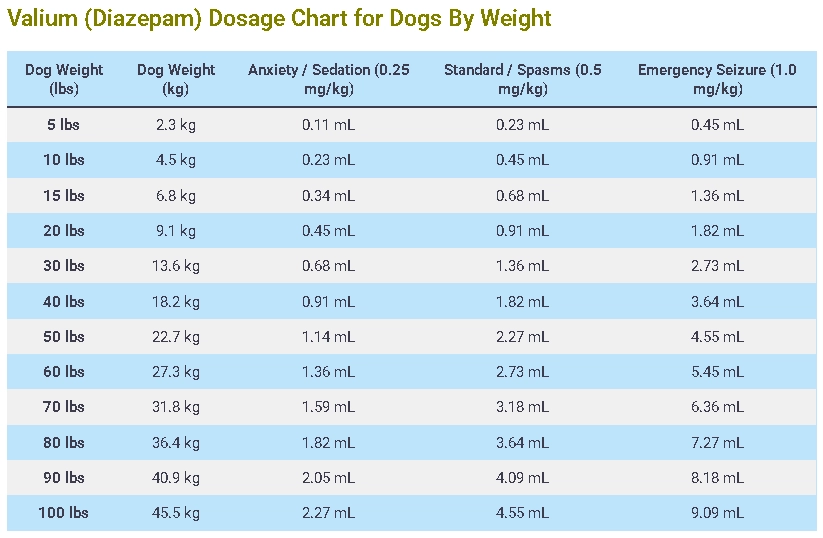
Valium (Diazepam) Dosage Chart for Dogs By Weight
This dosage table is calculated based on a standard veterinary concentration of 5 mg/mL (liquid diazepam). The values provided are for reference and represent the volume in milliliters (mL) required for different clinical scenarios.


| Dog Weight (lbs) | Dog Weight (kg) | Anxiety / Sedation (0.25 mg/kg) | Standard / Spasms (0.5 mg/kg) | Emergency Seizure (1.0 mg/kg) |
| 5 lbs | 2.3 kg | 0.11 mL | 0.23 mL | 0.45 mL |
| 10 lbs | 4.5 kg | 0.23 mL | 0.45 mL | 0.91 mL |
| 15 lbs | 6.8 kg | 0.34 mL | 0.68 mL | 1.36 mL |
| 20 lbs | 9.1 kg | 0.45 mL | 0.91 mL | 1.82 mL |
| 30 lbs | 13.6 kg | 0.68 mL | 1.36 mL | 2.73 mL |
| 40 lbs | 18.2 kg | 0.91 mL | 1.82 mL | 3.64 mL |
| 50 lbs | 22.7 kg | 1.14 mL | 2.27 mL | 4.55 mL |
| 60 lbs | 27.3 kg | 1.36 mL | 2.73 mL | 5.45 mL |
| 70 lbs | 31.8 kg | 1.59 mL | 3.18 mL | 6.36 mL |
| 80 lbs | 36.4 kg | 1.82 mL | 3.64 mL | 7.27 mL |
| 90 lbs | 40.9 kg | 2.05 mL | 4.09 mL | 8.18 mL |
| 100 lbs | 45.5 kg | 2.27 mL | 4.55 mL | 9.09 mL |
Key Administration Guidelines
- Standard Concentration: This table assumes a 5 mg/mL liquid concentration. If the concentration on the bottle is different (e.g., 2 mg/mL or 10 mg/mL), the mL dose must be recalculated using the formula: Weight in kg \times Dosage Rate / Concentration.
- Dosage Scenarios:
- 0.25 mg/kg: Used for mild anxiety, travel stress, or light sedation.
- 0.5 mg/kg: The standard rate for muscle relaxation and moderate sedation.
- 1.0 mg/kg: Typically reserved for active seizure emergencies.
- The "Rule of Three": In emergency situations involving seizure clusters, do not administer more than 3 doses within a 24-hour period without immediate veterinary intervention.
- Frequency: Doses should generally not be given more frequently than every 6 to 8 hours.
Note: These values are rounded for practical measurement. Always use a calibrated oral syringe for precise dosing.
What Is Valium (Diazepam)?
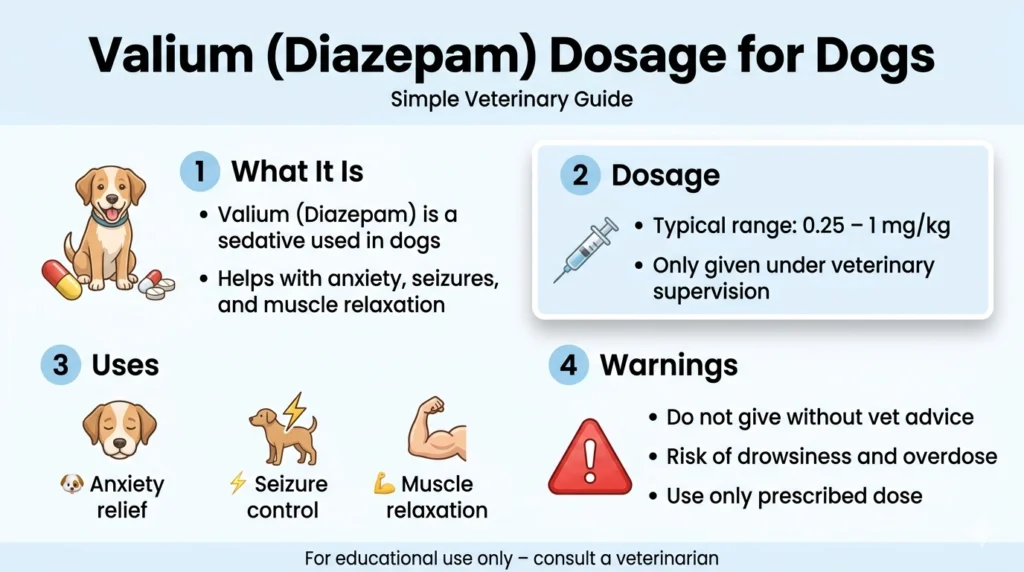
Valium (Diazepam), officially referred to as valium dosage is a prescription benzodiazepine drug that is used to treat the overworking of the nerve system, leading to a calming of overactive nerve activity in the body by amplifying the action of a brain chemical named GABA, which slows nerve impulses. Widely utilized in human and veterinary medicine, valium (diazepam) is not FDA-approved to use in humans but is often used in dogs in extra-label (off-label) prescribing by licensed veterinarians. Its misuse potential causes it to be a Schedule IV controlled substance, i.e. its prescribing, dispensing, and refilling are highly controlled.
(Diazepam) valium dosage for dogs per poung or kg is a rapid-acting and very efficient drug applied in emergency situations, as well as in everyday veterinary practice, in dogs. It is normally administered on a short term or as required basis since when taken on a long term basis, it will result on tolerance thus decreasing its effectiveness particularly in seizure control.
It can be given in various forms by veterinarians based on circumstances, and can either be used individually or with other therapies.
Some of the important applications and attributes of diazepam dosage in dogs are:
- Treats the seizures (including emergency cases) and assists in controlling the muscle spasms.
- Purposes of using it include anxiety, stress related behavior and relaxation of the muscles.
- Urethral constrictions aids and appetite stimulation.
- Usually used as a pre-operative or sedative prior to surgery.
- Comes in various forms: tablets, oral solution, injection and rectal gel.
- May be given orally, intravenously or rectally.
- Occasionally prepared to fit in a particular requirement when the standard forms do not fit.
- A benzodiazepine, which is a genus along with other drugs such as alprazolam and midazolam.
- Has a quick onset, good effect and proven safety record when administered with due veterinary care.
Common Uses of Valium (Diazepam) Dosage in Dogs
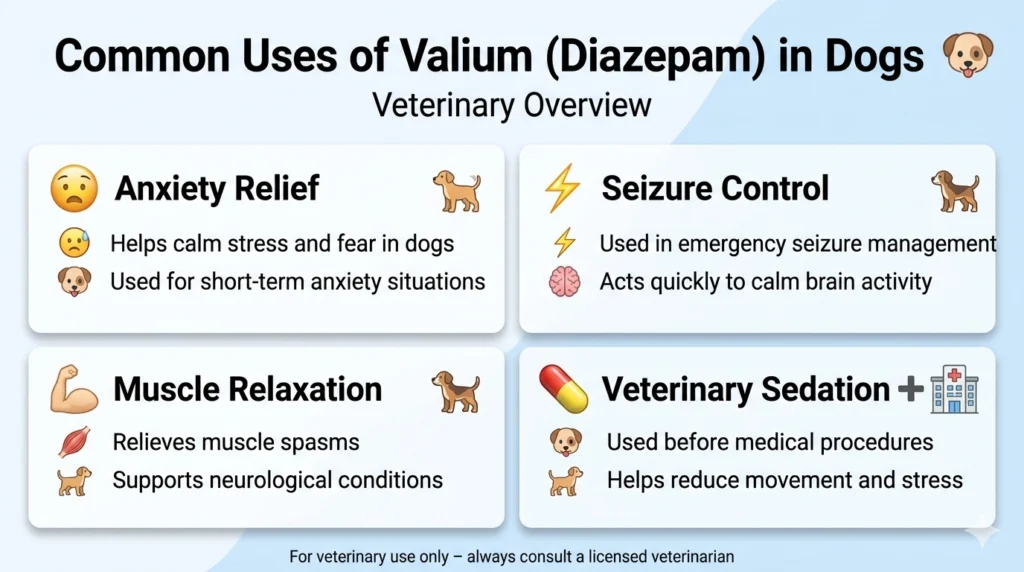
Diazepam (Valium) is a broad-spectrum, rapidly-acting drug popular with veterinarians because of its sedative, anti-anxiety, muscle-relaxing, and anticonvulsant effects.


It is prescribed by veterinarians used as both an emergency and short-term treatment of a number of medical and behavioral disorders, frequently on an as-needed basis as opposed to long term.
Valium Dosage for dogs is mainly used in dogs to:
- Seizure control (with emergencies): First-line therapy of active seizures and life-threatening seizures such as status epilepticus, usually by intravenous, rectal or intranasal route; can also be sent home to be used as a life-saving agent in dogs at risk of seizures.
- Anxiety and panic relief: Can be used in acute situation anxiety like thunderstorms, fireworks, travel, separation and veterinary visits; can also be utilized in behavioral problems such as aggression or compulsive behaviors.
- Pre-anesthetic sedation: Pretreatment of dogs prior to surgery or operations to sooth and relax them, as well as to facilitate induction of anesthesia, which may be combined with other drugs.
- Muscle relaxation and analgesia: Aids in the treatment of muscle spasms, stiffness, neurological disorders, injuries, intervertebral disc disease and extreme muscle contractions (such as snail bait poisoning)
- Urethral constriction relief: This is an relaxant of skeletal muscles of the urethra to assist dogs with urinary obstruction or difficulty in urinating, and is occasionally administered in divided doses daily.
- Stimulation of appetite: May temporarily stimulate the appetite in dogs that are not eating because of stress or illness (temporary use)
- Digestive and other disorders: Sometimes administered in irritable bowel syndrome, inflammatory bowel disease and metronidazole toxicity (drug poisoning)
Diazepam dose is available in various forms namely in oral tablets, injections, rectal gel or intranasal solution, depending on the condition and urgency.
Commonly administered off-label in veterinary care, it can be used as a stand-alone treatment or in conjunction with other therapies, depending on the particular needs of the dog.
Side Effects of Valium (Diazepam) in Dogs
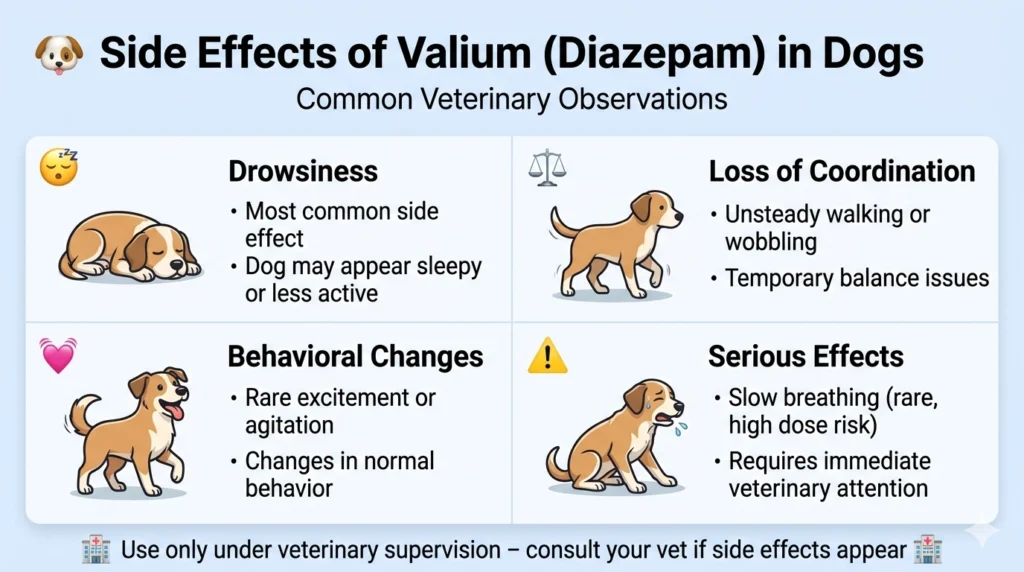
Valium (diazepam) drug for dogs tends to be safe in dogs under the care of a veterinarian when administered properly, but has a variety of side effects, both mild and severe. The majority of side effects are associated with its muscle-relaxing and sedative properties but some dogs can be unpredictable.
The most usual side effects are:
- Drowsiness, fatigue, grogginess and sedation.
- Weakness, unsteady gait, clumsy, loss of coordination (ataxia).
- Feeling lost or confused or seeming to be dazed.
- Hunger and drooling.
- Mild stomach problems like vomiting or diarrhea.
- Behavioral changes, e.g., restlessness, agitation, or aggression.
Paradoxical (opposite) reactions:
- Other dogs can get excited, anxious, hyperactive, or vocalize rather than have a calming effect.
- May increases aggressive or unwanted behaviours in some dogs.
Serious or not very frequent side effects:
- Severe drowsiness or extreme drowsiness.
- Low blood pressure
- Liver issues (rare but serious), particularly with repeated or chronic use; symptoms include jaundice (yellowing of the eyes, gums or skin), vomiting, diarrhea, loss of appetite and weakness.
Important safety considerations:
- Medications that may have drug interactions include antacids, omeprazole, erythromycin, ketoconazole, rifampin, propranol, narcotics, barbiturates, dexamethasone and some antibiotics.
- Tolerance may come about rapidly, and make the tolerance less effective in the long run.
- Withdrawal symptoms can be observed with abrupt withdrawal after prolonged use including rebound seizures or anxiety-tapering is necessary.
- The side effects normally pass as the drug passes out of the body, although the effects can be prolonged in dogs with liver or kidney diseases.
In case of emergency, call a veterinarian:
Incessant vomiting, intense lethargy or abnormal behavior, Indications of liver problems like jaundice, Any extreme or aggravated side effects.
Valium (Diazepam) Dosage for Dogs
The amount of Valium for dogs dosage dosage that should be given to a dog should always be decided by a veterinarian since the dosage is determined by the factors such as body weight, health status and the mode of administration of the drug.
It is a strong medication and owners must never seek to make any calculations or modify the medication without professional advice.
The most common dose is usually between 0.25 -1mg per pound (0.5 - 2mg/kg) and can be administered orally, intravenously, rectally or nasally. Rectal administration in cases of emergency, like seizures, is usually employed, where there is no access to the IV, and the dosage can be somewhat increased based on the case.
Doses of approximately 0.5 1mg/kg are commonly used to control partial seizures including cluster seizures or status epilepticus with up to 2mg/kg in a sick dog on drugs such as phenobarbital and can be repeated up to three times in 24 hours.
In case of situational anxiety, valium dosage for dogs is usually administered by mouth at the dosage of 0.5- 2mg/kg every 4-6 hours as required whereas in cases of a muscular-related condition or pain moderate dosages of diazepam may be administered at every 8-12 hours.
Lower doses can be applied in cases of digestive problems, but in cases of urethral obstruction higher divided doses can be prescribed.
In other instances, diazepam can be used on-demand, on a routine schedule or even as a slow-rate infusion in an inpatient environment.
Due to wide variations between dosage dependent on the condition and response, it is important to adhere to the instructions given to you by your veterinarian and not to change anything without their consent.
How Diazepam Dose Is Supplied
Diazepam for dogs dose comes in various formulations both in the human and veterinary market, thus providing a degree of flexibility in the type used depending on the type of dog and the urgency of treatment.
It is available as tablets of 2 mg, 5mg and 10mg, and oral liquid solution with a usual concentration of 1mg/mL or 5mg/mL.
In the case of emergency and clinical use, diazepam is also provided in injectable form (typically 5 mg/mL), most commonly in veterinary hospitals, commonly to control excessive seizures quickly.
In some instances, veterinarians can prescribe injectable diazepam, which can be administered at home by its owners in case of an emergency and especially in dogs which are likely to have seizures.
How Is Valium (Diazepam) Dosage Given to Dogs?
The dosage of diazepam for dogs can be administered to the dogs in a variety of ways, depending on the ailment being treated, and the speed with which the drug should work.
It comes in tablet forms, liquid, gel and injectable forms with varying concentrations that can be used in special purposes.
Oral route is the most commonly used route of administration to be used at home, usually in the form of tablets or liquids.
valium dosage for dogs can also be administered rectally in gell or liquid form to rapidly absorb it during time of emergencies (particularly in seizures). It is commonly used in veterinary practices, where it is given intravenously (IV) to have immediate action and is used under supervision.
Veterinarians will give there clear and detailed instructions on how and when to take each dose and it is imperative to adhere to these instructions carefully in order to have safe and effective treatment.
Diazepam Risks – Drug Interactions & Other Complications
Diazepam (valium) medication is typically safe when administered to dogs under the guidance of a veterinarian, although it has significant risks, particularly in those dogs with liver or kidney disease since these conditions have the capacity to influence the metabolism of the drug.
Under these circumstances, a veterinarian should precisely make the dosage and observe the dog.
One of the biggest issues with diazepam is that it can lead to drug interactions which may either increase the side effects or decrease the effect or change the mechanism of action of the drug.
Before starting diazepam it is critical to inform your veterinarian about all medications, supplements and herbal products that your dog is taking.
Some of the frequent interactions with drugs include:
- Depressants of the central nervous system (e.g., opioids, sedatives), which may cause drowsiness and sedation.
- Anxiety drugs and antidepressants (e.g., amitriptyline, fluoxetine)
- Seizure drugs (e.g., phenobarbital, phenytoin)
- Heart drugs (e.g., digoxin, quinidine, amiodarone, propranol), and some of the effects are enhanced.
- Antibiotics (e.g., erythromycin)
- Antifungal drugs (e.g., ketoconazole, itraconazole)
- Antacid medications and omeprazole and cimetidine, which can slow or accelerate the action of drugs (e.g., stomach acid drugs).
- Other benzodiazepines or sedatives, which put one at risk of excessive sedation.
- Theophylline, melatonin and some anti-cancer therapy Antihypertensive drugs, theophylline, melatonin and some cancer treatment.
Additional considerations include:
- The effects of diazepam may be delayed by antacids.
- Diazepam has the potential to increase the actions of some drugs such as digoxin and amitriptyline.
- It can cause an interference with urine glucose tests and give a false-negative.
Due to these dangers, valium dose is to be administered under strict veterinary control, and possible abnormal reactions or suspicions must be reported as soon as possible.
What Are the Most Serious Risks of Valium Dosage for Dogs?
Under normal conditions, diazepam is safe to use as per the prescription of the veterinarian, but in some cases, it is life-threatening, particularly when it is abused or administered to high-risk dogs. The worst side-effects are rare and may be fatal.
Diazepam poses the greatest dangers to dogs; loss of consciousness, coma and death, especially in the case of overdose or failure to metabolize the drug.
Such risks are very high in the liver-diseased dogs, as diazepam is hepatically metabolized and may reach to lethal proportions, when the liver fails to eliminate it.
Owing to these risks, diazepam must not be administered without the close supervision of a veterinarian and any symptoms of overdose or serious response are emergency veterinary visits.
Diazepam should NOT be used in:
- Dogs that are known to be allergic to diazepam or other benzodiazepines.
- Dogs that have a severe liver disease.
- Unless necessary and only with the approval of a veterinarian, pregnant or lactating dogs (in the first trimester in particular) are prohibited.
- Cats (it should be used orally) because of the possibility of fatal liver failure.
Extreme care should be taken when administering diazepam to the dogs that have:
- Kidney or liver disease.
- Breathing/ respiratory issues.
- Myasthenia gravis
- Glaucoma
- A debilitated, old, overweight or stunned state.
- Aggressive or those in working positions.
The owners should never make any changes to the dosage as they can be severely toxic with overdose. It is necessary to provide an immediate veterinary treatment in case a dog exhibits such symptoms like excessive sedation, weakness, or some signs of severe neurological depression.
You May Also Like to Read:
- Zofran Dosage For Dogs Calculator: Dosage Chart & Guide
- Lactulose Dosage For Dogs: Calculator, Chart & Safe Guide
FAQs
What can I do in case of missed dose of valium (diazepam) with my dog?
In case of missed dose, take it as soon as it is remembered and resume taking subsequent dose at the showcased time. Do not take two doses at the same time since it risks the danger of side effects. Get in touch with your veterinarian in case you are not sure of what to do.
Are diazepam and diazepam combination the long-term seizure control agents in dogs?
No. valiium dosage is primarily a short-term/emergency seizure control agent since it is a short-acting medication. It cannot be used to treat epilepsy in the long term and veterinarians normally prescribe other medications to be taken in the long term.
What would occur in case my dog is overdosed with diazepam?
Due to an overdose serious symptoms may include extreme sleepiness, confusion, disorientation, low body temperature, slow heart rate, involuntary muscle movement or aggression. In extreme instances, it may result in serious complications which may need emergency treatment.
What is the duration of valium in dogs?
In dogs, diazepam is a short-term drug that lasts a few hours, with the effects of the drug varying depending on the dose, disease, and method of administration.
Will diazepam cause my dog to sleep?
Yes, it does make one feel sleepy and groggy. Nevertheless, not all dogs will react in the same way, i.e. some dogs might feel restless or overexcitied as opposed to calm.
Is valium approved by the FDA to use in dogs?
No, valium (diazepam) is Not approved by FDA to be used only in humans. Nonetheless, it can be used as an off-label (extra-label) medicine by veterinarians as long as they prescribe it when medically necessary to dogs.
Will my dog be able to take diazepam medication daily?
Diazepam drug is normally used on an as-needed basis or in the short-term. It is not commonly administered on a daily basis unless in a certain case such as urethral obstruction and even there, strict veterinary care must be administered.
What are the symptoms of an overdose of diazepam in dogs?
Symptoms can be excessive sedation, confusion, disorientation, slow heart rate, low body temperature, abnormal movements or unusual behavior, such as aggression. These have to be taken to the veterinary immediately.
What do I do in case of an emergency with diazepam for dogs dosage?
Should there be the suspicion of an overdose or severe reactions, then contact your veterinarian or an emergency animal hospital as soon as possible. Know how to present the weight of your dog, its symptoms, and the information about the drug.
Final Thoughts
A potent sedative, immediate-acting neurostimulant, Valium (diazepam) dose for dogs by weight is a frequently utilized therapy in veterinary medicine to treat severe and acute illnesses in dogs. It is considered the most appreciated due to its capacity to promptly manage the seizures, severe anxiety episode, and muscle spasm, and it is also commonly used in hospitals to sedate and as a component of anesthesia regimen.
Valium can also be given as-home therapy by veterinarians, particularly in dogs with a track record of emergent seizures or sudden anxiety provoking situations, but is never meant to be used as a long-term treatment.
Due to its direct action on the central nervous system, errors in even small dosing may cause serious side effects and, therefore, it is necessary to follow the instructions of the veterinarian to the letter.
Although Valium dose may prove to be a life-saving drug in the case of emergent situations, it is not meant to be used on a long-term basis in the day-to-day management of behavioral or neurological disorders. Excess may lead to diminished efficacy and unjustified hazards and it is the reason why veterinarians would use other long-term treatment alternatives where feasible.
Finally, Valium is an important emergency drug in the veterinary practice, yet the safety and efficacy of Valium drug is fully reliant on proper use with the advice of a professional.
When taken in moderation, it could be a quick fix in times of crisis- however it can never be considered a long term fix and must always be considered a last resort.