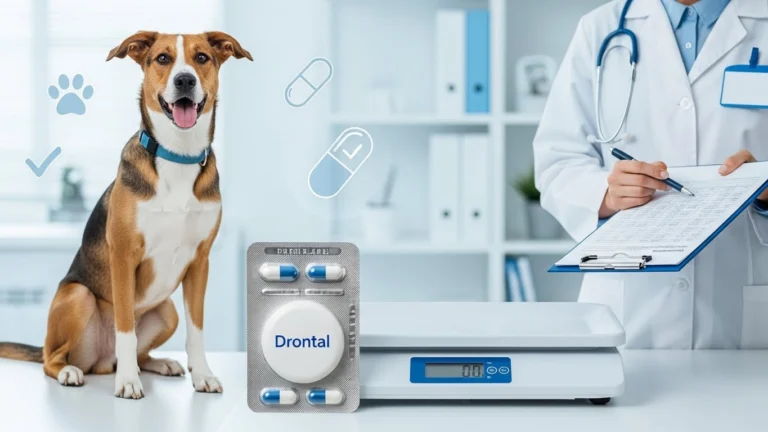
When it comes to effective and safe protection for your dog from potentially fatal parasites like heartworms, hookworms, roundworms, whipworms and some types of tapeworms, one of the most important areas to discuss is Milbemycin dosage for dogs. Milbemycin oxime is a broad-spectrum anti-parasitic compound that has been used extensively in veterinary medicine and is available in some of the more common veterinary products, such as Interceptor, Sentinel, Trifexis and Milbemax. It is frequently used monthly for heartworm prevention and can also help to control intestinal worms which are a common problem of dogs and puppies.
Parasitic infections can be external (e.g. flea, tick) or internal (e.g. heartworms, lungworms, roundworms, hookworms, whipworms, tapeworms), and are among the most common health issues in dogs. Milbemycin oxime acts by disrupting the nerve transmission in parasites and ultimately causes the worms to become paralyzed and to die. The drug is also very effective against tapeworms when used in conjunction with praziquantel, which helps to detach and expel them in the faeces.
Dosage is crucial, so it’s important to know what milbemycin dose is recommended for a dog’s particular weight, age, and health status, to avoid underdosing or adverse reactions. Milbemycin for dogs comes as flavored monthly tablet form and is quite easy to give puppies, adult dogs, breeding dogs and even pregnant or lactating females with a veterinarian’s supervision. It has also been proven safe for Collies and Collie crosses, as some parasite treatments can be sensitive to these.
As well as heartworm prevention, veterinarians may recommend the use of drugs containing Milbemycin for certain parasites like lungworm disease (Angiostrongylus vasorum) or eye worm disease (Thelazia callipaeda). Combination products are also available in some cases to replace traditional heartworm products when tapeworm treatment is also required.


Paid Links - As an Amazon Associate, I earn from qualifying purchases.
Milbemycin oxime is a prescription drug and should be used under the supervision of a veterinarian. This comprehensive guide will provide you with all the information you need on the recommended milbemycin dosage for dogs, dosage guidelines by weight, benefits, uses, safety information, potential side effects and important precautions to ensure that your dog is as safe as possible year-round.
Disclaimer: This guide is for informational purposes only and is not a substitute for professional veterinary advice. Always consult your veterinarian before giving Milbemycin or any medication to your dog.
Milbemycin Oxime Dosage Calculator for Dogs By Weight
Calculate the precise target dosage and find the correct commercial tablet size based on FDA-approved guidelines.
Key Takeaways
- Milbemycin oxime dosage for dogs is a prescription drug for dogs that is used to treat intestinal worms (hookworms, roundworms, whipworms) and to prevent heartworm disease.
- It’s used in popular veterinary drugs such as Interceptor®, Sentinel®, Trifexis® and Milbemax®.
- There are also some combination products available that have praziquantel, which can treat tapeworm infections in dogs.
- Milbemycin acts by blocking nerve transmission in parasites causing them to become paralyzed and kill the worms.
- Dosage of milbemycin for dogs will vary according to body weight, age, health status, and the product that the veterinarian recommends.
- Adult dogs and puppies can typically be protected from parasites through monthly tablets flavored with a variety of different herbs and plants.
- Medications containing milbemycin can also be used under veterinary supervision to treat some lungworm and eye worm infestations.
- When used correctly, the medication is generally considered safe for Collies, Collie mixes, breeding dogs, pregnant dogs and lactating females.
- Most dogs tolerate the medication well, and common side effects include vomiting, diarrhea, lethargy or decreased appetite.
- Milbemycin should be administered only under the guidance of a veterinarian to provide a safe dose and good control of the parasites and to prevent heartworm.
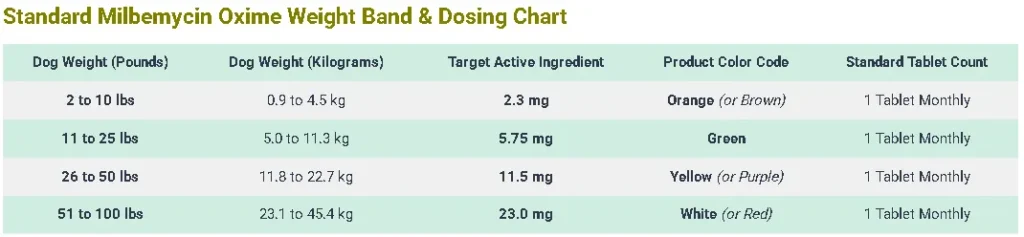
Milbemycin Oxime Dosage Chart For Dogs By Weight
| Dog Weight (Pounds) | Dog Weight (Kilograms) | Target Active Ingredient | Product Color Code | Standard Tablet Count |
| 2 to 10 lbs | 0.9 to 4.5 kg | 2.3 mg | Orange (or Brown) | 1 Tablet Monthly |
| 11 to 25 lbs | 5.0 to 11.3 kg | 5.75 mg | Green | 1 Tablet Monthly |
| 26 to 50 lbs | 11.8 to 22.7 kg | 11.5 mg | Yellow (or Purple) | 1 Tablet Monthly |
| 51 to 100 lbs | 23.1 to 45.4 kg | 23.0 mg | White (or Red) | 1 Tablet Monthly |
Alternative Off-Label Structural Dosing
While monthly heartworm prevention tracks the table above, specific medical diagnoses scale differently under absolute veterinary supervision:
- Demodectic Mange Treatment: Administered daily at 0.25 to 0.5 mg/lb (0.5 to 1.0 mg/kg) for 90 consecutive days.
- Microfilaria Clearance: Administered as a singular, standalone clinical dose of 0.25 mg/lb (0.5 mg/kg) under immediate, in-hospital veterinary monitoring.
What Is Milbemycin?
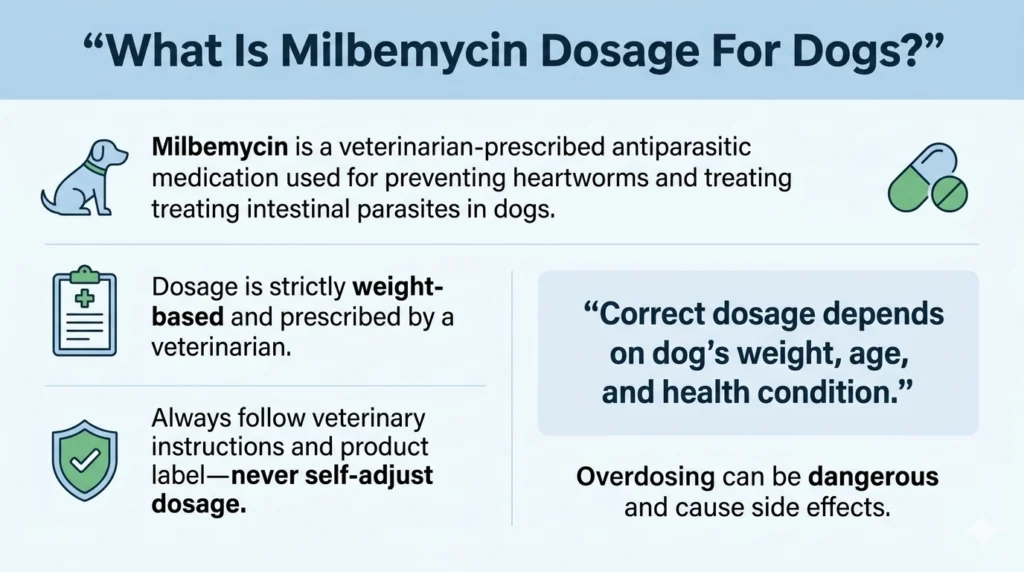
Milbemycin dosage for dogs by weight is a prescription antiparasitic drug that is used to prevent heartworm disease in dogs and cats, and to prevent and treat some intestinal parasites. It is a member of a group of medications known as macrolide antiparasitics, and is often used in veterinarian medications like Interceptor, Milbeguard, Milbehart and Milbemite. Milbemycin is a popular medication for preventing heartworms in dogs once a month, and for controlling or removing parasites such as hookworms, roundworms and whipworms.
Milbemycin dose is used in dogs to treat hookworms and to eliminate adult roundworms and whipworms in the intestine. The puppy must be at least 4 weeks old and ≥2 pounds when the medication is given. Milbemycin is labeled for use in cats to remove adult hookworms and roundworms, and can be administered to kittens 6 weeks of age or older and weighing at least 1.5 lb.
Milbemycin may be used by veterinarians for some extra-label, or off-label, applications, such as treating skin mites in dogs (demodectic mange and sarcoptic mange). While not necessarily FDA approved for these uses, there is veterinary evidence that these uses are safe and effective in some cases.
Milbemycin is safe for dogs, puppies, cats and kittens and is FDA approved for these species. It is prescription only and can be obtained from a veterinarian or a veterinary pharmacy, it is usually a chewable tablet flavored with beef and is available in various strengths. The drug can be marketed alone, or can be added to other ingredients to control other parasites.
How Is Milbemycin Used in Pets?
Milbemycin has a broad spectrum of activity in dogs and cats, and is used to prevent heartworm disease, and to control a number of enteric parasites such as hookworms, roundworms and some whipworms. Milbemycin and praziquantel combination products like Milbemax can also be used to treat tapeworm infections in pets. It is a medication that is very effective for heartworm prevention in dogs and cats when administered on a regular basis in accordance with the veterinarian’s instructions.
For sustained control of parasites, milbemycin dosage for dogs per pound can be applied every 30 days. May be administered with or without a small amount of food; however, pet owners should make sure the entire chewable tablet is eaten in order for the medication to be effective. It’s crucial to give heartworm and intestinal parasite protection on a regular basis, every month.
In some cases, veterinarians may decide to use milbemycin for extra-label or off-label uses. It is routinely used in veterinary medicine to treat and control mange infections due to the skin mites Demodex canis and D. mange. Milbemycin is also considered to be a strong microfilaricidal, which means that it can kill the tiny larvae of heartworms that can be found in the blood of an infected dog.
Although there is no FDA-approved medication for eliminating the remaining microfilaria, veterinarians may consider using a medication, like Milbemycin, to help with elimination after the adult worms are treated with medication, such as Melarsamine.
Owners should never exceed a veterinarian’s recommended dose and should always tell their vet if their pet is on any other medication, vitamin, supplement or herb product. It is also crucial to consult a vet prior to stopping or switching any parasite prevention product.
What Are the Benefits of Milbemycin for Dogs?
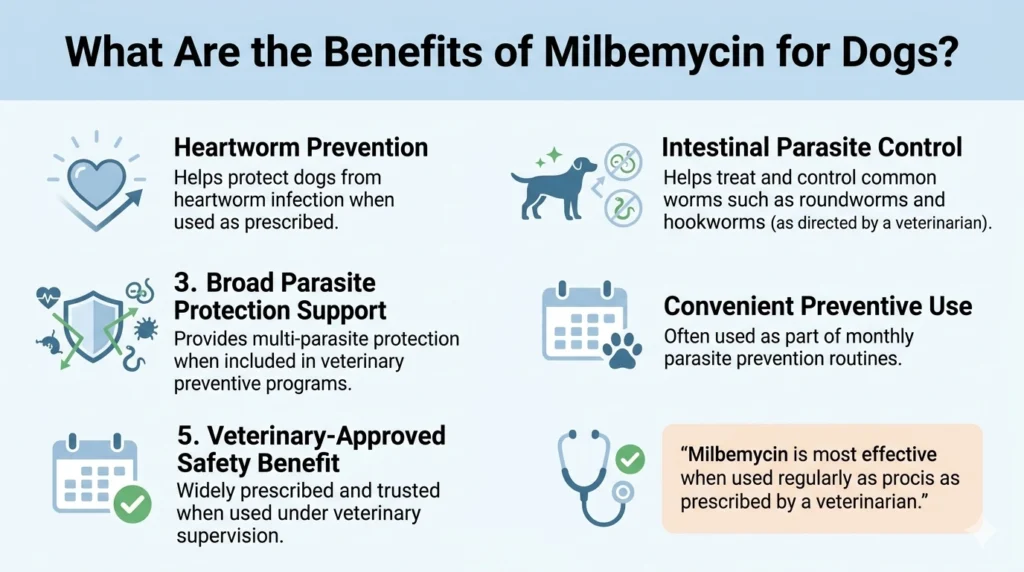
Milbemycin is a broad-spectrum treatment; it’s a medication that veterinarians use year-round to help keep dogs healthy. It has been approved for use in dogs and puppies and is typically safe to use provided it is administered as directed.


Paid Links - As an Amazon Associate, I earn from qualifying purchases.
Some of the main advantages of milbemycin for dogs involve:
- Helps keep dogs safe from heartworm disease
- Helps control common intestinal parasites like hookworms, roundworms and some whipworms
- Easy to give flavored chewable tablet
- Only a single dose every 30 days for continuous protection
- Safe for dogs and puppies, with approval from the FDA.
- When used correctly, is generally well tolerated by most dogs.
- Helps maintain healthy digestion and health over time by minimizing the risk of parasites
- Monthly dosing schedules make it convenient for pet owners to implement regular deworming.
- Veterinarians recommend it as part of a general parasite control program that treats a variety of parasites
Does Milbemycin Have Warnings or Side Effects in Pets?
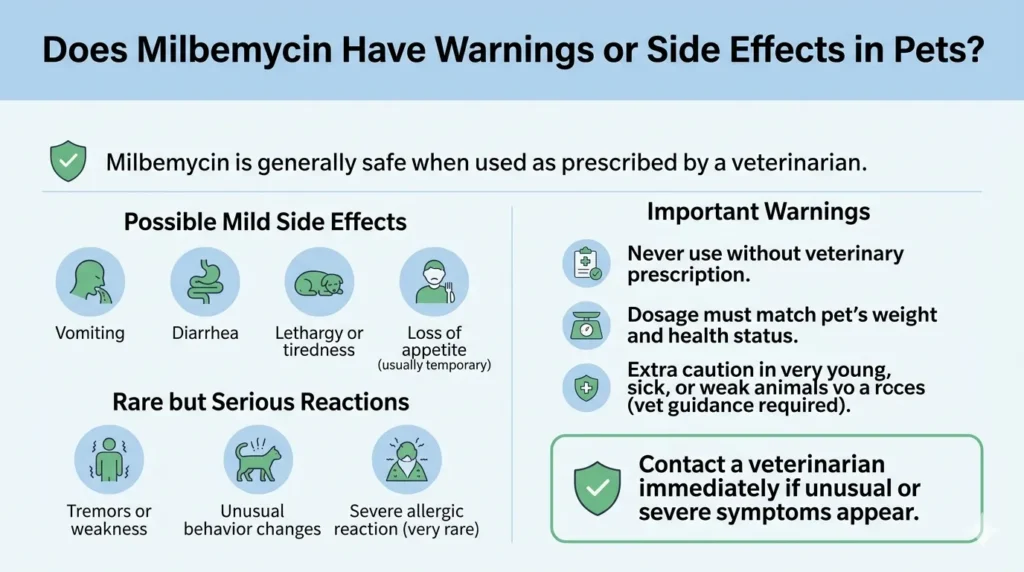
When used under the supervision of a veterinarian, milbemycin is considered safe and effective for dogs and cats, but as with any drug, it can have side effects or special precautions in some pets. Care needs to be taken to follow the veterinary instructions and monitor the animals after administration, particularly on initial doses.
Cautionary Notes and Precautions
- Avoid using milbemycin on pets that have a known allergy or hypersensitivity to the drug
- Before using milbemycin to prevent heartworm infection, your dog should be tested for heartworm infection.
- Avoid using milbemycin in dogs under 4 weeks of age and less than 2 lb.
- Avoid use in cats less than 6 weeks of age and less than 1.5 lb.
- Do not use some combination products like Milbemax in puppies younger than 2 weeks or pets less than 1 lb.
- Be careful in dogs that have a history of epilepsy, nervous disease or seizures.
- Avoid use of milbemycin in dogs with heartworm disease that have an active infection unless otherwise directed by a veterinarian.
- Caution should be used in breeding, pregnant and nursing dogs.
- Avoid using milbemycin in breeding, pregnant and nursing cats unless directed by a veterinarian.
Milbemycin Side Effects in Dogs (Common)
Most side effects are minor and transient and a lot of dogs tolerate the medication well. Side effects have been reported as:
- Vomiting
- Loose stools or diarrhea.
- Decreased appetite
- Depression or lethargy
- Tiredness or fatigue
- Weakness
- Excessive salivation
- Itching or pruritus
- Skin – urticaria or congestion
- Difficulty coordinating the body’s movements (ataxia)
To date, no formal studies on side effects in cats have been conducted but side effects may be similar to those in dogs.
Serious or Rare Side Effects
However, reactions are rare and can be serious in some pets, particularly in those that have heartworms or in the course of extra-label heartworm microfilaria treatment.
Side effects that could be serious include:
- Seizures or convulsions
- Tremors
- Nervous system reactions
- Difficulty walking
- Severe weakness
- Shock reactions to Heartworm MF treatment
If a dog is being treated with extra-label use to destroy microfilaria of heartworm, it may need close veterinary supervision or hospitalisation during treatment due to the possibility of needing supportive care if a severe reaction occurs.
If you think you may have overdosed, or if serious side effects occur following administration of milbemycin, contact your veterinarian or an emergency animal poison control center right away.
Does Milbemycin Interact With Other Medicines?
Yes, milbemycin medication can interact with other medications, supplements, and herbal products, which can alter the effects of the drug, or lead to increased effects in pets.
Pet owners should always let their veterinarian know about any prescription or over-the-counter (OTC) medications, vitamins, minerals, herbal remedies and supplements that their dog or cat is using before administering milbemycin.
Some medications known to potentially interact with milbemycin include:
- Medications like Alprazolam and Diazepam are Benzodiazepines (Xanax or Valium).
- Antifungal drugs like Itraconazole and Ketoconazole (azole)
- Cyclosporine
- Diltiazem
- Erythromycin
These are not the only drug interactions that could occur with milbemycin, so veterinarians should be aware of any and all medications a pet has been on before prescribing milbemycin. When milbemycin is used in combination with other drugs which affect the nervous system or the metabolism of drugs, careful monitoring may be necessary.
What If My Pet Takes Too Much Milbemycin or Has an Overdose?
Milbemycin is well tolerated in pets and overdoses are thought to be rare. But if you exceed the recommended dosage or accidentally take a higher dose of a medicine, it can still be dangerous, so it is important to take the necessary steps.
Knowing your pet’s overdose risk is important.
- Milbemycin may be considered safe if used according to the instructions.
- In most pets the risk for overdose is relatively low.
- However, exceeding the recommended dosage can result in possible unwanted effects.
If an overdose is suspected:
- Contact your veterinarian immediately if you think your pet has received too much milbemycin
- Contact your veterinarian’s emergency service if your veterinarian is not available
- If your pet exhibits any abnormal behavior or symptoms after being treated, get help immediately.
- Seek veterinary help early to minimize complications and provide appropriate support should that be necessary.
Key Reminder
Please make sure to follow your veterinarian’s instructions for medication and to keep your medication in a safe place so it can’t be accidentally overdosed.
You May Also Like to Read:
- Firocoxib Dosage For Dogs Calculator: Dosage Chart & Safe Guide
- Cefpodoxime Dosage For Dogs: Calculator, Chart & Safe Guide
FAQs
If the pet misses a dose of milbemycin, what should I do?
In case of missing a dose, administer the missed dose if it can be done safely and resume the normal dosing regimen. Don’t double the recommended dose. If more than 8 weeks have elapsed since the last dose, repeat monthly prevention and discuss a heartworm test with the veterinarian in 6 months, as it may take awhile to test positive for infection.
If I forget to apply milbemycin one day, can I apply two doses the next day?
No, it is never to be doubled. Do not provide extra medicine as this can lead to side effects but not provide further protection.
What is the storage for milbemycin drugs?
Keep milbemycin in the original container and out of direct light at room temperature for optimal activity.
Can owners touch pets treated with milbemycin?
Yes, but some basic precautions have to be taken. Wash hands after administering the medication to your pet and do not touch it if allergic.
How can kids be exposed to milbemycin?
No milbemycin should not be placed where it will be accessible to children.
If I take a break from milbemycin for more than 8 weeks, what happens?
If the last dose was more than 8 weeks ago, begin monthly treatment and then follow your veterinarian’s recommendations. You may consider getting a heartworm test after 6 months to ensure your pet’s status.
Why are post-dosing heartworm tests necessary?
If the heartworm prevention is not continued, it will take up to 6 months for the infection to be detected following a mosquito bite.
What precautions must I take with regards to safety when using milbemycin?
Always use according to your veterinarian’s advice, dose carefully, keep safely, wash hands after use and do not use if a known allergy.
Final Thoughts
Milbemycin dosage for dogs is a highly dependable prescription drug that is effective at preventing heartworm and also dealing with a number of intestinal parasites in both dogs and cats. When administered properly under veterinary supervision, it provides a wide and effective spectrum of parasite control, and it is easy to administer once a month. It is effective, available in chewable formulations and is available in combination products, making it a practical choice for long term parasite prevention.
But safe use requires accurate dosing, timing and an understanding of precautions like age, weight, health status, and potential drug interactions. Most pets tolerate milbemycin, however it is important to follow your veterinarian’s instructions carefully to ensure that the pet is protected, that the treatment does not cause side effects or complications.
Along with regular veterinary checkups, a consistent administration schedule and responsible storage, each of these factors helps ensure that your pet is protected and healthy throughout the year.