Disclaimer: This guide is for informational purposes only and is not a substitute for professional veterinary advice. Always consult your veterinarian before giving Fenugreek or any medication to your dog.
Fenugreek Dosage Calculator For Dogs
Fenugreek for dogs is starting to be used as a natural remedy of pets with a lot of potential due to its gentle and yet efficient action as an herbal supplement, but it is necessary to comprehend the appropriate amount of fenugreek for dogs to give to your dog before considering it one of the new additions to your pet. It is more than a cooking ingredient since it is an aromatic herb that is not only found in kitchens but is extensively applicable in traditional medicine.


Paid Links - As an Amazon Associate, I earn from qualifying purchases.
Being an annual pea and bean family plant, originally grown in Western Asia and even consumed by ancient cultures, such as the Egyptians, fenugreek is a great source of vitamins, minerals, and bioactive compounds that can help in the overall health of your dog.
Over the past few years, pet owners have begun to consider herbal alternatives such as fenugreek, at times in combination with other natural substances such as curcumin (in turmeric), as natural remedies to promote wellness.
Fenugreek is treasured because of its broad spectrum of possible advantages, such as aiding digestion to assist nursing mother dogs in producing more milk, particularly when they are unable to feed large litters or to relax into lactation.
It can be taken either in the short-term, a few days or even a week, depending on the case and ensuring that you closely observe the behavior of your dog.
Although this might be a good natural supplement, it can cause undesirable side effects in case of improper use or excessive use. Here, you will get to know all about the use of fenugreek in dogs, its mechanism of action, the timing and dosage, and how to safely add it to ensure health and wellness in your dog.
Key Takeaways
- Helps regulate Blood Sugar: galactomannan (soluble fiber) found in fenugreek seeds for dogs slows the uptake of sugar and may help dogs with diabetes or blood sugar issues.
- Enhances Digestive Health: Rich in soluble fiber, fenugreek dosage for dogs improves digestion, calms upset stomachs and can be used to relieve some constipation and diarrhea.
- Fosters Healthy Skin and Coat: Rich in nutrients, such as vitamin A, vitamin C and iron, fenugreek makes the coat shinier and skin healthier.
- Natural & Nutrient-Rich Supplement: Fenugreek medication for dogs is a supplement of vitamins, minerals and plant compounds that enhance the overall well-being of the dog.
- Optimal Dose: Although advantageous, proper dosage amounts of fenugreek dose should always be used to prevent any side effects and to be safe.
How Much Fenugreek Can I Give My Dog?
The appropriate amount of fenugreek for dogs can vary depending on their size and individual health needs. As a general starting guideline, ground fenugreek seeds or powder may be given in the following amounts:
- Small dogs: ⅛–¼ teaspoon per day
- Medium dogs: ¼–½ teaspoon per day
- Large dogs: ½–1 teaspoon per day
Fenugreek should not be given to pregnant dogs, as it may potentially stimulate uterine contractions. It should also be avoided in dogs with hypoglycemia (low blood sugar) because fenugreek may further lower blood glucose levels.
Always consult your veterinarian before adding fenugreek to your dog’s diet, particularly if your dog takes medications or has an underlying health condition.
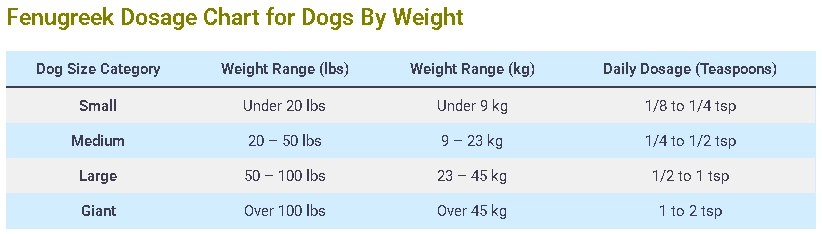
Fenugreek Dosage Chart for Dogs By Weight
| Dog Size Category | Weight Range (lbs) | Weight Range (kg) | Daily Dosage (Teaspoons) |
| Small | Under 20 lbs | Under 9 kg | 1/8 to 1/4 tsp |
| Medium | 20 – 50 lbs | 9 – 23 kg | 1/4 to 1/2 tsp |
| Large | 50 – 100 lbs | 23 – 45 kg | 1/2 to 1 tsp |
| Giant | Over 100 lbs | Over 45 kg | 1 to 2 tsp |
Important Usage Notes
- Administration: The daily amount should always be divided in two equal portions (in the morning and the evening) in order to have greater absorption.
- The Maple Syrup Rule: When your dog starts to have a sweet maple syrup smell to its skin or breath, then you are on the therapeutic level. Should this odor be excessive or in case your dog develops diarrhea, then immediately cut the dosage.
- Caution: Fenugreek dose for dogs by weight has a tendency to reduce blood sugar levels. Do not use this supplement in a diabetic dog unless it is under the direct supervision of your veterinarian.
- Ingredient Check: Supplements used only need to be specifically designed to work with dogs. Additives in human supplements can be very toxic to dogs such as Xylitol.
- Notice: This table is informational. Before introducing new supplements to your dog, always seek advice with your veterinarian.
What Is Fenugreek For Dogs?
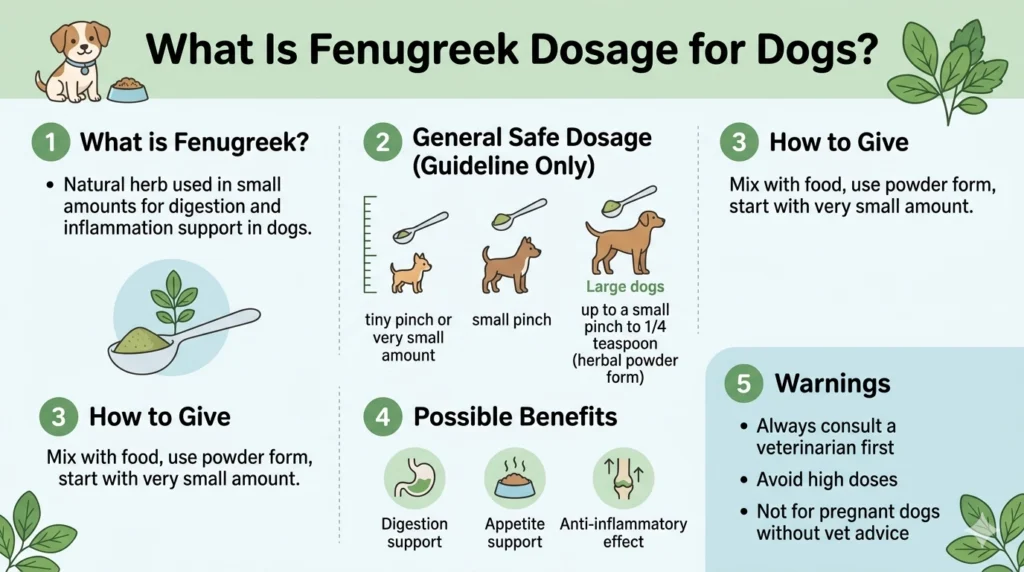
Fenugreek (Trigonella foenum-graecum) is a perennial herb of the legume (Fabaceae) or pea family, which has a long history of cultivation in Western Asia, and is extensively used in South Asia and the Mediterranean. Its history as a medicine dates back to ancient civilization and its use in ancient Egypt, Greece and Romans where the medicine was considered to possess healing powers.
It yields small, fragrant, golden-brown seeds, which are the most widely used component in both traditional medicine and cooking, though its leaves are also rich in nutrients, and are commonly used in both cooking and traditional medicine.
Historically, the fenugreek dosage for dogs has been significant in the systems such as Ayurvedic and Traditional Chinese Medicine in which it was utilized to aid digestion, lessen inflammation and induce milk production in nursing mothers because of its famed lactogenic qualities.
It is also a good source of vitamins, minerals, antioxidants as well as bioactive compounds like saponins, which are thought to play a role in its anti-inflammatory effects.
Besides these, the fenugreek dosage has also been identified as antibacterial, antiseptic, antiviral and antibiotic and can therefore be used in relieving minor infections, skin disorders, coughs, arthritis symptoms, cystitis and atopic dermatitis.
Fenugreek drug for dogs has been used in veterinary practice, sometimes given to puppies after birth, especially when the mother has a difficult time nursing, or has a large litter, and may be given a few days to as long as a week, depending on the response of the dog.


Paid Links - As an Amazon Associate, I earn from qualifying purchases.
Fenugreek dose is now a well-used natural remedy and even a food additive, particularly in Indian food, although contemporary studies are ongoing to investigate and confirm the traditional medicinal value of this herb in humans and dogs.
Benefits Of Fenugreek For Dogs
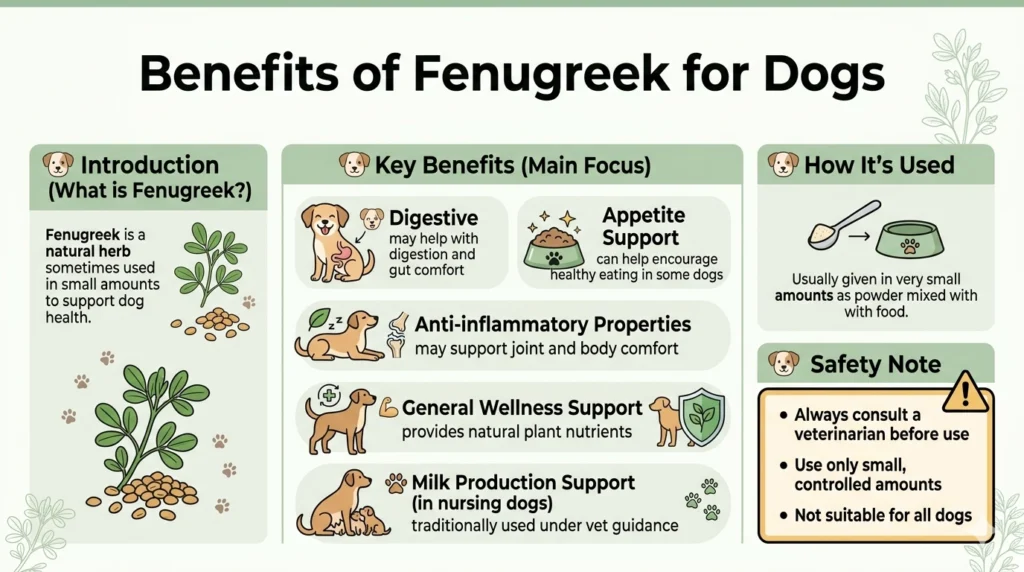
Fenugreek medication is a safe, non-toxic natural supplement of bioactive compounds such as saponins which benefits various facets of the health of a dog. Its major advantage is that it has a powerful anti-inflammatory effect which can be used to alleviate pain and swelling associated with arthritis, joint ailments, skin disorders and other chronic illnesses-eventually enhancing mobility and general comfort, particularly in the older dogs.
It is also a distinctive one as it balances the immune system. However, in contrast to most of the supplements which stimulate or suppress immunity, fenugreek for pets is an immunomodulator, which helps to balance excessive and inadequate immune responses. This helps in enhancing resistance to diseases and health.
Fenugreek for dogs dose is very helpful in digestive health as it contains a rich amount of soluble fibres (galactomannan). This aids in controlling bowel movement, constipation, diarrhea, bloating, calming the digestive tract and enhancing the growth of the useful gut bacteria.
It is also the same compound that decreases glucose absorption and, therefore, can be useful in maintaining a normal level of blood sugar in diabetic dogs or those at risk.
- Promotes intestinal functions and digestion.
- Helps in the control of sugar in the blood.
The other important advantage is its impact on appetite. Fenugreek dosage for pets is commonly administered to boost the appetite of fussy eaters or dogs with illnesses, but can in some instances suppress the appetite, and thus should be closely monitored. It is also popularly known to be lactogenic.
Fenugreek Dosage For Dogs per pound or kg could be used to stimulate milk production in nursing dogs, as well as enhance the quality of milk due to natural phytoestrogens, which means that puppies will be well-nourished.
Fenugreek dosage also contains a lot of vitamins A, B and C and minerals such as iron, calcium, magnesium and amino acids, which can be considered as nutritionally beneficial.
These nutrients help in immune, good bones and muscles and good metabolism. Its antioxidant properties also help keep the skin and a glossy coat healthy and the fenugreek oil may help ease itchy, dry skin and help hair grow.
- Supplies a healthy coat and skin.
- Offers much needed nutrients that are beneficial to health.
Furthermore, fenugreek could have protective properties against such diseases as diabetes and cancer. In combination with curcumin (found in turmeric) it greatly increases the absorption of curcumin – up to 7 to 10 times – which has an even more beneficial effect on anti-inflammatory, antioxidant and joint health.
What’s the Best Type of Fenugreek Dosage for Dogs?
Fenugreek dosage is available in various forms- seeds, leaves as well as powder and each form is beneficial depending on the need of your dog, health objectives and convenience.
- Fenugreek Seeds: The most active one, which has high amounts of active compounds that can offer great health benefits. But they are more difficult to digest and hence grinding or soaking them enhances the digestibility and palatability.
- Fenugreek Powder: This is the most convenient type of powder, as it is made of ground seeds. It has got equal advantages and can be conveniently added to the food of your dog without any cooking.
- Fenugreek Leaves: A less potent, less strong-tasting product, which is ideal as a general wellness supplement or as an easy to digest food supplement.
In general, the most suitable one is based on your needs seeds or powder would be better suited to more specific health benefits since it is potent, whereas leaves will work better with milder effects and daily use.
How Much Fenugreek Can Dogs Have?
The amount of fenugreek medication is to be taken in moderation because it is mostly mild and well-tolerated yet needs adequate dosing. When using fresh, dried or powdered fenugreek, a typical rule of thumb is 1/4 teaspoon per 20 lbs of body weight. It is easily incorporated into the food of your dog to be used on a daily basis.
The dosage can be different, based on the size of your dog:
- Small dogs (not more than 20 lbs): 1/8 to 1/4 teaspoon/day.
- Medium dogs (20-50 lbs): 1/4 -1/2 teaspoon per day.
- Large dogs (50–100 lbs): ½ to 1 teaspoon per day
- Giant dogs (100 or more lbs): 1-2 teaspoons daily.
When the commercial fenugreek supplements for dogs are used, make sure that you are following the instructions, particularly when using supplements which are specifically designed to work with dogs.
In the case of human supplements, they are normally dosed at a 150 lb adult, and therefore, it would have to be altered to the weight of your dog.
Care should be taken not to administer fenugreek dosage to pregnant dogs because it can cause uterine contractions, and should not be administered to dogs with hypoglycemia.
Fenugreek Dosage Risks, Cautions, and Side Effects for Dogs
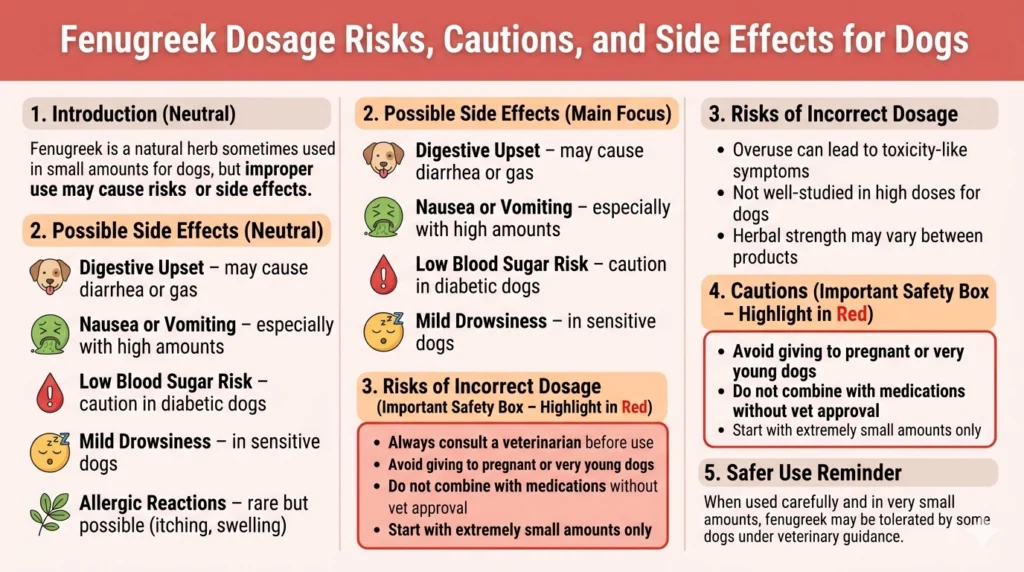
When fed in moderation, fenugreek dose is usually safe to dogs, and is even a part of certain natural supplements and holistic diets. Nevertheless, similar to all herbal treatments, it should be administered with caution since at the wrong dosage or in case of allergy, it may cause undesirable side effects.
Gastrointestinal upset, particularly when taken in great quantities is one of the most frequent risks. There might be some gas, bloating, diarrhea or mild indigestion among some dogs.
In order to minimize such a risk, fenugreek must be started with minimal doses and slowly increased in case of well-toleration.
dosage of Fenugreek for dogs can also have an impact on the level of sugar in the body since it can reduce the glucose levels in the body. This renders it possibly hazardous to diabetic or hypoglycemic dogs. In this instance, it is highly advised to consult veterinary advice before taking.
The other issue of concern is the allergic reactions or sensitivity. Though rare, in some dogs, reaction can be in the form of itching, swelling, and difficulty breathing. Fenugreek is contraindicated in case of any of the mentioned signs and was to be discontinued and a veterinarian consulted.
Pregnant dogs should not be fed on fenugreek dose because it can cause uterine contractions thus interfering with pregnancy. It is also not to be administered in dog that are nursing unless it is recommended and closely monitored by a veterinarian.
In others, fenugreek can react with some drugs consequently dogs under medical care should solely consume it under the guidance of a doctor. It is also essential to select only high-quality supplements with well-known brands so that they could be pure and safe.
On the whole, the usage of fenugreek is deemed to be safe, although it must always be introduced carefully, in low doses and with regard to the specific health status of your dog and his reaction.
Is Fenugreek Safe for Dogs?
In moderation, fenugreek dosage is generally thought to be safe in dogs, and is even a part of several natural dog supplements and even holistic diets.
In sufficient doses it could have a number of potential health benefits to dogs, and it is a popular choice in herbal treatments by pet owners.
Nevertheless, as with any food or supplement, fenugreek must be used with caution and not until you have assessed the particular health requirements of your dog.
It should be added to the diet of your dog only after consulting the veterinary, particularly, to make sure that it is appropriate and safe to be used on long-term or regular basis.
Although the use of fenugreek dosage for dogs is good when taken in the right amounts and mode of administration, excess of the ingredient or when taken in the wrong form can result in undesired side effects.
Thus, it is crucial to use this herbal supplement cautiously and monitor your dog to make sure it reacts to it.
How to Safely Give Fenugreek to Your Dog
Fenugreek is not harmful so long as it is used in low and moderated amounts and only with the approval of the veterinarian when included in the diet of your dog.
You can start by adding an extremely small amount of it; a small pinch of fenugreek seeds powdered or a handful of fresh leaves right into your dog’s usual food so that it can be readily swallowed.
Some of the safe modes of administering fenugreek are:
- Soaked or dry fenugreek seeds.
- Dried fenugreek leaves
- Fenugreek powders or pills (made up with safe doses) which are dog-specific.
Once you have introduced fenugreek, you must pay close attention to your dog to make sure it is not experiencing an upset of the stomach or allergic reaction.
The extent to which fenugreek is to be used, should be occasional, as a supplement, and should not be substituted for a whole and balanced diet.
To be on the safe side, be cautious when using concentrated fenugreek oil because it is not deemed to be safe in dogs.
Always take the instructions of the manufacturer when dealing with commercials products and consult your veterinarian in case you are not sure about the right administration or appropriateness to your dog.
You May Also Like to Read:
- Zofran Dosage For Dogs Calculator: Dosage Chart & Guide
- Lactulose Dosage For Dogs: Calculator, Chart & Safe Guide
FAQs
Is fenugreek dosage safe to dogs?
Yes, when administered in moderation, fenugreek dosage for dogs is considered to be safe to dogs. It can be found in most natural supplements and holistic diets, but should never be added without veterinary advice and under very slow dosage.
What are the advantages of fenugreek on dogs?
In dogs, fenugreek can aid digestion, decrease bloating, enhance the health of skin and coat, have anti-inflammatory effects, help maintain joint comfort and serve as a natural stimulant to appetite in some dogs.
Are puppies able to eat fenugreek medication?
Puppies should not be fed on fenugreek medication for dogs since their digestive systems are yet to develop. Any new supplement should be added to the diet of a puppy only after the consultation with a veterinarian.
Is it possible to feed diabetic dogs fenugreek?
Fenugreek can reduce blood sugar levels, and this can be dangerous to diabetic dogs or those dogs that are likely to develop hypoglycemia. In such cases veterinary advice is required.
Is it possible to feed pregnant dogs with fenugreek?
Nope, pregnant dogs must not be fed on fenugreek drug because it can cause the uterine contractions and possibly influence pregnancy.
What are the side effects of fenugreek to dogs?
It may have side effects such as vomiting, diarrhea, gas, bloating, allergic reactions (itching, swelling), excessive drooling, lethargy or abnormal behavior in sensitive dogs.
What is the amount of fenugreek drug for dogs that I should give my dog?
The smallest quantity will be safe, say a pinchful of powdered seeds, or a few cut leaves of a larger size. Nonetheless, it is important to always increase the dosage depending on the weight, age and health condition of your dog under the advice of a veterinary.
Which is the optimal fenugreek form of dogs?
The most frequently used are the powder and ground fenugreek seeds (soaked or ground) because they are very potent and are easily combined with food. Leaves are also available and less concentrated and milder.
What are the nutrients of fenugreek dose?
Fenugreek is a dietary fiber that includes calcium, iron, magnesium, phosphorus, potassium, zinc, manganese, vitamin B1, B2, B3, B6, B9 and vitamin C which helps to maintain the general health, immunity and metabolism in dogs.
Final Thoughts
When taken in moderation and properly, Fenugreek medication is a potent herb in nature, which can be of help to your dog in maintaining their overall health.
It has numerous possible benefits, including enhancing digestion and blood sugar levels or helping out the skin, appetite, and immune system.
It is a great supplement to a complete treatment of canine health because it has anti-inflammatory and nutrient-rich qualities.
Never the less, the introduction of fenugreek must be gradual keeping in mind the right dosage and health status of your dog.
Taken in moderation and with the recommendation of a veterinarian, fenugreek may be a safe and effective natural supplement to help maintain the long-term health of your dog.