Bismuth Subsalicylate (Pepto-Bismol) Dosage Calculator For Dogs By Weight
Calculated for standard Regular Strength Liquid (17.5 mg/mL or 525 mg per 30 mL)
⚠️ Crucial Administration Rules
- Measurement: Always use a plastic, needleless oral syringe. Never use standard kitchen spoons.
- Stool Discoloration: This medication turns stool dark gray or black. Note that this mimics internal bleeding, which can mask actual medical issues.
- X-Ray Notice: Bismuth is radiopaque and will show up as a white mass on X-rays, potentially hiding swallowed foreign bodies.
🛑 When to Stop & See a Vet Immediately
Discontinue use and seek urgent veterinary care if your dog experiences:
- Vomiting or an inability to keep water down.
- Extreme lethargy, sudden weakness, or complete food refusal.
- Visible red blood in stool or vomit.
- Diarrhea persisting past 48 hours.
🌱 Safer, Natural Alternatives
- Bland Diet: Fast adult dogs for 12–24 hours, then feed boiled, skinless/boneless white chicken meat mixed with plain white rice (1:2 ratio).
- Pure Pumpkin: Add 1 to 2 tablespoons of 100% pure canned pumpkin (not pie mix) to meals to naturally firm stools.
- Veterinary Protectants: Request dog-specific kaolin-pectin clay formulas directly from your vet.
© medsdog.com
Bismuth Subsalicylate Dosage For Dogs is a widely used gastrointestinal drug that can benefit dogs suffering from mild gastrointestinal issues like diarrhea, loose stools, nausea, vomiting, indigestion and stomach discomfort.


Paid Links - As an Amazon Associate, I earn from qualifying purchases.
It is probably best known as the active ingredient in Pepto-Bismol® and some Kaopectate® products, where it helps to protect the lining of the stomach and intestines, to lessen inflammation, and to ease the discomfort of upset digestion. Bismuth subsalicylate for dogs may also be a part of a treatment regimen for Helicobacter pylori infections, a bacteria that is linked to stomach ulcers in dogs.
This drug is readily available as an over-the-counter drug, but it is part of the salicylate (aspirin) family of drugs and is not registered for use in animals. Bismuth subsalicylate medication is used with veterinary supervision, due to its possible side effects, particularly when used incorrectly or to pets that have some health issues.
While Pepto-Bismol is a go-to remedy for many dog owners when the canine has an upset tummy, it's important to understand how to administer the correct dosage, what potential side effects are, and when veterinary attention is required.
This guide will explain the proper bismuth subsalicylate dosage for dogs, how it works, benefits and side effects, precautions, and situations in which it could be necessary or not for your dog's digestive health.
Key Takeaways
- Bismuth subsalicylate dose for dogs can be used to assist in managing mild diarrhoea, vomiting, nausea, indigestion and stomach upset in dogs.
- It acts by lining the stomach and gut and by reducing gut irritation.
- It may also be prescribed as a component of treatment to cure Helicobacter pylori infections, which causes stomach ulcers.
- Medications that contain bismuth subsalicylate include Pepto-Bismol® and some types of Kaopectate®.
- Bismuth subsalicylate, which is readily available over the counter, is not FDA approved for use in animals, and should only be administered under veterinary supervision.
- It is a salicylate (aspirin-like) drug, so there can be side effects or complications if it is not used correctly.
- Dosage will vary based on the dog's size, condition and the product.
- If digestive symptoms are severe, getting worse or persisting for more than 24-48 hours, contact your veterinarian.
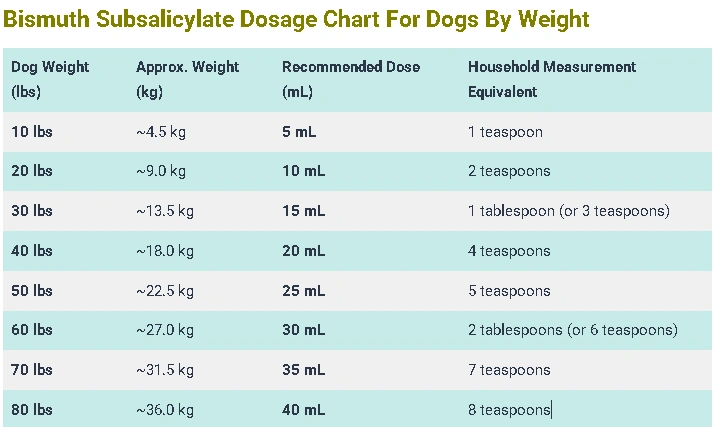
Bismuth Subsalicylate Dosage Chart For Dogs By Weight
Here is the comprehensive quick-reference dosage table, It lists the exact liquid volume in milliliters along with the safest household measurement equivalents.
| Dog Weight (lbs) | Approx. Weight (kg) | Recommended Dose (mL) | Household Measurement Equivalent |
| 10 lbs | ~4.5 kg | 5 mL | 1 teaspoon |
| 20 lbs | ~9.0 kg | 10 mL | 2 teaspoons |
| 30 lbs | ~13.5 kg | 15 mL | 1 tablespoon (or 3 teaspoons) |
| 40 lbs | ~18.0 kg | 20 mL | 4 teaspoons |
| 50 lbs | ~22.5 kg | 25 mL | 5 teaspoons |
| 60 lbs | ~27.0 kg | 30 mL | 2 tablespoons (or 6 teaspoons) |
| 70 lbs | ~31.5 kg | 35 mL | 7 teaspoons |
| 80 lbs | ~36.0 kg | 40 mL | 8 teaspoons |
Regular Tablet Alternative Dosage
If you are using the regular 262 mg chewable tablets instead of the liquid suspension, use this weight breakdown strictly every 12 hours:
- Under 11 lbs (less than 5 kg): 1/4 (0.25) tablet
- 11 to 21.8 lbs (5 to 9.9 kg): 1/2 (0.5) tablet
- 22 to 54.8 lbs (10 to 24.9 kg): 1 whole tablet
- Over 55 lbs (greater than 25 kg): 2 whole tablets
⚠️ Critical Reminder: While household measurements (teaspoons/tablespoons) are provided above for visual reference, you should always measure liquid doses using a plastic, needleless oral syringe to prevent accidental under- or over-dosing.
What Is Bismuth Subsalicylate?
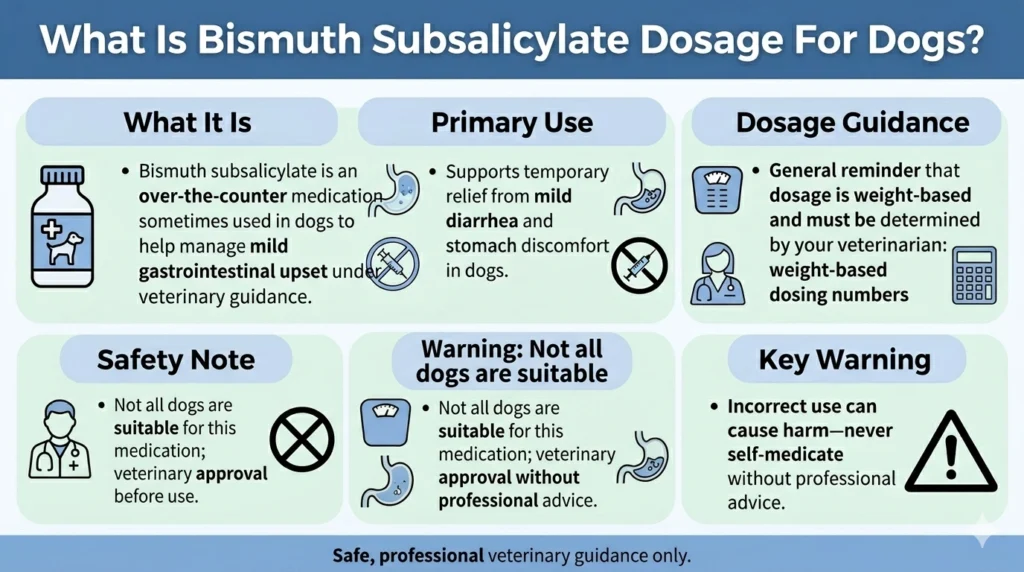
Bismuth subsalicylate dosage for dogs by weight is an anti-diarrhea and gastro-protective drug that is typically utilized for managing digestive upset in dogs such as diarrhea, loose stools, vomiting, nausea, indigestion and stomach upset. It does so by supporting stomach and intestinal lining and aids in the reduction of gastrointestinal irritation.
The Bismuth Subsalicylate for pets is the active ingredient in Pepto-Bismol® and some newer versions of Kaopectate® and it is part of a family of medicines known as the salicylates, which are related to aspirin.
Another use for bismuth subsalicylate is in the treatment of Helicobacter infections, a bacteria which can cause stomach ulcers and other gastrointestinal problems. The product is marketed in a number of different formats such as oral liquids, pastes, tablets and caplets and is used in a variety of animal species.
Bismuth subsalicylate drugs for dogs can be purchased easily over the counter, but it is not FDA approved for use in pets. For proper use, it is important to have veterinary guidance as use varies from species to species, state of health, and product formulation.
Many products containing bismuth subsalicylate should not be used in cats as they are sensitive to salicylates. Persistent vomiting and diarrhea (lasting more than 24 hours) should be investigated by a veterinarian.
How Is Bismuth Subsalicylate Used in Pets?
Bismuth subsalicylate medication is a stomach protective and antidiarrheal drug that is used in pets to treat digestive upset including diarrhea, vomiting, indigestion, mild gastrointestinal upset and Helicobacter infection. It is often given to dogs to treat acute stomach upset and to protect the stomach and intestinal lining.
There are different strength levels of this medicine and it comes in liquid, chewable tab, pill or caplet. Can be administered with or without food, however, please follow a veterinarian's recommendation as dosages for pets are different from those for humans.
Bismuth subsalicylate is used for a variety of purposes, such as:


Paid Links - As an Amazon Associate, I earn from qualifying purchases.
- Treatment of diarrhea and loose stool.
- How to deal with vomiting and indigestion
- Safeguarding gastrointestinal tract
- Supporting treatment of Helicobacter infections
Since bismuth subsalicylate dose contains a salicylate (aspirin-like) compound, it can interact with drugs like NSAIDs, steroids, tetracycline antibiotics and aspirin. Do not give to pets that are known to be allergic to salicylates. Owners should also be aware that stool may have a temporary change in colour due to the bismuth component, and this is a normal side-effect.
Extra care should be taken for cats, as they are very sensitive to salicylates. Do not administer Bismuth subsalicylate to cats unless directed by a veterinarian. Also, newer versions of medicines like Pepto-Bismol® and Kaopectate® can contain salicylates, so it is important to read the ingredients on the label and consult a veterinarian before administering.
Be sure to tell your veterinarian if your pet is taking any prescription or over-the-counter drugs, supplements, vitamins or herbal remedies; and carefully follow dosage directions to ensure safe and effective treatment.
What Are the Benefits of Bismuth Subsalicylate in Pets?
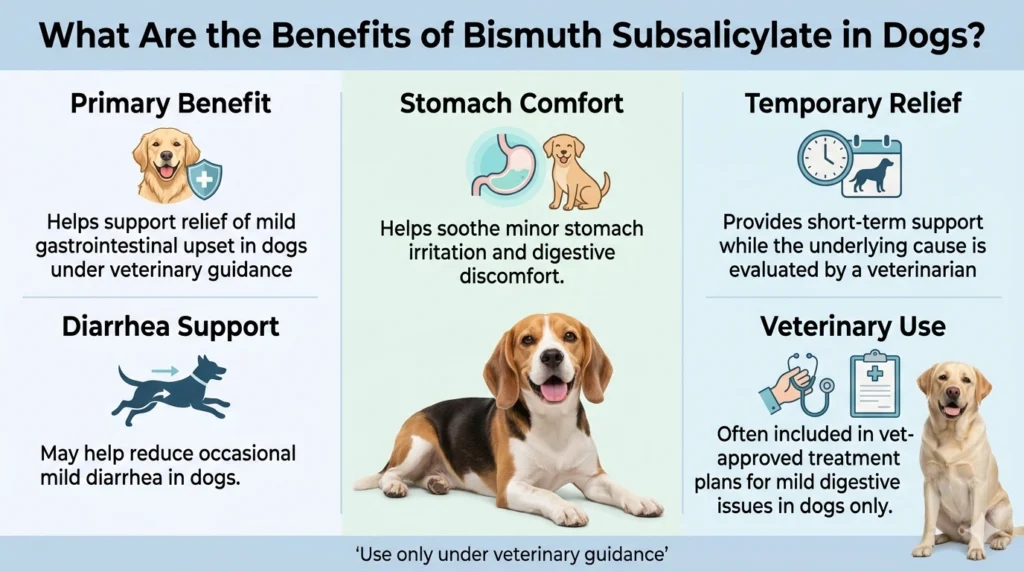
Bismuth Subsalicylate dosage can provide a number of advantages to pets that are suffering from mild stomach upset. One of its key benefits is that it's readily available in retail outlets, so it would be simple to get if prescribed or recommended by a veterinarian. It may help to alleviate gastrointestinal discomfort and may do so relatively fast, many pets getting better within 24 hours after being treated.
The main advantages of bismuth subsalicylate are:
- Is found in various formulations and available over the counter.
- Helps to relieve minor digestive discomfort.
- May see improvement in gastrointestinal symptoms within 24 hours
- Usually used as a digestive aid for short term use under vet supervision.
While it is available, bismuth subsalicylate is something all pet owners should use in consultation with their veterinarian to determine if it is appropriate to use for their pet's condition.
Does Bismuth Subsalicylate Have Warnings or Side Effects?
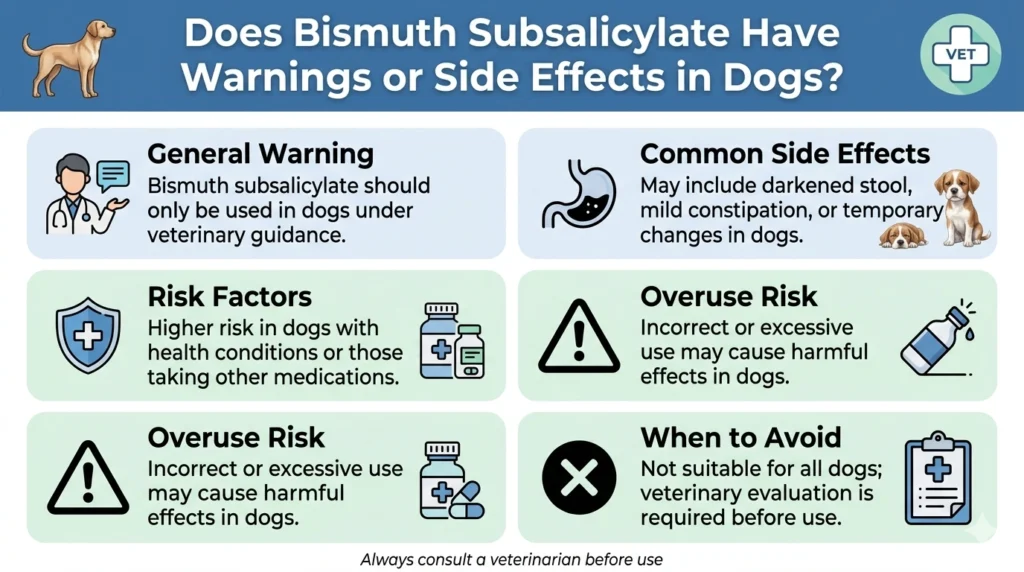
Yes. Bismuth subsalicylate should be used to treat digestive upset in pets, but it also has some warnings as well as side effects that should be understood before administering it to pets. It is important to follow veterinary advice for use due to a salicylate (aspirin) content.
Avoid using bismuth subsalicylate in pets that:
- Have an allergy to bismuth subsalicylate, aspirin, salicylates or related drugs
- Have stomach or intestinal ulcers
- Be diagnosed with a bleeding disorder
Use with caution in:
- Pets that are pregnant or lactating
- Young animals
- Severely affected or very sick animals
- Cats, who are especially susceptible to salicylates,
The most common side effects are usually mild and temporary. Some of these symptoms can be gray or greenish-black stool, a black tongue, and constipation. When people stop using the medication, stool color will usually return to normal as will tongue color. Dark black, tar-like stools, however, may be a sign of gastrointestinal bleeding, which should be treated by a veterinarian right away.
Pets may also react to the medication — even if they had no reaction to it before. Symptoms might include difficulty breathing, a rash, heat, swelling or puffiness of the face. If any of these symptoms occur, stop the medication and contact your veterinarian immediately.
Toxicity may occur with over-dosing or repeated dosing in rare cases. Symptoms of an overdose can include vomiting, diarrhea, drowsiness or lack of appetite. In case of suspected overdose, seek emergency veterinary assistance.
Bismuth subsalicylate dosage for dogs per pound can also interact with other medications and interfere with some diagnostic tests, such as X-rays. Therefore, before beginning treatment, always be sure to tell your veterinarian what medications and supplements your pet is taking.
Side effects tend to clear up after the drug is discontinued, but can persist for longer in pets with kidney or liver disease. Always adhere to your veterinarian's treatment recommendations, closely observe your pet during treatment and consult a veterinarian if you see any unusual signs.
Does Bismuth Subsalicylate Interact With Other Medicines?
Yes. Bismuth subsalicylate can interact with a variety of medications, potentially affecting how they work or increasing the risk of side effects. Due to potential drug interactions, it is important for pet owners to always check with their veterinarian prior to treatment to ensure the pet is not taking another prescription medication, over-the-counter, vitamin, supplement or herbal therapy.
Bismuth subsalicylate can interact with:
- Angiotensin-converting enzyme (ACE) inhibitors (such as benazepril, enalapril) that may decrease effectiveness
- Increasing the risk of bleeding (e.g., anticoagulants (heparin, warfarin))
- Salicylate containing drugs such as aspirin which can lead to stomach or bowel bleeding.
- Corticosteroids (such as prednisone, prednisolone, dexamethasone) which can also raise the risk of gastrointestinal bleeding.
- Nonsteroidal anti-inflammatory drugs (NSAIDs) (e.g., carprofen, meloxicam, robenacoxib) that may increase the risk of stomach ulcers and bleeding.
- These may be affected by tetracycline antibiotics (e.g., doxycycline, tetracycline), which may also be given to the child.
- Other antibiotics such as ciprofloxacin (may need to be administered at a specific time)
- Loop diuretics (e.g., furosemide)
- Medications for blood pressure and/or heart failure, such as ACE inhibitors and amlodipine
- Antacids
- Insulin
- Opioids
- Methotrexate
- Probenecid
- Omeprazole
- Clopidogrel
An especially significant interaction is with tetracycline antibiotics. These medicines should be taken at a different time than taking bismuth subsalicylate to prevent problems with their absorption. In general, the antibiotic should be administered at least 2 hours before or at least 6 hours after the administration of bismuth subsalicylate.
Always ask your veterinarian about any possible interactions before administering bismuth subsalicylate along with any other drugs or supplements, since this is not a comprehensive list. Thorough medication reviews minimize the risk of side effects and help keep your pet safe and effective with their medication.
What If My Pet Takes Too Much, Overdoses, or Misses a Dose of Bismuth Subsalicylate?
Bismuth subsalicylate should be administered with caution in pets as misdosing can result in potentially life-threatening health problems. Can be toxic in high doses, especially in cats, and could be life-threatening.
In case of excessive use (overdose):
- Bismuth subsalicylate is toxic at high doses particularly in cats.
- Possible signs of overdose or salicylate toxicity include:
- Vomiting and diarrhea
- Lethargy or weakness
- Neurological problems
- Gastric bleeding
- Fever (increased temperature of the body)
- Rapid breathing (tachypnea)
- Dehydration
- Seizures
- Coma
- Non-cardiogenic pulmonary edema
- Contact veterinarian or emergency clinic immediately if ODD is suspected.
In case of missed dose:
- Administer the missed dose as soon as possible, if it is not near the next dose
- If it is close to the time for the next dose, skip the dose and take the next dose as scheduled
- Do not try to "catch up" on doses by giving two at once.
- Afterwards, resume the normal dosage schedule.
Important safety reminders:
- Do not administer other medications within two hours without veterinarian's approval
- Never skip doses or take a double dose if you miss one
- If you are not sure on the dose or timing, consult your vet.
To avoid toxicity and species sensitivity (particularly in cats), correct dosage and prompt action to overdose or missed dose is important.
Are There Safety Concerns for Pet Owners Using Bismuth Subsalicylate?
Yes. To prevent accidental ingestion or abuse, pet owners need to follow important safety measures when handling and giving bismuth subsalicylate to their dogs.
Some of the main safety issues are:
- Always keep bismuth subsalicylate away from children's reach.
- Wash hands well after administering the medicine to your pet.
- Avoid handling the medication if there is known allergy to the medication.
These are simple precautions that will decrease the possibility of accidental ingestion, contamination or allergic reactions to pets. Use the medication as directed by a veterinarian for safe handling and administration.
You May Also Like to Read:
- Amantadine Dosage For Dogs: Calculator, Chart & Safe Guide
- Animax Ointment Dosage For Dogs Calculator & Safe Guide
FAQs
Bismuth Subsalicylate Storage: How to store?
Keep in a place at room temperature out of moisture and light. Liquid forms can be stored in the refrigerator for better flavor and taste, but should never be frozen. Always keep the medication out of reach of children and pets.
At what temperature should Bismuth compounds be stored?
The majority of bismuth compounds are best stored at 59 °F – 86 °F (15 °C – 30 ° C) out of the light and away from freezing.
If it is a liquid form, how should I prepare it before administering?
The liquid should be well shaken before use. For pets who don't like the taste, they might be more palatable when refrigerated.
What are the different methods of giving Bismuth Subsalicylate to pets?
It is readily available as an oral suspension (17.5 mg/mL and 35 mg/mL), tablets and liquid formulations and is administered according to veterinary directions.
What are the results of this medication?
Generally, it is used as an aid in the treatment of diarrhea and other gastrointestinal symptoms including nausea and vomiting, indigestion, when prescribed by a veterinarian.
If my pet has an emergency after taking it, what should I do?
Call your veterinarian right away if you think an overdose or adverse reaction has occurred. If your pet is unavailable, follow instructions to reach an emergency veterinary clinic and relay information about your pet's weight, symptoms and medication.
Can Bismuth Subsalicylate (Pepto-Bismol dosage) be used for an extended period in pets?
In general, it is used for short periods of time under veterinary supervision. Continuation of long-term use should only be done at the specific direction of a veterinarian.
Are there any adverse reactions?
Yes, side effects should be reported to your veterinarian and can also be reported to regulatory agencies like Health Canada (Canada) or FDA (USA).
Final Thoughts
Bismuth subsalicylate dosage for dogs by weight can be a useful short-term treatment for mild digestive problems in pets, such as stomach upset, diarrhea and vomiting. It also has a protective action on the gastrointestinal lining and can be used in certain conditions, for example, Helicobacter infections, if it has been recommended by a vet.
But, as commonly used in human medicine, it's not risk free for animals. It is a salicylate (aspirin-like) compound, is not approved by the FDA for use in animals, and should only be used under veterinary supervision. Proper dosing, careful monitoring, and awareness of potential drug interactions and side effects are essential for safe use.
It is important to always consult a veterinarian before giving this medication, and do not self-medicate any pet, particularly cats and medically sensitive pets. If used responsibly and under veterinary supervision, it can be an effective treatment, but safety is the primary concern.