
When your veterinarian prescribed your dog (deracoxib) Deramaxx, you probably need some straightforward instructions as to what it is, its mode of action, and how to use it safely. Deramaxx is a non-narcotic, nonsteroidal anti-inflammatory drug (NSAID) coxib which is specifically designed to be used in animals. It comes in round, biconvex and chewable tablets with a beef flavor that are easy to give to dogs.
Deramaxx Medication for dogs is an FDA-approved drug that is prescribed by veterinarians to be used in the treatment of dogs to manage the pain and inflammation linked to osteoarthritis (OA), arthritis, orthopedic illnesses and after surgery. It acts by inhibiting certain chemical messages (COX-2 enzymes) in the body that cause pain, swelling and inflammation and allows the dogs to move with ease and get better after recovery.
Nevertheless, as with all NSAIDs, side effects might arise and although serious reactions are not frequent, they might involve gastrointestinal, kidney or liver-related side effects. Proper dosing and keeping a close eye on your dog as it is treated is important to safe use and the most desirable results.
Disclaimer: This guide is for informational purposes only and is not a substitute for professional veterinary advice. Always consult your veterinarian before giving Deramaxx or any medication to your dog.
Deramaxx Dosage Calculator For Dogs By Weight


* Always consult your veterinarian before administering medication. Give with food.
© medsdog.com
Key Takeaways
- Deramaxx (deracoxib) drug for dogs is an anti-inflammatory drug (NSAID) that is a non-steroid that alleviates pain and inflammation in dogs.
- Gastrointestinal side effects such as a decrease in appetite, nausea, vomiting, and diarrhea are the most prevalent side effects.
- Deramaxx dose comes in easy-to-chew tablets.
- A veterinarian determines the dosage according to body weight of dog and the condition he or she is treating.
How Much Deramaxx Can I Give My Dog?
The recommended Deramaxx dosage for dogs is 0.45 mg to 0.91 mg/lb./day for osteoarthritis (OA) pain and inflammation. For Dogs with postoperative orthopedic pain the single daily dose of Deramaxx is 1.4 mg to 1.8 mg/lb.
Deramaxx Dosage Chart For Dogs By Weight
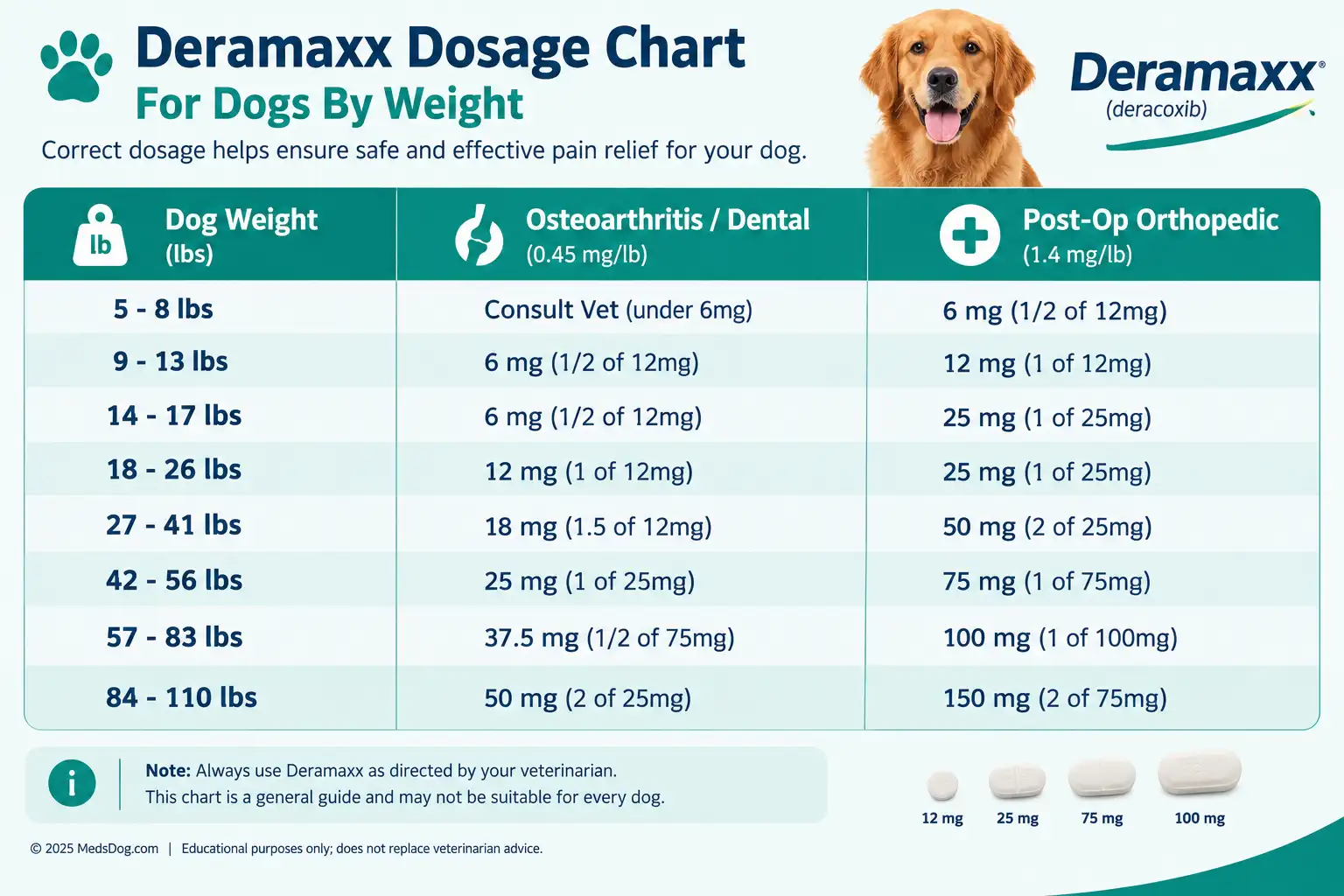
To help your readers easily determine the correct dosage for different conditions, I have compiled a comprehensive reference table. This includes both the Osteoarthritis/Dental Pain rate and the Post-Op Orthopedic rate, organized by weight.
| Dog Weight (lbs) | Osteoarthritis / Dental (0.45 mg/lb) | Post-Op Orthopedic (1.4 mg/lb) |
| 5 - 8 lbs | Consult Vet (under 6mg) | 6 mg (1/2 of 12mg) |
| 9 - 13 lbs | 6 mg (1/2 of 12mg) | 12 mg (1 of 12mg) |
| 14 - 17 lbs | 6 mg (1/2 of 12mg) | 25 mg (1 of 25mg) |
| 18 - 26 lbs | 12 mg (1 of 12mg) | 25 mg (1 of 25mg) |
| 27 - 41 lbs | 18 mg (1.5 of 12mg) | 50 mg (2 of 25mg) |
| 42 - 56 lbs | 25 mg (1 of 25mg) | 75 mg (1 of 75mg) |
| 57 - 83 lbs | 37.5 mg (1/2 of 75mg) | 100 mg (1 of 100mg) |
| 84 - 110 lbs | 50 mg (2 of 25mg) | 150 mg (2 of 75mg) |
Important Dosage & Safety Rules
- Available Tablet Sizes: Deramaxx dosage is manufactured in 12 mg, 25 mg, 75 mg, and 100 mg strengths.
- Administration: Always provide medication with food to support absorption and protect the stomach.
- Safety Warning: Never administer Deramaxx with other NSAIDs (such as Aspirin or Rimadyl) or steroids, as this can lead to severe adverse reactions.
- Veterinary Consultation: This table is for general guidance only. Always confirm your dog's specific dosage with your veterinarian, as they may adjust the dose based on your dog's health profile and the severity of the condition.
- Side Effects: Discontinue use and contact your vet immediately if your dog displays vomiting, diarrhea, lethargy, or loss of appetite.
What is Deramaxx Dosage for Dogs and How Does It Work?
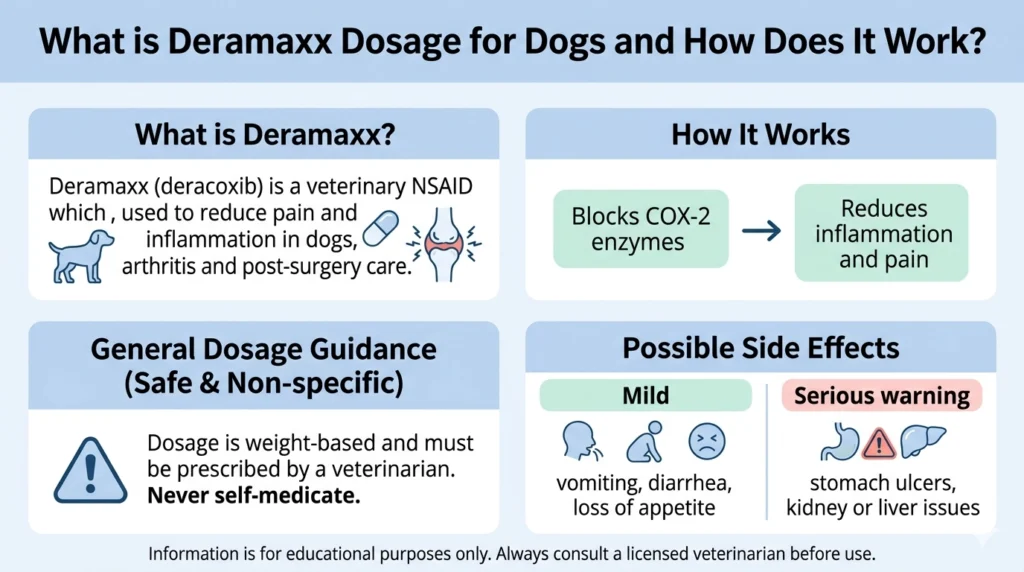
Deramaxx (deracoxib) is a non-steroidal anti-inflammatory medication (NSAID) that is specifically tailored to dogs, and can only be obtained by veterinary prescription. It is widely utilized to treat pain and inflammation due to diseases like osteoarthritis (OA), arthritis and post-operative pain, such as orthopedic surgery and dental care.
Deramaxx by weight fr dogs is not toxic to dogs like human NSAIDs (e.g. ibuprofen), and, when prescribed correctly, is safe and effective when administered to a dog.
Deramaxx dose for dogs by weight acts by inhibiting and attacking the formation of the chemical products in the body called the prostaglandins that cause pain, fever and inflammation. To be more precise, its active component deracoxib is a part of the group of NSAIDs called coxib, which selectively suppresses the activity of the enzyme, COX-2, that is the enzyme that causes inflammation and pain in arthritic and injured tissues.
Compared to most other NSAIDs, which also inhibit COX-1 (which is needed to maintain normal body functions such as stomach protection and blood clotting) the COX-2 selectivity of Deramaxx helps minimize pain with minimal interference with normal body functions.
This specific action enables Deramaxx drug for dogs to effectively relieve pain, swelling, and discomfort and help restore improved mobility and healing in dogs. It is usually used both in the short-term to manage post-surgical pain and in the long-term to treat chronic diseases such as osteoarthritis.
Also, Deramaxx is made in the shape of a beef-flavored chewable tablet, which is easier to administer and to be more palatable to dogs.
Deramaxx medication is a veterinary NSAID and it should not be administered to cats, humans or other animals since it is only administered to dogs.
It is usually very tolerable when administered on a veterinary basis and can be viewed as an effective alternative to the management of inflammatory disease and enhancing the quality of life in a dog with painful conditions.
What is Deramaxx Used for in Dogs?
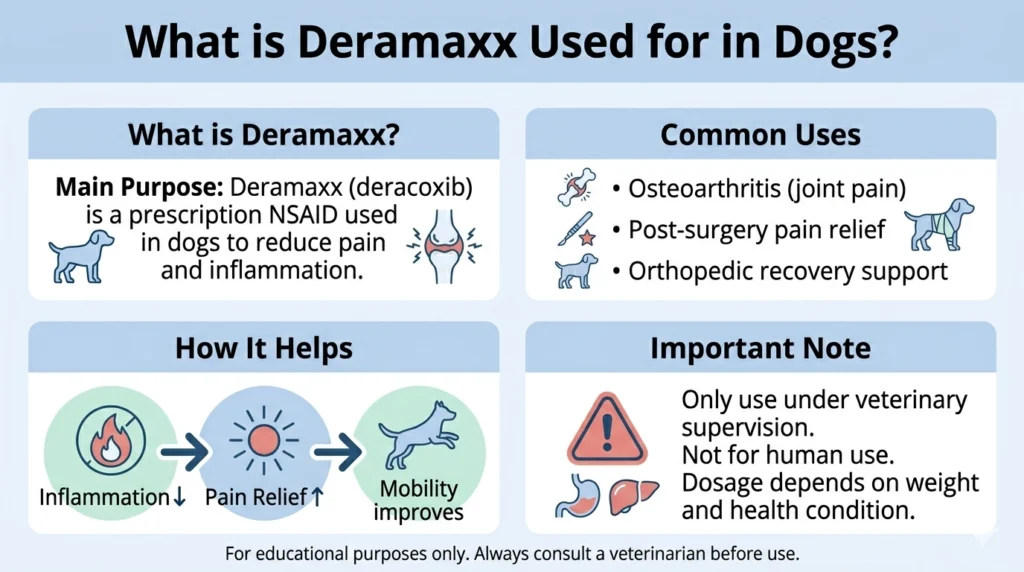
Deramaxx (deracoxib) is a non-steroidal anti-inflammatory drug (NSAID) that is used to alleviate pain, inflammation, and fever in dogs. It is a veterinary drug approved by FDA that can be administered to recover in the short term and chronic in the long term.


Paid Links - As an Amazon Associate, I earn from qualifying purchases.
Primary Deramaxx usages in Dogs.
Deramaxx dose is normally used to treat various pain related disorders such as:
- Osteoarthritis (most frequently used)
- Pain after surgery (spay, neuter, orthopedic surgery, dental extractions)
- Pain due to injury (fractures, wounds, sprains, strains)
- Some cancer pain management (in particular situations)
- Chronic Joint Pain and osteoarthritis.
Deramaxx for dogs has one of its main applications in the treatment of osteoarthritis (OA) which is the most common type of arthritis amongst dogs. This condition involves:
- Joint loss of cartilage.
- Bone proliferation of joints.
- Unusual proliferation of the bone.
The changes lead to chronic pain and loss of mobility or dysfunction of limbs. Osteoarthritis is a frequent condition that occurs as a result of other underlying conditions like:
- Hip dysplasia
- Dislocation of the kneecap (patellar luxation).
- Ligament disease
The dogs, which are at greater risk, are old dogs, large dogs, overweight dogs, highly active/sporting dogs, genetically predisposed dogs and dogs with joint injuries and/or infections such as Lyme disease.
Deramaxx mode of action in the body
Deramaxx dosage for pets includes deracoxib that helps to manage pain and inflammation through the action on certain enzymes:
- It selectively suppresses the COX-2 enzyme that produces inflammatory chemicals (prostaglandins) that cause pain, swelling and fever.
- It does not suppress the COX-1 enzyme that are involved in the normal body processes such as stomach defense, blood flow to the kidney (renal perfusion) and platelet activities.
Due to this selectivity of COX-2, Deramaxx can be used to minimize inflammation and at the same time has less impact on the normal body systems.
Additional Important Information
The effect of deramaxx medication for pets is commonly related to ibuprofen in humans in terms of pain-reliever, however, it is specifically designed to use in dogs and should never be administered to humans or other animals. As well, it comes in a beef-flavored chewable tablet, thereby being easier to administer.
Deramaxx is generally a popular veterinary drug as a rapid acting and effective NSAID in the treatment of acute injuries in dogs, as well as chronic inflammatory diseases.
How is Deramaxx Dosed and Given for Dogs?
Deramaxx (deracoxib) is an NSAID prescribed once a day by veterinarians to dogs as a chewable tablet that is flavored with beef. It can be easily administered and comes in four tablet strengths 12 mg, 25 mg, 75 mg and 100 mg.
Deramaxx Dosage for Dogs
A veterinarian always determines the proper dosage of Deramaxx and it is determined based on:
- The body weight of the dog.
- The condition that is under medical care (e.g., arthritis vs. post-surgical pain).
- The length of treatment that is needed.
Deramaxx dose can be used in certain instances on a short term basis, with only a few days after surgery and in others, dogs with chronic diseases such as osteoarthritis may require taking daily.
Flexible Dosing Approach
Depending on the needs of the dog, veterinarians can adopt various dosing measures:
- To manage pain and inflammation rapidly during the first few days a higher initial dose (loading dose) is used.
- Subsequently, a reduced maintenance dose can be followed to persist in managing it.
- Or a steady dose of one a day treatment, depending on the situation.
The specific dosage given by the veterinarian should be taken as it is to make sure that it is safe and effective.
The way to administer Deramaxx to dogs.
Deramaxx doasage for dogs is made into a beef-flavored chewable tablet thus it is normally palatable to most dogs. It will be a treat to many dogs.
To enhance tolerance and decreasing the chances of stomach upset:
Key Administration Points
- Given once daily
- Available in 12 mg, 25 mg, 75 mg, and 100 mg strengths
- May be applied both to short term pain (after surgery) and long term (arthritis).
- Should not be administered in any other way than prescribed by a veterinarian.
All in all, it is recommended that Deramaxx is a convenient, daily, chewable medicine that can be used with proper management of pain and inflammation when administered properly under the direction of the veterinarian.
What Are the Common Side Effects of Deramaxx in Dogs?
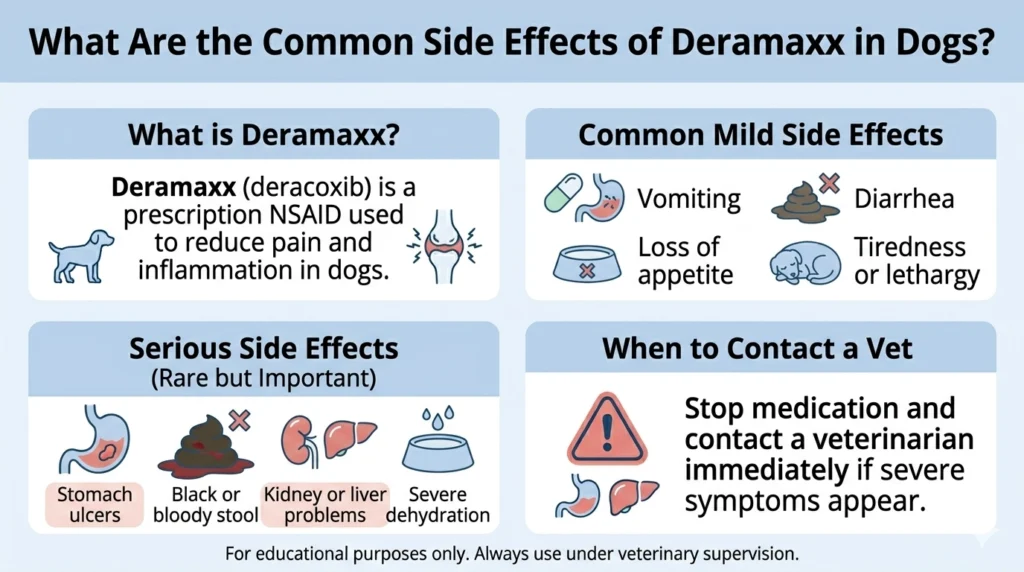
Deramaxx (deracoxib) for dogs is a non-steroidal anti-inflammatory drug (NSAID) which is usually well tolerated by dogs, and as with all drugs, has side effects in some instances.
The majority of the side effects are of the gastro intestinal system, but the more severe effects might be with the liver, kidney, blood, and nervous systems, particularly when the drug is used over an extended period, in large doses, or in dogs with underlying health problems.
Side Effects of Deramaxx on Dogs
The most common side effects reported are:
- Vomiting
- Diarrhea
- Decreased or loss of appetite
- Pain or discomfort in the abdomen.
- Fatigue or loss of energy.
- Weight loss
- Alterations in drinking or urinating patterns.
- Skin irritation
- Behavioral changes
- Black, tarry or bloody stools (indication of internal bleeding or ulcers)
The most frequent of these is gastrointestinal upset since NSAIDs can also have an impact on the protective lining of the stomach, making it susceptible to irritation and ulceration.
Severe Side Effects on Gastrointestinal tract
In other dogs, Deramaxx can cause even more serious digestive issues like:
- Stomach ulcers
- Hematemesis (vomiting blood)
- Melena (black, tarry digested blood stool)
- Hematochezia (blood in stool)
- Excessive drooling (hypersalivation)
- Dehydration
- Elevated pancreatic enzymes
- Severe abdominal pain
Without early treatment, these conditions may deteriorate and turn into life-threatening in infrequent instances (ulcer perforation). It becomes at risk when one is using in high doses or when the use is long-term.
Liver (Hepatic) Side Effects
In some dogs, long-term use of Deramaxx can have an impact on liver function with the result of:
- Elevated liver enzymes
- Jaundice (skins or gums becoming yellow)
- Fluctuations in the level of blood proteins.
- Fluid build-up in the abdomen (ascites)
- Urinary Side Effects and Kidney.
Dogs that are dehydrated or have kidney disease or are put on long-term NSAIDs could have urinary and kidney effects like:
- Increased thirst (polydipsia)
- Increased urination (polyuria)
- Blood in urine
- Decreased renal functioning or renal damage.
- Blood (Hematologic) Side Effects.
Deramaxx dosage for dogs can cause blood cells to be affected in some dogs although it is rare:
Anemia (reduced number of red blood cells in the body)
Thrombocytopenia (reduced number of platelets)
These symptoms may turn severe provided that they are not identified in the initial stages, this is why in most cases, long-term users may need regular blood tests.
Neurological Side Effects
Uncommon though possible neurological reactions consist of:
- Balance or coordination loss.
- Tremors or shivering
- Seizures
- Head tilting
- Abnormal eye movements
- Weakness of hind limbs (paresis)
- Aggression or anxiety behavior.
- Proprioceptive deficit (poor body part awareness)
- Allergies and Dangerous Dogs.
Other dogs can have allergic reactions especially to those that are sensitive to:
- Deracoxib
- Sulfonamides
- Beef flavoring
Signs may include:
- Itching
- Hives
- Facial swelling
- Difficulty breathing
Deramaxx is not recommended for:
- Dogs that have liver, kidney or heart disease.
- Dogs that have gastrointestinal ulcers.
- Dogs that are anorectic or severely dehydrated.
- Dogs under 12.5 lb (5.7 kg)
- Puppies that are less than 4 months old.
- Breeding, pregnant or nursing dogs.
- Dogs on steroids or drugs which interact with NSAIDs.
- Important Safety Note
The side effects are few and mostly occur in unhealthy dogs and occur more frequently when given in large dosages or when used over a long period of time.
Veterinarians usually carry out check-ups, and might prescribe blood tests and frequent check-ups in longer treatment so as to minimize risks and early signs of complications.
In case of any side effects, it is necessary to discontinue medication and refer to a veterinarian as soon as possible to assess and treat him/her adequately.
What Are the Most Serious Risks of Deramaxx for Dogs?
Deramaxx (deracoxib) drug for dogs per pound or kg is a non-steroidal anti-inflammatory medication (NSAID) that is more often used in the treatment of pains and inflammation in dogs.
Although it is generally safe when administered under veterinary care, there are some severe possible health risks of which any dog owner should be protective, particularly in the long-term administration or in a dog with the underlying illnesses.
- Gastrointestinal Ulcers (Stomach and Intestinal Damage)
Among the gravest threats of Deramaxx is the occurrence of gastrointestinal ulcers.
- NSAIDs such as Deramaxx might cause irritation to the stomach and intestinal lining.
- In unusual situations, it can cause the onset of ulcers.
- They can present themselves as vomiting, abdominal pain, or black stools.
Such an uncommon side effect, however, is considered less likely to cause ulcers than aspirin, another popular NSAID.
- Liver Disease and Liver Damage.
Deramaxx can have an impact on liver health of some dogs:
- It may aggravate an underlying liver disease.
- Few dogs can have an idiosyncratic (unpredictable) liver response, which causes liver damage.
- Normal pre-treatment bloodwork dogs have reduced chances of getting liver complications.
Due to this danger, veterinarians tend to conduct baseline blood tests prior to initiating long-term treatment.
- Renal Complications and kidney disease.
The other dangerous threat is the effect of kidney functioning:
- Deramaxx can make existing kidney disease worse.
- Dogs that have weakened kidney functions are more prone to complications.
- The chronic use can interfere with normal kidney functioning particularly when unmonitored.
- Significance of Veterinary Surveillance.
To minimize the chances of severe complications, veterinarians make a number of precautions:
- Prior to initiating long-term Deramaxx therapy, blood tests are done.
- Physical checkups and blood follow-ups should be used frequently (as a follow-up to the treatment).
- Surveillance assists in identifying possible liver, kidney, or gastrointestinal issues at an early stage before they develop into serious health problems.
Key Safety Insight
Although there are serious dangers like stomach ulcers, liver damage and kidney disease, which are not very common among healthy dogs when Deramaxx is administered properly under the supervision of a veterinarian, they do exist.
Dogs that already have organ disease are more prone to complications or when they are used without a check-up.
Does Deramaxx Interact With Other Dog Medications?
Deramaxx (deracoxib) is a non-steroidal anti-inflammatory medication (NSAID) that is more often used in the treatment of pains and inflammation in dogs.
Although it is thought to be safe in case of using it under veterinary control, there are a number of severe possible health risks, which the owners of dogs should be aware of, particularly in the cases of long-term use or in animals with compromised health.
- Gastrointestinal (Stomach and Intestinal Damage), Ulcers.
Among the greatest dangers of using Deramaxx, there is the formation of gastrointestinal ulcers.
- NSAIDs such as Deramaxx might cause irritation to the stomach and intestinal lining.
- This can result in formation of ulcers, in uncommon situations.
- Symptoms may involve vomiting, pain in the abdomen or black stools.
Such an uncommon side effect, however, is considered less likely to cause ulcers than aspirin, another popular NSAID.
- Liver Disease and Liver Damage.
Deramaxx can have an impact on liver health of some dogs:
- It may exacerbate liver disease that exists.
- Few dogs can have an idiosyncratic (unpredictable) liver response, which causes liver damage.
- Normal pre-treatment bloodwork dogs have reduced chances of getting liver complications.
Due to this risk, veterinarians usually do baseline blood tests prior to initiation of long-term treatment.
- Renal Complications and Disease of the kidney.
The other dangerous risk is that on kidney functioning:
- Deramaxx can make existing kidney disease worse.
- The dogs that have impaired kidney functions are more prone to complications.
- Long-term use can have an influence on the normal functioning of the kidneys particularly in the absence of monitoring.
- Significance of Veterinary Surveillance.
To minimize the chances of severe complications, veterinarians make a number of precautions:
- Blood tests are done prior to long-term therapy on Deramaxx.
- Physical checkups and blood follow-ups should be used frequently (as a follow-up to the treatment).
- Check-ups are used to identify liver, kidney or gastrointestinal issues at an early stage before they develop into serious complications.
Key Safety Insight
Although there are serious risks (such as stomach ulcers, liver damage and kidney disease), they are not common among healthy dogs in case of proper usage of Deramaxx under the supervision of the veterinarian.
Dogs that already have organ disease are more prone to complications or when they are used without a check-up.
You May Also Like to Read:
- (N-acetylcysteine) NAC Dosage For Dogs Calculator & Safe Guide
- Cardisure Dosage For Dogs: Calculator Chart & Safe Guide
FAQs
What would you do in case your dog missed a dose of Deramaxx?
Take the dose that you missed when you get the reminder. In case it is nearly time to take the next scheduled dose, do not take the missed dose, go about with the schedule. Take not two doses.
Is Deramaxx a sedative to dogs?
Deramaxx dosage for dogs does not normally lead to sleepiness, although there are mild cases of lethargy or a lack of energy in dogs. In case of severe drowsiness, one should consult a veterinarian.
Can cats take Deramaxx?
No. Deramaxx is not to be administered to cats, human beings or other animals.
What is the frequency of the Deramaxx to dogs?
Deramaxx dosage for dogs is typically administered in a single dose, although the dosing schedule should be determined by the veterinarian and the disease.
Is it okay to administer Deramaxx with food?
It can be administered either with or without food although when administered with a small meal, this can help decrease the incidence of stomach upset like nausea or vomiting.
What is the duration of stay of dogs on Deramaxx?
Treatment duration varies. Others last a few days after surgery and in other cases like chronic diseases such as osteoarthritis, the dog may require a long term treatment under the guidance of the veterinarian.
What can I do in case of side effects on my dog due to Deramaxx?
In case your dog is vomiting, diarrhea, anorexic, lethargic or exhibits any other strange symptoms, discontinue the medication, and call your veterinarian immediately.
Can Deramaxx dosage for dogs be used on long-term basis?
Deramaxx may be administered in the long term in certain dogs although under veterinary care with frequent checkups and blood tests to check liver, kidney and general condition.
Is it possible to use Deramaxx with other drugs?
It is not to be used together with other NSAIDs or steroids. Never leave out any medications and supplements your dog is on with your veterinarian to prevent toxic reactions.
Final Thoughts
Deramaxx for dogs is a safe and effective anti-inflammatory and pain reliever in veterinary medicine that is used to treat dogs, especially following a surgical procedure and arthritis. Although it is not a cure, it may considerably enhance the mobility, comfort level of the dogs with orthopedic or inflammatory conditions and the quality of life.
Nevertheless, similar to all NSAIDs, Deramaxx cannot be exempt of any side effects. Most often reported conditions are vomiting, diarrhea and lack of appetite and in certain instances more severe reactions can also be experienced.
This is why it is important that dog owners should collaborate closely with their veterinarian not only prior to the start, but also throughout the treatment in order to minimize the risks and maximize the benefits.
Deramaxx requires careful consideration by veterinarians who weigh the benefits and possible harmful effects of the drug, so their advice is vital to its safe usage. Frequent observations and correct dosages are significant in maintaining the effectiveness and also tolerance of the medication.
Deramaxx drug may be useful as both a short term post-operative pain reliever, as well as in long-term management of arthritis pain, as veterinary wisdom points out. In cases where a dog does not find adequate relief with Deramaxx, it may be recommended to incorporate it into other methods of pain management to enhance levels of comfort and results.
Finally, safe use of Deramaxx requires strict follow-up of veterinary recommendations and continuous veterinary care, so your veterinarian is the key to your dog living a pain-free life.






My 14 y old Doberman got slow growing soft tissue sarcoma.She is licking it and is perhaps itching.Seems to start growing faster
Size of biggest grapefruit- but She still enjoying short walks,eating more than ever before.She got Deramaxx 100mg -half tablet every 24 hours.Seems to be well tolerated and he with discomfort.We have the best Veterinarian in our town.
Your love and dedication to your beautiful Doberman really shine through. It’s wonderful to hear that she’s still enjoying her walks, eating well, and spending quality time with you. She is clearly very loved and well cared for. Wishing your furry friend comfort, happy days, and many more precious moments together.