Hyaluronic Acid Dosage Calculator For Dogs
Estimate a typical oral daily hyaluronic acid (HA) dosage based on your dog’s weight.
Estimated Daily Dosage
Potential Benefits
- Supports healthy joint lubrication and mobility.
- Helps maintain synovial fluid in joints.
- Supports skin hydration and connective tissue health.
- May assist tissue repair and post-exercise recovery.
© medsdog.com
One of the most typical questions that pet owners research when seeking to help support healthy joints, boost mobility and generally connect with tissue health is hyaluronic acid dosage for dogs. Hyaluronic acid, sometimes written as sodium hyaluronate in supplements, is a natural substance in your dog's joints, cartilage, skin and other connective tissues.
The main function of this is to retain and attract water, acting as a lubricant for joints, padding for cartilage, fluid for tissues, and mobility for normal movement. With every subsequent use of a joint, as dogs age, or after injuries, the body's natural hyaluronic acid may be depleted, leading to stiffness, loss of mobility and discomfort.


Paid Links - As an Amazon Associate, I earn from qualifying purchases.
While hyaluronic acid is most recognized for maintaining joint health, it is also beneficial for more than keeping joints moving. HA is also included in many veterinary supplements to help keep skin hydrated, giving skin a shine, supporting tissue repair and to assist in normal wound healing. Given these wide-spread advantages, oral hyaluronic acid has become a more and more common component in doggy joint supplements, frequently accompanied by glucosamine, chondroitin, collagen or MSM for much more thorough joint care.
The complete guide will tell you how much Hyaluronic acid your dog might need based on weight, how to work out doses on a daily basis, the various forms of hyaluronic acid, the health benefits to expect, any potential side effects and some important safety precautions. You'll also find out when hyaluronic acid can be a beneficial option, what research indicates about its efficacy, and how to select and use a good supplement safely.
Key Takeaways
- Hyaluronic acid (HA) for dogs is a natural compound that is important in lubricating joints, cushioning cartilage, and hydrating skin and connective tissue.
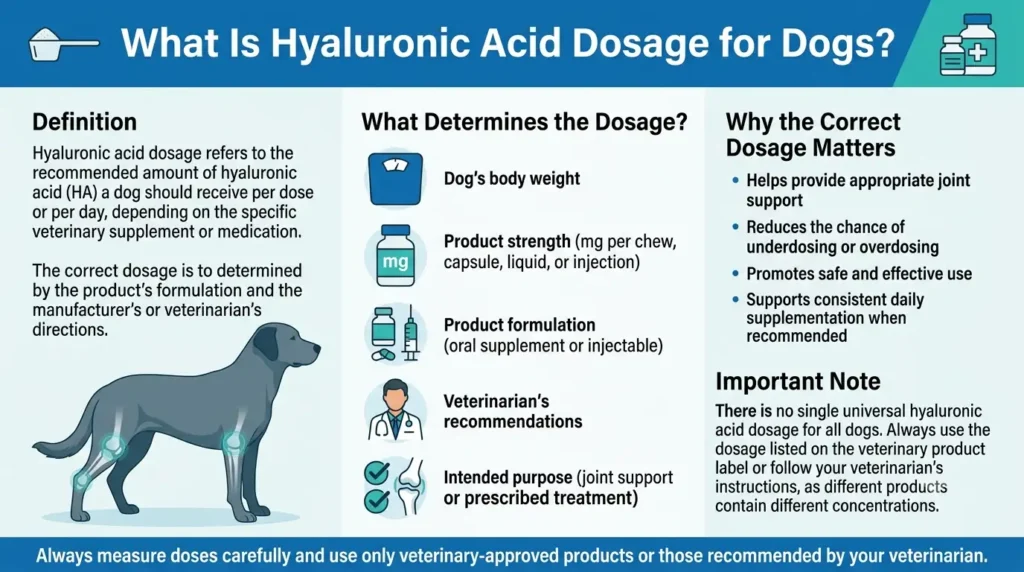
- Unless otherwise directed by your veterinarian, an oral dose of 1-2 mg of hyaluronic acid for every 10 lb (4.5 kg) of body weight is typical.
- Maintenance Support: 1 mg/10 lb/day. Joint support: 2 mg/10 lb body weight once a day, for therapeutic support.
- The use of hyaluronic acid is well established for the maintenance of joint mobility, health of cartilage, hydration of the skin, condition of the coat and normal wound healing.
- HA supplements come in various doses, from liquid to soft chews to capsules to powder.
- Do not use a one size fits all approach to dog dose; always check the product label for information on how much to use based on your dog's weight.
- Generally, hyaluronic acid is not toxic and has few side effects with the most common being mild upset of the digestive tract (vomiting or diarrhea).
- For a more comprehensive joint supplement, HA is often mixed with glucosamine, chondroitin, collagen or MSM.
- Hyaluronic acid is a supportive supplement and NOT a replacement for veterinary treatment for arthritis or other joint disease.
- Speak with your vet before beginning hyaluronic acid dosage for dogs as it may not be appropriate for dogs that are pregnant, nursing, with an underlying health disorder, or on other medications.
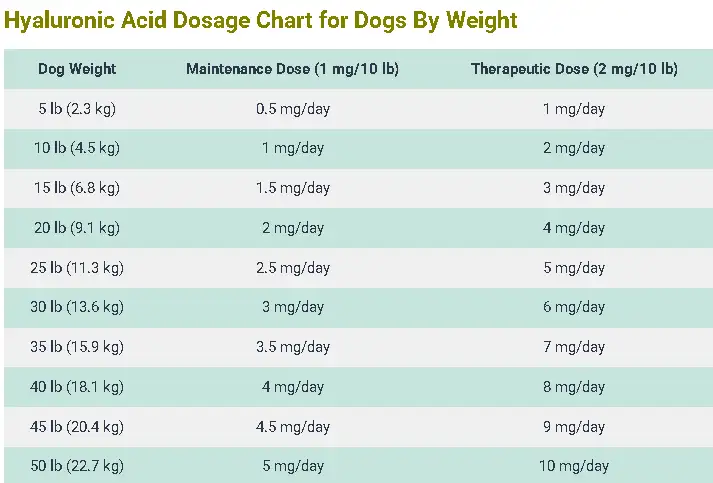
Hyaluronic Acid Dosage Chart for Dogs By Weight
| Dog Weight | Maintenance Dose (1 mg/10 lb) | Therapeutic Dose (2 mg/10 lb) |
|---|---|---|
| 5 lb (2.3 kg) | 0.5 mg/day | 1 mg/day |
| 10 lb (4.5 kg) | 1 mg/day | 2 mg/day |
| 15 lb (6.8 kg) | 1.5 mg/day | 3 mg/day |
| 20 lb (9.1 kg) | 2 mg/day | 4 mg/day |
| 25 lb (11.3 kg) | 2.5 mg/day | 5 mg/day |
| 30 lb (13.6 kg) | 3 mg/day | 6 mg/day |
| 35 lb (15.9 kg) | 3.5 mg/day | 7 mg/day |
| 40 lb (18.1 kg) | 4 mg/day | 8 mg/day |
| 45 lb (20.4 kg) | 4.5 mg/day | 9 mg/day |
| 50 lb (22.7 kg) | 5 mg/day | 10 mg/day |
| 55 lb (25 kg) | 5.5 mg/day | 11 mg/day |
| 60 lb (27.2 kg) | 6 mg/day | 12 mg/day |
| 65 lb (29.5 kg) | 6.5 mg/day | 13 mg/day |
| 70 lb (31.8 kg) | 7 mg/day | 14 mg/day |
| 75 lb (34 kg) | 7.5 mg/day | 15 mg/day |
| 80 lb (36.3 kg) | 8 mg/day | 16 mg/day |
| 85 lb (38.6 kg) | 8.5 mg/day | 17 mg/day |
| 90 lb (40.8 kg) | 9 mg/day | 18 mg/day |
| 95 lb (43.1 kg) | 9.5 mg/day | 19 mg/day |
| 100 lb (45.4 kg) | 10 mg/day | 20 mg/day |
Dosage Formula
- Maintenance: 1 mg of hyaluronic acid per 10 lb (4.5 kg) of body weight daily.
- Therapeutic/Severe Joint Support: 2 mg of hyaluronic acid per 10 lb (4.5 kg) of body weight daily.
Note: This chart is intended for oral hyaluronic acid supplements only. Product strengths vary (capsules, chews, powders, and liquids), so always calculate the actual amount based on the product's labeled hyaluronic acid content and consult your veterinarian before starting supplementation.
What is Hyaluronic Acid?
Hyaluronic acid (HA), or hyaluronan, is a naturally occurring glycosaminoglycan (GAG) present in the synovial fluid, cartilage, connective tissues, skin and eyes of a dog. It's vital in maintaining healthy connective tissues, hydrating tissues and lubricating joints.
Perhaps one of HA's most unique properties is that it can bind and hold up to a thousand times its own weight in water, resulting in a thick gel-like texture. Joints benefit from this increased viscosity of synovial fluid, enabling the bones to move more freely and with a reduced risk of friction and damage, while also providing cushioning and absorbing shocks. It also maintains the resiliency of cartilage and allows for comfortable, pain-free movement.
In addition to joint health, hyaluronic acid dosage for dogs also plays a role in skin moisture and elasticity, healthy connective tissues and normal tissue repair and wound healing. These properties make it moisturizing and this is why it is called "nature's moisturizer.
Dogs naturally lose hyaluronic acid as they grow older and after repeated physical stress and strain, injury or inflammation. Reduced HA levels can help to make the skin drier, irritated, less mobile, make the joints stiffer, help the skin to heal less easily and reduce cushioning in the joints.
For this reason, hyaluronic acid is a popular ingredient in long-term joint and wellness support products because it works to support canine skin moisture, coat health, joint lubrication, cartilage health, and overall mobility.
Benefits of Hyaluronic Acid for Dogs
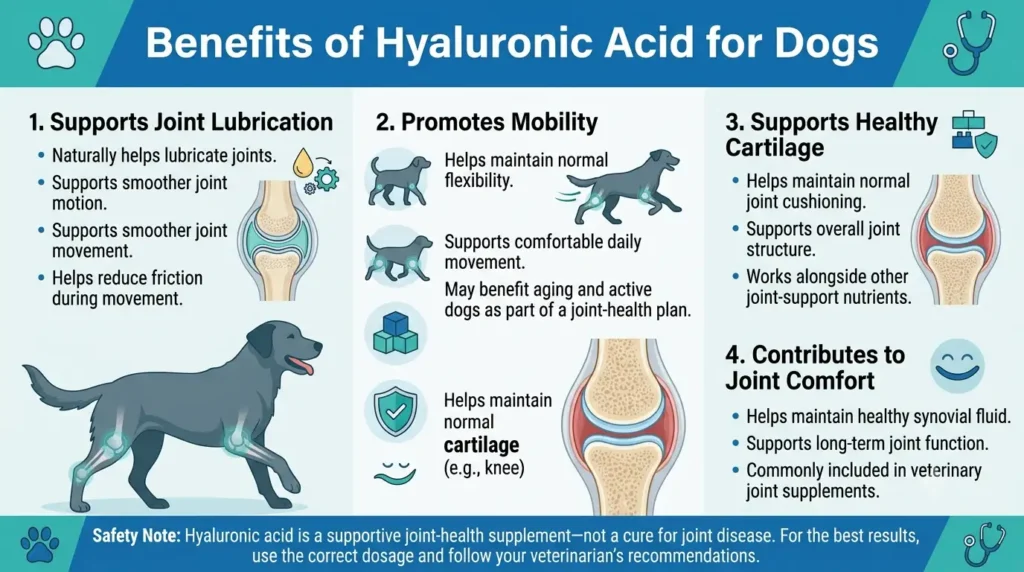
Hyaluronic acid (HA) can benefit a dog's health in a number of ways, including maintaining healthy joints, hydrating the skin, and aiding in tissue repair. HA dosage for dogs is naturally occurring in the body, and is important for the maintenance of healthy connective tissues and lubricated joints. Natural HA levels in dogs decrease as they grow older and/or have suffered injury, over-use or arthritis, and this is a popular choice among dogs for long-term support of joints and wellness.
- Supports Bovimax Caring for Joints and Mobility (B&WV CARE) Program
A major advantage to hyaluronic acid is that it helps to lubricate the joints. HA helps make joints move more easily and lessens the friction between bones, enhancing the shock-absorbing properties of the cartilage.
Potential benefits include:
- Improved joint lubrication
- Improved mobility and flexibility.
- Less stiffness and pain in the joints.
- Help for dogs with OA
The research also indicates that oral HA could be beneficial for joint health, as it has been shown to improve biomarkers associated with osteoarthritis following some orthopedic surgeries. It should be used in conjunction with veterinary care, however, and not as a substitute for medical treatment.
- Supports Wellness of Skin & Coat
Hyaluronic acid's super water retaining properties keep the skin moist and helps maintain a healthy coat. When skin is well-hydrated, it can help minimize dryness and flaking, and generally help to make skin feel comfortable.
It may help:
- Maintain skin moisture
- Help to maintain soft, shiny hair
- Help to diminish dry, flaky skin
- Maintain healthy skin in general
- Supports Wound Healing
Hyaluronic acid (HA) is a major component in tissue repair during normal cell growth and regeneration. Can be used to heal minor wounds, surgeries and skin injuries in dogs by accelerating the body's natural healing process.


Paid Links - As an Amazon Associate, I earn from qualifying purchases.
- Enhances Overall Comfort and Quality of Life
Hyaluronic acid can help dogs remain more comfortable and active by maintaining healthy joints, moisturised skin and supporting normal tissue function. With regular use, many owners report progressive improvements in their pet's mobility, coat condition, and overall comfort.
Note: Hyaluronic acid is not a cure for arthritis or any other type of joint disease—it is a supportive supplement. It should be used in conjunction with proper veterinary management, weight control, regular exercise, and, as appropriate, be supplemented with other joint-support ingredients, like glucosamine, chondroitin, or collagen.
The Different Types of HA Joint Supplements
Hyaluronic acid (HA) is offered in multiple forms, enabling pet owners and vets to decide on the best one considering a dog's health requirements and the condition being treated. Opioid, oral, injectable, and topical are the most popular.
- Oral HA Supplements
Oral supplements are the most commonly used, as they can be used for long-term joint support or just as daily supplements for overall wellness. They can be obtained in the form of:
- Liquids
- Powders
- Capsules or tablets
- Soft chews
Orally absorbed HA has been shown to be bioavailable. Liquid formulas might be more convenient to give, particularly if the dog hates pills, and powders can be added to food. Many oral HA products also contain other ingredients such as glucosamine, chondroitin, collagen or MSM for joint support and cartilage protection.
- Injectable HA
Hyaluronic acid is usually only used in dogs with moderate to severe arthritis or advanced joint disease and should only be given by a veterinarian. These injections can be injected into the affected joint, and provide direct HA to improve the lubrication of the joint, decrease pain, and maintain proper joint function.
There are two types of injectable products, high molecular weight (HMW) and low molecular weight (LMW). Both have been demonstrated to be effective at relieving symptoms of OA, although high molecular weight HA may be more beneficial. Typically, benefits will build up over 4–8 weeks, then slowly diminish after an about 6-month period, and may necessitate retreatment, as determined by a veterinarian.
- Topical HA Products
Most HA products are topical gels, creams, and sprays that are used to keep the skin moist and for minor wound care (not to support or treat joints). They can be used to hydrate dry, irritated skin, to aid normal healing, and to provide more specific moisture to areas that are prone to abrasions, hotspots, etc.
The most suitable type of hyaluronic acid supplement will depend on your dog's age, health status, and the desired outcomes of the treatment. Your veterinarian will be able to advise you on which formulation and dosage is right for your dog based on his or her particular condition.
Potential Side Effects of Hyaluronic Acid for Dogs
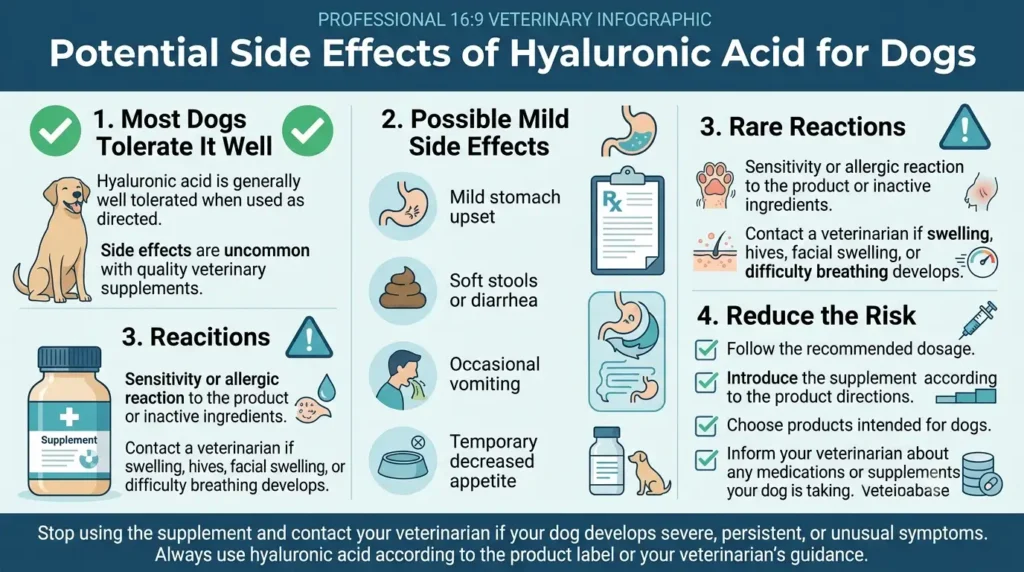
When used at the recommended dose, hyaluronic acid (HA) is generally safe and well tolerated by most dogs. As it is naturally occurring in the body, it has few side effects and if they do occur they are generally mild. As with all supplements however, it is important to remember that individual dogs may have different reactions, and to monitor your pet after beginning supplementation.
Mild Side Effects
Most side effects reported are short-lived and may be due to some adjustment period as your dog takes the supplement. These can include:
- Slight stomach distress (diarrhea, nausea)
- Redness or irritation of the skin using HA topical products
If any of these signs are not alleviated or if they become more severe, stop using and ask your veterinarian for advice.
While rare, there are serious reactions
Rarely some dogs can have an allergic reaction. If your dog gets any of the following, call your vet right away:
- Swelling of the face or body
- Severe itching
- Difficulty breathing
Injectable Hyaluronic Acid
Hyaluronic acid injections in dogs have been reported to have no significant side effects. Temporary reactions like mild pain or redness, swelling, or itching at the injection site have been observed in humans but have not been consistently reported in studies of dogs.
Safety Tips
To minimise side effects:
- Follow directions for use, do not use more than recommended.
- Use according to the manufacturer's directions for that particular product.
- Please consult your veterinarian prior to the use of hyaluronic acid particularly if your dog is on other medicines or has an underlying medical condition.
Hyaluronic acid medication for dogs is generally safe to use as a supportive supplement for most dogs, but always consult a veterinarian to determine if it is right for your dog.
You May Also Like to Read:
- Oregano Oil Dosage For Dogs Calculator, Chart & Safe Guide
- Capguard Dosage For Dogs: Calculator & Safe Dosage Guide
FAQs
How hyaluronic acid can help your dog?
Hyaluronic acid assists in lubrication of joints, viscosity of synovial fluid, assists in cushioning of joints, helps maintain healthy skin hydration, lends a shinier coat and helps support the normal repair of tissues. It is frequently employed as a part of a long term wellness program and joint care regimen.
How long does it take for hyaluronic acid to work in dogs?
The dog's age, health, and specific purpose for supplementation will affect the results. Lots of owners see improvement in the movement of a joint or a dog's skin hydration in 2-4 weeks; dogs with more advanced joint problems may take longer to see noticeable improvements.
Does hyaluronic acid work for dogs?
Yes. Oral hyaluronic acid has been demonstrated to be bioavailable, that is, able to be taken up and utilized by the body. It may be available in liquid, powder, capsule, or chew, with liquid usually being the first choice of administration because it is easy to give, and some liquid products may have greater absorption than other forms.
May HA be administered with glucosamine or other joint supplements?
Yes. Hyaluronic acid is frequently paired with other components like glucosamine, chondroitin, collagen, and MSM to supply even more extensive assistance for the joints. If you intend to feed a combination of supplements, ask your veterinarian to make sure it is suitable for your dog.
Does Hyaluronic Acid dose have any side effects on dogs?
Hyaluronic acid is used without any major issues and has minimal side-effects. Mild digestive upset may occur with some dogs, allergic reactions are uncommon. If your dog's vomiting, diarrhea, swelling, itching, or trouble breathing worsens or does not improve, stop using the product and call your veterinarian right away.
Is it safe for healthy dogs to take hyaluronic acid?
Yes. Hyaluronic acid may be used as a joint-support supplement for healthy dogs, particularly older dogs or breeds that may be prone to joint issues. As natural HA levels decrease as age goes up, supplementation can help to keep the joint lubricated and mobile in the long term.
Is it okay to supplement with HA for my dog?
Use a product of hyaluronic acid that is designed for your pet. Ingredients, flavorings or concentrations in supplements for humans can be toxic for dogs. Always choose products formulated for pets and follow your veterinarian's recommendations.
Final Thoughts
Hyaluronic acid medication for dogs is a substance that is naturally found in dogs and is essential to healthy skin, connective tissue, cartilage and joints. At the right dose, it can be beneficial for joint lubrication and mobility, skin hydration and comfort, especially in senior dogs or dogs suffering from joint pain (osteoarthritis).
There are various types and strengths of hyaluronic acid supplements available, so make sure to always dose your dog according to his or her body weight and follow the manufacturer's directions. HA is thought to be safe and well tolerated, but should be regarded as a supplementary treatment for joint disease and not as a cure.
If you already know that your dog has an underlying health issue or is taking other medications, it is best to check with your veterinarian before you begin to supplement. If used properly and under veterinary supervision, hyaluronic acid can prove to be a valuable addition to your dog's long-term health and wellness plan.