
If your dog sniffs a full bowl and walks away, or you want to know exactly what goes into their dinner, learning to make homemade salmon dog food can change mealtimes for the better. Salmon brings protein and omega-3 fats, rice gives gentle energy, and sweet potato and carrots add fiber and color that most dogs enjoy. You need no special equipment beyond a baking sheet, a pot, and a steamer basket, and most of the time is hands-off while the oven and stove do the work. This guide walks you through one batch from shopping to storage, with clear amounts and times at each point. One batch makes about 5 cups of food, enough for several meals for a medium dog or a week of toppers for a larger one. By the end you will have a batch you can portion, label, and store with confidence, plus a slow switch plan that keeps your dog’s stomach settled. This guide is general information, not vet advice, so check with your vet before you switch your dog to homemade food full time.
Time and Difficulty
Total Time: 50 minutes | Active Time: 25 minutes | Difficulty: Beginner
What You Need
Ingredients: 1 pound boneless salmon fillets, 1 cup dry white rice, 1 medium sweet potato, 2 medium carrots, water for cooking.
Tools: baking sheet, parchment paper, food thermometer, fork, large pot with a lid, steamer basket or colander, large mixing bowl, airtight containers.
Buy plain salmon only. Smoked, cured, seasoned or marinated salmon does not belong in this recipe, because salt and seasonings can upset a dog’s stomach.
At a Glance
- Ask your vet about homemade food first
- Choose boneless salmon and fresh vegetables
- Rinse the salmon and check for bones
- Bake the salmon until it flakes
- Cook the rice while the salmon cools
- Steam the sweet potato and carrots
- Flake the cooled salmon into small pieces
- Make homemade salmon dog food in one big bowl
- Portion the food into daily servings
- Refrigerate or freeze the leftovers
- Introduce the new food over seven days
Ask your vet about homemade food first
A quick vet check protects your dog from a well-meant mistake. Homemade meals can fall short on calcium and other nutrients when fed every day for months, so your vet can tell you whether this recipe works as a topper, a short-term meal, or a full diet with a vet-approved supplement. Dogs with pancreatitis, kidney disease, or a known fish allergy need a vet’s answer before any salmon meal.
Heads Up: Never feed raw salmon. Raw fish can carry parasites and bacteria that cooking destroys, so every fillet in this recipe gets cooked to 145°F before your dog eats it.
Choose boneless salmon and fresh vegetables
Farmed or wild salmon both work, as long as the fillets are plain and boneless. Press the flesh lightly at the store or at home. Fresh salmon springs back, smells mild like the sea, and shows no grey or slimy patches. Pick a firm sweet potato with no soft spots and carrots that snap rather than bend.
Rinse the salmon and check for bones
Cold water removes surface residue without warming the fish into the danger zone for bacteria. Hold each fillet under cold running water for a few seconds, then pat it dry with paper towels. Run your fingertips slowly along the thickest part of each fillet. Pin bones feel like tiny stiff hairs, and clean tweezers pull them out with a short, firm tug.
Bake the salmon until it flakes
Heat your oven to 400°F and line a baking sheet with parchment paper. Lay the fillets skin-side down with space between them so heat reaches every side. Bake for 12 to 15 minutes, depending on thickness. Salmon is done when the flesh turns opaque all the way through, flakes apart under a fork, and a food thermometer in the thickest part reads 145°F.
Cook the rice while the salmon cools
Your salmon needs at least 10 minutes of cooling time, and that window cooks the rice for free. Rinse 1 cup of dry white rice under cold water until the water runs mostly clear. Combine the rice with 2 cups of water in a large pot, bring it to a boil, then cover the pot and turn the heat to low for 18 minutes. Leave the lid on for 5 minutes after the heat goes off, then fluff the rice with a fork.
Steam the sweet potato and carrots
Peel 1 medium sweet potato and 2 carrots, then cut them into 1/2-inch cubes so every piece cooks at the same speed. Steam the cubes over boiling water for 10 to 12 minutes, until a fork slides in with no resistance. Add no salt, butter, oil, or seasoning at any point.
Flake the cooled salmon into small pieces
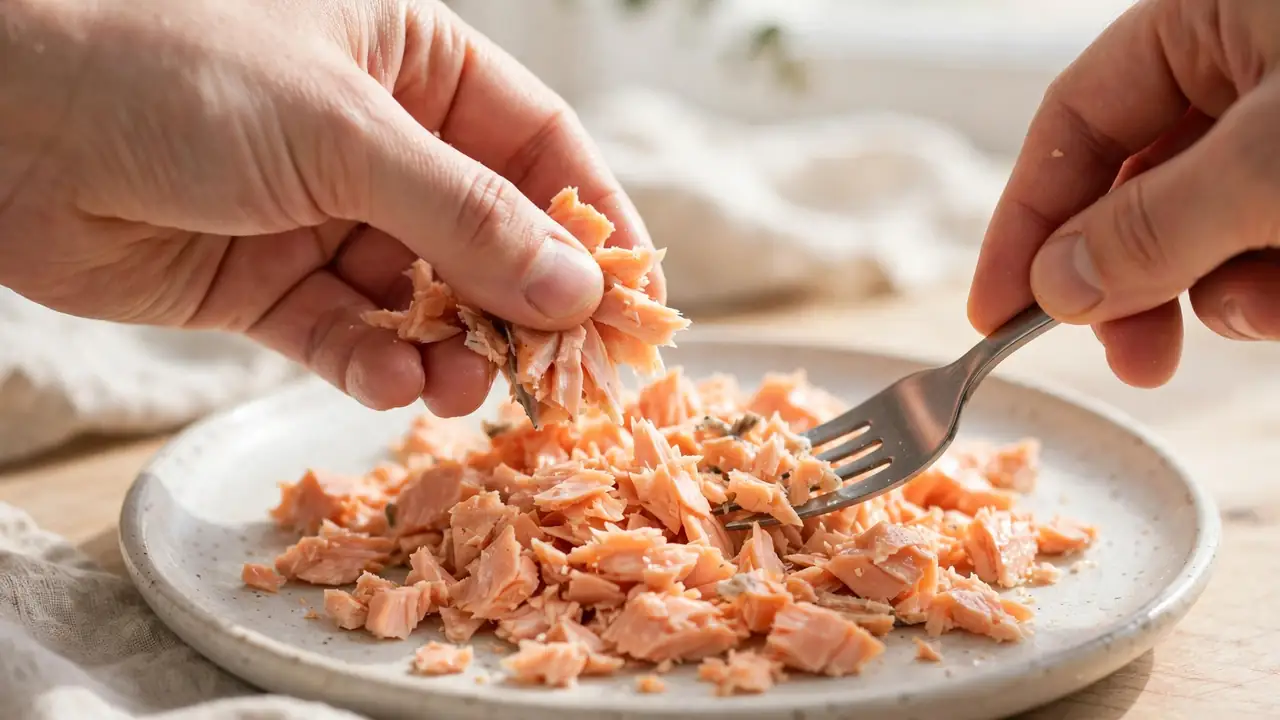
Warm fish breaks apart in strings rather than clean flakes, which is why cooling matters here. Slide the skin off each fillet and set it aside for the trash, since skin adds fat that sensitive stomachs do not need. Press a fork through the flesh and break it into pieces smaller than a thumbnail, checking once more for any bone you missed. For small dogs or puppies cleared by your vet, break the pieces smaller still, so no single piece needs much chewing.
Make homemade salmon dog food in one big bowl
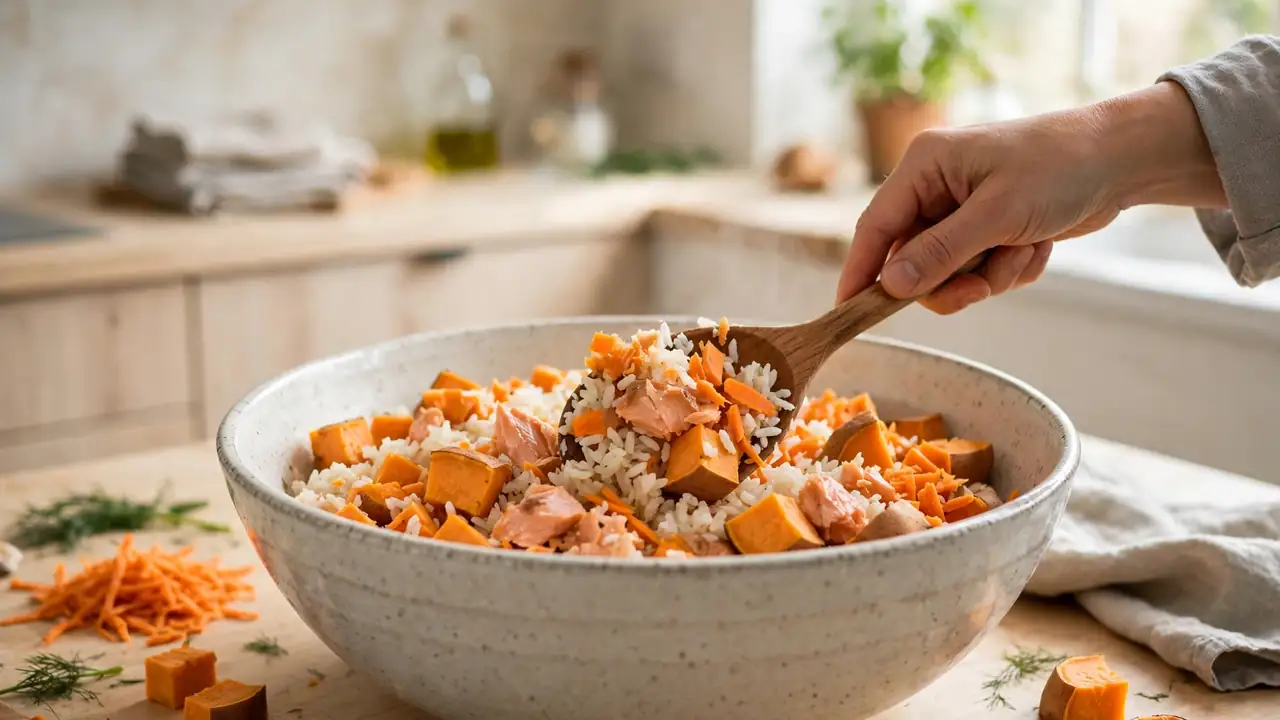
A large bowl gives you room to fold without spilling rice across the counter. Add the flaked salmon, the cooked rice, and the steamed vegetables to the bowl. Fold them together until the salmon shows in every scoop, rather than sitting in one pink clump. Serve only when the mix feels lukewarm to the inside of your wrist.
Portion the food into daily servings
Portioning now stops guesswork at every mealtime later in the week. Use your vet’s portion first if you have one. As a rough starting point only, many owners start with about 1 cup per day for a 20-pound dog, split over two meals, then adjust up or down by body condition and activity. Spoon each meal into its own airtight container and write the date on the lid.
Refrigerate or freeze the leftovers
Cooked fish spoils faster than most owners expect, so storage timing matters as much as cooking. Keep containers you plan to use within 3 days in the fridge. Freeze the rest in meal-size portions for up to 2 months. Thaw frozen portions in the fridge overnight, never on the counter, and throw out any portion that smells sour or has sat in the fridge past 4 days.
Introduce the new food over seven days
A sudden switch can cause loose stools even when every ingredient suits your dog. Mix 25% new food with 75% old food on days 1 and 2, move to a 50/50 mix on days 3 and 4, then 75% new food on days 5 and 6. Serve the new food on its own on day 7 only if stools stayed firm and your dog showed no vomiting, itching, or loss of appetite. Call your vet if loose stools last more than two days.


Paid Links - As an Amazon Associate, I earn from qualifying purchases.
Pro Tip: If your dog picks the salmon out and leaves the vegetables, mash the sweet potato and carrots into the rice before you add the fish. Salmon scent coats every bite that way, and picky eaters finish the bowl.
Troubleshooting
| If this happens | Try this |
| Loose stools after the switch | Slow the transition, drop back one stage for two days, and serve a smaller portion. |
| Your dog eats only the salmon | Mash the vegetables into the rice so every bite carries salmon scent. |
| The food smells off | Throw it out. Check the date on the lid and freeze the next batch sooner. |
| Your dog refuses the bowl | Warm it briefly until lukewarm, not hot, and call your vet if refusal lasts more than a day. |
Frequently Asked Questions
Can dogs eat salmon every day? Cooked, plain salmon can appear in a dog’s diet often, but a homemade recipe fed every day needs vet guidance so calcium and other nutrients stay in balance. Many owners use this recipe as a topper or a few meals a week instead.
Can I use canned salmon instead of fresh fillets? Yes, if the can holds salmon in water with no added salt. Drain it well, rinse it, and check for bones and skin before you use it. Fresh fillets still give you better control over fat and salt.
Can puppies eat this recipe? Puppies grow fast and need a precise balance of calcium and phosphorus, so ask your vet before you feed any homemade recipe to a puppy. A vet may approve small amounts as a topper on a puppy food that already meets growth needs.
Can I swap the rice for oats or quinoa? Plain cooked oats or well-rinsed cooked quinoa can replace rice in this recipe, with no seasoning added. Keep the same total amount of cooked grain, and check with your vet if your dog has a grain sensitivity.
Should I add a supplement to this recipe? Do not add calcium powder, fish oil, or a vitamin mix on your own guess. Your vet can tell you whether your dog needs one and how much fits this recipe, because the wrong amount can cause harm over time.
Quick Reference Card
You need: 1 pound boneless salmon, 1 cup dry white rice, 1 sweet potato, 2 carrots.
- Ask your vet, then buy plain boneless salmon and fresh vegetables.
- Rinse the salmon, check for bones, and bake at 400°F to 145°F.
- Cook the rice and steam the vegetables while the salmon cools.
- Flake the salmon, mix everything in one bowl, and serve lukewarm.
- Portion, refrigerate for up to 3 days or freeze for up to 2 months, and switch foods over 7 days.
You did more than cook a meal. You learned to make homemade salmon dog food from plain ingredients, with portions you can repeat and storage that keeps the next meals safe. Keep the vet conversation going if this recipe becomes a regular part of your dog’s diet, and adjust portions as your dog’s weight and activity change. Save this guide for your next batch, and share it with a dog owner who wants to know exactly what is in the bowl.