Cardalis® Dosage Calculator For Dogs
Accurate weight-based dosage guidance exclusively for dogs.
Recommended Dosage Results
Important Administration & Safety Guidelines
- Administration: CARDALIS administration should begin after pulmonary edema is stabilized. It must be administered orally **once daily with food**.
- NSAID Interaction: Do not administer CARDALIS in conjunction with non-steroidal anti-inflammatory drugs (NSAIDs) in dogs with renal insufficiency.
- Contraindications: Do not administer to dogs suffering from hypoadrenocorticism (Addison’s Disease), hyperkalemia, or hyponatremia.
- Hypersensitivity: Do not use in animals with known hypersensitivity to ACE inhibitors or spironolactone.
© medsdog.com
Cardalis Dosage for dogs is always a prescription heart medication and must be dosed based on a veterinarian’s examination as it is used to manage a congestive heart failure (CHF) from atrioventricular valvular insufficiency (AVVI) most commonly due to myxomatous mitral valve disease (MMVD). Cardalis is a chewable combination tablet that contains two drugs: spironolactone (an aldosterone antagonist that helps get rid of excess fluid) and benazepril hydrochloride (an ACE inhibitor that works by improving the way the heart works and by reducing the workload of the heart).
It is generally used with other drugs to manage the clinical signs of mild, moderate or severe CHF, enhance quality of life and slow progression of the disease, such as furosemide.


Paid Links - As an Amazon Associate, I earn from qualifying purchases.
Cardalis for dogs is not used as a cure or as a general heart supplement, so the proper dosage will vary based on your dog’s body weight, overall health, kidney function, blood pressure, hydration, and electrolyte levels, and how the dog responds to the treatment. Tablets are generally administered with food, and owners should not alter the dose or skip doses or stop treatment without veterinary advice. Veterinarians may suggest periodic checkups of kidney values and electrolytes during the therapeutic period to be sure the drug is safe and effective.
This Cardalis dosing guide will provide you with a veterinarian-created dosage chart, dosage calculator, administering tips, potential side effects, precautions, storage instructions, and answers to the most frequently asked questions so you can use this medication with confidence.
Key Takeaways
- Cardalis dosage for dogs is a veterinary prescription drug that contains two drugs, spironolactone and benazepril hydrochloride, in one chewable tablet.
- It is used to help manage congestive heart failure (CHF) caused by atrioventricular valvular insufficiency (AVVI), including myxomatous mitral valve disease (MMVD).
- Cardalis medication is usually used with other medicines for the heart (furosemide) as part of a complete treatment programme for heart failure.
- Dogs should only be given the correct dose of Cardalis based on their body weight, medical condition and the veterinary assessment.
- The tablets are generally administered with food and treatment should never be commenced, discontinued or altered without veterinary advice.
- Kidney function, blood pressure, hydration and electrolyte status (particularly potassium) must be monitored regularly during treatment.
- Common reactions are vomiting, diarrhea, anorexia and lethargy; serious reactions need immediate veterinary attention.
- Do not confuse Cardalis with Vetmedin (pimobendan) as it is a different drug and the two are used in combination, not as alternatives.
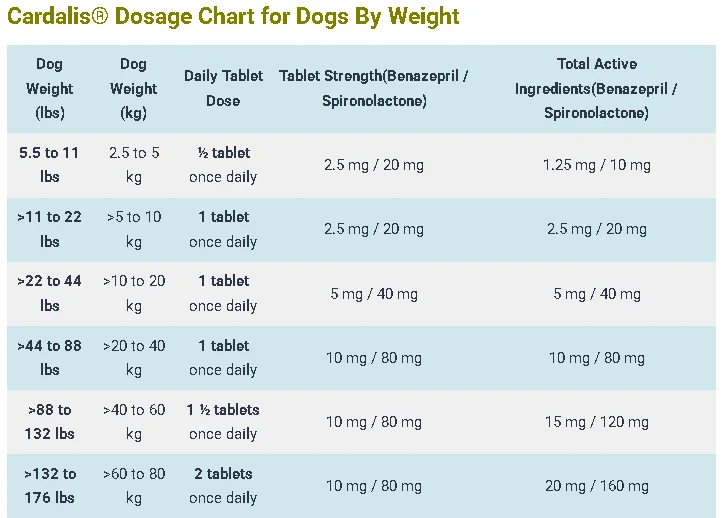
Cardalis® Dosage Chart for Dogs By Weight
| Dog Weight (lbs) | Dog Weight (kg) | Daily Tablet Dose | Tablet Strength(Benazepril / Spironolactone) | Total Active Ingredients(Benazepril / Spironolactone) |
| 5.5 to 11 lbs | 2.5 to 5 kg | ½ tablet once daily | 2.5 mg / 20 mg | 1.25 mg / 10 mg |
| >11 to 22 lbs | >5 to 10 kg | 1 tablet once daily | 2.5 mg / 20 mg | 2.5 mg / 20 mg |
| >22 to 44 lbs | >10 to 20 kg | 1 tablet once daily | 5 mg / 40 mg | 5 mg / 40 mg |
| >44 to 88 lbs | >20 to 40 kg | 1 tablet once daily | 10 mg / 80 mg | 10 mg / 80 mg |
| >88 to 132 lbs | >40 to 60 kg | 1 ½ tablets once daily | 10 mg / 80 mg | 15 mg / 120 mg |
| >132 to 176 lbs | >60 to 80 kg | 2 tablets once daily | 10 mg / 80 mg | 20 mg / 160 mg |
Important Clinical & Administration Notes
Administration Guideline: CARDALIS administration should NOT be started until pulmonary edema (fluid in the lungs) is fully stabilised. The medicine needs to be given once a day by mouth, with food or with a little food, so that it is best absorbed.
- NSAID Restriction: Avoid the use of CARDALIS with non-steroidal anti-inflammatory drugs (NSAIDs) when the dog has renal insufficiency (kidney disease).
- Contraindications: Don’t give this to dogs that have been diagnosed with Addison’s Disease, hyperkalemia (high blood potassium) or hyponatremia (low blood sodium).
- Hypersensitivity: Do not use in animals with known hypersensitivity to ACE inhibitors (like benazepril) or to spironolactone.
- Weight Extremes: Any dog that is under 5.5 lbs (2.5 kg) or above 176 lbs (80 kg) does not fit into the standardized manufacturer tablet range. These patients will require a customized compounding or dosing plan from a veterinarian.
What Is Cardalis for Dogs?
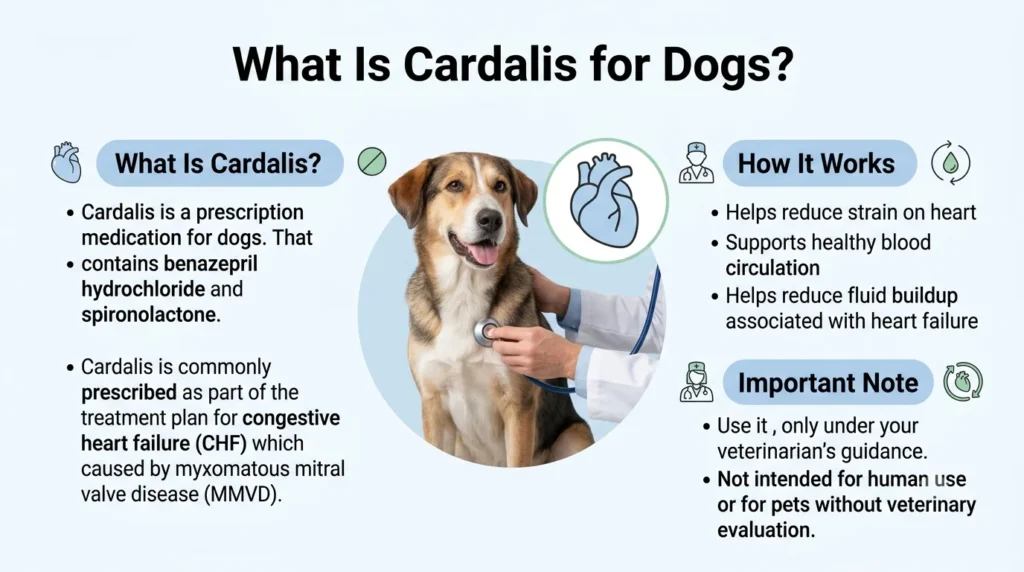
Cardalis drug for dogs is a prescription dog heart medicine that contains two active ingredients: spironolactone (an aldosterone antagonist) and benazepril (an angiotensin-converting enzyme (ACE) inhibitor). When used in combination, these drugs work together to treat some forms of congestive heart failure (CHF) to help decrease the work of the heart and promote good heart health.
The most common use of Cardalis dosage is for dogs suffering from congestive heart failure due to a condition called atrioventricular valvular insufficiency (AVVI), commonly known as ‘leaking heart valves’. It is usually administered as part of a general regimen to treat heart failure and may be prescribed with other heart failure drugs when necessary. Cardalis is not a cure for heart disease and is not a supplement to help maintain healthy hearts. Rather, it’s for dogs that have a specific diagnosis and should be used under the watchful eye of their veterinarian.
Dogs on Cardalis will usually need periodic veterinary checkups, such as clinical assessment, measurement of blood pressure, hydration levels, kidney function, and electrolyte levels for safe and effective treatment. In some instances, spironolactone and benazepril can be used off-label for other heart diseases, or for other animal species; however, always use your veterinarian’s instructions and precautions with great care.
When Cardalis for Dogs May Be Used
Cardalis Dosage For Dogs is FDA approved in the USA for the management of the clinical signs of congestive heart failure (CHF) in dogs associated with atrioventricular valvular insufficiency (AVVI). It is used as a part of a full treatment strategy and almost always with other heart drugs (like furosemide) – rarely as a lone choice. Cardalis can be prescribed to dogs suffering from mild, moderate or severe CHF to help control symptoms and enhance their quality of life.
Your vet might prescribe Cardalis for your dog if they have:
- Congestive heart failure (CHF) caused by atrioventricular valvular insufficiency (AVVI).
- Mild, moderate, or severe clinical signs of heart failure.
- Heart failure that needs to be treated at the same time as heart failure drugs, like furosemide or other heart drugs.
- A course of treatment that involves long-term management, with regular veterinary supervision.
The impact of AVVI on dogs
AVVI occurs when a heart valve (usually the mitral valve) fails to close tightly and blood begins to flow backward through the heart. As the disease worsens, it can cause additional stress on the heart, and can lead to:
- Coughing
- Fast or labored breathing.
- Exercise intolerance
- Extra fluid caused by congestive heart failure
Useful information to be aware of
- Heart murmur and valve disease are not a form of congestive heart failure. Cardalis dosage for dogs is not true for all dogs with a heart murmur or early valve disease.
- The suitability of Cardalis is decided after assessing the dog’s physical examination, chest imaging, blood tests, medications and clinical signs.
- Cardalis medication must be administered orally as prescribed and can be taken with or without food.
- Heart failure is a condition that needs to be managed with medication, so don’t stop or change the medication if your dog seems to be getting the hang of it without your veterinarian’s approval.
How the Ingredients Support Heart Care
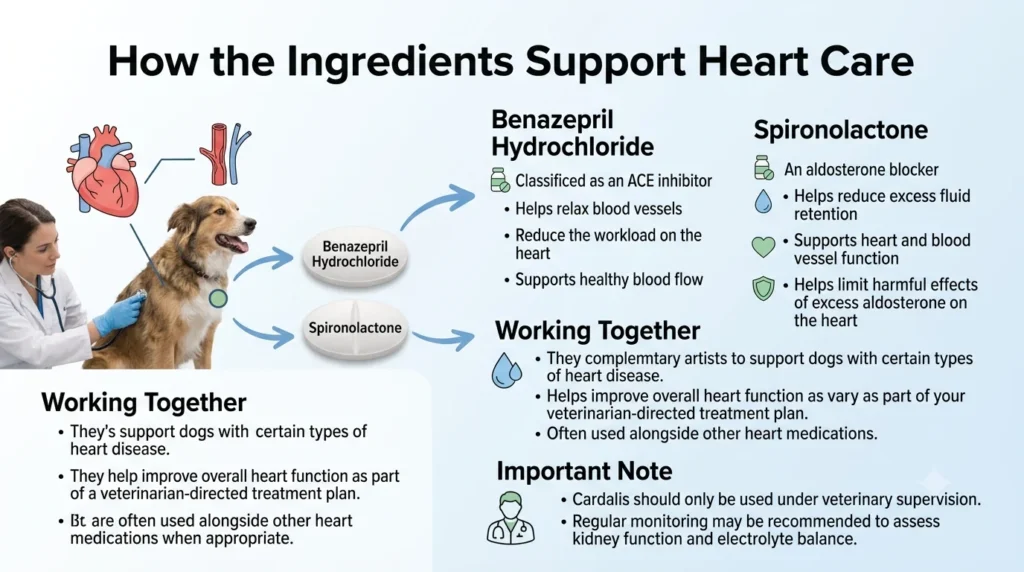
Cardalis Dose contains two proven heart health active components, spironolactone and benazepril hydrochloride, which act through different but complementary mechanisms. This is because this combination goes beyond fluid removal to include pathways that affect hormones that are important to the progression of heart disease, which is a crucial component of long term heart failure treatment.
In Cardalis, the active ingredients are:
- Spironolactone – Aldosterone blocker (also called aldosterone antagonist) that blocks the effects of aldosterone, a hormone that causes salt to be retained in the body and increases continued heart strain.
- Benazepril hydrochloride – An angiotensin-converting enzyme (ACE) inhibitor that slows down the process of activation of your body’s blood pressure and fluid-retention pathways to improve the health of your heart.
How the combination is made to work
Spironolactone and benazepril can be used together to decrease the hormonal stress that can lead to worsening congestive heart failure over time. This ACE inhibitor/aldosterone receptor blocker breakthrough drug has been proven to be more effective than an ACE inhibitor alone in combating the effects of degenerative heart disease. For this reason, Cardalis is not normally used to substitute for other heart medications, but rather in conjunction with them.
Cardalis vs. diuretics
Cardalis Dose works differently, and is not usually combined with diuretics.


Paid Links - As an Amazon Associate, I earn from qualifying purchases.
- Cardalis works on the hormonal signaling pathways involved in the progression of heart disease.
- Diuretics are mostly used to get rid of extra fluid in the body to make breathing easier.
Additional benefits
- The once-a-day dosing is convenient, which helps ensure adherence to treatment.
- Fast palatability, highly palatable Artificial Beef flavored chewable tablet, for easier administration.
- A beef flavour that is not allergic, but has yeast.
Cardalis for Dogs: Side Effects and Warnings
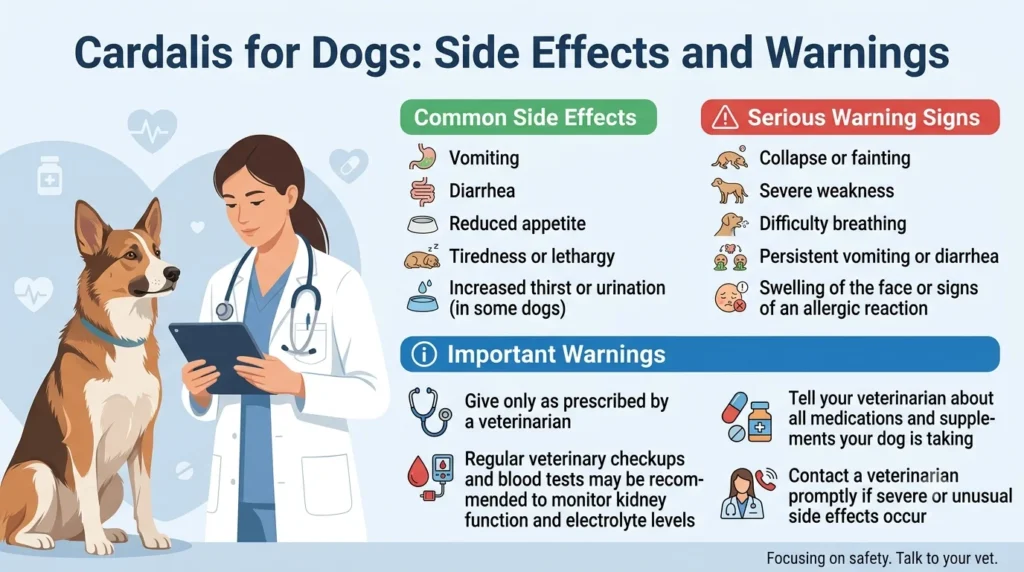
As with any prescription drug, Cardalis can have side effects. Some symptoms may be due to the medication itself and others may be due to the progression of congestive heart failure (CHF). Due to the presence of spironolactone and benazepril in Cardalis, veterinarians may want to consider frequent monitoring of kidney function, blood pressure, hydration status and electrolyte levels particularly when therapy is initiated or when dose adjustments are made. Make sure your vet knows what prescription and nonprescription drugs, supplements, and over-the-counter medications your dog may be taking, because they could interact and compromise safety.
Common side effects
Frequent side effects are:
- Decreased appetite
- Vomiting
- Diarrhea
- Stomach upset
- Being very thirsty and/or urinating more than usual
- Fatigue, sluggishness or low energy level
- Dizziness or lack of coordination (ataxia)
If your dog vomits or has diarrhea that is severe or doesn’t stop, or if you notice any unusual changes in your dog’s condition, please contact your veterinarian.
May experience serious side effects – veterinary treatment should be sought at once.
The following reactions are rare, but should be given immediate veterinary attention:
- Collapse or fainting
- Trouble walking or standing up straight
- Increased or labored breathing
- Severe weakness
- Allergic reactions, such as difficulty breathing, rash, fever, or swelling around the face
- Symptoms of hyperkalemia (high potassium levels) and/or deterioration in kidney function
Your dog might become sensitive to the drug after repeated use, despite having no signs of problems after the first few doses, so keep an eye on him during the whole treatment.
Warnings and precautions
Dogs should not be given Cardalis if they:
- Heart failure that is due to aortic or pulmonary valve disease
- Be diagnosed with Addison’s disease (hypoadrenocorticism)
- Be at risk for having high potassium (hyperkalemia) or low sodium (hyponatremia)
- Are sensitive to spironolactone, benazepril, ACE inhibitors or any ingredient in the medicine
- Suffer from kidney disease and are taking nonsteroidal anti-inflammatory drugs (NSAIDs)
- Pregnant women or women who are breastfeeding.
Use with caution in dogs that:
- Have kidney disease
- Have liver disease
- Are young
- Are used to produce offspring.
- Have uncontrolled conditions that can alter electrolyte or blood sugar levels (e.g., diabetes mellitus)
Drug interactions
Medications that affect may interact with Cardalis:
- Kidney function
- Blood pressure
- Potassium/Electrolyte balance
- Other heart medications
- NSAID pain medications
- Supplements or OTC products.
Do not start, stop, split, combine or replace heart medications without veterinarian’s authorization.
Monitoring during treatment
Your veterinarian might want to check the following regularly:
- Kidney function (renal values)
- Potassium level and other electrolytes
- Blood pressure
- Hydration status
- Overall response to treatment
Accidental overdose
Store Cardalis dosage securely and away from dogs, cats and other animals to avoid accidental ingestion. If you suspect your pet has overdosed contact your vet or veterinary emergency clinic immediately. Treatment can include inducing vomiting, stomach decontamination (if appropriate), electrolyte monitoring and supportive care like fluid therapy.
Cardalis for Dogs: Precautions
Cardalis Dosage For Dogs should only be used under the supervision of a veterinarian. Your veterinarian will assess your dog’s overall health prior to beginning treatment to decide if the medication is suitable for your dog. Cardalis contains spironolactone and benazepril hydrochloride, so monitoring is necessary to minimize the risk of kidney issues, electrolyte imbalances and other complications with long-term therapy.
Prior to starting treatment, your veterinarian should check the function of your dog’s kidneys (kidney function) and the amount of potassium in your dog’s blood. It is also important to measure these values periodically during treatment as Cardalis can make hyperkalemia (high potassium levels) more likely to happen.
Important precautions
- Safety and efficacy of Cardalis used in combination with pimobendan is not known.
- Dogs receiving Cardalis and NSAIDs should be kept well hydrated to help reduce the risk of kidney toxicity. Cardalis for dogs should not be used with NSAIDs in dogs that have renal insufficiency.
- Spironolactone may slow down digoxin’s elimination, which can lead to digoxin toxicity; so dogs on both drugs should be closely monitored.
- DOCP (desoxycorticosterone pivalate) and spironolactone work in opposite directions and using DOCP with spironolactone may decrease the effect of DOCP.
- Both of the active ingredients are highly metabolized in the liver, so Cardalis should be used with caution in dogs with liver dysfunction.
There is no evidence of safety in growing dogs and, due to the antiandrogenic activity of spironolactone, special caution is advised for young animals. Also, the safety of Cardalis has not been demonstrated in pregnant, lactating, or breeding dogs.
Do not use Cardalis dose for dogs with a history of allergy to spironolactone, benazepril, or other ACE inhibitors; or in dogs with hyperkalemia (high blood potassium levels), hyponatremia (low blood sodium levels), or Addison’s disease (hypoadrenocorticism). Veterinarian visits and lab tests are required periodically to make sure that the medication is safe and effective during treatment.
Cardalis and Vetmedin: Different Jobs in One Treatment Plan
Cardalis and Vetmedin are two different drugs that are used on dogs with congestive heart failure (CHF). They are not interchangeable and in fact, in some cases, they are used in combination, as part of a veterinarian’s treatment program, depending on the nature of the heart disease in a particular dog.
Vetmedin dosage for dogs is the brand name for pimobendan. It makes it easier for the heart to pump and dilates the blood vessels to improve blood flow. Cardalis, however, has spironolactone and benazepril, which act on the aldosterone and ACE (angiotensin-converting enzyme) pathways. This can help to lower the activity of harmful hormones that can be a factor in the development of heart disease.
In other words, Vetmedin is more of a heart function aid and Cardalis is more of a control of the hormonal changes that are associated with heart failure. Many dogs with CHF are given both drugs, as they do not do the same thing, but augment one another. The best treatment for the condition depends on the extent of the diseased heart, the results of blood tests, blood pressure readings and how the dog is responding to treatment.
| Medication | Primary role | What to discuss with your veterinarian |
|---|---|---|
| Cardalis | Targets the aldosterone and ACE pathways using spironolactone and benazepril to support long-term heart failure management. | Why Cardalis was prescribed, what laboratory monitoring is needed, and which side effects to watch for. |
| Vetmedin (pimobendan) | Helps the heart pump more efficiently and improves circulation by widening blood vessels. | Whether Vetmedin should be used alone or together with other CHF medications. |
An excellent question to pose your vet is: “What is each remedy used for in my dog? Knowing the role of each medication can help to make the reason for combined heart-failure treatment with Cardalis and Vetmedin more comprehensible.
What to Expect After Starting Cardalis Treatment
Each dog will respond to Cardalis drugs for dogs individually and there is no set time frame for improvement. Some dogs improve as soon as their complete treatment plan for heart failure is established, and the excess fluid is controlled; others may take longer to improve or their medications may need to be adjusted to finally stabilize the situation.
The most important sign of improvement is not how fast any changes occur, but rather whether your dog’s breathing, coughing, energy level, appetite, sleep and overall comfort is gradually improving.
It’s more beneficial to be able to watch for trends over time rather than make judgments based on one day at home. If your dog is still panting when resting, if coughing is getting worse at night, if your dog is becoming abnormally weak, faints or exhibits any signs that the heart failure may be getting worse, contact your veterinarian immediately.
How to check symptoms at home
- Rate and level of breathing particularly at rest
- How often the cough occurs, especially during the night
- Food and fluid consumption
- Vomiting or diarrhea
- Episodes of energy level, weakness or fainting.
At followup veterinary visits, physical examination, measuring blood pressure and laboratory tests may be performed, particularly after initiation of Cardalis or adjustment of the treatment plan. If your vet prescribes antibiotic or other medications for your dog, it is important to note any coughing, eating or drinking habits and any other signs your dog is exhibiting daily in a log. Dogs who are prescribed more than one heart medication or a special diet may also benefit from a medication schedule to prevent missed or duplicate doses.
You May Also Like to Read:
- Barrier® Dosage For Dogs: Calculator, Chart and Safe Guide
- Cyanocobalamin Dosage For Dogs: Calculator & Safe Guide
FAQs
What is Cardalis used for in dogs?
Cardalis dosage for dogs is used to control the clinical signs of congestive heart failure (CHF) due to atrioventricular valvular insufficiency (AVVI). It’s generally given with other heart drugs as part of a treatment plan determined by the vet.
How long does it take Cardalis medication to start working?
There are no set schedules. Some dogs are better once their full heart-failure treatment protocol has been successful in controlling fluid accumulation and others need to have their medications adjusted until they become more comfortable. Do not expect immediate results; watch your dog for signs that they are breathing, coughing, eating, feeling comfortable, or showing signs of exertion.
Is it OK to give Cardalis and Vetmedin at the same time?
Under veterinary supervision, some dogs may have an indications for the use of Cardalis and Vetmedin (pimobendan) concurrently. These two drugs are used in different ways, and may work well as complementary drugs but should not be used together unless recommended otherwise by the veterinarian.
During Cardalis treatment, what monitoring should be done for a dog?
Monitoring typically involves routine veterinary visits, blood tests to assess kidney function and electrolyte levels, blood pressure and home observation regarding breathing, coughing, appetite, water intake, level of energy and any weakness/fainting.
If you miss a dose of Cardalis dose, what should you do?
If a dose of medication is missed, take it as soon as possible. In the case where it is close to the time of the next dose, skip the missed dose and resume the regular schedule. Never try to make up a dose by administering two doses at one time.
How should Cardalis dose be stored?
Cardalis should be stored in its original container at controlled room temperature 20 – 25°C (68 – 77°F). Short-term storage is allowed between 15°C – 30°C (59°F – 86°F). Do not allow children or pets to have access to the medicine.
If my dog accidentally takes more than the recommended Cardalis dosage, what should I do?
If you suspect an overdose or if your dog has an adverse reaction, contact your vet immediately. If your regular veterinarian is not available, contact the closest emergency veterinary hospital immediately.
Do you need a prescription to get Cardalis?
Yes. Cardalis is a prescription only product and can only be dispensed against a valid, patient specific prescription from a licensed veterinarian.
Can Cardalis be used for long-term treatment?
Yes. Cardalis is used in the long-term treatment of congestive heart failure in dogs. Routine check-ups and monitoring help to ensure the medication will remain safe and effective during treatment.
Final Thoughts
When prescribed by a veterinarian, Cardalis Dosage For Dogs may be an important part of a congestive heart failure (CHF) treatment program for a dog with atrioventricular valvular insufficiency (AVVI). It is a combination of spironolactone and benazepril, which work on hormonal mechanisms that help the heart disease process to advance, and is sometimes prescribed in addition to other heart drugs for a more effective treatment plan.
Always use the right Cardalis dose for your dog, depending on your dog’s weight, medical condition, laboratory results and response to treatment, as determined by your veterinarian. So regular checks of your dog’s kidney function, blood pressure and electrolyte levels as well as careful eye and nose watching of your dog’s breathing, appetite and energy will help keep the meds safe and effective.
Many dogs can live a better quality life with chronic heart disease if they are dosed regularly, seen by their vet regularly and if new symptoms occur or old ones worsen. Adjusting, stopping or replacing Cardalis should never be done without consulting your vet as correct long-term management is key to ensuring the best possible outcome.