Enroquin® Dosage Calculator for Dogs
Calculates therapeutic oral dosage guidelines based on patient body weight.
Important Clinical Notes & Administration Instructions:
- Selection of a dose within the 5–20 mg/kg range should be based on clinical experience, severity of disease, and pathogen susceptibility.
- Monitoring Alert: Animals receiving doses in the upper end of the dose range (approaching 20 mg/kg) should be carefully monitored for clinical signs such as inappetence, depression, and vomition.
- Administration Tip: If dogs do not consume Enroquin Flavored Tablets willingly when offered by hand, tablets may be offered in food or hand-administered (pilled) as with other oral medications.
Dogs with bacterial infections usually need antibiotics, but not all antibiotics are suitable for treating all infections. However, first-line antibiotics can be very effective for most common infections, but sometimes a more powerful antibiotic may be needed for more serious or resistant bacterial infections. Enroquin Dosage For Dogs (enrofloxacin) is a broad spectrum fluoroquinolone antibiotic, which is commonly prescribed by vets when bacteria are sensitive to enrofloxacin or when other antibiotic treatments have failed to yield satisfactory results.
Enroquin Flavored Tablets are used to control bacterial diseases in dogs and cats. The active ingredient enrofloxacin is bactericidal to a variety of Gram-positive and Gram-negative bacteria by disrupting the metabolism of the bacteria’s DNA. Its wide spectrum activity makes it a common use in the treatment of infections in various parts of the body and also for the removal of the bacteria causing the infection.

Paid Links - As an Amazon Associate, I earn from qualifying purchases.
Here you will find all the information you need about dosage, a calculator, a dosage chart, side effects, safety precautions, and tips for giving Enroquin to your dog safely and effectively under veterinary supervision.
What is Enroquin Dosage For Dogs?
Enroquin® (enrofloxacin) dosage for dogs is typically prescribed at an oral rate of 5 to 20 mg/kg (2.27 to 9.07 mg/lb) of body weight administered once daily. Since the specific dosing is dependent on the weight of your dog, the severity of the bacterial infection and the susceptibility of the pathogen, the target dose is specific to each individual patient, and is determined by veterinarians.
Mild infection is treated with lower doses, and higher dosage rates are only applied to more drug-resistant conditions–they need close monitoring of side effects, such as loss of appetite or vomiting. Never administer more or less than the recommended amount of tablets to your dog without consulting a licensed veterinarian to determine the correct amount and schedule of administration.
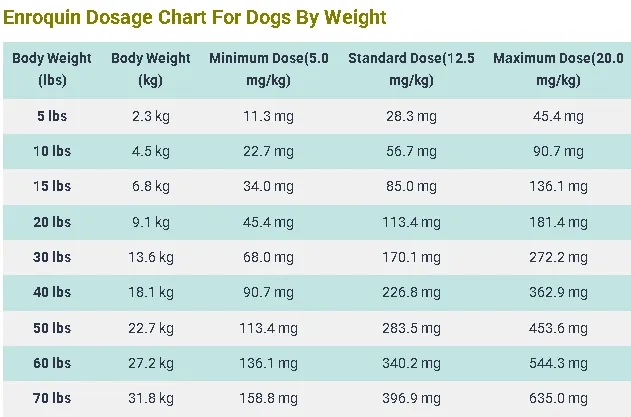
Enroquin Dosage Chart For Dogs By Weight
Here is the reference dosage table for Enroquin® Flavored Tablets for dogs based on the standard therapeutic target range of 5 to 20 mg/kg (2.27 to 9.07 mg/lb) given orally once daily.
| Body Weight (lbs) | Body Weight (kg) | Minimum Dose(5.0 mg/kg) | Standard Dose(12.5 mg/kg) | Maximum Dose(20.0 mg/kg) |
| 5 lbs | 2.3 kg | 11.3 mg | 28.3 mg | 45.4 mg |
| 10 lbs | 4.5 kg | 22.7 mg | 56.7 mg | 90.7 mg |
| 15 lbs | 6.8 kg | 34.0 mg | 85.0 mg | 136.1 mg |
| 20 lbs | 9.1 kg | 45.4 mg | 113.4 mg | 181.4 mg |
| 30 lbs | 13.6 kg | 68.0 mg | 170.1 mg | 272.2 mg |
| 40 lbs | 18.1 kg | 90.7 mg | 226.8 mg | 362.9 mg |
| 50 lbs | 22.7 kg | 113.4 mg | 283.5 mg | 453.6 mg |
| 60 lbs | 27.2 kg | 136.1 mg | 340.2 mg | 544.3 mg |
| 70 lbs | 31.8 kg | 158.8 mg | 396.9 mg | 635.0 mg |
| 80 lbs | 36.3 kg | 181.4 mg | 453.6 mg | 725.7 mg |
| 90 lbs | 40.8 kg | 204.1 mg | 510.3 mg | 816.5 mg |
| 100 lbs | 45.4 kg | 226.8 mg | 567.0 mg | 907.2 mg |
Important Dosage & Clinical Guidelines
- Dose Selection: A particular dose should be selected within this range based on clinical judgment, severity of the disease and pathogen susceptibility.
- Drug Warning: Dogs with doses towards the higher end of the spectrum (~20 mg/kg) should be closely observed to detect any toxic or adverse effects, such as inappetence, depression, and vomition.
- Administering: Hand out flavored pills. Unless taken voluntarily, tablets may be hidden in food or directly into the mouth (pilled).
What is Enroquin for Dogs?
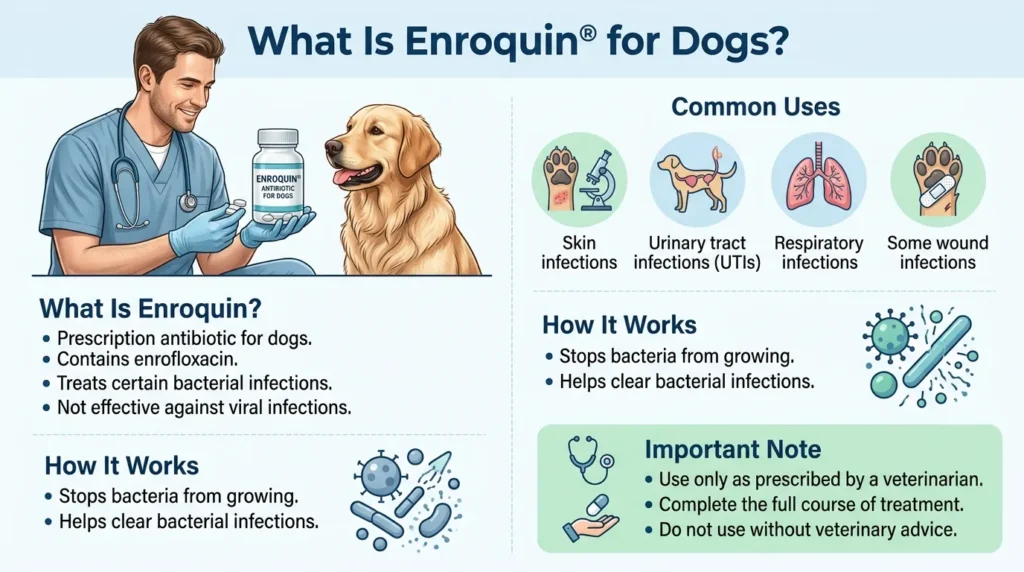
Enroquin® is a prescription-only antibiotic that contains enrofloxacin, a broad-spectrum fluoroquinolone antibiotic, to treat bacterial infections in dogs. It is prescribed for diseases caused by bacteria which are sensitive to enrofloxacin and is intended to kill a wide variety of harmful Gram-positive and Gram-negative bacteria.
Enorquin dog medication is not used as a first line antibiotic for common infections, but instead might be used for more serious bacterial infections and for infections that have failed to respond to other antibiotics. It does this by disrupting the metabolism of the bacterial DNA, thereby killing the bacteria and preventing the spread of the infection.
Dogs are commonly treated with Enroquin dog dosage for urinary tract infections (UTI), respiratory tract infections and skin (dermal) infections. The flavored tablets are given once a day which makes it more convenient for many pet owners to treat their pets. Enroquin has also been demonstrated to be bioequivalent to Baytril® Taste Tabs® in dogs, making it a good alternative when given by a veterinarian.
Enroquin for pets is a prescription drug and should only be used under a veterinarian’s advice to make sure it is used correctly to treat your dog for its particular bacterial infection.
How Does Enroquin (Enrofloxacin Flavored Tablets) Work in Dogs?
Enroquin® is a medicine containing an antibiotic called enrofloxacin which is used to treat bacterial infections in dogs. It is active by interfering with the DNA process of the bacteria, which stops the bacteria from multiplying and hence stops them from living. This bactericidal effect is used to eradicate the infection instead of merely retarding the growth of bacteria.
Enrofloxacin for dogs is well absorbed from the digestive tract, and distributes well to body tissues and fluids upon oral administration, where it can reach sites of infection efficiently. It is effective on a wide range of Gram-positive and Gram-negative bacteria which are susceptible to the drug.
In dogs, enroquin dosage for dogs is used to eliminate bacteria that cause urinary tract infections (cystitis), respiratory tract infections and skin (dermal) infections. Enrofloxacin medicine is a member of the fluoroquinolone family of antibiotics, which includes antibiotics such as ciprofloxacin, levofloxacin and ofloxacin. They all work by blocking the bacteria’s DNA to destroy the bacteria.
Benefits of Enroquin for Dogs
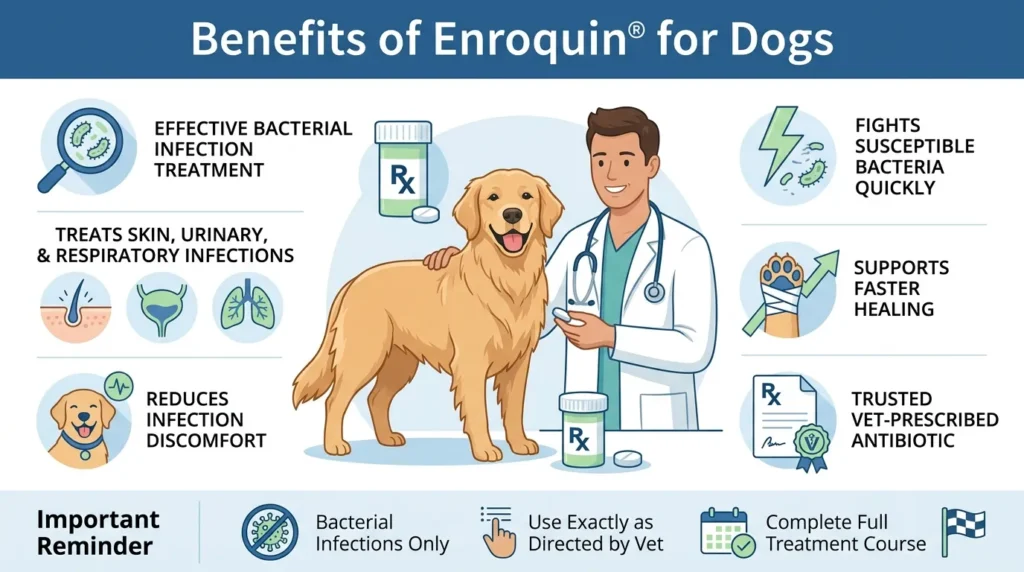
Enroquin® is a broad-spectrum enrofloxacin antibiotic used in the treatment of bacterial infections due to sensitive bacteria. It is commonly used to treat infections in the urinary tract, respiratory system and skin. It is bioequivalent to Baytril® Taste Tabs®; and should therefore be expected to offer the same safety and efficacy if it is used properly by a veterinarian.
Some of the overall benefits of Enroquin for dogs are:
- Supports healthy urinary tract function and fights against urinary tract infections such as cystitis.
- Effective in the respiratory tract infections caused by susceptible bacteria.
- Treats infections of skin (dermal) caused by bacteria.
- Gives wide spectrum of antibacterial activity against susceptible bacteria.
- Equally safe and effective as Baytril® Taste Tabs®.
- Easy to administer once-daily tablet formulation (as directed by your veterinarian).
Possible Side Effects of Enroquin for Dogs
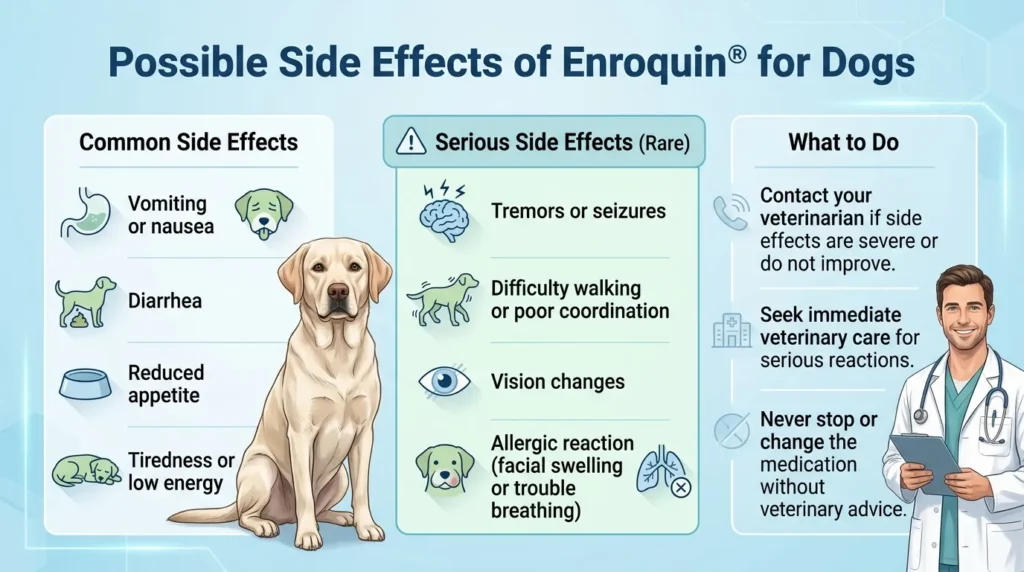
When used as directed, Enorquin® (enrofloxacin) is generally well tolerated by most dogs, but it can have side effects. Side effects most often affect the digestive tract and are not serious. Administration of the drug with food may help minimise stomach upset. If your dog refuses food, vomits often or has serious symptoms, reach out to your veterinarian right away.
Side effects include:
- Vomiting
- Diarrhea
- Loss of appetite or eating less than usual (low to no appetite)
Other side effects that are less common or rare are:
- Elevated liver enzymes
- Ataxia (Loss of co-ordination)
- Seizures
- Depression
- Lethargy
- Nervousness
Although side effects are rare, keep a close eye on your dog during treatment and consult your veterinarian if you notice any side effects are severe, persistent or getting worse.


Paid Links - As an Amazon Associate, I earn from qualifying purchases.
Warnings and Precautions for Enroquin in Dogs
Enroquin® (enrofloxacin) should only be used under veterinary supervision and is for the treatment of animals only. While the side-effects are not serious, there are some safety guidelines to consider before and during treatment for pet owners.
Important warnings include:
- Use for animals only.
- Do not allow children to come into contact with it.
- In rare instances, however, serious reactions of the nervous system, such as seizures and a loss of coordination (ataxia), can occur. If you notice your dog start to show these symptoms, discontinue the medication and contact your veterinarian or emergency veterinary hospital right away.
- Due to the possibility of impacting cartilage growth during development, enrofloxacin should not be used in puppies in general.
- Intravenous Bacterial infections may be lifethreatening; where other antibiotic options are not available, it may be decided that the benefits are more important than the risks to young dogs.
- Follow all veterinarian’s directions for use of Enroquin and finish the entire treatment regimen unless otherwise directed.
- Keep product quality by storing in a tightly closed container.
Before prescribing Enorquin to a dog, vets thoroughly examine their age, health, and infection type to ensure they receive the best and safest treatment possible.
Does Enroquin (Enrofloxacin) Interact With Other Dog Medications?
Yes. Enroquin® (enrofloxacin) may interact with some medicines and even supplements, and may make it less effective or cause side effects. Make sure you tell your vet if your dog is taking any other prescription or over the counter drugs, vitamins or supplements before you begin treatment, so you don’t have to worry about any interactions.
Medications and supplements which can interact with Enroquin are the following:
- Antacids
- Steroids (including prednisone)
- Cyclosporine
- Iron supplements
- Levothyroxine
- Nitrofurantoin
- Sucralfate
- Tetracycline
- Theophylline
Enroquin dog medication can also interact with products with metal cations (aluminium, calcium, iron, and magnesium) that decrease the absorption of enrofloxacin from the intestinal tract. Furthermore, Enroquin may affect the rate at which other liver metabolized drugs are eliminated and/or may affect how quickly Enroquin is eliminated, which may change its effects.
Always follow your veterinarian’s advice and do not change or discontinue any medication or supplement without veterinary advice to ensure your horse is receiving safe and effective treatment.
You May Also Like to Read:
- Endosorb Dosage For Dogs: Calculator, Chart & Safe Guide
- Effipro Dosage For Dogs: Calculator, Chart & Safe Guide
FAQs
If a dose of Enorqin is missed for my dog, what should I do?
If you miss a dose of Enroquin, give it as soon as you remember. If the next dose is due very soon, however, skip the dose and resume with the regular dose. Do not double dose to compensate for a missed dose.
How fast does Enroquin work on dogs?
Enroquin medicine is effective immediately after administration, but there may be a delay of a few days for the symptoms of your dog to improve. All the prescribed course should be completed to help remove the infection, even if your dog seems to be getting better.
Is Enroquin a treatment for chronic UTI in dogs?
Yes. Enroquin medicine for dogs can be prescribed by veterinarians for treating acute and chronic UTIs that are susceptible to enrofloxacin. May also be used to treat bacterial infections of the prostate as appropriate.
Does Enroquin work for respiratory infections in dogs?
Yes. Used under a veterinarian’s supervision, enroquin is effective for treatment of susceptible bacterial respiratory tract infections, due to its therapeutic concentrations in the lungs and bronchial tissues.
Is Enroquin a good choice to treat skin infections in dogs?
Yes. Enroquin is used to treat infections of the skin (dermal) caused by bacteria. It localizes in inflamed tissues and thus high levels of the antibiotic are available at the infection site and contribute to the eradication of susceptible bacteria.
What are the conditions of storage for Enroquin tablets?
Keep Enroquin tablets in the original box and in the original bottle until it is time for it to be administered, store at room temperature and protect from extremes of heat, moisture and direct sunlight. Ensure that a medication is kept away from children and pets at all times.
When my dog is feeling better, can I stop giving Enorquin?
No, early removal of Enroquin antibiotic for pets can leave live bacteria, which can lead to reinfection. Never skip parts of the treatment course unless advised to do so by your veterinarian.
Is Enroquin a prescription only drug?
Yes. Enroquin is a prescription-only veterinary antibiotic and is prescribed only when a veterinarian has determined there is a bacterial infection.
Is Enroquin effective against virus or fungal infections in dog?
Enroquin drug is only effective against susceptible bacterial infections. It’s not used for the treatment of viral diseases or fungal infections, so only use it when your vet is certain your dog is suffering from a bacterial infection.
Key Takeaways
- Enroquin® (enrofloxacin) is a prescription fluoroquinolone antibiotic to treat bacterial infections in dogs that are susceptible to the action of the drug.
- It is usually used for treating bacterial infections in the urinary tract, respiratory tract and skin (dermal).
- Enroquin is effective by disrupting the DNA of susceptible bacteria, thus preventing their further multiplication and causing them to die.
- Enroquin medicine is used by veterinarians for serious infections or when the first-choice antibiotics aren’t working.
- The drug is usually administered once a day, and always according to your veterinarian’s instructions.
- Side effects are usually mild, e.g. vomiting, diarrhea, loss of appetite; serious neurological problems are uncommon.
- Some drugs, supplements, or calcium, iron, magnesium or aluminum containing products may interact with enroquin; let your veterinarian know about all the medications, supplements, and products your dog is receiving.
- In the event of a dose being missed, administer immediately, unless it is close to the time of the next dose. Do not double dose.
- Finish the entire course of treatment even if a dog seems to be better before the treatment is finished.
- Enroquin can be used to treat bacterial infections, but should be used under veterinary supervision as only then can the safety and effectiveness of this be guaranteed.
Final Thoughts
Enroquin® (enrofloxacin) is a highly useful prescription antibiotic for dogs used to treat severe bacterial infections, when other antibiotics fail. This is often prescribed to treat bacterial infections of the urinary tract, respiratory tract and skin that are sensitive to enrofloxacin. Use of Enorquin dose should be limited to veterinarian’s prescription to minimize the risk of antibiotic resistance.
Enroquin dosage for dogs is well-tolerated by most dogs, though some may experience light gastrointestinal upset like diarrhea, vomiting, and/or loss of appetite. If your dog has severe or unusual reactions to the drug, see your veterinarian right away, as serious adverse reactions are rare. Be sure to follow veterinarian’s dosing directions, and follow the entire course of treatment to give your dog his/her best chance at full recovery.