Advantage Multi Dosage Calculator for Dogs
Find the correct tube size for your dog’s weight
Apply the entire tube topically once a month. Do not apply to irritated skin. Always consult your veterinarian before use.
Advantage Multi Dosage for Dogs is a veterinarian-prescribed topical treatment that treats a variety of external and internal parasites in a single application and is administered monthly. It contains 10% imidacloprid and 2.5% moxidectin, which are ingredients that kill adult fleas on contact, help to prevent heartworm disease, treat and control roundworms, hookworms, and whipworms, and are also effective against sarcoptic mange. Unlike oral parasite preventatives, Advantage Multi is applied topically to the skin, making it easy for dogs who have a hard time swallowing pills.
Advantage Multi dose is available in pre-measured applicator tubes for dogs and puppies 7 weeks of age or older that weigh 3 pounds or more, and provides a minimum dosage of 4.5 mg/lb (10 mg/kg) imidacloprid and 1.1 mg/lb (2.5 mg/kg) moxidectin based on the dog's or puppy's weight. It's important to use the correct dosage to make sure that the dog is being well protected from parasites and is safe to be around.


Paid Links - As an Amazon Associate, I earn from qualifying purchases.
This guide will help you learn all about Advantage Multi dosage for dogs by weight, how to calculate dosage, dosage package sizes, how to administer it, benefits, side effects, safety precautions, and answers to commonly asked questions.
Whether you are new to Advantage Multi or want to be sure that your dog is getting the proper dosage, this guide will help you make sure of that.
Disclaimer: This guide is for informational purposes only and is not a substitute for professional veterinary advice. Always consult your veterinarian before giving Advantage Multi or any medication to your dog.
Key Takeaways
- Advantage Multi dosage for Dogs is a prescription topical treatment that works against several internal and external parasites once a month.
- It aids in the prevention of heartworm, is effective against sarcoptic mange (scabies), is effective in killing adult fleas, and treats and controls roundworms, hookworms, and whipworms.
- The drug combines imidacloprid (10%) and moxidectin (2.5%) and is applied topically, so it is a great alternative to oral parasite preventatives.
- Advantage Multi is safe for dogs and puppies 7 weeks old and over that weigh at least 3 lbs.
- It is extremely important to use the correct weight based dose rate, to achieve maximum parasite control and minimise treatment failure.
- When applied as directed, most dogs tolerate Advantage Multi well; however, some may experience slight digestive upset, lethargy, itching, and/or temporary site irritation.
- All dogs should be given a recent (less than 12 months old) negative heartworm test prior to beginning heartworm prevention, unless otherwise advised by a veterinarian.
- Do not cut applicator tubes between dogs or use a dosage for a different weight range.
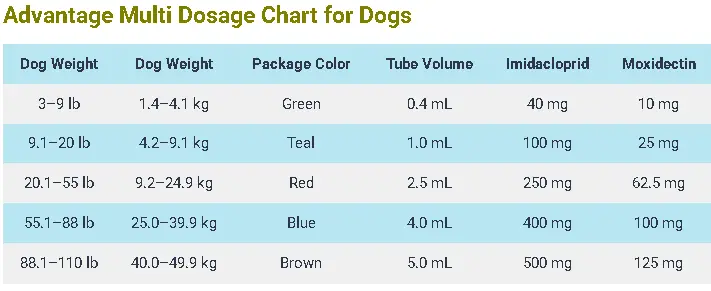
Advantage Multi Dosage Chart for Dogs
| Dog Weight | Dog Weight | Package Color | Tube Volume | Imidacloprid | Moxidectin |
|---|---|---|---|---|---|
| 3–9 lb | 1.4–4.1 kg | Green | 0.4 mL | 40 mg | 10 mg |
| 9.1–20 lb | 4.2–9.1 kg | Teal | 1.0 mL | 100 mg | 25 mg |
| 20.1–55 lb | 9.2–24.9 kg | Red | 2.5 mL | 250 mg | 62.5 mg |
| 55.1–88 lb | 25.0–39.9 kg | Blue | 4.0 mL | 400 mg | 100 mg |
| 88.1–110 lb | 40.0–49.9 kg | Brown | 5.0 mL | 500 mg | 125 mg |
Dogs Over 110 lb (49.9 kg)
For dogs weighing more than 110 lb, use a combination of pre-packaged tubes to meet or exceed the minimum required dose.
Examples:
- 120 lb (54.4 kg): 1 Blue tube (4.0 mL) + 1 Teal tube (1.0 mL) = 5.0 mL total
- 150 lb (68.0 kg): 1 Blue tube (4.0 mL) + 1 Red tube (2.5 mL) = 6.5 mL total
- 160 lb (72.6 kg): 2 Blue tubes = 8.0 mL total
Minimum Target Dose
- Imidacloprid: 4.5 mg/lb (10 mg/kg)
- Moxidectin: 1.1 mg/lb (2.5 mg/kg)
Important Safety Note
Always use the full sealed Advantage Multi tube intended for your dog's weight range. Never split a tube between multiple dogs, as this may result in inaccurate dosing and reduced effectiveness.
What Is Advantage Multi for Dogs?
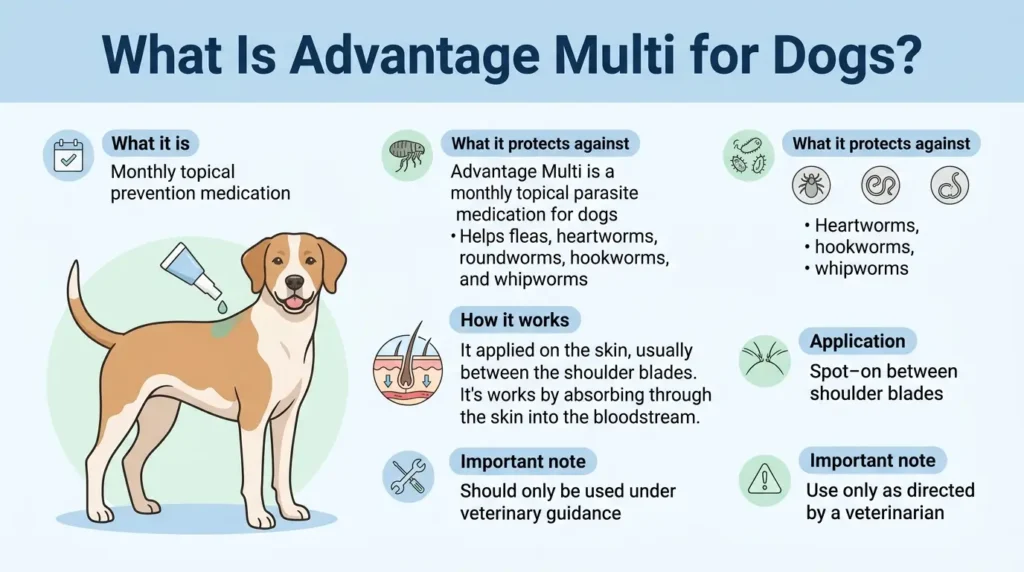
Advantage Multi for Dogs is a veterinarian-prescribed, FDA-approved monthly topical parasite preventive which is effective against multiple common parasites with just one application. It combines two active ingredients, imidacloprid and moxidectin -- imidacloprid tackles external parasites while moxidectin fights internal ones, helping to prevent serious health issues from fleas, heartworms, intestinal worms and mange mites.
Advantage Multi dose for pets has two active ingredients, each of which serves a different purpose, when applied to the skin once a month. Moxidectin enters the bloodstream through the skin and helps prevent heartworm disease, treats immature heartworms, or microfilaria, and helps control intestinal parasites (roundworms, hookworms and whipworms) in the bloodstream. Imidacloprid is mainly deposited on the skin and coat, where it is toxic to adult fleas by contact, and does not require fleas to bite your dog before they will be killed.
Advantage Multi medication is safe to use on dogs and puppies 7 weeks of age and older and at least 3 lbs. It is indicated for the control of the disease caused by heartworms, killing adult fleas, treatment, and control of flea infestation, treatment, and control of sarcoptic mange (scabies) and treatment and control of roundworms, hookworms, and whipworms. This particular product is ideal for dogs who are not always able to take oral medicine since it's a topical application instead of a tablet or chew.
A unique advantage of Advantage Multi is that it can be dosed once a month. Owners may use the next dose as soon as they remember, if more than 30 days elapse between doses, then resume the monthly dosage. But it is recommended to be used monthly to ensure good protection against parasites.
Advantage Multi provides all-round protection against parasites, but not ticks. Dogs that need ticking off might also need another tick control product as advised by their vet. Advantage Multi is relatively well tolerated when applied as directed, and is a prescription product available from veterinarians and licensed veterinary pharmacies.
What Are the Benefits of Advantage Multi for Dogs?
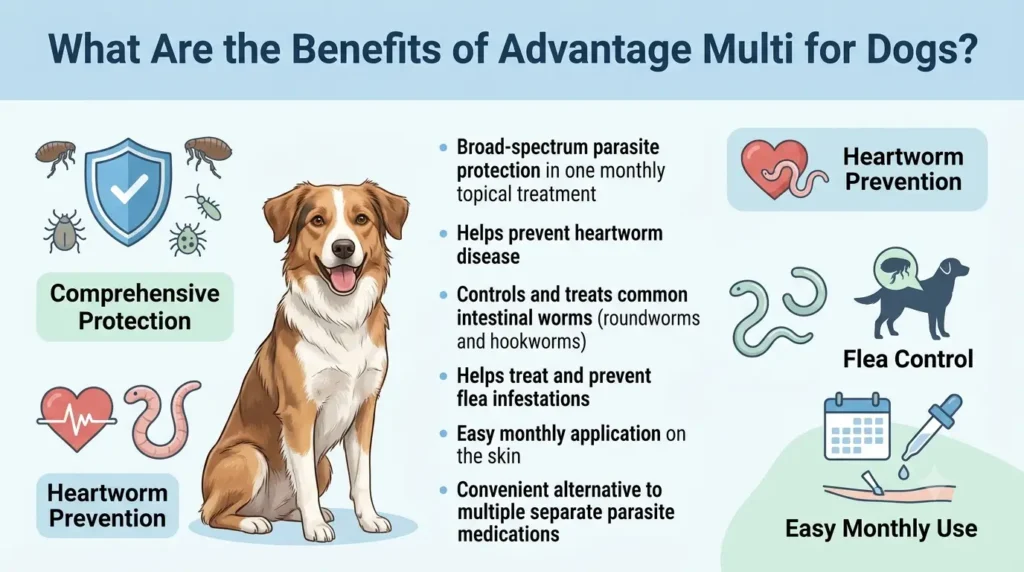
Advantage Multi for Dogs is a broad-spectrum topical product that provides protection against several internal and external parasites in dogs with one application every month. It is an easy alternative for dogs that do not like pills or chewable meds because it is applied topically.
Advantage Multi drug for dogs can also be used to treat and control circulating microfilaria (immature heartworms) in heartworm-positive dogs, and is one of the most important reasons to use it. It is also good for providing strong protection for fleas, as when they come in contact with it they will die without the need to bite the dog.
Besides heartworm and flea control, Advantage Multi also treats and controls some of the most common intestinal parasites that can be a problem with a dog's health, such as roundworms, hookworms and whipworms. It is also labeled for the treatment and control of sarcoptic mange (scabies), a very itchy condition of the skin caused by mites.
The following are some of the main advantages of Advantage Multi.


Paid Links - As an Amazon Associate, I earn from qualifying purchases.
- Easy topical application once a month.
- Helps prevent heartworm disease
- Kills and prevents reinfection of microfilaria in dogs already known to be heartworm-positive
- Kills the full grown flea on contact, so it can't bite
- Treats and controls flea infestations.
- Controls and treats roundworms, hookworms and whipworms
- Treats and controls sarcoptic mange (scabies)
- For dogs that do not take medications easily in their mouths
Another benefit is that it is flexible, and you can schedule it for any month. Owners may administer as soon as they remember, if more than 30 days have elapsed, and then resume monthly administration as usual. This ensures that protection is sustained even if there's an accidental missed dose.
Advantage Multi is easy to use, and provides protection against fleas, heartworms, intestinal worms, and mange mites in a single dose that you can give each month, which is better for your dog's health and less hassle for you.
What Is Advantage Multi Used for in Dogs?
Advantage Multi Dosage for Dogs is a monthly topical treatment for a variety of common parasites that can impact a dog's well-being. It is broad-spectrum effective against internal and external parasites, which helps to minimize the risk of serious diseases, digestive disorders, skin conditions and parasite infestations.
Advantage Multi is often used to protect dogs from the following parasites:
- Heartworms (Dirofilaria immitis) – protects against heartworm disease, and can be used for treatment of circulating microfilaria (immature heartworms) in heartworm-positive dogs. Heartworms are carried by mosquitoes and if left untreated can lead to extensive heart and lung injury.
- Fleas (Ctenocephalides felis) – Active on fleas; kills adult flea activity and prevents adult fleas. This helps to decrease itch and flea allergy dermatitis, blood loss caused by severe infestation, and the transmission of flea-borne parasites.
- Treatment and control of the common intestinal roundworm infection that may lead to vomiting, diarrhea, poor growth and weight loss. Humans may also be infested with roundworms.
- Hookworms – Treats and controls hookworm infections which may cause blood loss, anaemia, diarrhoea and digestive upset. Hookworms are also considered zoonotic parasites.
- Whipworms – Treats and controls whipworm infections that can result in bloody diarrhea, dehydration and electrolyte imbalance.
- Sarcoptic Mange (Scabies) – Treats and controls sarcoptic mange (Sarcoptes scabiei var. canis). It is a very contagious skin disease that can make you very itchy, lose your hair, turn red and get inflamed.
Advantage Multi is applied directly to the skin once a month, every 30 days using the weight appropriate applicator tube, usually between the shoulder blades. The treatment should be left to dry after applying, and pets should not touch the application site with the tongue or lick/groom until it is dry. Regular monthly treatment will help keep your dog protected around the clock from these parasites and will maintain your dog's health and well-being.
What Are the Common Side Effects of Advantage Multi in Dogs?
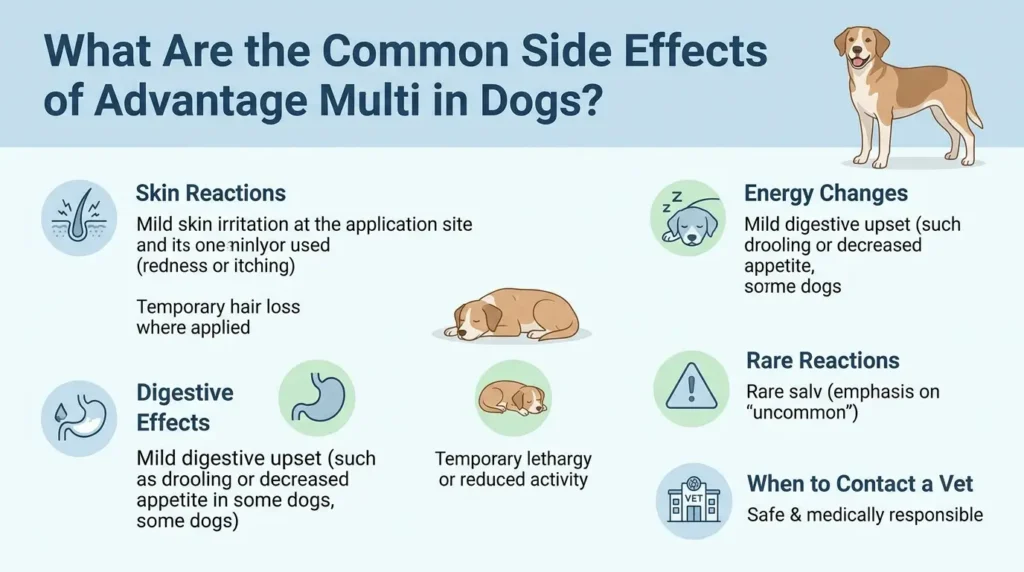
Advantage Multi for Dogs is generally well-tolerated when used as directed on the product label and as directed by your veterinarian. The side effects are usually minor and short-lived, and are likely to happen where the product is applied. There are some dogs, though, that may have bad reactions to the drug and need veterinary care.
Common side effects are itching at the application site (localised pruritus) and lethargy (tiredness). Mild skin irritation, redness, hair loss, greasy hair, hair clumping, matting and discomfort is also possible at the site of the application of the medication.
Other side effects can be:
- Vomiting
- Diarrhea
- Decreased appetite (inappetence)
- Very salivation if licked on
- Unusual behavior
- Inactivity or weakness
- Pyoderma (skin infection)
- Blood in stools (hematochezia)
Because of the bitter taste of the medicine, some drooling or foaming at the mouth may be seen temporarily if your dog or other pet licks the application area before it dries. Minimise this risk by keeping pets away from areas to be treated or from cleaning themselves or each other until the treated area is dry.
Serious Side Effects
More serious reactions are not common, but can happen in a few dogs, especially if they have the MDR1 genetic mutation that makes them more sensitive to moxidectin. If you notice the following, see your vet right away:
- Extreme fatigue or sadness.
- Dilated pupils
- Weakness or stumbling
- Excessive panting
- Generalized muscle tremors
You should contact your veterinarian about any of the following:
If side effects are severe, persistent or increase over time, consult your vet. Your vet might suggest washing the product off your dog, keeping your dog under close observation or changing the type of product you use for parasite control. If you suspect that your pet has taken too many medications, or if their reaction is severe, emergency veterinary attention is advised.
What Are the Most Serious Risks of Advantage Multi for Dogs?
When used as directed, Advantage Multi for Dogs can be used safely; however there are some important serious risks, warnings and precautions that every pet owner needs to know before using the product. These risks are primarily related to existing health conditions, misuse, or sensitivity to the active ingredients, imidacloprid and moxidectin.
One of the most serious risks is those dogs already infected with heartworm disease. These dogs have circulating heartworm larvae in the blood stream that will die off quickly after moxidectin is administered. This process can be very stressful to the body and can lead to complications.
Heartworm infected dogs have been reported to have:
- Cough
- Lethargy
- Vomiting
- Diarrhea
- Shortness of breath
In severe cases, these reactions can prove life threatening, so it is important that dogs are tested prior to treatment for heartworm infection. Infected dogs may need extra veterinary care, such as adulticide treatment to eliminate adult heartworms. Advantage Multi does NOT kill adult heartworms (Dirofilaria immitis).
The main safety hazards and precautions are provided.
There are several key precautions that need to be taken to minimize any potential complications:
- Safety has not been proven in breeding, pregnant or lactating dogs.
- May not be given to puppies younger than 7 weeks or less than 3 lbs (1.3 kg).
- Caution in the sick, debilitated or underweight dog.
- No safety data has been established if this is used on the same day as heartworm treatment for adulticides.
- Dogs already infected with heartworm will need veterinary supervision prior to use.
Human Safety Risks
Advantage Multi can also be a risk if not used properly by humans. May cause irritation and other reactions such as:
- Eye irritation (may be severe if it gets in the eye and is not flushed out right away for 15 minutes)
- Some skin irritation, including redness, burning, tingling, numbness, headache and dizziness.
- Harmful if swallowed
- Prevent contact with eyes, skin and clothing
Additional precautions include:
- Not suitable for children.
- Children should not come into contact with the application sites for 2 hours at least.
- Wash hands thoroughly after use.
- Avoid touching treated areas until completely dry
If you know you are sensitive to benzyl alcohol, imidacloprid or moxidectin, exercise extra caution and seek medical attention immediately if you experience an allergic reaction.
Rare Sensitivity Risks in Dogs
Some individual dog sensitivity to the product is rare. If symptoms persist or are severe, the veterinarian's attention is needed immediately.
Advantage Multi is a highly popular product and is generally safe to use, but the most significant concerns associated with this product are related to heartworm-positive dogs and to its misuse, as well as to uncommon sensitivity reactions, so veterinarian advice should be sought before and during use.
You May Also Like to Read:
- TrizEDTA Dosage For dogs: Calculator, Chart & Safe Guide
- Revolt Dosage For Dogs Calculator: Safe Dosage Guide & Chart
FAQs
What information is most important to know about Advantage Multi?
Advantage Multi for Dogs comes in various size and weight formulations that have a particular concentration of imidacloprid and moxidectin. For dogs over 110 lbs, a combination of tubes is needed for the proper dose. Application is made once every 30 days and children should not come in contact with the application site for a minimum of 2 hours following application.
What is the recommended use of Advantage Multi?
Advantage Multi is applied topically and is not taken orally. Once a month and as directed by your vet, it should be administered to your dog at a correct dosage depending on his/her weight. The product should be used on normal, undamaged skin and should be kept out of extremes of temperature (39°F to 77°F – 4°C to 25°C).
Before using Advantage Multi, talk to your vet about the following:
If your dog is in any of the following categories prior to treatment, you should let your veterinarian know: pregnant, nursing, or used for breeding, because its safety is not fully determined. Also advise if any allergies are known to imidacloprid, moxidectin or related components as your veterinarian will be able to help determine whether this product is suitable or not.
What are the side effects of Advantage Multi?
Mild reactions may include itching, redness and scratching at the site of application. Some dogs may also be vomiting, have diarrhea, have reduced appetite, lethargy or behavior changes. If the product is accidentally ingested, excessive drooling may occur. In very uncommon instances, severe allergic reactions, including swelling, convulsions, collapse or collapse, and severe gastrointestinal reactions, may occur, and veterinary assistance is required immediately.
What if I take a missed dose?
In the event of missed doses, the dose should be administered as soon as it is remembered. If it is near the time for the next dose, skip the missed dose and resume the regular dose schedule. A double dose should never be given. However, if there is a big delay between treatments, discuss this with your veterinarian as your dog may not be protected from heartworm and may need retesting.
If my dog takes too much Advantage Multi, what should I do?
If an overdose is suspected, immediate veterinary care is necessary. May drool, tremble, be depressed, or be uncoordinated. Overdoses occur rarely if ever, but can result in significant neurologic symptoms which must be treated promptly.
When using Advantage Multi, what precaution should NOT be taken?
DO NOT use in puppies under 7 weeks of age or in dogs under 3lbs. Should not be used in sick, debilitated, or underweight animals without veterinary supervision. No cross-use of dogs and cats is permitted and pets should not be permitted to lick the application site for at least 30 minutes after treatment. It is not suitable to use in combination with other flea or heartworm preventatives unless directed by a veterinarian.
Are there any drug interactions with Advantage Multi dose?
Advantage Multi should not be used with other flea or heartworm preventive products without a veterinarian's advice because there may be an increased risk of side effects. Some collie type breeds are genetically predisposed to be more sensitive to the drug, this is due to the presence of the gene mutation MDR1; extra precautions should be taken with the use of other medicines in this type of dog.
What is the recommended storage for Advantage Multi?
Advantage Multi should be kept in the original container in a cool and dry place. The suggested storage temperature zone is from 39°F to 77°F (4°C-25°C). It should avoid direct heat, water and frost, so as to guarantee the stability and effectiveness of the product.
Final Thoughts
Advantage Multi dosage for dogs is a broad spectrum monthly parasite control that helps defend against heartworms, fleas, roundworms, hookworms, whipworms and sarcoptic mange (scabies) in dogs. It is best applied monthly to the skin and should be applied completely to the area of application so that the medication is properly absorbed.
It is important to be consistent; if someone omits or delays a dose, the protection will not be as effective, and bathing or swimming too soon after application may diminish the protection. Parasite risks alternate among dogs based on their health, lifestyle, and setting, so it is always best to consult your veterinarian as to whether or not Advantage Multi is suitable for your dog and the way it ought to be utilized in your dog's situation.