Comfor-Trate Dosage Calculator For Dogs
Calculate veterinary maropitant citrate guidelines for dogs based on weight and clinical indication.
© medsdog.com
Calculated Dosage Guidelines
Dog Weight Context: —
Selected Indication: —


Paid Links - As an Amazon Associate, I earn from qualifying purchases.
Standard Tablet Matching Guide:
Enter parameters to see the optimized tablet recommendation.
Administration & Frequency Notes:
- Doses must be administered once daily.
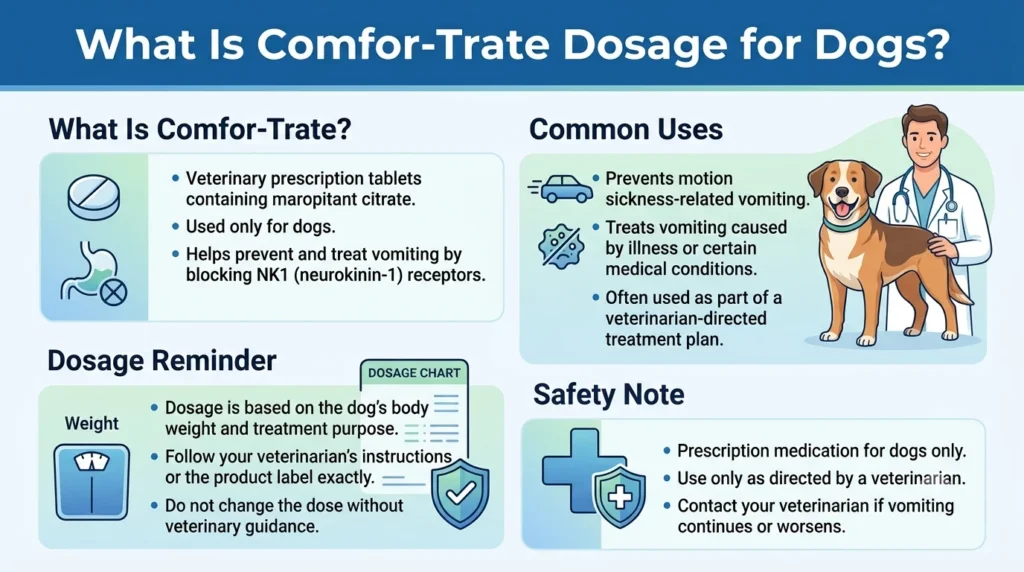
Comfor-Trate Dosage for dogs is always determined by your pet’s body weight, age, general health and condition, as well as the condition you are treating. Comfor-Trate for dogs is a prescription antiemetic (anti-vomit) drug that contains maropitant citrate, which works by blocking the receptors for a substance called neurokinin-1 (NK1) in the central nervous system, preventing nausea and vomiting. This will prevent substance P, a neurotransmitter that causes the vomiting reflex, from being activated, which will make dogs feel better and get well faster.
Comfor-Trate dose for dogs is prescribed by veterinarians to prevent acute vomiting, to manage nausea due to various diseases or treatments and to help with motion sickness. The tablets come in 16 mg, 24 mg, 60 mg and 160 mg dosages, which helps to make it easier to accurately dose to dogs of varying sizes. This drug is usually administered daily as directed by your veterinarian. It has been approved for dogs, and age indications depend on the condition, so always stick to the instructions given by your veterinarian for your dog’s particular situation.
This guide includes an easy to use Comfor-Trate dosage calculator for dogs by weight, weight based dosing charts, veterinarian recommended dosage guidelines, information on how to administer the tablets, information on potential side effects, safety information, and answers to frequently asked questions. This guide will help you to understand how to use Comfor-Trate safely and effectively for your dog, whether they are suffering from motion sickness or other causes of nausea and vomiting.
Key Takeaways
- Comfor-Trate dosage for dogs has the prescription anti-nausea drug maropitant citrate.
- It blocks the receptors for a substance called neurokinin-1 (NK1) which stops the action of a chemical called substance P that causes vomiting.
- Dog Comfor-Trate dosage is widely used by veterinarians for acute vomiting and for vomiting associated with motion sickness.
- Dosage depends on the condition to be treated, your dog’s body weight, and age; always follow your veterinarian’s recommendation.
- Comfor-Trate tablets come in 16, 24, 60 and 160 mg doses for dogs of various sizes.
- It is usually administered once a day, but the dosage and time of administration will depend on the reason for the treatment.
- Administer Comfor-Trate as directed and do not change the dose without veterinary advice.
- Side effects can be drooling, drowsiness, diarrhea, loss of appetite or slight pain at the spot where the medicine was injected (Injectable and Injectable Solution).
- If your dog experiences excessive vomiting, trouble breathing, collapse, seizures or symptoms of an allergic reaction, contact your veterinarian right away.
- The Comfor-Trate Dosage Calculator for Dogs can be used as a reference; however, it is important to always check with a veterinarian for the correct dosage before giving this medication to a dog.
Comfor-Trate dosage Charts for Dogs
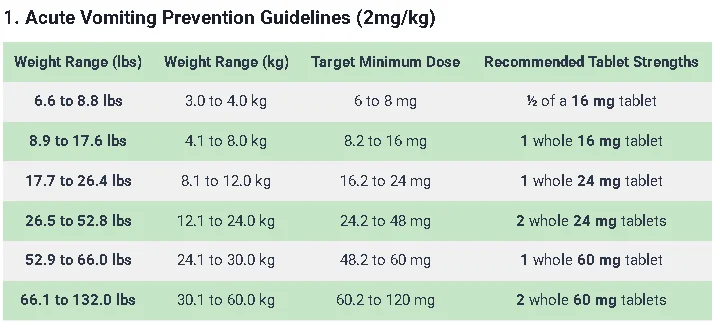
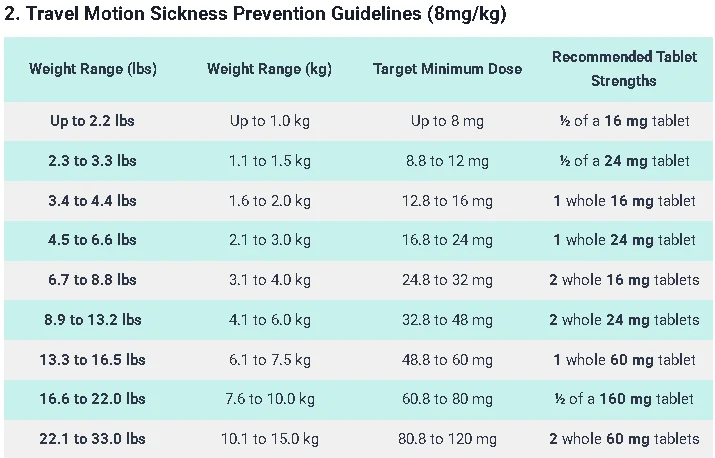
Here is the standard clinical dosage guidance for maropitant citrate (Comfor-Trate) in dogs. Dosages are calculated using a baseline rule: 2mg/kg for acute vomiting and 8mg/kg for travel motion sickness.
- Dogs 2 to 7 months old: 2 mg/kg, given once daily for up to 5 days.
- Dogs 7 months and older: 2 mg/kg, given once daily until vomiting resolves.
Motion Sickness Prevention
- Dogs 4 months and older: 8 mg/kg, given once daily for up to 2 consecutive days.
- Administer at least 2 hours prior to travel.
1. Acute Vomiting Prevention Guidelines (2mg/kg)
Administered orally once daily for up to 5 consecutive days.
| Weight Range (lbs) | Weight Range (kg) | Target Minimum Dose | Recommended Tablet Strengths |
| 6.6 to 8.8 lbs | 3.0 to 4.0 kg | 6 to 8 mg | ½ of a 16 mg tablet |
| 8.9 to 17.6 lbs | 4.1 to 8.0 kg | 8.2 to 16 mg | 1 whole 16 mg tablet |
| 17.7 to 26.4 lbs | 8.1 to 12.0 kg | 16.2 to 24 mg | 1 whole 24 mg tablet |
| 26.5 to 52.8 lbs | 12.1 to 24.0 kg | 24.2 to 48 mg | 2 whole 24 mg tablets |
| 52.9 to 66.0 lbs | 24.1 to 30.0 kg | 48.2 to 60 mg | 1 whole 60 mg tablet |
| 66.1 to 132.0 lbs | 30.1 to 60.0 kg | 60.2 to 120 mg | 2 whole 60 mg tablets |
Administered once daily, at least 2 hours prior to travel, for a maximum of 2 consecutive days.
2. Travel Motion Sickness Prevention Guidelines (8mg/kg)
| Weight Range (lbs) | Weight Range (kg) | Target Minimum Dose | Recommended Tablet Strengths |
| Up to 2.2 lbs | Up to 1.0 kg | Up to 8 mg | ½ of a 16 mg tablet |
| 2.3 to 3.3 lbs | 1.1 to 1.5 kg | 8.8 to 12 mg | ½ of a 24 mg tablet |
| 3.4 to 4.4 lbs | 1.6 to 2.0 kg | 12.8 to 16 mg | 1 whole 16 mg tablet |
| 4.5 to 6.6 lbs | 2.1 to 3.0 kg | 16.8 to 24 mg | 1 whole 24 mg tablet |
| 6.7 to 8.8 lbs | 3.1 to 4.0 kg | 24.8 to 32 mg | 2 whole 16 mg tablets |
| 8.9 to 13.2 lbs | 4.1 to 6.0 kg | 32.8 to 48 mg | 2 whole 24 mg tablets |
| 13.3 to 16.5 lbs | 6.1 to 7.5 kg | 48.8 to 60 mg | 1 whole 60 mg tablet |
| 16.6 to 22.0 lbs | 7.6 to 10.0 kg | 60.8 to 80 mg | ½ of a 160 mg tablet |
| 22.1 to 33.0 lbs | 10.1 to 15.0 kg | 80.8 to 120 mg | 2 whole 60 mg tablets |
| 33.1 to 44.0 lbs | 15.1 to 20.0 kg | 120.8 to 160 mg | 1 whole 160 mg tablet |
| 44.1 to 66.0 lbs | 20.1 to 30.0 kg | 160.8 to 240 mg | 1 and ½ of a 160 mg tablet |
| 66.1 to 88.0 lbs | 30.1 to 40.0 kg | 240.8 to 320 mg | 2 whole 160 mg tablets |
| 88.1 to 132.0 lbs | 40.1 to 60.0 kg | 320.8 to 480 mg | 3 whole 160 mg tablets |
Administration Tip: For motion sickness, offer a very light meal or treat an hour before dosing to prevent your dog from hypersalivating or throwing up the medication before it absorbs. Never wrap the tablet tightly in fatty foods (like commercial pill pockets or thick cheese), as high-fat food layers can delay absorption.
What Is Comfor-Trate?
Comfor-Trate Dosage For Dogs is a prescription antiemetic, which means it treats vomiting, with the same active ingredient, maropitant citrate, as Cerenia®. Specifically developed for the prevention of acute vomiting and motion sickness vomiting in dogs. Comfor-Trate inhibits the effects of a major neurochemical, called substance P, by blocking neurokinin-1 (NK1) receptors in the central nervous system (CNS), which usually activate nausea and vomiting. This selective mechanism offers rapid and wide spectrum alleviation of vomiting from both central and peripheral stimulation.
The veterinarian often prescribes Comfor-Trate for dogs that suffer from motion sickness, gastrointestinal upset, nausea from other medical conditions or nausea as a side effect of chemotherapy. Starts to act in 30 minutes to 2 hours, depending on how it is administered. The medication comes in 16 mg, 24 mg, 60 mg and 160 mg scored tablets which can be precisely dosed according to the weight of the person, and injectable forms are used in veterinary hospitals. Tablets are easy to give, are long lasting and only prescribed by a veterinary.
Benefits of Comfor-Trate for Dogs
Comfor-Trate dosage delivers rapid, effective relief of nausea and vomiting in dogs with maropitant citrate, an effective antiemetic which works by blocking the vomiting reflex, rather than just suppressing symptoms. It is widely used by veterinarians for the treatment and prevention of acute vomiting, as well as for the prevention of motion sickness while traveling and to control nausea caused by disease, drugs or chemotherapy. This medication will start to act in 30 minutes or two hours, giving the dog immediate relief.
Comfor-Trate offers some of these advantages:
- Helps to stop and treat acute vomiting in dogs.
- Helps to alleviate nausea and vomiting due to motion sickness.
- Works quickly, and effect is felt in 30 minutes to 2 hours.
- Prescribed for convenient once-a-day use and long-lasting action.
- Generally well tolerated with few side effects in dogs.
- Can be administered as tablets and injection, can be treated in the clinic and continued at home.
- Tablets that are generally administered with or without food; usually easy to administer as directed by your veterinarian.
- Vets rely on it to treat all sorts of nausea and vomiting.
When used under veterinary guidance, Comfor-Trate is an effective and convenient means of controlling nausea and vomiting in dogs to improve their comfort, aid in recovery and enhance their quality of life.
Uses of Comfor-Trate for Dogs
Comfor-Trate Dosage For Dogs is a prescription antiemetic drug which is mainly used to prevent and control vomiting in dogs and contains maropitant citrate. It is particularly effective for dogs that get carsick and acute vomiting and is a popular treatment for nausea. The tablets are easy to give once daily and come in 16 mg, 24 mg, 60 mg or 160 mg sizes to choose from depending on the size of your dog.
There are a number of conditions which veterinarians may prescribe Comfor-Trate for such as:


Paid Links - As an Amazon Associate, I earn from qualifying purchases.
- Treatment of acute vomiting
- Anti-motion sickness to stop vomiting.
- Chemotherapy-induced nausea and vomiting.
- Rehabilitation after surgery to decrease nausea
- Nausea, vomiting: relief of symptoms related to gastrointestinal disturbances
Comfor-Trate is for dogs 8 weeks and older and to be used under veterinary supervision. To make sure that the medication is administered properly and safely, always do this as directed by your veterinarian.
What Are the Side Effects of Comfor-Trate for Dogs?
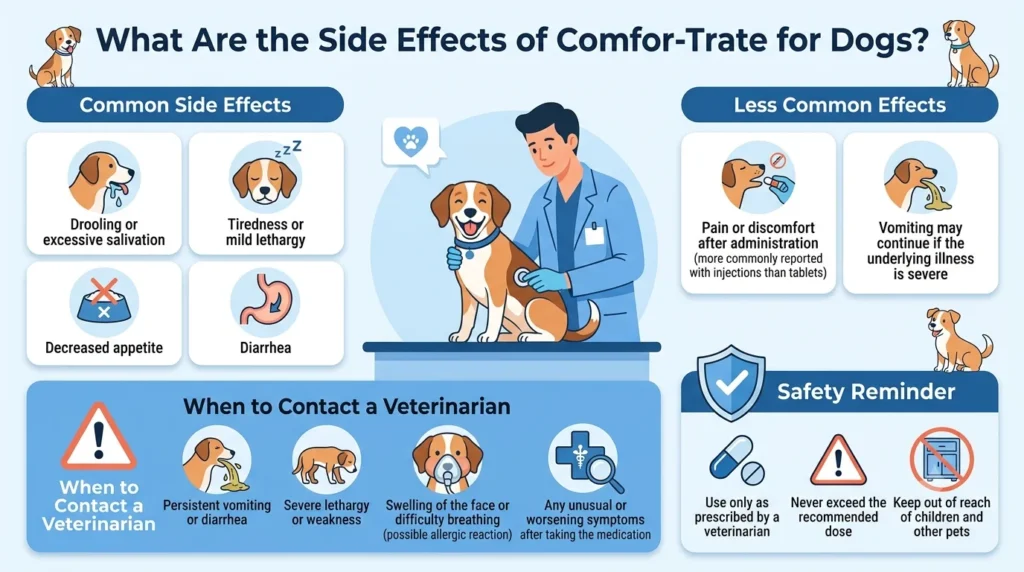
Comfor-Trate (maropitant citrate) is very safe to use and well tolerated by most dogs if administered as directed by a veterinarian. It can, however, have side effects in some dogs, as with any drug. Side effects are usually mild and will get better in a few days after the medication is discontinued and require urgent veterinary attention if serious.
Comfor-Trate side effects include:
- Decreased appetite (anorexia)
- Lethargy or tiredness
- Excessive drooling (hypersalivation)
- Vomiting or retching
- Diarrhea
- Shaking or twitching muscles
- Trouble moving around (ataxia or incoordination)
- Panting
- Weight loss
- Hyperactivity
While less common, more serious side effects can be:
- Facial swelling, hives, or trouble breathing (allergic reaction)
- Fever
- Convulsions (seizures)
- Situations in which the medicine doesn’t work
- There have been rare reports of death (including euthanasia) due to adverse events.
Dogs that are treated with the higher dose to prevent carsickness may be more likely to vomit or have salivation than if they are treated just before travel. Taking Comfor-Trate at least 2 hours before traveling may minimize these effects. If your dog vomits upon administration of a tablet, then you can try offering a tiny bit of food with the tablet next time to help develop tolerance. Some pain or swelling around the injection site may be experienced temporarily with the use of injectable maropitant.
Avoid Comfor-Trate for dogs with liver disease or heart disease and don’t use in dogs that are allergic to maropitant citrate. Also do not use for breeding, pregnant or nursing animals unless advised to do so by your veterinarian. If your dog shows any signs of an allergic reaction, has an overdose or severe side effects, contact your veterinarian immediately. Also, be sure to let your veterinarian know if your dog is taking any other medications, supplements, vitamins or herbal products to avoid potential interactions.
What Special Precautions Should You Take When Using Comfor-Trate for Dogs?
Only use Comfor-Trate (maropitant citrate for dogs) under a veterinarian’s supervision. It can be used safely when used properly, but some dogs may need to be used with caution as it has not been studied in some groups and could interact with other diseases or drugs. Also, it is important to find the cause of the vomiting and to treat the underlying cause, along with anti-vomiting drugs.
Some of the important precautions to be taken into consideration are:
- Comfor-Trate should not be used in dogs under 8 weeks of age.
- Do not use in dogs with gastrointestinal obstruction, or if they have ingested toxins, vomiting may be a protective response.
- Safety has not been determined in breeding dogs, pregnant or lactating (nursing) females.
- Exercise caution in dogs with liver disease (hepatic dysfunction) due to the metabolism by the enzymes of the CYP3A family.
- Even Comfor-Trate should be used with caution and under veterinary supervision in dogs with heart disease.
- Because drug interactions have only been partially studied, extra caution is suggested when Comfor-Trate is administered with highly protein-bound drugs, such as NSAIDs, cardiac drugs, anticonvulsants, and behavioral drugs.
- Medications that inhibit the metabolism of Comfor-Trate have not been fully studied and dogs that are taking more than one medication should be carefully monitored.
- Dose-related decreases in appetite and body weight may occur with Comfor-Trate, particularly with long-term administration.
- Use caution when employing the higher dose for motion sickness in puppies less than 16 weeks of age as bone marrow suppression has been reported.
Pet owners should take these safety measures:
- Not for human use. Keep away from children and other animals.
- Wash hands with soap and water after handling or giving medication.
- Skin contact should be avoided; repeated or prolonged contact may lead to some individuals to experience a localized allergic skin reaction or skin sensitization.
- Do not get in eyes; Comfor-Trate is an irritant to the eyes. In case of accidental contact with eyes flush eyes with water for 15 minutes and consult a physician.
- If swallowed, get medical advice right away.
By following these precautions and your veterinarian’s instructions, you can help to ensure the safe and effective use of Comfor-Trate and minimize the risk of complications or adverse reactions.
You May Also Like to Read:
- Imidacloprid Dosage For Dogs: Calculator & Safe Dosage Guide
- Flagyl Dosage For Dogs: Calculator & Safe Dosage Guide
FAQs
If my dog overdoses on Comfor-Trate Dose, what should I do?
If you think your dog may have overdosed on an overdose of Comfor-Trate (maropitant citrate), contact your veterinarian or your local emergency animal hospital right away. Symptoms of an overdose can include vomiting, drooling, lethargy, weakness, a loss in appetite, loose stool, slowing down of heart rate, changes in the function of white blood cells, or bone marrow, and electrolyte disturbances. Immediate veterinary help is required.
If I forget to take my dose of Comfor-Trate, what should I do?
In case of missed dose, administer it as soon as possible. If it is nearly time for the next dose, though, skip the dose and resume with the next scheduled dose. Do not double dose or give an additional dose for missed. If you are unsure, contact your veterinarian for advice.
What is the proper storage for Comfor-Trate tablets?
Store Comfor-Trate tablets at a controlled room temperature (20°C to 25°C or 68°F to 77°F). Temperatures may fluctuate for short periods of time up to 40ºC (104ºF). Store the tablets in a dry place out of direct light. Split tablets should be kept in the original foil and consumed within 2 days.
What is the storage for injectable maropitant?
Maropitant injection should be stored in the refrigerator between 2°C–8°C (36°F–46°F) after the initial administration. After opening, the vial must be used within 90 days according to veterinarian’s directions.
What are some safety tips for pet owners?
Yes. Do not let children and other pets come into contact with Comfor-Trate. Carefully wash your hands after handling or giving the medication. For patients who are known to be allergic to maropitant, avoid direct contact and contact your healthcare professional if it happens.
Final Thoughts
Comfor-Trate (maropitant citrate) is a reliable prescription drug for controlling and preventing nausea and vomiting in dogs, including those that vomit from motion sickness. It is generally safe, effective and well tolerated by most dogs when given at the proper weight based dosage and as directed by your vet.
The dosage calculator and dosing chart provided with the Comfor-Trate are a useful guide to dosage, but should not be a substitute for veterinary advice. Your vet will advise you of the most suitable dosage, depending on your dog’s age, weight, medical condition and health.
If your dog continues to vomit, has serious symptoms or accidentally takes too much medicine, contact your veterinarian right away. If used properly and monitored, Comfor-Trate can be an important part of maintaining your dog’s comfort, and aiding recovery.