Medically Reviewed by: Medsdog Team
Last updated: September 2026
If your dog is diagnosed with a fungal infection, then Fluconazole can be an effective antifungal treatments option for your pooch. Fluconazole (also known as a brand name Diflucan®) is a triazole antifungal drug, along with such drugs as itraconazole, ketoconazole, and miconazole. Dog Fluconazole keeps a wide range of applications in veterinary medicine to treat a wide range of fungal and yeast infections in dogs and cats.
Most dogs are prescribed fluconazole at 2.5–10 mg/kg (1.13–4.54 mg/lb) of body weight, given once daily depending on the type and severity of the fungal infection.
In this guide, we will deconstruct all the information that you need to know about safe dosing, dosage calculator, uses, side effects and what to expect during treatment so that you can help your dog heal better.


Paid Links - As an Amazon Associate, I earn from qualifying purchases.
Disclaimer: All information in this guide is provided for educational purposes only and should never replace professional veterinary advice.
🐾 Fluconazole Dosage Calculator for Dogs
Estimate an oral fluconazole dose based on body weight
Estimated Dose
Fluconazole for Dogs Overview
| Drug class | Triazole antifungal |
| Brand name | Diflucan® (human formulation, used off-label in dogs) |
| FDA status in dogs | Not FDA-approved for animals; legally prescribed off-label by veterinarians |
| Forms available | Tablets (50/100/150/200 mg), oral liquid suspension (10 mg/mL), injectable (in-clinic) |
| Typical dosage range | 2.5–10 mg/kg by mouth, once or twice daily |
| Common side effects | Reduced appetite, nausea, diarrhea, soft stool |
| Average cost | Roughly $30–$55 for 30 tablets at standard pharmacy pricing |
| Prescription required? | Yes |
What is Fluconazole for Dogs, and How Does It Work?
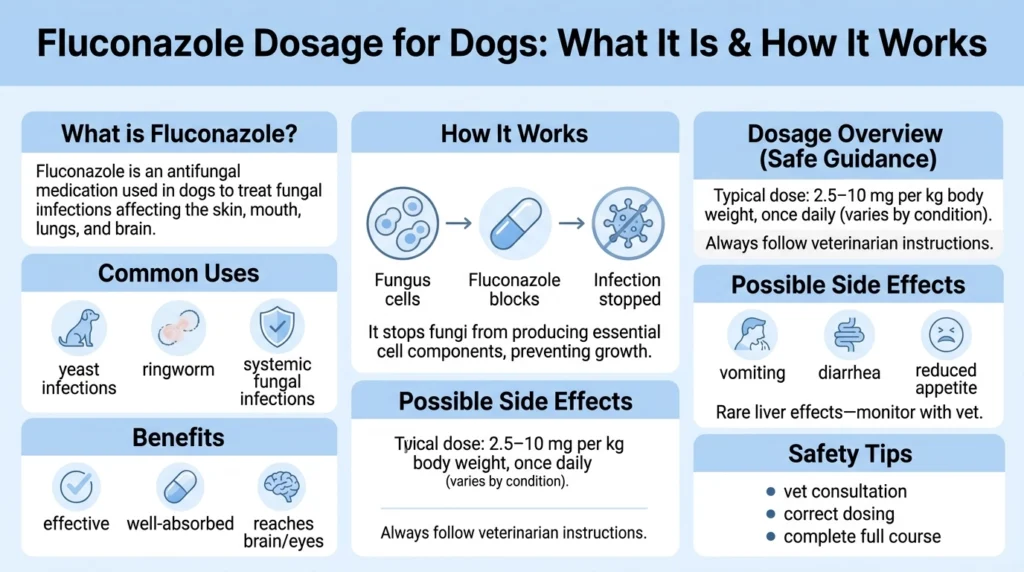
Fluconazole is an antifungal drug that is administered to dogs in order to cure numerous fungal infections in the body. It is a triazole antifungal medication, and it acts by disorderliness the structure and growth system of fungi.
Fluconazole is used to block the production of ergosterol in dogs which is an important constituent of fungal cell membrane by preventing the action of fungal enzymes.
Lack of sufficient ergosterol causes weakness of the fungal cell membrane, holes forming in it and loss of integrity. This interruption results in loss of critical cell contents, halting of metabolism, growth and eventual death of the fungus.
Besides disrupting the cell wall synthesis of the fungus, fluconazole disrupts the cell membrane of the cell as well, further preventing the spread of infection.
Due to its good absorption when administered orally, and deep penetration into body tissues, such as the central nervous system and the urinary tract, it is particularly effective in the treatment of internal and neurological fungi.
Fluconazole for dogs is fungistatic to many yeasts, and some molds, i.e., it only prevents the growth of fungi, and the immune system eliminates the infection.
The fact that it can cross the blood-brain barrier is especially useful in treating severe infections of the brain and other internal organs as well as skin and systemic fungal diseases.
How Much Fluconazole Can You Give a Dog?
The Fluconazole dosage for dogs primarily depends on the type of treatment the medication is being used for, such as systemic mycoses caused by Cryptococcus, Histoplasma, and Blastomyces spp. The ideal range falls between 2.5–10 mg/kg (1.13–4.54 mg/lb), PO, every 24 hours for 56–64 days. Your vet can better decide the dog's Fluconazole dosage after observing your canine's condition.
Condition Specific Dosing
Below are the general guidelines for educational purposes, your vet can ideally decide the dosage.
- Yeast and skin infections (Malassezia, Candida): Usually the lower end, around 2.5–5 mg/kg once or twice daily.
- Urinary candidiasis: Typically 5–10 mg/kg once every 24 hours.
- Systemic infections (blastomycosis, histoplasmosis, cryptococcosis): Often dosed at the higher end, sometimes split into two smaller doses every 12 hours to keep blood levels steady.
- Valley Fever (coccidioidomycosis): Frequently requires long-term therapy at the higher end of the range, sometimes for many months to over a year.
A study that looked at recovery rates in dogs with blastomycosis, a common fungal infection that can affect both dogs and humans, found that fluconazole was effective in about 75% of cases.
Another study evaluated the use of fluconazole for treating histoplasmosis, a fungal infection that can affect the lungs or gastrointestinal tract. In that study, 64% of the affected dogs achieved clinical remission with fluconazole.
However, fluconazole does not work as well against Aspergillus and Microsporum species. These fungi appear to have a higher level of resistance to the medication, making fluconazole less effective for treating infections caused by them.
How Fluconazole Is Supplied
- Fluconazole Tablets: 50 mg, 100 mg, 150 mg, or 200 mg tablets.
- Liquid Suspension:10 mg/ml to 40 mg/ml.
- Injectable Form: 2 mg/ml.
Fluconazole for Dogs: Dosage Chart by Weight
| Weight (lbs) | Weight (kg) | Low Dose (2.5 mg/kg) | Mid Dose (5 mg/kg) | High Dose (10 mg/kg) |
|---|---|---|---|---|
| 5 lbs | 2.3 kg | 5.75 mg | 11.5 mg | 23 mg |
| 10 lbs | 4.5 kg | 11.25 mg | 22.5 mg | 45 mg |
| 20 lbs | 9.1 kg | 22.75 mg | 45.5 mg | 91 mg |
| 30 lbs | 13.6 kg | 34 mg | 68 mg | 136 mg |
| 40 lbs | 18.2 kg | 45.5 mg | 91 mg | 182 mg |
| 50 lbs | 22.7 kg | 56.75 mg | 113.5 mg | 227 mg |
| 60 lbs | 27.3 kg | 68.25 mg | 136.5 mg | 273 mg |
| 70 lbs | 31.8 kg | 79.5 mg | 159 mg | 318 mg |
| 80 lbs | 36.4 kg | 91 mg | 182 mg | 364 mg |
| 90 lbs | 40.9 kg | 102.25 mg | 204.5 mg | 409 mg |
| 100 lbs | 45.5 kg | 113.75 mg | 227.5 mg | 455 mg |
Tip: Bookmark or print this table many owners search for a fluconazole for dog's dosage chart PDF to keep on hand at home, and this table works just as well saved as a screenshot or printed page for quick reference between vet visits.


Paid Links - As an Amazon Associate, I earn from qualifying purchases.

Worked Example: Fluconazole 150 mg for Dogs Dosage
Say your veterinarian prescribes 5 mg/kg for a 40-lb (18.2 kg) dog with a skin yeast infection. That works out to about 91 mg per dose. If your pharmacy filled the prescription with 150 mg tablets, 91 mg is roughly 0.6 of a tablet an awkward fraction that's a good reason to ask your vet or pharmacist about a more practical tablet strength (like 100 mg) or a compounded liquid suspension instead of trying to split an odd fraction of a tablet at home.
Fluconazole 50 mg, 100 mg, 150 mg, 200 mg Tablets Dosage Chart
| Dog Weight | Weight (kg) | Low Dose 2.5 mg/kg | Recommended Tablet Strength | Low-Dose Amount | High Dose 10 mg/kg | High-Dose Amount |
|---|---|---|---|---|---|---|
| 15 lb | 6.8 kg | 17 mg | 50 mg | ⅓ tablet | 68 mg | 1⅓ tablets |
| 20 lb | 9.1 kg | 22.7 mg | 50 mg | ½ tablet | 90.7 mg | 1¾ tablets |
| 25 lb | 11.3 kg | 28.3 mg | 50 mg | ½ tablet | 113.4 mg | 1⅛ tablets |
| 30 lb | 13.6 kg | 34 mg | 50 mg | ⅔ tablet | 136 mg | 2⅔ tablets |
| 40 lb | 18.1 kg | 45.4 mg | 50 mg | ⅞ tablet | 181.4 mg | 3⅔ tablets |
| 50 lb | 22.7 kg | 56.7 mg | 100 mg | ½ tablet | 226.8 mg | 2¼ tablets |
| 60 lb | 27.2 kg | 68 mg | 100 mg | ⅔ tablet | 272.2 mg | 2¾ tablets |
| 70 lb | 31.8 kg | 79.4 mg | 100 mg | ¾ tablet | 317.5 mg | 3⅛ tablets |
| 80 lb | 36.3 kg | 90.7 mg | 100 mg | ⅞ tablet | 362.9 mg | 3⅝ tablets |
| 90 lb | 40.8 kg | 102 mg | 150 mg | ⅔ tablet | 408.2 mg | 2¾ tablets |
| 100 lb | 45.4 kg | 113.4 mg | 150 mg | ¾ tablet | 453.6 mg | 3 tablets |

Fluconazole Liquid 10 mg/ml, 40 mg/ml Dosage Chat for Dogs
| Dog Weight | Weight (kg) | Low Dose 2.5 mg/kg | 10 mg/mL Volume | High Dose 10 mg/kg | 10 mg/mL Volume | 40 mg/mL Volume (Low–High) |
|---|---|---|---|---|---|---|
| 5 lb | 2.3 kg | 5.8 mg | 0.58 mL | 23 mg | 2.30 mL | 0.14–0.58 mL |
| 10 lb | 4.5 kg | 11.3 mg | 1.13 mL | 45 mg | 4.50 mL | 0.28–1.13 mL |
| 15 lb | 6.8 kg | 17 mg | 1.70 mL | 68 mg | 6.80 mL | 0.43–1.70 mL |
| 20 lb | 9.1 kg | 22.7 mg | 2.27 mL | 91 mg | 9.10 mL | 0.57–2.28 mL |
| 25 lb | 11.3 kg | 28.3 mg | 2.83 mL | 113 mg | 11.30 mL | 0.71–2.83 mL |
| 30 lb | 13.6 kg | 34 mg | 3.40 mL | 136 mg | 13.60 mL | 0.85–3.40 mL |
| 40 lb | 18.1 kg | 45.3 mg | 4.53 mL | 181 mg | 18.10 mL | 1.13–4.53 mL |
| 50 lb | 22.7 kg | 56.8 mg | 5.68 mL | 227 mg | 22.70 mL | 1.42–5.68 mL |
| 60 lb | 27.2 kg | 68 mg | 6.80 mL | 272 mg | 27.20 mL | 1.70–6.80 mL |
| 70 lb | 31.8 kg | 79.5 mg | 7.95 mL | 318 mg | 31.80 mL | 1.99–7.95 mL |
| 80 lb | 36.3 kg | 90.8 mg | 9.08 mL | 363 mg | 36.30 mL | 2.27–9.08 mL |
| 90 lb | 40.8 kg | 102 mg | 10.20 mL | 408 mg | 40.80 mL | 2.55–10.20 mL |
| 100 lb | 45.4 kg | 113.5 mg | 11.35 mL | 454 mg | 45.40 mL | 2.84–11.35 mL |
Note: Before administering liquid medication first confirm the product doesn't contain any toxic ingredients such as Xylitol or others.

What is Fluconazole Used for in Dogs?
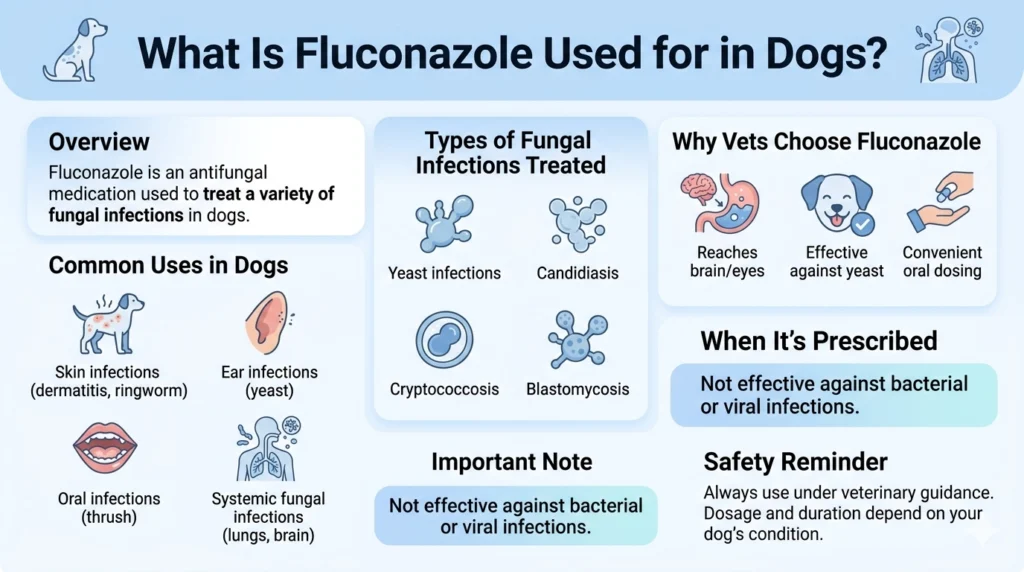
Fluconazole drugs is an antifungal agent of very broad spectrum in veterinary medicine, and finds application in the treatment of a wide variety of fungal infections in dogs and cats.
It is potent in dealing with infections that attack various body systems such as skin, claws, respiratory tract, bones, urinary system as well as central nervous system.
Fluconazole is used in dogs to treat:
Fluconazole medication is prescribed by veterinarians in treating various fungus such as:
Important Clinical Notes:
Limitations of Fluconazole:
Fluconazole dosage for dogs per pound in general is an effective veterinary antifungal agent as it has broad-spectrum activity and deep tissue penetration, thus making it useful to treat serious or life-threatening fungal infections in dogs.
How Effective Is Fluconazole for Dogs?
| Infection | Reported Effectiveness | Source |
|---|---|---|
| Blastomycosis | ~75% clinical success | Journal of Veterinary Internal Medicine study |
| Histoplasmosis | ~64% clinical remission | JAVMA study |
| Aspergillus / Microsporum species | Often resistant; less reliable | Veterinary pharmacology literature |
These numbers are a helpful general guide, but individual outcomes depend heavily on how early the infection was caught, the dog's overall health, and whether the correct dose and duration were followed.
What are the Common Side Effects of Fluconazole in Dogs?
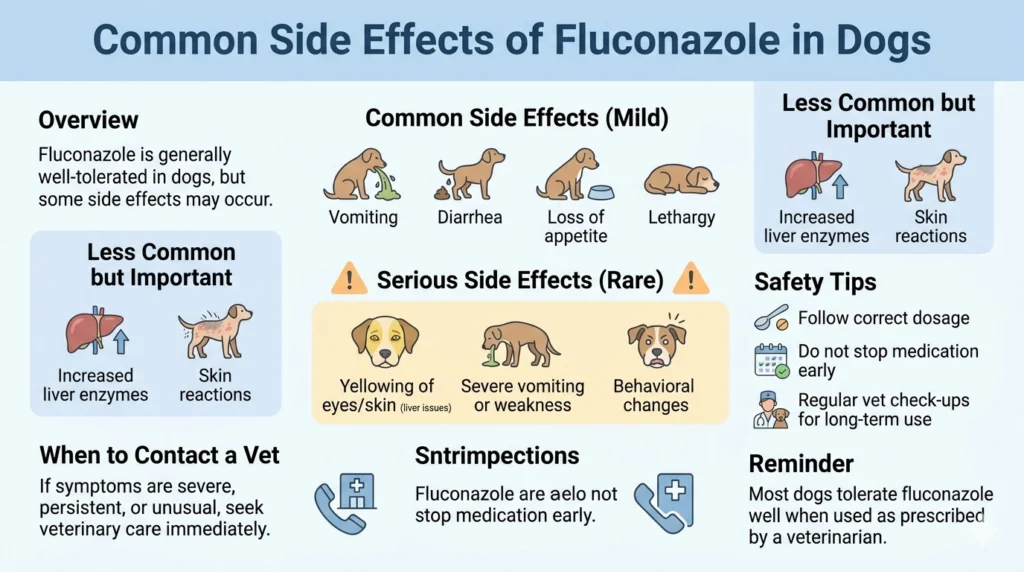
Fluconazole drugs is usually regarded as a tolerable antifungal drug in dogs particularly when compared to other antifungal drugs.
But it, like any drug, may also produce side effects, mild gastrointestinal upsets as well as more severe liver related effects, especially when used on a long-term basis or in sensitive dogs.
Fluconazole in dogs side effects:
Gastrointestinal (GI) and mild systemic effects are the most common side effects reported including:
Less Frequent Side effects:
Other dogs might have other, less frequent responses that include:
Severe, yet Uncommon Side Effects:
Though not very common, more severe adverse effects may take place and necessitate emergency treatment in a veterinary:
Symptoms of liver issues can be vomiting, lack of appetite, jaundice or a sense of constant tiredness and must be reported to a veterinarian.
Allergic Reactions (Uncommon yet Serious):
Other azole antifungals or fluconazole can be allergic to some dogs. Symptoms of an allergy are:
Important Safety Notes:
On the whole, fluconazole dose can be considered relatively safe and effective but it is important to keep an eye on your dog to be able to notice the first signs of any side effects.
Because fluconazole is processed through the liver, dogs on long-term therapy typically need bloodwork every few weeks to months to catch any liver stress early. If your dog needs extra support during long-term treatment, many vets recommend pairing antifungal therapy with a liver-support supplement to help protect liver function always run this by your vet first rather than adding it independently.
What are the Most Serious Risks?
Despite the generally safe and well-tolerated use of fluconazole dose in dogs, there are some severe dangers in uncommon situations. The risks are more common in dogs already having certain underlying health problems, long term treatment or sensitive to the drug.
The greatest potential risks of Fluconazole in dogs are most likely to be:
Severe side effects are rare but they may include:
In case any of the symptoms occur, the treatment must be ceased and a veterinarian called to do an assessment and perhaps change the dosage or medication.
Risky Conditions and precautions:
There are some conditions when fluconazole should be used with caution or not because of the higher risk of complications:
Key Safety Considerations:
In general, although severe responses to fluconazole are uncommon, close observation and veterinary advice are critical to prevent and treat the possible high-risk situations in dogs.
Does Fluconazole Interact With Other Dog Medications?
Yes, fluconazole affects the liver's CYP450 enzyme system, which is responsible for metabolizing many other drugs. That means it can raise or lower the effect of several common medications.
| Category | Examples |
|---|---|
| Antifungals/antibiotics | Amphotericin B, erythromycin, azithromycin, rifampin |
| Sedatives/neurological | Alprazolam, phenobarbital, phenytoin, tricyclic antidepressants |
| Pain medication | NSAIDs (Rimadyl, Deramaxx), opioids (fentanyl, methadone) |
| Heart/circulation | Quinidine, losartan, sildenafil |
| Immune/hormonal | Corticosteroids, cyclosporine |
| GI/metabolic | Cisapride, theophylline, sulfonylurea diabetes medications |
| Blood thinners | Warfarin |
One frequently overlooked interaction involves acid reducers: giving fluconazole too close to a common acid-reducing stomach medication can lower how well it's absorbed, so most vets recommend spacing the two doses apart by at least 2 hours.
Always tell your veterinarian about every medication, supplement, and vitamin your dog is taking before starting fluconazole.
Cost of Fluconazole for Dogs
Since fluconazole is a human generic drug used off-label, it's generally affordable. Standard pharmacy pricing runs roughly $30–$55 for a 30-tablet supply, though the exact cost depends on tablet strength, pharmacy, and whether you use a discount card.
Compounded liquid suspensions from a veterinary pharmacy are typically priced somewhat higher due to compounding fees.
Fluconazole vs. Other Antifungals for Dogs
| Drug | Best Used For | Key Trade-off |
|---|---|---|
| Fluconazole | Systemic/CNS infections, urinary yeast infections | Good CNS penetration, generally fewer side effects |
| Ketoconazole | A broad-spectrum option for general fungal and yeast infections | More affordable, but more GI and liver side effects, more drug interactions |
| Itraconazole | Often chosen for blastomycosis, histoplasmosis, and resistant cases | Broader antifungal spectrum, but poorer CNS penetration |
| Griseofulvin | The go-to choice specifically for ringworm (dermatophytosis) | Not effective against systemic/yeast infections |
| Terbinafine | Often used for stubborn skin and nail fungal infections | Sometimes combined with azoles for resistant cases |
FAQs
What can I do in case my dog is missing doses of fluconazole?
In case of an omitted dose, take it as soon as you you can remember. Nevertheless, in case it occurs near the next dose, omit the missed dose and resume taking the regular dose. Never give two doses at the same time.
Should I be able to get fluconazole dosage for dogs prescription to treat my dog?
Yes, fluconazole is a prescription drug and has to be prescribed by a veterinarian.
Is it possible to take fluconazole drug with food?
Yes it may be administered with or without food. It can be given with a small meal to some dogs to minimize stomach upsets or nausea.
The time it takes before it works in dogs?
It can take 1-2 weeks to attain equilibrium levels in the body and significant improvement can differ with the type and severity of the infection.
What is the reason why the treatment with fluconazole medication is so long?
The fungus is stubborn and, therefore, treatment may last weeks or months before it can be cleared and without the effects being evidenced, in order to avoid relapses.
Will a course of fluconazole dose help my dog? Can I discontinue?
No. Early cessation can lead to reoccurrence of infection and can lead to antifungal resistance. Always take the entire course that your veterinarian recommends.
Is my dog to be monitored in treatment?
Yes. In the long-term use may have impact on the liver and thus as part of treatment in most instances the veterinarians will check liver enzymes and the general health within a few weeks.
What are some of the fungal infections treated with fluconazole dosage for dogs?
It is applied in treating yeast infections ( Candida, Malassezia), cryptococcosis, blastomycosis, histoplasmosis and other systemic fungal infections which may affect the brain, lungs, skin and urinary system.
Can dogs safely be given fluconazole dose when it is not approved by FDA?
Yes. It is not approved by the FDA to administer to animals, but is widely used off-label, and is believed to be safe when administered and followed up by a veterinarian.
Is fluconazole dosage safe in dogs?
The human form of fluconazole (Diflucan®) can only be administered in dogs at the discretion of the veterinarian who knows the appropriate dosage and safety of the particular pet.
Does fluconazole dose contain an antibiotic?
No. Fluconazole is not an antibiotic, but an antifungal agent and it specifically attacks fungal and yeast infections.
The mechanism of action of fluconazole for dogs?
It operates by preventing the growth of fungi and disrupting the cell membrane of the fungi, thus preventing the propagation of the infection.
Which one is superior between fluconazole and ketoconazole in dogs?
Fluconazole tends to be more tolerated, has less drug interaction, penetrativeness to the body (including the brain) whilst ketoconazole may be more extensive but with more side-effects.
What would I do in case of drug overdose or emergency?
Overdose or severe response may present itself in the form of vomiting, fatigue, loss of appetite or jaundice. Immediately call a veterinarian or emergency clinic.