Seeing furry friend in pain make us in pain. If your dog is limping, stiff, or in pain, you might think about aspirin for dogs in your medicine cabinet. Giving (Acetylsalicylic Acid) Aspirin dosage for dogs correctly help your canine companion. However, the safe dose depends on your dog’s weight, why you’re giving it, and how long you plan to use it.
Below you’ll find a vet-reviewed aspirin dosage chart for dogs by weight, an interactive calculator, toxicity thresholds, and safer alternatives your veterinarian may recommend instead.
Disclaimer: This article is for informational purposes only and is not a substitute for veterinary advice. Always call your vet or an animal poison control line before giving your dog any human medication.
What Is Aspirin and How Does It Work in Dogs?
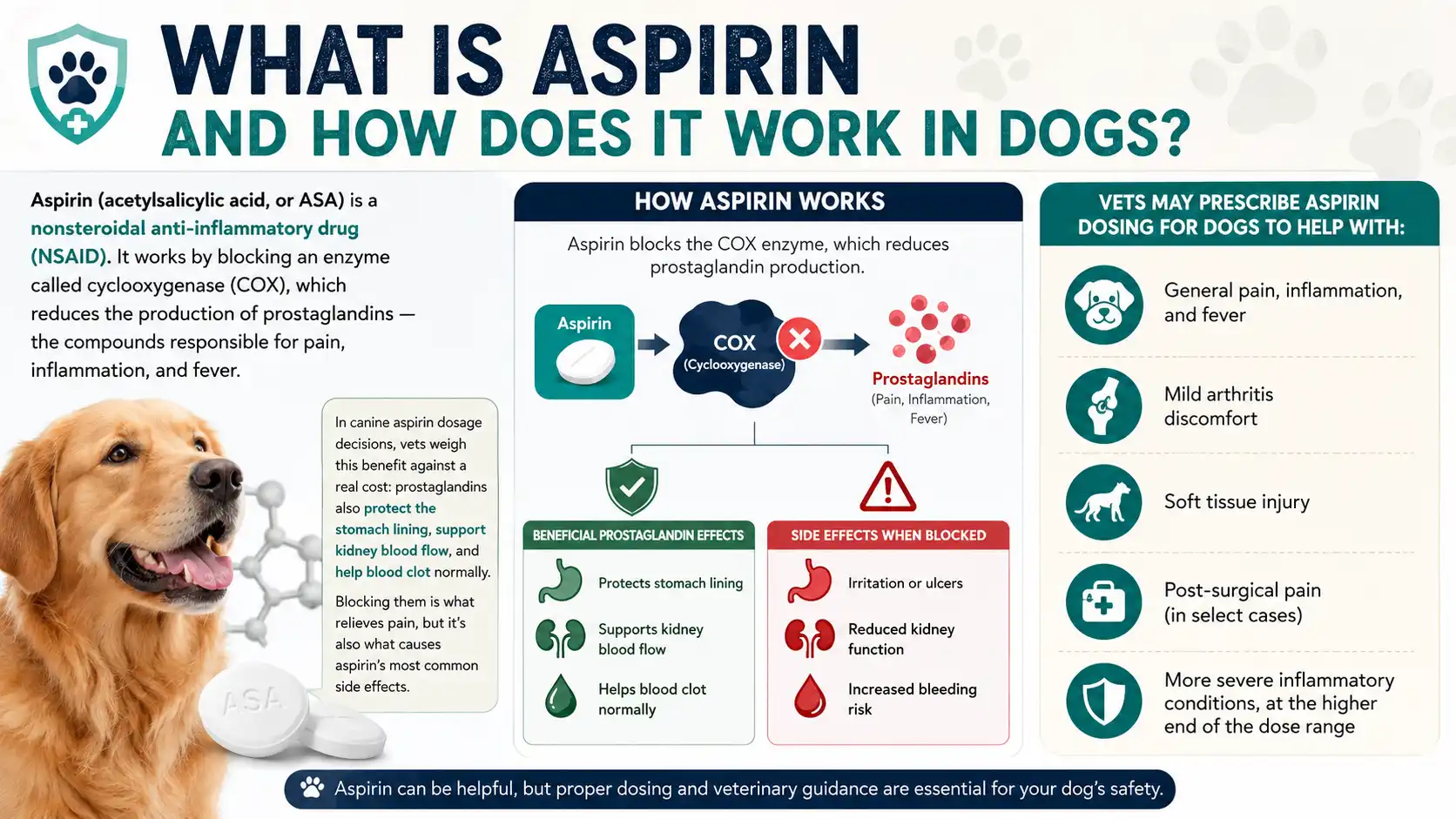
Aspirin (acetylsalicylic acid, or ASA) is a nonsteroidal anti-inflammatory drug (NSAID). It works by blocking an enzyme called cyclooxygenase (COX), which reduces the production of prostaglandins — the compounds responsible for pain, inflammation, and fever.


Paid Links - As an Amazon Associate, I earn from qualifying purchases.
In canine aspirin dosage decisions, vets weigh this benefit against a real cost: prostaglandins also protect the stomach lining, support kidney blood flow, and help blood clot normally. Blocking them is what relieves pain, but it’s also what causes aspirin’s most common side effects.
Vets may prescribe aspirin dosing for dogs to help with:
- General pain, inflammation, and fever
- Mild arthritis discomfort
- Soft tissue injury
- Post-surgical pain (in select cases)
- More severe inflammatory conditions, at the higher end of the dose range
Aspiring is human formulated medicine not dogs, instead veterinary-specific NSAIDs like carprofen, meloxicam, or grapiprant are usually the first choice of mine.
Aspirin can be use in dogs when a vet has a specific reason to reach for it, or short-term, off-label.
Is Aspirin Safe for Dogs? Dogs That Should Not Take It
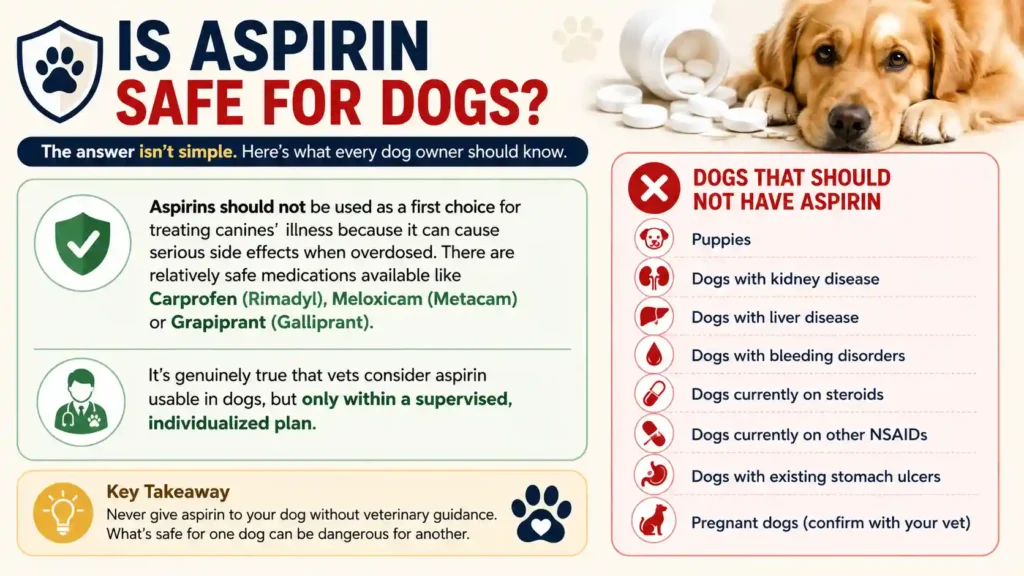
Aspirin can be appropriate for short-term with veterinarian approval in healthy adult dogs. It is not safe for:
- Puppies under 6 months old, in most cases
- Pregnant or nursing dogs
- Dogs with a history of stomach ulcers, GI bleeding, or kidney disease
- Dogs already taking another NSAID (e.g., carprofen, meloxicam), a steroid (e.g., prednisone), or a blood thinner
- Dogs with a known bleeding disorder.
Aspirins should not be used as a first choice for treating canines’ illness because it can cause serious side effects when overdosed. There are relatively safe medications available like Carprofen (Rimadyl), Meloxicam (Metacam) or Grapiprant (Galliprant).
Never combine aspirin with other NSAIDs, steroids (like prednisone), or give it for more than a few days without veterinary follow-up.
A note on cats: never use a dog aspirin dose for a cat. Cats metabolize aspirin far more slowly, so a much lower dose given much less often is required, and the margin for overdose is far smaller.
How Much Aspirin Can I Give My Dog?
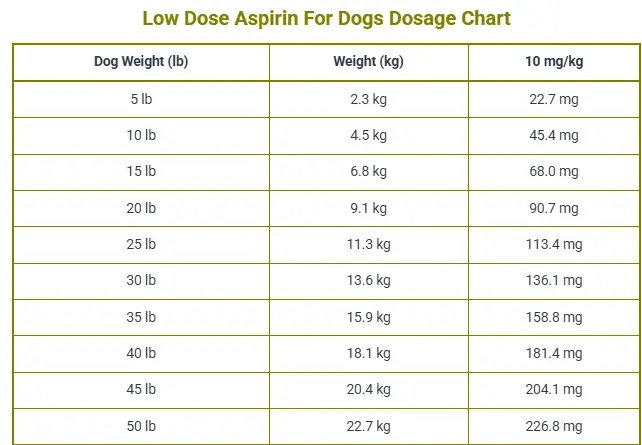
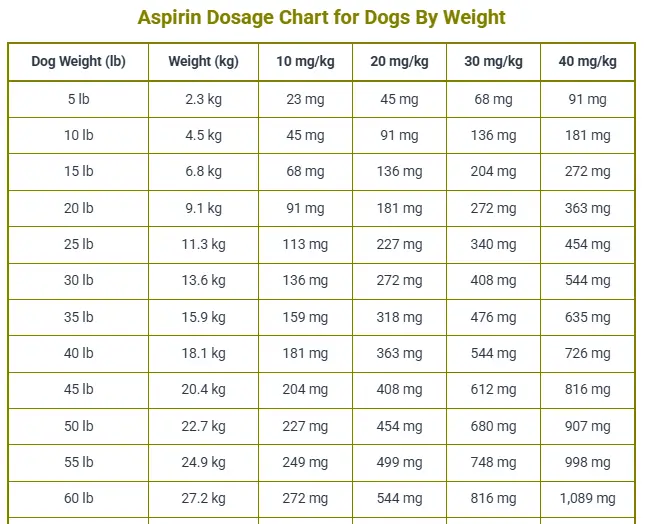
The aspirin dosage for dogs for pain and inflammation is 10–20 mg per kg of body weight (about 5–10 mg per pound), given every 12 hours. For long-term, low-dose antiplatelet (“cardiac”) use, the dose is much smaller roughly 0.5–2 mg/kg once daily.
Because aspirin carries real risks of stomach ulcers and bleeding in dogs, it should only be given at a vet-confirmed dose, ideally with food, and never alongside other NSAIDs, steroids, or for more than a few days without veterinary guidance.
Disclaimer: Never take any medication without consulting the licensed veterinarian in case you do not know the right dose, the frequency of the medication or whether the aspirin is suitable to treat the condition of the dog.
🐾 Aspirin Dosage Calculator for Dogs
Estimate an aspirin dose range based on your dog’s weight. Always confirm with your veterinarian before administering.
This calculator is for informational purposes only and does not replace professional veterinary advice. Always consult your veterinarian before giving any medication to your dog.
Aspirin Dosage Chart for Dogs by Weight
| Dog Weight | Weight in kg | Pain & Inflammation Dose | Frequency | Low-Dose Cardiac Range | Frequency |
|---|---|---|---|---|---|
| 5–10 lbs | 2.3–4.5 kg | 23–91 mg | Every 12 hours | 1.2–9 mg | Once daily |
| 11–20 lbs | 5.0–9.1 kg | 50–182 mg | Every 12 hours | 2.5–18 mg | Once daily |
| 21–30 lbs | 9.5–13.6 kg | 95–272 mg | Every 12 hours | 4.8–27 mg | Once daily |
| 31–40 lbs | 14.1–18.1 kg | 141–363 mg | Every 12 hours | 7–36 mg | Once daily |
| 41–50 lbs | 18.6–22.7 kg | 186–454 mg | Every 12 hours | 9–45 mg | Once daily |
| 51–60 lbs | 23.2–27.2 kg | 232–544 mg | Every 12 hours | 12–54 mg | Once daily |
| 61–70 lbs | 27.7–31.8 kg | 277–636 mg | Every 12 hours | 14–64 mg | Once daily |
| 71–80 lbs | 32.3–36.3 kg | 323–726 mg | Every 12 hours | 16–73 mg | Once daily |
| 81–90 lbs | 36.8–40.8 kg | 368–816 mg | Every 12 hours | 18–82 mg | Once daily |
| 91–100 lbs | 41.4–45.4 kg | 414–908 mg | Every 12 hours | 21–91 mg | Once daily |
| 101–120 lbs | 45.9–54.4 kg | 459–1,089 mg | Every 12 hours | 23–109 mg | Once daily |
The cardiac/antiplatelet range is much lower and should only be used when specifically directed by a veterinarian. The calculated ranges above are mathematical conversions of the dosage information you supplied and are not a substitute for veterinary dosing instructions.


Paid Links - As an Amazon Associate, I earn from qualifying purchases.
Low-Dose vs. High-Dose Aspirin: Pain Relief vs. Antiplatelet Use
One of the most common points of confusion in canine aspirin dosage is that "low dose" can mean two very different things:
- Antiplatelet / cardiac dose (0.5–2 mg/kg, once daily): used long-term to reduce clot risk in dogs with certain heart, kidney, or clotting conditions, under a vet's direction.
- Analgesic / pain-relief dose (10–20 mg/kg, every 12 hours, up to 40 mg/kg in some protocols): used short-term for pain and inflammation, such as after minor injury or for arthritis flare-ups.
These two uses should not be combined or confused — giving a pain-relief dose for a dog that only needs the cardiac dose significantly raises the risk of GI bleeding and ulcers.
Baby Aspirin (81 mg) Dosage for Dogs
Baby aspirin (81 mg, "low dose") is a common way owners dose small-to-medium dogs because it's easier to portion than a 325 mg regular-strength tablet. As a general reference:
| Dog's Weight | Approx. 81 mg Baby Aspirin Tablets (Low-Dose Use) |
|---|---|
| 10–20 lbs | ¼ tablet, once daily |
| 21–40 lbs | ½ tablet, once daily |
| 41–60 lbs | ¾–1 tablet, once daily |
| 61–90 lbs | 1–1½ tablets, once daily |
This 81 mg low dose aspirin for dogs' dosage chart reflects the antiplatelet/cardiac range only, not the higher pain-relief dose — confirm with your vet which use case applies to your dog before dosing.
Is Buffered Aspirin Safe for Dogs?
Buffered aspirin contains added antacid ingredients (like calcium carbonate or magnesium) intended to reduce stomach irritation. Many vets prefer buffered or enteric-coated aspirin over plain aspirin for dogs because it's gentler on the GI tract though it does not eliminate the risk of ulcers, and dosing is based on the same mg/kg guidelines as plain aspirin.
Always give buffered aspirin with food, and watch for vomiting, black stool, or reduced appetite, which can signal GI irritation even on a buffered formula.
Buffered Aspirin for Dogs Dosage
Buffered aspirin (aspirin combined with an antacid compound, such as calcium carbonate or magnesium) is sometimes preferred over plain aspirin because the buffering agent can reduce stomach irritation.
Buffered Aspirin 300mg
Inactive Ingredients:
- Calcium Carbonate,
- Dicalcium
Phosphate, - Magnesium Stearate,
- Malt,
- Maltodextrins,
Microcrystalline Cellulose, - Montmorillonite Clay,
Natural Flavoring, - Non-Fat Dry Milk, Stearic Acid.
Buffered Aspirin 300mg Dosage Chart For Dogs
| Weight | Buffered Aspirin |
|---|---|
| 24-35 lbs | 1/2 tablet |
| 36-60 lbs | 1/2 tablet |
| 61-90 lbs | 1 tablet |
| 90+ lbs | 1 1/2 tablets |
As with any aspirin product, confirm the exact strength per tablet with your vet before.
Is Human Aspirin Safe for Dogs?
Human aspirin can be used in canines, but "safe for humans" doesn't mean "safe at human doses." Dogs process aspirin differently, and human-labeled products (especially enteric-coated ones) aren't designed with canine dosing or absorption in mind.
If your vet has approved aspirin for your furry friend, plain, uncoated, human-grade aspirin is generally what's used at the dog-specific dose your vet calculates, not the dose printed on the human bottle.
How Much Aspirin Is Toxic to Dogs?
Giving more than 40 mg/kg of aspirin (acetylsalicylic acid) can be toxic to dogs. Keep in mind that even a low or normally safe dose may cause problems in certain dogs. Before giving aspirin to your furry friend, always consult your veterinarian and let them know your dog’s weight, health condition, and any other medications they are currently taking.
If you're trying to work out how much aspirin is toxic to your dog after a known or suspected overdose, don't wait for symptoms to confirm it contact your vet or an animal poison control line immediately with your dog's weight and the amount ingested.
Signs of Aspirin Toxicity in Dogs
| Severity | Signs | What To Do |
|---|---|---|
| Watch closely | Mild vomiting, reduced appetite, mild lethargy | Stop aspirin, call your vet same-day |
| Call your vet now | Repeated vomiting, diarrhea, black or tarry stool, pale gums | Contact your vet or emergency clinic immediately |
| Emergency — go now | Vomiting blood, rapid breathing, seizures, collapse, coma | This is a medical emergency; go to an emergency vet or animal ER immediately |
Aspirin vs. Veterinary NSAIDs: How They Compare
Rather than dosing human aspirin at home, many vets prefer NSAIDs built specifically for dogs. Here's how they stack up:
| Aspirin | Carprofen (Rimadyl) | Meloxicam (Metacam) | Grapiprant (Galliprant) | |
|---|---|---|---|---|
| FDA-approved for dogs | No (off-label) | Yes | Yes | Yes |
| Typical use | Short-term, off-label pain/fever | Osteoarthritis, post-surgical pain | Osteoarthritis, chronic pain | Osteoarthritis pain |
| GI risk profile | Higher | Lower than aspirin | Lower than aspirin | Lower; more GI-selective |
| Dosing frequency | Every 12 hours | Once or twice daily | Once daily | Once daily |
| Requires prescription | No (OTC, vet-directed) | Yes | Yes | Yes |
If your furry friend needs ongoing pain management rather than short-term relief, ask your vet whether one of these dog-specific options is a better fit than aspirin.
What Else Can I Give My Dog for Pain? (Safer OTC & Vet Alternatives)
A lot of owners searching for dog pain medication over the counter are really asking: "what can I give my dog for pain that won't hurt them?" A few honest answers:
- There is no truly "over-the-counter pain med for dogs" that's both effective and low-risk without veterinary guidance — even aspirin, the one human OTC drug some vets approve, needs a vet-calculated dose.
- Never give ibuprofen, naproxen, or acetaminophen (Tylenol) to a dog — these are far more toxic to dogs than aspirin and are not vet-recommended alternatives.
- Vet-prescribed options (carprofen, meloxicam, grapiprant, gabapentin, tramadol) are the safer path for anything beyond very mild, short-term discomfort.
- Non-drug options — rest, a well-fitted joint supplement, weight management, and vet-guided physical therapy — can reduce how much medication your dog needs at all.
FAQs
How much aspirin per pound can I give my dog?
The majority of sources indicate 5-10mg per pound at 12-hour intervals though under veterinary supervision.
Can I give my dog baby aspirin?
Perhaps, when the dose that is calculated is equal to the weight of your dog and your doctor is okay. All dogs cannot make good candidates.
Would 81mg aspirin be excessive to a small dog?
It can be. In dogs of less than 15 pounds, 81 mg might be in the exceeded lower dose range.
Can dogs take aspirin daily?
The prolonged use on a daily basis is not usually acceptable as it has risks of ulcer and bleeding.
What's the difference between the aspirin and the veterinary NSAids?
Prescription of veterinary NSAIDs is dog-specific and dosed, which is safer in case of prescription.
Is it necessary to use Aspirin Dosage Calculator online with the dogs?
It is useful in estimating dosage however it must not substitute professional medical advice.
Final Thoughts
A Aspirin Dosage calculator For Dogs per pound and per kg may prove convenient as a reference tool when estimating the dose based on weight.
But in dogs, aspirin does have actual medical dangers and in particular when used without advice.
The safest method is the case of:
- Make certain that your dog is of a certain weight.
- Consult your veterinarian.
- Use the minimal effective dose.
- Payment of close attention to side effects.
Your dog's safety should be the most important factor before convenience. All the difference is in proper dosing and supervision by professional persons.