Clonazepam Dosage For Dogs Calculator: Chart & Safe Guide
Clonazepam Dosage Calculator For Dogs By Weight
Usually administered every 8 to 12 hours. Consult your veterinarian before administering any medication.
© medsdog.com
Clonazepam Dosage For Dogs (brand name: Klonopin) is a prescription benzodiazepine drug that functions as a central nervous system (CNS) depressant to calm excessive firing of the brain in dogs. Clonazepam for dogs can be prescribed for dogs by veterinarians as an adjunctive treatment for some types of seizures, or in some instances, as a primary treatment for anxiety disorders. It's also sometimes used as a muscle relaxant and sedative, which may be helpful to dogs with overstimulated nervous systems.
This drug acts to increase the effects of the neurotransmitter gamma-aminobutyric acid (GABA) in the brain, which has a regulatory effect on nerve impulses. Clonazepam dose enhances inhibitory processes in the brain by binding to the benzodiazepine site on the GABA receptor, which helps to suppress seizures and excessive brain activity. It can also affect glutamate decarboxylase, contributing to its seizure-preventing properties.
Clonazepam medication for pets is widely used to treat certain types of seizures, including Lennox-Gastaut syndrome and akinetic, myoclonic and absence seizures. It may also be used by veterinarians to treat panic or anxiety disorders, if necessary. But due to its effects on the central nervous system, it should only be used under the supervision of a veterinarian and is prescription-only.
Although clonazepam dose for dogs is effective and relatively safe for use in dogs, prolonged use can result in tolerance, physical dependence and withdrawal reactions if abruptly discontinued. For these reasons, veterinarians may choose to use clonazepam for a short time, on an intermittent basis, or in a highly controlled manner.
Dogs can be given clonazepam in tablet or rapidly dissolving tablet form, which can be beneficial for dogs that have difficulty taking tablets.
Disclaimer: This guide is for informational purposes only and is not a substitute for professional veterinary advice.
Always consult your veterinarian before giving Clonazepam or any medication to your dog.
Key Takeaways
- Seizures and anxiety disorders are treated in dogs with clonazepam dosage.
- The recommended dose of clonazepam in dogs is 0.1-1 mg/kg, by mouth two or three times daily.
- Side effects in dogs include drowsiness and ataxia.
- Animals who are allergic to clonazepam or other benzodiazepines should not be administered clonazepam.
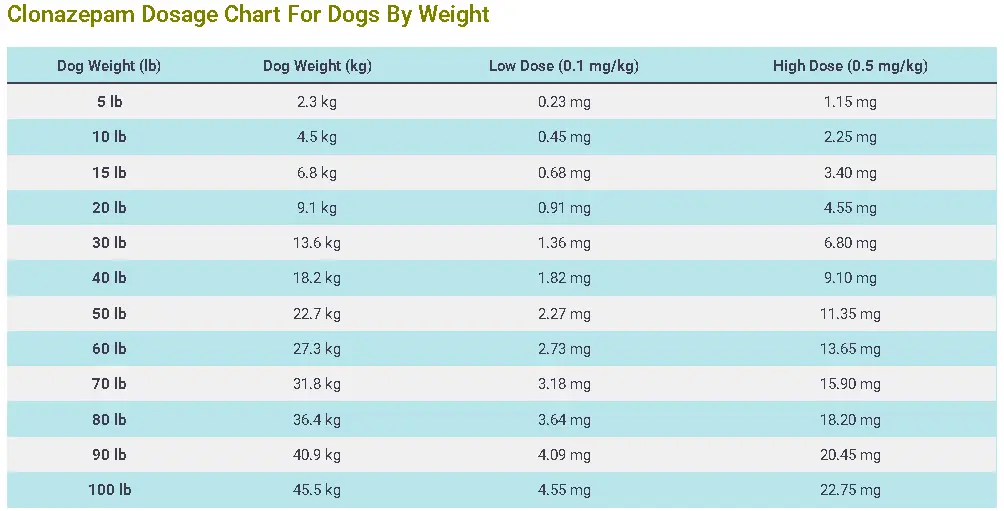
Clonazepam Dosage Chart For Dogs By Weight
Since the standard dosage range for Clonazepam for dogs by weight is 0.1 mg/kg to 0.5 mg/kg (though it can go up to 1 mg/kg for seizures), the table below uses the most common clinical range.
I have calculated these values based on the formula: Weight (kg) \times Dosage Rate (mg/kg) = Total Dose (mg).
| Dog Weight (lb) | Dog Weight (kg) | Low Dose (0.1 mg/kg) | High Dose (0.5 mg/kg) |
| 5 lb | 2.3 kg | 0.23 mg | 1.15 mg |
| 10 lb | 4.5 kg | 0.45 mg | 2.25 mg |
| 15 lb | 6.8 kg | 0.68 mg | 3.40 mg |
| 20 lb | 9.1 kg | 0.91 mg | 4.55 mg |
| 30 lb | 13.6 kg | 1.36 mg | 6.80 mg |
| 40 lb | 18.2 kg | 1.82 mg | 9.10 mg |
| 50 lb | 22.7 kg | 2.27 mg | 11.35 mg |
| 60 lb | 27.3 kg | 2.73 mg | 13.65 mg |
| 70 lb | 31.8 kg | 3.18 mg | 15.90 mg |
| 80 lb | 36.4 kg | 3.64 mg | 18.20 mg |
| 90 lb | 40.9 kg | 4.09 mg | 20.45 mg |
| 100 lb | 45.5 kg | 4.55 mg | 22.75 mg |
Important Administration Rules
- Frequency: Typically administered every 8 to 12 hours (2–3 times per day).
- The "Xylitol" Danger: As noted in the calculator, never use the "Quick-Dissolve" or "Wafer" forms of Clonazepam. These often contain Xylitol, which causes a massive insulin drop and liver failure in dogs.
- Tolerance: Dogs can develop a tolerance to Clonazepam for dogs per pound or kg quickly. If you notice the medication is becoming less effective over time, do not increase the dose yourself; consult your vet.
- Withdrawal: Never stop this medication abruptly if your dog has been on it long-term, as it can trigger severe withdrawal seizures.
Note: This table is for informational purposes. Dosage should always be determined by a licensed veterinarian, especially since Clonazepam is a controlled substance and can interact with other medications.
What is Clonazepam?
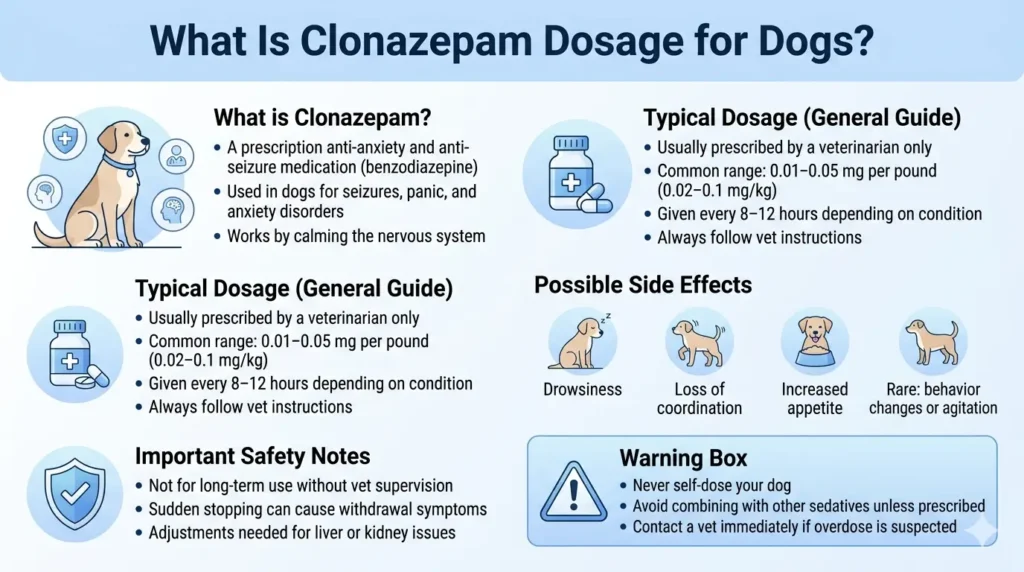
Clonazepam (brand names include Klonopin®, Antelepsin®, Clonagin®, Clonapam®, Clonex®, Diocam®, Epitril®, Iktorivil®, Kenoket®, Kriadex®, Neuryl®, Paxam®, Rivatril®, and Solfidin®) is an antiseizure benzodiazepine drug used as an adjunctive therapy for treating seizure disorders in dogs and cats. It can also be used to treat anxiety and as a muscle relaxant.
Clonazepam drug for dogs is often used in veterinary practice for treatment of seizures and behavioral disorders on an off-label (extra-label) basis, which means this medication has not been approved by the FDA or Health Canada for these indications in animals. As such, it should only be used under the guidance of a veterinarian, as it can be used at different dosages from those recommended on the label.
What is Clonazepam Used for in Dogs?
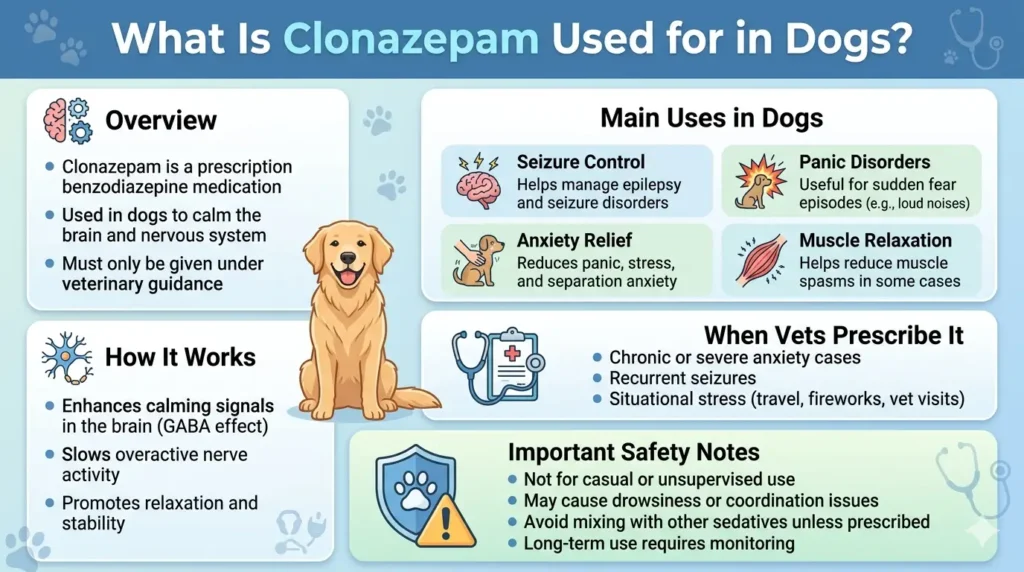
Clonazepam drug for pets is primarily used to treat seizures in dogs, but it's also used to treat anxiety and certain other neurological or behavioral conditions, under the supervision of a veterinarian.
- Antiseizure (main use)
It can be used as an adjunct anticonvulsant to treat seizures by calming over-stimulation of nerves within the brain. It is usually used in conjunction with long term epilepsy medications (such as phenobarbital or levetiracetam) and administered orally, rather than on its own for seizure control. - Anxiety and stress relief
Clonazepam dosage for dogs is a sedative and anxiolytic (anti-anxiety) drug which can help settle dogs during stressful events like thunderstorms, separation anxiety, veterinary appointments or other anxiety-inducing events. It can also complement other behaviour modification therapy for things such as aggression or compulsive behavior, oftentimes on an intermittent basis. - Neuromuscular and specific conditions
It can be used for hypertonicity (sitting or falling over), mainly Cavalier King Charles Spaniels. It has also been used in cats for anxiety and hyperaesthesia, but other antiepileptic medications are preferred.
In conclusion, clonazepam dosage for dogs by weight is a multi-purpose benzodiazepine, primarily used as an adjunct medication for seizures and for anxiety in short-term or on-demand use.
Is Clonazepam Safe for Dogs?
Clonazepam drug is not approved by the FDA in the treatment of dogs but it is an off label drug that is frequently prescribed by veterinarians. It has not been well-researched in veterinary medicine, that is, there is little scientific information on it specifically regarding dogs.
Although it may be useful when prescribed correctly, clonazepam has significant safety issues and is usually recommended to be used with a limited duration under close veterinary care.
- Safety status and regulation.
- Not permitted by the U.S. FDA to be used in dogs.
- Widely employed off-label by veterinarians in animal care.
- Insufficient veterinary studies of long-term safety in dogs.
- Key risks and adverse effects.
- Possible physical dependence with continued use.
- Tolerance, which reduces the effectiveness of the drug with time.
- Potential withdrawal symptoms when abruptly stopped.
- Possibility of an overdose or abuse.
- Risks of misuse or abuse by the owner because it is a human drug.
- Unsafe to all dogs.
- It should not be administered to dogs that are allergic to clonazepam or other benzodiazepines.
- Should be used with caution in dogs with liver or kidney disease, myasthenia gravis, or glaucoma.
- Additional care needed in pregnant, lactating, sick, debilitated or aggressive dogs.
- Not often used in working dogs because of potential sedation and loss of performance.
In general, clonazepam cannot be regarded as totally safe to all dogs, and its administration should be thoroughly assessed by a veterinarian, with a bias towards short-term or highly monitored regimes to reduce risks.
Side Effects of Clonazepam in Dogs
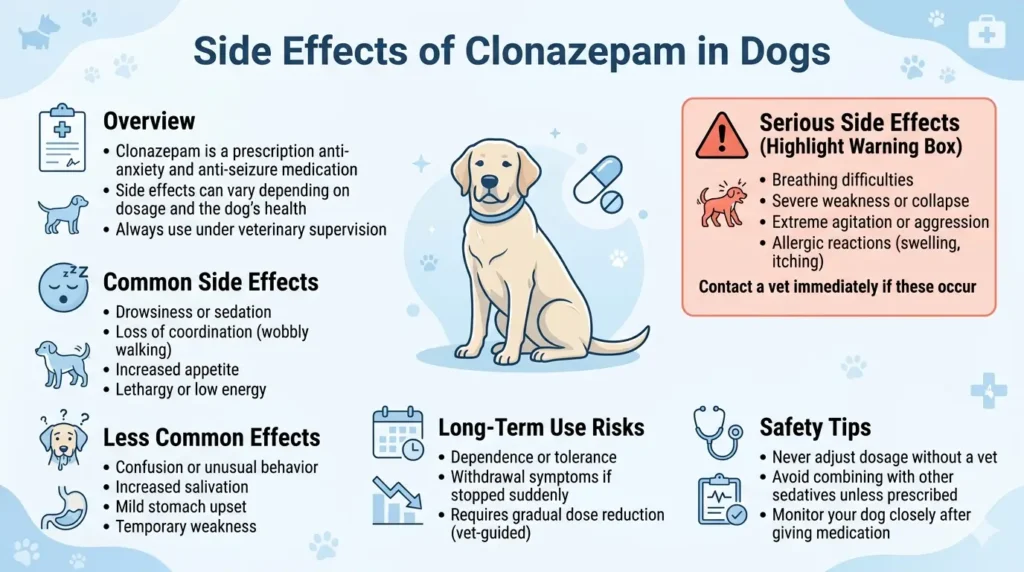
The primary side effects of clonazepam on dogs are mainly because of its calming effect on the central nervous system. The majority of the effects are mild, but some may be severe and necessitate immediate medical care.
Common side effects
Dogs can be drowsy, sleepy, have poor coordination (ataxia), clumsy, drool or sometimes excited.
Gastrointestinal and overall effects.
Certain dogs might exhibit vomiting, diarrhea, constipation, loss of appetite or excessive salivation. In other instances, there can be changes in appetite or even weight loss.
Less prevalent but serious risks.
Overdoses or sensitive dogs can respiratory depress (slow or shallow breathing), increase liver enzymes, cause blood disorders (anemia or low platelets), cause confusion, or sleep disorders. In uncommon situations, extreme toxicity may result in coma.
Paradoxical reactions (contrasts)
Some dogs will act aggressively, fearful or abnormally excited instead of calming, thus necessitating emergency veterinary care.
Important safety notes
The effects can be persistent in liver or kidney-diseased dogs. Clonazepam is usually short- to moderate-acting; however, it is highly monitored because of possible sedation-related and organ-related risks.
Risk Factors for Clonazepam Use in Dogs
In dogs, clonazepam must be administered with caution as some health issues and circumstances can greatly raise the chances of severe side effects or complications. In other instances, it should not be used at all.
Should NOT be used in dogs that:
- Allergic to clonazepam or other benzodiazepines?
- Severe or major liver disease.
- Suffers acute narrow-angle glaucoma.
- Has CNS (central nervous system) depression or respiratory depression.
- Is severely weak or hepatic impaired (has a risk of increasing hepatic encephalopathy)
- Are presented with dissolving tablets that have xylitol; xylitol is poisonous to dogs.
Should be used with great caution in dogs that:
- Suffers liver or kidney disease.
- Suffer from glaucoma
- Have myasthenia gravis
- Is ill, lame, or feeble.
- Are geriatric (elderly dogs)
- Pregnant or lactating.
- Show aggressive behavior
- Could they be working animals, because of potential sedation and poor performance.
In general, clonazepam drugs for dogs should be used with great caution in veterinary medicine, particularly in dogs with organ disease, neurological disorders, or hyperirritability to central nervous system-depressants.
Drug Interactions With Clonazepam in Dogs
Clonazepam may be incompatible with a number of drugs which impact the nervous system, liver metabolism or general level of sedation, risking the development of side effects or decreased efficacy. Supervision of veterinary is necessary when it is administered with other medications.
Medications that enhance CNS or sedation.
- Central nervous system (CNS) depressants drug.
- Anticholinergic agents
- Phenobarbital (can increase the sedation and CNS depression)
Drugs that have effects on metabolism or liver enzymes.
- Azole antifungals
- Cimetidine
- Erythromycin
- Diltiazem
Other important considerations
- Antihypertensive drugs must be cautiously administered as they may be additive.
- There should always be disclosure of all the existing medications like vitamins, supplements and even herbal products to the veterinarian.
before starting clonazepam
Due to these interactions, clonazepam must not be administered to dogs without veterinary recommendation especially when other drugs are being given.
Clonazepam Dosage for Dogs
The dosage of clonazepam in dogs also varies depending on the ailment being treated, the response of the dog and at the discretion of the veterinarians. It is normally administered in a broad dose range and it should always be adjusted cautiously by a veterinarian.
- To treat seizures (add-on therapy):
- 0.1–0.5 mg/kg given 2–3 times daily
- 0.5 mg/kg administered twice or thrice a day (alternative guideline)
- Some protocols use 12 hours, 1-2 mg/kg.
- To maintain seizures (monotherapy in certain situations):
- 0.5mg/kg taken thrice a day.
- In case of anxiety or behavioral disorders:
- 0.1–1 mg/kg given 2–3 times daily
- General dosing range (clinical guidance):
- As a recommended initial dosage, 0.5 mg/kg orally, every 8-12 hours, with a broad range of tolerance, based on the case.
- Notable formulation and safety concerns:
- Human tablets come in 0.5 mg, 1mg and 2mg strength.
- Human pills that can be given orally to dogs are hard to dose correctly and they can include xylitol which is poisonous to dogs.
- Veterinary compounded preparations are in the form of tablets, oral suspensions and oil-based suspensions to facilitate and safer dosing.
Dosage of clonazepam in dogs is very personalized and should always be decided and observed by the veterinarian to maintain safety and efficacy.
You May Also Like to Read:
- Cod Liver Oil Dosage For Dogs Calculator: Dosage Chart & Guide
- Hydrogen Peroxide Dosage For Dogs Calculator: Safe Guide
FAQs
Is it possible for dogs to overdose on clonazepam?
Overwhelming sedation, depression, ataxia, hyperactivity, disorientation, and vocalisation are symptoms. The highest dose recommended is 2 mg/kg every two hours. Veterinary care is needed in case of overdose.
Can I give my dog clonazepam dosage for dogs every day?
It is generally used in the short term. It is not for long-term daily use because this may lead to tolerance and dependence and sudden withdrawal may be accompanied by withdrawal symptoms. If used long-term it will need to be carefully weaned by a veterinarian.
How do I administer clonazepam to my dog?
Follow your veterinarian's directions. Administer the dose at the right time. For use for anxiety, give 30 minutes before the anxiety-provoking event. It may be given with or without food but food can be helpful if vomiting occurs.
What to do if I miss a dose?
As directed by your veterinarian. Do not give a double dose.
How to give clonazepam to dogs (tablets or liquid)?
Tablets can be swallowed or administered with a pill plunger. Liquid should be given with a syringe or dropper, and may require shaking.
Can clonazepam be used long term?
It's usually avoided for long term because of the risk of tolerance (decreased effect), dependence and withdrawal symptoms.
How do I store clonazepam drug?
Keep it at room temperature (59°F-86°F / 15°C-30°C), away from light and moisture, and store in a locked location out of the reach of children and pets.
What should I do if there's an emergency?
In case of an overdose or reaction, seek veterinary care right away. Have your dog's weight, symptoms and the drugs being used available.
Can I use something else instead of clonazepam?
Yes. Veterinarians can use diazepam, levetiracetam, alprazolam, midazolam, lorazepam or phenobarbital for dogs with seizures. SSRIs (selective serotonin reuptake inhibitors) such as fluoxetine (Reconcile), tricyclic antidepressants such as clomipramine (Clomicalm) and behaviour therapy are often the preferred treatments for anxiety and behavioural problems.
Final Thoughts
Clonazepam dosage for dogs is a sedative drug that can be used to treat seizures, anxiety, and some behavioural issues in dogs. It's considered safe and effective, but is not used alone on a long-term basis.
In dogs, clonazepam drug is used as an adjunct medication, alongside other medications (such as anticonvulsants) to treat seizures, or behavior modification programs for anxiety disorders. Clonazepam is best used temporarily or on an as-needed basis, particularly in cases where quick sedation is needed.
Although clonazepam can be useful when administered properly, long-term use can lead to tolerance, dependence, and ineffectiveness, so its use needs to be carefully monitored by a veterinarian.