In cases where a dog ingests something hazardous, the knowledge of the right dosage of Hydrogen Peroxide used on dogs may seem a life-saving emergency.
Most pet owners stock hydrogen peroxide at home as an easy solution to cause vomiting but what may appear as a simple solution can easily turn out to be dangerous when administered in the wrong way and without the guidance of a veterinarian.
The action of inducing vomiting in dogs should not be taken lightly without the expert guidance and the reasons are based on the following aspects: what your dog has swallowed, the volume it has ingested, the time of the intake, the size of your dog as well as its general health status.
Sometimes throwing a dog up may do more harm than good, particularly when the material is corrosive/sharp/toxic such that when brought back up, it harms the throat or lungs.


Paid Links - As an Amazon Associate, I earn from qualifying purchases.
Veterinarians highly warn that not all dogs are safe when exposed to hydrogen peroxide and that it must only be administered when prescribed to be used. Wrong dosage or time may result to severe complications like irritation, internal damage or even the aspiration pneumonia where the vomited content gets into the lungs.
It must never be administered when the dog is unconscious, experiencing seizures or is extremely weak and it might not be effective when the drug was ingested more than two hours ago.
Due to these dangers, the best thing to do in any case of poisoning is to call a veterinarian, emergency animal hospital, or pet poison control specialist first and then proceed with the treatment at home.
They will be able to advise you whether or not it is necessary to induce vomiting or other treatment is necessary to save the life of your dog.
You can also know when to apply hydrogen peroxide to dogs, the safe dosage and use of hydrogen peroxide for dogs depending on weight as well as circumstances when it should never be used so that you can make informed responsible decisions in an emergency situation.
Disclaimer: This guide is for informational purposes only and is not a substitute for professional veterinary advice. Always consult your veterinarian before giving Hydrogen Peroxide or any medication to your dog.
Hydrogen Peroxide Dosage Calculatot For Dogs By Weight
Based on 3% Hydrogen Peroxide Dosage
Key Takeaways
- In some cases, hydrogen peroxide dosage for dogs may be administered to get dogs to vomit and this can only be done under the guidance of a veterinarian or pet poison control expert.
- The correct dosage of Hydrogen peroxide dose to be used on dogs varies according to the weight, and should never be guessed without expert advice since it might result in very severe health consequences.
- There is no safe induction of vomiting and it depends on what the dog ate, the amount of what was eaten, and how long it has been since the eating.
- Induced vomiting is also risky because certain materials such as batteries, sharp objects and caustic chemicals may result in serious internal harm in case they are vomited back up.
- Hydrogen peroxide medication is not supposed to be administered when the dog is weak, lethargic, unconscious, or having seizures.
- With intoxication over a period of more than approximately two hours, it might not be effective to induce vomiting anymore depending on the substance ingested.
- Misuse of hydrogen peroxide for pets may cause severe complications like aspiration pneumonia, when vomit gets into lungs.
- Due to these dangers, the first action in any suspected case of poisoning is to consult a veterinarian, emergency clinic or pet poison helpline immediately.
- Only in case of the absence of a veterinary care and a clear instruction of a professional, pet owners can only attempt at-home vomiting induction.
Hydrogen Peroxide Dosage Chart For Dogs By Weight (3% Hydrogen Peroxide)
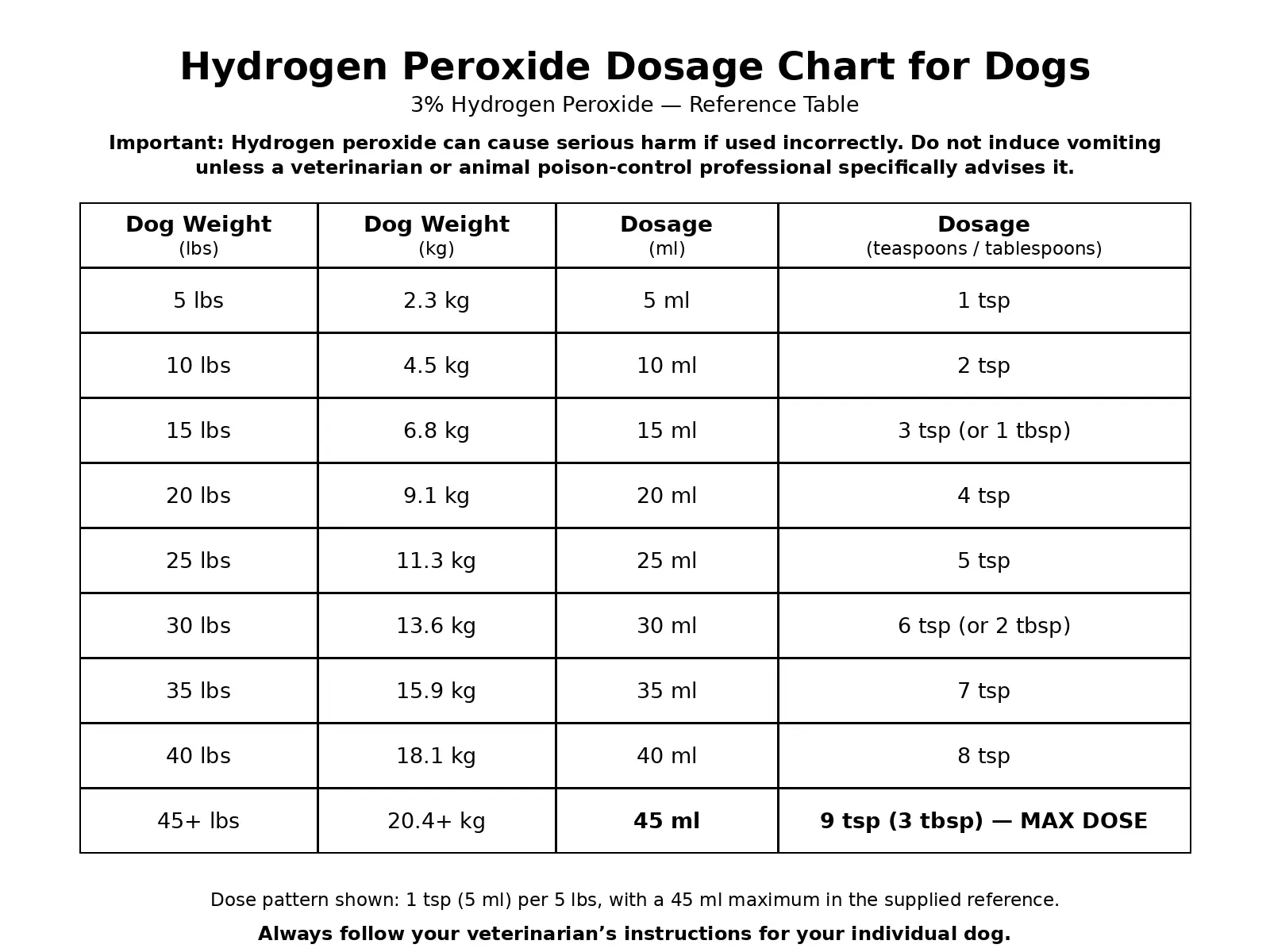
Since you are managing a situation where every second counts, here is a clear, easy-to-read reference table for 3% Hydrogen Peroxide dosage.
This table follows the rule of 1 teaspoon (5 ml) per 5 lbs, capped at the safety limit of 45 ml.
| Dog Weight (lbs) | Dog Weight (kg) | Dosage (ml) | Dosage (Teaspoons/Tablespoons) |
| 5 lbs | 2.3 kg | 5 ml | 1 tsp |
| 10 lbs | 4.5 kg | 10 ml | 2 tsp |
| 15 lbs | 6.8 kg | 15 ml | 3 tsp (or 1 tbsp) |
| 20 lbs | 9.1 kg | 20 ml | 4 tsp |
| 25 lbs | 11.3 kg | 25 ml | 5 tsp |
| 30 lbs | 13.6 kg | 30 ml | 6 tsp (or 2 tbsp) |
| 35 lbs | 15.9 kg | 35 ml | 7 tsp |
| 40 lbs | 18.1 kg | 40 ml | 8 tsp |
| 45+ lbs | 20.4+ kg | 45 ml | 9 tsp (3 tbsp) — MAX DOSE |
Vital Safety Reminders
- The 45 ml Cap: Never exceed 45 ml, regardless of how much the dog weighs. Too much hydrogen peroxide dose can cause severe gastric ulceration or air embolisms.
- The 3% Rule: Only use the standard over-the-counter 3% concentration. Food-grade or hair-bleach concentrations (which are much higher) are toxic and potentially fatal.
- Time Limit: If your dog doesn’t vomit within 15 minutes, you can give one more dose. If they still don’t vomit after the second dose, stop and go to an emergency vet immediately.
- When NOT to induce vomiting: * If the dog is already vomiting.
- If the dog is lethargic, seizing, or unconscious.
- If the dog swallowed corrosive chemicals (bleach, drain cleaner) or sharp objects, as bringing them back up can cause more damage to the throat.
What is Hydrogen Peroxide 3% Oral?
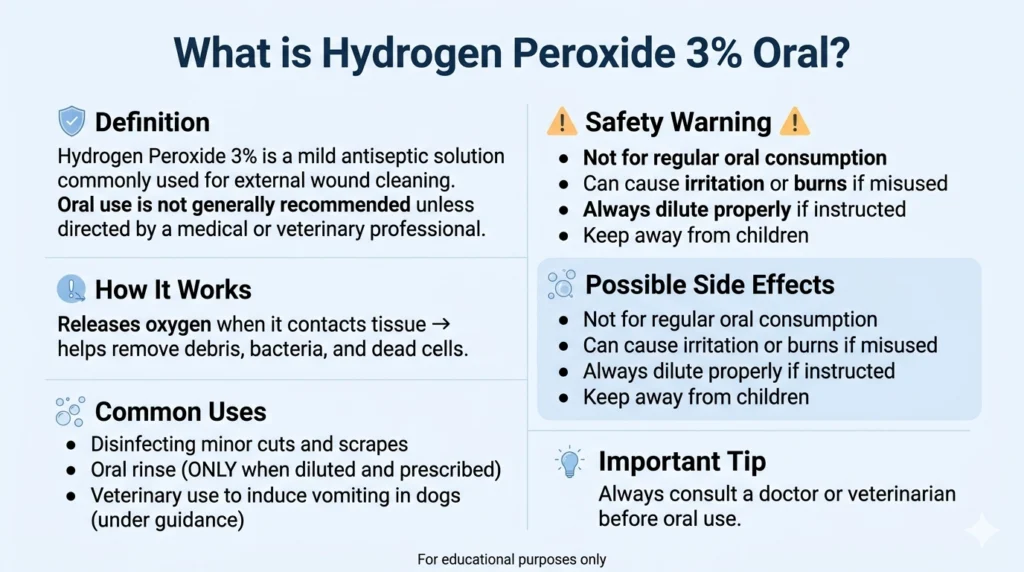
Hydrogen peroxide 3% oral dosage for dogs is a topical antiseptic agent which has also been employed in veterinary medicine as an emergency emetic (vomiting-inducing agent) in dogs and ferrets.
In some cases, it is used in emergencies, when a pet has consumed a toxic substance and cannot be taken to the veterinary immediately or when other vomiting-inducing drugs (emetics) are not available.
This application is off-label (extra-label) in veterinary medicine, i.e. not officially approved by FDA or examined by regulatory bodies like the U.S. Food and Drug Administration (FDA) or Health Canada to cause vomiting. Nevertheless, it can still be prescribed in some cases of emergency by veterinarians who can find that it is suitable to the situation of the pet.
Due to its off-label use, there are always situations where strict veterinary guidance is needed and dosage, safety, and methods of application can be drastically different to those provided in the labels. Misuse may cause health problems hence should only be administered under expert advice.
What Is Hydrogen Peroxide Used for in Dogs?
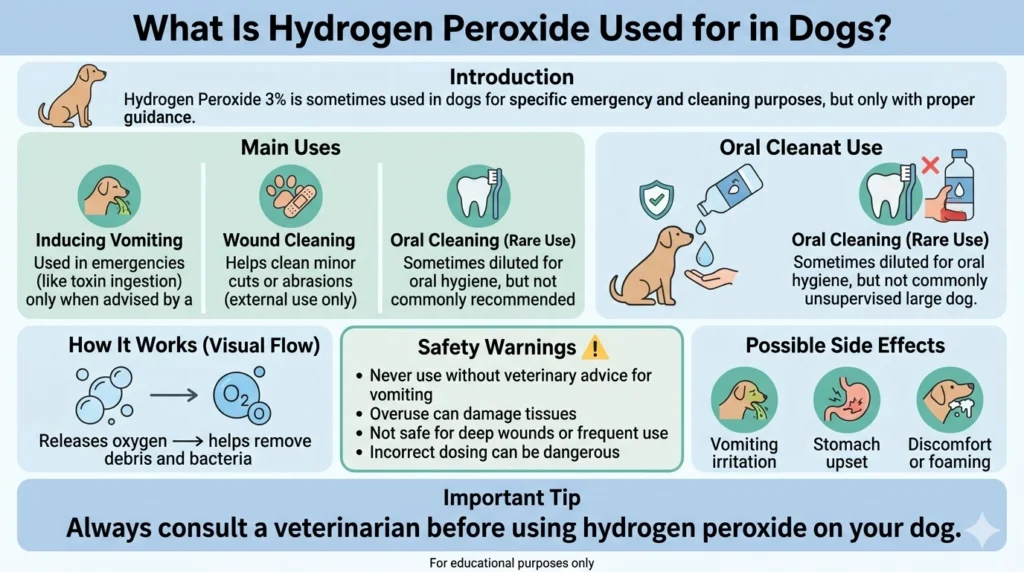
Hydrogen peroxide for dogs (3% solution) is occasionally administered to dogs, primarily as an emergency induction of vomiting after ingesting a poison, although it should be administered under the most stringent of supervision and only when recommended by a veterinarian.


Paid Links - As an Amazon Associate, I earn from qualifying purchases.
Although it may assist in eliminating harmful substances in the stomach prior to absorption, it is not safe when used on a regular basis and may lead to major side effects when abused such as stomach irritation, ulcer, and aspiration pneumonia.
Main Uses in Dogs
- Causing vomiting in case of emergency after consuming toxins.
- Takes between 10-15 minutes of work and can last up to 45 minutes.
- When combined with other components, skunk odor cleanup (limited use) is used.
Important Safety Restrictions
- Should not be used in case the dog is vomiting, lethargic or unconscious.
- Should not be used in dogs that have seizures or problems with breathing/swallowing.
- Dangerous in case of swallowing sharp objects, corrosive chemicals or some drugs.
- Not effective or safe in case of ingestion several hours ago.
- Is only to be administered in recommended dose by vets.
Applications NOT Recommended
- Cleaning of wounds (may harm tissue and retard healing)
- Cleaning of the ear (can be irritating or damaging to the ear canal)
- Dental treatment (can injure gums and is not effective)
- Removal of tear stains (danger of eye irritation)
Key Takeaway
Hydrogen peroxide dosage for dogs by weight is not to be used as a last resort, but solely as an emergency measure when under veterinary advice. Pets that are safer and immediate consultation with the veterinary are the most appropriate response in most cases.
Hydrogen Peroxide Dosage for Dogs by Weight
Hydrogen Peroxide dosage to dogs per kg or pound is normally computed on a basic guide followed in the cases of emergency where a dog might be required to vomit after consuming something that is toxic.
The dose that has been suggested to be widely used is 1 teaspoon (5 ml) per 5 pounds of body weight with a maximum of 45 ml (approximately 3 tablespoons) in large dogs.
Such an approach can only be used in case of an emergency and must, in any case, be verified with a veterinarian prior to use since not all toxins will be safe to vomit and such may cause more damage than good when abused.
Normal Hydrogen peroxide Dosage on weight.
- 5 lbs → 1 teaspoon (5 ml)
- 10 lbs → 2 teaspoons (10 ml)
- 20 lbs → 4 teaspoons (20 ml)
- 30 lbs → 2 tablespoons (30 ml)
- 40+ lbs → up to 45 ml (maximum dose)
Key Safety Guidelines
- Apply 3% solution of hydrogen peroxide (never more)
- Give orally with syringe or turkey baster.
- Vomiting in most cases should take place with in 10-15 min.
- Repeating it more than once is not recommended unless recommended by a veterinarian.
- It is never necessary to vomit some of the substances ingested and this is always done only under the advice of a vet.
Important Reminder
The use of hydrogen peroxide dose should be an emergency, veterinarian option, and not a routine option. Dosage varies based on weight, though safety is based on the substance you are consuming, when, and the condition of your dog, so a professional should be consulted prior to administering.
When Should You Use Hydrogen Peroxide for Dogs?
Use of hydrogen peroxide on dogs should be in very limited cases of emergency and under the advice of a veterinarian. The proper dosage of Hydrogen Peroxide to use in dogs based on their weight is usually taken into consideration only when it is necessary and safe to induce vomiting.
Proper Use of situations.
- Recent consumption (in 1-2 hours) of a toxic substance
- Dog is alert, conscious and responsive.
- Consumption of non-corrosive toxins in which vomiting is deemed as safe.
Examples Where It Can be thought of.
- Eating chocolate
- Eating spoilt or rotten food.
- Ingesting foreign objects that are not sharp and are small.
Key Safety Reminder
There is no automatic application of hydrogen peroxide medication for dogs such as during emergencies. Only in the case when the substance is not dangerous, it is right to make a person vomit and the condition of a dog permits it.
In any case, it is necessary to consult a veterinary prior to usage to prevent complications and make the safest choice regarding treatment.
When NOT to Use Hydrogen Peroxide for Dogs
In some cases, hydrogen peroxide for pets must not be applied because it may cause serious complications that may result in internal injury, aspiration pneumonia, or even death.
In such situations, making them vomit may result in more damage than benefit and immediate medical attention should be sought in the veterinary.
Do NOT Use Hydrogen Peroxide When your Dog Ingested:
- Bones, glass or plastic shards.
- Strong chemicals such as bleach or cleaning chemicals.
- Oil or gasoline products that are of petroleum-origin.
- Battery or poisonous industrial chemicals.
Do NOT Use Hydrogen Peroxide When Your Dog:
- Is unconscious or so sleepy.
- Strains breathing or can hardly breathe.
- Has had seizures or neurological problems.
- Has a brachycephalic breed (e.g., Bulldogs, Pugs) because it is at increased risk of aspiration.
Key Safety Reminder
In such cases, hydrogen peroxide may result in severe internal damage or serious complications in the case of vomiting induced. Never try to treat at home, but always seek veterinary help immediately.
Potential Side Effects and Risks of Hydrogen Peroxide in Dogs
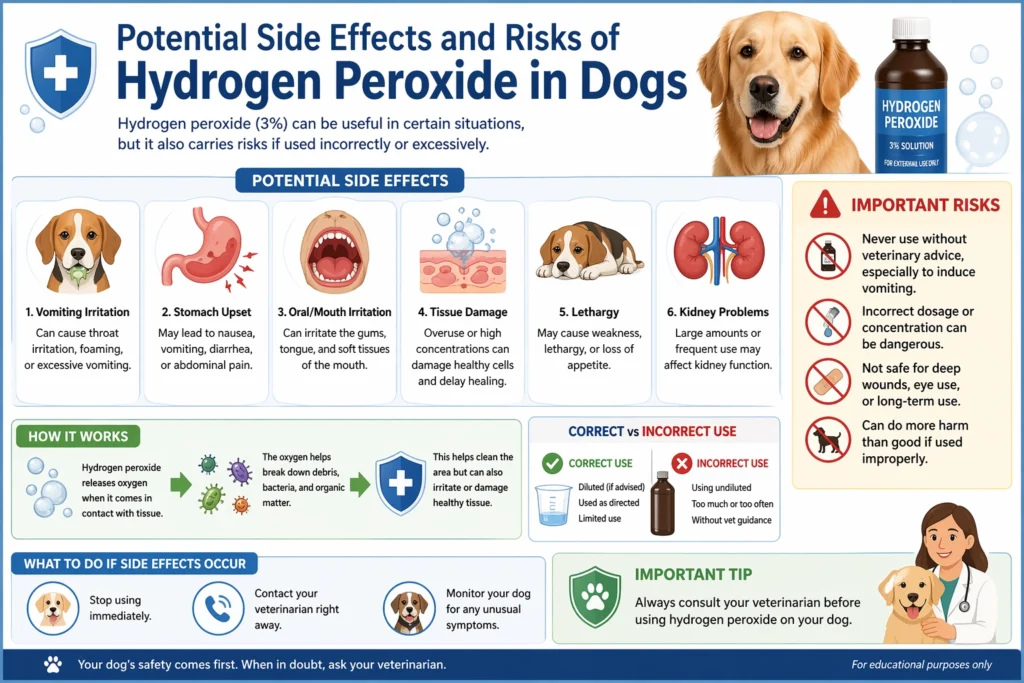
The amount of Hydrogen Peroxide to be used on dogs based on their weight notwithstanding, this chemical can still cause various side effects and severe health complications as it acts by irritating the stomach wall to cause vomiting.
Although it can be applied in case of emergency, its application is not without risk and should be under close supervision or advice of a veterinarian.
Common Side Effects
- Inflammation of stomach lining and stomach irritation.
- Excessive drooling
- Nausea and vomiting
- Diarrhea
- Temporary lethargy
- Minimal decrease in heart rate (transient low heart rate)
Severe Risk and Complications.
- Stomach gastric ulcers as a result of stomach lining injury.
- Aspiration pneumonia in case of inhalation of vomit into the lungs.
- Gastrointestinal hemorrhage, such as blood in vomit or stool or black-colored vomit (coffee-ground).
- Abdominal volvulus Gastric dilatation volvulus (GDV) symptoms include bloated abdomen, pain, restlessness, and ineffective retching.
- Severe allergic reactions (such as facial swelling, rash, fever, or abnormal breathing).
- In infrequent instances, internal bleeding or extended side effects.
High-Risk Conditions (Do NOT Use or extreme caution)
Dogs that should not be treated with hydrogen peroxide include:
- Are cats, rabbits or rodents (species sensitivity risk)?
- Allergic to any ingredient of hydrogen peroxide
- Have seizures or neuro conditions?
- Swallowing or airway problems (e.g. laryngeal paralysis)
- Has swallowed sharp objects, caustics, strong acids, or alkalis.
- In shock, or has difficulty breathing?
Should be used with great caution in dogs which:
- Weak physically or central nervous system is depressed.
- Recently abdominal surgery.
- Pneumonia by aspiration or seizures.
- Has swallowed petroleum products, strickenine or other CNS stimulants.
Additional Long-Term Risks
- Frequent application may lead to slow healing of wounds and tissue injury since hydrogen peroxide is damaging to the skin cells used in repair.
- May causes chemical burns and skin irritation, particularly when it is in high concentrations.
- Potentially leads to protracted stomach inflammation upon short-term use.
- The sensitivity can be progressive; that is, the repetition of the exposure can result in the progression of the reactions.
Key Safety Reminder
Hydrogen peroxide dosage for dogs by weight is only recommended in dogs as an emergency treatment (that is, in cases of gastrointestinal hemorrhage, respiratory diseases, and anaphylactic reactions) and it is short-term only, and the risks of this treatment are severe or even fatal: gastrointestinal hemorrhage, respiratory complications, and anaphylactic reactions. Any unusual or severe symptoms are to be promptly addressed with the help of a veterinary.
How Do I Give My Pet Hydrogen Peroxide 3% Oral?
Hydrogen peroxide 3% oral is a liquid, which could be used to cause vomiting in pets, but only under the advice of a veterinarian that it is safe to do so.
Only the 3% formulation should be used and the formulation is most effective when the stomach has a small amount of food and when the formulation is administered within approximately 2 hours of ingestion of a harmful substance.
Due to the high susceptibility of adverse effects, it is necessary to follow the instructions of the veterinary carefully.
Step-by-Step Administration Method
- Always check with a vet.
- Calculate the precise amount of dose depending on the weight of your pet.
- Accurate delivery should be done using a syringe or oral dosing baster.
- Cautiously pour the liquid in the back of the mouth of the pet.
- Promote light exercise or walking to aid in vomiting.
- Keep a close watch on your pet at least 15 minutes.
What to Expect after Giving It.
- The vomiting usually takes place in 10-15 minutes.
- The reaction can be bubbled to produce foam or froth.
- A little bit of restlessness or discomfort may be normal in the process.
Important Safety Reminder
dog vomiting dosage hydrogen peroxide must never be administered in any other manner than prescribed by a vet since it has complications when used inappropriately. Always administer the medicine as instructed and keep a watch on your pet after administration.
Safer Alternatives to Hydrogen Peroxide for Dogs
safe hydrogen peroxide dose for dogs may be applied to cause vomiting in dogs, but it is not necessarily the safest option. In a large number of cases of poisoning or emergencies, the veterinarians suggest more controlled and safe medical interventions that minimize risk and enhance their results.
Safer Veterinary Alternatives
- Charcoal therapy to assist in toxin absorption in digestive tract.
- Vomiting in a veterinary clinic, when it is administered clinically and is controlled and monitored.
- IV fluids and medical monitoring to aid hydration, organ function, and recovery.
These are usually regarded as safer than home treatment as they are done under the guidance of professionals and are more specific to the condition of the dog.
Poisoning Prevention in the event of an emergency.
The best line of defence against toxic exposure is prevention. Owners of pets can minimize dangers by:
- Storing medications and household chemicals in a safe place.
- Bans on chocolate and other detrimental foods of the human.
- Cleaning with pet-safe products at home.
- Monitoring dogs when they are out on walks and taking playtime.
- The correct storage and disposal of domestic waste.
Key Safety Reminder
Learning the appropriate dosage of Hydrogen Peroxide dose for dogs per pound to use on dogs based on their weight can be beneficial during an emergency, but should not substitute professional veterinary attention or advice. Never act without a veterinarian because improper treatment may only get the situation worse.
When facing an emergency or a doubtful situation, the best choice to ensure the well-being and survival of your dog is to seek urgent assistance of a veterinary expert or an emergency clinic.
Are There Any Drug Interactions You Should Be Aware of?
In case of taking hydrogen peroxide 3% orally in dogs, the drug interactions should be taken into account since some drugs can decrease the effectiveness of hydrogen peroxide or predispose to adverse outcomes.
Always report to your veterinarian on all medications, supplements, vitamins or herbal products that your pet is already taking before administering any new therapy.
Drugs to Be Careful With:
Care should be taken when using hydrogen peroxide when your dog is taking:
- Acetylcysteine
- Antiemetic drugs (vomiting prevention drugs), like maropitant.
Important Safety Reminder
Since hydrogen peroxide is employed in order to induce vomiting, drugs that influence nausea or how toxins are handled can disrupt its effect. This is why the advice of the veterinarian is necessary prior to mixing treatments in order to be safe and effective.
You May Also Like to Read:
- 4CYTE Dosage For Dogs Calculator: Safe Dosage Guide & Chart
- Robitussin Dosage For Dogs Calculator: Safe Guide & Chart
FAQs
How much safe hydrogen peroxide can I administer to my dog to make him/her vomit?
The usual dose is 1 teaspoon (5 ml) of every 5 pounds of body weight, but not more than 45 ml.
What is the time span of Hydrogen peroxide dose to induce vomiting in a dog?
A majority of the dogs will be able to vomit 10 to 15 minutes after being administered the appropriate dose.
Should my dog not vomit, can I repeat the dose?
You can repeat it once within 10-15 minutes, however, only in case a veterinarian directs you to do it.
Is Hydrogen peroxide medication safe to all dogs?
No. Not all dogs are safe and are not safe particularly those with breathing issues, seizure disorders or other health risks.
And what happens in case of no action of hydrogen peroxide?
Immediately contact your veterinarian or an emergency clinic to get alternative treatment options.
What are the times when I should not induce vomiting in my dog?
Do not cause vomiting when your dog has swallowed sharp objects, caustic chemicals, or is vomiting or distressed.
What symptoms are an indication that I need to visit an emergency veterinarian?
Get assistance immediately when your dog is having trouble breathing, convulsions, fainting or is drooling excessively.
What is the storage of hydrogen peroxide 3% oral?
Keep at room temperature (59o F-86o F / 15o C-30o C), in the dark, and out of the reach of children and pets.
How to handle in case of overdose or reaction?
Call your veterinarian or visit an emergency center. Prepare to give the weight of your dog, the symptoms and the details of the product.
Funal Thoughts
Hydrogen peroxide Dosage for dogs per pound or kg may also come in handy as an emergency intervention in a case of vomiting in dogs, but it is a very risky intervention that cannot be applied in a carefree manner or without veterinary supervision.
Although it can assist in getting rid of some toxins in a short period of time when properly applied, misuse, underdosage, or incorrect application and place of application may cause severe complications like stomach irritation, aspiration pneumonia or internal trauma.
The most important lesson is that hydrogen peroxide should not be a home remedy, but a last resort, only in special, vet-approved situations.
The treatment of many poisoning situations is entirely different and even when it comes to causing vomiting, this may even worsen the situation.
Since each case is unique and varies according to what was ingested, the duration of time it was ingested and the health status of your dog, the best step to always take is to consult a veterinarian or an emergency animal hospital first.
Professional advice is what can save a life and avert disaster in a situation.
After all, having good responsible pet care is to act quickly- but also to be prudent when the health of your dog is in danger.