Zofran Dosage For Dogs Calculator: Dosage Chart & Guide
Zofran Dosage Calculator For Dogs
Give this dose once or twice daily (every 12-24 hours) as directed by your vet.
© medsdog.com
When your dog is nauseous or keeps vomiting, it is one of the highest priorities to find a quick and assuring remedy. (ondansetron) Zofran Dosage For Dogs an anti-nausea potent drug that was first created to treat humans would be one of the medicines that the veterinarians would use in such cases.
Here you will find everything you need to know about Zofran for dogs dosage including the modes of action, when it is administered and how to use it safely under the care of a veterinarian.
Ondansetron dosage is a type of drug that is referred to as 5-HT3 receptor antagonists (serotonin antagonists). It acts by inhibiting serotonin in gastrointestinal tract and the chemoreceptor trigger zone in the brain that cause nausea and vomiting.
Due to such a specific action, it is particularly useful in the treatment of severe or chronic nausea in dogs.
Doctors usually prescribe ondansetron to dogs to help them combat nausea due to a number of causes such as:
- Gastrointestinal disorders
- Pancreatitis
- Toxin exposure
- Parvovirus infections
- Chronic kidney disease (CKD).
- Vestibular disease
- Chemotherapy or other medicine side effects.
Besides vomiting control, ondansetron (zofran) dose for dogs could be used in some situations to aid in the control of itchiness caused by opioids and other complex symptoms due to advanced medical interventions.
You may have experienced the feeling of having a dog feel nauseated, be it due to motion sickness, sickness or side effects of treatment, and what a disturbing experience it is.
Of course, a lot of pet owners pose such question: Is Zofran drug safe to dogs? How much is the proper dosage? What are the side effects to be observed?
This veterinarian-led guide provides all the information you need to know about the dosage of Zofran for dogs, including the correct dosing schedule, its advantages, possible side effects, safety measures, contraindications, monitoring suggestions, and what to do should your dog have an experience.
Disclaimer: This guide is for informational purposes only and is not a substitute for professional veterinary advice.
Always consult your veterinarian before giving Zofran or any medication to your dog.
Key Takeaways
- Unapproved but reputed in veterinary medicine: It is not approved by the FDA to be used in pets, but is commonly used under veterinary guidance since it has been proven to be effective.
- Usually safe with few side-effects: Zofran (Ondansetron) dosage for dogs is usually well tolerated by most dogs, although it can cause side-effects such as sedation, constipation, diarrhea and head shaking.
- Watch out signs of severe response: Pet owners need to look out suspicious gastrointestinal, neurological, or cardiovascular effects, particularly in frail dogs.
- Should be used with caution in certain situations: Dogs with liver disease or MDR1 gene mutation, or dogs on QT-prolonging drugs require extra care.
- Professional advice is important: Do not administer without a prescription of a vet, it should be administered in the correct dosage and watched to avoid any complications.
- Helps comfort and recover: Ondansetron medication when appropriately used can help a dog tremendously in terms of comfort, particularly during complicated procedures such as chemotherapy.
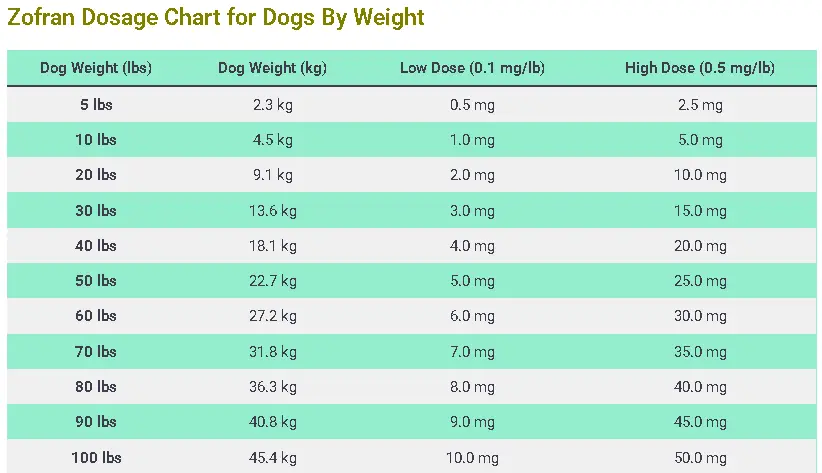
Zofran Dosage Chart for Dogs By Weight
This table provides the estimated Zofran (ondansetron) dosage for dogs based on the standard veterinary range of 0.1 mg to 0.5 mg per pound.
| Dog Weight (lbs) | Dog Weight (kg) | Low Dose (0.1 mg/lb) | High Dose (0.5 mg/lb) |
| 5 lbs | 2.3 kg | 0.5 mg | 2.5 mg |
| 10 lbs | 4.5 kg | 1.0 mg | 5.0 mg |
| 20 lbs | 9.1 kg | 2.0 mg | 10.0 mg |
| 30 lbs | 13.6 kg | 3.0 mg | 15.0 mg |
| 40 lbs | 18.1 kg | 4.0 mg | 20.0 mg |
| 50 lbs | 22.7 kg | 5.0 mg | 25.0 mg |
| 60 lbs | 27.2 kg | 6.0 mg | 30.0 mg |
| 70 lbs | 31.8 kg | 7.0 mg | 35.0 mg |
| 80 lbs | 36.3 kg | 8.0 mg | 40.0 mg |
| 90 lbs | 40.8 kg | 9.0 mg | 45.0 mg |
| 100 lbs | 45.4 kg | 10.0 mg | 50.0 mg |
Administration Quick Facts
- Frequency: Usually administered every 8 to 12 hours (2–3 times daily) or once every 24 hours, depending on the severity of the nausea.
- Forms: Available as 4 mg and 8 mg oral tablets.
- Timing: Works quickly, typically taking effect within 1 to 2 hours.
- Round Down: For safety, if your calculated dose is between tablet sizes, always round down to the nearest quarter or half pill as directed by your vet.
What Is Zofran (Ondansetron)?
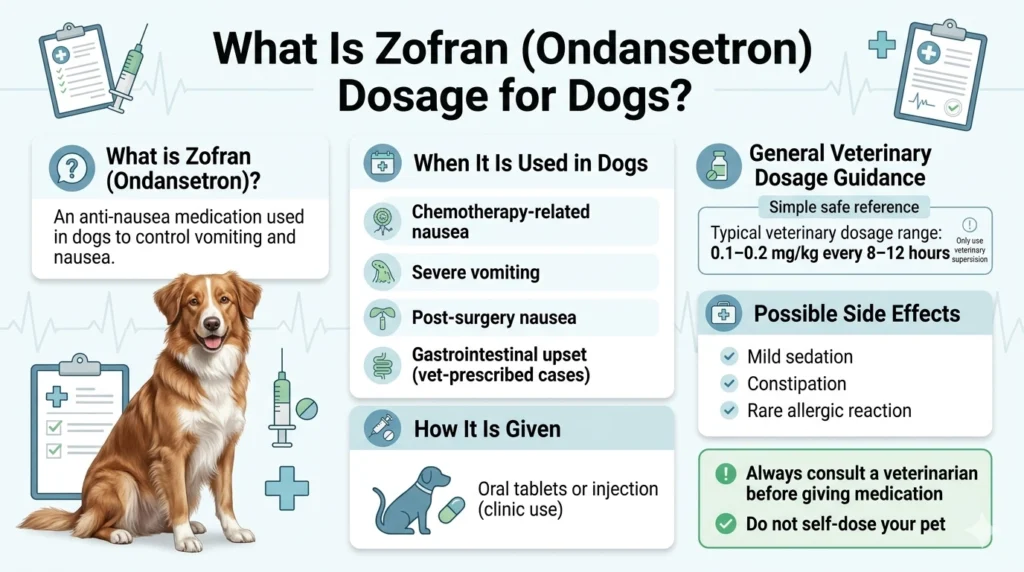
Ondansetron or Zofran dosage is a prescription anti-nausea drug that is usually administered to dogs to prevent and treat vomiting.
It is effective and is now common in veterinary medicine, even though its original application was in human beings, particularly in treating nausea following surgery, chemotherapy or radiation therapy. It is not approved by FDA in animals, but when necessitated, it is prescribed as an off-label (extra-label) medication by veterinarians.
The mechanism of action of Ondansetron drug for dogs is to block the serotonin (5-HT 3 ) receptors in the gastrointestinal tract and chemoreceptor trigger zone in the brain triggering nausea and vomiting. It acts quickly, quickly alleviating the nausea, which is usually relieved in 1-2 hours of administration, and is particularly effective in severe or persistent episodes of nausea.
Zofran for dogs is frequently used to treat vomiting in dogs due to parvovirus, chemotherapy, infections, vestibular disease and even prophylaxis prior to anaesthesia. It can be applied either alone or alongside other therapies based on the onset of the symptoms, and their severity.
The drug comes in a variety of forms such as tablets, orally disintegrating tablets (ODT), liquid suspensions and injectable forms that are used in veterinary clinics. Moreover, veterinarians might prescribe compounded preparations in order to more appropriately meet the needs of a particular dog, such as the inability to swallow pills or the need to have a tailored dosage.
Since ondansetron dose is also used on humans, it is essential to realize that the dosing and safety guidelines of pets are different. Dogs should not be exposed to human medication without veterinary advice because it is important to prescribe the drug appropriately, formulate it and monitor it to ensure safe and effective use.
What Is Zofran (Ondansetron) Used for in Dogs?
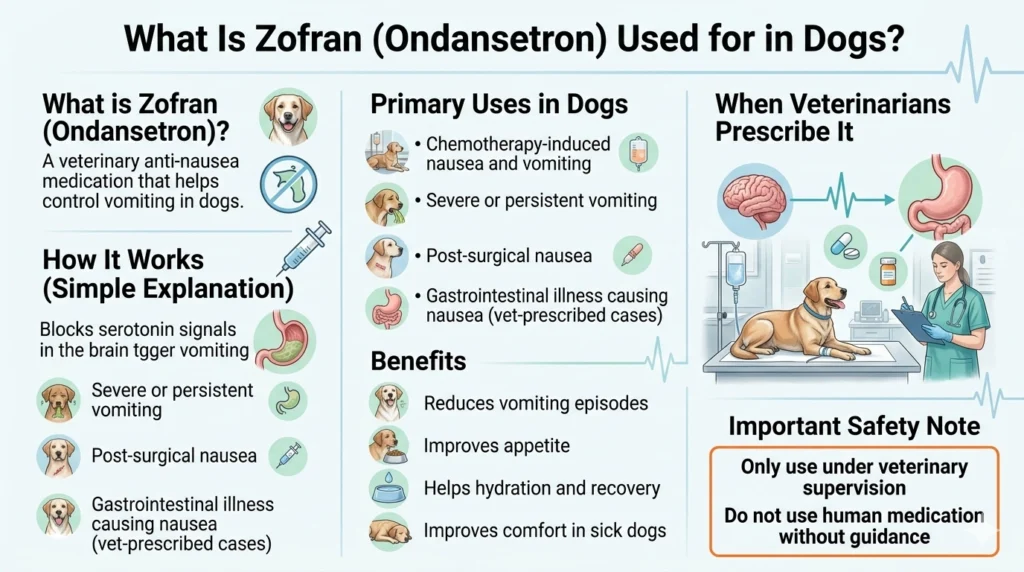
Zofran (ondansetron) for dogs dose is commonly used in animals (i.e. dogs) to treat and manage the moderate to severe nausea and vomiting especially when the symptoms are intractable or not responding to other drugs.
It is a strong antiemetic which can be used to improve the comfort and also avoid complications such as dehydration in severe cases.
The most common uses of ondansetron by veterinarians are as follows:
- Nausea and vomiting that are caused by chemotherapy: These are administered before and after cancer therapies to manage their side effects.
- Severe or persistent vomiting: It is commonly applied to vomiting that is severe or repetitive and in some cases as first line therapy.
- Gastrointestinal problems: These include infections, pancreatitis, exposure to toxins or food-related illness.
- Vestibular (balance) disorders: Assists in decreasing the nausea that comes with dizziness and motion-related symptoms.
- Nausea caused by medication or anesthesia: It is used to prevent vomiting prior to surgery or on the intake of some drugs.
- Antiemetic: Can be used beforehand to lessen the chances of vomiting.
Other or less frequent applications are:
- Adjunct therapy of diarrhea: The adjunct therapy aims at reduction of movement and loss of fluid in the intestines but is combined with other drugs.
- Itching (pruritus) due to opioids: Can be used to treat itching due to some pain medication.
- Apnea in brachycephalic breeds: Sometimes applied to such breeds as Bulldogs to address breathing problems.
Although certain drugs such as maropitant (Cerenia) could be considered a better option to prevent vomiting, ondansetron can be viewed as a more efficient way of directly alleviating nausea. On the whole, it is important in the treatment of very diverse conditions that result in nausea and vomiting in dogs.
Side Effects of Zofran (Ondansetron) Dosage in Dogs
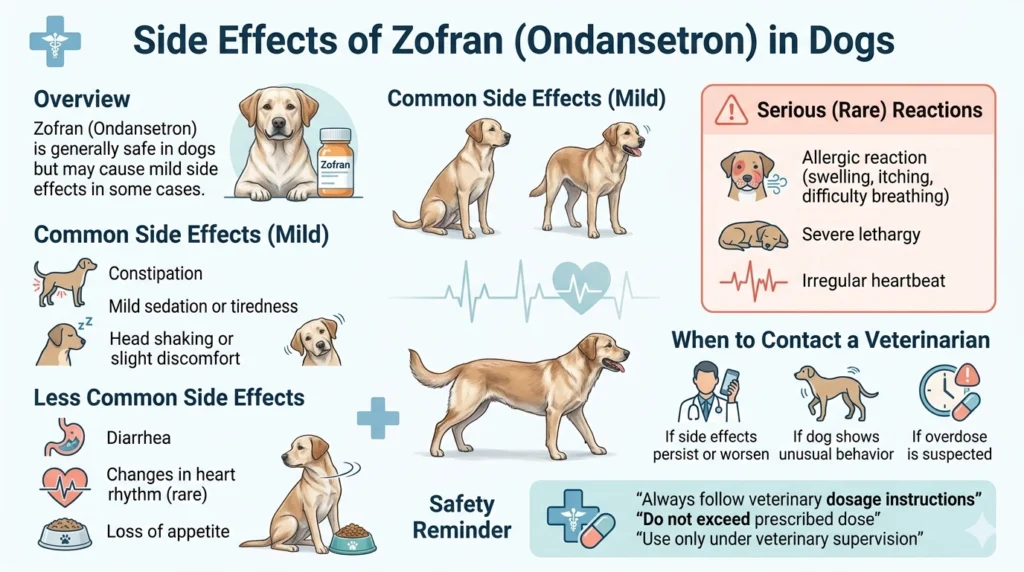
(ondansetron) Zofran dosage for dogs is not commonly associated with side effects in dogs, and in this case, any drug may have some side effects that are mild or rare yet severe. The majority of side effects are not long-lasting and disappear when medication is discontinued usually within 24 hours, but in dogs with liver or kidney disease, it can take a longer time.
Usually mild side effects:
- Constipation
- Light intoxication or drowsiness.
- Diarrhea
- Head shaking ( extrapyramidal signs)
Side effects that are rare or infrequent, include:
- Low blood pressure (hypotension), and this can make one weak or lethargic.
- Abnormal heartbeats (arrhythmias)
Uncommon serious risks:
- Serious cardiac rhythm alterations, such as QT prolongation (greater with high or IV doses)
- Incident of fainting or collapse due to low blood pressure.
- Allergic reactions
In exceptional instances, extreme doses have been linked to alterations in the electrical activity of the heart, but not necessarily with noticeable effects. Due to this, there might be a need to modify dosing in dogs with underlying heart conditions by veterinarians.
Precautions and contraindications:
Ondansetron medication is not to be used in dogs with intestinal obstruction (ileus), gastric distension or known allergy to the drug. It must be administered cautiously in dogs with liver disease or those with MDR1 gene mutation and in patients who are more susceptible to heart problems.
In general, the side effects are not frequent and tend to be mild, however, close attention should be paid by pet owners to monitor their dog and address a veterinarian as soon as such severe symptoms as collapse, extreme lethargy or abnormal heart rhythms are observed.
Interactions of Zofran (Ondansetron) Dosage with Other Pet Medications
Ondansetron (Zofran) For dogs dosage by weight does not interact with a number of drugs, but it is important to pay attention to its usage in combination with other medications to guarantee their safety and efficacy.
As the interactions may alter the effectiveness of treatments or pose the risk of side effects, the owner of any dog must always report all medications, supplements, and home remedies (including CBD or herbal products) which he/she feeds his/her dog.
Among the issues that require great attention, there is the matter of drugs, which influence the heart rhythm (QT-prolonging drugs) (e.g., some cardiac drugs (e.g., cisapride, sotalol). They can interact with ondansetron to cause abnormal heart rhythms and thus they need close observation particularly in high-risk dogs.
Ondansetron drug for dogs may also be used with serotonergic and central nervous system (CNS) drugs, such as tramadol, opioids (such as fentanyl and methadone), trazodone, phenobarbital and monoamine oxidase inhibitors (MAOIs). Such combinations can be under veterinary control, as they can modify the effects of the drugs or raise the side effects.
It is important to note that ondansetron can be used with tramadol, which can decrease the effectiveness of the former.
Some drugs may inhibit the ondansetron dose effect like rifampin that decreases its concentration in the body. Also drugs such as apomorphine (which causes vomiting) must be cautiously used since ondansetron is known to suppress vomiting which could come in the way of its action.
Other drugs with which it can interact include azole antifungals, cyclophosphamide and metformin, and may need an adjustment in dose, or monitoring based on the circumstances.
In the case of injectable ondansetron, mishandling should be avoided as well- this medication should be administered only when it is mixed with compatible solutions and in case it is combined with alkaline solutions, it may precipitate and decrease the safety level.
In general, ondansetron is usually safe, but it is important to coordinate with a veterinarian, disclose all medications, and monitor your dog to prevent any interaction and provide the most optimal results.
How Much Zofran Dosage Can i Give to my Dog?
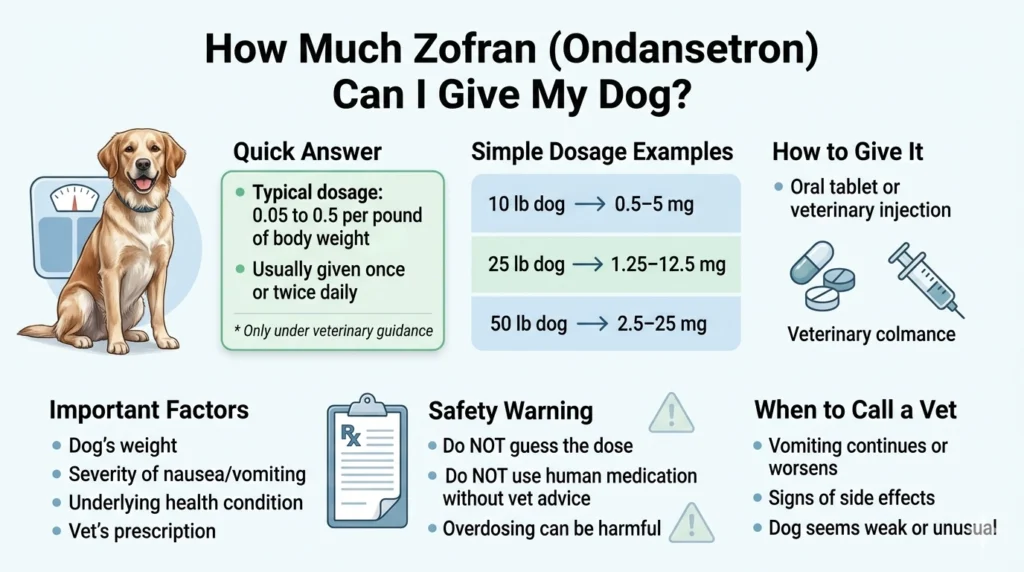
The appropriate dose of Zofran (ondansetron) for dogs per pound or kg varies based on various factors such as the body weight, age, general health of a dog and the intensity of nauseating and vomiting symptoms.
All dogs react differently and hence the veterinarians will always tailor the dose, as opposed to treating them uniformly.
Overall, the dosage range, which is widely recommended, is between 0.05 and 0.5 mg per pound of body weight and is usually administered once or twice a day.
Nevertheless, the precise dosage should never be left unaltered but always determined and changed by a veterinarian according to the conditions and reaction of the dog to medication.
You May Also Like to Read:
- Lactulose Dosage For Dogs: Calculator, Chart & Safe Guide
- Loratadine Dosage For Dogs Calculator, Chart & Safe Guide
FAQs
Is Zofran medication safe on dogs?
Yes, Zofran (ondansetron) drug is not dangerous to dogs, when it is taken, and used correctly by a veterinarian. Nonetheless, it might lead to some mild side effects and must never be taken without the advice of a professional.
What are the side effects of Zofran dosage for dogs?
Milder sedation or drowsiness, diarrhea, constipation and in some cases, evidence of discomfort or restlessness are the most prevalent side effects.
What is the rate of Zofran dosage for dogs by weight?
The onset of work with Zofran is normally 30-60 minutes, and the nausea and vomiting improve significantly during this period.
Are puppies or older dogs able to take Zofran?
Yes, but the dosages should be properly adjusted depending on the age, weight and health condition. Puppies and elderly dogs should receive particular veterinary care.
Is it possible to administer my dog human Zofran?
Human Zofran can only be applied in dogs under the close supervision of the veterinary. Dogs need much less and well-calculated doses, thus you can never administer it without the consent of a vet.
How to take in case of a missed dose?
In case of missed dose, take it immediately afterwards. In case it is near the dose then miss the dose. Do not increase dose.
Are dogs able to overdose on ondansetron?
Yea, it is possible and serious to overdose. It is likely to result in low blood pressure, extreme constipation or serotonin related complications. Overdose should be suspected and immediate veterinary attention should be obtained.
Which is better between Zofran and Cerenia in dogs?
The only anti-nausea agent that is approved by the FDA to use in dogs is called Cerenia and is regularly used in severe cases or chronic cases. The use of Zofran remains a viable alternative and is still in use as an alternative in cases where Cerenia should not be used or when cost is an issue.
What are the duration of Zofran drugs side effects in dogs?
The majority of side effects are mild and not long lasting and usually end in 24 hours, but in dogs with liver or kidney problems, the effects may take longer.
Final Thoughts
When used under the care of a veterinarian, Ondansetron (Zofran) dosage for pets is a safe, reliable and fast-acting drug in dogs. It is usually regarded as a primary line of attack in achieving severe or recurring vomiting particularly in situations like nausea as a result of chemotherapy.
It can greatly enhance a dogs comfort and general well being, usually in a very short time of treatment by being able to alleviate vomiting by a quick action.
Ondansetron is well tolerated by most dogs and any side effects like diarrhea or constipation tend to be mild, rare and temporary. It is necessary to take each dose properly as prescribed so that the relief could be constant, and so that the symptoms would not reoccur.
Nonetheless, ondansetron may react to other drugs that your dog is undergoing. This is why it is necessary to tell your veterinarian about all prescription drugs, over-the-counter medications and supplements prior to treatment.
When used correctly, ondansetron is a reliable and effective medication in treating nausea and vomiting in dogs, allowing them to heal more quickly and be more comfortable in the face of illness or medication.