Promethazine Dosage For Dogs: Calculator, Chart & Safe Guide
Promethazine Dosage Calculator For Dogs
© medsdog.com
In terms of dealing with allergies, nausea or motion sickness in pets, it is important to know the right Promethazine Dosage For Dogs to give to your dog without risking its life or the drug not accomplishing its intended task.
Promethazine for dogs dosage is an antihistamine drug of the first generation and is readily available to human therapies, although is sometimes prescribed in veterinary care to ease the symptoms of itching, vomiting, dizziness, and travel sickness. It can also be employed in mild sedation prior to the procedures or to alleviate nausea after the surgery.



Since promethazine for dogs is not a regular dog drug, and may have serious side effects, especially drowsiness, dry mouth, or even toxicity in overdose, always have your veterinarian check your dog, and base the correct dosage on his weight, health status and advice of a veterinarian.
Indicatively, a small breed such as a 5-pound Pomeranian drugs would be extremely low and a well thought-out dosage to prevent over sedation or complication.
Although promethazine dose for dogs is commonly used in humans as an allergen, motion sickness, and nausea (occasionally in multiple doses per day depending on the ailment), there should be an added caution and supervision of use in dogs.
This manual will take you through the steps of safe dosing, the advantages, possible side effects and the key tips on safety in order to make informed, responsible decisions regarding the health of your dog.
Disclaimer: This guide is for informational purposes only and is not a substitute for professional veterinary advice.
Always consult your veterinarian before giving Promethazine or any medication to your dog.
Key Takeaways
- Promethazine dosage for dogs per pound is an antihistamine drug of the first generation to treat allergies, nausea, vomiting, motion sickness and occasionally mild sedation in dogs.
- It is not often used in the veterinary medicine and therefore the use must always be highly considered by a veterinarian.
- Dosage depends on weight of the dog, condition, and the purpose of treatment, small dogs, such as a 5-pound Pomeranian need very little dosage.
- It may be used to treat itchiness, dizziness, and vomiting and other discomforts associated with traveling.
- Promethazine can also be employed either prior to or post-procedures to decrease nausea or to offer soothing effects.
- The wrong dosage may cause severe side effects such as too much sedation, dry mouth and even toxicity.
- Before administering promethazine, always consult a veterinarian to give the right and safe dosage.
- They need to monitor closely to make sure that it is effective and to promptly respond to any side effects.
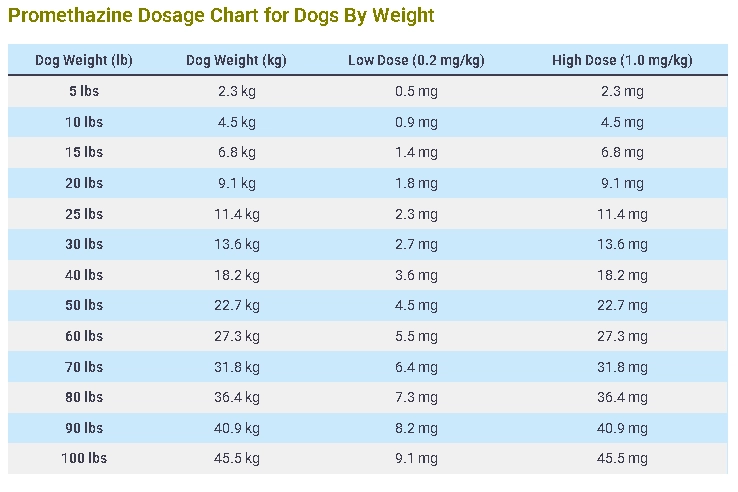
Promethazine Dosage Chart for Dogs By Weight
The following dosage table is based on the standard veterinary guidelines of 0.2 (Low Dose) to 1.0 (High Dose).
Promethazine (Phenergan) dosage for dogs by weight is typically administered every 8 to 12 hours (2–3 times daily) for allergic conditions or 30–60 minutes before travel for motion sickness.


| Dog Weight (lb) | Dog Weight (kg) | Low Dose (0.2 mg/kg) | High Dose (1.0 mg/kg) |
| 5 lbs | 2.3 kg | 0.5 mg | 2.3 mg |
| 10 lbs | 4.5 kg | 0.9 mg | 4.5 mg |
| 15 lbs | 6.8 kg | 1.4 mg | 6.8 mg |
| 20 lbs | 9.1 kg | 1.8 mg | 9.1 mg |
| 25 lbs | 11.4 kg | 2.3 mg | 11.4 mg |
| 30 lbs | 13.6 kg | 2.7 mg | 13.6 mg |
| 40 lbs | 18.2 kg | 3.6 mg | 18.2 mg |
| 50 lbs | 22.7 kg | 4.5 mg | 22.7 mg |
| 60 lbs | 27.3 kg | 5.5 mg | 27.3 mg |
| 70 lbs | 31.8 kg | 6.4 mg | 31.8 mg |
| 80 lbs | 36.4 kg | 7.3 mg | 36.4 mg |
| 90 lbs | 40.9 kg | 8.2 mg | 40.9 mg |
| 100 lbs | 45.5 kg | 9.1 mg | 45.5 mg |
What Is Promethazine Dosage?
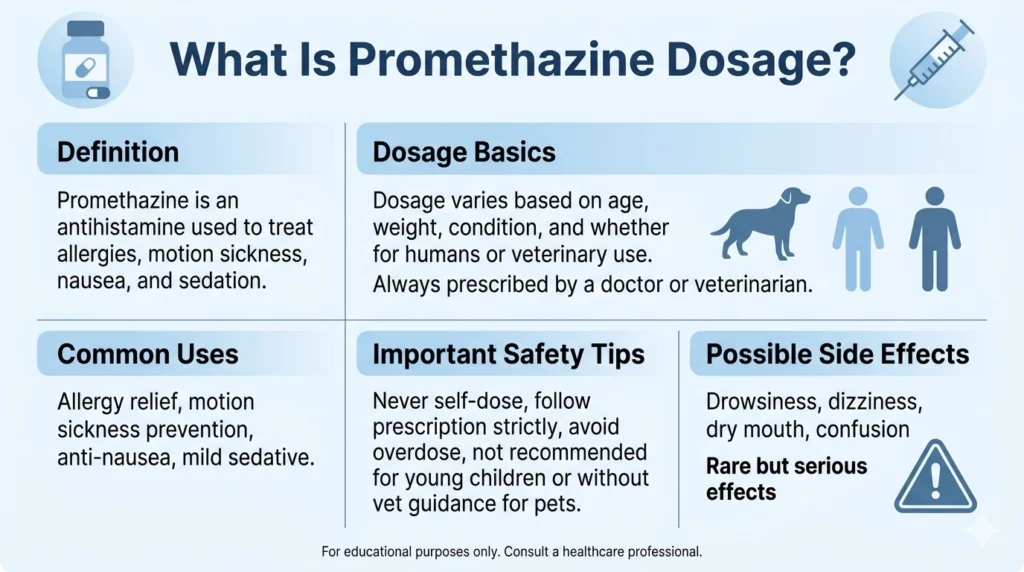
Promethazine dosage for dogs is the recommended dose and frequency of the first-generation antihistamine in treating allergic reactions, nausea, vomiting and motion sickness and in providing sedation prior to or during medical procedures. The right amount of dose depends on the condition one is treating and personal requirements.
When allergic, it is usually administered in a single dose at night or in smaller doses in the daytime. Being a tranquilizer, it can be administered either as a one time dose or multiple doses around surgeries.
In the case of motion sickness, it is normally administered two times a day but active nausea and vomiting may necessitate increased dosage (up to several times per day). Promethazine comes in generic form, as well as branded as Phenergan (injection), Promethegan (rectal suppository) and can also be used to induce drowsiness or sleep.
Uses of Promethazine Dosage in Dogs
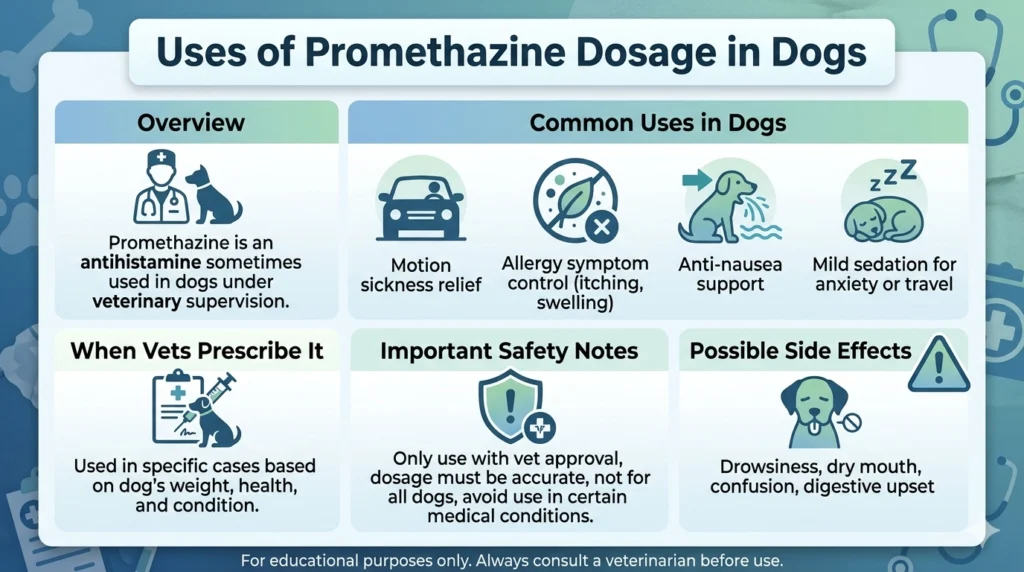
Promethazine dosage for dogs per kg or pound of body weight is mainly administered in veterinary medicine to aid in controlling allergic responses and in immunological responses. It acts as an antihistamine and it decreases the action of histamine in the body, this decreases the discomfort brought about by allergies.
It can also be supportive in case of an emergency situation involving severe allergic reaction although this should be under strict veterinary supervision.


- Helps treat allergic disorders and lessen their symptoms of itching and reactions.
- Favors early intervention of anaphylaxis as an emergency treatment by a veterinarian.
Promethazine Dosing and Administration for Dogs
Promethazine dosing and administration in dogs is different depending on the condition to be treated, the administration route and the weight of the dog.
Being the first generation antihistamine, it can be administered by mouth, intravenously (IV or IM) or in an elixir, and the dosing schedule varies depending on the therapeutic purpose; i.e., allergies, motion sickness, or antiemetic.
- Normal dosage: 0.2 -1.0 mg/kg, based on low or high-dose recommendations.
- Oral (PO) dosing: 0.2-0.5 mg/kg in 6-8 hour intervals to use as an antiemetic or prevent motion sickness.
- Oral dosing: 1mg/kg twice per day depending on formulation, condition.
- Fixed oral dose: 12.5-25mg/kg/day in a few instances.
- Routes of administration Injections (IV/IM): 0.2-0.4mg/kg after every 6-8 hours.
- Frequency: Typically every 8-12 hours (2-3 times a day) in allergic diseases.
- Use as motion sickness: Take 30-60 minutes prior to travel.
- Routes: tablet (10 mg and 25mg), and elixir (5mg/ml).
A veterinarian is always required to determine the correct dosage to administer to be safe and effective.
Side Effects of Promethazine in Dogs
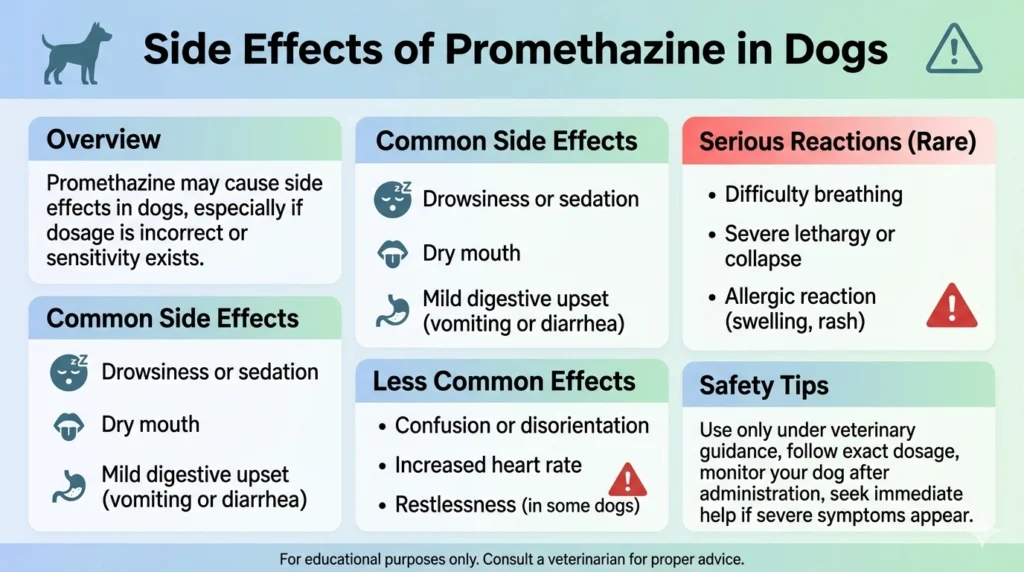
The use of promethazine medication for dogs can also result in some side effects based on antihistamine and central nervous system activities. Although it is relatively mild when used properly there is the need to monitor it well in order to be safe.
- May may lead to slight drowsiness or sedation.
- May decrease the seizure threshold, making the susceptible dogs prone to seizures.
Can I Give My Dog Promethazine for Her Allergies?
In case allergies are diagnosed in the dogs, the same dosage of promethazine can be used provided it has been prescribed before and the dosage remains constant provided the weight of the dog does not increase substantially. A
s the medication is believed to lose a part of its power after some time depending on the conditions in which it is stored, it is said to be safe; it is not harmful or goes bad.
Nevertheless, effective and safe storage and veterinary advice are still necessary to achieve effectiveness and safety.
Side Effects and Risks of Giving Promethazine Medication to Dogs
Even when the dose of promethazine dose for pets is the same, it may have some side effects and risks when used in dogs with allergies.
Although the medication is safe and it does not accumulate to create a harmful effect, its efficiency might fade away when not stored effectively and this can also affect the outcome of the treatment.
- May result in a mild sedation or drowsiness.
- Has a decreasing effect on seizure threshold, thereby putting sensitive dogs at risk of seizure.
- Less effective in case the drug was not stored properly or is expired.
- A dose that was safe previously, without taking into account the changes in health, and without alterations in weight, can make one more dangerous.
- Needs the advice of a veterinarian to be properly used safely and effectively.
Benefits of Giving Promethazine to Dogs for Allergies
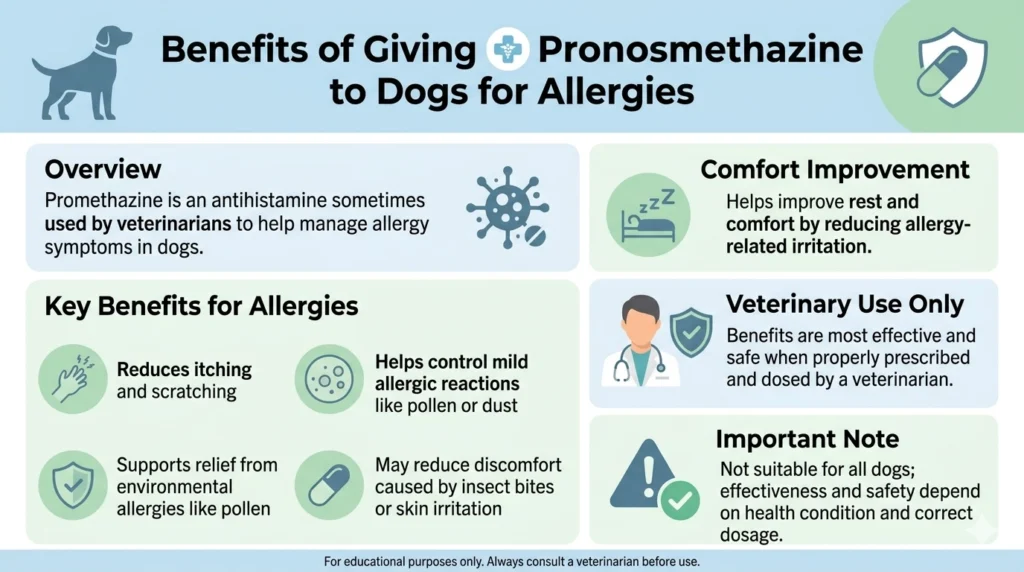
Under proper use under the guidance of a veterinarian, promethazine can be a good remedy to the allergic dogs. Being an antihistamine, it regulates the allergic reaction of the body and enhances comfort in general.
- Helps alleviate allergy like itching and irritation.
- Blocks the action of histamine by preventing allergic reactions.
- Can be reused with the same amount should the weight of the dog not have changed significantly.
- Can be used safely in the long term, since it does not deteriorate or go bad.
- Even when somewhat less effective as a result of storage conditions, May will have benefits.
Pomeranian (5 Pounds): Proper Promethazine Dosage for Dogs
Pomeranians dosage for dogs, small dogs with a weight of approximately 5 pounds are particularly sensitive to medications and therefore, the correct dosing is important.
Sometimes, promethazine drug for dogs is the antihistamine that is used in dogs to treat allergies, nausea and motion sickness to alleviate such symptoms as itchiness, vomiting and dizziness.
Since dosage is determined by body weight, most Pomeranians (5 pounds) will need a very low dosage that is measured with utmost care to prevent any complication like overdose or even toxicity.
Even small breeds that are over dosed slightly, can have stronger side effects, and therefore, it is important to be precise.
- Applied in allergies, anti-nausea and anti-motion sickness.
- Helps relieve itching, vomiting and light-headedness.
- Doses very low in small-bodied dogs such as Pomeranians.
- Side effects are common, drowsiness and dry mouth.
It is preferable to never administer promethazine to your dog without consulting a veterinarian. Safe and effective treatment is guaranteed by proper dosing, proper monitoring and professional guidance.
You May Also Like to Read:
- Zycortal Dosage For Dogs: Calculator, Chart & Safe Guide
- Deramaxx Dosage For Dogs Calculator: Safe Guide & Chart
FAQs
How much dose of promethazine dosage for dogs would be safe in my dog?
The right dosage is only determined by a veterinarian because the dosage would depend on the weight of your dog, the health condition and the purpose of treatment.
Is it possible to administer promethazine medication to my dog due to allergies?
Yes, though only under the supervision of the veterinarians. It can be used to treat allergic symptoms although it is important to take the required dosage to be safe.
Do you have any natural remedies to the motion sickness of my dog?
Yes, it can be helped by such options as ginger supplements or calming pheromones, however, it is always better to consult your vet.
What are the symptoms of allergic reaction in dogs?
The symptoms consist of swelling, hives and difficulty breathing. These should be immediately taken to the veterinary.
What will happen to me in case of missing a dose of promethazine?
Donate when you recall that you are still in need. When it is near the subsequent dose, discontinue it--never increase the dose twice.
What would I do in case of excess promethazine dose on my dog?
Mild overdoses can result in drowsiness or confusion, however more serious cases can be breathing difficulties or unconsciousness-emergency treatment is necessary.
What are the side effects of promethazine in dogs?
Side effects are mild sedation, drowsiness and potential of dry mouth. It also can decrease the seizure threshold in certain dogs.
Is promethazine doses safe when used in long-term in dogs?
It is not to be administered without a veterinarian. Long-term use is based on the condition of a dog and it needs to be regularly observed.
Final Thoughts
Promethazine dosage for dogs by weight may be a sensible choice of treating allergies, nausea and motion sickness in dogs, but should be administered carefully.
Since it is not widely prescribed as a veterinary drug and can lead to other side effects, such as sedation or risk of more frequent seizures, it is imperative to have precise dosing and expert advice.
Your weight, health condition and the purpose of the use of your dog are all factors that influence the safest method.
Although it can be effective in relieving such symptoms as itching, vomiting and dizziness, the incorrect use or dosage may cause complications- particularly among small breeds.
Never administer promethazine without first seeking veterinarian advice, take the dosage as instructed and observe your dog in case of any side effects.
Under the right precautions, it can be utilized safely and efficiently as a part of your overall care plan of your dog.