Cyanocobalamin Dosage Calculator For Dogs
© medsdog.com
Vitamin B12, also known as cyanocobalamin Dosage For dogs, is a water-soluble vitamin that is crucial to a dog’s health. Dogs are unable to synthesize their own vitamin B12 and must receive it from food or supplements from their veterinarian. Cyanocobalamin dosage plays a role in the formation of red blood cells, DNA synthesis, function of the nervous system, metabolism of energy and many biochemical reactions that are important for the health of cells. It also serves as an important cofactor of enzymes participating in single-carbon metabolism and is essential for proper growth, tissue renewal and metabolic well-being.
Cyanocobalamin dose for dogs is generally used in dogs with known or suspected deficiency, and those with chronic gastrointestinal (GI) disease, exocrine pancreatic insufficiency (EPI), intestinal dysbiosis, inflammatory bowel disease (IBD), malabsorption disease, severe malnutrition, or some inherited conditions that affect vitamin B12 absorption. When cobalamin is low, it can lead to loss of appetite, weight loss, chronic diarrhea, anaemia, weakness, lethargy and neurological abnormalities. Vitamin B12 deficiency correction has also been demonstrated to be beneficial in the treatment of dogs suffering with chronic gastrointestinal disease.
This is a comprehensive guide on the dosage of cyanocobalamin Dosage for dogs By Weight, which includes a vet dosage calculator, a dosage chart, instructions for use, injection guidelines, benefits, side effects, precautions, and FAQs. Although vitamin B12 is considered extremely safe with excess amounts being excreted in the urine, please make sure the proper dosage and treatment schedule is used and determined by a veterinarian in relation to your dog’s weight, medical condition, laboratory results and cause of the B12 deficiency.


Paid Links - As an Amazon Associate, I earn from qualifying purchases.
Disclaimer: This guide is for informational purposes only and is not a substitute for professional veterinary advice.
Always consult your veterinarian before giving Cyanocobalamin or any medication to your dog.
Key Takeaways
- Vitamin B12 for dogs, also known as Cyanocobalamin, is a water-soluble essential vitamin in dogs that aids in red blood cell formation, nerve function, DNA synthesis and healthy energy metabolism.
- Dogs are unable to synthesize vitamin B12 on their own and therefore need to receive it from food or a supplement from their veterinarian.
- Vitamin B12 deficiency is frequently linked to: malabsorption disorders, severe malnutrition, some inherited imbalances in absorption, exocrine pancreatic insufficiency (EPI), chronic gastrointestinal disease and intestinal dysbiosis.
- Symptoms of deficiency include decreased appetite, weight loss, chronic diarrhea, lethargy and weakness, anemia, and neurological abnormalities.
- A cobalamin blood test, in conjunction with a folate (vitamin B9) blood test, may be used to assess digestive function and nutrient absorption in addition to a canine trypsin-like immunoreactivity (cTLI) blood test.
- Oral supplements can be recommended for some dogs or an injection of cyanocobalamin (usually 1,000 mcg/mL) may be recommended for dogs with severe deficiencies or poor intestinal absorption.
- The proper dose of cyanocobalamin is based upon your dog’s weight, diagnosis, lab values and cause of the deficiency, and is not necessarily based on weight only.
- Vitamin B12 supplementation is a very safe treatment, but should only be administered with veterinary supervision to ensure correct dosage and duration of treatment.
Cyanocobalamin Dosage Charts For Dogs
Here are the standard clinical dosage tables for Cyanocobalamin (Vitamin B12) in dogs, separated by treatment protocol.
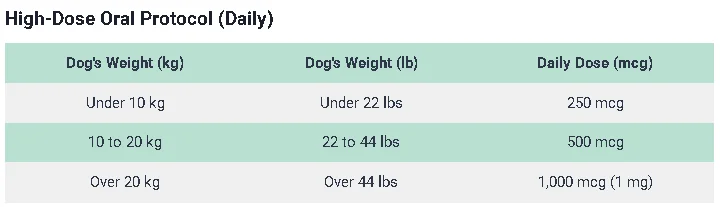
High-Dose Oral Protocol (Daily)
Oral doses are typically administered once daily. Ensure any oral supplements are strictly free of Xylitol, which is highly toxic to dogs.
| Dog’s Weight (kg) | Dog’s Weight (lb) | Daily Dose (mcg) |
| Under 10 kg | Under 22 lbs | 250 mcg |
| 10 to 20 kg | 22 to 44 lbs | 500 mcg |
| Over 20 kg | Over 44 lbs | 1,000 mcg (1 mg) |
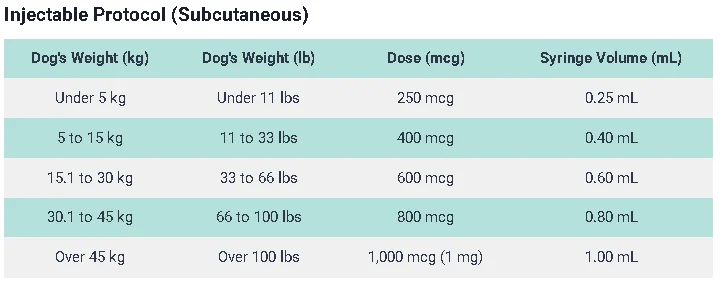
Injectable Protocol (Subcutaneous)
Based on a standard bottle concentration of 1,000 mcg/mL. This protocol is generally administered weekly for 6 weeks, followed by a tapering schedule determined by a veterinarian.
| Dog’s Weight (kg) | Dog’s Weight (lb) | Dose (mcg) | Syringe Volume (mL) |
| Under 5 kg | Under 11 lbs | 250 mcg | 0.25 mL |
| 5 to 15 kg | 11 to 33 lbs | 400 mcg | 0.40 mL |
| 15.1 to 30 kg | 33 to 66 lbs | 600 mcg | 0.60 mL |
| 30.1 to 45 kg | 66 to 100 lbs | 800 mcg | 0.80 mL |
| Over 45 kg | Over 100 lbs | 1,000 mcg (1 mg) | 1.00 mL |
Critical Safety Note: These tables outline standard protocols, but final dosages should always be confirmed by a veterinarian based on the dog’s specific condition and response to treatment.
What Is Cyanocobalamin?
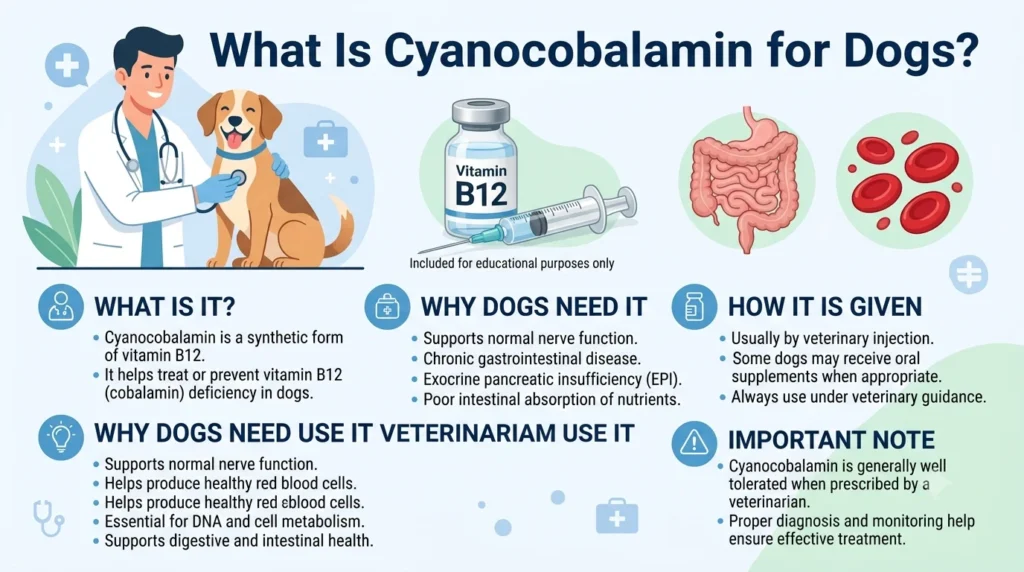
Cyanocobalamin Dosage for dogs is a stable, synthetic form of Vitamin B12 (Cobalamin) that is indicated for the prevention and treatment of Vitamin B12 (Cobalamin) Deficiency in Dogs. Vitamin B12 is a cobalt-containing, water-soluble, essential vitamin and can be absorbed into the dog’s body only through food or supplements. It’s found naturally in meat, organ meats, poultry, fish, eggs and dairy products; commercial dog food may be supplemented with vitamin B12 to provide nutrition.
Once ingested, vitamin B12 medication for dogs is a special vitamin to be absorbed. It is liberated from dietary proteins in the stomach and then it will bind to protective proteins and subsequently to intrinsic factor (IF), a protein primarily secreted by the pancreas in the dog. This complex is absorbed mainly in the ileum (the last part of the small intestine) via special absorbers and then transported into the blood stream where it can be used in the whole body. This is then stored in the liver for future use.
Cyanocobalamin is a cofactor for several enzymes which participate in crucial metabolic reactions, such as single carbon metabolism, cell growth and DNA synthesis. Cyanocobalamin is converted to its active forms, methylcobalamin and adenosylcobalamin, after absorption, which can then be utilized by cells to carry out normal biological processes.
Cyanocobalamin for dogs dosage is commonly used in veterinary medicine as a treatment for systemic vitamin B12 deficiency due to metabolic or genetic causes, chronic gastrointestinal disease, intestinal malabsorption and other causes of decreased vitamin B12 absorption. It is also a part of treatment in dogs with gastrointestinal disease as correction of cobalamin deficiency may enhance treatment. In some instances, its use in dogs is “off-label” (extra-label), which means that it is used outside the scope of the original product label, but based on clinical evidence and veterinary professional judgment.
How Quickly Does Cyanocobalamin Work?
Cyanocobalamin for pets is not a quick acting supplement. It takes a couple of weeks of regular treatment for most dogs to see improvement. The recovery period varies based on the severity of the B12 deficiency, the underlying disease and the dog’s ability to absorb and react to B12 supplementation. To find the best results, always follow your veterinarian’s cyanocobalamin instructions and follow the recommended treatment course.
Benefits of Cyanocobalamin for Dogs
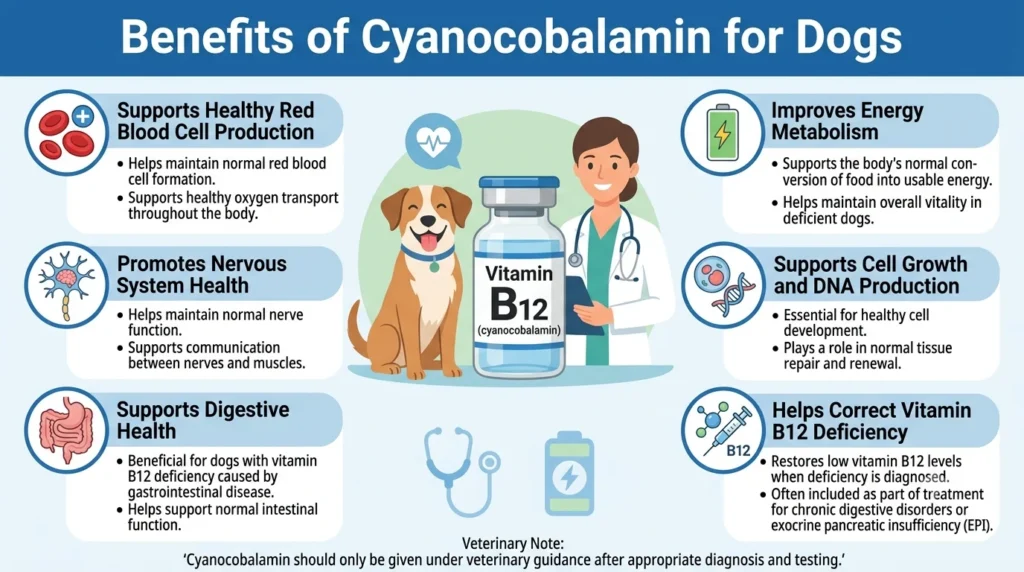
Cyanocobalamin (vitamin B12) is a nutrient that is essential for a number of important functions in a dog’s body. When prescribed by a veterinarian for dogs with a vitamin B12 deficiency, it can provide the following benefits:
- Aids energy production: Assists in the breakdown of fats and carbohydrates to give the body energy to use in everyday activities.
- Supports healthy nerve activity: Helps to produce the protective coating around nerves, known as myelin, which is important for healthy nervous system function.
- Helps the formation of red blood cells: Crucial for the production of healthy red blood cells which carry oxygen around the body.
Cyanocobalamin dose is a valuable Vitamin but should only be given as supplementation under veterinary guidance. Giving vitamin B12 when it is not needed may lead to unnecessary nutritional excesses or imbalances.
Are There Any Potential Side Effects of Cyanocobalamin for Dogs?
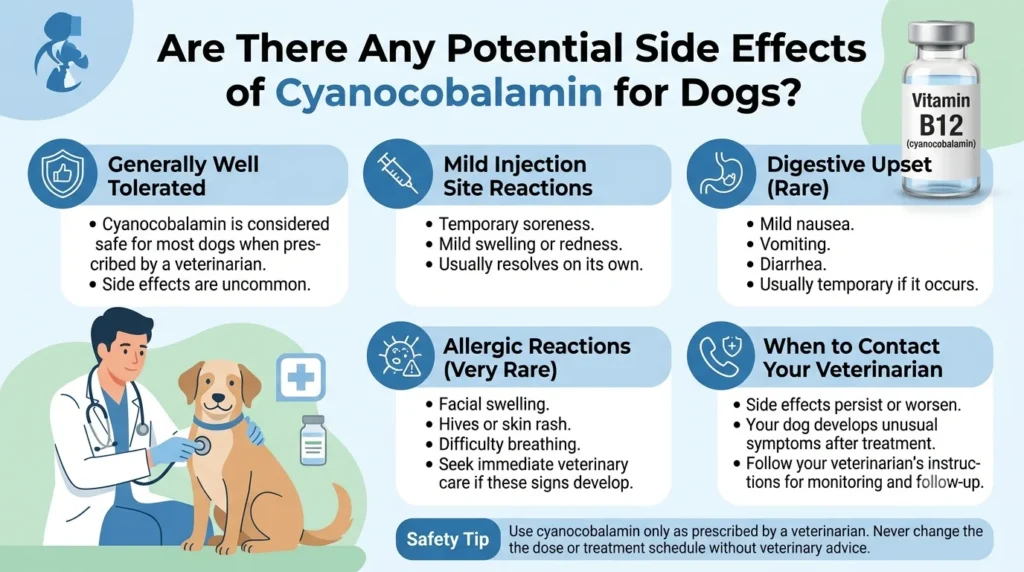
Cyanocobalamin (vitamin B12) is generally considered very safe as it is well tolerated by dogs, both orally and by injection. Side effects are rare and most dogs do not have any major issues while they are being treated.
Side effects may include:
- Some mild stinging or discomfort at the spot where the needle was inserted, which usually is short-lived.
- The effects of an injectable dose may last for several days.
Risk Factors
- No risk factors for the use of injectable or oral cyanocobalamin in animals have been reported.
- Safe to use by pregnant dog, nursing mothers and young animals if used as directed by veterinarian.
While cyanocobalamin is considered safe, it is important to remember to always follow veterinarian’s directions when administering and watch your dog closely for any unusual reactions following treatment.
Are There Any Drug Interactions With Cyanocobalamin for Dogs?
There are very few drug interactions and some drugs may affect how cyanocobalamin (vitamin B12) works or how it is absorbed. Before beginning cyanocobalamin treatment, always tell your veterinarian which medications, vitamins, supplements or herbal products your dog is taking.
Potential interactions include:
- Chloramphenicol: Use with caution as it may decrease your dog’s ability to respond to cyanocobalamin treatment.
- Omeprazole and pantoprazole: These acid reducing drugs can impair the absorption of vitamin B12 in humans with long-term use. But the implications of this in dogs is not known.
Your veterinarian will be able to let you know if any adjustments to your dog’s medications or extra monitoring is required in order for it to reap the full benefits of taking cyanocobalamin.


Paid Links - As an Amazon Associate, I earn from qualifying purchases.
Signs of Vitamin B12 Deficiency in Dogs
Vitamin B12 deficiency can disrupt numerous of your dog’s normal metabolic and enzymatic functions and cause a variety of health issues. Vitamin B12 is required for normal cell function, so a deficiency over a long period of time may impact growth, digestion, blood cell production, and the nervous system.
Vitamin B12 deficiency manifests itself with the following common symptoms:
- Failure to grow in puppies and young dogs
- Weight loss
- Chronic diarrhea
- Vomiting
- Low red blood cell count (anemia)
- Weakness or other nervous system abnormalities
Many of these are similar to symptoms seen in the digestive disorders which lead to B12 deficiency. Chronic gastrointestinal diseases can also cause vomiting, diarrhea and weight loss in dogs, and may also cause the digestive system to be damaged or altered, which results in less vitamin B12 absorption.
These symptoms will continue to occur if the dog is still lacking Vitamin B12 even after the initial underlying digestive disease is cured. If this occurs, the clinical signs may persist due to the effect of the deficiency, and not due to the original disease.
If your dog shows signs of a possible vitamin B12 deficiency, consult your veterinarian for appropriate testing and treatment.
How To Supplement B12 In Your Dog’s Diet
Dogs that consume a complete and balanced commercial diet typically have adequate vitamin B12 (cobalamin) content and don’t require supplementation. Vitamin B12 is water soluble and high doses generally are excreted in the urine, which makes toxicity rare. However, supplementation should only be given when recommended by a veterinarian.
Dogs that might benefit from Vitamin B12 supplementation:
If your dog has any of the following, your veterinarian might suggest vitamin B12 supplements:
- Inflammatory bowel disease (IBD)
- Exocrine pancreatic insufficiency (EPI)
- Small intestinal bacterial overgrowth (SIBO)
- Short bowel from bowel surgery
- Malignant tumor of the intestine.
- Familial cobalamin deficiency (an inherited disorder)
- A self-made vegetarian (vegan) diet not designed by a veterinary nutritionist.
How Veterinarians determine the right dose
If your dog either has one of these conditions, or exhibits any symptoms of vitamin B12 deficiency, your veterinarian will often take blood tests to see what the levels of vitamin B12 are. The results will help them determine which supplement and dosage is most appropriate for your dog, based on his medical condition.
There are a number of different Vitamin B12 supplements.
There are various types of Vitamin B12 supplements available, such as:
- Dogs that need fast or efficient supplementation can use an injection of vitamin B12 (cyanocobalamin).
- Oral vitamin B12 tablets or chewable vitamin B12 supplements for dogs who are able to absorb the vitamin well.
- Multivitamins with B12 as part of a number of other necessary nutrients.
Storage Tip: Vitamin B12 injections and tablets should be stored in a light proof container since vitamin B12 can be destroyed by light.
Vitamin B12 in Dog Food
Commercial dog foods which meet AAFCO nutritional standards have enough vitamin B12 content for healthy dogs and puppies. Vitamin B12 is naturally found in foods that are high in meat and organ meats, poultry, fish, eggs, and dairy products, and some food manufacturers fortify the vitamin B12 content when making the food. The ingredient list can be used to determine whether a food is fortified with vitamin B12.
You May Also Like to Read:
- Synflex Dosage For Dogs: Calculator, Chart & Safe Guide
- Fortiflora Dosage For Dogs: Calculator and Complete Guide
FAQs
Does my dog need any monitoring if he takes cyanocobalamin Dose?
Yes. Your veterinarian will likely check your dog’s reaction to the cyanocobalamin treatment to ensure that it is being effective. They might suggest a blood panel at the outset of treatment and then again after treatment has commenced for supplementation. A serum cobalamin level is sometimes requested approximately 1 month after the initial injectable dose and dosing may be adjusted if levels are still low. If the dog is taking oral cobalamin tablets, cobalamin levels can be retested approximately 12 weeks after the dog has begun receiving cobalamin.
How many days for vitamin b12 to be effective for dogs?
A response may be seen after a few days of beginning vitamin B12 supplementation; however, a full response may take several weeks. The recovery period will vary according to the severity of the deficiency and the health status of the patient with regard to the cause of the B12 deficiency.
What’s the best way to store cyanocobalamin for dogs?
Cyanocobalamin tablets for dogs should be kept in a container, which is closed and at room temperature and should be protected from light. Injectable cyanocobalamin must be stored below 40°C (104°F), away from light, and protected from the freezing.
If my dog gets too much or reacts to cyanocobalamin, what should I do?
If an overdose is suspected, or an adverse reaction occurs after applying cyanocobalamin dosage, contact your veterinarian immediately. Follow your veterinary office’s instructions for calling an emergency veterinary facility if it is not available.
What are the best foods for vitamin B12 for dogs?
Organ meats, meat, poultry, seafood, eggs, and dairy products are good sources of vitamin B12. But, if your dog has been diagnosed with a B12 deficiency, he or she might need B12 supplementation as dietary sources may not be enough.
Is it possible for a healthy dog to obtain sufficient vitamin B12 from his diet?
Yes. For most healthy dogs on a complete and balanced diet, the amount of vitamin B12 in their diet should be sufficient. Generally no extra supplementation is required unless indicated by a veterinarian due to a deficiency or medical condition.
A vet might prescribe cyanocobalamin for a dog for what reason?
Cyanocobalamin may be recommended if a dog’s vitamin B12 levels are low and the cause is related to poor absorption such as chronic gastrointestinal disease, exocrine pancreatic insufficiency (EPI), intestinal disorders, or other causes of a B12 deficiency.
Is it safe to give cyanocobalamin to dogs?
When used following veterinarian’s advice, cyanocobalamin is generally safe and well tolerated in dogs. A veterinarian should decide on the appropriate dosage and treatment schedule, depending on the condition and vitamin B12 levels of the dog.
Final Thoughts
Cyanocobalamin (Vitamin B12) is a vital nutrient that aids in energy metabolism, the nervous system and red blood cell production in dogs. Appropriate supplementation can be very helpful for dogs that are Vitamin B12 deficient, particularly when they also have chronic gastrointestinal disease, exocrine pancreatic insufficiency (EPI) and/or other absorption disorders.
Cyanocobalamin dosage is safe and well tolerated in general, but the exact amount, length of treatment and length of treatment should always be decided by your vet and your dog’s blood test and condition. Vitamin B12 supplements can be a vital part of your dog’s recovery and overall health when diagnosed, monitored and followed up as part of their treatment plan.