Vitamin D3 Dosage Calculator For Dogs By Weight
Calculations based on Metabolic Body Weight ($BW^{0.75}$)
© medsdog.com
The right amount of Vitamin D3 Dosage for dogs is more crucial than many realize. Since it's a fat-soluble vitamin (along with vitamins A, E, and K), vitamin D is essential for your dog's overall health. It aids in the regulation of calcium and phosphorus levels, essential for the development and maintenance of healthy bones, muscular activity and the functioning of the nervous system and immune system.
Vitamin D3 (cholecalciferol), also known as the “sunshine vitamin,” is produced naturally in humans when they are exposed to sunlight, however dogs are unable to produce sufficient vitamin D3 from sunlight and therefore must concentrate almost entirely on their diet to obtain their vitamin D3 requirements.


Paid Links - As an Amazon Associate, I earn from qualifying purchases.
Too much vitamin D3 for dogs can be harmful, but optimal levels are essential for proper development and daily activities. Inadequate amounts can cause deficiencies that impact the strength of bones and overall vitality, and excess amounts can be harmful. Too much vitamin D3 can be toxic, especially if it goes untreated and results in severe problems like kidney failure.
This can be especially dangerous because cholecalciferol is also part of some rodenticides and bait products, so if a dog eats these products, it may ingest enough cholecalciferol to become poisoned.
This comprehensive guide will enlighten you on the safe Vitamin D3 dosage for your dog, its sources, benefits, potential deficiencies, toxicity risks, and the importance of providing your dog with the right amount of Vitamin D3 for a healthy and thriving life.
Disclaimer: This guide is for informational purposes only and is not a substitute for professional veterinary advice.
Always consult your veterinarian before giving Vitamin D3 or any medication to your dog.
Key Takeaways
- Vitamin D3 dosage for dogs is a necessary vitamin for dogs that helps in the vital processes such as bone strength, calcium balance, muscle activity and immune system health, and it should always be administered in safe levels.
- Dogs are unable to synthesize sufficient vitamin D3 from sunlight, therefore they must obtain this vitamin through their diet and/or controlled supplementation.
- Although rare, Vitamin D3 toxicity is a very serious and preventable hazard that may occur from over-dosing, human supplements or inadvertent ingestion of rodenticides or vitamin D containing products.
- However, the prognosis for vitamin D3 toxicity is good with prompt veterinary intervention and with early recognition of the toxicity.
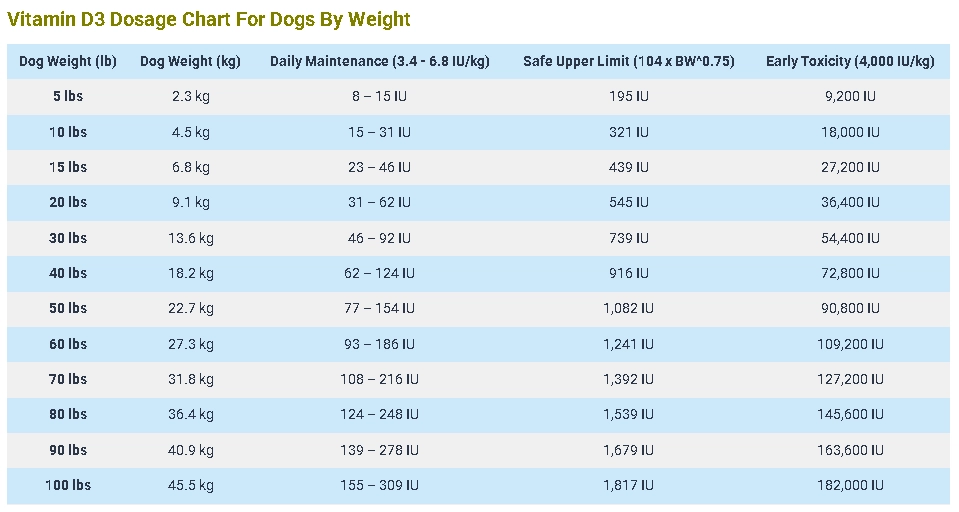
Vitamin D3 Dosage Chart For Dogs By Weight
This table provides the Vitamin D3 Medication breakdown for dogs based on the veterinary standards and NRC guidelines provided. It includes the Daily Maintenance (low to high range), the Safe Upper Limit (calculated via Metabolic Weight), and the Toxicity Thresholds.
| Dog Weight (lb) | Dog Weight (kg) | Daily Maintenance (3.4 - 6.8 IU/kg) | Safe Upper Limit (104 x BW^0.75) | Early Toxicity (4,000 IU/kg) |
| 5 lbs | 2.3 kg | 8 – 15 IU | 195 IU | 9,200 IU |
| 10 lbs | 4.5 kg | 15 – 31 IU | 321 IU | 18,000 IU |
| 15 lbs | 6.8 kg | 23 – 46 IU | 439 IU | 27,200 IU |
| 20 lbs | 9.1 kg | 31 – 62 IU | 545 IU | 36,400 IU |
| 30 lbs | 13.6 kg | 46 – 92 IU | 739 IU | 54,400 IU |
| 40 lbs | 18.2 kg | 62 – 124 IU | 916 IU | 72,800 IU |
| 50 lbs | 22.7 kg | 77 – 154 IU | 1,082 IU | 90,800 IU |
| 60 lbs | 27.3 kg | 93 – 186 IU | 1,241 IU | 109,200 IU |
| 70 lbs | 31.8 kg | 108 – 216 IU | 1,392 IU | 127,200 IU |
| 80 lbs | 36.4 kg | 124 – 248 IU | 1,539 IU | 145,600 IU |
| 90 lbs | 40.9 kg | 139 – 278 IU | 1,679 IU | 163,600 IU |
| 100 lbs | 45.5 kg | 155 – 309 IU | 1,817 IU | 182,000 IU |
Important Dosage Definitions:
- Daily Maintenance: The range needed for healthy dogs, typically provided by standard commercial dog food.
- Safe Upper Limit: The maximum amount a dog should consume daily before risking long-term health issues. This is calculated using Metabolic Body Weight (BW^0.75), as larger dogs require less Vitamin D3 per pound than smaller dogs.
- Early Toxicity: The level where clinical signs of poisoning often begin. This is a "Danger Zone" and requires immediate veterinary attention.
Quick Unit Conversion Reminders:
- 1 IU = 0.025 mcg (micrograms)
- 400 IU = 10 mcg
- 1,000 mcg = 1 mg
Warning: Never supplement Vitamin D3 if your dog is already eating a complete and balanced commercial diet unless specifically instructed by a veterinarian. Excess Vitamin D3 can cause permanent kidney damage and "soft tissue mineralization."
What Is Vitamin D3 Dosage for Dogs?
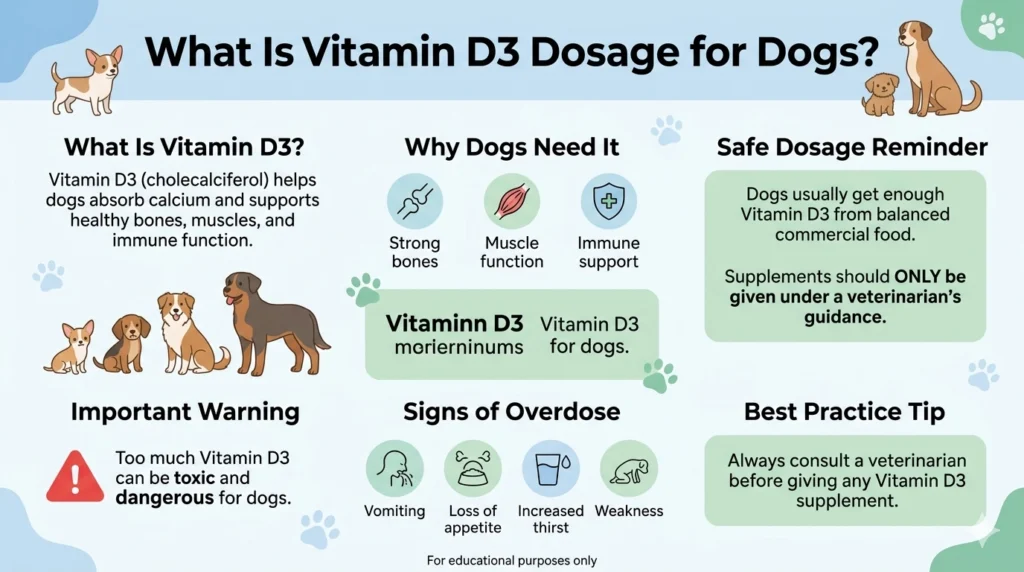
Vitamin D3 (cholecalciferol dosage for dogs) is an essential fat-soluble vitamin (like vitamins A, E and K) that dogs require for good health and proper functioning. It helps regulate and absorb calcium and phosphorus to promote healthy bones, as well as boosts the immune system, nervous system and muscle function.
Vitamin D3 for dogs is the “sunshine vitamin” that is made when humans are in the sun, but in dogs it is not possible to synthesize enough on their own and is mostly made from animal products or supplements.
Vitamin D3 For Dogs, derived from fish and oils, is more effective and potent for dogs than vitamin D2 (ergocalciferol) which is found in plants, yeast and fungi. Vitamin D3 can become deficient when a dog's diet doesn't have enough or if the body is not absorbing or utilizing vitamin D3.
Is Vitamin D3 Safe for Dogs?
Vitamin-D3 for dogs is safe for dogs if used appropriately under veterinary supervision and at correct levels and is usually used when there is a confirmed deficiency. But, it is important to get a precise dose, as it can be dangerous if the dosage is too low or too high. Because it is a fat-soluble vitamin that is stored in the body, excess vitamin D (particularly vitamin D3) can cause toxicity.
When present in high concentrations, they can lead to serious problems, such as sudden onset kidney failure and death. Vitamin D2 is safer to consume in larger quantities than vitamin D3, but they can be dangerous if overused. Pet owners should always adhere to the veterinarian's recommended dose and never use vitamins containing vitamin D for humans as they may have too much or be unsafe for dogs.
What are the Benefits of Vitamin D3 for Dogs?
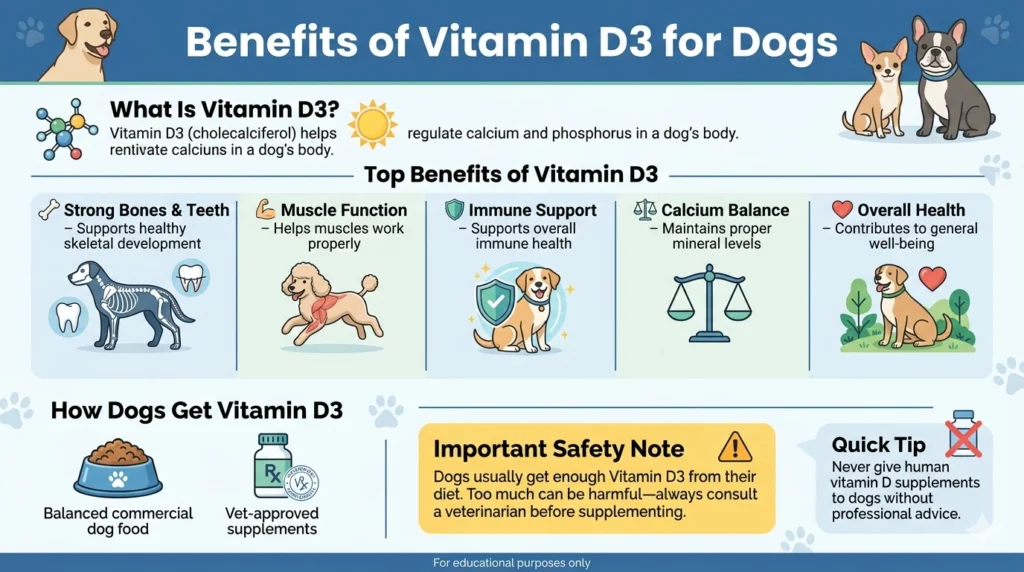
Vitamin D3 is important to your dog's health as this vitamin aids in the regulation of mineral metabolism and the balance of calcium and phosphorus. It plays a critical role in maintaining bone health, body function and preventing chronic disease.
The major advantages of vitamin D3 for canine's are:
- Helps absorb calcium & phosphorus, maintain mineral balance, prevent rickets in puppies, osteomalacia in adults and bone deformities. May also be beneficial to dogs with reduced mobility due to arthritis.
- Heart Health Support: When they are in adequate amounts, they may play a role in preventing congestive heart failure and complications related to it.
- Immune System Strength: Regulates inflammatory cytokines and immune cells and contributes to a healthy immune response.
- Chronic Disease Prevention: Helps to prevent inflammatory bowel disease, hyperparathyroidism and kidney disease.
What are Good Sources of Vitamin D3 for Dogs?
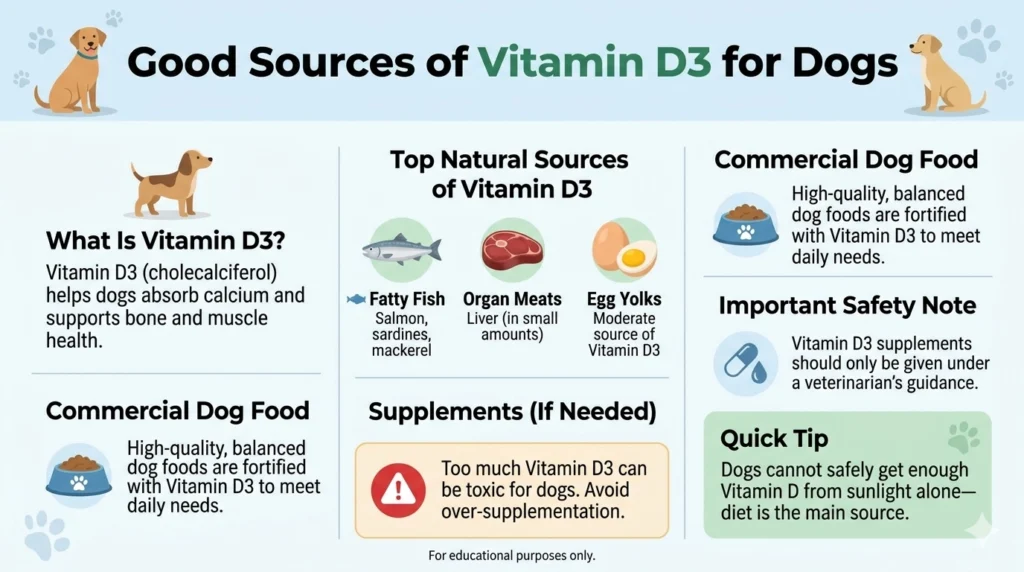
Vitamin D3 for dogs is available in the form of a high-quality supplement, as well as being found in certain foods that are rich in nutrients.
Top Supplement Sources:
- Rx Vitamins Rx D3 Liquid: Pure cholecalciferol with MCT oil to support the immune system and mix easily with foods.
- Nutrition Strength Vitamin D Complex: Contains vitamin D as well as calcium, magnesium and zinc for bones, muscles, immunity and heart health.
- PetHonesty 10-in-1 Multivitamin: Vitamin D3 – Promotes healthy joints with glucosamine and helps maintain healthy skin and coat with krill oil.
- ProSense Vitamin Solutions: A well-rounded mix of vitamins, minerals and antioxidants, designed for all dog breeds and ages.
- BravoPaws Dental Chews: Tasty chews, free of grains, fillers and artificial additives with vitamin D3, vitamin C, curcuminoids and zinc.
Natural Food Sources:
- Oily Fish: Salmon, tuna, herring, halibut, sardines and mackerel
- Eggs, beef liver, cheese and yogurt are all animal-based foods.
- Other sources: Mushrooms, fortified oats and squash.
Vitamin D dosage for dogs is also added to most commercial dog foods, but adding safe food sources and vet approved supplements can help ensure sufficient vitamin D.
What Foods Contain Vitamin D3 for Dogs?
Vitamin D3 vitamin for dogs is best obtained from animal based food sources in dogs and typically a well-balanced diet will suffice if no other health problems are involved. Foods that contain natural fats are the best means of absorbing Vitamin D3, and some ingredients are particularly beneficial.
The best Vitamin D3 foods for dogs are:


Paid Links - As an Amazon Associate, I earn from qualifying purchases.
- Fatty Fish: salmon, tuna, herring, halibut, sardines, mackerel, cod and swordfish (high fat content aids absorption)
- Fish Liver Oils (also rich in antioxidants and omega 3 fats): Cod liver oil and salmon oil.
- Beef Liver: High in vitamin D3, vitamin A, protein and essential minerals.
- Egg Yolks: Good amount of vitamin D3; add healthy fats, vitamins and minerals.
Other safe food sources:
- Cheese
- Yogurt
- Mushrooms
- Fortified oats
- Squash
Most commercial dog foods have vitamin D added to them to help with their intake. AAFCO guidelines recommend at least 500 IU (0.0125 mg) per kilogram, but not more than 3000 IU (0.075 mg) per kilogram of adult dog food to ensure safe and adequate levels of vitamin D.
How Often Should You Give a Dog Vitamin D3?
Vitamin D3 supplementation for dogs should be based on their health status and whether they have a deficiency. Depending on the severity of the condition, supplementation may be necessary daily or weekly for dogs diagnosed with vitamin D deficiency, and is recommended by your veterinarian. In contrast, healthy dogs that are fed a balanced diet typically do not need additional vitamin D3 supplementation.
Dosing and frequency are vital to safety, and should always be decided by a vet. This is determined through the dog's medical history, examination, blood test results, diet and health to ensure supplementation is effective and safe.
How Much Vitamin D3 Should I Give My Dog?
Always follow a veterinarian's recommendations for giving Vitamin D3 to dogs, as most dogs do not need supplemental doses and can get sufficient vitamin D3 from a good diet. Vitamin D being fat soluble tends to accumulate in the body, and consumes in excess can be detrimental.
The safe amount of Vitamin D3 for dogs is 5000 to 10,000 IU per day.
- Fresh food diet: 125 IU for every 1000 calories (min.) and up to 750 IU for an active 33 lb dog.
- About 1 ounce of wild salmon every other day, if no other vitamin D sources are provided
- Commercial dog food: Usually 500-3000 IU per kg (AAFCO guideline).
- Supplements should be only used under the guidance of a vet and typically within the safe range of ng/ml per day (around 100-120 ng/ml range guidance).
The potential risks to vitamin D3 toxicity.
- Toxic dose: 0.45 mg/10 lb body weight.
- Potentially fatal dose: approximately 9 mg for every 10 lbs.
- Even 1 mg (or 1,000 mcg) can be toxic for a 22-pound dog, particularly in susceptible or diseased dogs (such as a dog with kidney disease).
Common causes of overdose are:
- Human vitamin D supplementation or cream (unintentional ingestion)
- Cholecalciferol containing rodent poisons
- Over or inappropriate supplementing without veterinary advice
Even small overdoses can be harmful, so vitamin D3 for pets should only be administered in accordance with veterinary recommendations or the recommendation of a good quality dog food.
You May Also Like to Read:
- Nemex-2 Dosage For Dogs Calculator: Safe Dosage Guide & Chart
- Levetiracetam Dosage For Dogs Calculator, Chart & Safe Guide
FAQs
What are some signs of vitamin D toxicity in dogs?
Symptoms of vitamin D toxicity (hypercalcemia) are vomiting, diarrhea, anorexia, polydipsia, polyuria, abdominal pain and cramps, weight loss, lethargy, weakness, tremors, irregular pulse, and in severe cases, renal failure or even death. The symptoms usually appear within 24 hours and may progress rapidly if left untreated.
How do dogs get vitamin D poisoning?
Overdose typically occurs as a result of supplementation, mistakenly being fed a rodenticide containing cholecalciferol, or from human supplements, creams or medications with vitamin D. Vitamin D is fat soluble (this means it can be stored in the body).
What are the treatments for vitamin D toxicity in dogs?
Treatment may involve IV fluids, diuretics (furosemide), steroids, activated charcoal and, if it is recent, induced vomiting, and hospitalization may be indicated in severe cases. Prompt veterinary attention is crucial to recovery.
What are some symptoms of a vitamin D deficiency in dogs?
Symptoms of deficiency include weakness, bone fragility, decreased appetite, poor growth, lethargy, loss of weight and muscle mass. It can also raise the risk for rickets, bone problems, heart disease and softening of the bones.
How does a dog get low levels of vitamin D?
Typically it's a result of an imbalanced diet, malabsorption problems, digestive disorders, or genetic problems that make it harder to use vitamin D.
What is the treatment for vitamin D deficiency in dogs?
Treatment consists of providing better quality diet, supplementation with vitamin D-rich foods and supplements as prescribed by the veterinarian and treating any underlying health conditions.
What is the recommended dose of vitamin D for dogs?
There is a no universal dose. In general, dogs may require between 50 and 200 IU per kg of body weight depending on their size, age, diet and health. Dosage should always be determined by a veterinarian.
Is it possible for dogs to receive excessive amounts of vitamin D?
Yes. Too much vitamin D poses potentially serious risks of calcium imbalance, which can result in vomiting, loss of appetite, thirst, urination problems, weight loss and, if left untreated, organ damage and death.
Final Thoughts
Vitamin D3 dosage for dogs by weight is a crucial nutrient for dogs, and it helps build strong bones, regulate calcium levels, maintain muscle function, support the immune system, and promote overall health. Dogs are not able to get enough vitamin D from the sun, so adequate nutrition or supplementation should be used to provide them with this vitamin.
But it's a fine balance. Deficiency or excess can cause significant health issues, from weak bones and fatigue to life-threatening health issues such as kidney failure from toxicity. Vitamin D is fat soluble and accumulates in the body and incorrect dosing is particularly dangerous.
Therefore vitamin D3 supplements for dogs should never be administered without a veterinarian's recommendation. The safest method to provide your dog with the appropriate amount for optimal health and wellbeing is through a well-balanced diet, regular checkups, and the guidance of your veterinarian.