Lasix Dosage For Dogs Calculator: Safe Dosage Chart & Guide
Lasix Dosage Calculator For Dogs By Weight
© medsdog.com
When your veterinarian orders Lasix dosage for dogs, it is likely that your pet is in need of immediate assistance in the handling of excessive retention of fluids due to an underlying medical complication. One of the most widely-used and well-trusted loop diuretics in veterinary medicine is Lasix is the brand name of furosemide. also known as a water pill, it is used to make the kidneys get rid of more salt (sodium), chloride, potassium and water in the form of urine, which removes excess fluid that is dangerous, and makes the dogs breathe easier, move more comfortably and feel better.
Lasix dosage is commonly used in dogs with congestive heart failure, fluid in the lungs (pulmonary edema), kidney disease, liver disease, high blood pressure, and some electrolyte imbalances, such as high potassium. Due to its rapid and potent effect, it can also be used by veterinarians in case of an emergency when it is important to remove fluid fast.
Furosemide dosage for dogs is generally absorbed in the intestinal tract after oral administration, and can start to act within 30-60 minutes, which makes it a useful agent in relieving acute symptoms. It acts predominantly in the kidney in the ascending loop of Henle where it inhibits fluid-reabsorption and enhances urine secretion. It is highly effective, has a wide dosing, and the use is relatively safe when administered under veterinary care, which makes it an important medication in a wide variety of canine disorders.
As Lasix dosage for dogs varies according to factors such as body weight, age, general health, level of hydration and the specific illness being treated, this drug can only be administered under the guidance of a veterinarian. The incorrect dosage may result in dehydration or mineral imbalances. This guide will teach you Lasix basics, how it works, typical uses, dosage, the side effects and how to administer Lasix safely to your dog.
Disclaimer: This guide is for informational purposes only and is not a substitute for professional veterinary advice.
Always consult your veterinarian before giving Lasix or any medication to your dog.
Key Takeaways
- A widely used diuretic (water pill) in dogs is Lasix (furosemide) dosage and it is used to help eliminate excess fluid in the body by raising the amount of urine produced.
- It is mainly administered to congestive heart failure, lung edema (fluid in the lungs), fluid retention, kidney failure, and some electrolyte imbalances.
- Lasix may be used to ease breathing, decrease swelling and assist the heart by assisting the body in getting rid of the excess fluid.
- The most frequent side effects are high urination, thirst, dehydration, gastrointestinal upsets, and electrolyte imbalance.
- One of the greatest concerns is dehydration and fresh water availability and frequent veterinary checkups are essential.
- In case of decreased or ceasing of your dogs urine flow, then stop using it and immediately call the veterinarian.
- Lasix may be overdosed, and this can lead to severe health complications, therefore, always administer the correct dose as it is prescribed by your vet.
- Checkups and lab tests might be required regularly to check hydration, kidney work, and electrolytes when receiving treatment.
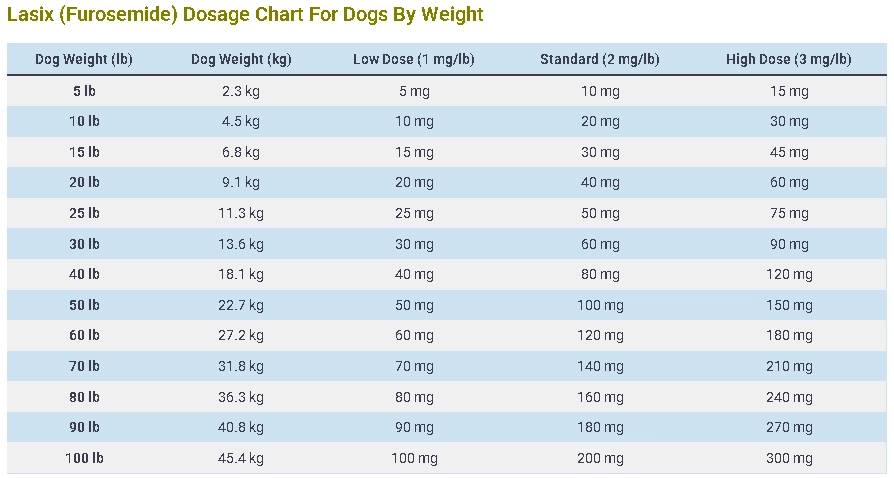
Lasix (Furosemide) Dosage Chart For Dogs By Weight
This table provides a quick reference for the Total mg per dose based on the dog’s weight. These figures are calculated using the standard veterinary guidelines of 1 mg to 3 mg per pound (approximately 2.2 mg to 6.6 mg per kg).
| Dog Weight (lb) | Dog Weight (kg) | Low Dose (1 mg/lb) | Standard (2 mg/lb) | High Dose (3 mg/lb) |
| 5 lb | 2.3 kg | 5 mg | 10 mg | 15 mg |
| 10 lb | 4.5 kg | 10 mg | 20 mg | 30 mg |
| 15 lb | 6.8 kg | 15 mg | 30 mg | 45 mg |
| 20 lb | 9.1 kg | 20 mg | 40 mg | 60 mg |
| 25 lb | 11.3 kg | 25 mg | 50 mg | 75 mg |
| 30 lb | 13.6 kg | 30 mg | 60 mg | 90 mg |
| 40 lb | 18.1 kg | 40 mg | 80 mg | 120 mg |
| 50 lb | 22.7 kg | 50 mg | 100 mg | 150 mg |
| 60 lb | 27.2 kg | 60 mg | 120 mg | 180 mg |
| 70 lb | 31.8 kg | 70 mg | 140 mg | 210 mg |
| 80 lb | 36.3 kg | 80 mg | 160 mg | 240 mg |
| 90 lb | 40.8 kg | 90 mg | 180 mg | 270 mg |
| 100 lb | 45.4 kg | 100 mg | 200 mg | 300 mg |
Critical Administration Guidelines
- Frequency: The amounts above represent a single dose. Your veterinarian will specify how many times per day (usually 1 to 4 times) the medication should be given.
- Hydration: Furosemide is a powerful “water pill.” Always ensure your dog has unlimited access to fresh drinking water, as they will urinate significantly more than usual.
- Formulations:
- Tablets: Common strengths are 12.5 mg, 20 mg, 40 mg, 50 mg, and 80 mg.
- Oral Liquid: Usually comes in a concentration of 10 mg/mL.
- Side Effects: Watch for signs of dehydration or electrolyte imbalance, such as extreme lethargy, weakness, sunken eyes, or dry gums.
Disclaimer: This table is for educational purposes. Never adjust your pet’s heart or kidney medication without a direct order from a licensed veterinarian.
What Is Lasix Dosage for Dogs and How Does It Work?
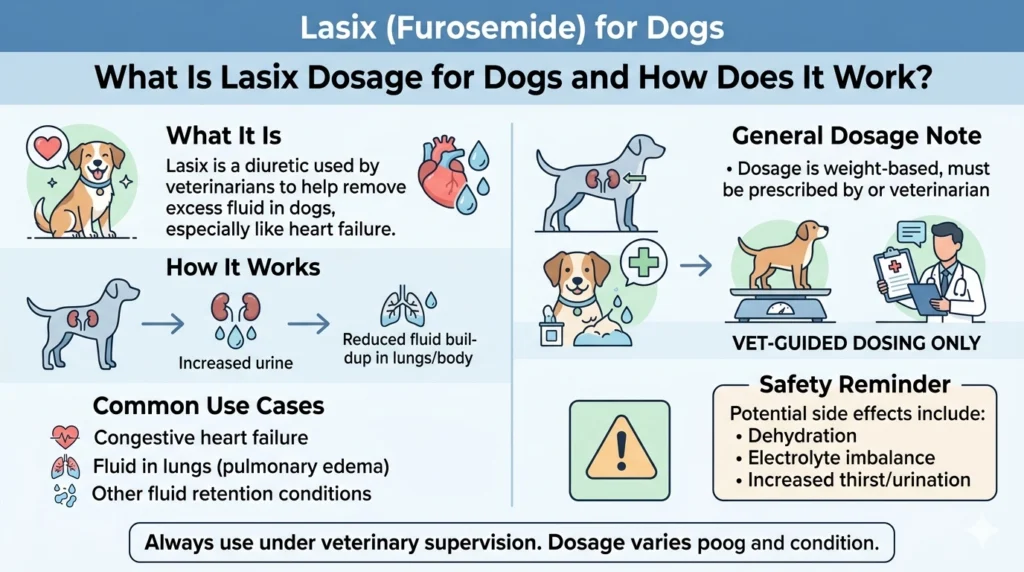
Furosemide or Lasix Dosage for dogs, is a commonly used diuretic (water pills) in veterinary medicine under its generic name furosemide. It is given to aid in the evacuation of fluid in the body, most often used in treating congestive heart failure, lung edema (state of having fluid in the lungs), retention of fluid in the body (edema), some kidney diseases, fluid build up in the liver, high blood pressure, and high blood potassium levels.
Lasix is an anti-diuretic hormone working on the kidneys, as it inhibits the reabsorption of salt and fluid in the renal tubules. This makes the kidneys to produce more urine which enables the body to get rid of the excess water, sodium, minerals and electrolytes. The greater the urine output, the greater the fluid trapped in the tissues or lungs gets pulled back into the bloodstream and eliminated out of the body.
Lasix dose for dogs can be used to ease breathing, reduce swelling, enhance comfort, and aid heart work by decreasing the accumulation of fluid in the organism of the dogs. It comes as brand-name Lasix ®, Salix ®, and Disal ®, and generic furosemide. Use of this medication is only by veterinary supervision and dosage depends on the health requirements and condition of your dog.
What Is Lasix Used for in Dogs?
Lasix in dogs (furosemide in generic) is mostly applied to eliminate the surplus in the body by stimulating urine. It is a quick-acting diuretic normally administered by veterinarians to de-swell, ease breathing and to assist in control of severe medical disorders associated with fluid retention.
Common Uses of Lasix in Dogs
- CHF: Lasix is used regularly to treat CHF. In cases where the heart is not able to pump the blood, the fluid may accumulate in the lungs, chest, abdomen, or other tissues. Lasix is used to eliminate this fluid enabling the dogs to breath more easily and feel more comfortable.
- Pulmonary Edema: This is administered to treat the accumulation of fluid in the lungs and this may lead to coughing as well as short breaths and low oxygen levels.
- Edema and Ascites: Assists in decreasing swelling and fluid retention in the tissues of the body, the belly or body cavity due to heart disease or other ailments.
- Kidney Disease or Kidney Failure: Can be used to make dogs that produce inadequate amounts of urine produce more urine, which assists the kidneys in getting rid of the excessive amounts of fluid and waste products.
- Liver Disease: Sometimes prescribed when the liver issues cause the accumulation of fluid in the abdomen or body.
- High Blood Pressure: It may be employed to aid in the treatment of high blood pressure.
- Hypercalcemia: Aids in lowering excessively high calcium levels in blood by enhancing the amount of calcium released into the urine.
- Hyperkalemia: It might be useful in reducing the elevated potassium level, particularly when associated with kidney issues.
- Chronic Bronchitis: Lasix can be used to decrease coughing and aid breathing in certain cases, but is not typically the primary treatment.
Lasix dosage for dogs by weight is not to be administered without veterinary supervision and the proper dosage and observation because it may be life-saving in emergencies and chronic diseases.
How Is Lasix Given to Dogs, and What Is the Recommended Dosage?
Lasix for dogs (furosemide generic name) is in both oral and injectable forms. It is administered in home treatment as either tablet or liquid oral solution, and injections are usually administered by veterinarians in hospitals or other clinics when there is an emergency. In emergency situations Lasix can be administered intravenously (IV), as a continuous IV infusion, intramuscularly (IM) or subcutaneously (SC).
The manner in which Lasix is administered to dogs.
- Oral tablet or liquid: Oral tablet is used at home to manage in the long term.
- With or without food: Can be administered either. In case of vomiting, the subsequent dosage can be administered along with food or snacks.
- Emergency management: IV injections are frequently administered in severe heart failure, pulmonary edema or breathing distress.
- Always have fresh water as Lasix makes one urinate a lot and could cause dehydration.
Dogs Lasix Recommended Dosage.
Depending on the weight of your dog, the type of medical condition, the severity of the illness, kidney functioning, and the duration of treatment, the appropriate Lasix dose in dogs varies. It should always be a veterinarian dosage.
Normal Oral Dosage Ranges.
- Oral dose: 1-4 mg/kg 8-12 times a day.
- Short-term therapy: 2-4 mg/kg at the beginning and end of 1-24 hour intervals based on the necessity.
- Long-term therapy: 1- 2 mg/kg, once or twice a day.
- Mild heart failure: Approximately 1 mg/kg orally in every other day.
- Severe heart failure: To a maximum of 4 mg/kg via mouth after every 8 hours.
Injectable Dosage Examples
- General range: 2-8mg/kg
- Pulmonary edema: 2-8 mg/kg IV at 2 hour intervals until the breathing is better.
- Reduced calcium: 2- 4mg/kg orally or via injection two to three times a day.
- Kidney disease-induced fluid retention: 1 mg/kg IV or IM every 6-12 hours.
Available Strengths
Lasix may come as:
- 10 mg/mL oral solution
- 12.5 mg, 20 mg, 40 mg, 50 mg, and 80 mg tablets
- 50 mg/mL injectable solution
- There might also be soft chews available at some clinics.
Important Safety Tips
- Administer as directed and never change, reduce, or discontinue without a veterinary recommendation.
- The long term therapy is usually tapered to the minimum effective dose.
- Some dogs with a kidney disease or severe heart disease may need higher doses.
- In case of a missed dose, administer it when you remember except when the next dose is soon. Do not increase the dose twice.
- Check-ups, blood tests and kidney/liver examination may be required after some time of treatment.
- Keep at room temperature, in the absence of heat, light and water.
What Should You Do If Your Dog Misses a Dose of Lasix?
When you forget to administer Lasix (furosemide) to your dog, administer the missed doses immediately. But when the next dosing date is nearly approaching, then leave the missed dose and resume the normal dosing schedule of your dog.
Should not administer two doses simultaneously, should not combine doses, and should not administer more than the prescribed dose to compensate a missed dose.
When Lasix is administered on an as-needed basis as opposed to a periodic basis, you should adhere to the instructions of your veterinarian.
Should you skip a dose, or believe your dog has a severe heart or respiratory illness, then consult your veterinarian.
What Are the Common Side Effects & Risks of Lasix in Dogs?
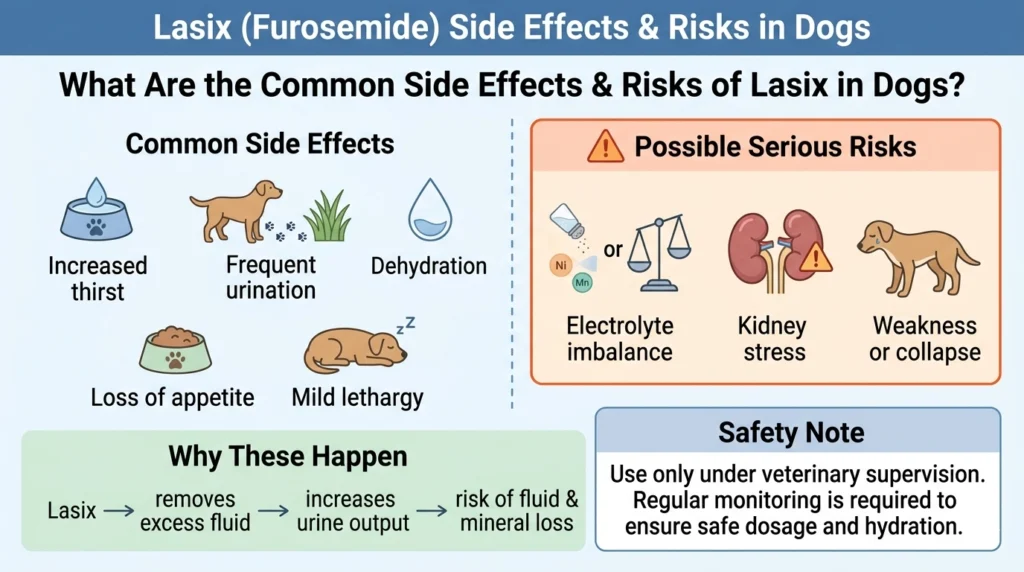
The generic Lasix used in dogs (furosemide) is considered safe in most cases and when used under supervision by the veterinarian, but it can result in side effects and health risks due to the effect on urination, fluid and electrolyte balance.
Side Effects of Lasix in Dogs.
- More frequent urination (most frequent and anticipated)
- Increased thirst
- Indoor accidents or blood urine leakage.
- Dehydration
- Diarrhea
- Constipation
- Vomiting or nausea
- Loss of appetite
- Lethargy or drowsiness
- Weakness
- Restlessness or depression
- Headache or dizziness and blurred vision.
Severe risks and undesirable effects.
- Electrolyte imbalances including low potassium, low sodium, low calcium or low magnesium.
- Low blood pressure
- Alteration in kidney functioning, azotemia or deterioration of kidney disease.
- Less frequent urination, less urgent urination or none at all (anuria).
- Fast or irregular heartbeat.
- Collapse or fainting
- Pain or weakness of muscles.
- Balance issues or head tilt.
- Deafness or ear injury, particularly at extremely high volumes.
- Anemia or deficiency of white blood cells.
- Increased blood sugar or aggravated diabetes.
- Dark urine or jaundice.
- Skin lesions, vesicles, hair loss or abnormal bleeding.
- Uncommon allergic reactions like hives, swelling of the face, difficulty breathing.
Higher Risk / Use With Caution Dogs.
Lasix should not be taken by dogs that:
- Allergic to furosemide or sulfa drugs?
- Fails to make urine.
- Gets worse kidney disease unless ordered by a vet.
Should not be used in dogs with:
- Dehydration
- Electrolyte imbalances
- Kidney disease
- Hepatitis or cirrhosis.
- Diabetes
- Vomiting or diarrhea
- Pregnancy or nursing
Drug Interactions
Lasix can have interactions with:
- Corticosteroids
- Digoxin
- Theophylline
- Aspirin
- Digitalis
Important Safety Tips
- Always keep fresh water to aid in preventing dehydration.
- Lasix can cause skin to be more sensitive to sunlight and risk sunburn.
- The increased doses increase the risk of side effects.
- Consistent use of it can be associated with the need to adjust the dose and periodically monitor blood.
- Immediately contact your veterinarian in case of weakness, collapse, excessive thirst, lack of urination, vomiting, increased heart rate, hearing loss, or signs of serious illness in your dog.
Does Lasix Interact With Any Other Dog Medications?
Furosemide (Lasix in dogs), is a generic name that may have numerous interactions with drugs, supplements, and herbal products. These interactions can enhance the side effects, decrease the effectiveness of treatments, or expose individuals to the risk of kidney damage, dehydration, electrolyte imbalances, or hearing dysfunction.
Dog Medications that could Interact with Lasix.
Be careful and have your veterinarian watch your dog take:
- Heart disease or blood pressure drugs (ACE inhibitors) like enalapril or benazepril.
- Insulin
- Theophylline and other xanthines.
- Digoxin or other cardiac glycosides
- Dexamethasone and triamcinolone (Kenalog, Triamcinol, Kenalog 401, etc.)
- Aminoglycoside antibiotics like amikacin, gentamicin or tobramycin.
- Some other antibiotics
- Amphotericin B: Antifungal drug.
- Aspirin or indomethacin NSAIDs or salicylates.
- Antiseizure drugs like phenobarbital.
- Relaxants affecting muscle like succinylcholine.
- Cisplatin and cisplatin drugs.
- Medications associated with diuresis, e.g. probenecid.
- Sacralfate is a protective ulcer agent.
Notable Drug Interaction Risk.
The use of Lasix with some drugs can:
- Raise the chances of kidney poisoning (nephrotoxicity)
- Increase the risk of hearing loss (ototoxicity)
- Exacerbate dehydration or electrolyte imbalances.
- Influence blood pressure or heartbeat.
- Lessen the efficacy of a single or both drugs.
Other Important Note
Lasix can also lead to a falsely high Free T4 lab result which can interfere with thyroid testing.
Safety Tip
Never start Lasix without informing your veterinarian about all the prescription drugs, OTC medications, vitamins, supplements, CBD, and herbal products your dog takes.
Monitoring and Follow-Up Care
In case the dog is under Lasix therapy (furosemide), monitoring and follow-ups should be performed regularly in order to ensure the safety and effectiveness of the medication. Since Lasix may influence hydration, kidneys, blood sugar and electrolyte levels, regular veterinary check-ups help avoid complications and keep your dog on the minimal dose of Lasix.
Veterinary Surveillance Can Incorporate
Blood tests to check:
- E electrolyte, particularly, potassium.
- Kidney values
- Liver values
- Blood sugar levels
- Urine tests to determine urine kidney functioning and response to treatment.
- Hydration status checks
- Blood pressure check where necessary.
- Monitoring body weight to observe changes in fluid.
- Ear/hearing as indicated.
Home Monitoring Dog Owners.
Watch your dog’s:
- Weight
- Appetite
- Energy level
- Thirst level
- Urination habits
With these changes, it is possible to spot dehydration or other side effects early.
When To Call Your Veterinarian.
Contact your veterinarian in case of:
- Increased thirst
- Vomiting
- Weakness
- Changes in urination
- Inappetence or strange fatigue.
Important Reminder
Even when your dog appears better, do not discontinue Lasix or alter the dosage without veterinary advice. Home visits should be used to make adjustments to the treatment and guarantee long-term safety.
You May Also Like to Read:
- Augmentin Dosage For Dogs Calculator, Chart & Safe Guide
- Spirulina Dosage For Dogs Calculator: Safe Dosage Guide & Chart
FAQs
Will Lasix dosage for dogs improve my dog to breathe better?
Yes. When the existence of fluid accumulation due to certain illnesses such as congestive heart failure causes breathing difficulties, Lasix dose assists to eliminate the surplus fluid in the lungs/abdomen which would greatly help to ease breathing. Nevertheless, it is most commonly combined with other drugs depending on the underlying disorder.
Do dogs overdose Lasix medication for dogs?
Yes–but it is rare. Excessive urine, excessive thirst, weakness, fatigue, depression, abnormal heart rhythm, and loss of appetite may be caused by an overdose. Severe loss of fluids and electrolytes may take place thus emergency veterinary attention is needed in suspected cases of an overdose.
Does Lasix have an effect on kidney failure in dogs?
Lasix does not cause kidney failure per se but may impose a strain on the kidneys since they have to work more to eliminate fluid and electrolytes. In other instances, there can be mild kidney damage although severe kidney failure is rare. Lasix should be used carefully in dogs with kidney disease and kidney values and electrolytes should be monitored regularly.
Is furosemide human (Lasix) safe in dogs?
Yes. Furosemide has the same active ingredient in a human and veterinary form and thus can be frequently filled at a standard pharmacy. Nevertheless, dogs need a specific amount of doses than humans, hence should be administered solely by a veterinarian to prevent overdose.
Frequency of urination in dogs on Lasix?
The majority of dogs start to urinate 30 minutes to 2 hours following a dose and may urinate multiple times a day. The frequency is determined by dosage and frequency of administration.
Does Lasix increase the amount of water that dogs drink?
Yes. This is likely to cause increased thirst, since Lasix is a diuretic. To help prevent dehydration, dogs should always have access to clean and fresh water.
Is Lasix prescription-only medication?
Yes. Lasix (furosemide) is a prescription-only drug that needs to be prescribed by a veterinarian.
What would happen in case my dog misses a dose?
Administer the omitted dose as soon as possible. In case it is within the following dosing, omit it and resume the normal schedule. Do not administer two doses concurrently.
How to act in case of an emergency or overdose?
In case your dog exhibits signs of overdose or an adverse reaction, including being weak, feeling dizzy, fainting, disoriented or anorexic, discontinue the medication, and call a veterinarian or visit an emergency clinic.
What should be the storage of Lasix drugs for dogs?
Keep at room temperature (approximately 20 25 C / 68 77 F) in a well-closed container, not subjected to light, moisture or freezing conditions. Never put medication where children and pets can reach it, and take care to follow the instructions on the prescription label.
Final Thoughts
Lasix (furosemide, Salix) dosage for dogs is a strong veterinary diuretic that is commonly applied to treat various severe conditions in dogs, particularly congestive heart failure, and fluid retention, pulmonary edema (fluid in the lungs) and renal-related complications. It is fast and efficient as it assists the kidneys to eliminate water in the body, thus it is especially useful in emergencies and in critical care.
But Lasix is a delicate balancing act. The aim is to take away sufficient fluid to alleviate symptoms and enhance breathing without excessive loss of fluid that may result in dehydration and electrolyte imbalances. Due to its strength, even minor dosing variations may substantially impact the hydration of a dog and its overall well-being.
Although Lasix dosage for dogs is safe in most cases when given and observed under the care of a veterinarian, it needs strict observation of dosing and constant checks on the health. Close attention should be paid to the symptoms of dehydration, weakness and other side effects in dogs with this medication, and frequent veterinary examinations are used to monitor kidney activity and normality of electrolytes.
To summarize, Lasix is potentially life-saving when administered properly, although, it should always be closely monitored by the veterinary in order to ensure that the balance between effective treatment and safety is maintained.