(N-acetylcysteine) NAC Dosage For Dogs Calculator & Safe Guide
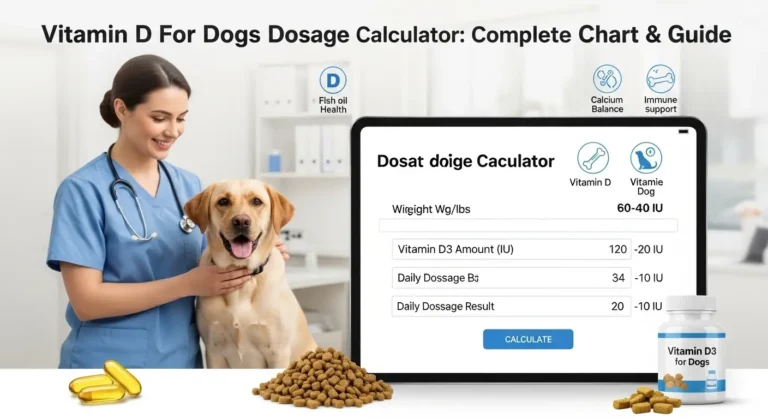
(N-acetylcysteine) NAC Dosage Calculator For Dogs
Important: Always confirm dosage with your veterinarian. Do not exceed 250 mg/lb.
© medsdog.com
Regarding the (N-acetylcysteine) NAC dosage for dogs, it is part of the knowledge that every pet owner should have to distinguish what is beneficial about this potent compound, and how it can be used without causing harm to the animal.


(N-acetylcysteine) NAC Dose for dogs is a sulfur-based analog of the amino acid cysteine, and is a direct precursor to the most important antioxidant in the body- glutathione. Since dogs are unable to synthesize it adequately, there can be considerable health advantages with the help of a veterinarian.
N-acetylcysteine (NAC) Medication is also known to have wider-known mucolytic activity, by breaking disulfide bonding in mucus, aiding in the thinning and clearance of thick respiratory secretions. It is particularly applicable in dogs with an underlying chronic pulmonary disease since it is able to enhance breathing, cough reduction and oxygenation.
In addition to respiratory health, NAC for dogs is also essential in liver detoxification, which neutralizes toxins, and shields against damages that are caused by substances such as acetaminophen, xylitol, and other dangerous substances.
N-acetylcysteine dosage for dogs is commonly used in veterinary medicine as an off-label medication, administered under the care of a professional and can be taken orally, intravenously, administered via nebulizer or even topically on the eye in certain instances. Its antioxidant property also assists dogs that have to cope with oxidative stress-induced illnesses, like chronic renal failure or degenerative diseases.
Although NAC (N-acetylcysteine) Dosage for dogs by weight has an extensive list of advantages, it should be administered cautiously, and pregnant dogs or those with ulcers in the stomach should be avoided at all costs and only under the guidance of a veterinary. Here, we will dissect safe (N-acetylcysteine) NAC For dogs dosage, advantages, side effects and how to use NAC safely to ensure your pet is healthy in this comprehensive guide.
Disclaimer: This guide is for informational purposes only and is not a substitute for professional veterinary advice.
Always consult your veterinarian before giving (N-acetylcysteine) NAC or any medication to your dog.
Key Takeaways
- N-acetylcysteine (NAC) dose is an effective supplement that has numerous health advantages to dogs.
- Helps in the production of glutathione, one of the antioxidants which helps in the defense against oxidative stress.
- Helps to support the proper functioning of the liver and detoxification.
- Bolsters immune system and heart health.
- Mucolytic – Thins and decreases the amount of mucus in the breathing system.
- May be administered as a supplement, and there are even more advanced types such as liposomal glutathione systems in dogs.
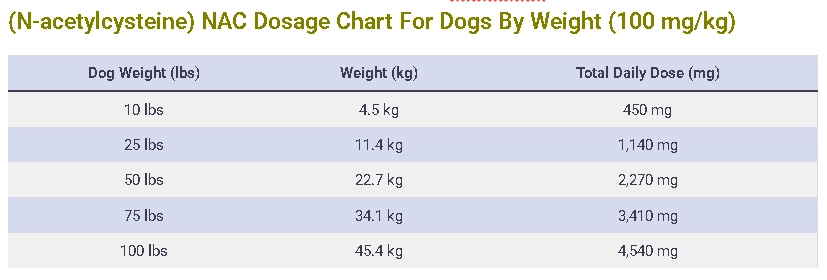
(N-acetylcysteine) NAC Dosage Chart For Dogs By Weight (100 mg/kg)
This table uses 100 mg/kg as a baseline for antioxidant/respiratory support.


As requested, here is the reference table for a Standard Support Dose (100 mg/kg). This table is designed to be clear and easy for your readers to understand as a quick reference guide on medsdog.com.
| Dog Weight (lbs) | Weight (kg) | Total Daily Dose (mg) |
| 10 lbs | 4.5 kg | 450 mg |
| 25 lbs | 11.4 kg | 1,140 mg |
| 50 lbs | 22.7 kg | 2,270 mg |
| 75 lbs | 34.1 kg | 3,410 mg |
| 100 lbs | 45.4 kg | 4,540 mg |
Important Usage Notes
- Formula: The calculations are based on Weight(kg) times 100mg/kg.
- Rounding: Weights in kilograms are rounded to one decimal place for simplicity.
- Safety Warning: Always confirm the specific dosage requirements with your veterinarian. Do not exceed 250 mg per pound of body weight, as this is the threshold for high-risk toxicity.
What Is NAC (N-Acetylcysteine)?
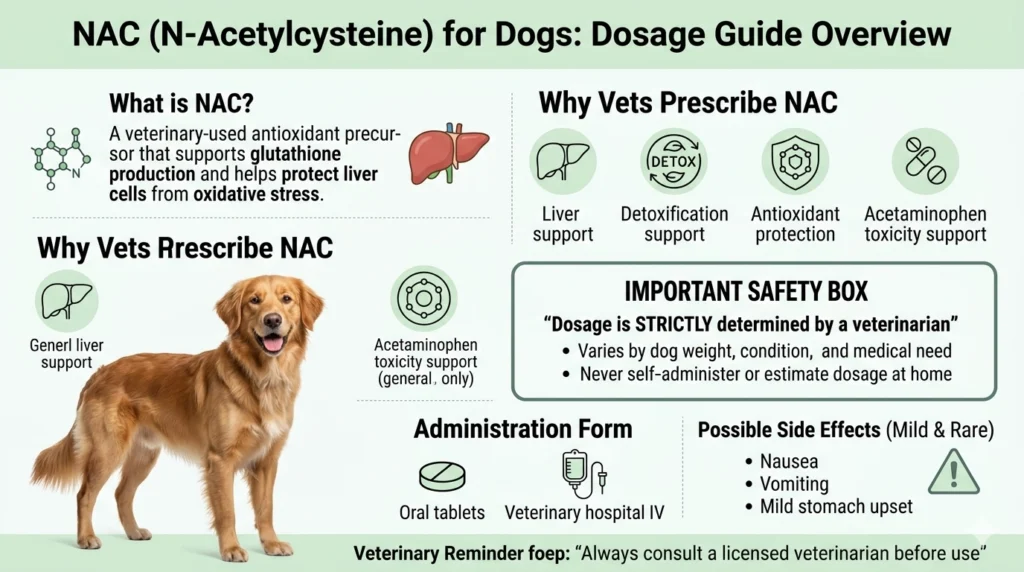
N-acetylcysteine (NAC) or N- Acetyl-L- Cysteine or Mucomyst is an analog of the amino acid cysteine. It is also crucial in the body as it is the precursor to L-cysteine and glutathione- one of the most potent antioxidants that protect cells and are involved in detoxification.
NAC Dosage for dogs is very common in the medical practice of humans and veterinary and it may be taken orally or by injections under the care of a veterinarian. It is frequently used as an extra-label drug in animals, and should not be employed without veterinarian advice.
Mucolytic properties of NACvdosage, i.e. breaking down thick mucus by breaking the sulfur bonds in mucoproteins are best known. This will lower the viscosity of the mucus and it will be easier to remove it in the respiratory system, which enhances breathing, coughing, and oxygenation. It is usually applied in treating acute and chronic lung diseases.
Moreover, NAC For dogs (N-acetylcysteine) is very essential in liver protection and detoxification and particularly in acetaminophen toxicity where it aids to prevent liver damage by offering an alternative binding route. It can also help to detoxify the toxic chemicals and heavy metals in the body.


Key Points:
- It is a derivative of the amino acid cysteine, and is called N-Acetyl-L-Cysteine or Mucomyst.
- The forerunner of glutathione, a strong antioxidant that aids cell wellbeing and detoxification.
- An oral supplement used in dogs and other animals or injected to induce medication.
- Has a mucolytic effect to loosen mucus and enhance the respiratory system.
- Helps alleviate coughing and enhance the level of oxygen in lung conditions.
- Maintains the well-being of the liver and prevents the destruction of the liver by toxins, such as acetaminophen poisoning.
- May help to detoxify damaging chemicals and heavy metals.
- Applied in the treatment of a number of veterinary diseases, among them respiratory and in some eye diseases.
- Usually given in an extra-label prescription by veterinarians.
Potential Beneficial Effects of N-Acetyl-L-Cysteine (NAC)
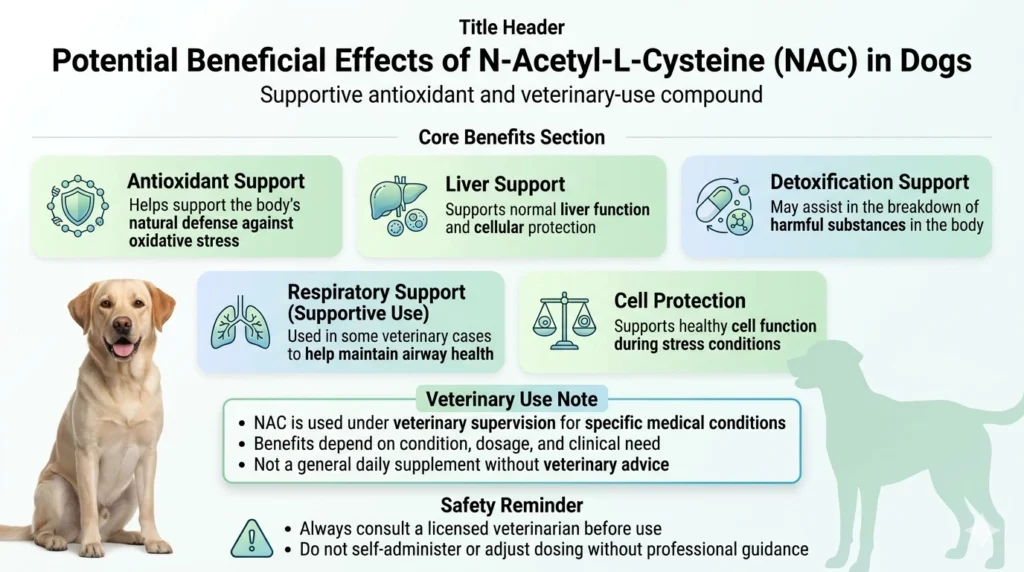
N-acetyl-L-cysteine (NAC) Dosage for dogs per pound or kg offers various possible health advantages to dogs, directly and indirectly by helping to generate glutathione which is an effective antioxidant. Glutathione assist in the antioxidant defense of the body by counteracting the detrimental free radicals and this is particularly required in ill or stressed animals.
Research indicates that NAC supplements for dogs have the ability to normalize glutathione levels, as well as raise the levels of cysteine, boosting antioxidant systems in the body. It is also proposed that NAC would be beneficial when used as a combination of antioxidants to alleviate oxidative stress phenomena and promote gut health.
NAC medication for dogs also has an important role in the detoxification and liver support. It can prevent acetaminophen toxicity by keeping the glutathione levels, enabling the body to counteract toxic substances. NAC helps in maintaining normal liver functioning, particularly in dogs that are exposed to environmental or domestic toxins since liver is vital in the elimination of toxins.
It is also mucolytic, i.e., NAC causes the destruction of the viscous mucus breaking the disulfide bonds and allowing easier clearance of the respiratory tract and facilitating easier breathing.
Key Points:
- Promotes glutathione synthesis, which is a potent antioxidant, and decreases oxidative stress.
- Scavenges the free radicals and shields cells.
- Helps to stabilize the glutathione and to raise the cysteine in ailing dogs.
- May decrease the oxidative stress biomarkers and promote gut health (in combination with other antioxidants)
- Favors the detoxification and normal liver operation.
- Helps safeguard against acetaminophen toxicity.
- Helps to get rid of environmental and chemical poisons.
- Mucolytic, to thin mucus and to enhance respiratory clearance.
- May loosen viscosity and rigidity of the mucus to make it easier to breathe.
- Can be used to support respiratory health (directly or orally).
- May improve immune system and cardiovascular activity.
Acetylcysteine for Pets: Precautions and Side Effects
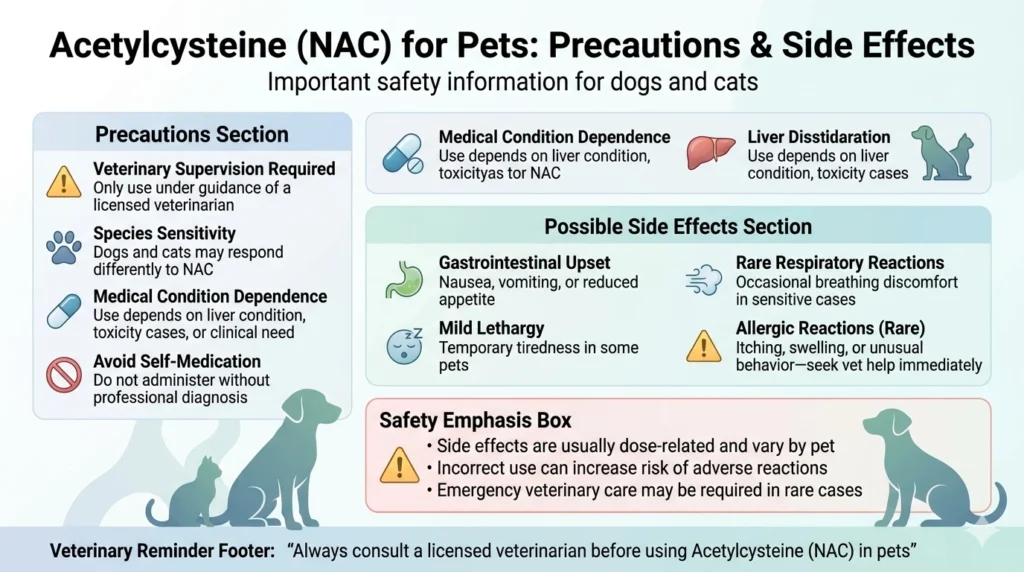
When administered correctly by a veterinarian, acetylcysteine is usually safe and effective, however, it may have certain side effects in certain pets, and should always be used with caution.
Common Side Effects:
- Nausea and vomiting (particularly in case of oral use)
- Salivates because of the bitter taste of sulfur and offensive smell.
- Hypersensitivity, such as hives (urticaria)
Respiratory Side Effects (particularly when used inhaled/nebulized):
- Chest tightness
- Bronchoconstriction (airway narrowing)
- Irritation of the bronchi or the trachea.
- Possibility of spasms in the airways and particularly in pets who already have lung disease.
Precautions:
- Caution in the use with animals with lung disease, which is likely to have airway spasms.
- Should not be used in pets that are known to be allergic or hypersensitive to acetylcysteine.
- May does not react with other drugs, such as activated charcoal.
- Always report to your veterinarian about anything your pet is getting in terms of medications, supplements or herbs.
- Bad taste might be a problem in oral administration; other routes (e.g., NG tube) can be used.
Storage & Handling:
- The liquid forms are volatile at room temperature.
- Ophthalmic solutions are frequently refrigerated, and have a short shelf life.
Additional Considerations:
- No special measures made in regard to pregnancy.
- Whether acetylcysteine is excreted in maternal milk or not is not known.
Dosing Information for Acetylcysteine in Dogs
The dosing of acetylcysteine in dogs should never be left to the veterinarian; the dosing depends on the ailment being treated, the weight of the dog, and response to treatment. It is typically employed in acetaminophen toxicity, respiratory mucus disorders as well as supportive care.
It should never be given to the owners without professional advice and the entire course should be taken so as to avoid relapse.
In case of acetaminophen toxicity, acetylcysteine is usually administered as 70 mg/lb (140 mg/kg) firstly as a loading dose of acetylcysteine, which is orally or intravenously administered. This is then followed by a maintenance dose of 35 mg/lb (70 mg/kg) at 4-6 hourly, which is based on the treatment regimen.
The overall dosage is between 3-7 times. To prevent interaction the medication is usually diluted to a 5% or 50 mg/mL solution and administered at least 23 hours apart of activated charcoal.
Acetylcysteine is usually used as a nebulizer to provide respiratory support and help to remove mucus. It is administered twice daily (after 12 hours) by inhaling at a rate of about 50 mL per hour during 30 to 60 minutes in this procedure.
This can be used to decrease the thickness of the mucus and enhance airway clearance of dogs with respiratory disease.
In others, acetylcysteine is also administered in a weight-adjusted, capsule-based, supplement. Dogs with a weight of 125-25lbs are normally given half capsule two times a day, dogs between 25-50lbs are normally given one capsule twice a day and dogs with a weight of 50-100lbs are normally given two capsules in the morning.
Due to its bitter taste that is very strong, it is usually advised to take it in small dosages and advance to the entire dosage so as to enhance acceptability.
Other factors are the presence of a standard support dose of 100mg/kg in certain clinical practice. There are 10 and 20 percent acetylcysteine solutions in different sizes of vials.
Treatment depends upon the condition that is being treated and the recommendation of the veterinarian and dosing can be varied depending upon the effectiveness and side effects noticed.
Uses of Acetylcysteine for Dogs
Acetylcysteine dosage for dogs is a multifunctional drug employed in dogs to detoxify, antioxidate and mucolyze. It is also most often applied to treat the cases of toxicity under veterinary control, to support liver activity and to ameliorate the respiratory condition by decreasing the excessive production of mucus.
It has been used as an antidote in acetaminophen toxicity as one of its most crucial applications to prevent the liver toxicity related to exposure to toxic drugs. It is also taken in instances of phenol toxicity and in such a case, it helps the body to eliminate the toxicity.
In addition to the use of acetylcysteine as a treatment of toxicity, acetylcysteine is also important in protecting the liver and improving the body natural mechanisms of detoxification by aiding glutathione production, the main antioxidant of the body.
Acetylcysteine dose for dogs can be used in respiratory health as a mucolytic drug, to aid the degradation and removal of excess mucus in the respiratory tracts and eyes.
This renders it applicable in the state of upper respiratory infection, chronic bronchitis and pulmonary diseases where it aids in the betterment of breathing and removal of harmful debris in the lungs.
Key Points:
- As an antidote in cases of acetaminophen (paracetamol) toxicity in animals (dogs).
- Applied in the support of detoxing in cases of phenol toxicity too.
- Helps safeguard and assist in maintaining normal liver functioning.
- Improves detoxification in the body.
- Increases the levels of glutathione, which is the primary antioxidant in the body.
- Offers good antioxidant protection against oxidative stress.
- Mucolytic to debride and clear airways and eyes mucus.
- Applied in respiratory disorders like infection, chronic bronchitis and pulmonary disease.
- Helps remove damaging substances in the lungs and removes breathing difficulties.
How NAC (N-Acetylcysteine) Might Work in Dogs
N-acetylcysteine (NAC) dosage for dogs has numerous biological mechanisms of action predominantly by aiding antioxidant defense mechanism, increasing detoxification and clearing of mucus in the body. It is based on the sulfuric amino acid cysteine that is crucial in the development of keratin, in the defense mechanism of the liver against detoxification, and a natural antioxidant.
When acetylated, cysteine transforms to NAC, which plays a major role in raising the levels of reduced glutathione- the most important antioxidant in the body.
One of the major processes NAC drug for dogs is involved in is enhancing the production of glutathione which aids in the prevention of oxidative damage of cells associated with aging, degenerative diseases, cancer and organ injury.
Glutathione itself can be used as a supplement, but is poorly absorbed and is also costly, so NAC is a better precursor to increase glutathione levels naturally. NAC for dogs further promotes the maintenance of antioxidant equilibrium in the body by assisting in the maintenance of low levels of glutathione in the body that enhances the overall cellular defense mechanisms.
NAC dose has a significant role in liver protection as it offers an alternative substrate on which toxin is metabolized. As an example, it can be used to lessen liver damage and methemoglobinemia caused by acetaminophen ingestion by facilitating safer metabolic pathways. This enables it to be a crucial agent in the detoxification and emergency toxicology treatment.
NAC dosage is a potent mucolytic as well in the respiratory tube when put in place. It lowers mucus viscosity by disrupting mucoproteins bonds, and allowing the body to better eliminate secretions by coughing. This assists in keeping the respiratory tract clean, enhances efficiency in breathing and keeps lungs healthy.
It may be delivered directly into the lungs (e.g., nebulization) orally, and both routes have been demonstrated to be effective in decreasing the amount of mucus.
NAC also has a role in general structural and biological well-being as it participates in cysteine metabolism which is essential in the production of the skin, hair, nails, feathers and other tissues. It is considered to be a highly safe substance and toxicity has been reported only at very high levels.
Key Points:
- Based on cysteine, an amino acid with a sulfur atom that is necessary in the process of detoxification and antioxidant.
- Rises in the concentration of the main antioxidant of the body, glutathione reduced.
- Helps counteract aging, disease and organ damage, which are associated with oxidative stress.
- Helps in the detoxification of the liver and offers an alternative route of metabolism in acetaminophen poisoning.
- Lessens exposure to toxins; reduces the chances of liver damage and methemoglobinemia.
- Mucolytic- breaks down mucus and enhances clearance of the airways.
- Improves the health of the lungs by lowering the viscosity of the mucus.
- Helps in the formation of keratin, which is crucial to the skin, hair and nails among other tissues.
- Is administerable either orally or by respiratory delivery, with good consequences.
- Considered to be very safe, and toxic only in very high doses.
You May Also Like to Read:
- Cardisure Dosage For Dogs: Calculator Chart & Safe Guide
- Vetsulin Dosage For Dogs Calculator By Weight: Safe Guide
FAQs
Is it possible to administer NAC medication to my dog?
Yes, NAC dose can be beneficial to dogs provided there is proper use under the care of the veterinarian. It can aid liver cleanse, antioxidant and respiratory well-being. NAC may be used as a part of some formulations that include additional components like glutathione and milk thistle to further aid liver functioning and overall health.
What will happen in case a dog consumes excess NAC?
NAC drug for dogs is mostly safe at recommended doses, although too much of it may be harmful, depending on the size, weight and sensitivity of the dog. Generally, a dog should not be fed a dosage of over 250 mg per pound of body mass. In case of an overdose, contact with a veterinarian or an animal poison control center must be done immediately.
Who is not to have (N-acetylcysteine) nac?
In dogs, which are hypersensitive or allergic to the drug, NAC for pets should not be used. It must be used with caution in pregnant or lactating dogs, and in pets with stomach, liver or kidney problems. Before use, it is advisable to consult the veterinary particularly when the dog is taking other medications or supplements.
What are some generic and brand names and forms of acetylcysteine?
Acetylcysteine is a human drug mainly used as a brand name (Mucomyst 2 and Mucosil-10).
There are no veterinary preparations as a rule. It is usually available in 100 mg/mL and 200mg/mL in the 4mL, 10mL and 30mL vial sizes.
What are the storage and handling of acetylcysteine?
Products that are not opened are to be kept at room temperature. Upon opening, refrigeration of vials is necessary and they are usually utilized within 96 hours. Depending on the labeling instructions, intravenous formulations may have to be thrown out within 24 hours.
What will I achieve through the use of NAC dosage for pets?
Results in toxicity cases are dependent on the speed of starting treatment, and the severity of the situation, hence.
change can not be quick. In mucus-related conditions, the processes can be observed after the initial few doses, as breathing becomes easier, and the mucus is cleared.
What should I do in case of a missed dose?
In case of a dose being missed, just take the next dose. Do not administer two doses in a row. In case it is near the subsequent dose time, do not take the missed dose and continue with the normal routine as prescribed by the veteran.
NAC dose can overdose?
NAC dosage is very safe. Cases of overdoses are rare and even at higher doses it is deemed to be safe though side effects can still be experienced. Toxicity has been demonstrated by extremely high oral doses, but this is uncommon.
What are some drug interactions and precautions?
When administered orally, oral acetylcysteine can be absorbed by activated charcoal, thus it should be separated when administered concomitantly. It should also be used with caution in combination with nitroglycerin. The risk of rapid methemoglobinemia should not delay the treatment in cases of acetaminophen toxicity particularly among cats. NAC dosage for dogs is contraindicated in pets having liver/kidney disease.
Are there contraindications?
Yes, NAC dosage for dogs is contraindicated in animals which have a known hypersensitivity reaction to the drug. Use only with the consultation of a veterinarian to prevent complications with underlying conditions or medications.
Final Thoughts
The potential benefits of N-acetylcysteine (NAC) dosage for pets are diverse as it is capable of aiding in the activation of glutathione, the important antioxidant in the body that helps dogs to withstand oxidative stress and cell damage.
It further has a significant role in the liver support, detoxification, respiratory health and well-being when it is used in the right setting under veterinary recommendations.
NAC is given in various forms though oral supplementation is one of the most acceptable and convenient way of administration by the pet owners.
It is a useful alternative in the supportive veterinary care with its versatility and excellent safety profile when used appropriately. Always put in correct dose and veterinary care to come up with safe and effective outcomes to the health of your dog.