Terbinafine Dosage For Dogs Calculator: Safe Guide & Chart
Terbinafine Dosage Calculator For Dogs
© medsdog.com
In the case of treating the recalcitrant fungal infections in dogs, it is vital to know the correct Terbinafine Dosage For Dogs that should be used in dogs to be safe and effective.
Terbinafine (also referred to as Lamisil) for dogs, is an antifungal drug that contains allylamine, a prescription drug that a veterinarian uses to treat skin infections, like ringworm, and some systemic funguses. It acts by attacking the fungus on the cellular level, interfering with its growth and survival.


This detailed instruction manual covers all the information that pet owners should know about terbinafine for dogs dosage, its mechanism of action, available versions of the drug as an oral and topical agent, the general dosing schedule, and when this medication should be increased or decreased.
We also will discuss possible side effects, significant contraindications, necessary monitoring (liver health check), and safety considerations in treatment. Towards the end, you will have a clear idea on how terbinafine is applied in veterinary medicine and how to ensure effective and safe recovery of your dog.
Key Takeaways
- Drug Name: Squalene epoxidase inhibitor (already antifungal) allylamine.
- Main Uses: Ringworm (Microsporum, Trichophyton), dermatophytosis, Malassezia dermatitis/otitis, systemic fungal infections
- Doses: Oral tablets, topical gel, ear preparations.
- Dosage: 25-50 mg/kg orally 1 time a day; topical 1 time a day; ear gel as indicated on label.
- Side Effects: Vomiting, diarrhea, poor appetite, lethargy, and panting, high liver enzymes.
- Follow-up: Hepatotoxicity (chronic), clearance of infections, symptoms.
- Contraindications: Liver/kidney disease, pregnancy, lactation, known drug allergy.
- Storage: 68 -77 o C, closed, dry, place, not accessible by pets and children.
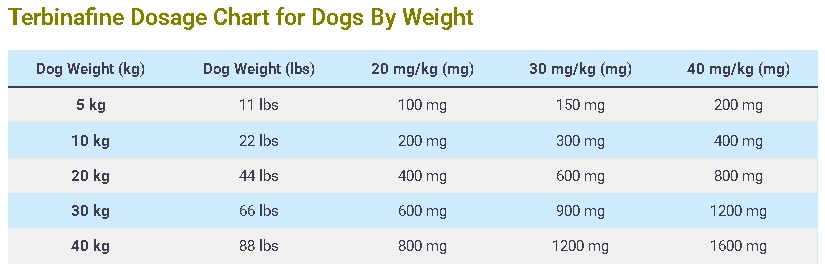
Terbinafine Dosage Chart for Dogs By Weight
The following table provides examples of how weight translates to dosage based on common ranges. This is for informational purposes only and does not replace a prescription.
| Dog Weight (kg) | Dog Weight (lbs) | 20 mg/kg (mg) | 30 mg/kg (mg) | 40 mg/kg (mg) |
| 5 kg | 11 lbs | 100 mg | 150 mg | 200 mg |
| 10 kg | 22 lbs | 200 mg | 300 mg | 400 mg |
| 20 kg | 44 lbs | 400 mg | 600 mg | 800 mg |
| 30 kg | 66 lbs | 600 mg | 900 mg | 1200 mg |
| 40 kg | 88 lbs | 800 mg | 1200 mg | 1600 mg |
Important Clinical Considerations
- Drug Interactions: Terbinafine dosage for dogs by weight can interact with various medications, including certain heart medications, antidepressants, and immune modulators. Always disclose other medications your dog is taking to your vet.
- Individualization: Dosage of Terbinafine For Dogs is often adjusted by a veterinarian based on the severity of the infection and the dog’s response. Doses as high as 30–40 mg/kg may be specifically required to reach therapeutic levels in the skin.
- Administration: Terbinafine is best absorbed when given with food.
- Safety & Monitoring:
- Liver/Kidney Health: Terbinafine dose should be used with caution or avoided in dogs with pre-existing liver or kidney disease.
- Side Effects: Watch for vomiting, diarrhea, or lethargy. If you notice yellowing of the eyes or gums (jaundice), contact your veterinarian immediately.
What Is Terbinafine & How It Works in Dogs
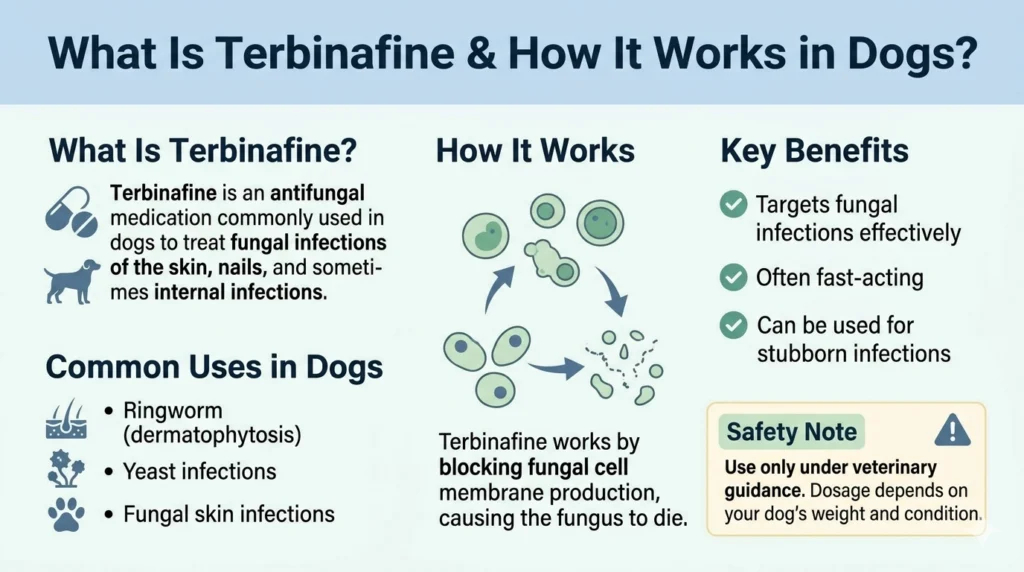
Lamisil (brand name Terbinafine) is a type of antifungal drug made of allylamine, which veterinarians use to treat fungus in dogs and cats and is mainly used to treat skin fungus.
It is used to treat a variety of fungal infections including ringworm (dermatophytosis caused by Microsporum and Trichophyton) although is also used in some systemic fungal infections like blastomycosis, cryptococcosis, histoplasmosis, coccidioidomycosis and sporotrichosis.
Even though terbinafine is officially approved to be used by humans, it is not officially approved to be used in veterinary medicine, and is usually used off-label, a common practice in veterinary medicine.


It comes in oral pills, topical ointments or sprays and occasionally in compounded preparations so custom-made to meet the needs of a particular pet.
Terbinafine dosage for dogs acts by preventing the activity of the enzyme, squalene epoxidase, which inhibits the synthesis of ergosterol, which is a crucial cell membrane constituent in fungi. This interference disrupts the fungal cell structure resulting in fungal death (fungicidal activity), especially in dermatophyte infections, and can retard the growth of other fungi.
It is either administered by itself or in conjunction with other antifungal drugs; however, it might be less efficient in treating some types of yeast infections such as Malassezia, Candida, and Aspergillus.
- Class of drug: Allylamine antifungal.
- Primary Applications: Ringworm, dermatophytosis, and certain systemic fungus.
- Mechanism: Inhibits the formation of ergosterol through the inhibition of squalene epoxidase.
- Effect: Kills fungal organisms or retards its growth.
- Forms: Oral tablets, creams/sprays applied topically, compounded forms.
- Purpose: Off-label (extra-label) in veterinary medicine.
- Combination Use: Can be used in combination with other antifungals as necessary.
- Limitations: Not as effective against certain yeast infections (Malassezia, Candida, Aspergillus).
What Is Terbinafine Used for in Dogs?
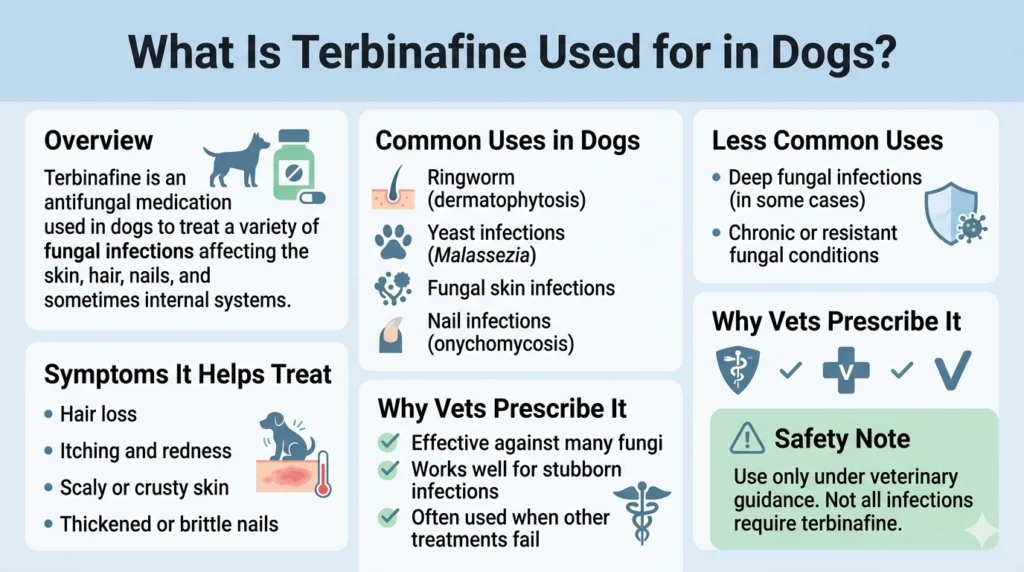
Terbinafine Dosage for dogs is an antifungal agent which is primarily used to treat fungal infections in dogs, especially skin infections. It is best in treating ringworm (dermatophytosis) and also in some other fungus at veterinary discretion.
Off-label use in dogs is not FDA approved, but is commonly used and may be preferred in certain instances, as there are fewer drug interactions and it is less likely to cause side effects in most instances than some other antifungals.


- Primary Use: Microsporum and Trichophyton caused ringworm (dermatophytosis).
- Skin Infections: This is generally used in treating fungus in the skin.
- Other Fungal Organisms: Candida, Aspergillus, Blastomyces, Coccidioidomycosis, Histoplasma, Sporothrix, Cryptococcus, Malassezia
- Use Type: Off-label (not approved by FDA in veterinary medicine but commonly used in veterinary medicine)
- Alternative Choices: Azole antifungal (itraconazole, fluconazole, ketoconazole) can be the choice in some instances.
- Benefit: Reduced drug interactions and the risk of side effects is usually decreased in some dogs.
How Is Terbinafine Dosage Given to Dogs?
Terbinafine for dogs dose is administered to dogs in various forms, which depend on the type and location of fungal infection. It is usually given by mouth in case of widespread or systemic infections and more local skin problems are treated with topical treatment.
Ear infections are treated in certain instances with special ear medications. The dosage and route may differ depending on the fungal organism and the severity of the disease and consultation of a veterinarian is mandatory.
Terbinafine dose is usually administered with food to aid in alleviating stomach upset and although the effects may be felt within a few days, full treatment may take a number of weeks.
- Oral Tablets/Granules: Taken by mouth in case of a ringworm and deeper or systemic fungal infections.
- Normal oral dosage: 25-50mg/kg/day (depends on the disease)
- Compounded Liquid: Custom liquid form to be able to dose easily in case of necessity.
- With Food: Helps prevent vomiting; can be used in soft food in form of granules.
- Topical Forms: Creams or sprays on the skin in case of local infections.
- Ear Drops: Combo products (e.g., terbinafine with other substances) that are utilized in the treatment of yeast ear infection.
- Dose Variation: Relies on infection type, and location.
- Veterinary Guidance: Must be done to ascertain proper dose and duration.
- Onset Time: Improvement in a few days; it can take weeks to fully improve.
Terbinafine Medication Side Effects in Dogs
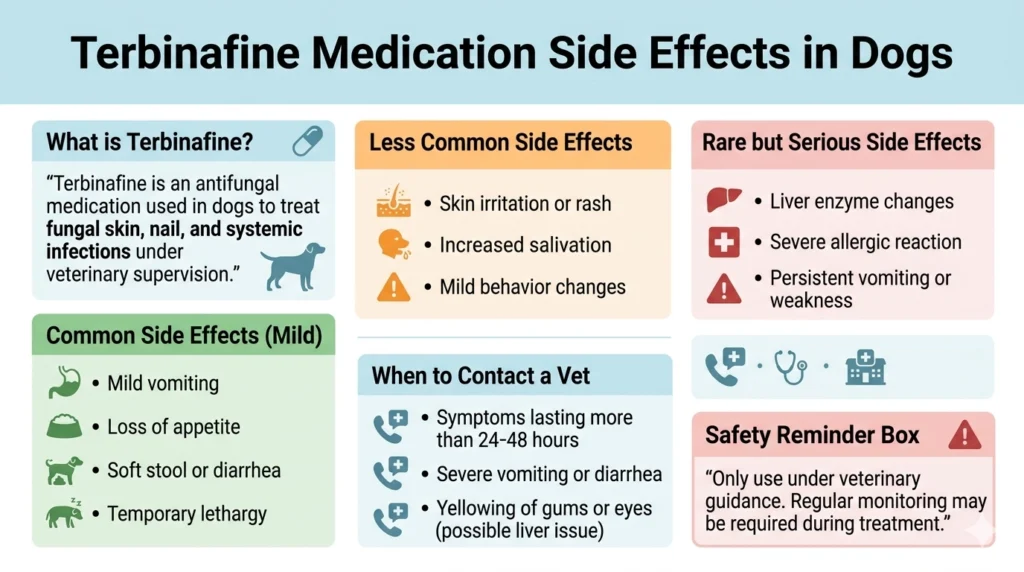
Generally, terbinafine drug for dogs is considered a well-tolerated antifungal drug in dogs and cats, but like any drug it can have side effects on certain pets.
The majority of the reactions are mild and short-term, primarily due to the fact that the medication is a short-acting one and can be eliminated by the body in approximately 24 hours. Nevertheless, in pets that have liver or kidney disease, they can have a long-lasting effect, which needs close monitoring.
The most common side effects that are reported are those associated with the digestive system. The most frequent complication is gastrointestinal upset and may include vomiting, diarrhea, and a decreased appetite.
Other changes that may be experienced by some dogs include odd panting or other changes in behavior. These side effects are normally mild and disappear once the drug is changed or stopped with the advice of the veterinary.
- Typical Effects: Vomiting, diarrhea, lack of appetite.
- Symptoms: Over panting in dogs.
In other instances, there might be more precise or minor side effects. Sometimes, dogs can contract a temporary eye inflammation (conjunctivitis).
Lethargy and itchiness of face has been reported in cats. Topical forms can also cause mild skin irritation but this is rare.
- Cats: Depression, itchiness of the face.
- Occasional Effects: in dogs, occasional conjunctivitis.
- Topical Use: Infrequent local skin irritation which is mild.
The changes associated with liver are infrequent but can occur, and some of the pets may display a high level of liver enzymes.
These alterations can be normally turned back with treatment modification. Although serious side effects are not usually reported in pets, care should be taken in animals with a known liver or kidney disease.
Tarbinafine for dogs dosage, in contrast to the azole antifungals, does not generally have hormonal side effects, and may be considered a different safety profile choice in veterinary medicine.
- Uncommon Effects: Hepatotoxicity (in most cases, reversible)
- Caution: Do not use or abuse when taking liver or kidney disease.
- Significant Benefit: No hormonal side effects as with azole antifungals.
- Serious Reactions: Not usually seen in dogs and cats.
Terbinafine Dosage For Dogs: Risk Factors & Drug Interactions
Terbinafine drug for dogs is usually safe but important risk factors and drug interactions that must be taken into account by pet owners and veterinarians when using this drug in dogs. Some health conditions may predispose to complications and a combination of terbinafine and certain drugs may alter the action of either of the drugs in the body.
Before beginning treatment, it is crucial to carefully examine the veterinary.
Dogs Terbinafine: Risk Factors.
Terbinafine should not be administered or administered with a lot of caution to some pets because of its possible side effects.
Should not be used in dogs which are:
- Intolerant or allergic to terbinafine.
- Lactating (nursing)
- Having active or chronic liver disease.
- Being under decreased kidney functioning (dose adjustment might be needed)
Apply WITH Caution in:
- Pregnant dogs
- Rearing of animals (safety not completely determined)
When there is liver or kidney disease and the patient must be treated, veterinarians may opt to use lower dosage and closely observe the patient.
Interactions between drugs and Terbinafine.
Terbinafine may react with various medications, which may change their efficacy, or raise their concentration in the body. The owner of a pet must never leave out any medication including supplements and herbal products to his or her veterinarian.
Drugs that can be used with terbinafine:
- Cyclosporine (can lose its effectiveness)
- Fluconazole
- Rifampin
- Beta-blockers (e.g., heart medications)
- Selegiline (MAO inhibitor)
- SSRIs (e.g., fluoxetine)
- Tricyclic antidepressants (e.g. clomipramine, amitriptyline)
- Trazodone
- Narcotic pain relievers
- Amitraz (control products against ticks)
They can remain longer in the body or they can be more effective as they are together with terbinafine because of common metabolic processes.
- Other notes of interaction:
- There can be a decrease in cyclosporine, which may decrease its efficacy.
- Cimetidine (antacid) has the potential of slowing down the breakdown of terbinafine, raising its concentration in the body.
Due to these risks, terbinafine use in dogs should be under veterinary supervision to promote safe and effective use.
You May Also Like to Read:
- Sotalol Dosage For Dogs Calculator: Safe Dosage Guide & Chart
- Fenugreek Dosage For Dogs Calculator, Chart & Safe Guide
FAQs
Tarbinafine dose is used in dogs to treat what?
Terbinafine for dogs dose is an antifungal agent used to cure the fungus in the skin (ringworm) and other fungal infections in dogs. It can also be applied in some systemic fungal infections with the guidance of the veterinary.
What is the time terbinafine dose for pets takes to work on dogs?
It begins to act rapidly yet it may be several days to several weeks before one realizes positive changes. Severe infections of the skin or the whole body can require 4-12 weeks or more to be treated completely.
Is terbinafine effective in treating the ringworm in dogs alone?
Yes, it is usually administered singly in the case of ringworm, but it might be necessary to use it together with topical therapy and cleaning of the environment to avoid re-infection.
Is terbinafine approved by FDA to use in dogs?
No, terbinafine drug is not approved by FDA to be used in veterinary. Nevertheless, it is usually off-label, which is typical of veterinary medicine, prescripted by veterinarians.
What are terbinafine’s side effects in dogs?
The side effects are common such as vomiting, diarrhea, loss of appetite and panting in rare cases. Seldom, liver enzyme raises can be seen.
Is terbinafine toxic to liver in dogs?
Problems with the liver are uncommon yet a possibility particularly with chronic use. This is the reason why liver blood tests are mostly prescribed by veterinarians before and during treatment.
What is the way that terbinafine dosage is administered to dogs?
Based on the infection, it may be administered as oral pills, compounded liquid, or topical medication. It is usually used with food in order to decrease stomach upset.
How to take it in case of a missed dose?
In case it is near to the time that was missed, administer the dose in the nearest future. In case it is too early to the following dose, omit the missed dose. Do not double up without consulting the veterinarian.
Is terbinafine dosage for dogs applicable to treat ear infections in dogs?
Not by itself. It is not useful on its own when used in ear infections but can be included in combination ear drugs with other active ingredients.
Does terbinafine dosage for dogs per pound or kg have any drug interactions?
Yes, it can also have an interaction with drugs such as cyclosporine, fluoxetine, beta-blockers and certain antidepressants. Always tell your veterinarian about any drugs and supplements that your dog is taking.
Final Thoughts
Terbinafine Dosage for dogs is an effective and most commonly well-tolerated antifungal agent in dogs that is used to treat fungal infections and more specifically ringworm, and other fungi such as Microsporum and Trichophyton.
Under appropriate veterinary care, appropriate dosing and monitoring, it may be a useful alternative to localized as well as in a few instances, systemic fungal infections.
Topical preparations can be effective in case of mild or local infection, and oral therapy can be required in case of deeper or widespread infection.
During treatment, veterinary advice is not to be neglected, especially to control the health of the liver by blood testing and to be sure that the infection is completely eliminated before discontinuing medication.
Regular dosing and postcare enhance the success of the recovery significantly and supportive tracking devices could assist pet owners to be on schedule and monitor progress.
In general, terbinafine can still be an effective tool in veterinary practice as it is both effective and safe when properly used.