Dexmedetomidine Dosage Calculator For Dogs By Weight
Calculated Output Parameters
⚠️ Clinical Safety Check Reminder
Do not use in dogs with pre-existing cardiac, respiratory, hepatic, or renal diseases, puppies under 16 weeks, geriatric patients, or pregnant/lactating dogs.
© medsdog.com
Dexmedetomidine dosage for dogs is an important subject for veterinarians and owners of dogs as it is a drug commonly used in veterinary practice to provide safe and effective sedation, pain management (analgesia) and pre-anesthetic support during veterinary procedures. Dexmedetomidine is a very selective alpha-2 adrenergic agonist and is the dextrorotatory (D) isomer of medetomidine, which has potent effects at lower doses. It is often used prior to general anesthesia and during clinical examinations, diagnostic tests and minor surgery and dental procedures in dogs because of its strong sedative and analgesic effects.
Dexmedetomidine dosage effects are dose-dependent, that is, the higher the dose the more sedative and pain control effects. Sedation usually starts quickly in most dogs, and reaches peak sedation in about 10 minutes after sedation is administered intravenously, and peak analgesic effects within 20 minutes. Sedative and analgesic effects last for 40-90 minutes, depending upon dose, route of administration and individual dog response; some dogs may be sedated for several hours.
Not only is dexmedetomidine a calm and controlled sedative, it also has a valuable role in veterinary anesthesia by reducing the amount of inhalant anesthetic used while under anesthesia. This anesthetic-sparing effect can be beneficial in the anaesthetic management of these patients as well as give veterinarians the freedom of selecting an appropriate anaesthetic regime for individual patients.
Dexmedetomidine for dogs can have an impact on heart rate, blood pressure and cardiovascular function, so it is important to get the dexmedetomidine dosage right in the dog for safety and effectiveness. Dosage will depend on the type of surgery, other drugs being administered and the dog's health status, age and weight. This guide provides information on standard dosing guidelines, dosage charts, administration methods, benefits, as well as potential side effects, safety precautions, and important veterinary considerations to ensure proper and safe medication use.
Key Takeaways
- Dexmedetomidine dose is a highly selective alpha-2 adrenergic agonist that can be used in dogs for sedation and for pain relief or as a pre-anesthetic medication.
- It is the active isomer of medetomidine and at lower doses is an effective sedative.
- It is used for clinical examination, for diagnostic procedures, for minor surgery, for dental procedures and for preparation of anesthesia.
- Sedation is dose-dependent, meaning that the higher the dose the stronger the sedation will be.
- Peak sedation is expected to occur approximately 10 minutes after intravenous (IV) administration and peak analgesia is expected to occur approximately 20 minutes after administration.
- The sedation typically lasts for 40-90 minutes, although some dogs may be sedated for several hours.
- Dexmedetomidine dosage for dogs has been shown to decrease the need for general anesthetic during procedures significantly.
- Dosage depends on the dog's procedure, route of administration, age, health status and size.
- Side effects include deceleration of heartbeat, fluctuations in blood pressure, vomiting, sluggishness and coldness in the body.
- Dexmedetomidine should be used only under veterinary supervision and patients monitored for its cardiovascular effects.
- To guarantee safe and effective sedation and pain management and to minimize the risk of adverse effects, precise dosing is imperative.
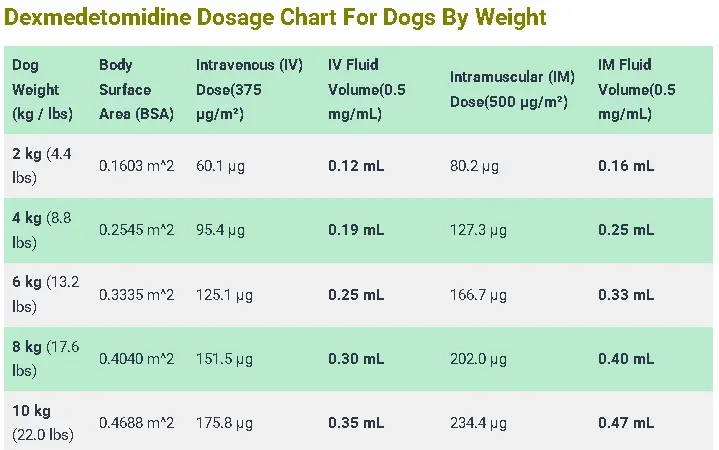
Dexmedetomidine Dosage Chart For Dogs By Weight
Because metabolic scales scale non-linearly with weight, notice how the intramuscular (IM) fluid volume in milliliters mathematically mirrors the dog's calculated BSA (m^2) due to the target dose (500 mu{g}/m^2) matching the drug concentration (500{g}/{mL}).
| Dog Weight (kg / lbs) | Body Surface Area (BSA) | Intravenous (IV) Dose(375 μg/m²) | IV Fluid Volume(0.5 mg/mL) | Intramuscular (IM) Dose(500 μg/m²) | IM Fluid Volume(0.5 mg/mL) |
| 2 kg (4.4 lbs) | 0.1603 m^2 | 60.1 μg | 0.12 mL | 80.2 μg | 0.16 mL |
| 4 kg (8.8 lbs) | 0.2545 m^2 | 95.4 μg | 0.19 mL | 127.3 μg | 0.25 mL |
| 6 kg (13.2 lbs) | 0.3335 m^2 | 125.1 μg | 0.25 mL | 166.7 μg | 0.33 mL |
| 8 kg (17.6 lbs) | 0.4040 m^2 | 151.5 μg | 0.30 mL | 202.0 μg | 0.40 mL |
| 10 kg (22.0 lbs) | 0.4688 m^2 | 175.8 μg | 0.35 mL | 234.4 μg | 0.47 mL |
| 12 kg (26.5 lbs) | 0.5294 m^2 | 198.5 μg | 0.40 mL | 264.7 μg | 0.53 mL |
| 15 kg (33.1 lbs) | 0.6143 m^2 | 230.4 μg | 0.46 mL | 307.2 μg | 0.61 mL |
| 20 kg (44.1 lbs) | 0.7442 m^2 | 279.1 μg | 0.56 mL | 372.1 μg | 0.74 mL |
| 25 kg (55.1 lbs) | 0.8635 m^2 | 323.8 μg | 0.65 mL | 431.8 μg | 0.86 mL |
| 30 kg (66.1 lbs) | 0.9751 m^2 | 365.7 μg | 0.73 mL | 487.6 μg | 0.98 mL |
| 35 kg (77.2 lbs) | 1.0807 m^2 | 405.3 μg | 0.81 mL | 540.3 μg | 1.08 mL |
| 40 kg (88.2 lbs) | 1.1813 m^2 | 443.0 μg | 0.89 mL | 590.7 μg | 1.18 mL |
| 45 kg (99.2 lbs) | 1.2778 m^2 | 479.2 μg | 0.96 mL | 638.9 μg | 1.28 mL |
| 50 kg (110.2 lbs) | 1.3708 m^2 | 514.0 μg | 1.03 mL | 685.4 μg | 1.37 mL |
| 55 kg (121.3 lbs) | 1.4607 m^2 | 547.8 μg | 1.10 mL | 730.4 μg | 1.46 mL |
| 60 kg (132.3 lbs) | 1.5479 m^2 | 580.5 μg | 1.16 mL | 774.0 μg | 1.55 mL |
⚠️ Clinical Safety Warning: Dexmedetomidine dose for dogs is a profound sedative with intense dose-dependent impacts on the cardiovascular system (including expected bradycardia and transient hypertension). This table is intended exclusively for qualified veterinary reference. Always perform a comprehensive pre-sedative health assessment before administration.
What Is Dexmedetomidine?
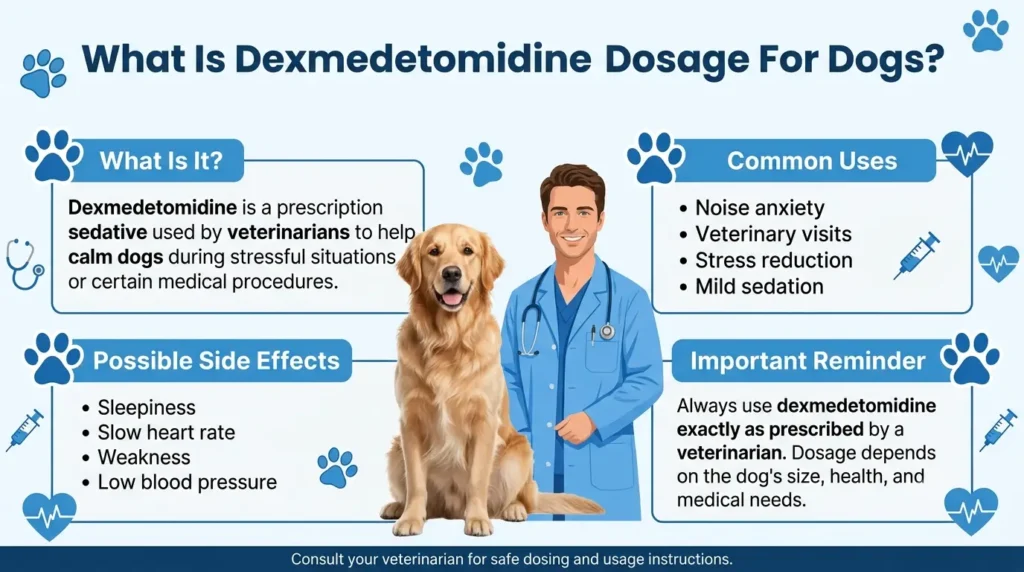
Dexmedetomidine medication for dogs is a veterinary drug that is approved by the FDA as a sedative, tranquilizer and pain-relief (analgesic) agent for use in dogs and cats. It is often used to keep pets calm when they are undergoing veterinary examination, diagnostic testing, and some minor surgery or dental treatment. Dexmedetomidine dose can also be used as an anesthetic adjunct prior to anesthesia for patient handling and comfort.
Dexmedetomidine drugs is found in several veterinary products, such as Dexdomitor®, Dexased®, Dexmedesed® and Sileo®. Sileo® has been specifically approved for dogs with fear, anxiety and panic related to loud noises, like thunderstorms and fireworks. But it is not usually used to treat generalized anxiety disorders.
In addition to its approved uses, dexmedetomidine is sometimes used off-label (extra-label) in exotic pets as a sedative or tranquilizer. Off-label use refers to the use of the drug for indications not evaluated or approved by the regulatory authorities; only administered under veterinary instruction.
Dexmedetomidine dosage also has good analgesic properties in dogs and cats. Veterinarians might give dexmedetomidine orally in some situations where cats may need to vomit after ingesting a foreign object. Dexmedetomidine gel should not be administered to cats however, unless otherwise instructed by a veterinarian.
How Is Dexmedetomidine Used?
Sedative, dexmedetomidine is generally used in dogs and cats for sedation, to keep animals calm during veterinary examinations, diagnostics, and minor surgery. Most often the medication is given as a shot in the clinic under the supervision of a veterinarian. Pets will usually fall asleep within 5-15 minutes after the injection and the calming effect will last from 2-3 hours. A veterinarian can reverse the sedation with atipamezole (Antisedan®), if necessary.
Dexmedetomidine dosage for dogs is also available as an oral gel for dogs to treat fear and anxiety from fireworks, thunderstorms and other loud noises at home. The gel is inserted into the dog's cheek, and it is absorbed through the gums. Should not be administered with food or food rewards as this may decrease effectiveness of the drug.
When using dexmedetomidine gel for noise aversion:
- When possible, provide 30-60 minutes prior to the anticipated noise event.
- May repeat doses if necessary, at least two hours (2 hrs) apart.
- Limit to no more than 5 doses in 10 hours.
Owners must always be careful of following their veterinarian's advice. Dexmedetomidine gel should be handled with latex gloves and pregnancy should be avoided. It is also essential that you keep your veterinarian updated on any other medications, vitamins, supplements or herbal treatments you are giving your pet and that you consult your veterinarian before changing your pet's treatment plan.
How Is Dexmedetomidine Given?
The most common route of administration for dexmedetomidine is in an intramuscular (IM) injection by a veterinarian in a hospital or clinical setting. This approach is most often used to calm and sedate prior to minor surgery, diagnostic procedures or examinations.
Dexmedetomidine medication for dogs can also be given to dogs as a gel or liquid solution put directly on the gums (gingiva); it is absorbed through the tissues and acts in the same way as when injected. Do not swallow the medication as it could decrease the effectiveness. Feed your dog after the medication has been given will prevent proper absorption, and follow your vet's guidelines for giving the medicine.
If the gel formulation is used:
- Read the product directions carefully prior to giving.
- To prevent accidental over-dosing, make sure the dosing syringe is locked at the right dose mark.
- If there is still enough medication in the dosing syringe for a full dose, it can be reused.
- Use protective gloves while giving the medicine to help reduce the amount of medicine that humans come into contact with.
Always check with your veterinarian before administering dexmedetomidine to your pet if you have any questions about the proper administration of the drug.
What Are the Benefits of Dexmedetomidine?
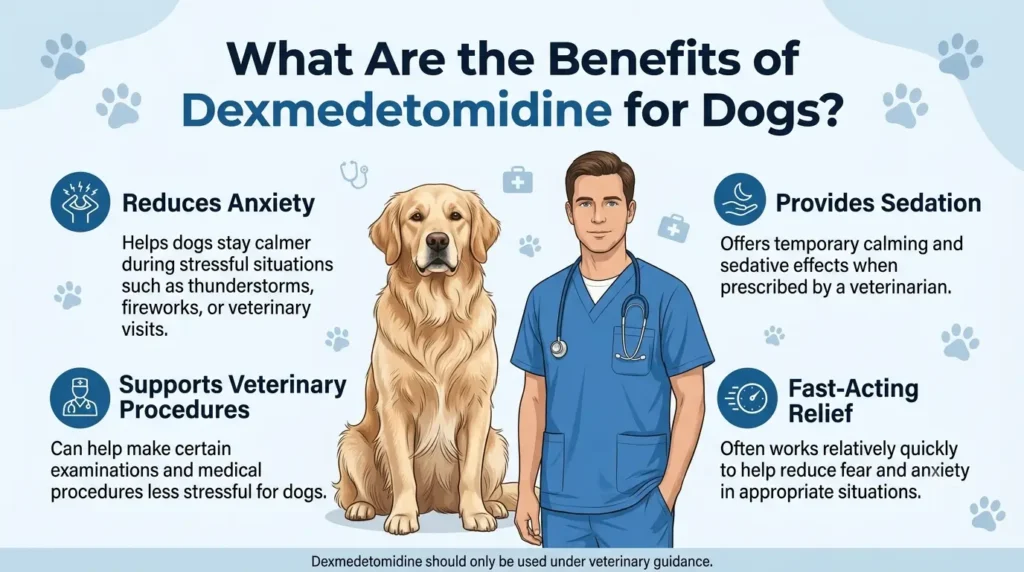
Dexmedetomidine for dogs dosage is a sedative commonly used in veterinary medicine, as it can provide a number of important benefits for dogs and cats. One of the greatest benefits of it is its quick onset of sedative effect, with sedative effect starting within 5 to 15 minutes after being administered. This enables vets to easily and rapidly sedate pets prior to examination, diagnostic testing or minor surgery.
The advantages of dexmedetomidine are:
- Rapid onset of sedation, usually in 5-15 minutes.
- When used prior to surgery, reduced levels of anaesthetic, helping to reduce the need for general anesthetic.
- The effects are reversible since veterinarians can give atipamezole (Antisedan®) to reverse the sedation if needed.
The range of benefits provided by dexmedetomidine makes it a valuable tool for controlled sedation and anesthetic management of veterinary patients.
Does Dexmedetomidine Have Warnings or Side Effects?
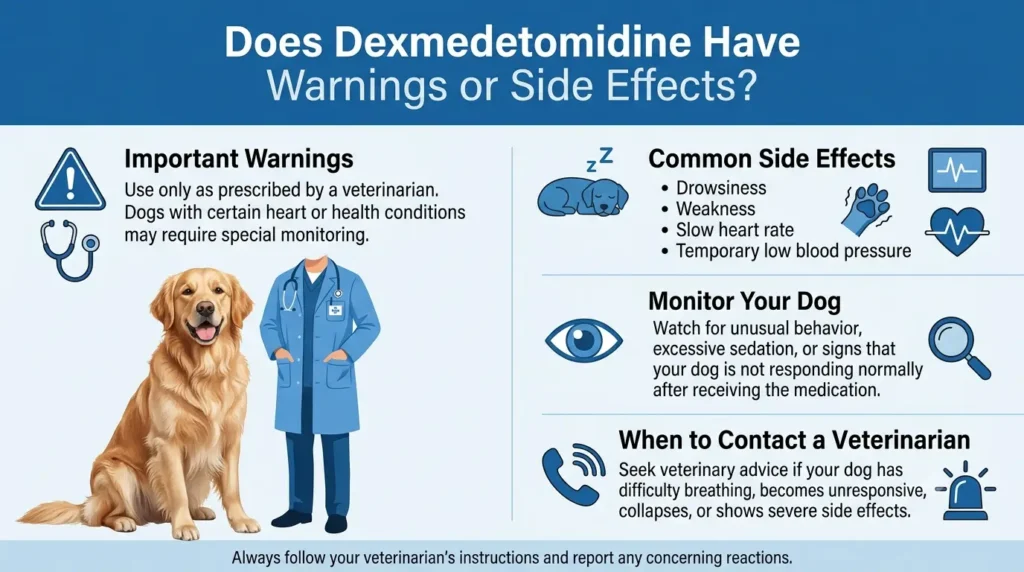
Yes, dexmedetomidine dose does have some side effects and is not a good choice for all pets. It is considered safe when administered by a veterinarian, but there are some safety considerations, risk factors and potential side effects that pet owners should know.
Side effects of Dexmedetomidine that are common include faintness, dizziness, and a decrease in blood pressure.
There may be short-term side effects that some pets have, such as:
- Slow heart rate (lowered heart rate)
- Depressed breathing (slower respiratory rate)
- Very drowsy or dull
- Pale gums
- Tremors or shakes of the muscles
- High blood pressure
- Dry eyes
- Lower body temperature
- Vomiting
- Increased blood sugar levels
- Transient pain at the site of injections (in case of injectable formulations)
This short-acting drug is usually effective within 24 hours, but may take longer in animals with liver or kidney disease.
Serious Side Effects
Stop using dexmedetomidine and contact your veterinarian immediately if your pet develops:
- Vomiting
- Diarrhea
- Collapse
If sedation is prolonged, if your pet is abnormally hyperactive, or if they are difficult to handle, particularly during noisy events, you should also consult your vet.
Important warnings and precautions:
For the oral gel in dogs:
- Do not use in dogs younger than 16 weeks of age.
- Avoid use in dogs with severe dental/gum disease.
- Do not take more than once in a 2 hour period to reduce the risk of overdose.
- For 15 minutes after administration, do not feed, give treats or water, as it may decrease the effectiveness of the medicine.
- Do not administer oral gel of dexmedetomidine to cats.
Dexmedetomidine should not be used in the following situations:
Pets should not be treated with dexmedetomidine if they:
- Is allergic or sensitive to medication.
- Have a serious heart, lung, liver or kidney condition.
- Are severely debilitated.
- Are under stress because of over heating, over cooling or overworking.
- Are pregnant or breastfeeding.
- Are still on the downer of one dose.
Some veterinarians may also not use injectable dexmedetomidine in dogs or cats with blood pressure issues or those with serious cardiovascular issues.
Use With Caution
Special caution should be exercised when using dexmedetomidine in:
- Pupies less than 16 weeks old.
- Older or frail pets.
- Dogs taking other behaviour modifying medications.
- Dogs with dental/gum disease that use the oral gel formulation.
Dexmedetomidine may impact a number of body systems including the heart and lungs, blood pressure, etc., and should only be used under veterinary supervision. Call your vet right away or an emergency veterinary hospital or animal poison control center if you think the reaction is serious.
Are There Any Drug Interactions I Should Be Aware Of?
Yes, dexmedetomidine may interact with other medicines, which may lead to excessive sleepiness, irregular heart rate, low blood pressure or trouble with breathing. Your veterinarian should be aware of any medications (prescription or over-the-counter), vitamins, supplements, or herbal products that your pet may be using before beginning dexmedetomidine.
Medicines that can interact with dexmedetomidine are some:
- Acepromazine – May cause excessive or prolonged sedation when used together.
- Benzodiazepines (e.g., diazepam and midazolam) – May enhance sedative effects and produce more sedation.
- Opioids (like tramadol, morphine) – May further increase sedation and may impair breathing.
- ACE Inhibitors (such as enalapril and benazepril) – Can increase the risk of low blood pressure.
- Blood Pressure Medications (such as amlodipine and telmisartan) – May cause blood pressure to drop too low when combined with dexmedetomidine.
- Calcium Channel Blockers (e.g., diltiazem and verapamil) – Can cause a slow or abnormal heartbeat.
- Digoxin – May cause a slower than normal heart rate if combined with dexmedetomidine.
- Anesthetics – May increase sedative and cardiovascular activity.
- Atenolol – May increase the risk for changes in the heart rate and blood pressure.
- Sildenafil – Must be used with caution because may affect cardiovascular system.
- Yohimbine – May interact with the action of dexmedetomidine in the body.
Drug interactions may be different depending on your pet's condition and treatment protocol, so your veterinarian might change a medication's dose or closely watch your pet if the drug is given with other drugs. Do not mix dexmedetomidine with any other drugs without consulting your veterinarian.
You May Also Like to Read:
- Dimenhydrinate Dosage For Dogs: Calculator & Safe Guide
- Bedinvetmab Dosage For Dogs: Calculator, Chart & Safe Guide
FAQs
Do pet owners have to worry about safety?
Yes. Pet owners are advised to use dexmedetomidine gel in a careful manner. It should be kept away from children and gloves (latex or nitrile) should be used when giving it to dogs. Hands should be thoroughly washed after application. It must not be used by people with a heart disorder or people who are pregnant or allergic to the medication.
What should I do if my pet overdoses or takes too much?
Contact your veterinarian or emergency veterinary clinic if you suspect that your pet has received more dexmedetomidine dose than prescribed. Symptoms of overdose include excessive drowsiness, vomiting, incontinence, weakness, poor balance and fainting from a slow heart beat (bradycardia). Prompt veterinary attention is required.
What if I miss a dose or take a second dose?
Dexmedetomidine gel is usually used as needed, for instance, before stressful events occur, which means that missed doses are rare. A double dose should never be given, however. Never skip or vary from your veterinarian's directions as to timing and frequency.
What is the storage for dexmedetomidine?
Dexmedetomidine dosage for dogs should be stored in original container, protected from light, at room temperature. Gel must be discarded after 28 days if it has not been used. The medication is compounded and stored as per the pharmacist's directions and opened gel syringes should be used within 4 weeks.
Does this drug need to be monitored?
Yes. Your veterinarian may check your pet's heart rate, heart rhythm, blood pressure and body temperature as part of the treatment. You should also be alert for any unusual side effects at home, and call for them to be reported immediately. Your veterinarian should re-assess the medication periodically to help ensure it is safe and effective.
What should I do in case of an emergency?
Your veterinarian will want to be contacted immediately if your pet has any signs of adverse reaction or possible overdose. If they are not available then an emergency veterinary clinic should be called immediately. Have a description of your pet's weight, symptoms and medication available.
Is it safe to give dexmedetomidine gel to a cat?
No, cats should NOT receive dexmedetomidine gel at any time.
Final Thoughts
Dexmedetomidine dosage for dogs by weight is a potent and rapid acting veterinary sedative, which is important for controlling anxiety, pain and procedural stress in dogs and cats. Under veterinary supervision, it can be used appropriately as an effective sedative with the benefit of being reversible and versatile for a variety of clinical settings.
It can have a significant impact on heart rate, blood pressure, and breathing, though, and should only be used with dosing precautions, patient condition and medications taken. Owners should always carefully follow veterinarian's directions, use the medication properly, and keep a close eye on their pets for any adverse reactions.
While overall highly beneficial when used properly, dexmedetomidine's safety and efficacy are solely dependent on responsible use and professional guidance.