Amantadine Dosage For Dogs: Calculator, Chart & Safe Guide
Amantadine Dosage Calculator for Dogs By Weight
Accurately calculate the low and high target dosage ranges based on your dog’s weight.
- Always verify calculations with your veterinarian before giving medication.
- Amantadine must be paired with other analgesics for effective relief.
- Long-term therapy requires routine blood panels to safeguard organs.
© medsdog.com


Amantadine Dosage for dogs is a prescription drug that is typically used to assist in the management of chronic pain, particularly in dogs that are affected by chronic osteoarthritis, nerve pain, cancer pain, degenerative joint disease, disk disease and other chronic painful conditions.
Amantadine (Symmetrel®, Gocovri®, Osmolex ER®, and Endantadine®) is an antiviral drug used in humans for the treatment of Influenza A, but is widely used by veterinarians off-label for pain management and the enhancement of the dog’s quality of life. Amantadine is not primarily used as a pain reliever; instead, it is used in combination with other drugs like gabapentin, opioids or NSAIDs when pain persists or is no longer well-managed.
Amantadine functions by interfering with the central nervous system’s processing of pain signals, which is why it may be useful for chronic, neuropathic pain. Its use in veterinary medicine is “extra-label” and pet owners should be diligent in following their veterinarian’s dosage and monitoring guidelines.
This guide will help you understand all the details of Amantadine dosage for dogs by weight, such as recommended dosage guidelines, Amantadine uses, benefits, side effects, safety precautions and more—including some helpful tips for getting your dog the most pain-relief benefits from this medication.
Key Takeaways
- Amantadine for dogs is a prescription-only drug for the management of chronic pain (long-term and nerve pain) in dogs.
- It was first used as an antiviral medication, but has little use as an antiviral in dogs today.
- Amantadine is generally well tolerated and very few dogs are known to have side effects when used as directed by a vet.
- Side effects, the most common of which are mild gastrointestinal upset (vomiting and diarrhea), have been reported.
- Amantadine is frequently prescribed as part of a complete pain management program in dogs with chronic pain to assist in making them more comfortable and improve their quality of life.
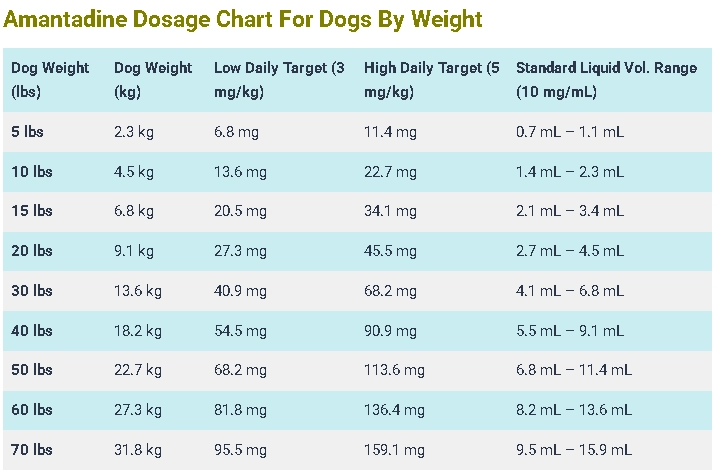
Amantadine Dosage Chart For Dogs By Weight
Here is a complete, quick-reference dosage table based on the standard veterinary target guidelines of 3 mg/kg (low dose) to 5 mg/kg (high dose).
To make this as practical as possible for dog owners, the liquid volumes are pre-calculated using the standard veterinary liquid concentration of 10 mg/mL.


| Dog Weight (lbs) | Dog Weight (kg) | Low Daily Target (3 mg/kg) | High Daily Target (5 mg/kg) | Standard Liquid Vol. Range (10 mg/mL) |
| 5 lbs | 2.3 kg | 6.8 mg | 11.4 mg | 0.7 mL – 1.1 mL |
| 10 lbs | 4.5 kg | 13.6 mg | 22.7 mg | 1.4 mL – 2.3 mL |
| 15 lbs | 6.8 kg | 20.5 mg | 34.1 mg | 2.1 mL – 3.4 mL |
| 20 lbs | 9.1 kg | 27.3 mg | 45.5 mg | 2.7 mL – 4.5 mL |
| 30 lbs | 13.6 kg | 40.9 mg | 68.2 mg | 4.1 mL – 6.8 mL |
| 40 lbs | 18.2 kg | 54.5 mg | 90.9 mg | 5.5 mL – 9.1 mL |
| 50 lbs | 22.7 kg | 68.2 mg | 113.6 mg | 6.8 mL – 11.4 mL |
| 60 lbs | 27.3 kg | 81.8 mg | 136.4 mg | 8.2 mL – 13.6 mL |
| 70 lbs | 31.8 kg | 95.5 mg | 159.1 mg | 9.5 mL – 15.9 mL |
| 80 lbs | 36.4 kg | 109.1 mg | 181.8 mg | 10.9 mL – 18.2 mL |
| 90 lbs | 40.9 kg | 122.7 mg | 204.5 mg | 12.3 mL – 20.5 mL |
| 100 lbs | 45.5 kg | 136.4 mg | 227.3 mg | 13.6 mL – 22.7 mL |
⚠️ Important Administration Note: Standard human capsules come in a fixed 100 mg size. Because these capsules cannot be safely split into fractional or custom doses, veterinarians almost exclusively prescribe custom-compounded liquids or specialized smaller capsule sizes for dogs under 40 lbs to avoid accidental overdosing. Always default to your vet’s precise syringe or pill instructions.
What Is Amantadine?
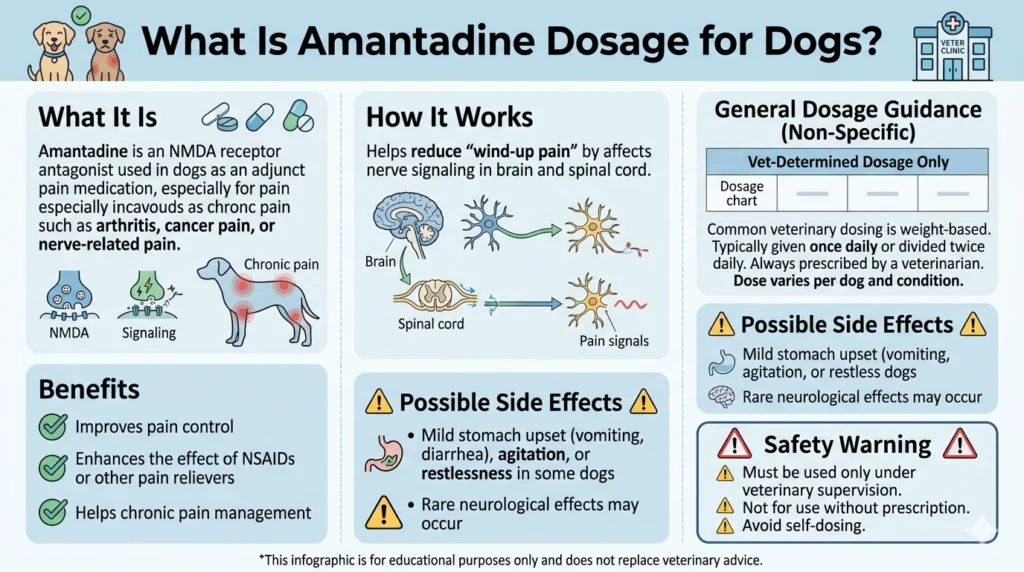
Amantadine (Symmetrel®) is a prescription drug that was initially designed to treat Influenza A infections in humans but is no longer used for this purpose. Later it was found to have an effect on nerve signaling as well and is therefore effective in managing chronic and neuropathic (nerve) pain in both dogs and cats. Amantadine dosage is a class of drugs called N-methyl-D-aspartate (NMDA) receptor antagonists that are used to decrease pain sensitization and “wind-up” pain in the nervous system.
Amantadine for dogs dosage is most commonly used in veterinary medicine as an adjunct pain medication, that is, it is usually added to other pain killers that may not be sufficiently controlling the pain. It is not regarded as particularly effective on its own as a pain medication.
Amantadine use in dogs and cats is considered extra-label (off-label) because it is not specifically approved by the FDA for use in animals, but is used as a result of veterinary experience and evidence. No veterinary specific formulation exists and veterinarians often use human formulations, such as tablets, capsules, liquid solutions or even compounded formulations that have been adapted to an individual pet’s dose.
What Is Amantadine Used for in Dogs?
Amantadine for pets is mostly used to manage chronic and neuropathic (nerve-related) pain in a dog when other pain medications are no longer effective. It does this by dampening pain sensitization in the nervous system, making it especially effective for those dogs that are suffering from chronic or escalating pain.
Amantadine is used for the following conditions in dogs:
Amantadine can be prescribed by a veterinarian for:


- Osteoarthritis and other degenerative diseases of the joints
- Pain due to cancer, especially osteosarcoma (bone cancer)
- Intervertebral Disc Disease (IVDD).
- Any kind of pain or nerve related conditions that affect the nervous system.
- Chronic pain syndromes
- Post-operative pain management
How Amantadine Helps
Amantadine is recommended when a dog’s nervous system gets “wound up,” or “central sensitization” occurs, meaning that the nervous system is overly sensitive to pain. The drug’s action on this process may help to better manage pain and encourage dogs to be more comfortable and active.
Common Combination Medications
Amantadine is not a single drug therapy and is often paired with:
- Nonsteroidal anti-inflammatory drugs (NSAIDs)
- Gabapentin
- Morphine and other opioids
Researchers have found that dogs with arthritis who receive amantadine in combination with an NSAID may have better mobility and be more physically active than dogs that are treated only with an NSAID.
Important Considerations
- The treatment plan is customized to meet the needs of the dog.
- Amantadine is to be used with caution in dogs with kidney disease, liver disease, or heart failure.
- Most of the time it is not recommended for pregnant or nursing dogs.
- It can take 10 days or longer to see all the benefits of the medication.
- For the best and safest results, always follow your veterinarian’s directions for dosing and administration.
What Are the Benefits of Amantadine for Pets?
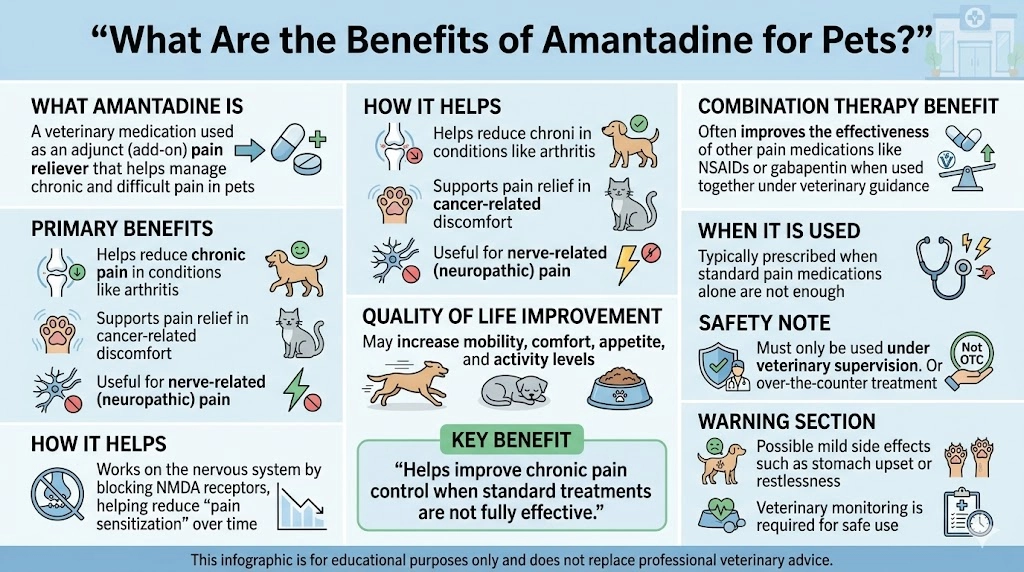
The use of Amantadine drugs for dogs can provide a number of benefits for pets, especially if they are suffering from chronic or persistent pain that is hard to manage with other pain relief options. It is typically used when other pain-relieving drugs on their own have failed to ease the pain and is generally combined with other pain-management strategies.
Some of the main advantages of Amantadine for pets are:
- Supports chronic pain and neuropathic (nerve) pain.
- May enhance the comfort and quality of life of pets suffering from chronic painful disease.
- Typical uses are post surgery healing and treatment of arthritis and osteosarcoma.
- Helps to reduce pain along with other analgesics.
- May help pets with pain not responding to other pain medication.
- May be part of some treatment protocol for its antiviral properties.
- Veterinarians prescribe for dogs and cats as part of a treatment plan tailored to a specific animal.
Amantadine may also be used in combination with other pain control drugs to relieve pain in a more effective and all-encompassing manner in pets suffering from chronic and persistent pain.
What Are the Common Side Effects of Amantadine in Dogs?
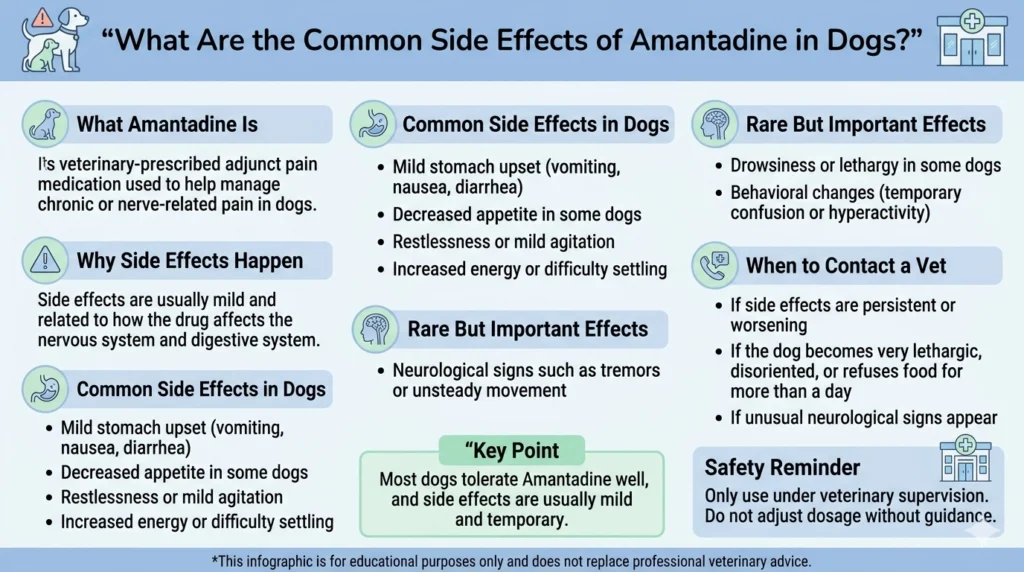
Most dogs will have few or no significant side effects from Amantadine, and the drug is thought to be safe for dogs. If side effects do happen, they are generally mild and short-lived, and may get better as the dog’s body becomes accustomed to the drug. Amantadine should be taken with food to help prevent stomach problems.
Common Side Effects
Common side effects are:
- Poor or loose stools
- Vomiting
- Flatulence (gas)
- Decreased appetite
- Sleepiness or drowsiness
- Some fatigue or sluggishness
- Restlessness or agitation
Less common side effects may include:
Some dogs may experience less common side effects, such as:
- And incoordination or difficulty in walking (ataxia).
- Lightheadedness
- Excessive drooling
- Increased thirst
- Dry mouth
- Dysuria or retention of urine
- Alterations in urination habits.
- Increased heart rate
- Constipation
- Dry eyes
Very uncommon but serious side effects.
More serious reactions are rare but may happen and do need immediate veterinary care:
- Severe agitation or aggressive behaviour
- Tremors
- Anxiety
- Seizures
- Limb swelling
- Confusion or behaviour like a hallucination, especially at high doses, or in combination with some medicines that affect the nervous system
Important Safety Notes
- Most gastrointestinal side effects are mild, such as diarrhea, gas or vomiting, and tend to improve over the first few days of treatment without intervention.
- More prolonged effects may be seen in dogs with kidney or liver disease as the medication may remain in the body longer.
- If the side effects continue or get worse or your dog appears to be having a serious reaction or possible overdose, contact your veterinarian immediately.
- Always adjust or discontinue meds for your dog only with a veterinarian’s advice.
In general, most dogs tolerate amantadine well and when used correctly under veterinary supervision, it can be extremely helpful for pain relief.
What Are the Most Serious Risks of Amantadine for Dogs?
Amantadine dosage for dogs is generally safe for most dogs, but in rare cases serious side effects may occur. Owners should be mindful of these potential risks and if any concerning signs appear during treatments, veterinary attention should be sought immediately.
Severe Side Effects to be Alert to
Side effects that are very rare but can be serious in amantadine are:
- Seizures
- Severe restlessness, agitation
- Lack of co-ordination (balance)
- Walking problems or unusual walking pattern
- Swelling of the limbs especially in dogs with heart disease.
If your dog shows signs of any of these problems, call your vet or emergency veterinarian right away.
Dogs at Higher Risk
Dogs with some health conditions should not take Amantadine or should take it with caution such as:
- Kidney disease
- Liver disease
- Heart failure or heart disease
- Seizure disorders
- Behavioral disorders
- Untreated glaucoma
- Eczematoid dermatitis
- History of allergies or sensitivity to amantadine.
Use in Pregnancy and During Lactation
Amantadine should be used with caution in pregnant or nursing dogs because it has not been sufficiently proven to be safe in these animals.
Potential Drug Interactions
Some drugs may interfere with the way amantadine works and may be more likely to cause side effects. Let your veterinarian know if your dog is on any other medications or supplements, particularly:
- Thiazide diuretics
- Trimethoprim-sulfa antibiotics
- Heart medications, such as quinidine
With careful veterinary monitoring and proper dosing, however, there is the potential for dogs to receive amantadine’s pain-management benefits while reducing risks.
Does Amantadine Interact With Any Other Dog Medications?
Amantadine is compatible with many veterinary drugs and only has a few significant drug interactions. However, some medications may interact with amantadine, either increase the amount of amantadine in the blood or increase the risk of side effects.
Therefore, dog owners should always let their veterinarian know of any prescription or over the counter drugs, vitamins, supplements or herbal treatments that their dog is on.
Medications that may interact with Amantadine.
Amantadine should be used with caution in combination with:
- Amitriptyline
- Antihistamines like diphenhydramine (Benadryl®)
- Atropine
- Selegiline (Anipryl®)
- Quinidine
- Quinine
- Trimethoprim/sulfa (Bactrim®)
- Thiazide diuretics (e.g., hydrochlorothiazide)
- Triamterene
- Other anticholinergic medications
- Stimulants that act on the central nervous system (CNS stimulants)
- Medications that affect the pH of the urine; urinary acidifiers
The possibility of drug interactions and what they may be.
These interactions may:
- Blood levels of amantadine can be increased by giving it as a bolus followed by a continuous infusion.
- Cause side effects to occur more easily
- Raise the level of activity, excitement or agitation of the nervous system
- Worsen anticholinergic side effects such as:
- Dry mouth
- Dry eyes
- Constipation
- Difficulty urinating
- Increased heart rate
- Blurred vision
- Slow down the clearance of amantadine from the body
Important Safety Advice
Amantadine dosage for dogs per pound is relatively safe and may be administered with other veterinary drugs, however, drug interactions may occur. Always ask your vet before adding, removing or mixing medicines, to make sure of the safest and best treatment for your dog.
You May Also Like to Read:
- Animax Ointment Dosage For Dogs Calculator & Safe Guide
- Milbemycin Dosage For Dogs Calculator: Dosage Guide & Chart
FAQs
If my dog forgets to take amantadine, what do I do?
If a dose is missed, administer it as soon as possible. If it is close to the time of the next scheduled dose, however, skip the missed dose and proceed with your dog’s regular dose schedule. Do not double dose or ‘catch-up’ doses.
When does amantadine begin to be effective in dogs?
Amantadine dose for pets will not relieve pain immediately. Most dogs start to notice a significant improvement within 1-3 weeks but some pets may respond sooner. Chronic pain and nervous system sensitization takes time to fix, so it is recommended that treatments be continued for at least several weeks before assessing their effectiveness.
For how long will the effects of amantadine last?
Amantadine’s effects tend to last for approximately 24 hours. Sometimes, two doses a day are prescribed to help keep the levels of medication and pain control more constant.
Can amantadine be used by itself?
Amantadine is generally effective when used in conjunction with other pain-management drugs, like NSAIDs, gabapentin or tramadol, though it may be used alone. Chronic and nerve-related pain may require a combination therapy for relief.
Does Gabapentin equal Amantadine?
No. Gabapentin and amantadine are two different medications, from two different drug classes, which work to decrease pain in different ways. They may be used in combination together because they work in different ways to relieve pain.
Is extended-release amantadine safe for dogs?
Long acting preparations for human use (e.g., Parkinson’s) are normally not recommended unless directed by the veterinarian. Standard formulations are generally recommended because there are more options for accurately dosed amounts of medication for the dog.
Do I need to monitor my dog while he or she is on amantadine?
All dogs receiving amantadine do not require special monitoring, but veterinarians should evaluate your dog’s response to amantadine and monitor for adverse effects. Dogs on long term treatment may be monitored for renal function due to elimination of the drug by the kidneys. Mobility, activity, appetite, bathroom habits, gait changes and pain scores can also be monitored over a period of weeks and can be used to assess the success of treatment.
What signs indicate that I should contact my veterinarian?
If your dog’s condition deteriorates, doesn’t improve, or if he or she has any serious side effects, or you think you may have given the wrong amount, contact your veterinarian. If symptoms that are not normal appear during treatment, it is important to seek veterinary attention.
If a dog overdoses on amantadine, what should you do?
Overdose can result in extreme sleepiness, shaking, vomiting, restlessness, trouble breathing, salivation, drooling, loss of coordination (ataxia) and other serious neurological effects. If you think it’s an overdose, get immediate veterinary help or contact an animal poison control center.
Is Amantadine medication safe for a dog?
Amantadine is generally safe to use in most dogs when used and supervised by a veterinarian. Your vet will be able to decide if it is suitable for your dog, depending on his medical history, the medications he is taking, and his health.
What kind of amantadine can I purchase for my dog?
Amantadine can only be bought with veterinary prescription. It is available at veterinary clinics, human pharmacies, and/or veterinary compounding pharmacies if individual dosing needs are required.
What are the storage directions for amantadine?
Store amantadine at controlled room temperature (68°F – 77°F/20°C – 25°C) with excursions allowed between 59°F and 86°F (15°C and 30°C) and keep it in a tightly closed container. Keep medication away from moisture and light! Oral liquid formulations should not be refrigerated or frozen unless instructed. Compounded products must be stored following the directions of the compounding pharmacy.
Are there any safety precautions for pet owners?
Amantadine should not be given to children or pets. After handling or giving the medication, wash hands, and do not give to people who are known to be allergic to amantadine.
Final Thoughts
Amantadine (Symmetrel®) for dogs is a safe and effective adjunct drug for chronic and neuropathic pain in the dog. It is commonly incorporated into a multimodal approach to pain management and is often prescribed in combination with NSAIDs, opioids or gabapentin to manage pain associated with arthritis, intervertebral disc disease or cancer.
Amantadine dosage for dogs is a relatively safe drug, and most cases of side effects are mild and transient gastrointestinal symptoms like diarrhea and vomiting. In rare instances, however, more severe side effects may occur, such as seizures or neurologic changes, so veterinary supervision is needed during the treatment.
Amantadine drug for dogs is generally given at 3–5 mg/kg either once or twice daily (q12h), the latter being preferred for more consistent pain control, as long as it is used under veterinary advice. Full benefits may take 1 or 3 weeks to see, and it is important to be patient and take the correct dosage consistently.
Monitoring, particularly renal function during long term use, and careful observation of adverse effects help assure safe and effective therapy. Amantadine should be used as part of a holistic, multimodal pain management program that is designed for each individual dog.
Be sure to check with your veterinarian before beginning, changing or combining medications to provide the safest and most effective pain relief for your pet.