Zinc Dosage For Dogs Per Day Calculator & Safe Guide
Zinc Dosage For Dogs Calculator
| Supplement | factor | clinical dose (mg/kg) |
|---|---|---|
| Zinc sulfate | 10 | 10 mg/kg |
| Zinc gluconate | 5 | 5 mg/kg |
| Zinc methionine | 1.7 | 1.7 mg/kg |
📋 Administration essentials
- Absorption: give away from high‑calcium meals (dairy) & cereals (phytates).
- Stomach upset? crush tablet, mix with tiny low‑calcium meat.
- Monitoring: if skin lesions don’t improve after 4 weeks, vet may increase dose by 50%.
- 1 lb reference: ≈ 0.45 mg elemental zinc (our formula: 1 lb → 0.45 mg).
(kg × 1 = elemental; × factor = supplement)
© medsdog.com
Disclaimer: This guide is for informational purposes only and is not a substitute for professional veterinary advice.
Always consult your veterinarian before giving Zinc or any medication to your dog.
As a dog parent, seeing your furry friend battle with lingering skin problems, limp coat and lethargy for no apparent reason, can be frustrating.
You may have tried different foods and supplements and still found that the missing piece in the puzzle is a successful simple mineral and that is zinc For Dogs.
This guide is meant to let us hear the importance of zinc with possible lapses and most importantly how to maneuver through the equally confusing world of supplementation.
We’ll be giving you practical tools such as a detailed breakdown of zinc dosage for dogs per day calculator by weight in order to help you talk to your veterinarian confidently about dealing with these options.
Whether you are worried about a predisposed breed such as the Siberian Husky or simply want to golf the max from your dog’s health, this is your starting place to safe and effective management of dosage of zinc for dogs.
Key Takeaways: What You Need to Learn
- Zinc is Vital: It’s an essential mineral that is a component of over 300 enzymatic processes, affecting everything from your skin health to immune function.
- Deficiency is Real: Some breeds (such as arctic breeds) and some diets (particularly those that are high in grains or calcium) may predispose to a deficiency in diabetes, resulting in skin lesions, poor wound healing and a weak immune system.
- Dosage is Precise: The correct Zinc Dosage For Dogs is highly dependent upon the weight of the dog, the form of zinc taken, and the purpose for which it is being supplemented (maintenance or in the treatment of a deficiency).
- Toxicity is a Danger: Even though it is often necessary to supplement, an excess of Zinc Dosage For Dogs is toxic and can lead to severe health problems, such as anemia and organ damage. This guide focuses mainly on the safety aspect. and use of Zinc Dosage For Dogs.
Zinc Dosage For Dogs
the therapeutic dosage for zinc supplementation in the dog with syndrome I is 1 mg elemental zinc / kg body weight, orally every 24 hours. This dosage works out to specific amounts depending on the form of the salts used. 10 mg/kg of zinc sulfate, 5 mg/kg of zinc gluconate or 1.7 mg/kg zinc methionine.
Treatment is usually lifelong for this condition. If an inadequate response is seen after four weeks, the dose should be increased by 50%. In situations where the animals do not respond adequately, low dose corticosteroids may be employed to increase zinc absorption.
For animals with syndrome II, correction of the diet will usually cure the disease within two to six weeks but may be accelerated by supplementation.
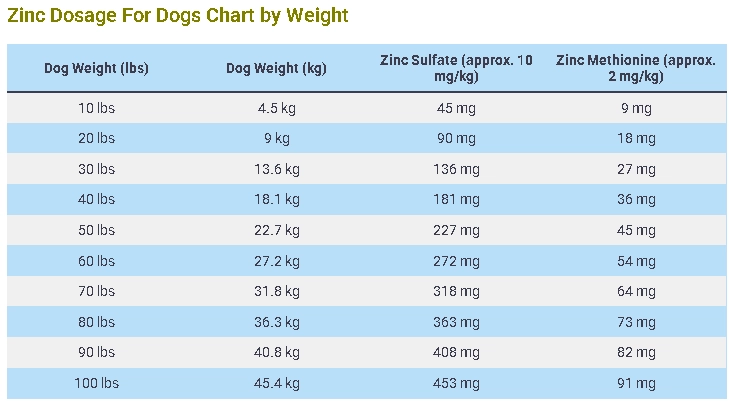
Zinc Dosage Chart For Dogs by Weight
| Dog Weight (lbs) | Dog Weight (kg) | Zinc Sulfate (approx. 10 mg/kg) | Zinc Methionine (approx. 2 mg/kg) |
|---|---|---|---|
| 10 lbs | 4.5 kg | 45 mg | 9 mg |
| 20 lbs | 9 kg | 90 mg | 18 mg |
| 30 lbs | 13.6 kg | 136 mg | 27 mg |
| 40 lbs | 18.1 kg | 181 mg | 36 mg |
| 50 lbs | 22.7 kg | 227 mg | 45 mg |
| 60 lbs | 27.2 kg | 272 mg | 54 mg |
| 70 lbs | 31.8 kg | 318 mg | 64 mg |
| 80 lbs | 36.3 kg | 363 mg | 73 mg |
| 90 lbs | 40.8 kg | 408 mg | 82 mg |
| 100 lbs | 45.4 kg | 453 mg | 91 mg |
Note: Dosages are based off elemental zinc content. Zinc sulfate is commonly dosed at 10mg/kg once a day, and zinc methionine is dosed at a lower rate of 1.7-2 mg/kg once a day .
About Supplements of Zinc Dosage For Dogs
Zinc is a trace mineral, which means the body requires it in very small amounts but the role it plays is monumental.
It’s a co-factor for hundreds of enzymes, in essence it’s a helper so that these enzymes could do their jobs correctly.
These jobs include protein synthesis, DNA duplication, cell division and wound healing.
So why would a dog require a supplement? It’s not as easy as simple to add zinc to their bowl. There are a number of factors that can result in a deficiency even when the diet appears to be balanced.
- Dietary Antagonists: Ingredients often found in dog food such as phytates (found in cereals, grains and soy) and high amounts of calcium cause Zinc Dosage For Dogs to bind in the digestive tract and not be absorbed.
This is the main reason why a dog feeding on a full diet of a commercial can still exhibit signs of deficiency. - Genetic Predisposition: Certain breeds, specifically the Arctic breeds, such as Siberian Huskies and Alaskan Malamutes have a genetic predisposition to fail to absorb the zinc properly from their intestines.
This condition, which can be referred to as Syndrome I zinc-responsive dermatosis, usually necessitates lifetime supplementation. - Rapid Growth & Poor Diet: Giant and large breed puppies growing fast (such as Great Danes & Doberman Pinschers) may consume their Zinc Dosage For Dogs stores if their diet does not keep pace with the demands of their rapid growth, resulting in Syndrome II deficiency.
- Gut Health Issues: Issues such as Inflammatory Bowel Disease (IBD) can affect the body’s gut enzyme in its ability to absorb nutrients such as zinc or Zinc Dosage For Dogs in the proper way.
Supplementation, therefore, isn’t only about adding zinc but overcoming these barriers so your dog’s body will receive the amount that it needs to function optimally.
How Much Zinc Does My Dog Really Need Per Day?
This is the most important question and the answer is not one-size-fits-all. The amount of Zinc Dosage For Dogs required by a dog depends on his life stage, overall health and whether he has a deficiency.
We can divide this into two general ones – dietary allowance and therapeutic dosing.
Dietary Allowance vs. Therapeutic Dosage
- Dietary Maintenance: This is the amount of zinc that a normal dog requires in their daily diet to maintain normal body functions. The Association of American Feed Control Officials (AAFCO) recommends 120 mg of zinc /kg dry-matter diet for adult dogs.
The National Research Council (NRC) gives guidelines according to caloric intake, which recommend 15mg per 1000 kcal for adult dogs . High Quality commercial foods are designed to comply with these standards. - Therapeutic Dosage: this has a higher dose, is caused by your veterinarian, and has a specific purpose of active treatment of a diagnosed case of zinc deficiency or malabsorption problem.
This is where Zinc Dosage For Dogs per day calculator By weight comes into play and it will be a tool for your vet, as they will make the final decision on how much of Zinc Dosage For Dogs is required to correct the deficiency.
Why Zinc Matters: The Role of Zinc Dosage For Dogs
In order to fully appreciate the importance of getting Zinc Dosage For Dogs a day right, it helps to be aware of just how interwoven this mineral is into your dog’s biology. It’s one of the pillars of health from within out.
Immune System Support: Zinc plays an important role in development and function of immune cells. A deficiency can cause your dog to be more vulnerable to infections, including recurrence skin infections and pneumonia.
It functions as an antioxidant and helps protect the cells from cell damage.
Skin and Coat Health: This is where the deficiency in Zinc Dosage For Dogs shows up to be the most visible. Zinc is required in the turnover of skin cells and keratinization (the process where the skin makes the protective outer layer of skin).
Without it, the skin barrier is compromised, which leads to the development of the classic signs of zinc responsive dermatosis: crusting, scaling, hair loss and slower healing wounds .
Thyroid Function and Metabolism: Zinc is involved in the synthesis and regulation of thyroid hormones, which regulate your dog’s metabolic rate. It’s also involved in production and storage of insulin .
Cognitive Function and Wound Healing: From helping you learn and remember to washing up then taking care of those cuts and scrapes as well, zinc is a busy mineral.
It’s necessary for DNA synthesis and cell division, making it critical for growth in puppies and tissue repair in dogs of all ages.
Signs of Zinc Deficiency in Dogs
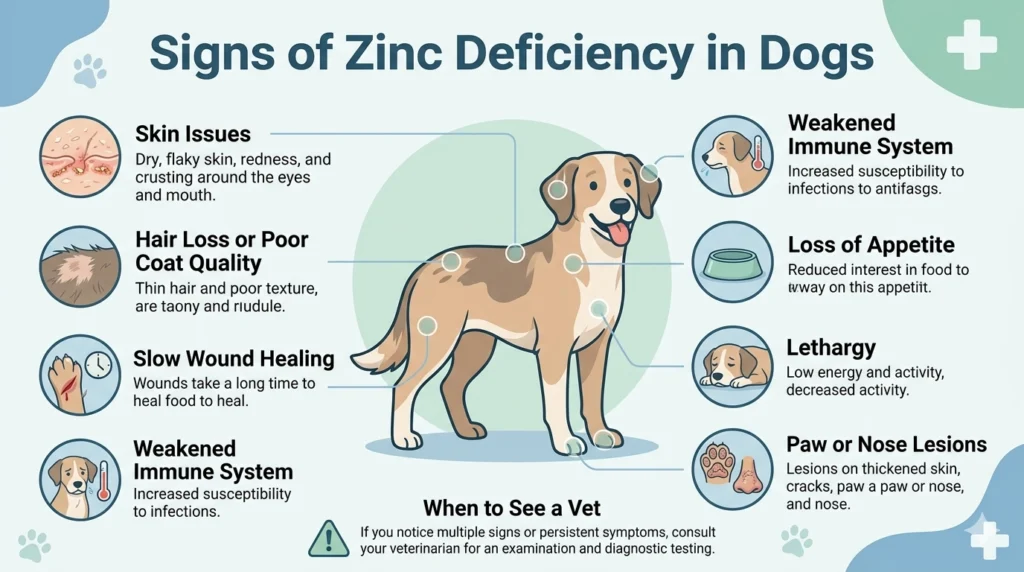
Knowing the symptoms of a Zinc Dosage For Dogs deficiency is the first local reports in getting your dog the help they need. The symptoms tend to come on slowly and may be mistaken as something else such as allergies or infections .
The distinguishing features are dermatological, although systemic problems may also be present.
- Skin Lesions: Look for red (erythema), hair loss (alopecia), and thick crusty scales. These lesions are most often observed around the eyes, mouth, ears, muzzle, and footpads and other areas of pressure such as elbows and hocks.
- Poor Coat Quality: The quality of the coat can be dull, dry and harsh. You may notice that your hair is shedding too much or you may have areas that are shedding hair very thinly.
- Cracked Footpads: The paw pads can become thickened and hardened and may develop painful fissures or cracks in them making it uncomfortable for them to walk around.
- Slow Wound Healing: Cuts, scrapes or skin infection may take an unreasonably long time to heal.
- Lethargy and Depression: Dogs who have a deficiency will appear to lack energy, be more tired, and also just generally be “off”.
- Recurrent Infections: We are also prone to frequent secondary bacterial or fungal skin infections because the immune system is crippled.
- Poor Growth in Puppies: A Zinc Dosage For Dogs deficiency in puppies can not grow properly and undergo a poor growth unlike his litter mates.
Causes and Risk Factors for Zinc Deficiency in Dogs
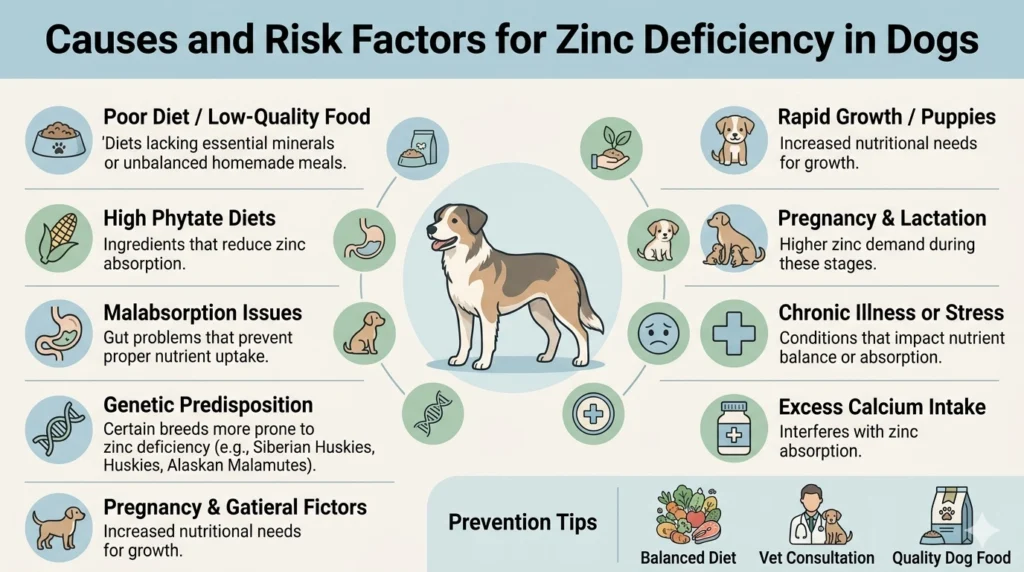
Understanding the cause behind the Zinc deficiency is just as important as the treatment of the symptoms. The causes usually fall into three categories.
they are: dietary imbalance, genetic malabsorption, and underlying health conditions .
Dietary Factors and Nutritional Factors
This being the most common and easily correctable cause. It is not always the amount of Zinc Dosage For Dogs in the food, but the amount of Zinc Dosage For Dogs to use.
- High Phytate Diets: Cereals, Grains, and Soybeans These contain phytates which bind to and prevent zinc absorption in the gut.
Diets that are high in these ingredients can result in deficiency despite a minimum requirement of Zinc Dosage For Dogs. - High Calcium Levels: Too much calcium in diet frequently from supplementation or a diet too enriched in dairy or bone meal may compete with Zinc as a mineral for absorption, practically blocking it.
- Poor Quality Diet: Cheap portions of dog food may contain low quality ingredients that have poor bioavailability of zinc.
- Low Fat Diets: More than fat content does control can be Zinc Dosage For Dogs uptake? Diets of fat too low may have a negative impact on absorption.
Breed Predispositions (Genetic Factors)
Some dogs are born and have a genetic challenge.
- Syndrome I (Malabsorption): This is a disorder that is mostly seen in Arctic breeds such as Siberian Huskies and Alaskan Malamutes.
These dogs are fed a good diet, but are unable to absorb adequate levels of zinc from their intestines, and require life-long supplementation. - Other Predisposed Breeds: Less commonly, other breeds have been reported to develop Zinc Dosage For Dogs responsive dermatosis including Bull Terrier, Doberman Pinschers, Labrador Retrievers, Great Danes, German Shepherds and Beagles.
Other Risk Factors
- Puppies and Senior Dogs: Rapidly growing puppies have large zinc requirements while older dogs may not be able to absorb zinc as well.
- Gastrointestinal Disease: Diseases such as Inflammatory Bowel Disease (IBD) are known to damage the gut lining, and this impairs absorption of all nutrients including Zinc .
Treatment: Zinc Supplement of Dogs and Supportive Care
Once the veterinarian has diagnosed a zinc deficiency or a malabsorption problem treatment usually involves a multi-pronged approach.
The cornerstone is of course the introduction of a Zinc Dosage For Dogs supplement but supportive care is often required to help control the secondary effects.
Forms of Zinc Supplements
Not all zinc is created equal. The form determines the degree of absorption and the dosage. Your vet would be able to choose the best best option.
- Zinc Sulfate: This is a common inorganic form, and an effective form which is usually affordable. It’s often dosed 10mg/kg /once a day. A possible side-effect of it is that it can cause gastrointestinal upset in some dogs.
- Zinc Methionine: This is an organic, chelated form and zinc is bound to an amino acid called methionine. It is also more likely to be absorbed and less likely to be bothered by dietary antagonists such as phytates and calcium.
The dosage is less, usually 1.7-2 mg/kg once daily. - Zinc Gluconate: Another organic form that should be dosed similarly to the zinc methionine (around 1.7 mg/kg).
- Veterinary Products: Commercial products such as Zinc Dosage For Dogs Plus Tablets contain a blend of zinc and other minerals and vitamins, which promotes skin health.
These are formulated for a specific use in dogs and cats and are a standardised dose.
Administration Tips
- Give with Food: In order to reduce the risk of stomach upset, always give zinc supplements with a meal . You can even crush a tablet and mix it into some small amount of wet food.
- Be Patient: It may take up to several weeks to notice a significant improvement in the condition of your skin and coat. Consistency is key.
Supportive Therapies
- Dietary Correction: In the case of dogs with Syndrome II (dietary deficiency), a simple dietary correction by switching to a high quality balanced diet with highly bioavailable ingredients may correct the problem within 4-6 weeks.
- Antibiotics: Infection from secondary bacteria of the skin are common. Your vet may prescribe a course of antibiotics such as cephalexin or clindamycin to stop these infections before the skin can start to heal completely.
- Therapeutic Shampoos: Medicated baths with keratolytic shampoos (contain sulfur or salicylic acid) can help gently remove the heavy crusts and scales improving the comfort and allowing the skin to breeze and heal.
- Corticosteroids: In very severe, itchy, or inflammatory cases, a veterinarian may prescribe a brief course of oral corticosteroids such as prednisone in order to quickly decrease inflammation and help interrupt the itch-scratch cycle.
Dietary Sources of Zinc
While supplements are extremely important in the treatment of deficiencies, prevention and maintenance begins with the food bowl.
Incorporating zinc-rich foods into your dog’s diet can help do this and it helps to have these in conjunction with supplementing what your veterinarian recommends your dog be eating.
Top Zinc-Rich Foods for Dogs
The best sources of bioavailable zinc are animal based proteins.
| Food Source | Notes on Bioavailability |
|---|---|
| Beef | A highly digestible and excellent source of zinc. |
| Chicken | Good source, especially the darker meat. |
| Lamb | Another excellent red meat source. |
| Fish (Salmon, Sardines) | Rich in zinc and beneficial omega-3 fatty acids. Canned sardines in water are an easy option. |
| Eggs | A good source of highly digestible protein and zinc. |
| Organ Meats (Liver) | Extremely nutrient-dense and rich in zinc, but should be fed in moderation due to high vitamin A content. |
| Oysters | One of the richest natural food sources of zinc. |
Incorporating Zinc-Rich Foods into Your Dog’s Diet
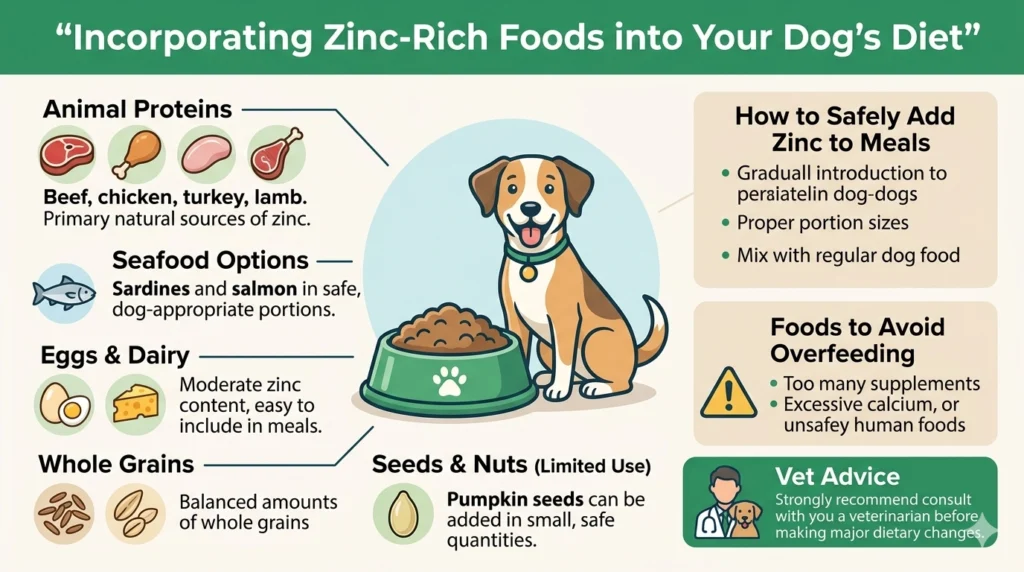
- As a Topper: A little cooked, unseasoned ground beef, chicken or a sardine can be a healthy and enticing topper to your dog’s regular kibble food.
- In the case of Homemade Diets: If you prepare food at home, it is imperative to work with a veterinary nutritionist.
They are able to create a recipe that can satisfy all your dog’s nutritional needs and include exact amounts of Zinc Dosage For Dogs without the risk of deficiencies or excesses from other minerals such as calcium. - Read the Label: When purchasing commercial food, check out named animal protein sources (such as “chicken meal” or “salmon”) at or toward the top of the list of ingredients.
Meat meals are concentrated sources of protein and minerals including zinc.
Zinc Dosage For Dogs Chart by Weight
To give you an overview of what specific dose of Zinc Dosage For Dogs per day, here is a Zinc Dosage For Dogs per day consolidated for you in rough chart enviro style.
It combines information from various sources to illustrate dosage change with weight and zinc form. This chart is for educational, only and is not instead a substitute of a veterinarian’s prescription.
Disclaimer: The following chart is a visual aid. The exact zinc dosage for dogs per day must be determined by a veterinarian, especially for long term treatment.
Potential Risks and Side Effects of Zinc Supplementation
A correction of deficiency is vital but more is not better. Over-supplementation can cause Zinc Dosage For Dogs toxicity, a severe and potentially life-threatening condition.
It’s also important to be aware of its side effects even at pharmacologic levels.
Side Effects of Proper Supplementation
- Gastrointestinal Upset: Most common side effect and associated with (Zinc Dosage For Dogs) zinc sulfate in particular is mild vomiting, nausea, or diarrhea.
This can often be controlled by administering the supplement with food.
Zinc Toxicity (Overdose)
Zinc toxicity typically occurs following one large non-food item ingestion but also may occur if one is grossly overdosing on a supplement for an extended period of time.
- Common Sources of Toxic Zinc: No-digestible food itself is ordinarily the greatest threat but households can be, as their food sources are again all too often.
These include the US pennies minted after 1982 (this is 97.5% zinc content), galvanized metal parts (nuts, bolts, cages), hardware and zinc oxide creams such as diaper rash or sunscreens. - Symptoms of Toxicity: Signs may occur within hours after ingestion and include vomiting (sometimes containing blood), diarrhea, lethargy, loss of appetite and pale or jaundiced (yellow) gums, a sign of anemia and liver damage.
- Why it’s an Emergency: Zinc kills red blood cells causing hemolytic anemia. It can also cause severe damage to the liver, pancreas and kidneys.
Treatment may come in the form of hospitalization and IV fluids, blood transfusions or as drastic as requiring surgery if the source must be removed.
Maximum Safe Levels
The maximum tolerable concentration for Zinc Dosage For Dogs in a complete diet is thought to be 1,000 mg/kg of dry matter.
Toxicity from a properly formulated supplement is rare but this is one of the reasons why you should never exceed the dosage recommended by your veterinarian.
Incorporating Zinc-Rich Foods into Your Dog’s Diet
For maintenance and as a supportive measure, a strategy of focusing on whole food sources, is a fantastic strategy.
This approach is sure to ensure your dog to obtain zinc in a natural matrix possibly easier to absorb.
Practical Guidance for Raw Feeders and Home Cooks
If you are feeding a raw or home cooked diet, then you are assuming the job of a “formulator.” This means you need to ensure that the diet is complete and balanced.
- The Risk of Imbalance: Probably the most common pitfall with diets prepared at home is an imbalance of calcium and phosphorus, usually the result of including too much bone.
As said, excess calcium is a direct antagonist of zinc absorption. You cannot just add more zinc rich foods, you have to calculate the whole mineral profile. - The Role of Zinc-Rich Foods: In a professionally formulated diet food such as beef, liver and fish would be the primary source of zinc. For example: meat meals are very concentrated sources of zinc.
- Consult with a Professional: Never try to design a home-cooked diet without the assistance of a board-certified veterinary nutritionist.
They can help you put together a recipe using whole foods to provide all of your dog’s needs in a safe way making sure the correct zinc dosage for dogs by weight is achieved through diet alone or in concert with precise supplementation.
You May Also Like to Read:
- Omeprazole For Dogs Dosage Chart, Calculator & Safe Guide
- Ativan For Dogs Dosage Calculator: Safe Guide & Chart
FAQs
What is the Dark Chocolate Dark Chocolate Best Form Of Zinc Dosage For Dogs Supplement?
There is not one “best” form as it depends on the dog. Zinc methionine and zinc gluconate are frequently used as they have better bioavailability and do not have such a high risk of stomach upset.
Zinc sulfate also is effective but is more likely to cause gastrointestinal problems. There are many different options your veterinarian can help you get.
Can I feed my dog human Zinc supplements?
You should only do this on the express order of your veterinarian. Human supplements can be of the wrong form of zinc, have inappropriate dosages or contain other ingredients such as xylitol (sweetener toxic to dogs) that are dangerous.
How long does it take to notice results from Zinc Dosage For Dogs supplementation?
In cases of zinc responsive dermatosis you may begin to see an improvement in skin lesions and the quality of the coat in 4 to 6 weeks but at times it may be longer. For systemic problems such as lethargy, improvement may be observed sooner.
What are the initial symptoms of zinc deficiency in dogs?
It is usually the dermatological earliest signs. Look for red, scaly, crusty patches of skin most around the eyes, mouth and on the paw pads as well as a dull hair coat that looks dry .
Is Zinc Dosage For Dogs calculator By weight online reliable?
Zinc Dosage For Dogs By Weight Online calculator is available which can give a rough idea based on average guidelines, such as the chart in this article.
However, it cannot take into consideration your dog’s individual state of health or even the reason to supplement as well as interactions with other medicines. It should not be used as a prescription, but as a suggestion or start of a conversation with your vet.
A reduction in magnesium can lead to the problem is too much Zinc possible?
Absolutely, Zinc toxicity is a serious and life-threatening accident. Symptoms include vomiting, diarrhea, lethargy and pale and or yellow gums.
This is why it’s so important to not only keep anything with zinc in it (pennies, supplements, creams) out of your dog’s reach, but also follow the dosing instructions from your veterinarian to the letter.
What should I do if I suspect that my dog has zinc toxicity?
Contact your veterinarian or an emergency animal hospital right away. If at all possible, bring whatever it is that you think your dog ingested with him. Do not attempt to induce ristsma unless directed specifically to do so by a professional.
Final Thoughts
Zinc Dosage For Dogs may be a small mineral, but it has a huge role to play in your dog’s health. From healing skin and gaining you immunity support thyroid and getting the dosage right.
Whether an immigrant with a zinc dosage for dogs per day calculator, supplementing with zinc-rich blue foods to meals or any other supplement plan suggested by your vet, balance is always the benchmark.
Too little produces deficiency, too much causes toxicity. Work with your veterinarian closely, be patient with outcomes, and have faith that consistent care can fill your pet with good health, happiness, and vitality for years to come.