Imodium Dosage For Dogs By Weight Calculator & Safe Guide
🐕 Imodium Dosage Calculator For Dogs veterinary guide
| Weight (lbs) | Caplet (2 mg) | Suspension (ml) |
|---|---|---|
| 10 lb | ¼ caplet | 3.75 ml |
| 20 lb | ½ caplet | 7.5 ml |
| 40 lb | 1 caplet | 15 ml |
| 60 lb | 1½ caplet | 22.5 ml |
© medsdog.com
The Imodium dosage for dogs by weight calculator is used to determine the proper dosage of loperamide (Imodium) for use in dogs based on the dog’s body weight.
Veterinarians often use a rule of thumb of 0.1 milligrams per kilogram (or 0.045 milligrams per pound) of weight, usually administered every 8-12 hours, however the actual dosage is dependent upon the health condition, breed and drugs used by the dog.
Because of certain breeds and medical conditions, using Imodium is not safe for all pets, a veterinarian should always make sure to confirm the dose before administering Imodium to your dog.
This guide teaches you how to figure out how to give Imodium dosage for dogs safely, a dosage chart for dogs based on their weight, and when this medication might or might not be suitable.
Key Takeaways
- (loperamide) Imodium dosage for dogs is occasionally used by vets in the treatment of diarrhea in dogs.
- A rule of thumb that is often cited is 0.1 mg / kg (0.045 mg / pound) of body weight.
- The Imodium dosage for dogs medication is normally administered every 8-12 hours depending on veterinary advice.
- Some breeds, particularly herding breeds, who have the MDR1 gene mutation, may have serious reactions.
- Dogs with infection, parasite, or toxin exposure should not be treated with Imodium without veterinary supervision.
- A Imodium dosage for dogs by weight calculator is helpful in estimating the correct quantity but should never replace professional veterinary advice regarding a dosage.
What Is Imodium (Loperamide)?
Imodium is the brand name for loperamide, an anti-diarrheal drug that is commonly used in people. Veterinarians will occasionally prescribe it off-label to treat some types of diarrhea in the dog.
It works by slowing down the movement of the intestinal tract which gives the body more time to absorb water and nutrients from food.
This can help decrease the flushing out of the stools.
However, the causes of diarrhea in dogs are many, including:
- Dietary indiscretion
- Stress or sudden change in diet
- Parasites
- Bacterial infections
- Food intolerance
- Toxic ingestion
Because of these possibilities, treating diarrhea with medication without knowing the cause of the diarrhea can sometimes make the condition worse.
Imodium Dosage For Dogs By Weight Calculator
Veterinarians usually give the dose based on the weight of the dog.
Standard Veterinary Guidelines
Dose (mg) = Dog weight (kg) × 0.1
This formula approximates the milligrams of loperamide that are contained in each dose.
Pounds to Kilograms Conversion
If your dog weighs in pounds:
1 kg = 2.2 lbs
So the guideline becomes something like.
0.045 mg per pound of body weight.
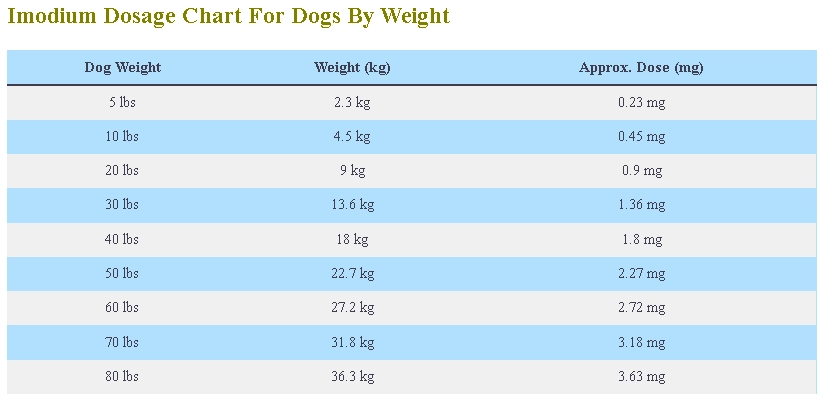
Imodium Dosage Chart For Dogs By Weight
The following chart is an estimated guide to dosage based on common veterinary references. These are just approximations and these values should always be verified by your veterinarian.
| Dog Weight | Weight (kg) | Approx. Dose (mg) |
|---|---|---|
| 5 lbs | 2.3 kg | 0.23 mg |
| 10 lbs | 4.5 kg | 0.45 mg |
| 20 lbs | 9 kg | 0.9 mg |
| 30 lbs | 13.6 kg | 1.36 mg |
| 40 lbs | 18 kg | 1.8 mg |
| 50 lbs | 22.7 kg | 2.27 mg |
| 60 lbs | 27.2 kg | 2.72 mg |
| 70 lbs | 31.8 kg | 3.18 mg |
| 80 lbs | 36.3 kg | 3.63 mg |
Most Imodium tablets available over the counter contain 2 mg of loperamide and it is therefore difficult to accurately dose a small dog.
How To Use An Imodium Dosage Calculator For Dogs
A dosage calculator makes it easier to find out a safe-estimate.
Step-by-Step Process
- Weigh your dog correctly in pounds or kilograms.
- Convert pounds to kilograms (if necessary).
- Multiply the weight by 0.1 mg/kg.
- Change the dosage according to the strength of tablets available
- Always check with a veterinarian before administering.
Example:
If a dog weighs 22 pounds (10 kg):
- 10 × 0.1 = 1 mg per dose
When Is Imodium Used For Dogs?
Veterinarians may prescribe Imodium for short-term diarrhea due to:
- Mild dietary upset
- Stress induced digestive problems
- Sudden food changes
- Irritation of non-infectious origins of the gastrointestinal tract
In these cases, the medication may be beneficial in controlling the symptoms while the digestive system returns to its own.
When Dogs Shouldn’t Take Imodium
Imodium is not safe for all dogs. It should be avoided in the following situations unless prescribed specifically.
Herding Breeds
Some breeds carry an MDR1 genetic mutation which affects the way drugs are processed.
Breeds commonly affected are:
- Collies
- Australian Shepherds
- Shetland Sheepdogs
- Border Collies
Dogs that have this mutation could have serious neurological reactions.
Other Situations in Which Imodium Is Not Safe
Do not administer Imodium when your dog has:
- Infectious diarrhea
- Infectious intestinal infections by bacteria
- Parasite infestations
- Toxin ingestion
- Liver disease
- Severe dehydration
In these situations, a reduction in the speed of the intestine movement may aggravate the condition.
Imodium Tablets vs Liquid for Dogs
Imodium comes in a number of forms.
Tablet Form
Most common:
- 2 mg tablets
- Caplets
These are often too much for very small dogs and one needs to split into care.
Liquid Form
Advantages include:
- Easier dose adjustment
- Better for small dogs
- More precise measurements
However, there are some liquid formulas that contain other ingredients that may not be safe for dogs, so it is important to get veterinary approval.
Possible Side Effects of Imodium in Dogs
Although many dogs do tolerate loperamide well, side effects do occur.
Common side effects include:
- Constipation
- Sedation
- Bloating
- Reduced appetite
Less common but serious reactions:
- Extreme lethargy
- Neurological symptoms
- Vomiting
- Severe abdominal pain
If any of these are present then veterinary attention should be sought immediately.
Natural Alternatives For Dog Mild Diarrhea
Before medications are used, vets often recommend supportive care.
Common approaches include:
Temporary Fasting
Withholding of food for 12 – 24 hours allows the digestive system to relax.
Bland Diet
Some of the foods that are commonly recommended are:
- Boiled chicken
- Plain white rice
- Pumpkin puree (unsweetened)
Hydration Support
Maintaining the hydration of the animals is critical, especially in small dogs and puppies.
When To Call a Veterinarian
Even mild diarrhea can become serious in some situations.
Contact a veterinarian if your dog has:
- Diarrhea for longer than 24 – 48 hours
- Blood in stool
- Vomiting
- Fever
- Lethargy
- Dehydration
- Diarrhea in puppies or older dogs
Professional evaluation is helpful to determine the cause of it.
You May Also Like to Read:
- Penicillin Dosage For Dogs By Weight Calculator & Safe Guide
- Pregabalin For Dogs Dosage Calculator, Chart & Safe Guide
FAQs
Can dogs take Imodium dosage safely?
Some dogs can take Imodium dosage with veterinary guidance but it is not safe for all dogs. Breed sensitivity and underlying illness as well as the cause of diarrhea have to be considered before use.
What is the typical Imodium dosage for dogs per pound?
A common rule of thumb is about 0.045 mg per pound of body weight, typically every 8-12 hours, but dosage should always be decided by a veterinarian.
And how often can I give Imodium dosage to my dog?
Veterinarians usually recommend dosing every 8-12 hours and it will depend on how the dog is and how well he responds to treatment.
Is human Imodium dosage Safe for Dogs?
The active ingredient, loperamide, is used occasionally in dogs, but human products may contain additional ingredients that are not safe for pets.
Always check with a veterinarian before using.
Can puppies take Imodium Dosage?
Puppies are more sensitive to medications and decrates from diarrhea. Imodium should not be administered to puppies without the specific orders from veterinarians.
Final Thoughts
An Imodium dosage for dogs by weight calculator can be a good tool in helping to estimate a dosage of loperamide that a dog might receive but it should never be used as a substitute for veterinary advice.
There are many causes of diarrhea, and it can be a mistake to try to treat symptoms without finding the cause so that proper care can be given.
If your dog develops persistent diarrhea, lethargy, or other symptoms that give you cause for concern, it is always best to consult a veterinarian for an accurate diagnosis and treatment plan.