Fish Oil Dosage Calculator For Dogs and Safe Dosage Guide
Fish Oil Dosage Calculator for Dogs
Enter Dog Details
Recommended Dosage
Daily Dosage
Approximately 3 pumps (1ml per pump)
Salmon Oil Method
Ideal for Brilliant Salmon Oil
Dosage Reference Chart
| Weight (lbs) | Weight (kg) | Daily Dosage (ml) | EPA+DHA (mg) |
|---|
Important Disclaimer
This calculator provides general guidelines for fish oil supplementation in dogs. Individual needs may vary based on breed, age, health status, and other factors. Always consult with your veterinarian before starting any new supplement, especially if your dog has existing health conditions or is on medication. Excessive omega-3 intake can cause gastrointestinal issues or interact with medications.
© medsdog.com
Did you ever have the experience of staring at the bottle of fish oil pills and being unsure, does one of them count as a portion of my 70-pound Lab or is it really a portion of my 10-pound Chihuahua? You’re not alone. You Can use this Fish Oil fish oil dosage calculator for dogs by weight


Determining the right amount of fish oil to give to dogs is like walking in a dark ocean of confusing information, and making a wrong step is equal parts lost money and a sore stomach on your dog.
The point is that an effective and safe dose does not exist, it is an exact formula depending on the weight of your dog, your health purposes, and the very product you use.
This guide is definite and clears the confusion. We will give you clear guidelines, a solid system of computing dosage and necessary safety information that will help you be comfortable and at ease to support your dog in a healthy way, both in joints, skin and heart.
For those of you who want to know more straight away, our dosage calculator for dogs or the simple chart below will provide you with a credible starting point for your pet.
Major Insights: Fish Oil For Dogs
- The dosage is calculated according to EPA/DHA rather than volume: Combined EPA and DHA Therapeutic dose ranges are 20-55mg/kg of body weight (45-120mg/kg) of EPA and DHA daily, based on health condition.
- More is not better: Vitamin A/D toxicity, gastrointestinal problems and inability to clot blood can occur in case of overdosing. Always start at the lower end.
- Consult your vet first: This is of vital importance in case your dog is on medication (particularly blood thinners), is ailing, or pregnant.
- Quality matters immensely: Select an animal product, purified (molecularly distilled) and put in dark bottles to avoid rancidity.
The knowledge of Fish Oil: Why it is a Canine Super- Supplement
It is always more interesting to discuss the reasons why this supplement is so popular in the veterinary and pet wellness industry before we get into the world of milligrams and milliliters.
Fish oil is also valued due to its richness in two essential fatty acids in omega-3, namely eicosapentaenoic acid (EPA) and docosahexaenoic acid (DHA).


Dogs are able to transform some of the omega-3s in vegetarian sources such as flax seeds but the conversion is not as efficient. It is the already developed EPA and DHA in marine oils that give the deliver the strong, evidence-based benefits:
- Lessens Inflammation: EPA is a giant in the management of inflammatory reactions. This is great to use in osteoarthritic dogs, it aids in alleviating joint pain and stiffness, and in treating allergic dermatitis, resulting in a less itchy skin and a shinier coat.
- Helps Brain and Cognitive Process: DHA is a principal constituent of the brain. It contributes to the cognitive growth of the puppies and could be effective in keeping the aging dogs mentally sharp.
- Promotes Heart Health: Omega-3s can promote healthy heart rhythm and are shown to have positive effects on blood pressure and triglyceride levels.
- Protects the Working of the Kidneys: When the dogs have kidney disease, the Omega-3s help to treat inflations and possibly delay the disease.
Imagine it is specific nutritional care. However, it is a potent tool and it should be used properly.
Calculating the Right Foxtel dose of fish oil
This is the core of the matter. You do not dose the liquid or capsule but dose the active things within it- the EPA and the DHA.
The Optimal Gold Standard Dosage
Depending on the body weight and health requirement of your dog, the dosage that is normally prescribed by veterinary nutritionists is as follows:
- In the case of General Wellness and Maintenance: Goal of some 20-30 mg of EPA and DHA combined per pound of body weight (45-65 mg/kg). You can easily calculate it using fish oil dosage calculator for dogs by weight
- In Therapeutic Support(Arthritis, Allergies): A greater dose is commonly employed and can be 40-55 mg of combined EPA and DHA per pound (90-120mg/kg).
Example: For the above 50 pound dog on a therapeutic dosage level, 50 pounds x 50 mg/lb = 2,500 mg (or 2.5 grams) of the combined EPA/DHA on a daily basis.


Guide to step by step calculations
- Get the Pounds You Need to Find Your Dog.
- Identify the Amphibol: Maintenance or Therapeutic?
- Check Your Product Label: This is the most imperative step. Search the levels of EPA and DHA per serving (e.g. per softgel or mL of liquid). These two numbers plus each other.
- Sample Label: 600 mg EPA and 400mg DHA per softgel. Combined EPA/DHA = 1000 mg.
- Do the Math:
- Target mg/lb (e.g., 30 mg) = Weight (lbs) of the dog x Target mg/lb (e.g., 30 mg) = Total EPA/DHA Required (mg)
- The number of servings required = total EPA/DHA required (mg)/total EPA/DHA in the product (mg).
Real-Life Computation: A 30 pound dog on a maintenance dose (25 mg/lb) with the above softgel (1000 mg) would use the following softgel:
- 25 mg/lb. x 30 lbs = 750 mg EPA/DHA that is required each day.
- 750mg required/ 1000mg/ softgel = 0.75 softgels.
- In practice: You could administer one softgel daily (somewhat too much, but nowhere near dangerous levels to do harm to a heavy dog) or administer one day every two. A liquid is more accurate and has a better dosage.
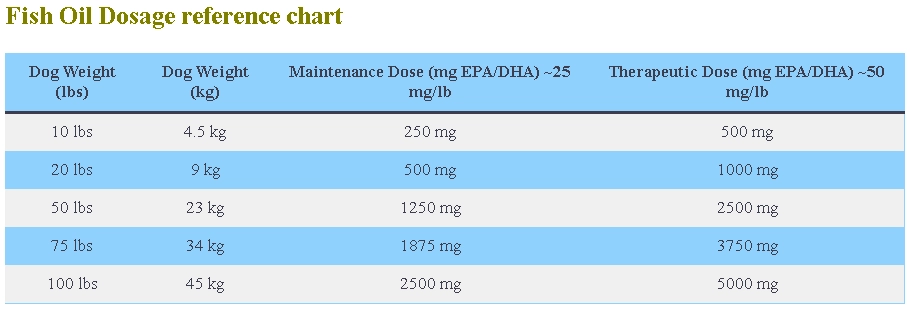
Fish Oil Dosage reference chart
Table below offers a rough visualization of the daily combined EPA/DHA requirements. Do not forget to make this consistent with your own concentration of a given product.
| Dog Weight (lbs) | Dog Weight (kg) | Maintenance Dose (mg EPA/DHA) ~25 mg/lb | Therapeutic Dose (mg EPA/DHA) ~50 mg/lb |
|---|---|---|---|
| 10 lbs | 4.5 kg | 250 mg | 500 mg |
| 20 lbs | 9 kg | 500 mg | 1000 mg |
| 50 lbs | 23 kg | 1250 mg | 2500 mg |
| 75 lbs | 34 kg | 1875 mg | 3750 mg |
| 100 lbs | 45 kg | 2500 mg | 5000 mg |
Chart Note: Doses will be rounded off. Avet should always have a customized plan.
The Dangers: What Could Go Wrong When You Take Excessively much Fish Oil?
The more must be better attitude is perilous in this case. Excessive supplementing does not have imaginary effects:
- Gastrointestinal Upset: The most prevalent one. Diarrhea, vomiting and fishy odor on the breath or the skin.
- Blood Thinning and Coagulation Problems: High dosage may inhibit platelet activities which may result in bleeding. This is something to think twice about when your dog requires surgery, or is taking such medication as aspirin or clopidogrel.
- Weakness Effect Vitamin A & Vitamin D Toxicity: It can occur with cod liver oil or substandard products to a significant degree. Too much vitamin A may result in pain of the bones and liver and too much of vitamin D may result in threatening calcium accumulation.
- Pancreatitis: This is a painful and serious condition that might be triggered by the high level of fat in the dogs that are prone to pancreatitis.
Always start low and go slow. Stay at the low end of the maintenance range during the 2-3 weeks to determine the tolerance of your dog before deciding to increase it.
Selection of the Right Product: A Buyer Checklist
All omega 3 supplements are not made equal. Use this checklist:
- Purity & Processing: Choose “molecularly distilled” to make sure that it is free of contaminating factors, such as heavy metals.
- Form: Liquid oil It is usually ideal to use when dosage needs to be adjusted. Softgels resist oxidation, but can be pierced.
- Concentration: The greater the concentration the smaller the amount of volume you would give. Test a combination of EPA/DHA/100ml or/and gel.
- Type: It is a great, well-absorbing substitute, Krill oil. Another potent supplement is the green-lipped mussel oil in the case of severe allergies.
- Storage: The oil is to be stored in a dark airtight bottle and refrigerated once it is opened to keep the rancidity at bay.
- implied: intently clear of things with fillers, pretend flavors, or things that fail to portray EPA/DHA content.
You May Also Like to Read:
- Safeguard Dosage Calculator for Dogs and Safe Dosing Chart
- Tramadol For Dogs Dosage Calculator and Safe Dosage Chart
FAQs
Can I simply put my own fish oil capsules in my dog by the same amount that I take?
It’s not ideal. Human supplements do not undergo same purity levels as pet supplements and the dosage concentration is based on human body weight. It is safer and more precise to utilize a product that is created to treat dogs.
What is the time of seeing the results of fish oil?
Some improvement to the skin and coat would be seen at 4-6 weeks. In case of joint mobility support of arthritic dogs, 8-12 weeks of regular supplementation is needed to notice a considerable change.
Does it have any dogs which should not take fish oil?
Yes. The use of fish oil in dogs who have known bleeding problems, in those who are to be operated on or in dogs taking anticoagulant medication should only be done under the strict supervision of a veterinary. It is important to seek advice of your vet before hand.
Are there any differences between fish oil and the other supplements such as melatonin or glucosamine?
They are used to accomplish different things. Fish oil is a wide range anti-inflammatory. Melatonin finds major application in sleep cycles and some coat conditions. Glucosamine aids in the structure of cartilage of the joints. They may work synergistically (i.e. fish oil in combination with glucosamine in arthritis).
My dog hates the taste. Any tips?
Use a small portion put into nasty smelling favorite food. Another way that you can try is freezing the dose in some plain yogurt or peanut butter. In dogs that do not like the taste of capsules, poke the gel and squirt oil on their food.
Final Thoughts
The omega-3 dosage is one of the most effective things that you can offer your dog to keep them comfortable and healthy in the long-term, and navigating the world of canine supplements may seem complicated, but it is not.
With the principles and canine dosage calculator system we have reviewed in mind (with the key ideas being the weight of your particular dog, the EPA/DHA content of the product, and the initial dosage being on the low side) you will be prepared to make the necessary decision.
Make this guide your beginning but make your veterinarian your ending. Discuss your plan with them and this is particularly true when your dog is controlling a health condition.
A quality EPA and DHA supplement can be a convenient go-down the throttle of your dog and keep them in good health internally and externally well to many years of healthy and happy dog life ahead.
Disclaimer: It is not a professional and a pure education article but not a professional substitute of veterinary advice, diagnosis or treatment.
You should always consult your veterinarian with any questions that you might have concerning the health of your pet as well as before beginning any new supplement program.