Quercetin Dosage For Dogs Calculator
© medsdog.com
Disclaimer: This guide is for informational purposes only and is not a substitute for professional veterinary advice.
Always consult your veterinarian before giving Quercetin or any medication to your dog.
If you are looking for a natural solution to getting your dog off the allergy season scratches, licks and suffers, you have probably heard of Quercetin Dosage For Dogs.
Often referred to as "Nature's Benadryl," this plant-based compound has garnered a lot of interest from pet parents and holistic veterinarians alike.
But knowing how much exactly to give your dog can be overwhelming.
This thorough guide offers a reliable quercetin dosage for dogs per day calculator by weight with a detailed weight chart and administration tips and safety information to help you use this natural supplement with confidence and effective results.
Quercetin Dosage For Dogs
Quercetin dosage is usually taken mixing it up according to the body weight of the dogs, which is usually used as a natural antihistamine in order to help fight allergies, inflammation in the body, and also as an immune support Purification.
A general guideline is around 5 - 10 mg. per pound (10 - 20 mg./kg.) of the weight of the dog taking the medication, performed 1 - 2 times daily, but doses may vary according to the condition of the dog and formulation of the medicine used.
Quercetin is commonly used with bromelain to enhance its absorption and effectiveness. It may take several days to weeks before noticeable improvements in symptoms such as itching or redness may be noticed.
While considered gives overall safe and mild side effects can include digestive upsets.
Always consult a veterinarian before suggesting quercetin as there is always a risk that a proper dosage of quercetin might get decomposed by other medicines.
Quercetin Dosage For Dogs Chart by Weight
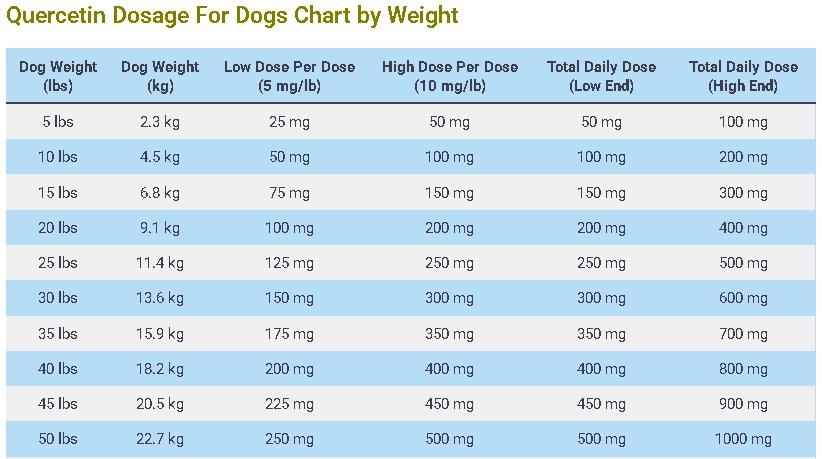
To make the dosage calculations easier, use this complete Quercetin Dosage For Dogs chart by weight.
The total daily dose (the sum of both daily administrations) as well as the per-dose amount is given on the chart.
| Dog Weight (lbs) | Dog Weight (kg) | Low Dose Per Dose (5 mg/lb) | High Dose Per Dose (10 mg/lb) | Total Daily Dose (Low End) | Total Daily Dose (High End) |
|---|---|---|---|---|---|
| 5 lbs | 2.3 kg | 25 mg | 50 mg | 50 mg | 100 mg |
| 10 lbs | 4.5 kg | 50 mg | 100 mg | 100 mg | 200 mg |
| 15 lbs | 6.8 kg | 75 mg | 150 mg | 150 mg | 300 mg |
| 20 lbs | 9.1 kg | 100 mg | 200 mg | 200 mg | 400 mg |
| 25 lbs | 11.4 kg | 125 mg | 250 mg | 250 mg | 500 mg |
| 30 lbs | 13.6 kg | 150 mg | 300 mg | 300 mg | 600 mg |
| 35 lbs | 15.9 kg | 175 mg | 350 mg | 350 mg | 700 mg |
| 40 lbs | 18.2 kg | 200 mg | 400 mg | 400 mg | 800 mg |
| 45 lbs | 20.5 kg | 225 mg | 450 mg | 450 mg | 900 mg |
| 50 lbs | 22.7 kg | 250 mg | 500 mg | 500 mg | 1000 mg |
| 55 lbs | 25.0 kg | 275 mg | 550 mg | 550 mg | 1100 mg |
| 60 lbs | 27.3 kg | 300 mg | 600 mg | 600 mg | 1200 mg |
| 65 lbs | 29.5 kg | 325 mg | 650 mg | 650 mg | 1300 mg |
| 70 lbs | 31.8 kg | 350 mg | 700 mg | 700 mg | 1400 mg |
| 75 lbs | 34.1 kg | 375 mg | 750 mg | 750 mg | 1500 mg |
| 80 lbs | 36.4 kg | 400 mg | 800 mg | 800 mg | 1600 mg |
| 85 lbs | 38.6 kg | 425 mg | 850 mg | 850 mg | 1700 mg |
| 90 lbs | 40.9 kg | 450 mg | 900 mg | 900 mg | 1800 mg |
| 100 lbs | 45.5 kg | 500 mg | 1000 mg | 1000 mg | 2000 mg |
How to Use This Chart
- Find your dog's weight in the first column.
- Decide if you want to go for the mileage low or high. If a dog has never been on quercetin dosage before, or develops only very minimal symptoms, start low.
For an active flare-up or extremely inflamed dogs, you can go with the higher end. - Divide the total daily dose in two administrations. An example for a dog that falls on the low end of the scale is 50 pounds, which would take 250 mg in the morning and 250 mg in the evening.
- Monitor your dog's response. If no improvement is seen 2 to 3 weeks if your dog is tolerating the supplement well, you may want to consider increasing to the higher end of range.
Key Takeaways
Before we go into the details on quercetin supplementation.
below are the basic things all dog owners should know:
- What It Is: Quercetin Dosage For Dogs is a natural bioflavonoid present in such things as apples, berries, kale and other plant foods. It acts as a mast cell stabilizer, natural anti-histamine and anti-inflammatories.
- Standard Dosage: The standard dosage is 5 to 10 milligrams of quercetin for every pound of body weight, in divided doses two times a day. For dogs on the metric system this works out to about 10 to 22mg per kilogram twice a day.
- Time to Effect: Unlike the fast-acting effects of such pharmaceutical antihistamines, quercetin has a slower effect time.
Most dogs need between 2 and 6 weeks of regular supplementation before notable improvement in allergy symptoms is seen. - Safety Profile: Quercetin is generally thought to be safe for most dogs, but it's not recommended to give it to dogs with kidney disease as well as pregnant and nursing females and dogs that take certain medications such as blood thinners or chemotherapy drugs without vet supervision.
- Synergistic Partners: Quercetin is commonly used in combination with bromelain (an enzyme found in pineapple), and vitamin C, and it works with them synergistically, which leads to an increased absorption and anti-inflammatory activity.
- Form Matters: Quercetin Dosage For Dogs is not very well absorbed as is. Look for supplements which contain bromelain or are made as phytosomes for much better bioavailability.
What Is Quercetin Dosage For Dogs?
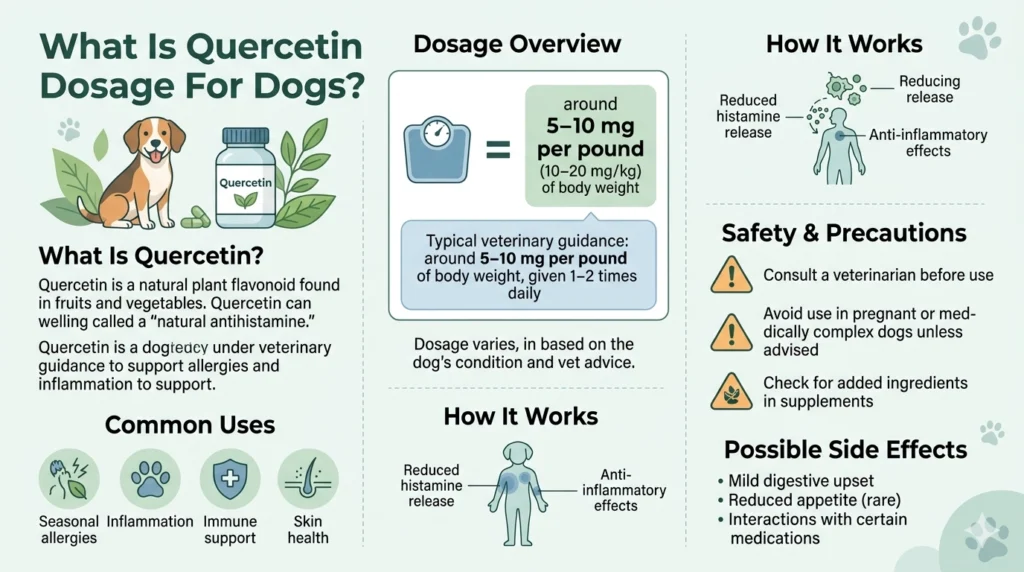
Quercetin is part of a large family of plants called flavonoids. These are the pigments that give fruits and vegetables their vibrant colors deep red apples, purple berries, yellow onions, and dark green kale contain these different amounts of quercetin.
In plants, flavonoids have a natural defence system, as they protect against pests, UV radiation and environmental stress.
When interacting with your dog, when they ingest quercetin whether through their diet or supplementation, the compound works within their body to perform similar protective effects.
Specifically, quercetin performs the functions of:
- A Mast Cell Stabilizer: Mast cells are a type of immune cells which release the chemical histamine and other inflammatory chemicals when exposed to the allergens.
Quercetin Dosage For Dogs helps in stopping these cells from bursting and releasing their contents. - A Potent Antioxidant: It neutralizes free radicals that can cause cell damage leading to aging and chronic disease.
- An Anti-Inflammatory Agent: Quercetin Dosage For Dogs blocks the action of certain enzymes, such as COX-2 and LOX that are responsible for triggering inflammation throughout the entire body.
What makes Quercetin Dosage For Dogs by weight so different from other natural supplements is that it acts to correct the allergic response at the source rather than cover up symptoms once the allergic response has already occurred.
This upstream mechanism is the reason why this is viewed by many vets and pet owners as a cornerstone supplement for the management of chronic allergies and inflammatory conditions.
How Does Quercetin Dosage For Dogs Help Dogs With Allergies?
To understand how Quercetin Dosage For Dogs works in dogs with allergies, it is useful to learn what occurs during the development of an allergic reaction for starters.
When the allergic dog is exposed to something that triggers the allergy (pollen, dust mites, certain proteins in food for example) the dog's immune system responds to the harmless substance as a threat.
Those mast cells, which are stationed in various parts of the body in tissues such as the skin, respiratory tract and the digestive system, react by secreting histamine and other inflammatory chemicals.
This release is what causes the classic signs of allergies which include itchiness, redness and swelling, sneezing and digestive upset.
Conventional antihistamines are based on the blockade of histamine receptors after the chemical has been released. They can be effective but they do not prevent the start of the reaction.
The other approach is taken by quercetin. It stabilises the mast cell's membrane making it harder for the cell to burst and release histamine in the first place.
By preventing the release of histamine and other inflammatory mediators, Quercetin Dosage For Dogs is able to minimise the allergic response before it becomes fully blown.
Besides its mast cell stabilizing properties, quercetin has the following properties:
- Reduces The Immune Dominance: Allergies are frequently fuelled by an excessive Th2 immune response. Quercetin helps to modulate the above pathway, bringing the immune system back into balance.
- Calms Skin Inflammation: The skin actually becomes inflamed and itchy for dogs who suffer with atopic dermatitis. Quercetin's anti-inflammatory properties are directly against this inflammation that occurs on the skin.
- Supports Respiratory Health: For dogs who have allergic bronchitis or other respiratory allergies, Quercetin Dosage For Dogs can be used to help decrease airway inflammation and mucous production.
This combination of mechanisms makes Quercetin Dosage For Dogs by the dog body weight especially valuable for dogs suffering from chronic reoccurring allergies that have not responded as well to other treatments.
Quercetin Benefits for Dogs
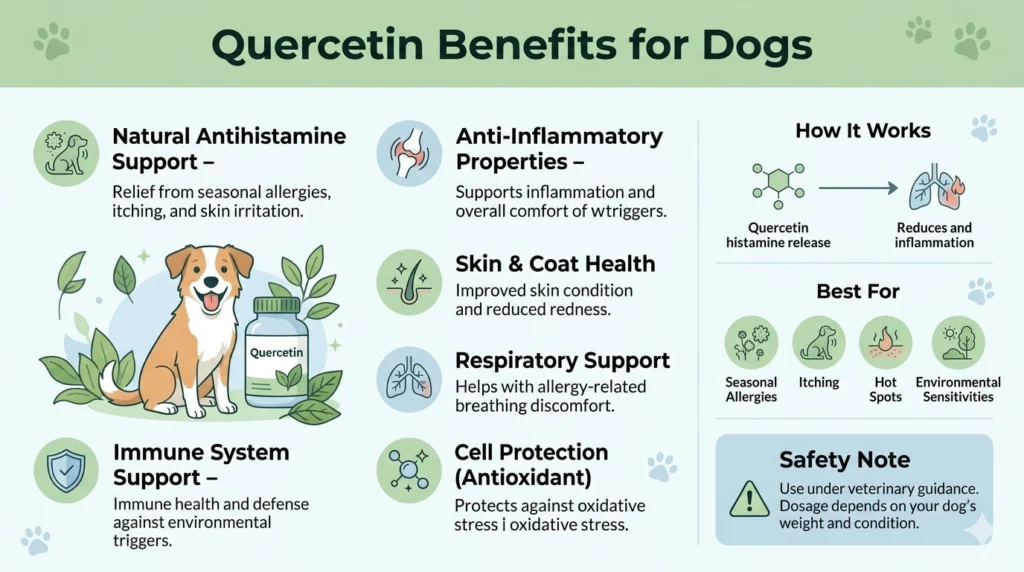
While the most prominent use of quercetin may have been its allergy-fighting properties, the benefits go far beyond seasonal itching.
Here are the best-researched ways in which quercetin can help your dog's health.
1. Natural Allergy Relief
This is still the main reason underlying why pet parents turn to Quercetin Dosage For Dogs.
By stabilizing mast cells and decreasing histamine production, quercetin may play a major role in decreasing symptoms associated with environmental allergies, food allergies and atopic dermatitis.
Many owners report a decreased amount of scratching, paw licking, calmer skin and/or fewer ear infections after consistent use.
2. Joints and Movement Support Anti-Inflammatory
Chronic inflammation is a causative factor in arthritis and other degenerative joint disorders. Quercetin Dosage For Dogs capacity to block pro-inflammatory enzymes such as COX-2 and LOX are properties which make it a useful supplement for arthritic dogs.
Unlike NSAIs (non-steroidal anti-inflammatory drugs) such as carprofen or meloxicam, which come with the risk of gastrointestinal ulcers or kidney damage.
if used long-term, quercetin does not have the same risk making it an attractive option for long-term joint support.
3. Mast Cell Tumor Support
One of the most common dogs skin cancer is the mast cell tumors. Because these tumors are composed of abnormal mast cells that may spontaneously release histamine, these dogs tend to have a lot of inflammation, itching and even gastric ulcers.
Quercetin's mast cells stabilizing capability makes it a popular complement supplement for dogs under treatment for mast cell tumors.
Many veterinary oncologists advocate its use to supplement conventional treatments to help control symptoms and maintain overall immune health.
4. Cardiovascular Health
Quercetin Dosage For Dogs is a potent antioxidant, and it protects the blood vessels against oxidative damage.
Research suggests it may help improve endothelial function (the lining of the blood vessels), promote healthy blood pressure and lower the oxidation of the LDL cholesterol.
While more research is needed specifically in dogs, these cardiovascular benefits are in line with the benefits of quercetin that have been firmly established in studies in humans.
5. Respiratory Support
For dogs who suffer from allergic bronchitis, collapsing trachea where there is inflammation, and conditions similar to asthma, quercetin can help to thin out the mucus and minimize inflammation within the airways.
When combined with bromelain which have mucolytic (mucus-thinning) properties, quercetin is able to make breathing easier for dogs suffering from chronic respiratory problems.
6. Gut Health and Inflammatory Bowel Disease
Inflammatory bowel disease or IBD in Dogs is a chronic inflammatory disease of the gastrointestinal tract.
Because quercetin has anti-inflammatory properties that extend beyond that, and has been shown to promote the health of the gut lining, quercetin is sometimes considered as part of a holistic approach to the management of IBD.
Its antioxidant properties also help to protect the tissues in the gut from oxidative stress.
7. Immune System Modulation
Rather than boosting the immune system, Quercetin Dosage For Dogs is used to balance it. In the case of an overactive immune system (allergies or autoimmune conditions), Quercetin for dogs Dosage helps to settle the immune system.
In situations when the immune function is compromised, its antioxidant properties aid in immune cells overall.
How Much Quercetin Dosage For Dogs?
Determining the appropriate Quercetin Dosage For Dogs requires taking into account their weight, the severity of their symptoms, and any underlying health conditions.
The general dosaging range which is used by veterinary professionals is 5 to 10 mg per pound of body weight, 2 times a day.
Such range allows flexibility. The lower end of this (5 mg per pound) is often used for maintenance dosage, for dogs with sensitive stomachs or when introducing the supplement for the first time.
The higher end (10mg per pound) is usually reserved for dogs who suffer from active allergy flare-ups, who are having significant inflammation or who have more severe symptoms.
For those who like the metric measurements, that translates to about 10 to 22mg per kilogram of body weight, twice a day.
How To Feed Quercetin to Your Dog?
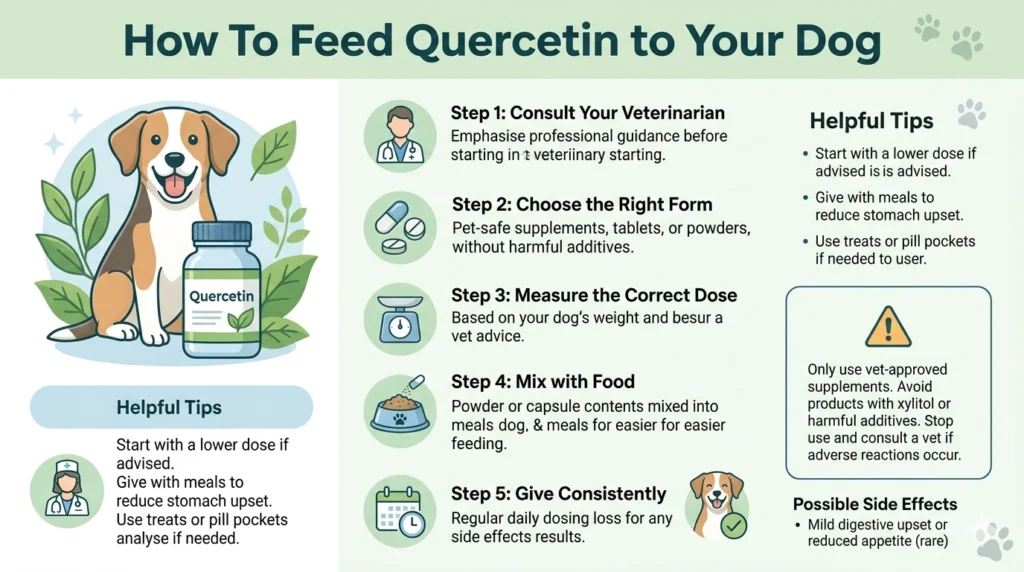
Successfully supplementing with quercetin is also not a matter of just calculating the right dose using. The form you take, how you take it, and what you take it with all have an effect on how well it all works.
Choosing the Right Form
Quercetin Dosage For Dogs is known to be very hard for the body to absorb. On its own, very little ingested quercetin passes into the bloodstream, only a small percentage.
For this reason, the form that you choose is important much:
- Quercetin with Bromelain: This was the most common and accessible for dogs. Bromelain is an enzyme that is extracted from pineapple stems and has been shown to increase the absorption of quercetin.
It also contains its own anti-inflammatory and mucolytic properties making this combination especially effective for allergies and respiratory problems. - Quercetin Phytosomes: This form is the binding of quercetin to phospholipids which becomes a structure that is much more easily absorbed by the body.
Phytosome preparations can be absorbed several times faster than regular quercetin. If your budget is not a problem, this is often the most effective option. - Plain Quercetin Capsules: Although these are available everywhere, plain Quercetin Dosage For Dogs capsules have the lowest absorption rates.
If using this form, try to avoid that there's a small-I'll say and omega-3 fat that can marginally improve absorption here - coconut oil, vitamin C.
Administration Tips
- With the Association of Food: Quercetin Dosage For Dogsis to be always given within food. This helps reduce the risk of gastrointestinal upset and results in better absorption, the presence of food slows the digestion process and more time is available for absorption of the compound.
- Divide Doses: Giving quercetin twice during the day helps to maintain more consistent levels in your dog's system than giving one large dose.
- Start Low Go Slow: At the start of detailed dosages of quercetin, start at the lower end of the dosing range. Gradually increase over a period of 7 to 10 days so as to give your dog's digestive system time to adjust.
- Consistency Is Key: Quercetin Dosage For Dogs is a cumulative agent. Missing out on doses or using it in a sporadic manner will make it much less effective. Try to be consistent, however, with twice a day administration.
Combining with Other Supplements
Quercetin Dosage For Dogs acts well with a number of other natural supplements.
Common combinations are:
- Quercetin + Bromelain + Vitamin C: This triple helicon would be termed more often as the "natural allergy protocol." Bromelain increases the absorption, while vitamin C is a complementary antioxidant and further helps in breaking down histamine.
- Quercetin+ Omega 3 Fatty acid: Fish oil exposes the body to emu and DHA, which have their very own potent anti-inflammatory effects. Together with quercetin they provide inflammation support of wide spectrum.
- Quercetin + CBD: For dogs with important inflammation or itching associated with anxiety, CBD (cannabidiol) will be able to complement the actions of Quercetin Dosage For Dogs, by acting on different inflammatory and neurological pathways.
Is Quercetin Safe for Dogs?
Quercetin Dosage For Dogs is usually thought to be safe for most dogs when used appropriately.
However like any supplement it is not without risks and there are certain situations in which one should pay attention.
General Safety Profile
Quercetin has been extensively studied on both humans and animals and its safety profile is well-known.
Side effects are not common but may include:
- Mild gastrointestinal upset (especially if this is the first time supplementation has been started)
- Loose stools or diarrhoea at higher doses
- Greenish discoloration of urine (harmless - temporary)
These side effects usually end themselves within a few days as the dog's system adjusts. If the diarrhea persists, reduction of dose or discontinuing of use is recommended.
Who Should Not Take on Quercetin
There are some cases in which the use of Quercetin Dosage For Dogs should be avoided or strictly supervised by a veterinarian:
- Kidney Disease: Quercetin is a substance that is broken down and released via the kidneys. The use of Quercetin Dosage For Dogs with pre-existing kidney disease, or with reduced kidney function, should be possible in which it can build up to unsafe levels.
Do not consider using quercetin without there being direct veterinary guidance if your dog has any type of kidney disease. - Pregnancy and Nursing: There is not enough safety information about the use of quercetin in pregnant or nursing dogs. Several times, it is recommended to not supplement during these times.
- Blood Thinners: Quercetin possesses mild blood thinners. Dogs that are taking anticoagulant drugs (such as warfarin) or antiplatelet drugs should not take Quercetin Dosage For Dogs without veterinary approval because of the possibility of increased bleeding.
- Chemotherapy: Quercetin may interfere with the action of some chemotherapy drugs, which could also change their effectiveness.
If your dog is receiving a course of treatment for cancer, ask your veterinary oncologist before supplementing with quercetin. - Cyclosporine and Other Immunosuppressants: Quercetin may affect the metabolism of cyclosporine and other drugs that are classified with the cytochrome P450 metabolizing system in the liver.
There may be need to adjust the dose.
Potential Drug Interactions
Along with the specific contraindications above.
Quercetin Dosage For Dogs may interact with:
- Fluoroquinolone antibiotics (enrofloxacin / ciprofloxacin for example), which might decrease / retard their absorption
- NSAIDs (such as carprofen, meloxacam or aspirin), possibly leading to an increased risk of gastrointestinal irritation
- Corticosteroids (such as prednisone), which might make those effects stronger
Always tell your vet of all the supplements your dog is taking to make sure of safe combinations.
Choosing a Good Quercetin Supplement
With there being so many products on the market it's important to choose a good quality supplement of Quercetin Dosage For Dogs.
Here is what to look for:
What to Look For
- Third-Party Testing: Look for supplements that have been tested by independent organizations such as the National Animal Supplement Council (NASC) or that are covered by seals from USP or NSF. These certifications show that the product is of quality and purity.
- Manufacturing Standards: Select supplements that are made in manufacturing facilities that meet Good Manufacturing Practices (GMP).
- Transparent Labeling: The label should list the content of quercetin though per dose, as well as any other ingredients such as bromelain or vitamin C.
Genuine products do not have proprietary blends where the individual ingredient content is not made known. - Form Specificity: If the product utilized some form of enhancing absorption technology called phytosome, then it should be specifically mentioned whether it's found on the label.
What to Avoid
- Unnecessary Additives: You should avoid supplements when the ingredients are artificial colors, flavors, preservatives, and too many additives in the supplement.
- Vague Claims: Watch out for products that make outlandish claims about curing diseases or fails to give you any clear instructions on doses.
- Human Supplements with Xylitol: So some of the human supplements of quercetin may contain xylitol - a sweetener which is highly toxic to dogs. Textithersonal fiber: - always check the ingredient list carefully.
Can You Use Human Quercetin for Dogs?
In a lot of cases, human-grade quercetin supplements can be used for dogs, provided that they contain no harmful additives, such as xylitol.
However, there are benefits for opting for supplements made especially for dogs:
- Dog-specific products generally give warning doses by weight as opposed to a one-size-fits-all human dose.
- They are more likely to be formulated with bromelain which improves absorption.
- They usually come in capsule sizes that can more easily be split into canine appropriate doses.
If you are going to use a human supplement the first thing that you should do is make sure that the inactive ingredients contained in the supplement are safe for dogs use and use the Quercetin Dosage For Dogs calculator by weight.
in this guide to ensure an appropriate amount.
How Long Does It Take for Quercetin Dosage For Dogs to Work?
One of the common questions that pet owners ask is how long does it take to see any results. Unlike antihistamines that are pharmaceutical based, which can work in a matter of hours, quercetin is not a fast acting supplement.
It is cumulative in action and often its benefits are not seen for weeks rather than days.
- Initial Effects (1 to 2 Weeks): Some dogs will exhibit slight improvements, especially in the reduction of itching or calmer skin, in the first week or two.
- Full Effects (4 to 6 Weeks): Most dogs will need 4 to 6 Weeks Consistent feeding 2 x a day to develop full benefits. This is because the action of Quercetin Dosage For Dogs is to help stabilize the mast cells over time and modulate the immune function, which take time to establish.
- Chronic Conditions: For chronically allergic or chronically inflammatory dogs it may take 8 weeks or more to see a significant improvement.
Patience is essential. As you do not see results immediately this doesn't mean that quercetin is not effective. Consistency of several weeks is the key to success.
Quercetin vs. Other Allergy Treatments
Understanding how quercetin compares with other form of allergy treatments can help you make informed decisions about the care of your dog.
| Treatment | How It Works | Onset of Action | Side Effects | Best For |
|---|---|---|---|---|
| Quercetin | Stabilizes mast cells; prevents histamine release | 2 to 6 weeks | Mild GI upset | Long-term management; mild to moderate allergies |
| Antihistamines (Benadryl, Zyrtec, Claritin) | Blocks histamine receptors | 30 to 60 minutes | Drowsiness, dry mouth | Acute flare-ups; short-term relief |
| Apoquel | Inhibits JAK enzymes involved in itching | 4 to 24 hours | Immunosuppression; increased infection risk | Moderate to severe allergic dermatitis |
| Cytopoint | Monoclonal antibody that targets itch pathway | 24 to 48 hours | Rare injection site reactions | Moderate to severe allergies; dogs who cannot take oral meds |
| Corticosteroids (Prednisone) | Broad immunosuppression | Hours to days | Increased thirst/hunger; immunosuppression; long-term risks | Severe acute flares; short-term use only |
| Omega-3 Fatty Acids | Anti-inflammatory; supports skin barrier | 4 to 8 weeks | Fishy breath; loose stools | Maintenance; supports other treatments |
Many veterinarians recommend the use of quercetin when in conjunction with other treatments, especially in the case of dogs who suffer from chronic allergies.
It can be a basic supplement that will decrease the need for higher medications such as Apoquel or steroids over time.
You May Also Liketo Read:
- Clonidine Dosage For Dogs Calculator: Chart & Safe Guide
- Zinc Dosage For Dogs Per Day Calculator & Safe Guide
FAQs
Can I give Quercetin Dosage For Dogs to my dog daily?
Yes, Quercetin Dosage For Dogs is normally taken in the form of a daily supplement for long term allergy and inflammation management. Most dogs are given it 2 times per day, everyday.
Unlike some pharmaceutical medications, quercetin is not lost after a certain time period of use and there is no need for drug holidays unless advised by your veterinarian.
What is the best Dog quercetin?
The best quercetin supplements for dogs are the ones that contain bromelain, in order to further increase absorption. Phytosome formulations have the best bioavailability.
Look for products that come from reputable manufacturers that are third-party tested. Veterinary-formulated brand products designed specifically for dogs often are the safest and most reliable or safe choice.
Can I give my dog Quercetin Dosage For Dogs and Benadryl Dosage For Dogs together?
In many situations, quercetin and Benadryl (diphenhydramine) can be used in combination, especially at the time of allergy flare-ups.
Quercetin Dosage For Dogs is the preventative to stabilize the mast cells, and Benadryl is the blocker of the histamine receptors for faster relief.
However, you should always check with your veterinarian before combining any supplements with medications, as one's health factors can play a role.
How much quercetin can I feed my dog?
The general range of dosage is 5 to 10 mg per pound of body weight, twice a day. Use the quercetin dosage for dogs per day calculator and chart given in this guide to determine the proper dosage for your dog's weight.
Start at the lower end of the range, and adjust depending upon how your dog responds and tolerates.
Are there side effects in dogs of quercetin?
Side effects are rare but possibly mild gastrointestinal upsets, loose stools or greenish urine (this is not harmful). Such effects are usually gone in a few days.
For persisted diarrhea or any of the above symptomatology (such as feeling lethargic, not eating well, vomiting), make sure to stop your use and visit your vet.
Can Quercetin Dosage For Dogs be helpful in the case of mast cell tumors in dogs?
Quercetin is frequently taken as a supplemental treatment with dogs with mast cell tumors because of its mast cell stabilising properties. By blocking the release of histamine by mast cells it can help to reduce the inflammation and itching associated with these tumors.
However, Quercetin Dosage For Dogs is not a treatment for cancer itself and should be only used in addition to conventional veterinary care.
Is quercetin safe for puppies?
There is not much safety information about the use of quercetin in growing puppies. While the supplement is mostly safe, it is best if you consult your veterinarian before giving Quercetin Dosage For Dogs to puppies under one year of age. The same caution is taken for gestating or nursing dogs.
Final Thoughts
Quercetin For Dogs Dosage is a natural and generally safe method of controlling allergies, inflammation and immunological issues in dogs.
In addition to its benefits in reducing the solar dermatitis, its ability to stabilize the mast cells and reduce histamine release, which makes it a valuable tool for dogs who suffer from chronic itching, skin problems and respiratory allergies.