Lactulose Dosage For Dogs: Calculator, Chart & Safe Guide
Lactulose Dosage Calculator For Dogs
Weight-based dosing guide for dogs
Titrate (adjust) the dose to achieve 2 to 3 soft, formed stools per day. If diarrhea occurs, reduce the dose immediately.
© medsdog.com
Lactulose Dosage for Dogs is a significant veterinary medicine that is mostly used to treat constipation and assist dogs with liver dysfunction such as hepatic encephalopathy. Lactulose (sometimes called Chronulac, Enulose, Cephulac, Constilac, or Kristalose) dosage is a non-digestible, prescription-only synthetic disaccharide (sugar solution) that is a derivative of lactose (galactose and fructose).
It is also an extra-label veterinary drug commonly used in both dogs and cats, that is, prescribed by veterinarians, but with a use that is not officially approved by regulatory bodies like the FDA, but accepted in veterinary practice.
Lactulose for dogs dosage is not absorbed in the blood as are regular sugars. Rather, it is absorbed intact to the colon where intestinal bacteria decompose it to organic acids like lactic, formic and acetic acid. This mechanism raises the osmotic pressure in the intestines, and water is pulled to the colon to make stools soft and relieve constipation particularly in chronic diseases such as megacolon and obstipation.
Meanwhile, the acidic gut aids in changing the poisonous ammonia into ammonium which is confined in the bowel and released through feces in a safer way. This two-fold effect renders lactulose particularly useful in liver-diseased dogs, or those with high blood ammonia concentrations.
Veterinarians can orally administer lactulose or in extreme liver failure, by enema. The dosage of lactulose for dogs is usually administered two to four times a day basing on the state and reaction of the dog to the therapy although the precise dosage of lactulose in dogs should always be decided by a veterinarian. Since it is a prescription medication, close attention is needed to prevent side effects including fluid loss, electrolyte imbalance or diarrhea. It is also not to be applied carelessly in pregnant or lactating animals.
Key Takeaways
- Lactulose dosage for dogs is a veterinary medicine that is prescribed to dogs and cats, and is typically sold under brand names like Chronulac, Enulose, Cephulac, Constilac and Kristalose.
- It is an indigestible synthetic disaccharide (sugar solution) which is a derivative of lactose and is composed of galactose and fructose.
- Applied in dogs to treat two common diseases:
- Constipation (chronic constipation, obstipation and megacolon)
- Support with liver disease (hepatic encephalopathy) through decreasing blood ammonia.
- The use of lactulose dosage as an extra-label (off-label) veterinary drug is quite common, i.e. it is not approved by the FDA to be used in animals, but is nonetheless legally prescribed by veterinarians.
- It does not get absorbed into the blood circulation, it goes to the colon intact.
- The gut bacteria in the colon degrade it to organic acids (lactic, formic and acetic acids).
- Veterinary advice is necessary since the amount of dose and treatment varies according to the condition of the dog, its severity and overall health condition.
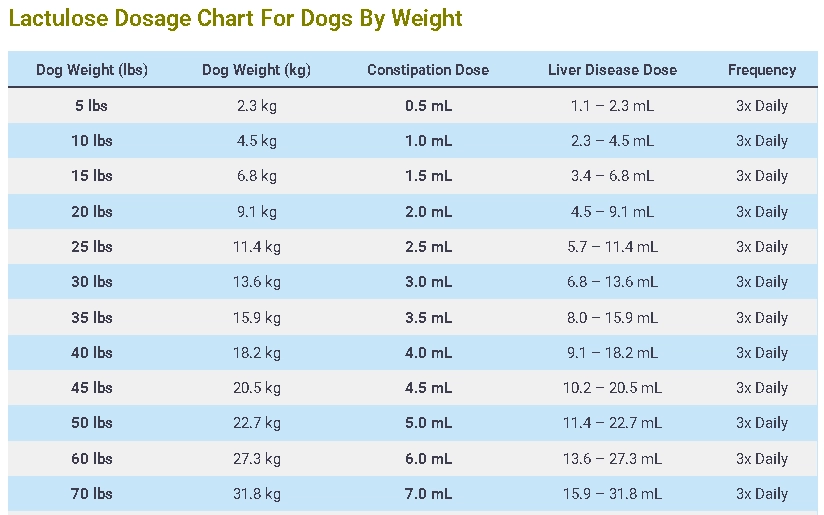
Lactulose Dosage Chart For Dogs By Weight
Standard concentration: 10g/15mL (667mg/mL)
| Dog Weight (lbs) | Dog Weight (kg) | Constipation Dose | Liver Disease Dose | Frequency |
| 5 lbs | 2.3 kg | 0.5 mL | 1.1 – 2.3 mL | 3x Daily |
| 10 lbs | 4.5 kg | 1.0 mL | 2.3 – 4.5 mL | 3x Daily |
| 15 lbs | 6.8 kg | 1.5 mL | 3.4 – 6.8 mL | 3x Daily |
| 20 lbs | 9.1 kg | 2.0 mL | 4.5 – 9.1 mL | 3x Daily |
| 25 lbs | 11.4 kg | 2.5 mL | 5.7 – 11.4 mL | 3x Daily |
| 30 lbs | 13.6 kg | 3.0 mL | 6.8 – 13.6 mL | 3x Daily |
| 35 lbs | 15.9 kg | 3.5 mL | 8.0 – 15.9 mL | 3x Daily |
| 40 lbs | 18.2 kg | 4.0 mL | 9.1 – 18.2 mL | 3x Daily |
| 45 lbs | 20.5 kg | 4.5 mL | 10.2 – 20.5 mL | 3x Daily |
| 50 lbs | 22.7 kg | 5.0 mL | 11.4 – 22.7 mL | 3x Daily |
| 60 lbs | 27.3 kg | 6.0 mL | 13.6 – 27.3 mL | 3x Daily |
| 70 lbs | 31.8 kg | 7.0 mL | 15.9 – 31.8 mL | 3x Daily |
| 80 lbs | 36.4 kg | 8.0 mL | 18.2 – 36.4 mL | 3x Daily |
| 90 lbs | 40.9 kg | 9.0 mL | 20.5 – 40.9 mL | 3x Daily |
| 100 lbs | 45.5 kg | 10.0 mL | 22.7 – 45.5 mL | 3x Daily |
Important Administration Notes:
- The "Stool Goal": The dose should be titrated to achieve 2 to 3 soft, formed stools per day.
- Adjustment: If stools remain hard, the dose or frequency may be increased under veterinary guidance. If watery diarrhea occurs, reduce the dose immediately to prevent dehydration.
- Safety Checklist:
- Hydration: Always provide unlimited fresh water.
- Diabetes: Use with extreme caution as Lactulose contains sugars that can affect insulin levels.
- Antacids: Do not give with oral antacids, as they can reduce the medication's effectiveness.
What Is Lactulose?
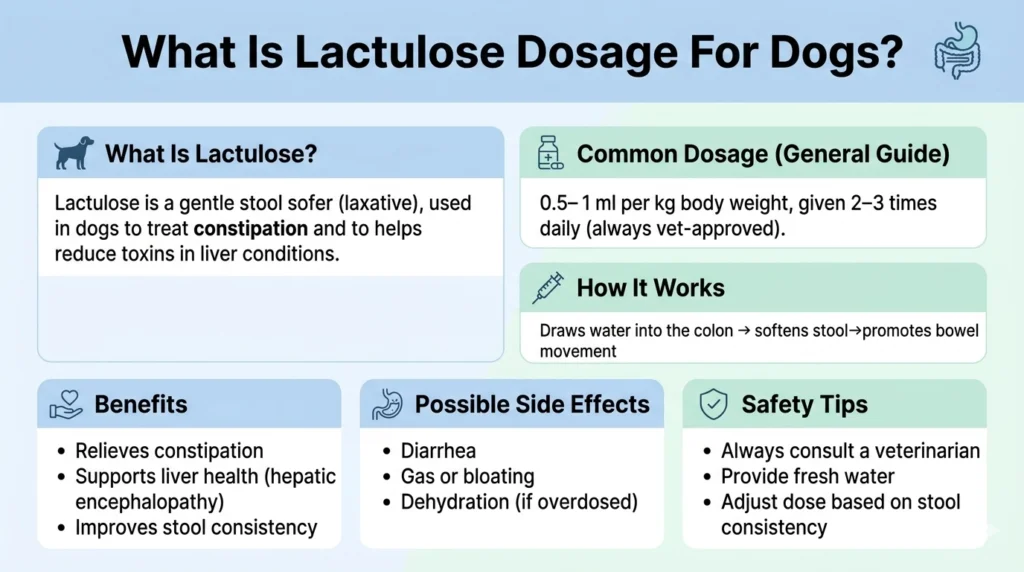
Lactulose dose for dogs is a non-absorbable, synthetic disaccharide (sugar-based drug) that was formerly approved to be used in humans and sold under brand names like Constulose, Enulose, Generlac, Cephulac and Kristalose. It is commonly used as an extra-label (off-label) drug in dogs, cats, birds and reptiles under the guidance of a veterinarian in veterinary medicine.
It is used as a stool-softening laxative and ammonia-reducing agent, and is useful in the treatment of constipation and hepatic encephalopathy (liver-related high blood ammonia levels). Lactulose dose acts by attracting water into the bowels to soften stool and in aiding to decrease the absorption of ammonia in the body, which helps in the liver functioning.
Lactulose for dogs is used in veterinary care despite not having been developed originally as it is effective. Since its use in pets is off-label, it should always be used under the directions of a veterinarian, which may vary greatly in comparison to human labeling directions.
What Is Lactulose Dosage Used for in Dogs?
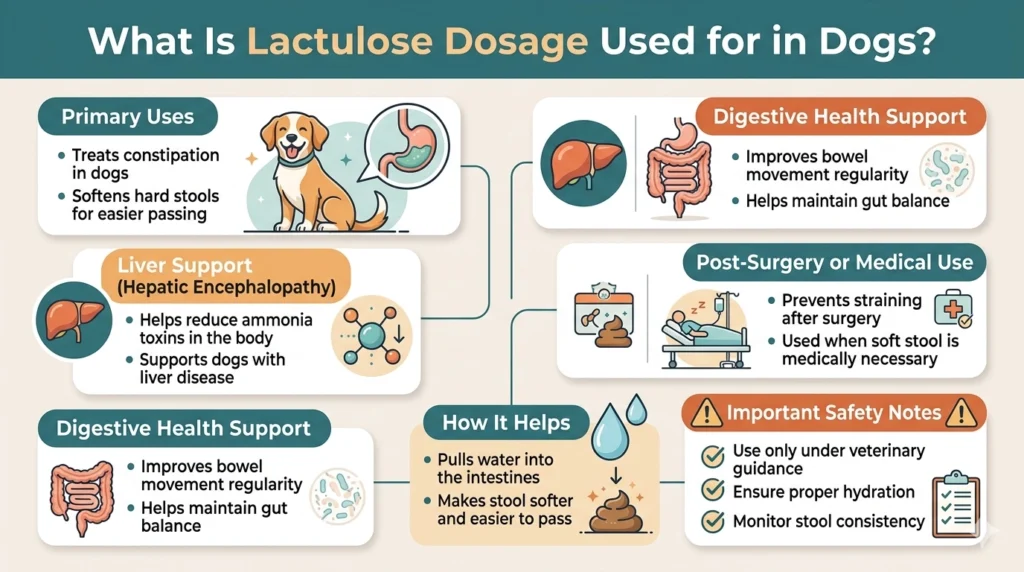
Lactulose dosage for dogs by weight is a prescription veterinary drug that is primarily utilized on dogs to treat liver-related and constipation.
It is additionally employed in hyperammonemia (excess blood ammonia) and a key therapy in the veterinary medical care to aid digestive and liver wellbeing.
The important applications of Lactulose in Dogs are:
- Hepatic encephalopathy - administered to treat a severe liver disease in which the body accumulates toxins such as ammonia in the bloodstream, which impacts the brain function leading to abnormal behavior, confusion or coma.
- Hyperammonemia - assists in the decreasing level of ammonia in the blood.
- Constipation - is a laxative to relax hard or infrequent stools and to increase bowel movements in dogs.
- Liver disease support - assists in managing the amount of ammonia in dogs with damaged liver functions.
Additional Information:
- Lactulose for dogs is a non-digestible man-made disaccharide (sugar-based drug).
- Usually taken as a stool softener and as a lowering agent of ammonia.
- Usually used in the short-term to relieve constipation or in the long-term to treat liver conditions.
- Comes in brand names Cephulac 2.7, Kristalose, Generlac, Constulose and Enulose.
- Can be administered on several occasions a day as the veterinary directs.
- Initially meant to be used by people but is commonly used in veterinary care of dogs and cats.
Always put under the supervision of a veterinarian, the dosage and the length of lactulose treatment varies depending on the condition of the dog and the severity of symptoms.
How Lactulose Works in Dogs
Lactulose dosage for dogs, a non-digestible artificial disaccharide (sugar molecule composed of fructose and galactose) is effective in dogs by two principal mechanisms: osmotic laxation and ammonia reduction, which is why it is very useful in constipation as well as liver-related diseases, such as hepatic encephalopathy.
The mechanism of action of Lactulose in dogs is as follows:
- Mammals and birds do not digest or absorb lactulose and thus, it remains intact in the stomach and small intestine into the colon.
- In the colon, there are good gut bacteria that digest lactulose as a source of food.
- The organic acids that are produced by this bacterial fermentation are lactic acid, acetic acid and formic acid and the carbon dioxide gas.
- These acids produce an osmotic effect and the water is attracted in the intestines.
- Being a higher water content results in softened stools and triggers bowel movements, which makes it a good stool softener in constipation.
- The acids also decrease (acidify) the colon pH.
Ammonia-Reducing-Mechanism (Liver Disease):
- The colon has an alkaline environment that helps to draw the ammonia out of the blood to the gut.
- This is then used to produce ammonium which is trapped in the colon.
- This ammonia is discharged in feces thus lowering the ammonia content in blood.
- This is particularly necessary in dogs with liver dysfunction wherein the liver is not able to properly detoxify ammonia.
- Lactulose can prevent neurological problems (confusion, seizures, and brain dysfunction caused by hepatic encephalopathy) by reducing the concentration of ammonia.
Key Functional Summary:
- Acts as osmotic laxative by adding to the water in the colon.
- Softens the stool, and enhances bowel movement.
- Makes the colon acidic by the fermentation of bacteria.
- Helps eliminate the surplus ammonia in the body through feces.
- Helps dogs that are constipated and those with toxin accumulation caused by liver disease.
Side Effects & Risks of Lactulose in Dogs
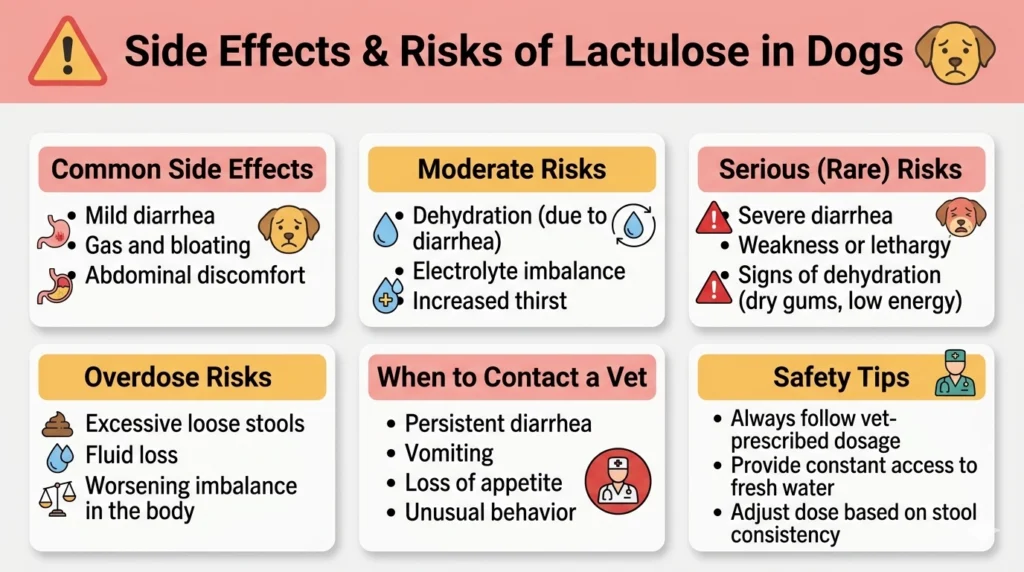
Lactulose dosage for dogs per poung or kg og body weight is typically a safe and well-developed veterinary drug when used properly, but may lead to gastrointestinal side effects and some metabolic hazards, particularly when overdosed, or in sensitive pets.
The majority of side effects are not long lasting and clear up within 24 hours, because the drug is fast acting and easily clears the system.
Common Side Effects:
- Diarrhea (most typical effect because of stool-softening effect)
- Flatulence (excessive production of gases)
- Dilated abdomen or bloating.
- Stomachache or abdominal cramps.
- These digestive reactions can happen even when taking as part of the treatment of liver diseases or constipation and tend to get better with time.
Side Effects: increased doses:
- Severe diarrhea
- Fluid loss and dehydration.
- Electrolyte imbalances, especially:
- Low potassium in the blood (hypokalemia).
- High sodium levels
- These dangers are augmented with an overdose or lack of water.
Any allergic or rare reactions:
- Rare hypersensitivity reactions
- The potential manifestations are swelling of the face or seizures.
- In case of observation, it is recommended to discontinue lactulose and contact a veterinarian.
Risk Factors & Precautions:
- Should NOT be used in pets with:
- Allergy to lactulose.
- Obstruction or blockage of the intestines.
- Should be used WITH CAUTION in pets with:
- Diabetes (can have an indirect effect on glucose balance due to GI changes)
- Fluid or electrolyte disorders.
- Animals under pregnancy or lactation.
Additional Safety Notes:
- Lactulose can have an interaction with other laxatives, and some antibiotics.
- Could be hard to give to cats because of its flavor, and could lead to over drooling.
- Excessive or incorrect water consumption may enhance the chances of dehydration and electrolyte imbalances.
- Pets should always be monitored and a veterinarian called in case of any side effects or in case they become worse.
Overall Risk Summary:
The majority of side effects of lactulose in dogs are mild, short-term and digestive, although it is important to carefully dose and not to ignore veterinary care to avoid dehydration, electrolyte imbalance, and complications in pets with high risks.
Dosing & Administration of Lactulose Dosage in Dogs
veterinarian depending on the condition of the dog, its weight and reaction. It is primarily applied in the treatment of constipation and hepatic encephalopathy (HE) in which the dosage is tailored to promote the targeted stool consistency and clinical response instead of a standard dose.
Administration in Dogs
Lactulose dose is given orally, usually as a liquid syrup or sometimes in crystal/granule form. It may be given with or without food and is usually combined with food or water to enhance taste and easy ingestion. There should always be fresh water because dogs might feel more thirsty after dosing and this must be swallowed to ensure that the full dose is effective.
Typical Dosage Guidelines
In the case of constipation, the usual dose is about 1 mL per 10 lb (0.2 mL/kg) three times a day, and depending on the stool consistency. In the case of hepatic encephalopathy, dogs can be given a 1530 mL per dose four times a day but the dose should be carefully adjusted so as to keep the stool count at approximately 2-3 soft feces per day, which is a sign of good ammonia control and bowel activity.
Notes for Cats (comparative)
Small doses are usually given to cats, ranging between 0.25-1 mL every 8-12 hours, depending on stool response. Liquid lactulose is not always palatable, so most cats can better digest the crystalline form, 1 gram of which is approximately 1.5 mL of liquid and it is usually added to food.
Duration & Key Considerations
Treatment varies in terms of length depending on the condition, response, and side effects. Treatment is to be continued as prescribed even in case there is an improvement early to avoid relapses. The veterinarian may modify dosing as time passes in order to achieve the best outcomes.
On balance, when using lactulose in dogs, it is necessary to strictly monitor the veterinary control, monitor the pet, and change the dose according to the reaction on the stool and the general condition of the body.
Possible lactulose drug interactions
Lactulose medication for dogs is a widely used veterinary drug yet can have a reaction with a number of other drugs that can either decrease its efficacy or predispose the individual to more side effects. This is why it is critical to make sure that all medications, supplements and vitamins that a dog is already on should be aware of before beginning the treatment with lactulose.
Caution: Drugs that can Interact with Lactulose.
Some drugs are contraindicated with lactulose, such as:
- Antacids - could negate lactulose efficacy by disrupting acidification of colon, required to entrap ammonia.
- Other laxatives - may enhance the action of stool-softening, and occasionally cause excessive diarrhea or undesirable gastrointestinal reactions.
- Antibiotics like neomycin and gentamicin - can have effects on the gut bacteria and changes in the action of lactulose in the bowels.
- Warfarin (anticoagulant) - needs special attention because it can have an over-all impact on the safety of treatment because it can interact with other drugs.
Key Interaction Concerns
- The lactulose with other laxatives can cause intense bowel movements and diarrhea, which is desirable, or undesirable, depending on the desired treatment.
- Antacids have the potential to diminish the lactulose capacity of acidifying the colon that is significant in trapping ammonia in cases of liver diseases.
- The use of oral antibiotics can change the activity of the intestinal bacteria and thus lactulose might not in the gut behave in a similar manner.
Important Safety Guidance
- Never leave out any current medications, herbal products, vitamins or supplements with your veterinarian.
- Adjustments to dose or timing of drugs can be required to prevent decreased activity or adverse effects.
- Close observation is necessary in the use of lactulose with other gastrointestinal or systemic therapies.
In general, lactulose reactions can be treated under the care of a veterinarian, yet medication disclosure is paramount to the successful and safe treatment of a dog.
You May Also Like to Read:
- Loratadine Dosage For Dogs Calculator, Chart & Safe Guide
- Psyllium Husk Dosage For Dogs: Calculator, Chart & Safe Guide
FAQs
What is the use of lactulose dosage in dogs?
Lactulose dosage for dogs is primarily applied in the treatment of constipation and hepatic encephalopathy, to soften stool and normalize the ammonia level in the blood of dogs with liver disease.
Which monitoring of lactulose drug should be done during treatment?
Dogs that are on a long-term lactulose drug diet may need to be monitored about their stool frequency and consistency (aim: 2-3 soft stools a day), hydration levels, and frequent veterinary examinations. In other instances, veterinarians can as well check on the level of electrolytes and in diabetic dogs, the level of blood glucose.
What is the supply of lactulose medication?
Lactulose medication for dogs is packaged as a syrup (usually 666 mg/mL concentration in different sizes of containers) as well as in crystals to be taken by mouth.
What is the storage requirements of lactulose dose?
It is recommended to be stored at room temperature (20–25 C) in an airtight container, away from heat and light. The drug is not to be frozen.
What is to be done in case of a dose being missed?
In case of a missed dose it is necessary to take it as soon as one remembers. But when it is within the time interval to the next dose, omit the missed dose and resume normal schedule. Do not give a double dose.
What is to be done in case of an emergency or overdose?
In the case of an overdose, or suspected adverse reaction, call a veterinarian. In case they are not available, then consult an emergency veterinary clinic under professional advice.
Do you have any home care directions to lactulose use?
It should be given as instructed by the owners using a syringe or a spoon and it should be mixed with food or water to be more acceptable. Fresh water must be available at all times and the owners should watch out on any side effects and report to a veterinarian.
Do you have any alternatives or support treatments?
In the case of constipation, dietary fiber supplements can be used including psyllium. In the case of liver disease, lactulose is commonly used in conjunction with dietary protein restriction, antibiotics (e.g., metronidazole), and probiotics, as well as fluid replacement and the underlying disease.
What are main considerations of long-term care?
Chronic therapy should be properly adjusted in the dose depending on the response, frequent veterinary visits, checking of hydration, electrolytes and metabolic changes. Safe and effective therapy requires proper client education and compliance with the treatment.
Final Thoughts
Lactulose dosage for dogs or pets is a very useful veterinary prescription drug that is regularly administered to dogs to treat constipation, hepatic encephalopathy and to lower high blood ammonia levels related to liver dysfunction.
Its special power to not only soften the stool, but also to aid in eliminating toxins such as ammonia in the body makes it a valuable component of gastrointestinal and liver disease therapy in veterinary medicine.
Whether used properly under the guidance of a veterinarian, lactulose drug for dogs by weight can make a tremendous difference in the comfort, regularity and health of a dog. Its effectiveness however, lies in the adequate dosage, close modification according to the consistency of the stool, and close follow-ups, particularly in the long-term treatment.
With the help of veterinary directions, proper hydration, and checking any side effects including diarrhea, gas, or electrolyte imbalances, pet owners need to pay close attention to these factors and use these medications properly.
Frequent check-ups can be required to check the progress and change dosage, especially in dogs with liver disease or underlying illnesses such as diabetes.
In general, lactulose dosage is a good and useful treatment, but should be used responsibly, constantly monitored, and communicated with a veterinarian to guarantee safe and effective effects in dogs.