Psyllium Husk Dosage For Dogs: Calculator, Chart & Safe Guide
Psyllium Husk Dosage Calculator For Dogs
© medsdog.com
In terms of making your dog digest better naturally, there are not many supplements as useful and effective as the one of Psyllium Husk Dosage For Dogs. In case you are looking to find out what is the correct dosage of psyllium husk for dogs, it is important to know how it works, its advantages, and how to use it to achieve good and safe outcomes.
Psyllium husk dosage is a natural soluble fiber made of the outer part of the seeds of the herb, the Plantago ovata plant indigenous to India. It is a special fiber that is soluble in water, and creates a gel-like substance in the gut which assists in balancing digestion in a manner that can hardly be achieved using other supplements. Psyllium does not just add bulk as does insoluble fiber but rather functions to absorb water, gel hard stool in constipation and solidify loose stool in diarrhea. This twofold effect causes it to be a potent, but mild bulk-forming laxative which promotes general gastrointestinal wellness.
The fact that Psyllium Husk Dosage For Dogs by weight can pass through the digestive tract without being completely absorbed is one of the factors that make it special since it can easily control the bowel movements and at the same time enhance the absorption of nutrients. It also has the hemicellulose mucilage compound which is able to swell in the intestines and which gives the stool a better consistency. Due to these characteristics, psyllium has been extensively used to treat problems like constipation, diarrhea, irritable bowel and general gut health in dogs.
In addition to the essential digestion, the contemporary studies point to the psyllium husk dose as the prebiotic powerhouse. It assists in enhancing the synthesis of positive short-chain fatty acids such as n-butyrate that feed the colon cells and make the gut environment healthier. In most instances, the pet owners can see the apparent improvements including firmer and more frequent stools within only 24 to 48 hours of the correct use.
Another important factor is dosage. Psyllium husk for dogs can be made to suit your dog size and condition with the most frequently suggested doses of it including: weight-based dosing (approximately 0.2 g/kg/day) or more convenient house-dosages such as small teaspoon-to-tablespoon portions depending on the weight of the dog. The dosage is very important, and it has a direct effect on whether the psyllium will soften or harden stool.
This guide will also tell you all you need to know about psyllium husk dosage for dogs, the safe dosing schedules, its effectiveness, possible side effects, and the proper use of this substance to maintain the normal healthy digestive system of your dog.
Disclaimer: This guide is for informational purposes only and is not a substitute for professional veterinary advice.
Always consult your veterinarian before giving Psyllium Husk or any medication to your dog.
Key Takeaways
- Natural Soluble Fiber: Psyllium husk dosage is made of Plantago ovata and aids in the digestion in case of proper dosage.
- Dual-Action Digestive Support: Liquid stool is absorbed to firm it up and hard stool is moistened and bulked to soften.
- Digestive Regularity: Aids in regular bowel movements towards the healthy functioning of the gut.
- Anal Gland Support: Enhances the stool consistency, which enhances the optimal functioning of the anal glands.
- Weight Management Aid: Satiety increases, and this could aid in maintaining the healthy weight.
- Gradual Introduction: This is a gradual introduction that should be introduced gradually and the dosage should be altered depending on the size and weight of your dog.
- Veterinary Consultation Recommended: It is particularly important to dogs that have chronic health issues or are on drugs.
- Safe Incorporation: Adhere to a specific weight-based dosage schedule and stepwise instructions in order to make sure they are effective and safe.
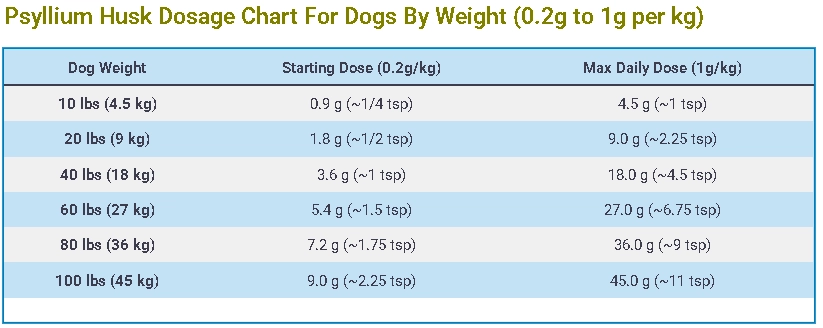
Psyllium Husk Dosage Chart For Dogs By Weight (0.2g to 1g per kg)
If you prefer to be exact or are managing a specific condition, use this table based on the 0.2g/kg to 1g/kg (Maximum) rule.
| Dog Weight | Starting Dose (0.2g/kg) | Max Daily Dose (1g/kg) |
| 10 lbs (4.5 kg) | 0.9 g (~1/4 tsp) | 4.5 g (~1 tsp) |
| 20 lbs (9 kg) | 1.8 g (~1/2 tsp) | 9.0 g (~2.25 tsp) |
| 40 lbs (18 kg) | 3.6 g (~1 tsp) | 18.0 g (~4.5 tsp) |
| 60 lbs (27 kg) | 5.4 g (~1.5 tsp) | 27.0 g (~6.75 tsp) |
| 80 lbs (36 kg) | 7.2 g (~1.75 tsp) | 36.0 g (~9 tsp) |
| 100 lbs (45 kg) | 9.0 g (~2.25 tsp) | 45.0 g (~11 tsp) |
What Is Psyllium Husk?
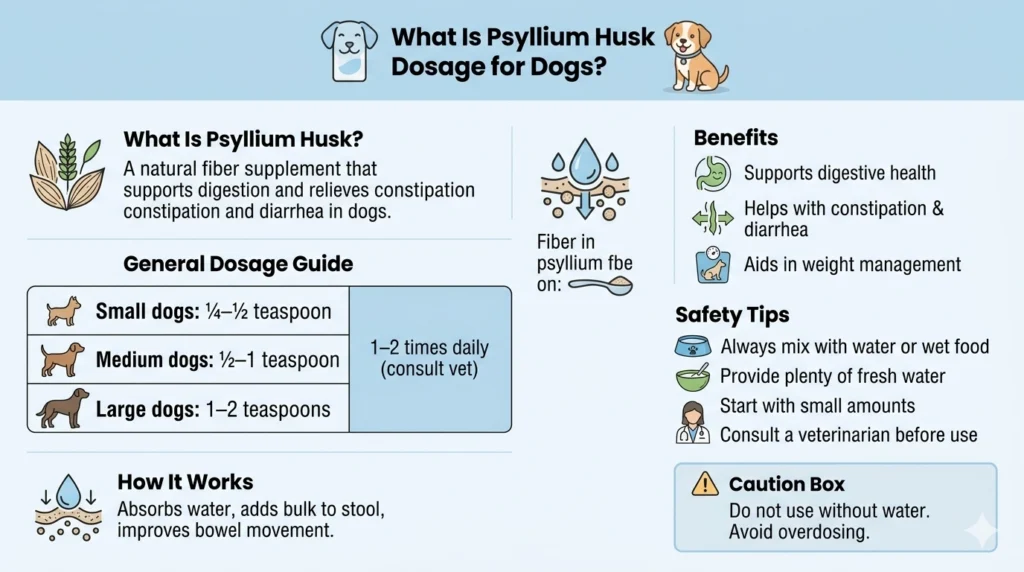
Psyllium husk dosage is a natural and soluble fiber supplement, which is obtained as a natural outer coating of the seed of the Plantago ovata plant, a shrublike herb that is mainly cultivated in India.
It is commonly referred to as a super-fiber and has been utilized in human medicine since 1970s and is now an ordinary therapeutic supplement to the diets of dogs with digestive issues.
This is a fine, virtually tasteless, powder that is a concentrated soluble fiber, which can be dissolved in water and create a gel like substance in the digestive tract. This gel adds bulk and maintains the soft and moist form of stool making bowel movements easier and more regular. Its prebiotic effect on the gut is due to its bioactive substances, hemicellulose mucilage, arabinoxylans, and traces of polyphenols, which feed the good gut bacteria and aid the overall health of the gastrointestinal system.
Psyllium husk dose for dogs is different than insoluble fiber which does not interact with the gut therefore to a large extent; its solubility actively engages in digestion, enabling your dog to absorb nutrients better. A single plantago ovata plant is capable of producing up to 15,000 gel-coated seeds and the husk is the most useful part of the seed. To be on the safe side, it is recommended to feed dogs on pure unflavored psyllium powder only, as any fiber supplement given to humans with extra sugar, flavorings, or artificial sweeteners may be dangerous.
Psyllium husk, a widely-accessible and natural product, is very adaptable in helping to maintain normal bowel movements, stool composition, and a normal gut flora, and is thus an important part of dog diets.
How Psyllium Husk Works in a Dogs Digestive System
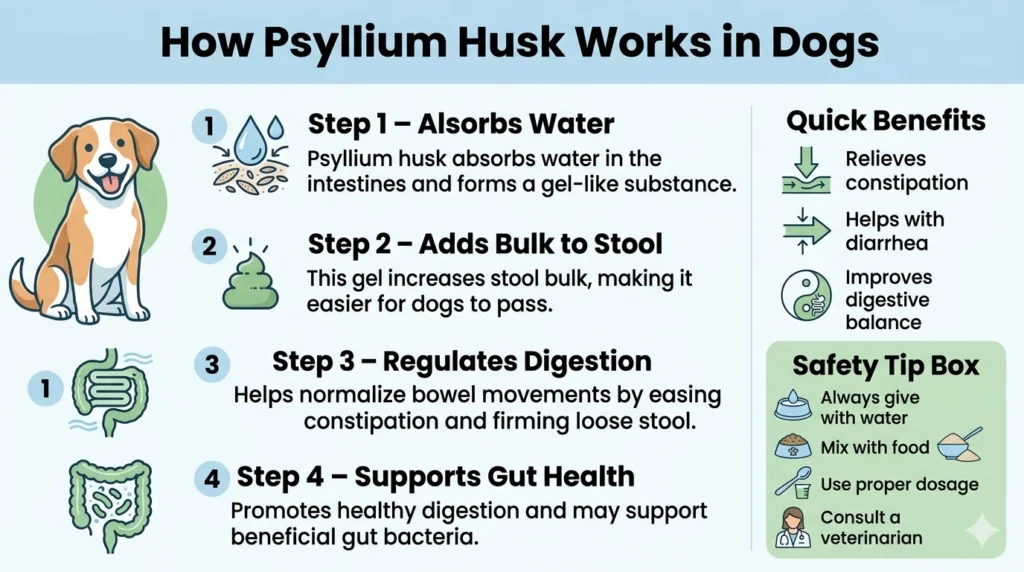
Psyllium husk dosage for dogs is a soluble fiber supplement which helps in digestion, gut and overall wellness of a dog.
It works in the following way:
- Water Absorption and Gel Formation: Psyllium absorbs water in the intestines which forms a soft gel-like mass to be propelled easily through the digestive tract.
- Dual Action Stool Normalization: Soft stool and means that people lose their stool when they have diarrhea and hard stool when they are constipated; this helps the body to restore normalcy in the digestive system.
- Prebiotic Benefits: Supplies the intestinal beneficial bacteria which ferment some of the fiber into short-chain fatty acids such as butyrate feeding the colon cells and enhancing the intestinal barrier.
- Anal Gland Support: The stool bulk can be increased to empty anal glands in a natural manner, therefore, alleviating inflammation and pain.
- Metabolic and Systemic Effects: Reduces glucose uptake, assists in glucose regulation, has a minor lipid-lowering effect, and raises the levels of satiety, which can help maintain a healthy weight.
- Clinical Results: It has been concluded that daily psyllium supplementation enhances the consistency of the stool, defecation frequency, chronic diarrhea and can be used to help underweight dogs gain healthy weight.
Important Implication: Psyllium husk dose is a safe, natural, and multi-purpose fiber which enhances the regularity of the intestines, prebiotic gut maintenance, stool consistency, metabolic wellness, and general well-being of the dog.
Benefits of Psyllium Husk for Dogs
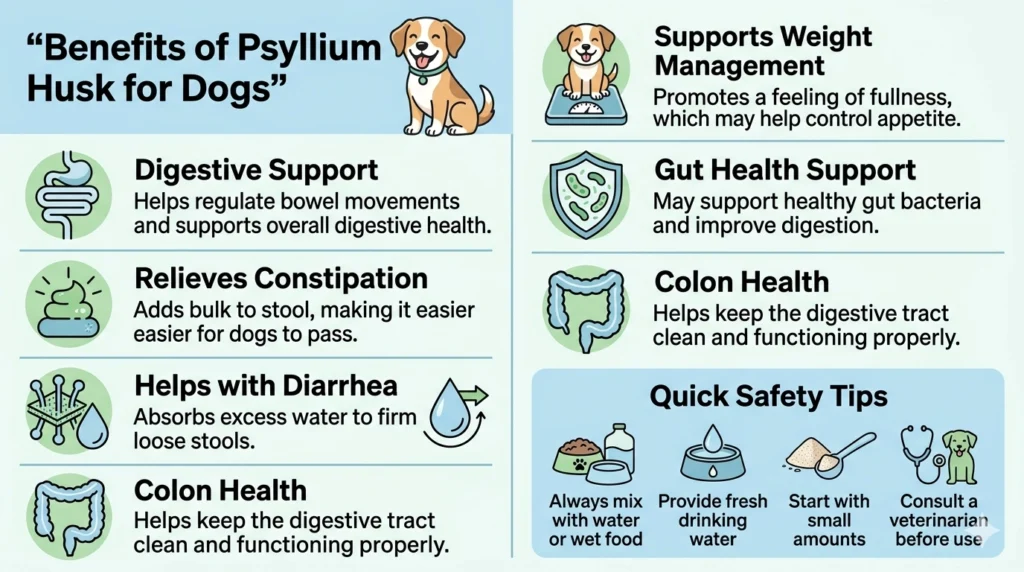
Psyllium husk dosage for dogs is an evidence-based, natural, soluble fiber supplement with numerous benefits to dogs, including the focus on digestive health, anal glands functionality, and weight management.
The benefits of this product are practical, unlike a cure-all, and supported by research in both dog and human research.
Key Benefits:
- Stool Normalization: Corrects loose and hard stools, and soothes dogs that are affected with chronic diarrhea or constipation.
- Digestive Support: Is a mild bulk-forming laxative, enhancing the regularity and gastrointestinal comfort.
- Anal Gland Health: Maximizes the bowel motility, assists in the expression of the anal glands and avoids inflammation.
- Weight Management: Satiety-enhancing, satiating, and healthy weight management.
- Metabolic Support: Can assist in the regulation of the blood sugar level and the lipid profiles, which are involved in the long-term metabolism.
- Short-term and Rapid: Digestive benefits are seen in the first few days and two weeks, and with long-term usage, it leads to microbiome stability and permanent gut health.
- Broad-spectrum: Can be used in various gastrointestinal conditions such as chronic large-bowel diarrhea, constipation caused by low-fiber diets as well as in irritable bowel syndrome.
Conclusion: Psyllium husk dosage is a safe, effective, and research based supplement that aids in digestive harmony, anal gland functionality, weight management and canine wellness when used on a regular basis.
Is Psyllium Husk Safe for Dogs? Contraindications & Side Effects
Psyllium husk for dogs dosage is a safe and effective soluble fiber supplement in dogs in most cases provided that they are used at the right dosage and combined with enough water. It is generally tolerated by most dogs and the side effects are not that serious, however, it is not applicable to all dogs.
Cases in which Caution or Veterinary Surveillance is necessary:
- Suspect obstruction of the intestine: Do not take.
- Severe vomiting: Not until resolved.
- Megaesophagus: This is only to be used under the strict veterinary direction.
- Known intestinal strictures: Prevention.
- Serious renal disease: See a vet because of the issue of hydration.
- Dogs receiving several drugs: Space these drugs spaciously so that they do not cause absorption to be disrupted.
Potential Minor Side Effects:
- Gas and flatulence
- Bloating or stomachache.
- Cramping
- Transient diarrhea or counter-intuitive constipation.
Drug Interactions: Psyllium can slow down or decrease the intake of some oral medications, such as thyroid and certain antibiotics. Give drugs at least 1-2 hours after psyllium except as otherwise prescribed by a veterinarian.
Hydration Is also an Essential: Dogs should be continuously exposed to fresh water taking psyllium. This is because the growing fiber may theoretically lead to the obstruction of the esophagus or the intestine in the absence of sufficient fluid, which is a severe but avoidable complication.
Comparison with Pumpkin: Albeit pumpkin is a good source of fiber and other nutrients and maintains healthy bowel movements, anal glands expression, psyllium has broader gastrointestinal health benefits, maintaining stool consistency between constipation and diarrhea. Your veterinarian would be able to help you decide which option is the best one depending on the needs of your dog.
How Much Psyllium Husk Should You Give Your Dog?
Psyllium husk dosage for dogs is a healthy and safe soluble fiber supplement to dogs, which helps maintain healthy digestion, stool composition and microbiome balance in the gut. Dose varies by body weight, the health status of the dog and therapeutic objectives and a guiding principle is commencing with a low dose and gradually increasing. Small dogs (1012 lbs): 1/4-1/2 teaspoon of compound mixed with food is the usual dosage, with larger dogs being dosed by weight (0.2 g/kg per day or 2-4 tablespoons per day and split into 1- 2 meals).
The gradual introduction in few days will also be necessary to reduce cramping or flatulence. Psyllium is a prebiotic, which promotes the growth of beneficial n-butyrates and maintains a healthy colonocyte, as well as helping chronic large-bowel diarrhea, constipation, hairball control, and potentially hepatic support by lowering ammonia levels. Research indicates that there are quick stool recovery effects of 24-48 hours and long-term positive effects on long-term supplementation.
Always observe stool quality with standardized equipment, give ample water and visit a veterinarian, particularly when a dog has chronic illness or when taking various medications. Psyllium dosage should be avoided when there is severe colonic dysmotility or megacolon.
Important Lessons: Weight-based dosing, gradual introduction, divided meals, the benefits of prebiotics, therapeutic (diarrhea, constipation, hairballs, hepatic support), rapid action, and veterinary supervision to ensure safety and the best results.
How to Give Psyllium Husk to Your Dog?
Psyllium husk can be easily administered to your dog if done with care. To be safe, effective and optimally digested.
follow these steps:
- Accurate Measurement
- Proper measuring spoon/gram scale.
- Due to uneven dosing, avoid making guesses.
- Prepare Psyllium Gel
- Combine psyllium powder by 5-10 times that of water (e.g. 1/2 teaspoon powder with 2-3 tablespoons water).
- Allow to boil until it sets into a gel (2-3 minutes).
- To remove dry lumps, stir thoroughly into food.
- Feeding Options
- Wet food: Add to canned or fresh food.
- Wet kibble: Wet the kibble by adding warm water, and mixing with psyllium gel.
- Picky eaters: Bone broth, plain yogurt, or small portions of unsalted homemade meat broth can be used as the carrier.
- Start Slowly
- Start with a single meal a day the first 3-5 days.
- Keep track of the poop and comfort.
- In case of tolerance, it can be considered dividing doses into breakfast and dinner.
- Hydration
- Make sure that fresh water is free at all times.
- Promote additional postprandial consumption of psyllium.
- Timing
- Administer psyllium with food, but not on an empty stomach.
- Regular schedule aids in setting a regular bowel movement and alleviates cramping.
- Monitor Response
- Maintain a stool journal 1-2 weeks:
- Stool firmness (1–7 scale)
- Frequency of defecation
- Mucus or blood.
- Symptoms of difficulty or pain.
- Adjusting Dose
- Stool excessively liquid: Reduce dose slightly.
- Stool that is too hard or straining: Reduce dose or drink more water.
- No improvement after 2 weeks: See your veterinarian.
- Gas or bloating: Discontinue gradually and add the gradual introduction.
- What to do when to Call a Vet.
- Lassitude, vomiting, sharp pain in the abdomen, or bloody diarrhea.
These steps guarantee that psyllium husk is used to keep dogs healthy in terms of proper digestion, bowel movement and gut health with fewer side effects.
Potential Side Effects of Psyllium for Dogs
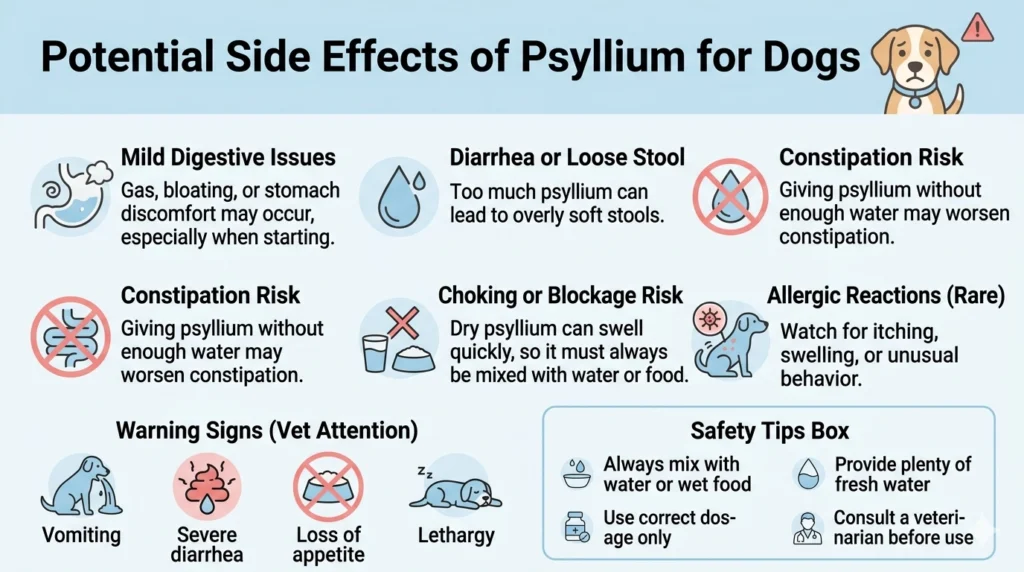
In general, psyllium is safe in dogs, though some side effects are possible, which must be monitored:
- Risk of choking: This may happen when psyllium for dogs dosage is combined with thickened liquids, or is not adequately hydrated.
- Allergic Reactions (Rare but Serious): Could include irregular breathing, rash, fever, facial swelling, or swelling. These signs necessitate immediate veterinary care in case they occur.
- Drug Sensitivities: Dogs can also become sensitive to drugs, when initial doses had no effect. Constant observation during treatment is imperative.
- Other Unusual Reactions: You should call your veterinarian at any time you experience any unexpected symptoms.
The effects of Pysllium dose for dogs are usually short-lived and less than 24 hours, but in dogs with kidney or liver problems, the effects may be prolonged. Close monitoring, good preparation and hydration reduce risks and provide safe supplementation.
You May Also Like to Read:
- Theophylline Dosage For Dogs: Calculator Chart & Safe Guide
- Frontline Dosage for Dogs: Calculator, Guide & Dosage Chart
FAQs
Is it possible to give human psyllium products (e.g. Metamucil) to dogs?
Unflavored psyllium husk dose only is safe. Never use products that contain sweeteners (particularly xylitol), sugars or additives. Options that are pet-specific are safer, but pure psyllium powder can be used with veterinary recommendations.
What is the amount of psyllium husk dosage to feed a dog?
Depending on size and requirements dosage varies:
Small dogs: ~1/8 to 1/4 teaspoon daily or 1/4–1/2 tsp per meal
Medium dogs: 1/2-1 tsp/meal.
Large dogs: 1-2 tsp at a time.
Begin small, gradually build up, share with food, combine with water, and keep hydrated.
Is psyllium husk dosage safe for dogs?
Yes, when given in appropriate amounts. It aids in digestion, controls bowel movements and can possibly aid in weight loss.
What is the maximum length of stay of dogs on psyllium?
It can be used by dogs months and years under the supervision of a veterinarian. It is not addictive, however, stool, hydration, and weight monitoring should be done regularly.
Will psyllium dosage be of any use during food changes?
Yes, temporary small doses can be used to improve stool consistency during 7-10 days but it is not an alternative to gradual food transition.
Can puppies be given psyllium for dogs dosage?
Under the supervision of a veterinarian. Puppies take much less dosage and diet management is normally the preferred choice to begin with.
Is psyllium a de-toxifier?
No, it has a weak detox action. It is not to be applied to toxin exposure- contact a veterinarian in case of such cases.
Psyllium vs. Pumpkin - which is better?
Pumpkin: Provides fiber and nutrients, assists in stool bulk and expression of anal glands.
Psyllium: Fiber that is soluble and regulates diarrhea and constipation and provides a more powerful gut health benefit.
Option is based on the needs of your dog.
What are the negatives or side effects?
Gas or bloating when added to rapidly.
Possibility of choking or blockage of the intestines due to lack of sufficient water.
Excess use can interfere with the absorption of nutrients.
Is monitoring required?
Yes. Adhere to veterinary exams when prescribed and watch out to any deviant changes at home. Do not use and see a vet in case of problems.
What is the storage of psyllium?
Keep at room temperature in a tightly-closed container, and not exposed to moisture or to children or pets.
What to do in case of emergency or overdose?
Call your veterinarian or an emergency. Reporting of adverse effects can be done to FDA or Health Canada.
What should I do in case of a missed dose?
Give it immediately remembered, and resume the regular schedule. Do not increase dose.
Final Thoughts
When used properly, psyllium husk dosage for dogs per pound or kg is a safe, natural and effective means of maintaining the digestive health of your dog. It helps to ease constipation and diarrhea, improve the consistency of stool and other benefits, to maintain gut health and weight control, which are supported by evidence of practice and scientific studies.
The trick here is to begin with a low dosage, introduce it step by step, never leave it uncompounded with water and to keep your dog hydrated.
Stability and check-ups are necessary- keep a check on the quality of the stool, the comfort and the general response of the dog and modify dosage accordingly. Although psychillium use in many dogs can be safely used over the long-term, each and every dog is unique, so it is best to consult your veterinarian, particularly in puppies, chronic illnesses, or those on medication.
In appropriate amounts, psyllium husk dose can form an important component of your dog's daily regimen, enhancing the long-term digestive stability and well-being.