Cetirizine Dosage For Dogs Calculator: Dosage Chart & Guide
Cetirizine Dosage For Dogs Calculator
Veterinary-Based Guide for Dogs
When your dog is scratching all the time, or has irritated skin, or seems to have a seasonal reaction, it can make a huge difference to know the right amount of Cetirizine Dosage For Dogs. Cetirizine or Zyrtec dosage is an over-the-counter antihistamine found in humans to treat such symptoms as sneezing, runny nose, and itch. It is commonly suggested in veterinary practice to treat dogs with atopic dermatitis, sensitivity to insect bites and mild to medium environmental allergies.
Though cetirizine dosage has not been approved by FDA to be used in animals, it has often been used as an extra-label medicine by veterinarians to treat allergic reactions in dogs. It is effective because it is a second generation H1 antihistamine, which acts by inhibiting histamine, a chemical secreted when an individual is allergic to something. As histamine attaches to the H1 receptors, it becomes inflamed, itchy, swollen, and in some cases, results in respiratory discomfort.
Cetirizine can prevent this interaction, thus alleviating these symptoms without a significant increase in heart rate or stomach acid, as H2 receptor-acting medications do.
Due to the variability of reactions and the possibility of underlying health issues that can impact the safety of using cetirizine, cetirizine must be used under veterinary supervision. You will learn the safe dosage, the benefits of this medication, possible side effects and when this medication is the appropriate one to use to treat your dog with allergy in this guide.
Disclaimer: This guide is for informational purposes only and is not a substitute for professional veterinary advice.
Always consult your veterinarian before giving Cetirizine or any medication to your dog.
Key Takeaways
- Cetirizine for dogs is a non-drowsy antihistamine that is given to dogs with itchy skin (pruritus) which is caused by atopic dermatitis, allergies, insect bites or hives.
- Its normal dosage is 1mg/kg body weight (0.45 mg/lb) administered once or twice in a day with veterinary supervision.
- Cetirizine dose for dogs should never be used with pseudoephedrine (e.g., Zyrtec-D) because it is poisonous to dogs.
- The mild side effects can be vomiting, drooling, or drowsiness.
- Keep cetirizine dose by weight in a proper place at room temperature and never leave it within the reach of pets and children.
- Always check with a veterinarian to be sure that cetirizine is combined with other drugs and in particular with central nervous system depressants.
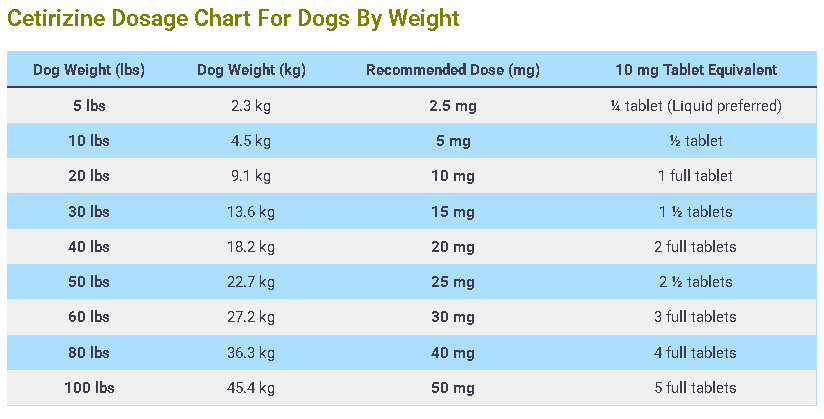
Cetirizine Dosage Chart For Dogs By Weight
Based on the veterinary guidelines provided, here is the comprehensive dosage Chart for Cetirizine (Zyrtec) for dogs. This table utilizes the standard 0.5 mg/lb (1 mg/kg) ratio and applies it to the most common human formulation (10 mg tablets).
| Dog Weight (lbs) | Dog Weight (kg) | Recommended Dose (mg) | 10 mg Tablet Equivalent |
|---|---|---|---|
| 5 lbs | 2.3 kg | 2.5 mg | ¼ tablet (Liquid preferred) |
| 10 lbs | 4.5 kg | 5 mg | ½ tablet |
| 20 lbs | 9.1 kg | 10 mg | 1 full tablet |
| 30 lbs | 13.6 kg | 15 mg | 1 ½ tablets |
| 40 lbs | 18.2 kg | 20 mg | 2 full tablets |
| 50 lbs | 22.7 kg | 25 mg | 2 ½ tablets |
| 60 lbs | 27.2 kg | 30 mg | 3 full tablets |
| 80 lbs | 36.3 kg | 40 mg | 4 full tablets |
| 100 lbs | 45.4 kg | 50 mg | 5 full tablets |
Important Dosing Notes
- Normal Ratio: The ratio is 0.5 mg of medication per 1 lb of body weight or 1 img per 1 kg.
- Administration: It is usually given once a day or twice a day. But in the case of severe allergies, other veterinarians will prescribe this dose twice a day. Use without professional advice.
- Small Dogs (less than 10 lbs): 10 mg tablets are hard to break into any less than a half. In the case of very small dogs, veterinarians highly recommend Children Cetirizine Liquid (1 mg/1 mL) because they do not want them to overdose.
- Relapse Prevention: Although the itching or sneezing may have stopped, take the full course of treatment as prescribed by your vet to avoid recurrence of the symptoms.
Caution: It is important to ensure that you have Plain Cetirizine dose by weight for dogs. Products labeled Zyrtec-D contain Pseudoephedrine, which can cause seizures or death in dogs. Also, check liquid labels of Xylitol (an artificial sweetener), which is very poisonous to canines.
What Is Cetirizine Used for in Dogs?
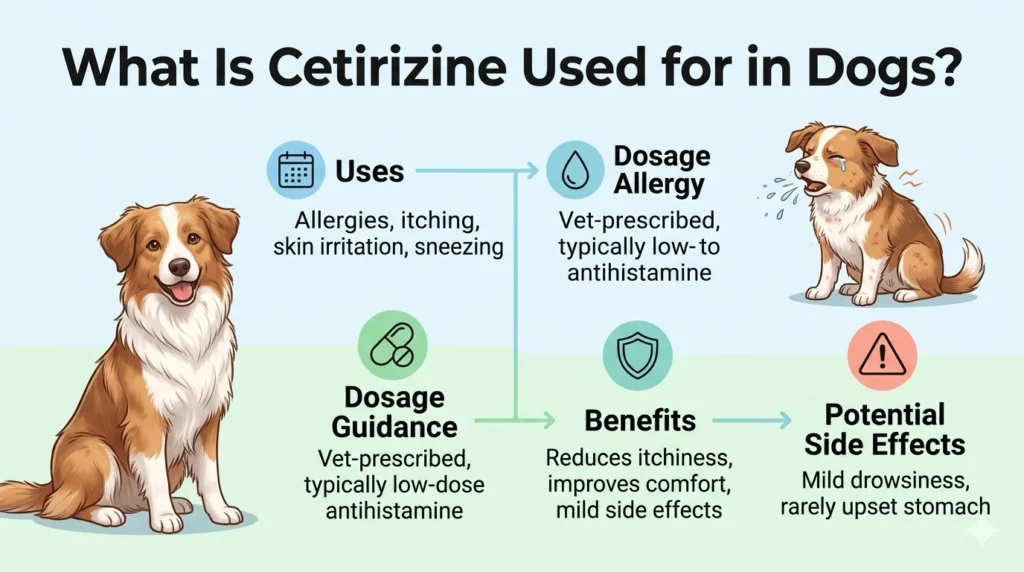
Cetirizine dosage is widely used in dogs to treat various types of allergies-related illnesses, as it inhibits histamine, which causes allergies in dogs (itching and inflammation). It comes in particularly handy when it comes to making the skin more comfortable and modulating allergic reactions.
As a veterinary drug, cetirizine is mainly employed in dogs:
- Heals itching (pruritus) of atopic dermatitis.
- Assists in the treatment of allergies, such as environmental allergies.
- Eases the pain due to insect bites and hives.
- Manages histamine-reactive skin disorders.
- Helps in the treatment of histamine release in the mast cell tumors.
Other advantages in the treatment plans:
- Safe to take together with oral/topical corticosteroids.
- Improves the general efficiency of the allergy treatment.
- Allows the use of reduced doses of steroids, which contributes to the minimization of possible side effects.
Cetirizine is significant in treating symptoms of allergy in dogs with the help of veterinary prescriptions as a complex therapy.
Zyrtec (Cetirizine) Dosage for Dogs
Dogs Cetirizine (Zyrtec) dose for dogs is administered at a dosage that depends on the weight of the dog, since there is no specific veterinary formulation and an officially accepted dog dose regimen.
The standard dose that is recommended is approximately 0.5 -1 mg per kg (0.25-0.5 mg per pound) and is typically administered one time per day, but in some cases may be necessary to administer every 12 hours in cases of allergy or every 24 hours in cases of atopic dermatitis.
General dosage guidelines:
- Less than 10 lbs: ~2.5 mg (½ of a 5 mg tablet or ¼ of a 10 mg tablet)
- 10–50 lbs: 10 mg (one tablet)
- Over 50 lbs: Up to 20 mg (two 10 mg tablets)
Alternative dose (tablets):
- <5 lbs: ½ of 5 mg tablet
- 5–10 lbs: 5 mg
- 11–20 lbs: 10 mg
- 21–50 lbs: 10 mg twice daily
- 50–100 lbs: 20 mg twice daily
Cetirizine dosage comes in 5mg and 10mg tablets and in a liquid version, which can be administered using a syringe, food or by mouth, particularly in small dogs. Although tablets are sold over the counter, oral syrup usually needs a prescription and can be compounded into palatable forms to make its administration easier.
Never give more than what your veterinarian has prescribed and never use cetirizine dose together with other tranquilizers of the nervous system like phenobarbital.
How to Give Your Dog Zyrtec (Cetirizine) Dosage
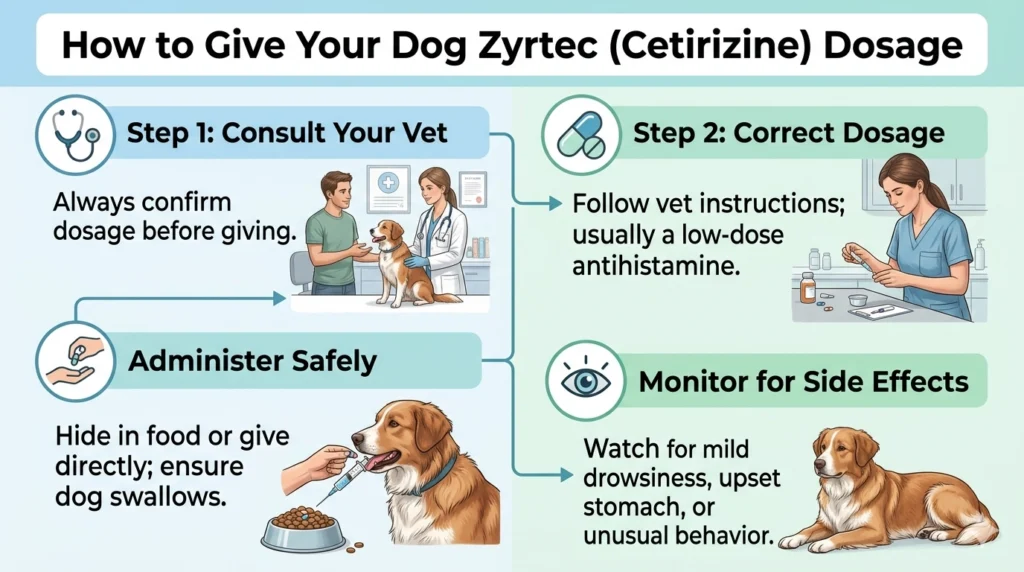
Cetirizine (Zyrtec) dosage is administered to dogs either orally in a tablet or liquid (oral syrup) and to guarantee effective and safe use of this medication, the correct administration methods should be used. Regardless of the method of administering this medication, it is always important to consult your veterinarian.
The most important rules when administering cetirizine to dogs are:
- Take in tablet or liquid form as per the needs of the dog.
- Liquid doses are to be measured with the dosing device.
- Split pills with a pill cutter to split the pills correctly in case a partial dose is needed.
- May be administered in the presence of or without food.
- In case of vomiting or any form of illness in your dog, administer subsequent doses in a small portion of food.
- Stuff pills in a pill pocket or treat of choice in case your dog does not take pills.
Important safety precautions:
- Do not administer combination medication such as Zyrtec-D as it contains pseudoephedrine which is lethal to the dogs.
Cetirizine normally takes effect in 1- 2 hours and the symptoms of allergies are felt to be improved after administration.
Side Effects of Cetirizine Dosage in Dogs
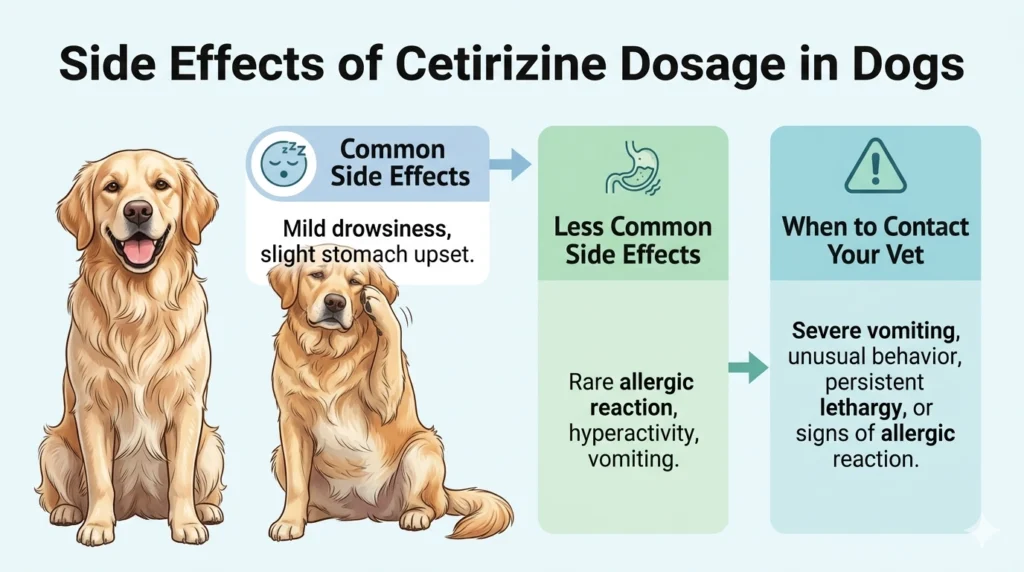
As a rule, cetirizine for dogs can be taken by dogs with a prescription of a veterinarian, however, certain animals might have side effects, particularly when taken regularly or in excessive amounts. It is relevant to pay attention to your dog to make sure it is safe and comfortable.
The most common side effects of cetirizine dose in dogs are:
- Vomiting
- Hypersalivation (drooling)
- Somnambulism or drowsiness, particularly among small dogs.
- Fatigue or lethargy
- Decreased appetite
- Dry mouth
- Hyperactivity
- Constipation
- Difficulty urinating
- Impulsiveness
Important safety precautions:
- The medication should be avoided in dogs that are known to be allergic/hypersensitive to cetirizine.
- Interacts with the depressants of the central nervous system or other drugs.
- Even when first doses have been tolerated, side effects may occur over time.
- Your veterinarian should be contacted immediately in case of any serious, unusual or progressive symptoms.
- The effects are normally short term (less than 24 hours) though in dogs with liver or kidney disease, the effect can be long term.
Cetirizine is a safe drug that should be used in accordance with proper veterinary instructions to help control the allergy symptoms of your dog.
Interactions of Cetirizine with Other Pet Medications
It is critical to note that you should always tell your veterinarian all the drugs, over-the-counter drugs, vitamins, and supplements that your dog has taken before administering cetirizine. Although cetirizine medication may react with a few drugs, there are drugs which can pose a risk of side effects especially central nervous system depressants.
Drugs that can be interacted with cetirizine:
- Opioids (codeine, hydrocodone, morphine)
- Up to anti-anxiety or sleeping drugs (e.g., alprazolam, lorazepam, diazepam, zolpidem, clonazepam)
- Muscle relaxers (ex. carisoprodol, cyclobenzaprine)
- Other antihistamines (oral or topical e.g. diphenhydramine, chlorpheniramine)
- Propylene glylycol (decongestants)
- Cannabinoids (CBD)
Cetirizine medication for dogs has the potential to increase the sedation properties of these drugs and, therefore, close attention should be paid. Also, cetirizine for dogs medication can lead to the interference of allergy skin test and therefore one should stop taking it at least one to two weeks before any testing.
It is important to always communicate with your veterinarian about your dog in their entirety (medication and supplement list) to prevent unsafe and ineffective treatments with cetirizine.
How Cetirizine Medication Works in Dogs
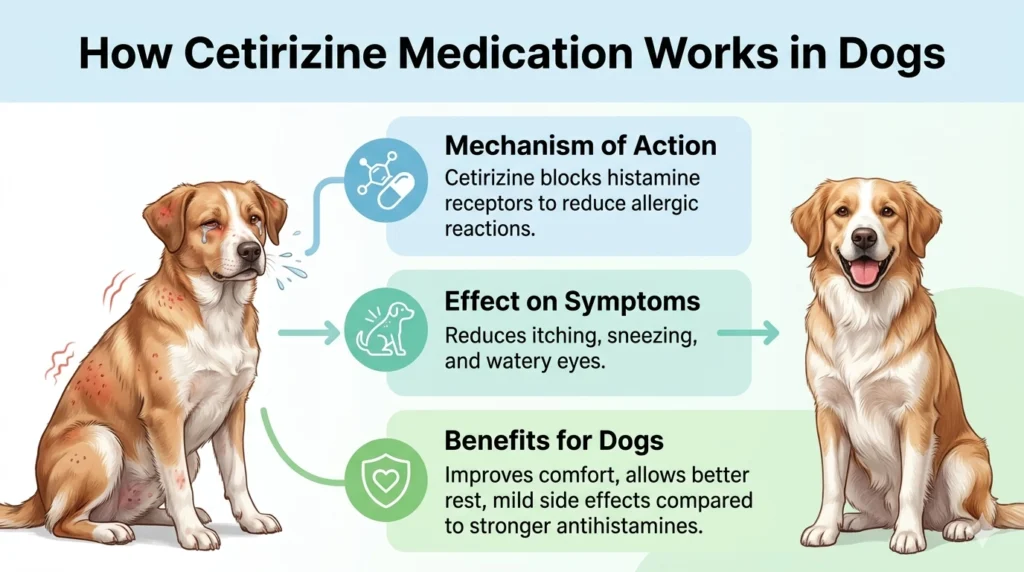
Cetirizine is a medication that inhibits the H1 histamine receptors in the body and in so doing inhibits the ability of histamine to bind and cause allergic reactions. It also assists in reducing the release of histamine by basophils, which is a form of white blood cell that is involved in the immune reactions.
Cetirizine dosage for dogs by weight is effective in reducing the itch, swelling, and other symptoms of allergies by inhibiting histamine, which is the cause of atopic dermatitis, insect bites, and hives among other histamine-related diseases in dogs.
Risk Factors and Precautions for Using Cetirizine in Dogs
Although cetirizine dosage for dogs is safe with a veterinarian prescription, there are some risk factors and precautions that should be taken to guarantee the safety of your dog.
Cetirizine should not be administered to pets that:
- Hypersensitive or allergic to cetirizine or hydroxyzine (Atarax 2, Vistaril)
- Being administered cetirizine-pseudoephedrine combination preparations (toxic to dogs and cats)?
Cetirizine should be used with care in pets that:
- Suffers a convulsive disorder.
- Experience urination problems or constipation.
- Suffers thyroid or prostate swelling.
- Suffers heart disease, liver disease or kidney disease.
- Have glaucoma
- Are senior dogs
- Are working dogs (can get sleepy and they cannot work)
- Pregnant or lactating.
Veterinary oversight is necessary when using cetirizine dosage for dogs per kg or lb so that you can be assured that the drug is safe and suitable to your dog with the particular health issues.
Cetirizine Dosage Forms for Dogs:
Zyrtec® or cetirizine is a drug that is used in dogs only by human preparations, since there are no veterinary-specific preparations.
Available dosage forms:
- Tablets: 5 mg and 10mg coated tablets to be taken orally.
- Chewable tablets: Grape-flavored, 5 mg and 10 mg, which are easier to administer to the dog because they are flavored.
- Liquid suspension: to be dosed with a syringe or a dropper; 1mg/mL concentration, can be kept at room temperature or refrigerated.
These types offer options in the administering cetirizine drugs to dogs by placing the pills in food, using chewables as treats, or liquid in small dogs or an exact dose.
You May Also Like to Read:
- Meloxidyl Dosage For Dogs: Dosage Calculator, Chart & Guide
- (SMZ-TMP) Bactrim Dosage For Dogs: Chart, Calculator & Safe Dosage Guide
FAQs
Is cetirizine drugs safe on dogs?
Yes, cetirizine dose is not harmful to dogs as a rule, when administered under the supervision of the veterinarian. Being the second generation antihistamine, it has less chances of causing drowsiness, dizziness, or a dry mouth. This medication should not be used in dogs which are hypersensitive to cetirizine or hydroxyzine.
Is cetirizine overdose by dogs?
Hogs are not likely to overdose. The symptoms can be vomiting, lethargy, hyperactivity, panting, dilation of the pupil, or acceleration of the heart rate. This is because, in case of doubt of an overdose, immediate veterinary care is needed, particularly where the product contains pseudoephedrine.
Is it ok to administer cetirizine dose to my dog every day?
Yes, it can be administered daily and in most cases, it is prescribed as long term treatment of itchy skin in atopic dermatitis. Majority of the dogs can be used on a daily basis.
Is it better to administer Zyrtec with food?
Cetirizine drugs for dogs is not influenced by food hence it can be administered with or without a meal. In case of vomiting, one can take it with a small portion of food.
So, what happens to me in case I forget to take a dose?
In case of twice daily dosing, the subsequent dose should be at regular time. When administered once a day, administration should be as early as possible unless it is within the same dose schedule. Do not take two doses of the same drug.
Is cetirizine supposed to cause my dog to be sleepy?
Majority of dogs do not get drowsy although some of them may. Administration of the drug at bedtime can help in decreasing sleepiness.
What is the storage of cetirizine Dosage for dogs supposed to be?
Tablets are to be kept at room temperature in its original packaging. Liquid forms could be stored at room temperature or refrigeration as per label instructions, should not be accessible to pets and children.
Is it acceptable to administer Zyrtec-D to my dog?
No, Zyrtec-D has pseudoephedrine that is lethal to dogs and may result in serious and fatal consequences.
What are the outcomes that I can achieve?
Reduction in itching, elimination of allergic response and treatment of histamine based disorders, including mast cell tumors.
Do they have precaution or contraindication?
Dogs with liver or kidney illness, thyroid issues, heart ailments, glaucoma, urination issues, old age, working dogs, pregnant /nursing pets are advised to be careful. Avoid interactions with central nervous system depressants with all medications and supplements that you use.
So what is to be done in case of an emergency?
In case of overdose or severe reaction, call your veterinarian or an emergency facility immediately, and tell them what kind of product was used, the dose used and the weight and the symptoms that your dog has.
Final Thoughts
Zyrtec, also known as cetirizine, is a generic medication of Zyrtec, and is a relatively inexpensive and largely safe antihistamine in dogs to help them treat itchiness caused by atopic dermatitis and other allergic diseases.
It is not as effective as some other antihistamines, but due to its mild side effects, it can be used successfully as one of the add-on therapies to steroids or other medications.
It is important that pet owners should make sure that their dog is treated with cetirizine-only preparations because most of the preparations include pseudoephedrine that is poisonous to dogs.
Cetirizine dosage for dogs per pound may be a useful option to ease the allergic symptoms of a dog and make the life of your pet better under the supervision of a veterinarian.