Famotidine Pepcid For Dogs: Dosage Calculator, Chart & More
Pepcid for dogs is the brand of famotidine that works like a charm for canines that are suffering from multiple gastrointestinal problems. This is very powerful medication, yet proven to be safe, providing it works to reduce the acid production! this medication works by blocking the histamine-2 receptors in the stomach lining.
When your furry friend is suffering from uncomfortable conditions such as acid reflux, stomach ulcers, or frequent vomiting, Pepcid can offer much needed relief by changing their digestive tract to a less acidic environment.
Pepcid Dosage For Dogs
The safe dosage of Pepcid® for dogs for gastrointestinal problems is 0.5 mg to 1 mg / kg body weight / 24 hours. Please remember the correct dosage of the Pepcid for your dog is important for not only safety but effectiveness. The safe amount of the medication shall mainly depend on the weight of your pup. In some instances, your vet will suggest dividing this up into 2 pours at every 12 h.


Pepcid Dosage Calculator for Dogs
Calculate safe Famotidine dosage for gastrointestinal problems
Recommended Dosage
Dosage Range: — to — mg per day
Dog’s Weight: — kg (— lbs)
Note: Your veterinarian may recommend dividing the daily dosage into two equal doses given every 12 hours for better effectiveness.
Important: Always consult your veterinarian for the correct Pepcid (Famotidine) dosage. The safe amount depends on your dog’s weight, health condition, and specific gastrointestinal issues.


Key Takeaways
- Famotidine (Pepcid®) for dogs, helping to reduce the acid in their stomachs, and protects the lining of their stomach through various forms of issues within the GI pipeline.
- Always give famotidine for dogs under the supervision of a veterinarian although it is available over-the-counter.
- Proper dosage is dose dependent on your dog’s weight but mostly it will be between 0.5 mg and 1 mg per kilogram every 24 hours.
- Dogs Pepcid can interact with other medications including antibiotics such as Simplicef for dogs so tell your vet of all medications your pet is taking.
- Most dogs do pretty well with parcelle side effects when given at the right dosage of Pepcid.
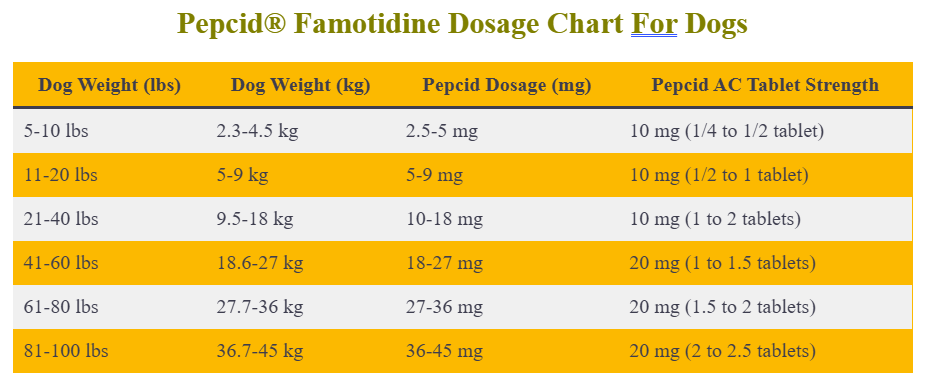
Pepcid® Famotidine Dosage Chart For Dogs
| Dog Weight (lbs) | Dog Weight (kg) | Pepcid Dosage (mg) | Pepcid AC Tablet Strength |
|---|---|---|---|
| 5-10 lbs | 2.3-4.5 kg | 2.5-5 mg | 10 mg (1/4 to 1/2 tablet) |
| 11-20 lbs | 5-9 kg | 5-9 mg | 10 mg (1/2 to 1 tablet) |
| 21-40 lbs | 9.5-18 kg | 10-18 mg | 10 mg (1 to 2 tablets) |
| 41-60 lbs | 18.6-27 kg | 18-27 mg | 20 mg (1 to 1.5 tablets) |
| 61-80 lbs | 27.7-36 kg | 27-36 mg | 20 mg (1.5 to 2 tablets) |
| 81-100 lbs | 36.7-45 kg | 36-45 mg | 20 mg (2 to 2.5 tablets) |
How to Administer Pepcid to your Dog
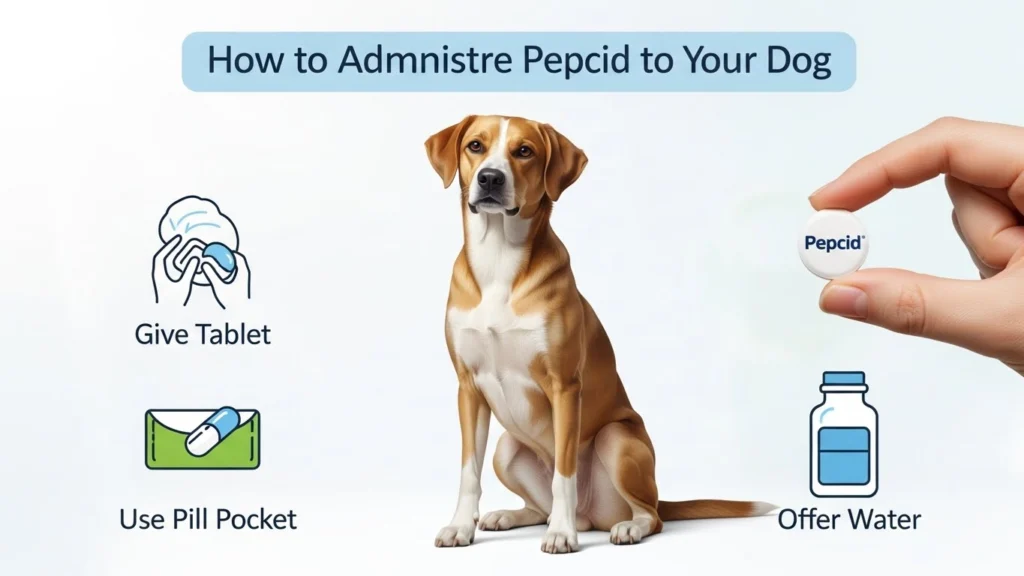
Getting your furry friend to take medication sometimes can be tricky, but Pepcid is generally easier to get your pet to take the meds due to the rather neutral taste factor.
Here are some successful ways to ensure your canine gets his or her proper dose:
Administration Techniques
- Direct administration:
- Open your dog’s mouth gently and put the tablet as far back on your pup’s tongue as you can. Then, stay their mouth closed and stroke their throat in order to appeal for them to swallow it.
- Mixing With Food:
- The tablet can be concealed by a soft food that your furry friend will eat.
- Crushing method:
- Crushing the tablet by mixing it with a little bit of wet food or a tasty liquid can be a good option. It must be noted that there are certain extended-release formulations that should not be crushed.
- Liquid formulation:
- Liquid form can be measured with a dropper and mixed to food or straight.
Famotidine Pepcid Side Effects in Dogs
Is Pepcid® safe for dogs? Most puppies have an extremely positive reaction to Pepcid and significant side effects are rare. When they do occur are usually in the form of mild and may include:
- Mild gastrointestinal upset
- Drowsiness/lethargy
- Loss of appetite (temporary)
- Headache (You can see a change in behavior)
Serious & Allogenetic reaction
While rare, severe reactions can happen, in which case your vet needs to be contacted immediately. Keep an eye out for allergic reaction signs which may include:
- Swelling of the face, lips or tongue
- Hives or skin rash
- Difficulty breathing
- Severe vomiting or diarrhea
- Extreme lethargic or collapse behaviour
- Loss of consciousness
Which Dog Should Not Take Famotidine
- Dogs with kidney disease
- Dogs with liver disease
- Dogs with heart rhythm problems
- Dogs that are pregnant or nursing
- Dogs with a history of drug allergies, especially to acid reducers
- Dogs taking medications like ketoconazole, sucralfate, antifungals, or blood thinners (possible interactions)
Drug Interactions
Pepcid can interact with certain types of medication that your dog may be taking that can either impact the effectiveness of medication or increase the risk for side effects. This is why it is important to let your veterinarian know all drugs, supplements and herbal remedies your dog is receiving.


- Antifungals: Medications such as fluconazole or ketoconazole may have had an alteration to the absorption mechanism when used together with Pepcid
- Antibiotics: Some types of antibiotics, such as Simplicef, for dogs (cefpodoxime), may also interact with famotidine. In case that your dog has prescribed two drugs at once, your veterinarian might suggest you provide them at different times of the day.
- Dichlorphenamide: This medication used for glaucoma may have enhanced side effects with its combination with Pepcid.
- Iron supplements: The absorption of iron may be slowed down when taken with famotidine.
- Other antacids: The use of Pepcid in combination with other acid-reducing medications may cause too much decrease in stomach acid.
How to Manage the Potential Interactions
Give your veterinarian a full list of all medications and supplements your dog is taking. Follow certain timing instructions if your veterinarian recommends providing medications at different times.
Watch your dog for any new or unusual symptoms when using combination of drugs with that of Pepcid. Never give any medication, nor discontinue any medication, without first consulting your veterinarian first.
You May Also Like To Read:
FAQs
What is Famotidine Pepcid and when is it used in dogs?
Famotidine (commonly known by brand name as Pepcid) is an H2-blocker and reduces acid production in the stomach. In dogs, veterinarians can consider the use for treatment/control of Ulcers, ulceration of the gastric-ventriculitis line (gastritis), acid reflux (GERD), aversion, vomiting, stomach upset, diseases that synthesize acidic substance for the stomach.
Is human Pepcid safe for dogs?
Yes, when used properly (in veterinary supervision, and properly dosed) famotidine (Pepcid) can be relatively safe for dogs. Many vets “off-label” use it (officially this medicine isn’t approved by the FDA for all animals) when they have to tackle acid related digestive problems.
Is Famotidine/Pepcid a permanent solution to the dog’s digestive problems?
Not necessarily. While famotidine for dogs may be effective in reducing symptoms caused by acid, it is not a long-term solution for permanent (non-acid) treatments for the underlying causes (such as infections, dietary problems, chronic disease).