Theophylline Dosage Calculator For Dogs
- Never crush Extended-Release tablets.
- Use Ideal Weight for overweight dogs.
- Monitor for tremors or racing heart.
- Consult your vet for drug interactions (e.g., Baytril).
© medsdog.com
In cases where your dog has had problems in persistent coughing or difficulty breathing, the priority should be to locate the appropriate treatment. Theophylline Dosage For Dogs is a widely searched issue as the oral solution is significant in the treatment of respiratory diseases.
Theophylline dosage is a bronchodilator -a methylxanthine drug- chemically similar to caffeine and theobromine- which relaxes airway muscles and dilates bronchial tubes to assist in breathing comfortably by your dog. It is usually given in tablet, capsule or liquid form and the dosage is specifically established depending on the weight and health status of your dog and the recommendation of your doctor.
Theophylline Dosage For Dogs is frequently given by veterinarians off-label to treat chronic cough, asthma, tracheal collapse, pulmonary edema, and even some heart-related problems in dogs (and occasionally cats). It acts by blocking enzymes such as phosphodiesterases that relaxes smooth muscles in the lungs and blood vessels facilitating easy breathing. Nevertheless, it is a prescription drug, and thus it is not recommended to use without the guidance of a competent veterinarian.
Theophylline for dogs dosage, similar to any drug, has possible side effects. The most frequently reported ones are digestive problems, like lessened appetite and vomiting, and heightened excitability or hyperactivity. Within this comprehensive guide you will be taught all you need to know about theophylline dose for dogs, how it works, how it should be dosed, the safety of the drug, the potential drug interactions, and the most important monitoring tips, which means you will be able to make informed choices and at all times heed the advice of your veterinarian.
Disclaimer: This guide is for informational purposes only and is not a substitute for professional veterinary advice.
Always consult your veterinarian before giving Theophylline or any medication to your dog.
Key Takeaways
- Theophylline dosage for dogs is a prescription oral drug, which is used to relieve coughing and breathing problems in dogs by relaxing airway smooth muscles and facilitating breathing.
- It is a methylxanthine substance (related to caffeine and theobromine) which acts by blocking phosphodiesterase enzymes and dilating blood vessels and bronchial tubes.
- Administered typically as a tablet, capsule or liquid, depending on the weight and condition of the dog under veterinarian advice.
- Not approved by the FDA to be used in animals but legally prescribed by veterinarians as an extra-label drug.
- The side effects may include loss in appetite, vomiting, and increased excitability or restlessness.
Theophylline Dosage For Dogs Reference Chart
| Formulation Type | Dosage Rate (mg/kg) | Dosage Rate (mg/lb) | Frequency | Common Usage / Notes |
| Immediate-Release | 5 – 10 mg/kg | 2.3 – 4.5 mg/lb | Every 8 hours (q8h) | Standard oral tablets or liquid. |
| Parenteral (Injectable) | 10 mg/kg | 4.5 mg/lb | Slow IV or IM | Used in clinical settings for emergencies. |
| Extended-Release (Daily) | 20 mg/kg | 9 mg/lb | Every 24 hours (q24h) | Must be swallowed whole. Do not crush. |
| Extended-Release (Twice Daily) | 10 – 15 mg/kg | 4.5 – 6.8 mg/lb | Every 12 hours (q12h) | Often used to maintain steady blood levels. |
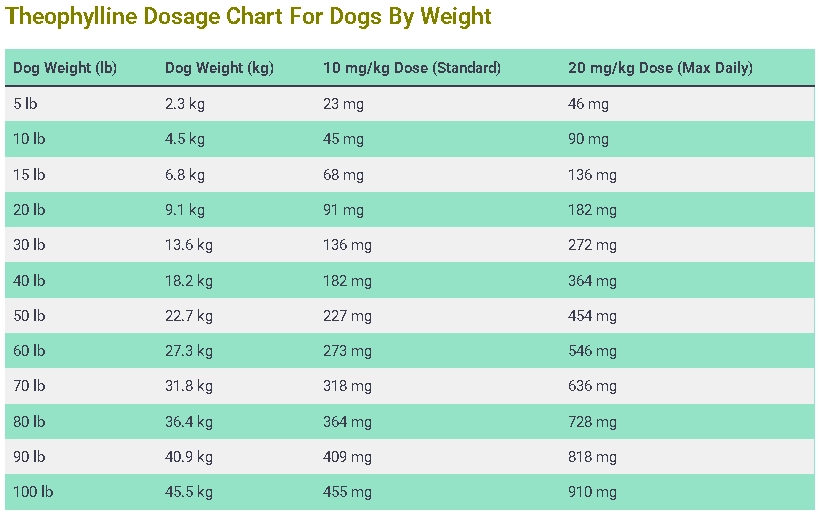
Theophylline Dosage Chart For Dogs By Weight
Calculated using standard therapeutic rates.
| Dog Weight (lb) | Dog Weight (kg) | 10 mg/kg Dose (Standard) | 20 mg/kg Dose (Max Daily) |
| 5 lb | 2.3 kg | 23 mg | 46 mg |
| 10 lb | 4.5 kg | 45 mg | 90 mg |
| 15 lb | 6.8 kg | 68 mg | 136 mg |
| 20 lb | 9.1 kg | 91 mg | 182 mg |
| 30 lb | 13.6 kg | 136 mg | 272 mg |
| 40 lb | 18.2 kg | 182 mg | 364 mg |
| 50 lb | 22.7 kg | 227 mg | 454 mg |
| 60 lb | 27.3 kg | 273 mg | 546 mg |
| 70 lb | 31.8 kg | 318 mg | 636 mg |
| 80 lb | 36.4 kg | 364 mg | 728 mg |
| 90 lb | 40.9 kg | 409 mg | 818 mg |
| 100 lb | 45.5 kg | 455 mg | 910 mg |
Critical Dosing Rules
- Do Not Crush: Never break or crush extended-release (sustained-release) tablets. This destroys the time-release mechanism and can cause a fatal overdose.
- Ideal Weight: If your dog is obese, calculate the dose based on their Lean/Ideal body weight, not their actual weight.
- Drug Interactions: Levels can become toxic if taken with Enrofloxacin (Baytril), Erythromycin, or Cimetidine.
- Toxicity Signs: Contact a vet immediately if you notice vomiting, diarrhea, extreme restlessness, racing heart, or tremors.
Disclaimer: This table is for informational purposes only. Theophylline has a narrow therapeutic window; always confirm the exact dose for your specific dog with a veterinarian.
What Is Theophylline for Dogs and How Does It Work?
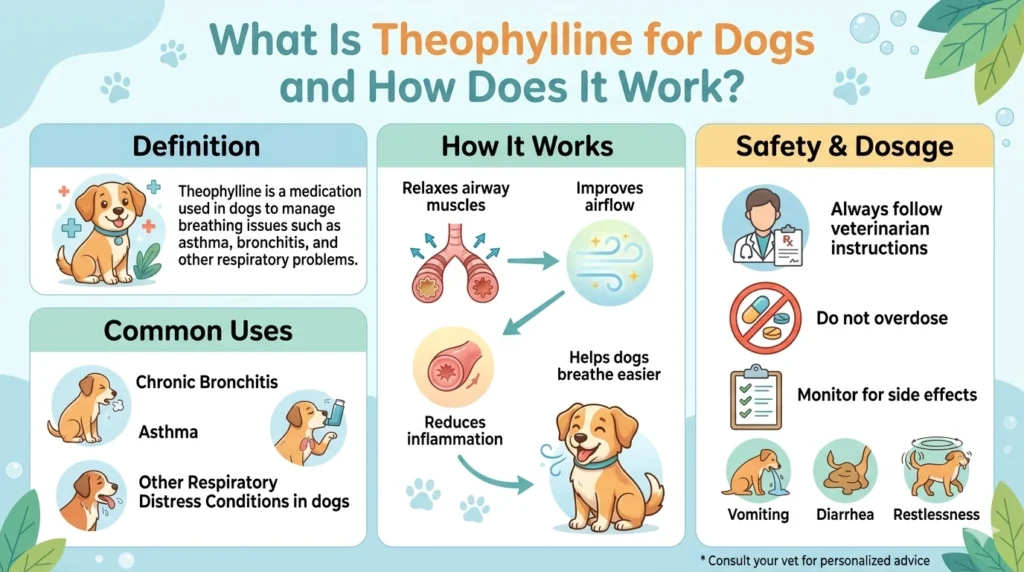
Theophylline dose in dogs is a bronchodilator drug (similar to caffeine and belonging to the methylxanthine family) which assists in opening airways and enlarging bronchial tubes to allow easier breathing by relaxing smooth muscles of the airways. It acts as a phosphodiesterase (PDE) inhibitor, and it acts on airway muscles to increase oxygen levels in the lungs.
- Calms airway muscles and opens bronchial tubes to ease breathing.
- Helps cilia (minuscule hair in the respiratory tract) sweeps out mucus and debris better.
- Decreases swelling in the trachea and lungs.
- Activates respiratory muscles, heart and the central nervous system.
- Mildly acts as a diuretic to aid in eliminating surplus fluid in the body (helpful with conditions such as pulmonary edema)
Though theophylline is approved by the FDA to be used by humans, it is not approved to be used by veterinarians but commonly prescribed by veterinarians as an extra-label drug.
It can also be administered in compounded form in certain instances where the standard preparations are not applicable to the particular requirements of a dog i.e. inability to swallow pills or need to have an individual dosage.
What Is Theophylline Used for in Dogs?
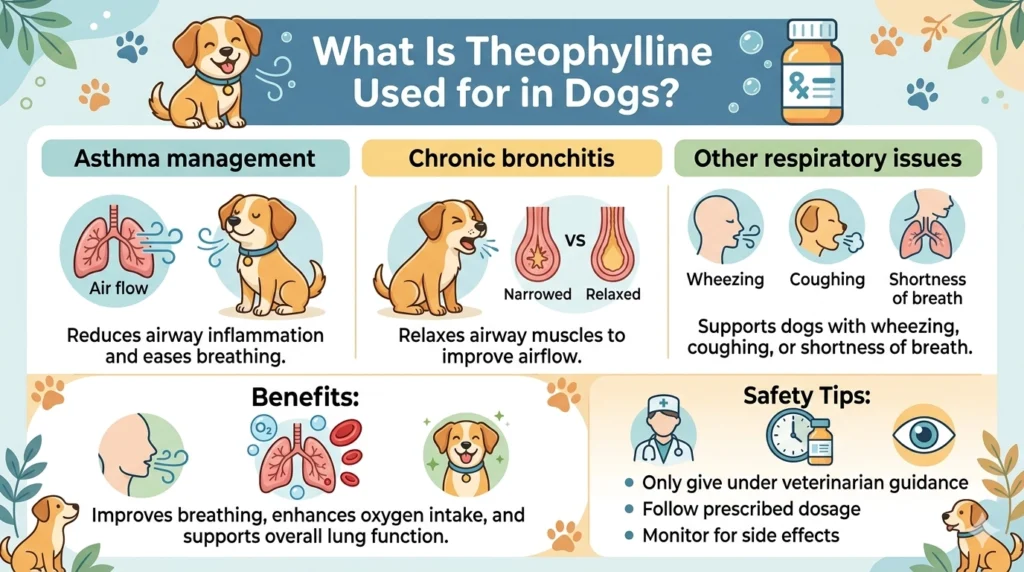
Veterinarians normally administer theophylline to manage diseases that affect airway narrowing and difficulty in breathing in dogs. It is particularly useful in treating chronic coughs and airflow obstructions, which dilates airways.
Even though it is a human drug and is not approved by the FDA to be used in dogs, it is commonly used off-label, and is deemed safe and effective in the hands of the veterinarian.
- Mainly taken in the treatment of chronic coughs which are a result of airway diseases.
- The typical ones are the tracheal collapse, chronic bronchitis, asthma and other inflammatory diseases of the lower airways.
- Helps deal with the problems of breathing by enlarging airways and making breathing easier.
- As an adjunctive therapy in congestive heart failure and pulmonary edema.
- May helps in treating some heart disorders, such as sick sinus syndrome and heart block, by elevating the heart rate.
- May be used to decrease risk of collapse when there is vasovagal or tussive syncope (fainting) occurs.
How Is Theophylline Given to Dogs?
Theophylline is normally used on dogs under the care of the veterinary and the dosage and schedule of the drug is determined based on the weight of the dog and the medical condition.
Due to the variation in response of each dog, veterinarians can vary the dose used in treatment in order to produce the most effective results.
- Typically administered orally as a tablet, capsule or liquid.
- May be administered with or without food; in case of stomach upset, it should be administered with food.
- Available in immediate-release (taken every 6-8 hours) and sustained-release (taken once or twice a day) forms.
- Pills are not to be crushed or broken or chewed unless instructed by a veterinarian.
- Injectable theophylline may be used by veterinarians in emergency or hospital settings
- Responses are generally evident in 1-2 days with the improvement of breathing and symptoms.
What Are the Common Side Effects of Theophylline in Dogs?
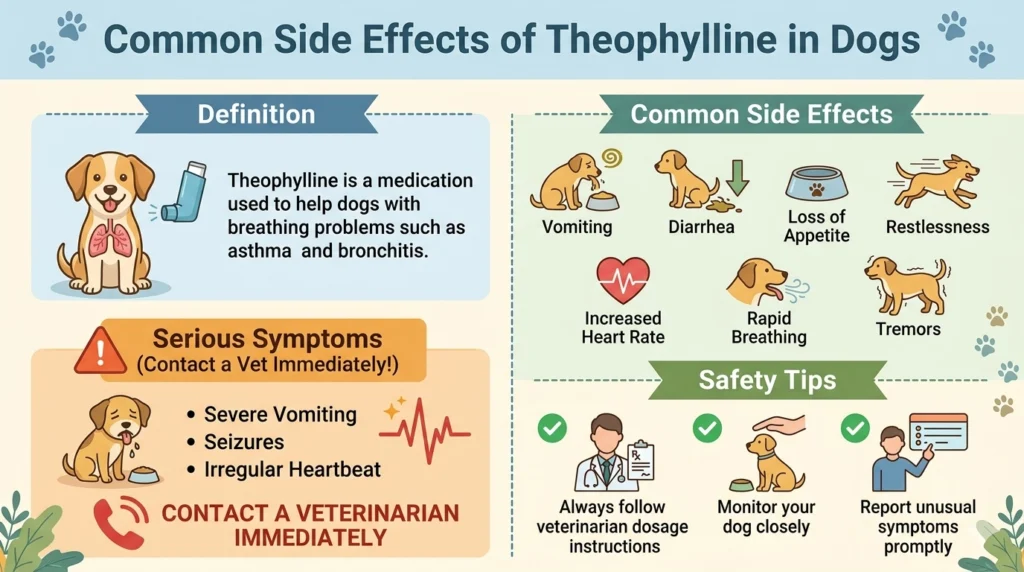
Theophylline is mostly well tolerated by dogs although it has side effects, particularly with gastrointestinal and central nervous systems.
Most of these effects are mild and can be corrected by changing the dosages, but some can be severe and might need emergency treatment by a veterinarian.
- Popular gastrointestinal effects: lack of appetite, nausea, vomiting, diarrhea, stomach irritation (frequently decreased by administering with food)
- Central nervous system effects: restlessness, excitability, nervousness, insomnia and caffeine like jitteriness.
- Changes in the urine and hydration: thirstiness, frequent urination and in some cases increased appetite.
- Cardiac effects: increased heart rate, palpitations and infrequent arrhythmias.
- Other effects that may happen: tremors, fever, rash, dizziness, or slight changes in weight.
- Severe side effects (need emergency veterinary attention): seizures, collapse, excessive vomiting, allergic reactions (including swelling, hives, or breathing problems), or coughing up blood.
- Increased vulnerability in dogs with some conditions: kidney disease, liver disease, diabetes, hyperthyroidism, heart disease, or irregular heartbeats.
- Drug interactions: can have interactions with some antibiotics, phenobarbital, propranol, caffeine, acetaminophen and furosemide.
- Adverse effects increase with overdose or excessive dosing and in most cases, tend to improve with a change of dose or withdrawal under veterinary supervision.
What Are the Most Serious Risks of Theophylline Dosage for Dogs?
The theophylline for dogs is not very dangerous when administered properly, but it may have severe side effects in dogs, particularly when given in large doses or in pets with a risk factor.
These are serious reactions that are rare but pose life-threatening circumstances.
- Side effects: muscle tremors, seizures, collapse and in severe cases life threatening reactions.
- First aid: discontinue administration of the medication and go to the vet ASAP in case of a seizure or collapse.
- Contraindications: is contraindicated in dogs that have a history of epilepsy or hypersensitivity to theophylline, caffeine, aminophylline or theobromine.
- Pets that are dangerous: be careful with dogs that are severely ill of the heart, have abnormal heartbeats, kidney or liver disease, stomach ulcers, hyperthyroidism, severe high blood pressure, or low blood oxygen.
- Special precautions: pregnant or lactating dogs, very young or old dogs, pets with heart failure or liver disease might have lower doses or alternative treatment to prevent toxicity.
To reduce the severe risks related to theophylline treatment in dogs, it is necessary to have proper veterinary control and follow recommended doses.
Is Theophylline Dosage Interact with Other Dog Medications?
Yes, theophylline dosage for dogs may also interact with a large number of medications and it is necessary to make sure that the veterinarian is aware of all the prescription medications, over-the-counter medications, supplements, and herbals that your dog is taking.
Theophylline for dogs may have drug interactions that may decrease its effectiveness or raise the risk of side effects.
- Drugs that can raise theophylline levels: erythromycin, cimetidine, corticosteroids (such as prednisone), beta-blockers, SSRIs, clindamycin, ketoconazole, macrolides and sympathomimetics.
- Medications that may decrease theophylline levels: phenobarbital, rifampin, activated charcoal, and some barbiturates
- Other interacting drugs: thyroid hormones (levothyroxine), calcium channel blockers, and loop diuretics.
- Precautions: should be used with caution in dogs with liver or kidney disease, gastric ulcers, hypertension, heart disease, or a history of seizures because the interactions may exacerbate these conditions.
- Pregnancy and lactation: theophylline is only to be administered in pregnant or nursing dogs under veterinary supervision.
Always be sure to inform your veterinarian about any medications and supplements that your dog is taking so they can anticipate any dangerous interactions and make sure that the treatment is safe and effective.
How Theophylline Dosage Is Supplied
- Theophylline For dogs dose is available in a variety of milligram tablets ranging from 50 mg to 600 mg.
- It is also available as a 80 mg/15 ml or 150 mg/15 ml syrup.
Theophylline Dosing & Administration for Dogs
Theophylline dosage for dogs by weight should be administered in the right dose and method to be effective and safe in the treatment of respiratory diseases in animals such as dogs and cats.
Never self-prescribe, or overdose your pet, all medications vary in appropriate dosages, and your veterinarian must advise you on the right amount of medicine to use depending on your pet, its health status and the type of medication.
Dogs
- Oral immediate-release: 5-7 mg/kg (2.25-5mg/lb) after every 8 hours.
- Oral extended-release: ~20 mg/kg (≈10 mg/lb) once daily
- IV/IM (in case of emergency): 10 mg/kg at a slow rate.
- Administration hints: Take on an empty stomach (1 hour before or 2 hour after eating). Long-acting pills should not be crushed or broken but need to be swallowed whole.
- Length: Will vary with condition, reaction, and adverse effects; take entire course unless directed otherwise by your veterinarian.
Notable: Theophylline must not be used without veterinary advice. The dosages can be varied with the condition severity, type of preparation (immediate or extended release), and pet reaction to reduce side effects and guarantee the best therapeutic effects.
You May Also Like to Read:
- Frontline Dosage for Dogs: Calculator, Guide & Dosage Chart
- Acepromazine Dosage For Dogs Calculator: Chart & Safe Guide
FAQs
What can I do in case my dog misses a theophylline dose?
Give the missed dose as soon as possible. In case it is almost time to take the next dose, do not take the missed dose and proceed with regular schedule. Do not take two doses, this may lead to overdose.
Does theophylline dose completely stop coughing in dogs and cats?
Theophylline for dogs helps improve coughing in dogs with airway conditions and cats with asthma, but it may not completely eliminate the cough.
What are substitutes of theophylline?
Aminophylline is another such medication and can be used as an alternative to the same based on the condition of your pet. Never change drugs without consulting your veterinarian.
What are signs of theophyline overdose?
Overdose can be serious and include:
Increased heart rate or irregular rhythms.
Electrolyte imbalances or fever.
Seizures
Seek emergency treatment with your vet or an animal poison control center in case of overdose.
What is the storage of theophylline dosage?
Keep at room temperature (59–86 °F / 15–30 °C)
Keep tablets and liquids in well closed containers, out of the reach of water and light.
Adhere to instructions on storage of compounded drugs.
Is monitoring needed during theophylline therapy?
Yes. Monitor behavioral changes, eating, urination and breathing. In case of long-term or high-dose treatment, veterinarians can prescribe blood tests, ECG, and serum theophylline.
Does it mean that I can cease theophylline when my dog starts to cough better?
No. Take the entire course as instructed to avoid relapses and aggravation of the condition.
What do I do when my pet vomits after taking theophylline?
Attempt to administer the drug with food or consult with your veterinarian and change to a compounded liquid preparation.
Can cats be given theophylline dose for dogs?
Yes, cats usually need shorter doses (typically 3-5 mg/kg daily, 12 hour intervals) and can be placed on longer-release preparations, should they be tolerated.
Final Thoughts
Theophylline medication for dogs is an excellent bronchodilator that is frequently used to control chronic coughing and some respiratory or cardiac diseases in dogs. It can enhance the quality of life of your pet when used correctly, helping to ease breathing, lessen airway constriction, and more.
Theophylline dose is otherwise safe, though can result in such side effects as loss of appetite, vomiting, diarrhea, restlessness and increased urination and can also work with other medications that your dog is taking. Close attention and following the advice of veterinarians are necessary to reduce risks.
Owners may improve the success of treatment by:
- Adhering to dosing and administration routines.
- Observation of side effects and reporting of the same.
- Professional help by using such tools as Ask A Vet, Woopf to remind about medication, and Purrz to track symptoms and share the data with the veterinarian.
Generally, theophylline dosage is a useful and effective agent in the management of chronic respiratory and select cardiac conditions in dogs, especially when administered under the supervision of a veterinarian, at the right dose, and with supportive care.