Loperamide Dosage For Dogs: Calculator, Chart & Safe Guide
Loperamide (Imodium) Dosage Calculator For Dogs By Weight
Calculate safe guidelines based on your dog’s weight.
Calculated Dosage Results
Frequency: Every 8 hours by mouth as needed.
Maximum Duration: Do not use for more than 3 consecutive days.


⚠️ Critical Safety Warnings
- MDR1 Gene Mutation: These dosages may be **unsafe or fatal** for herding breeds (Collies, Australian Shepherds, Whippets, etc.) carrying the MDR1 gene mutation.
- Consult Your Vet: There is no official FDA-approved loperamide dosage for dogs. Always verify with your veterinarian before administration.
© medsdog.com
Diarrhea is a very common digestive issues in dogs and can result from a few different causes including dietary indiscretion, stress, food sensitivities, intestinal parasites, infections or other health problems. Some pet owners have asked themselves if they can help their dog with diarrhea when they have some Imodium® (loperamide) for themselves, as this is one of the most popular over-the-counter anti-diarrheal medications.
Loperamide Dosage For Dogs is a synthetic anti-diarrhea agent which acts by slowing intestinal propulsion, decreasing the loss of fluid from the intestinal tract, and increasing the absorption of water from the intestine. Veterinarians might also prescribe loperamide to help treat diarrhea in dogs.
However, it should never be used without vet advice as it may not be safe for some dogs or medical conditions, and is available over the counter.
Note that loperamide dose can be effective if used correctly, but some breeds and individual dogs are more sensitive to the effects and may have serious side effects or complications. The medication is not labeled for veterinary use, but is legally prescribed by veterinarians as an extra-label medication if deemed appropriate.
In this comprehensive guide, you'll learn the recommended loperamide dosage for dogs, dosage charts by weight, how the drug works, potential benefits, side effects, safety warnings, breed-specific risks, and when to refer to a veterinarian for your dog's diarrhea.


Key Takeaways
- Antidiarrheal drugs such as loperamide (Imodium®) may be used by veterinarians to treat diarrhea in dogs when it is not caused by an infection.
- It does so by reducing the movement of the intestines, decreasing the fluid produced in the intestine and increasing water absorption in the digestive tract.
- Loperamide is available over the counter, but it must only be used under vet supervision to ensure it is safe and suitable for your dog.
- Loperamide for dogs is not labeled for use in animals, but can be used as an extra-label drug in animals.
- Absorbed through GI tract and metabolised in liver.
- Loperamide dosage for pets is thought to work faster, and last longer, than diphenoxylate (Lomotil®) by some veterinarians.
- Side effects include drooling, constipation, bloating and sedation.
- MDC1R mutation should be taken with caution in dogs because they may have severe reactions and should not use loperamide except when prescribed by a veterinarian.
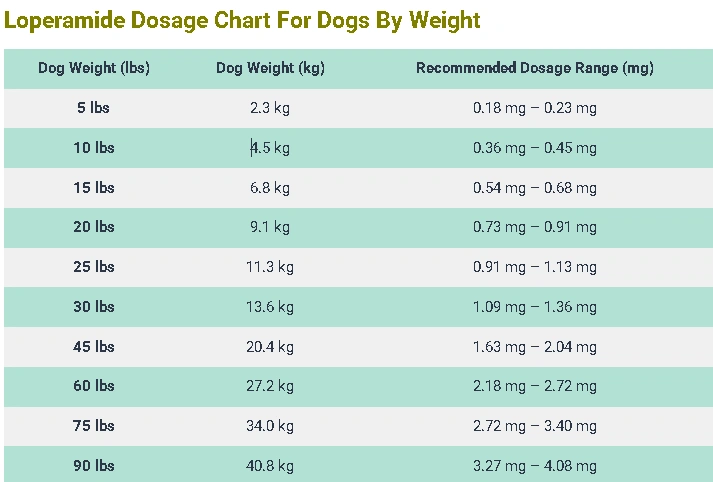
Loperamide Dosage Chart For Dogs By Weight
Here is the complete reference table for standard dog weights, calculated using the precise 0.08 mg to 0.1 mg per kilogram guideline. The values show how much medicine a dog can safely receive every 8 hours based on their exact mass.
| Dog Weight (lbs) | Dog Weight (kg) | Recommended Dosage Range (mg) |
| 5 lbs | 2.3 kg | 0.18 mg – 0.23 mg |
| 10 lbs | 4.5 kg | 0.36 mg – 0.45 mg |
| 15 lbs | 6.8 kg | 0.54 mg – 0.68 mg |
| 20 lbs | 9.1 kg | 0.73 mg – 0.91 mg |
| 25 lbs | 11.3 kg | 0.91 mg – 1.13 mg |
| 30 lbs | 13.6 kg | 1.09 mg – 1.36 mg |
| 45 lbs | 20.4 kg | 1.63 mg – 2.04 mg |
| 60 lbs | 27.2 kg | 2.18 mg – 2.72 mg |
| 75 lbs | 34.0 kg | 2.72 mg – 3.40 mg |
| 90 lbs | 40.8 kg | 3.27 mg – 4.08 mg |
⚠️ Critical Dosing Warning: Standard human over-the-counter Imodium caplets usually come in 2 mg strengths. For small or medium dogs, attempting to split a solid tablet to achieve these tiny, fractional milligram amounts (like 0.36 mg) is highly dangerous and inaccurate. Always consult a veterinarian for alternative liquid forms or precision compounding options.
What Is Loperamide?
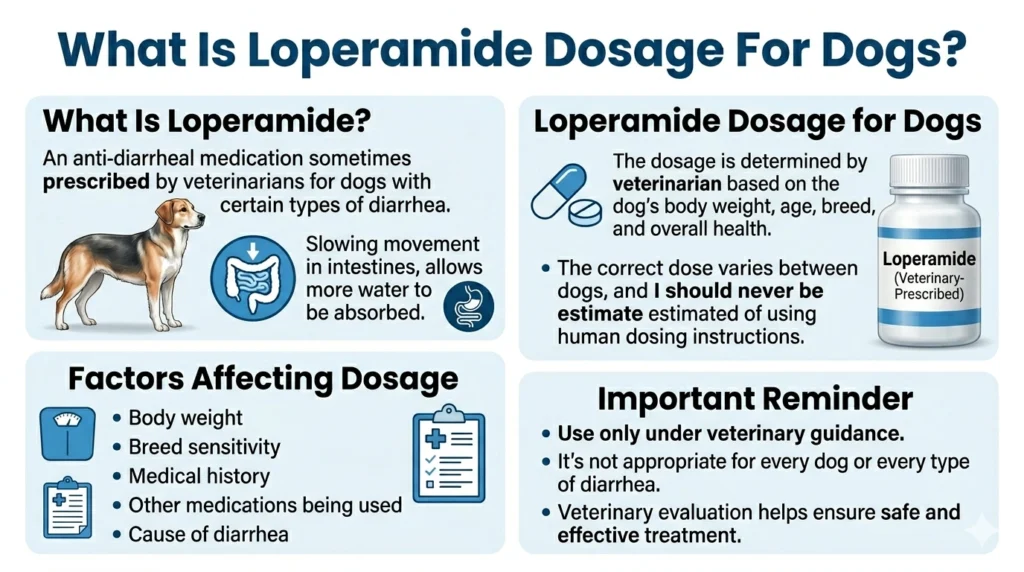
Loperamide (trade names Imodium A-D, Difixn, Anti-Diarrheal® and Diamode®) is a retail drug used to treat diarrhea. It is a type of medication called an opioid antidiarrheal, also known as an antimotility agent, which is used to make the intestines move slower to help control loose stools and diarrhea.
Loperamide Dosage For Dogs By Weight may be recommended by veterinarians for dogs with diarrhea that is not infectious in nature and to prevent and control diarrhea in dogs receiving cancer chemotherapy. While it is widely used in veterinary medicine, all applications of loperamide are off-label (extra-label) uses, where the drug is not FDA approved for use in pets but can be used under the veterinarian's judgment and available evidence.
Loperamide medication for dogs can be purchased over the counter as tablets, capsules or liquid. But pet owners should only use it under the guidance of a pet doctor, who would be able to determine the proper product and dosage. There are other ingredients that are added to many human formulas (including simethicone) which may not be appropriate for animals, so be sure to use a formula with just loperamide as the active ingredient.
How Is Loperamide Used in Dogs?
Loperamide drug for dogs is an anti-diarrheal drug that is frequently used by veterinarians to treat diarrhea in dogs. It is commonly recommended for non-infectious diarrhoea, and can be used for short term and long-term digestive problems when prescribed by a vet.


Loperamide's common uses in dogs are listed below:
Loperamide can be prescribed for the following:
- Acute (sudden-onset) diarrhea
- Diarrhea that lasts a long time caused by inflammatory bowel disease (IBD)
- Stress- or anxiety-related gastrointestinal upset
- Intolerances and digestive sensitivities to food.
- Diarrhea caused by cancer chemotherapy
- Some cases of faecal incontinence as a result of its impact on intestinal and anal sphincter muscle tone
Loperamide's Mode of Action
Loperamide is a synthesized version of opiate that decreases the movement of the gut, causing the food and stool to pass more slowly through the intestines. This will enable the digestive tract to absorb more water and fluids, which will assist in:
- Reduce watery stools
- Reduce the incidence of diarrhea
- Improve stool consistency
Loperamide can be used to help manage the symptoms, but it is not for the treatment of the underlying cause of diarrhea. Before use, infections, parasites or exposure to toxins should be excluded.
How Is It Given?
Loperamide is given via the oral route as a:
- Tablet
- Capsule
- Liquid solution
May be administered with or without meals. If vomiting or stomach upset does occur after taking it on an empty stomach, then future doses should be taken with food. Liquid formulations will need careful application with a dosing syringe or dropper and some will need shaking before application.
Loperamide will start to work in about 1 to 2 hours, and diarrhea should improve soon after. Dosage, administration and monitoring differ from humans, always follow your veterinarian's advice.
What Are the Benefits of Loperamide in Pets?
Loperamide is a medication that can have several advantages for pets who have noninfectious diarrhea, when recommended by a veterinarian. One of the best features of it is that it is readily available at most stores and online, and it can be obtained without a prescription when veterinary advice is given.
Loperamide has several benefits, including:
The benefits of Loperamide are:
- Dose – Loperamide products can be bought in 2 mg doses.
- Rapid onset of action – the drug starts to act within 1-2 hours after being given.
- Reduces symptoms of diarrhea – It can help slow down bowel motility to decrease the number of bowel movements and promote firmer stools.
- Convenient dosing options – comes in tablet, capsule and liquid format to accommodate various pets and needs.
Although loperamide dose for dogs per pound may provide quick symptom relief, it should only be used under veterinary supervision to ensure it is appropriate for your pet’s condition.
Does Loperamide Have Warnings or Side Effects in Pets?
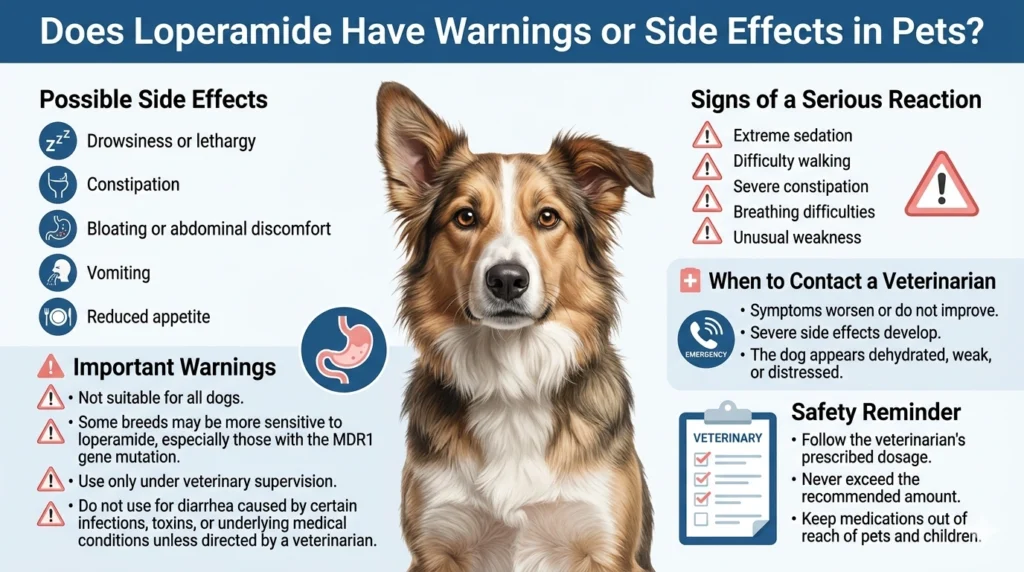
Yes. Although loperamide may be effective in treating some types of diarrhoea, it is not appropriate for all pets and might have side effects in sensitive pets ranging from mild gastrointestinal upset to serious neurological side effects. It is important that extra care is taken under veterinary supervision, particularly for dogs with the MDR1 gene mutation and dogs with other health problems.
Loperamide's Common Side Effects
Common to common side effects are:
- Excessive drooling
- Constipation
- Bloating (bloat)
- Sleepiness or sedation
Other, less common, but more serious side effects can be:
- Toxic megacolon
- Pancreatitis
- Depression of the central nervous system or behaviour changes.
- Excitatory neurologic effects or aggression in cats
- When someone is overdosing, they may be struggling with breathing.
Most side effects are related to the digestive or nervous system. If any unusual symptoms develop, contact your veterinarian immediately.
Highest Risk: MDR1 Gene Mutation in dogs
Loperamide should not be administered to dogs with the MDR1 (ABCB1) gene mutation (some herding breeds and crosses are carriers of this mutation). This can lead to symptoms following just one dose of the medication.
- Extreme sedation
- Excessive drooling
- A "drunken" gait (ataxia)
Your vet can help you decide if your dog is at risk for such genetic sensitivity.
Loperamide should not be used when:
Avoid using in animals that:
- Is allergic or hypersensitive to the drug
- Have an intestinal obstruction
- Be infected with bacteria and develop diarrhea
- Have diarrhea caused by toxin ingestion
- Have diarrhoea that's due to taking antibiotics
- Have the MDR1 gene mutation
Loperamide can aggravate certain underlying diseases and should not be used as a substitute for the diagnosis of a person's diarrhea.
Caution: Use in some pets
Dogs or cats with the following may need special care or should be avoided altogether:
- Liver disease
- Kidney disease
- Respiratory disease
- Head injuries or neurologic disorders
- Hypothyroidism
- Addison’s disease
- Low blood pressure
- Acute abdominal pain
- Old, weak or ill health.
Loperamide has not been tested for its safety in pregnant, breeding, or nursing animals; caution is advised.
Additional Safety Considerations
- Loperamide for pets generally is contraindicated for puppies younger than 6 weeks of age.
- Before treating a dog for fever or bloody diarrhea, it is important to have the dog assessed by a veterinarian.
- Liquid products might be necessary for small dogs to give them exact doses.
- Loperamide may react with some medicines such as some antihistamines, barbiturates, tranquilizers, and monoamine oxidase inhibitors (MAOIs).
- Even though a pet may have taken certain amounts of a drug with no issues in the past, drug sensitivities can occur over an extended period of time.
In the event of suspected overdose, serious reaction or worsening symptoms, contact your veterinarian or an emergency animal poison control service immediately.
Does Loperamide Interact With Other Medicines (Drug Interactions)?
Yes. Loperamide dose may interact with a number of medicines and can increase the effect or change the way some medicines work or are removed from your body. Talk to your veterinarian about any prescription or over the counter medications, vitamins, supplements or herbal products your pet is currently taking before it is administered loperamide.
How Drug Interactions Occur
Loperamide can affect:
- Cytochrome P450 (CYP) enzymes, which metabolize a large number of drugs.
- Transporters like P-glycoprotein (P-gp) that help get drugs out of the body.
- Heart rhythm (QT interval), which may make the person more susceptible to abnormal heart rhythms when taking certain drugs.
These effects can cause some drugs to stay in your system longer or be present in higher concentrations, which can lead to side effects.
Some medicines may interfere with Loperamide.There are some medicines that can affect the way Loperamide works.
Examples of medications that may interact with loperamide include:
- Antihistamines
- Tranquilizers
- Monoamine oxidase inhibitors (MAOIs), such as selegiline
- Some antibiotics (such as erythromycin or sulfamethoxazole/trimethoprim)
- Antifungal drugs like ketoconazole, itraconazole
- Amiodarone, carvedilol, propranolol, metoprolol, quinidine and verapamil are all heart medications.
- Cyclosporine
- Tacrolimus
- Moxidectin
- Midazolam
- Ketamine
- Propofol
- Imipramine
- Medetomidine
- Progesterone
- Tamoxifen
Important Monitoring Information
Loperamide can cause transient increases in blood test results of amylase and lipase for up to 24 hours after taking the drug. Make sure your veterinarian knows if your dog or cat has recently taken loperamide prior to any laboratory testing.
This is not a comprehensive list of drug interactions, so be sure to ask your vet before giving Loperamide along with any other drug or supplement.
What if My Pet Takes Too Much Loperamide or Has an Overdose?
An overdose of loperamide is a veterinary emergency and should be treated right away. Excessive doses of loperamide may cause serious problems and overdoses have been reported in humans. If you suspect your pet has taken too much loperamide, or accidentally got a dose, contact your veterinarian or veterinary emergency clinic immediately.
It is important to see your pet promptly, even if he or she is yet to present any signs of a problem, because an overdose can cause problems very quickly.
You May Also Like to Read:
- Bismuth Subsalicylate Dosage For Dogs: Calculator & Safe Guide
- Amantadine Dosage For Dogs: Calculator, Chart & Safe Guide
FAQs
Is it okay to take loperamide at a later time if it's forgotten?
Yes. For missed doses, administer the dose as soon as it is remembered and resume dosing as appropriate from the time of the missed dose. Do not give two doses at the same time or to make up a missed dose.
If my dog ingested too much loperamide dosage, what happens?
Overdose can be severe and manifest itself through drooling, vomiting, lethargy, weight loss or nervous system depression. If an overdose is suspected, please contact your veterinarian or an Emergency Veterinary Clinic right away.
Are some breeds of dogs more susceptible to loperamide?
Yes. Dogs with the MDR1 gene mutation and herding breeds might be more sensitive to loperamide and be at higher risk of getting side effects. Always consult your veterinarian before use.
Loperamide for dogs is effective in dogs after 45 minutes.
Loperamide usually starts to work in 1 to 2 hours after giving. Diarrhea may improve soon after, but can take individual dogs longer.
What should I expect from taking “loperamide”?
Loperamide dosage for dogs, when used properly, can help to decrease the frequency of stools, increase stool consistency, and relieve gastrointestinal upset that occurs with noninfectious diarrhea.
Should my dog be supervised when taking loperamide medicine?
Yes. Your veterinarian may check how hydrated your dog is, electrolyte concentrations, and how your dog responds to treatment. Monitor for side effects at home and report them as soon as possible.
What is the storage information for loperamide medication?
Loperamide should be stored in a tightly closed container at room temperature (59°F to 77°F or 15°C to 25°C). Store away from light and children/pets.
Are there any safety precautions for pet owners?
Never leave the medicine where a child can get it, wash your hands after handling or giving the medicine, and don't take the medicine if you know you are allergic to it.
If my dog does have a reaction to loperamide, what do I do?
If your dog experiences side effects or unusual symptoms, do not administer any more and call your veterinarian immediately. If you think the reaction is serious or if your veterinarian is not available, get veterinary help right away.
Final Thoughts
Veterinarians can prescribe Loperamide (Imodium®) for the management of noninfectious diarrhea in dogs, but veterinary use is not FDA approved. The medication can be helpful in slowing intestinal movement and make the stool more solid, but should not be used in all dogs, and should only be used under veterinary supervision.
Canine dosing is very different from human dosing, and even if the dosage is incorrect, it could result in an increased risk of serious side effects or toxicity. Loperamide dosage may also be harmful to dogs that have the MDR1 gene mutation and may not be safe for dogs with some medical conditions. Talk to your vet before administering some loperamide to your dog, to make sure it is compatible and safe for your dog's condition.