🐕 Vitamin D For Dogs Dosage Calculator
- NRC safe upper limit: ~980 IU/day for this dog
- Ensure total diet (incl. food) stays below limit
- Avoid human supplements (1 drop can be toxic)
- Monitor for thirst, vomiting, lethargy
For renal use, measure ionized calcium if dose >6 ng/kg.
© medsdog.com
A Vitamin D for dogs dosage calculator By Weight (kg or pound) is a tool for estimating the safe daily dosage of vitamin D (usually vitamin D3) based on the dog's body weight for accurate dosage.
Vitamin D is one of the fat-soluble vitamins that helps balance calcium, phosphorus, bones, immune system, and muscles. Because too much vitamin D may be toxic, it is important to always follow veterinary dosing.
Most dogs not suffering from deficiency but eating complete food from the veterinarian, your dog must not need extra supplementation unless the veterinarian diagnoses the deficiency.
Key Takeaways
- Vitamin D is vital in the regulation of calcium levels, bone integrity and immune function of dogs.
- Over-supplementation could lead to vitamin D toxicity with serious health complications.
- Dogs on balanced commercial diets normally get sufficient vitamin D while they are eating food.
- A Vitamin D for Dogs Dosage Calculator per pound is used to give individuals approximate amounts based on the weight but it is critical that veterinary supervision be given.
- Always ensure that you are getting dosage in IU (International Units) and that you know what is the difference between vitamin D2 and D3.
What Is and Why Do Dogs Need Vitamin D?
Vitamin D is a fat-soluble vitamin and has important functions in:
- Calcium absorption
- Phosphorus balance
- Bone mineralization
- Muscle contraction
- Immune system regulation
Unlike human beings, dogs do not efficiently produce vitamin D by exposure to the sun. They rely nearly solely on source food as follows:
- Commercial dog food (AAFCO-balanced)
- Fish oils
- Liver
- Egg yolks
Because of this dependence on food, it is possible to both under- and over-supply it if supplementation is not managed properly.
When Dogs Require Vitamin D Supplements?
Most healthy dogs do not require vitamin D supplementation; this is because the amount of vitamin D needed is present in complete and balanced commercial food. However, reasons for supplementation may include these cases:
- Documented deficiency
- Certain gastrointestinal disorders affecting absorption
- Hand made or uncooked diets that are not fortified.
- Specific metabolic or kidney conditions (should be supervised.)
The use of a supplement should not be used without the testing of the veterinarian. Blood work estimating levels of 25-hydroxyvitamin D is usually a means of evaluating status.
Vitamin D For Dogs dosages Calculator
A Vitamin D For Dogs Dosage Calculator is used to estimated dosage based on body weight.
Veterinary recommendations vary based on health status and diet however safe nutritional intake ranges are usually commensurate with AAFCO nutrient profiles.
General Maintenance Levels (Ensuring AAFCO Nutritional Guidelines)
AAFCO recommends:
- 500 IU to 3,000 IU per kg dog food (DMC)
(Not on a per kg of body weight - this is on a per kg of food basis).
Because supplementation differs depending on diet, the dosage should be carefully calculated.
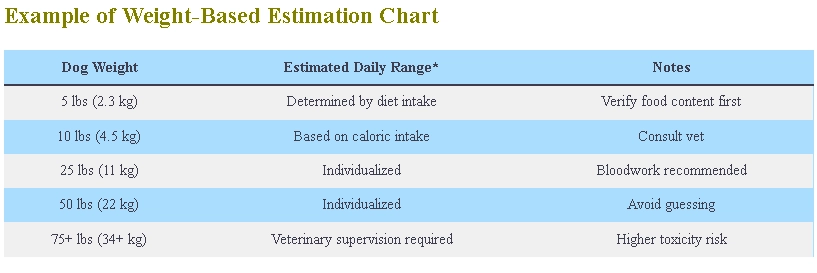
Example of Weight-Based Estimation Chart
| Dog Weight | Estimated Daily Range* | Notes |
|---|---|---|
| 5 lbs (2.3 kg) | Determined by diet intake | Verify food content first |
| 10 lbs (4.5 kg) | Based on caloric intake | Consult vet |
| 25 lbs (11 kg) | Individualized | Bloodwork recommended |
| 50 lbs (22 kg) | Individualized | Avoid guessing |
| 75+ lbs (34+ kg) | Veterinary supervision required | Higher toxicity risk |
*Exact supplementation amounts must be prescribed by a veterinarian.
Vitamin D Overdose in Dogs: How to Calculate the And Dog Doses
Usual calculator of a Vitamin D dosage used on dogs considers:
- Body weight (kg or pounds)
- Current dietary intake
- Health condition
- Blood vitamin D level
Basic Conversion Reference
- 1 microgram (mcg) vitamin D = 40 IU
- Vitamin D3 (cholecalciferol) is what is more commonly found in the canine supplements
In case the label on the supplement will contain mcg rather than IU:
Example:
5 mcg × 40 = 200 IU
Vitamin D3 vs Vitamin D2 for Dogs
There are two primary forms:
| Type | Name | Preferred for Dogs? |
|---|---|---|
| Vitamin D2 | Ergocalciferol | Less commonly used |
| Vitamin D3 | Cholecalciferol | Preferred and more biologically effective |
Veterinary supplements typically contain vitamin D3.
Safe Vitamin D Dosage Range for Dogs
There is no general recommendation of per pound dosage for supplementation as needs differ by:
- Age
- Diet composition
- Medical condition
- Blood vitamin levels
Excess vitamin D can lead to:
- Hypercalcemia (High Cholesterolemia)
- Kidney damage
- Soft tissue mineralization
- Vomiting and lethargy
Toxicity from cholecalciferol may occur with the ingestion of high-dose supplements or rodenticides that contain cholecalciferol.
Symptoms of Vitamin D Toxicity in Dogs
Early signs may include:
- Loss of appetite
- Vomiting
- Increased thirst
- Increased urination
Severe cases may show:
- Weakness
- Kidney failure
- Abnormal heart rhythm
Vitamin D poisoning is an emergency in surgery. Items required for immediate treatment include the following:
Homemade Diets and Vitamin D Supplementation
If feeding a homemade diet:
- Work with a board certified veterinary staff nutritionist
- Use formulated recipes
- Avoid guessing in the amount of supplements
The most common causes of vitamin D deficiency or excess is unbalanced homemade diets.
IU vs mg: Which Is Label Confusion?
Many pet owners confuse the following.
- IU (International Units)
- mcg (micrograms)
- mg (milligrams)
Remember:
- 1 mg = 1,000 mcg
- 1 mcg vitamin D = 40 IU
Always be sure before you administer supplements.
Can Dogs Receive Sufficient Vitamin D Through Food alone?
Yes — if they eat:
- AAFCO approved commercial food
- Properly formulated prescription diets
Deficiency is not common in dogs that are fed a balanced kibble.
You May Also Like to Read:
- Meloxicam Dosage Calculator For Dogs: Chart & Safe Guide
- Doxycycline For Dogs Dosage Chart Calculator and Safe Guide
FAQs
How much vitamin D to give my dog each day?
It does not have any universal per pound dose administration. Most dogs which are fed complete commercial foods do not require vitamin D supplements. Supplementation should be done with veterinary advice.
Can I give a human vitamin D supplement to my dog?
Not without the approval of a veterinary. Human supplements may contain excessive doses which are unsuitable for dogs and may create problems due to toxicity.
What if my dog has too much vitamin D?
Vitamin D overdose can lead to excess calcium in your blood and kidney damage as well as potentially life-threatening complications. Seek veterinary attention immediately.
Is There A Difference Between Vitamin D3 & D2 Is D3 Better Than D2 For Dogs.
Yes. Vitamin D3 (cholecalciferol) is normally more biologically effective in dogs.
Do puppies need extra vitamin D?
Puppies fed diet food formulated for puppies can usually get all of the vitamin-D they need, and it is usually not beneficial to supplement them with vitamin-D if no food Taurine is needed as directed by your veterinarian.
Final Thoughts
A Vitamin D For Dogs Dosage per day Calculator is a great tool to help inform, but it is always recommended to ensure that you obtain vet advice before acting on your dog.
Because the vitamin D is fat soluble and is stored in the body, the amount of vitamin D that can be too much can be close to the amount of vitamin D that is sufficient.
If you suspect deficiency or you are feeding a homespun foods diet, consult your veterinarian before adding supplements. Proper dosing helps to protect your dog's bones, kidneys and long-term health.
When used responsibly and under the supervision of a medical doctor, vitamin D promotes strong bones, balanced calcium, and overall health for the canines.