🐕 Melatonin For Dogs Dosage Calculator
Reference Dosage Chart
| Dog Size | Weight (lbs) | Dosage |
|---|---|---|
| Extra Small | Under 10 | 0.5 – 1 mg |
| Small | 10 – 25 | 1.5 mg |
| Medium | 26 – 50 | 3 mg |
| Large | 51 – 100 | 3 – 6 mg |
| Extra Large | Over 100 | 6 mg |
© medsdog.com
Disclaimer: This guide is for informational purposes only and is not a substitute for professional veterinary advice.
Always consult your veterinarian before giving Melatonin or any medication to your dog.
As a devoted dog parent, there’s nothing quite like watching your fur baby pace anxiously during a thunderstorm, have difficulty settling at night or show signs of stress when you’re about to leave the house.
You want to help them feel calm and secure but you also want to make sure that whatever you give them is safe and effective.
This is where melatonin can often enter the conversation. Naturally produced by the pineal gland in mammals, melatonin is commonly known as the “sleep hormone” that helps to regulate circadian rhythms.
But can you give it to your dog? And if so, how much?
In this ultimate guide, I’ll guide you through everything you need to know about using melatonin for dogs Dosage, including a comprehensive melatonin for dogs dosage chart by weight, when to use it, possible side effects, and some critical safety considerations.
Whether you’re dealing with a senior dog who paces throughout the night or a pup who is terrified of fireworks, this article will help you make informed decisions about using melatonin safely and effectively.
Melatonin Dosage For Dogs
Melatonin dosage Most often, melatonin is used to assist with anxiety, sleep disorders, and some hormonal conditions such as alopecia, but should always be directed by a veterinarian.
A normal dose is determined by weight: small dogs can be administered 1mg, medium dogs can be administered 1.5-3mg and large dogs can be administered 3-6mg, typically administered once or twice a day.
Melatonin is generally considered safe for short-term use, but it’s important to dose appropriately to avoid side effects, such as feelings of sleepiness, digestive upset, or changes in fertility.
It may take a couple of days to see the calming effects in anxious dogs. Always opt for pet-safe formulations, and avoid products that contain xylitol (toxic to dogs).
Safe and effective use is ensured by regular veterinary advice.
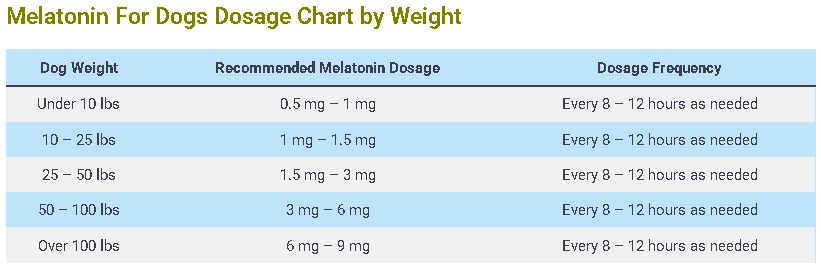
Melatonin For Dogs Dosage Chart by Weight
The following melatonin dosage chart gives general guidelines for administering melatonin in dogs.
These recommendations are based on typical veterinary practice but individual dogs may respond differently.
In all cases, always start with the lowest recommended dose for your dog’s weight range and see how he is doing before considering adjustments.
| Dog Weight | Recommended Melatonin Dosage | Dosage Frequency |
|---|---|---|
| Under 10 lbs | 0.5 mg – 1 mg | Every 8 – 12 hours as needed |
| 10 – 25 lbs | 1 mg – 1.5 mg | Every 8 – 12 hours as needed |
| 25 – 50 lbs | 1.5 mg – 3 mg | Every 8 – 12 hours as needed |
| 50 – 100 lbs | 3 mg – 6 mg | Every 8 – 12 hours as needed |
| Over 100 lbs | 6 mg – 9 mg | Every 8 – 12 hours as needed |
When it comes to using a Melatonin For Dogs Dosage calculator per pound or kg, this chart is your jumping-off point.
For dogs with severe anxiety or with specific medical conditions, your veterinarian may prescribe doses outside of these ranges.
Some dogs, especially those undergoing treatment for Cushing’s disease, may need higher doses under your veterinarian’s supervision.
Key Takeaways
- Melatonin generally safe for dogs if given at a dose appropriate for weight
- The usual starting dose is from 0.5 mg in small dogs to 6 mg in giant breeds
- Melatonin is also commonly used for anxiety, sleep disorders, noise phobias and for certain medical conditions such as Cushing’s disease
- Always opt for melatonin products that do not contain xylitol, a sweetener that is highly toxic to dogs
- Consult your veterinarian before giving melatonin, particularly if your dog has other health conditions or is on other medications
What Is Melatonin And How Does It Work In Dogs?
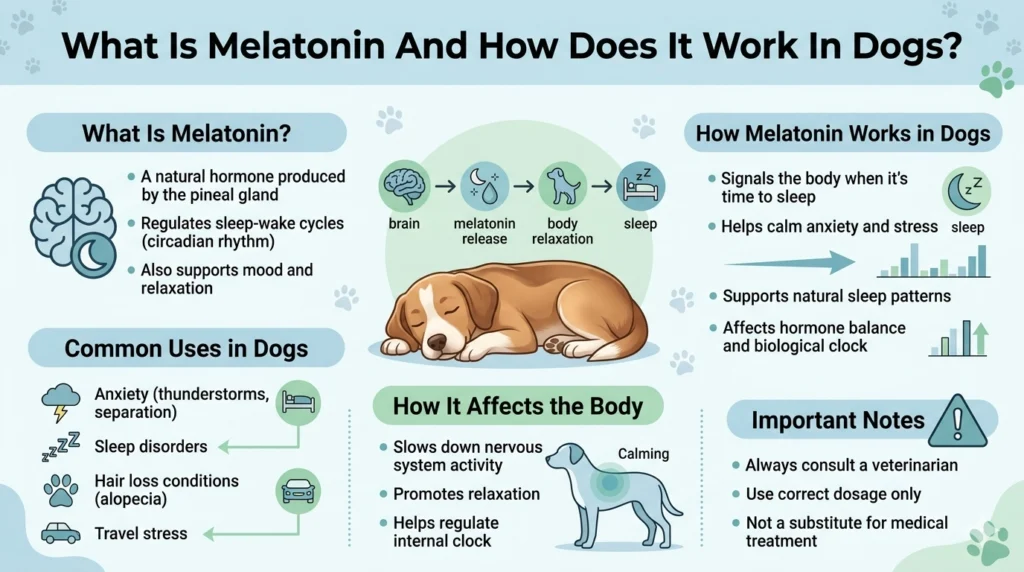
Melatonin is a hormone that is produced naturally by the pineal gland, a small gland that lies deep inside the brain.
In both humans and dogs, melatonin is an important component of the sleep-wake cycle, also known as the circadian rhythm.
Darkness triggers the production of melatonin, which signals the body that it’s time to rest; light suppresses melatonin production.
When you take melatonin in the form of a supplement, you’re basically giving your body an outside source of this natural hormone.
For dogs, melatonin attaches to certain receptors in the brain involved in sleep, mood and stress responses.
This is why melatonin is often effective in dogs that have anxiety, insomnia or are experiencing a disruption to their normal routine.
In addition to regulating sleep, melatonin is also an antioxidant and has been found to play a role in other body systems.
In veterinary medicine, it is sometimes used to help manage conditions such as Cushing’s disease, some types of hair loss and even in a supportive role in seizure disorders.
Factors to Consider When Determining Melatonin Dosage for Dogs
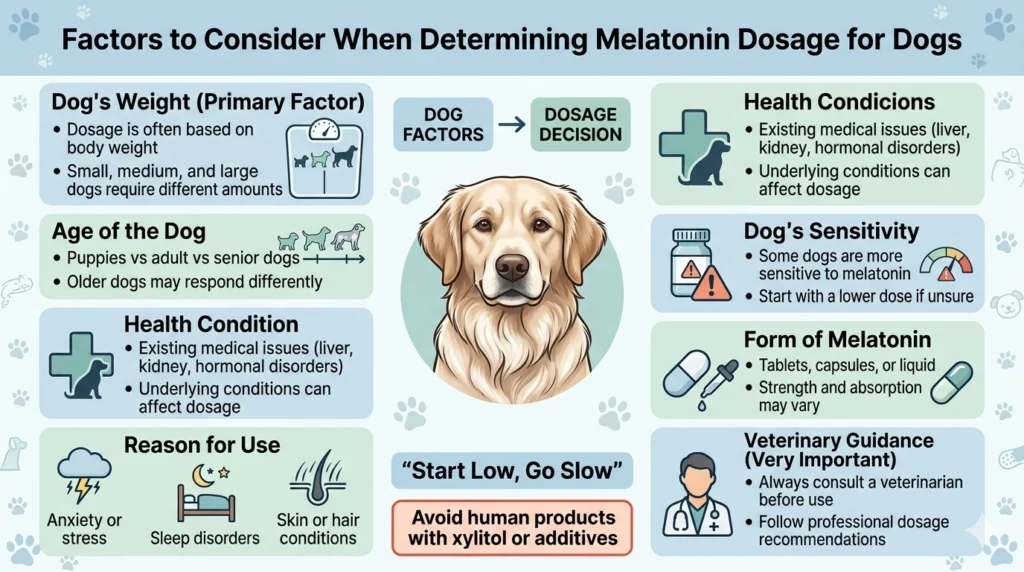
Before you reach for the bottle of melatonin, however, there are some important things to factor in.
Dosing is not a one-size-fits-all treatment and what is effective in your neighbor’s Labrador may not be suitable for your Chihuahua.
Your Dog’s Weight
Weight is the number one factor in figuring out an appropriate Melatonin For Dogs Dosage. Larger dogs usually need more to get the desired effect, and in toy breeds, a fraction of this is needed.
Your Dog’s Age
Puppies and senior dogs may have a different metabolism for melatonin than healthy adult dogs.
Older dogs also may have age-related changes in liver and kidney function, which may impact the way that supplements are processed.
Puppies, on the other hand, have developing systems and should be treated with extra caution.
Underlying Health Conditions
Dogs with certain medical conditions may need to be dosed differently or may not be candidates for melatonin at all.
Conditions such as liver disease, kidney disease, diabetes and autoimmune disorders require special consideration and veterinary guidance.
Other Medications
Melatonin can interact with many drugs such as sedatives, anxiety medications (like trazodone) and certain blood pressure drugs.
If your dog is already on medications such as gabapentin, trazodone, or any other prescription, your veterinarian should check for interactions.
The Reason for Use
The purpose for giving melatonin also affects the dosage. A dog requiring a low dose of calming during a thunderstorm may do fine with a standard dose, but a dog with Cushing’s disease may require a different protocol altogether.
How Much Melatonin Dose Can You Give to Your Dog?
This is one of the most common questions asked by dog owners and the answer to this question depends on several variables.
Using the melatonin dosage chart above, you will be able to find a good starting point for your dog. For example, if you have a 30-pound dog the recommended dose would be between 1.5 mg – 3 mg.
It is usually advised to start in the lower end of the range and see how your dog reacts. If the lower dose does not work well after a few times, you can slowly try to go higher to the more desirable end of the range.
However, never give more than your dog’s weight of the maximum recommended dose without consulting your veterinarian.
For those dogs under 10 pounds, you need to be extremely careful. These little dogs are much more sensitive to supplements and even a small excess can cause significant sedation or other adverse effects.
Using a liquid formulation where for precise measurement can be helpful for very small dogs.
Uses of Melatonin in Dogs
Melatonin has many different purposes in veterinary medicine whether it is for routine behavioral problems or for the management of some medical conditions.
Anxiety and Stress
Many dog owners look to melatonin for situational anxiety. Common triggers are thunderstorms, fireworks, visits to the veterinarian, riding in the car, and separation from their owners.
Melatonin’s tranquilizing effects can help take the edge off of these stressful experiences without the heavy sedation sometimes associated with prescription medications.
Sleep Disorders
Dogs, especially seniors, can have disturbed sleep patterns. Cognitive dysfunction syndrome, also called dog dementia, often results in nighttime restlessness, pacing and vocalization.
Melatonin can help reset the sleep-wake cycle in these dogs and encourage more restful nights of sleep.
Noise Phobias
One of the most common behavioral problems in dogs is noise aversion. The sound of fireworks, thunder or even household appliances can cause intense fear reactions.
Melatonin, if administered prior to the expected trigger, can help suppress the severity of these reactions.
Cushing’s Disease
Melatonin For Dogs is sometimes used as part of a treatment protocol for Cushing’s disease, which is a condition in which the adrenal glands produce too much cortisol.
Research indicates that Dosage of melatonin may help block the hormones responsible for this overproduction, but is generally used in conjunction with traditional treatments, not as a treatment itself.
Alopecia and Hair Loss
Certain types of hair loss in dogs, especially seasonal flank alopecia, may respond to melanocyte-stimulating hormone therapy (melatonin).
The hormone seems to have an effect on hair follicle cycling, and can encourage regrowth in affected dogs.
How Melatonin Dosage Can Affect Your Dog
When given properly, melatonin will have a relaxing effect on most dogs. You may find that your dog is more relaxed, less reactive to stimuli, and more likely to rest.
The effects are usually mild, rather than heavy sedation, which is one reason melatonin has become a popular choice among owners who don’t want to rely on heavy prescription treatments.
However, the effects of melatonin in your dog may depend on your dog’s sensitivity, dosage, and purpose of administration.
Some dogs get very drowsy, while others just seem to be less anxious and not acting as severely sedated.
In dogs with certain medical conditions, melatonin may have effects in addition to calming, such as affecting hormone levels, or maintaining coat health.
When To Feed Melatonin Dose to Your Dog
Timing is important when administering melatonin to dogs. Because melatonin has a role in the sleep-wake cycle, it is best to administer it about 30 to 60 minutes before the desired effect.
For anxiety caused by specific events such as thunderstorms or fireworks, take melatonin an hour before the feared event.
This allows time to absorb and for the calming effects to take hold before the stressor begins.
For sleep problems or restlessness at night, take melatonin about 30 to 60 minutes before bed. Consistency is key and taking melatonin around the same time nightly helps to reinforce the natural circadian rhythm.
For dogs administered melatonin as a part of a treatment protocol for certain disorders, such as Cushing’s disease, your veterinarian will give specific instructions about how often to administer the supplement, which can include multiple doses throughout the day.
Benefits and Uses of Melatonin Dosage for Dogs
The benefits melatonin for dogs do not stop there, and its calming effects.
When used correctly this is a supplement with a range of benefits:
- Non-prescription availability makes it available for many pet owners
- Generally mild side effect profile (compared to prescription anxiety medications)
- Can be used situationally or taken daily depending on the need
- May aid in treatment of some endocrine disorders
- Antioxidant properties offer other benefits to cells
- Can be used in conjunction with other relaxing supplements/medication under veterinary guidance
Many owners like the fact that melatonin provides a compromise between doing nothing and reaching for more drastic prescription medication.
It enables them to give meaningful relief of anxiety and sleep problems to their dogs with a relatively low risk profile.
How Long Does It Take for Melatonin to Work on Dogs?
Melatonin usually starts working after 30 to 60 minutes after it is taken. The timing of this can differ depending on factors such as if the melatonin was administered with food, the formulation used, and your dog’s individual metabolism.
Immediate-release formulations are often more quickly acting but also leave the system more rapidly.
Sustained-release products often referred to as “time release” or “extended release” offer longer duration of effect, but the product may take a little longer to reach maximum levels in the bloodstream.
For situational anxiety, immediate-release products are usually preferred, because they allow you to target the dosing more closely to the stressful event.
For sleep disorders or long-term conditions, sustained-release formulations may help treat disorders or conditions more consistently throughout the night.
Risk of Melatonin Side Effects for Dogs
While melatonin is generally thought to be safe for dogs, there are possible side effects. It’s important to be aware of any possible reactions to monitor your dog accordingly when beginning this supplement.
Common Side Effects
- Drowsiness or lethargy
- Mild digestive upset such as nausea, or vomiting
- Changes in appetite
- Increased heart rate – in some dogs
Less Common Side Effects
- Disorientation or confusion, especially in the aging dog
- Allergic reactions such as facial swelling or hives
- Exacerbation of some medical conditions in predisposed dogs
Most side effects are mild and disappear on their own when the dog’s system becomes adjusted.
However, if you see that your dog is drowsy, cannot be awakened, is vomiting, or any signs of an allergic reaction, stop using it and call your veterinarian.
Safety of Melatonin for Dogs
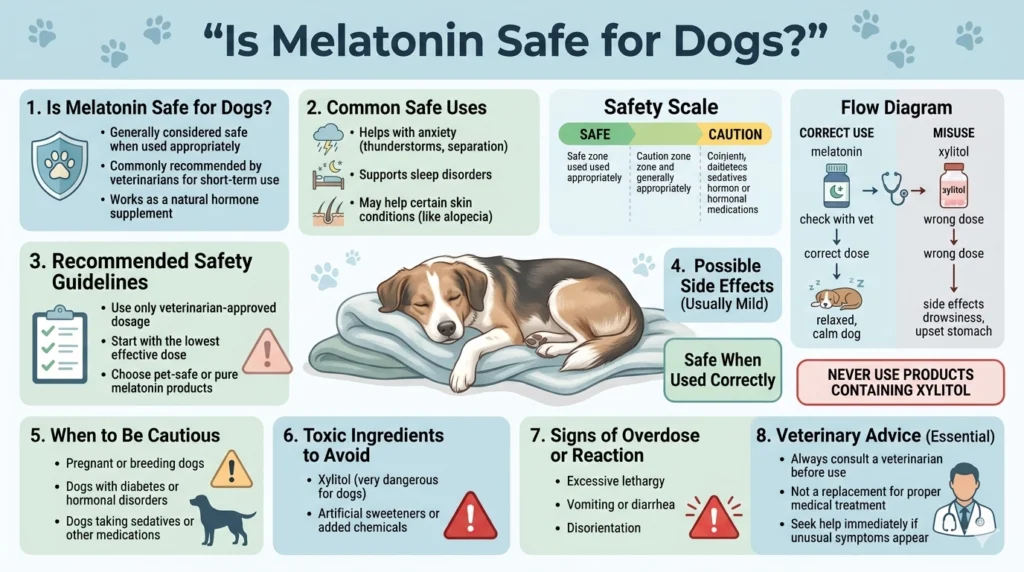
Melatonin is considered safe for dogs when used properly, but there are some important safety considerations to be aware of.
Choosing the Right Product
All melatonin products are not created equal Many human melatonin supplements contain xylitol, an artificial sweetener that is extremely toxic to dogs, even at small amounts.
Always read ingredient labels carefully and look for products that only include melatonin and safe inactive ingredients.
Products are available especially formulated for dogs, which takes the guess work out of the process, but if you choose a human formulation.
make sure to check that it does not contain xylitol, that it does not include added flavors that may be unsafe and that it does not include other active ingredients (for example, added herbs or medications).
Medical Contraindications
There are some dogs that should not be given melatonin without a vet’s permission. These include dogs with known autoimmune diseases, dogs with severe liver or kidney disease, diabetic dogs, and pregnant or nursing females.
If your dog has any underlying health condition, it is important to talk to your veterinarian before starting melatonin.
Quality Matters
Select a reputable melatonin and choose a reputable manufacturer. Third-party testing, transparent ingredient listing, and transparent manufacturing practices are signs of good supplements.
Can You Give Melatonin Dosage To Your Dog?
This question arises quite often and the answer must be thought of carefully. Yes, there are many cases when you can give your dog human melatonin, but with important caveats.
Human melatonin products are widely different in terms of their ingredients. The melatonin itself is usually safe for dogs, but the inactive ingredients may not be.
As mentioned xylitol is the main one to be concerned about but some products also contain artificial colors, flavors, or other additives that could cause digestive upset.
If you do decide to use human melatonin, look for a product that only contains melatonin and a simple base like rice flour or gelatin.
And do not give gummy formulations because these often contain xylitol and other ingredients that are a problem for dogs. Stick with plain tablets/capsules from trusted brands.
That said, there are dog-specific melatonin products that can provide peace of mind. These formulations are formulated with canine safety in mind and do away with any worries about hidden harmful ingredients.
What Are the Side Effects of Melatonin in Dogs?
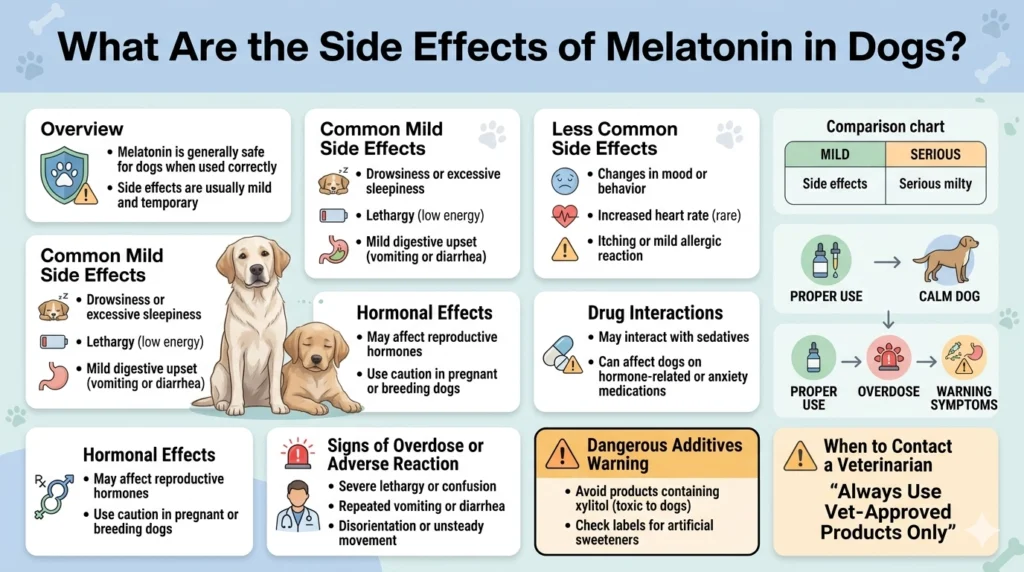
Understanding the possible side effects of melatonin in dogs will help you identify when something is wrong and what to do about it.
The most commonly reported side effect is drowsiness, which to many owners is actually the desired effect.
However, excessive drowsiness so that your dog is difficult to rouse could be an indication that the dose is too high.
Gastrointestinal upset such as vomiting, diarrhea or loss of appetite can occur, especially when first introducing the supplement. Starting with a lower dose and gradually increasing helps to minimize these effects.
Some dogs have a paradoxical effect when taking melatonin, which means that the intended calming effect of melatonin does just the opposite.
Instead of relaxing, these dogs may become agitated, restless or more anxious. If this is the case, then melatonin is not for your dog.
Changes in heart rate may also occur. While not always common, some dogs may have an elevated heart rate, especially if they have any underlying cardiovascular conditions.
You May Also Like to Read:
- Cefdinir Dosage Calculator For Dogs: Safe Guide & Chart
- Naproxen For Dogs Dosage Calculator By Weight: Safe Guide
FAQs
Can I give my dog Dosage of melatonin every day?
Many dogs can take melatonin For dogs dosage on a daily basis, especially those that are being treated for diseases such as sleep disorders or Cushing’s disease.
However, daily use should be discussed with your veterinarian to make sure that it is appropriate for your dog’s individual health status.
What if I accidentally give too much melatonin Dose by weight to my dog?
If you administer a dose that’s a little above what you should give your dog, you will likely notice increased drowsiness. Monitor your dog closely and let him or her rest.
If you think your pet may have had a significant overdose or if your dog displays severe symptoms including vomiting that won’t stop, difficulty walking or unresponsiveness, contact your veterinarian or an emergency vet clinic right away.
Can melatonin Dose for dogs be taken with other meds such as trayodone or gabapentin?
safe melatonin dose for dogs can be used in some cases in conjunction with other calming drugs, although this practice can cause excessive sedation. If your dog is taking trazodone, gabapentin, or any other medication, your veterinarian should consider whether it is safe to give melatonin in addition to the other medications.
Is Melatonin Safe For Puppies?
Melatonin for dogs dosage is not usually recommended for puppies without veterinary advice. Puppies have developing systems and may have unpredictable reactions to supplements. Additionally, many of the behavioral problems in puppies are best addressed by training as opposed to supplementation.
How should I store melatonin for dogs dosage by weight?
Store melatonin in a cool, dry place out of direct sunlight. Try to keep it out of reach of your dog to avoid an accidental ingestion of it. Check expiration dates and dispose of any expired product.
What if my dog has a medical condition, such as diabetes or liver disease?
Dogs with diabetes, liver disease, kidney disease or other chronic disease should not be given melatonin for dogs dosage without veterinarian approval. These conditions may impact the way the body processes supplements and melatonin can interact with medications that are used to treat these diseases.
Final Thoughts
safe melatonin dose for dogs can be a useful tool in helping manage anxiety, sleep problems, and certain medical conditions in our dogs.
When used correctly and taking into account proper dosing, product choice and individual factors, it is a relatively gentle approach to helping your dog’s wellbeing.
The melatonin dosage chart and calculator information presented here should provide you with a good starting point, but your veterinarian is your best bet.
They know your dog’s medical history and can assess how it might interact with current medications and can help tailor a dosing plan that is specific to your dog’s needs.
It’s important to remember that supplements are most effective as part of a comprehensive approach.
For anxiety try using melatonin in conjunction with behavior modification, environmental management, and lots of exercise and mental stimulation.
For sleep problems, having a consistent sleeping routine and having comfortable places to sleep helps with the effects of the sleep hormone melatonin.
By approaching melatonin use with thought and consideration for your dog’s individual needs, you can help your furry friend to feel calmer, sleep better, and enjoy a higher quality of life.