Loratadine (Claritin®) Dosage Calculator For Dogs
Calculate the safe dosage for your dog based on veterinary guidelines.
- Use Plain Loratadine only.
- NEVER use “Claritin-D” (contains toxic Pseudoephedrine).
- Avoid “Quick-Dissolve” (may contain toxic Xylitol).
- Give only once every 24 hours.
© medsdog.com
When your dog is always scratching, sneezing, or scratching his skin, allergies might be the cause and you may have heard about Loratadine Dosage For Dogs as a potential remedy. Loratadine dosage is an over-the-counter antihistamine, commonly known by brand names such as Claritin® and Alavert 2, and that is designed to treat people, although it is occasionally given to dogs under the care of a veterinarian to help control the effects of an allergy to itching, inflammation, insect bites, and seasonal allergies.
But prior to administering any human drug to your dog, you should realize that the use of loratadine dosage for pets is not on-label and that its effect on animals has not been well-examined. Not every formulation is safe in dogs and the wrong dose may result in undesirable side effects or decreased efficacy. That is why the approval of the veterinarian is necessary before the treatment is performed.
This is the ultimate guide of Loratadine Dosage for Dogs, where you will find out how Loratadine dose acts, when it can be prescribed, how much to be given, what kind of side effects to expect and what circumstances to avoid. You may want to relieve your minor allergy or you may want to learn about safe antihistamine use, but whatever your purpose may be, this article will tell you all you need to make a wise and responsible choice regarding your dog.
Disclaimer: This guide is for informational purposes only and is not a substitute for professional veterinary advice.
Always consult your veterinarian before giving Loratadine or any medication to your dog.
Key Takeaways
- Relief of Allergy: Loratadine dosage for dogs has been shown to be effective in managing itching, swelling, hives and other allergy symptoms in dogs.
- Uses: Appropriate in insect bites, food allergies, reaction to vaccines, chronic skin diseases such as the atopic dermatitis.
- Merits: Fewer side effects, less drowsiness and a longer effect than other antihistamines.
- Risks: There are potential side effects, such as vomiting, diarrhea, nervousness, heart palpitations, and overdose.
- Safety First: loratadine for dogs should never be administered without consulting a veterinarian, it is necessary to take it correctly and avoiding pseudoephedrine or xylitol that can be harmful.
- Administration: It may be administered as 5 or 10 mg tablets, plain or with food, once or twice a day.
- Alternatives Available: The other possible options of managing allergies are corticosteroids, immunotherapy, omega-3 fatty acids or natural remedies.
- Monitor Your Dog: Check to see if there are any adverse reactions and report changes to your veterinarian.
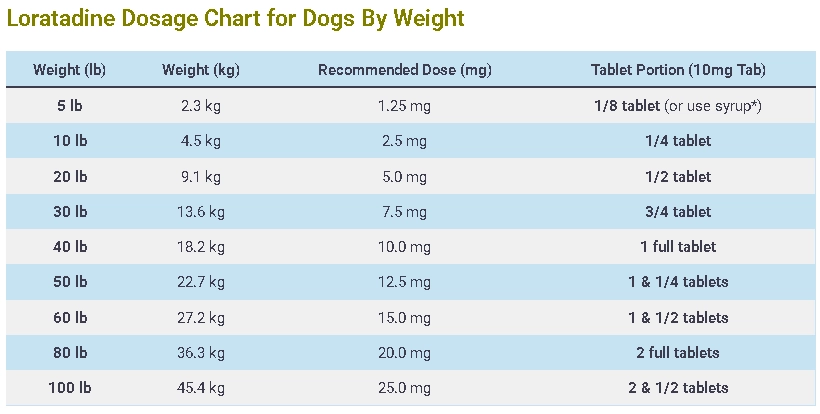
Loratadine Dosage Chart for Dogs By Weight
This full dosage table for Loratadine (Claritin®) dosage for dogs by weight is based on the standard veterinary rate of 0.25 mg per pound (lb) or 0.5 mg per kilogram (kg), once daily.
The tablet calculations are based on standard 10 mg Loratadine tablets.
| Weight (lb) | Weight (kg) | Recommended Dose (mg) | Tablet Portion (10mg Tab) |
| 5 lb | 2.3 kg | 1.25 mg | 1/8 tablet (or use syrup*) |
| 10 lb | 4.5 kg | 2.5 mg | 1/4 tablet |
| 20 lb | 9.1 kg | 5.0 mg | 1/2 tablet |
| 30 lb | 13.6 kg | 7.5 mg | 3/4 tablet |
| 40 lb | 18.2 kg | 10.0 mg | 1 full tablet |
| 50 lb | 22.7 kg | 12.5 mg | 1 & 1/4 tablets |
| 60 lb | 27.2 kg | 15.0 mg | 1 & 1/2 tablets |
| 80 lb | 36.3 kg | 20.0 mg | 2 full tablets |
| 100 lb | 45.4 kg | 25.0 mg | 2 & 1/2 tablets |
⚠️ Essential Safety Reminders
- Plain Only: Use only products where Loratadine is the sole active ingredient.
- Toxic Additives: Never use "Claritin-D" (contains pseudoephedrine, which is fatal to dogs) or "Quick Dissolve" tablets (often contain xylitol, which causes liver failure and seizures).
- Health Conditions: Consult a vet before use if your dog has liver disease, kidney disease, or dry eye (KCS), as Loratadine can worsen these conditions.
- Frequency: Administer only once every 24 hours unless specifically directed otherwise by your veterinarian.
Tip for Small Dogs: If your dog is under 10 lbs, it is often easier to use a pediatric Loratadine syrup (ensure it is xylitol-free and alcohol-free) to measure precise small doses.
What Is Loratadine?
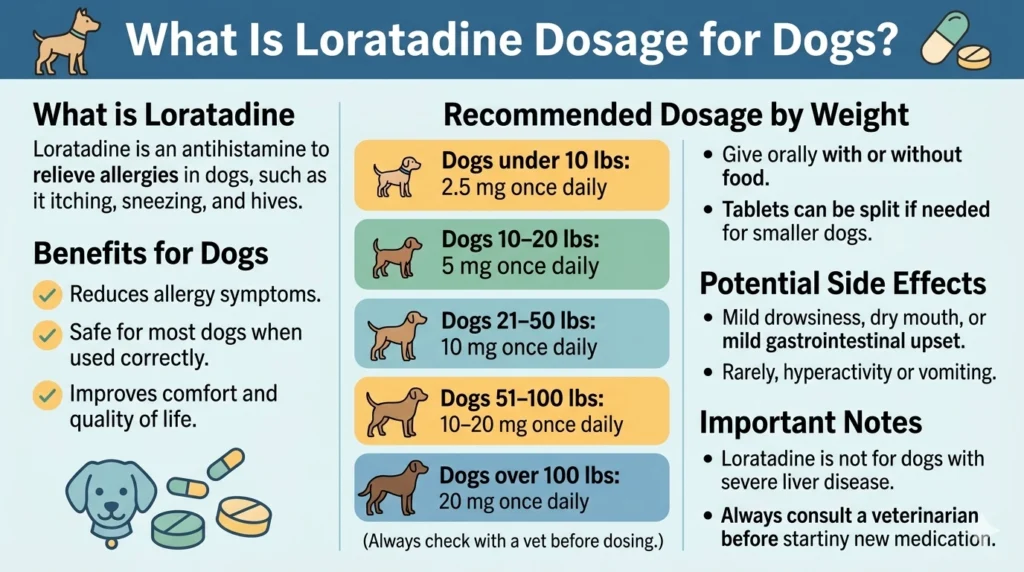
Loratadine (also referred to as Claritin) dosage is a second-generation antihistamine that prevents the release of histamine a chemical secreted by the immune system when a dog is exposed to allergens such as a pollen, dust or food. Histamine is an irritant that causes allergic reactions, inflammation, blood flow, mucus, watery eyes and itching.
Loratadine dose for dogs inhibits the activation of these responses by histamine, thus decreasing the common symptoms of allergy (sneezing, runny nose, coughing, and skin irritation).
It also has less chances of causing drowsiness, unlike older antihistamines. It can be suggested in veterinary practice in mild to moderate allergic dogs, but plain loratadine for dogs dosage should be used only, since combination agents with decongestants are detrimental. Always consult a veterinarian before giving it to your dog.
Can Loratadine Help Treat Dog Allergies?
Loratadine dosage for dogs per pound or kg may be used to treat some of the symptoms of allergy in dogs, although it is not very effective as histamine is not a very important component of an immune system of a dog as it is in humans.
It is not commonly a first line or a stand-alone medicine to use in chronic or seasonal allergies in dogs, but veterinarians may use it as part of a larger strategy in dogs with severe itchy skin diseases.
It is more typically applied in the short-term allergic reactions, caused by things like skin irritants, tick bites, bee stings or vaccines. Loratadine for pets can also be used to relieve symptoms such as itching, swelling, redness of the skin and hives in such instances and in some cases, the symptoms may be relieved as early as 10 minutes.
- More appropriate in the short term to control allergy than the long term.
- Manage symptoms such as itching, swelling, redness and hives.
- The effects of May are quick with an effect felt as soon as 10 minutes up to 1 hour.
- May be included in a combination therapy of severe allergies.
Also, initial studies indicate that loratadine can be used in dogs with mast cell tumors to prevent excessive histamine, but further research will be required before it becomes a common treatment method.
Is Loratadine Safe For All Dogs?
Loratadine dosage is not entirely safe to all dogs, primarily due to the fact that little research has been conducted on the same when using pets. High-risk dogs need additional care and veterinary advice is necessary before usage.
Loratadine dose should not be administered to expectant dogs without a veterinarian since it could be harmful to unborn pups. Other medications can also react with the medication, leading to greater side effects-these drugs are cimetidine (antacid), erythromycin (antibiotic), ketoconazole (antifungal) and omeprazole (proton-pump inhibitor).
Also, dogs with liver or kidney issues might not be able to metabolize loratadine dosage correctly and it is very important to seek out the advice of a professional veterinarian to ensure the safety and effectiveness.
What’s The Recommended Loratadine Dosage For Dogs?
The dosage of Loratadine for dogs is never fixed, but must always be prescribed by a veterinarian since little research has been conducted in dogs and most of the recommendations are solely anecdotal.
The accurate dose is based on a number of crucial issues:
- Size and weight
- Age
- Intensity of allergy symptoms.
- Overall health condition
Common dosage guidelines:
- 0.1 to 0.5 mg per pound (0.25–1.1 mg/kg) per day
- Frequently administered as a single dose or two times a day.
- Typical range: 0.12 to 0.22 mg per pound (0.25–0.5 mg/kg) once or twice daily
General dosing according to size of dog:
- Small dogs (less than 15 lbs): 5mg/kg/day.
- Medium dogs (15–50 lbs): 10 mg once daily
- Big dogs (more than 50 lbs): 10 mg two times a day.
- Example: A 40-pound dog can be given approximately 10 mg.
Form of medication and route:
- Comes in 5 mg and 10mg tablets.
- Adjustment in dosage can be done by rounding up to half the tablet.
- Can be given with or without food
- Dose through the use of treats or pill pockets.
- Always have fresh water available.
Important safety guidelines:
- Should not be taken more than 20 mg per 24 hours without a vetty.
- Only use plain loratadine (avoid combination products)
- Do not use products that have xylitol (poisonous to dogs).
- Do not apply to dogs with:
- Severe liver or kidney disease.
- Dry eye (KCS)
- Should not be taken with medications such as:
- Ketoconazole
- Cimetidine
Never give your dog a dosage without consulting your veterinarian to find out the safest and most effective dosage.
Risks and Side Effects of Loratadine Dosage for Dogs
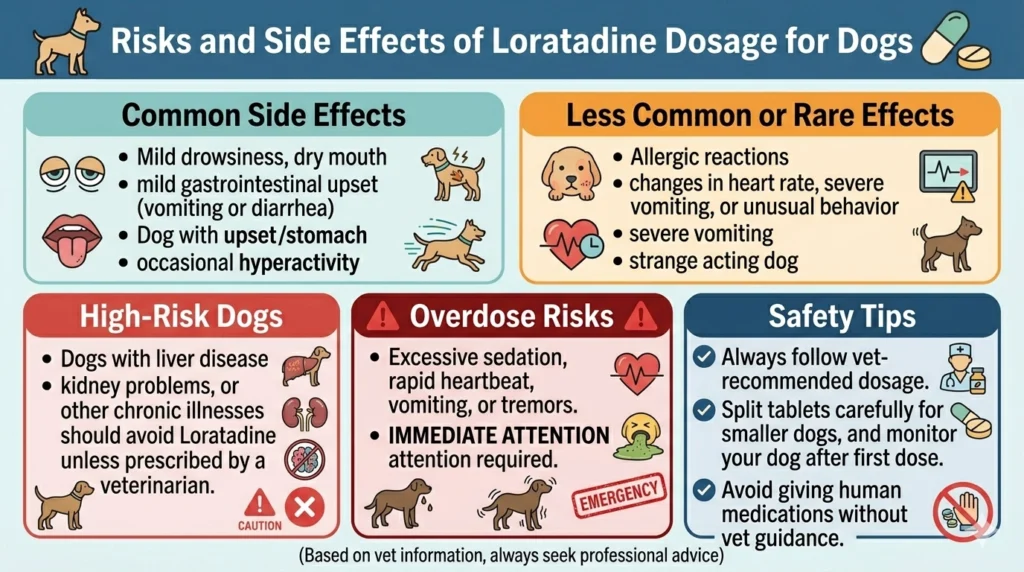
Loratadine dosage for pets is also considered to be safe in dogs, provided that it is administered at the proper dosage, and under veterinary care, and with side effects and risks, but it can lead to side effects and risks when it is abused or overdosed.
Side effects are common and mild:
- Dry mouth (apparently, more thirst)
- Dry eyes or lack of tears.
- Vomiting
- Diarrhea
- Loss of appetite
- Lethargy or drowsiness
- Headache
- Nervousness or hyperactivity
- Palpitations or fast heartbeat.
Important notes:
- Most of the side effects are mild and temporary and pets can be less affected by them as compared to human beings.
- Drowsiness is rare but can result as a result of drug interactions.
- Frequent care should be observed in the dogs with dry eye (KCS) because of a lower level of tear production.
Suggestions of overdose or toxicity:
- Agitation or confusion
- Rapid heart rate
- Tremors or convulsions
- Hyperactivity or major depression.
- Vomiting
- Coma or in extreme situations death.
Allergic reaction (uncommon and severe):
- Difficulty breathing
- Face, lips, tongue or throat swelling.
- Hives and itching
- Drooling
- Collapse or seizures
Safety precautions:
- Discontinue the drug and call a vet in case of any side effects.
- Take an overdose or anaphylaxis emergencies to the veterinary.
- It is always advisable to seek the advice of a veterinarian prior to the administration of loratadine since dogs do not react to drugs as human beings do.
Benefits of Loratadine for Dogs
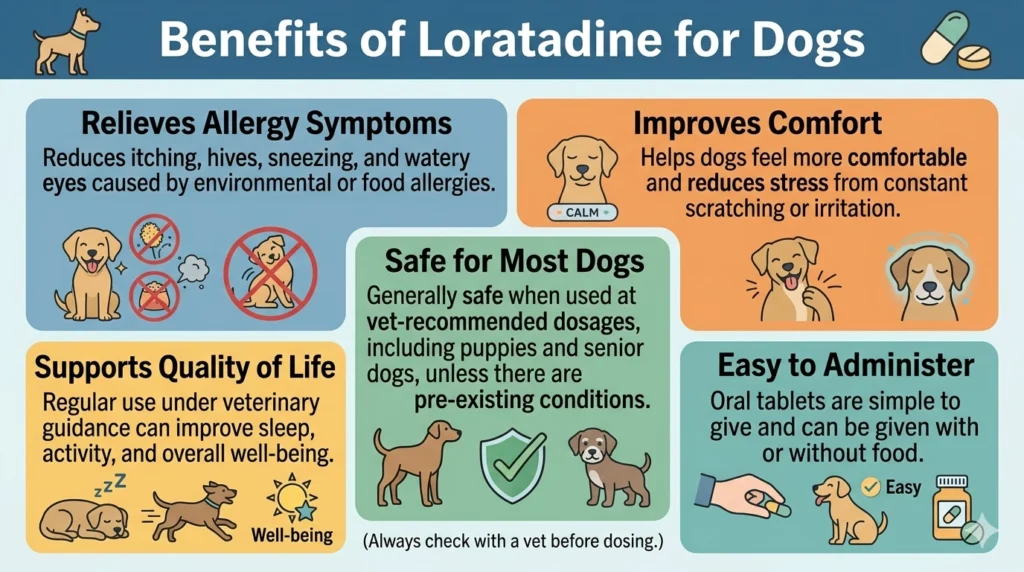
Loratadine for dogs dosage has a number of benefits in terms of treating allergies in dogs and making them more comfortable:
- Manages any kind of allergies, such as allergies to insect bites, allergies to food, and allergies to vaccination.
- Helps treat atopic dermatitis, minimize inflammation, itching, and hair loss.
- Lessens the intensity and frequency of flare-ups of allergies.
- Enhances the quality of life of chronically-skinned dogs.
- Few side effects than other antihistamines such as diphenhydramine (Benadryl®) and chlorpheniramine (Chlor-Trimeton®).
- Usually is not drying or calming, so it can be used during the day.
- Greater action time, which provides an opportunity to take once or twice a day instead of many times a day.
You May Also Like to Read:
- Psyllium Husk Dosage For Dogs: Calculator, Chart & Safe Guide
- Theophylline Dosage For Dogs: Calculator Chart & Safe Guide
FAQs
Is it possible to treat my dog Claritin because of allergies?
Yes, simple loratadine (Claritin) dosage can be administered to dogs to treat allergies, though, be sure to consult a veterinarian on the correct dosage.
Is Claritin-D safe for dogs?
No. Claritin-D also has pseudoephedrine which may lead to vomiting, shaking, hyperactivity and drooling among dogs.
Is it possible to feed dogs flavored or chewable Claritin tablets?
Sweetened chewables can consist of aspartame, which is likely to irritate the stomach of some dogs. They should not be used without the consent of a vet.
Are loratadine dose tablets safe to dogs?
There are some fast-dissolving tablets which include some sweeteners that are harmful to dogs and hence they should not be used.
Which types of loratadine for dogs dose should dogs have?
Plain 5mg or 10mg dogs are the safest and more convenient to accuracy dose.
Are there any side effects of loratadine in dogs?
Yes there are mild side effects such as dry mouth, vomiting, lethargy, hyperactive and rapid heart rate, particularly when overdosed.
What is the fast acting loratadine on dog allergies?
Loratadine dosage has the ability to begin relieving allergic symptoms such as itching, swelling, and hives in 10 minutes of the administration.
Is it possible to administer loratadine to my dog without veterinary advice?
No. Never administer loratadine without consulting a veterinarian to make sure of safe doses and to prevent interactions with other drugs.
Final Thoughts
Loratadine dosage for dogs is an effective antihistamine when used to treat allergic symptoms in dogs such as insect bites, food allergies or chronic diseases such as atopic dermatitis. It has advantages over other antihistamines that include; fewer side effects, minimal drowsiness, and longer duration of action which makes it convenient to be used once or twice a day.
Nonetheless, loratadine medication for dogs has its own side effects such as vomiting, diarrhea, nervousness, heart palpitations and overdose. It is important to use the right dosage, the health condition of your dog, and not dangerous formulations, including pseudoephedrine or xylitol.
It is always good to consult a veterinarian before administering loratadine and adhere to the advice provided by the doctor and keep an eye on your dog and any side effects or changes in behavior.
Among numerous choices available to deal with allergies, loratadine medication is one; others are corticosteroids, immunotherapy, omega-3 fatty acids, and natural remedies. To be able to select the most effective and safest course of treatment, discuss all the options with your vet to select the one that suits your dog best.