Zoloft Dosage For Dogs Calculator: Safe Dosage Guide & Chart
Zoloft (Sertraline) Dosage Calculator For Dogs By Weight
Calculate the recommended daily dosage for your dog.
© medsdog.com


Whatever the reason why your dog is anxious, aggressive, or compulsive, you are not the only one: behavioral problems are among the most frequent reasons to visit the veterinary, and, in the worst case, may even cause some hard choices, such as euthanasia.
Luckily, there are effective solutions to the problem in modern veterinary medicine. Sertraline (Zoloft® Dosage For Dogs) is one of the most popular drugs which was originally developed to treat people but nowadays it is also used with dogs as a part of an elaborate behavior therapy. It is a selective serotonin reuptake inhibitor (SSRI) which is used to treat people.
The mechanism of action of sertraline is that it raises the level of serotonin in the brain which is a major chemical involved in the regulation of mood and emotional stability.
This medication may assist dogs in dealing better with anxiety, fear-driven behavior, aggression, compulsive disorder and certain phobias (thunderstorms) by boosting serotonin activity. Training and behavior modification are the most crucial but medications such as Zoloft dose for dogs may go a long way in ensuring your dog responds positively to the interventions.
Even though sertraline is regarded as a relatively safe and effective choice, it is a prescription-only drug that should be administered by a veterinary.
Not approved by the FDA to be used in animals but prescribed extra-label by veterinarians, with clinical experience and research, it is legally authorized to be used.


By reading this comprehensive guide to Zoloft dosage for dogs, you will find out how Zoloft works, how much to feed your dog and how many side effects it may have, safety precautions, and when it is the correct solution to the behavior of your pet dog- so you can make informed decisions about your dog in behavioral health.
Disclaimer: This guide is for informational purposes only and is not a substitute for professional veterinary advice.
Always consult your veterinarian before giving Zoloft (Sertraline) or any medication to your dog.
Key Takeaways
- Zoloft (sertraline) medication for dogs is an antidepressant that is likely to be used to treat behavioral issues in dogs.
- The appropriate dosage will vary according to the weight of your dog and will have to be decided by a veterinarian.
- It comes in tablet form as well as oral liquid form to be easily administered.
- The most prevalent side effects can be vomiting, diarrhea, lack of energy, loss of appetite and tremors.
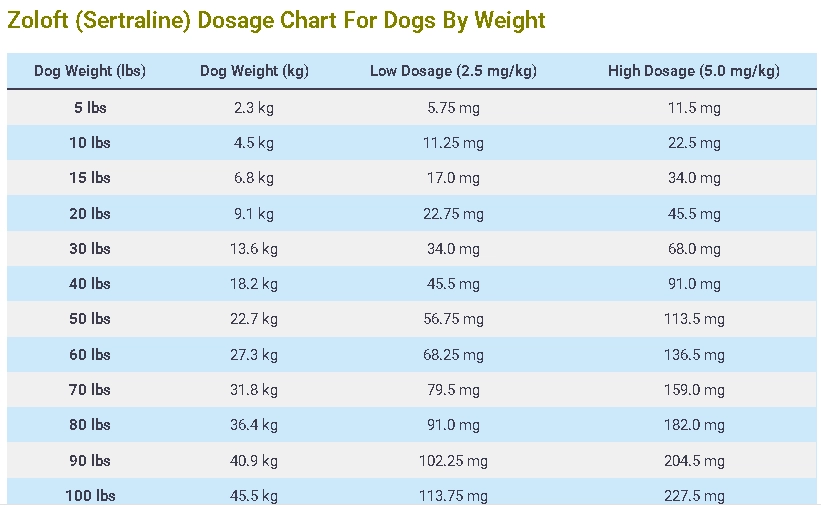
Zoloft (Sertraline) Dosage Chart For Dogs By Weight
Here is a comprehensive dosage table based on the standard veterinary range of 2.5 mg/kg to 5.0 mg/kg (once daily).
I have organized this into a clean, copyable format that includes both Metric and Imperial weights, as well as the calculated milligram range.
| Dog Weight (lbs) | Dog Weight (kg) | Low Dosage (2.5 mg/kg) | High Dosage (5.0 mg/kg) |
| 5 lbs | 2.3 kg | 5.75 mg | 11.5 mg |
| 10 lbs | 4.5 kg | 11.25 mg | 22.5 mg |
| 15 lbs | 6.8 kg | 17.0 mg | 34.0 mg |
| 20 lbs | 9.1 kg | 22.75 mg | 45.5 mg |
| 30 lbs | 13.6 kg | 34.0 mg | 68.0 mg |
| 40 lbs | 18.2 kg | 45.5 mg | 91.0 mg |
| 50 lbs | 22.7 kg | 56.75 mg | 113.5 mg |
| 60 lbs | 27.3 kg | 68.25 mg | 136.5 mg |
| 70 lbs | 31.8 kg | 79.5 mg | 159.0 mg |
| 80 lbs | 36.4 kg | 91.0 mg | 182.0 mg |
| 90 lbs | 40.9 kg | 102.25 mg | 204.5 mg |
| 100 lbs | 45.5 kg | 113.75 mg | 227.5 mg |
Important Administration Reminders:
- The "Golden Rule": Always start at the lower end of the dosage range unless specifically instructed otherwise by your vet.
- Consistency is Key: Zoloft should be given at the same time every day to maintain steady levels in the bloodstream.
- The 4-Week Window: Do not expect immediate results. Behavior modifications via Sertraline typically take 3 to 4 weeks to become apparent.
- Never "Cold Turkey": If you need to stop the medication, it must be tapered down slowly over several weeks to avoid withdrawal symptoms or rebound anxiety.
What Is Zoloft (Sertraline) for Dogs and What Is It Used For?
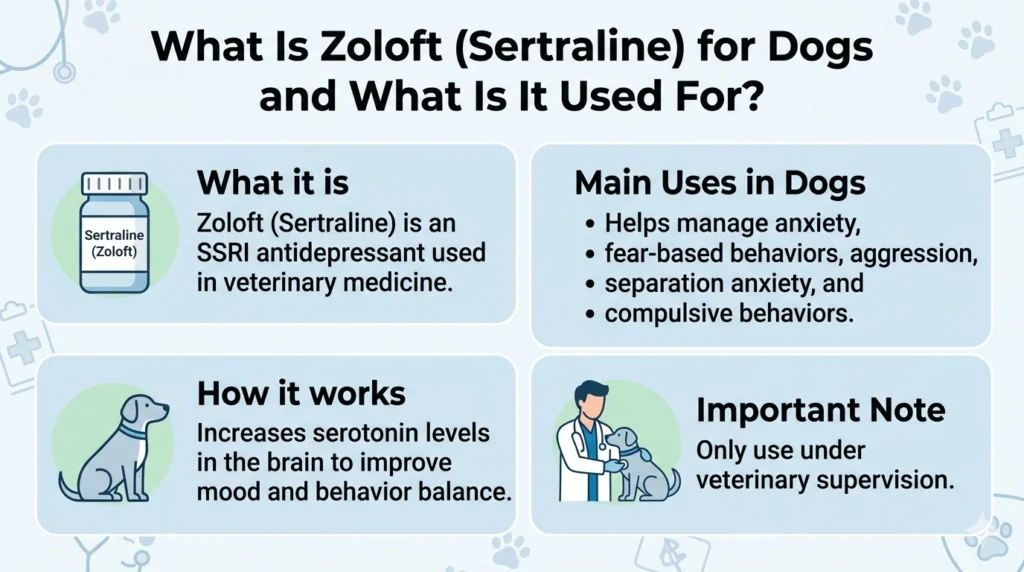
Zoloft dosage for dogs medication for dogs is a selective serotonin reuptake inhibitor (SSRI) antidepressant that is applied in veterinary treatment to help treat a wide variety of behavioral disorders in dogs. It acts by raising the amount of serotonin in the brain which helps to stabilize mood, lessens anxiety and enhances emotional stability.
Sertraline is often prescribed by veterinarians to treat anxiety, separation anxiety, fear-based behavior, noise or thunderstorm phobia, aggression, compulsive disorders (tail chasing, excessive licking, and over-grooming), urine marking and other stress-related behavior.


It can also be helpful in lessening the symptoms of anxiety such as trembling, barking, destructive behavior, inappropriate urination or excessive neediness.
Zoloft drug for pets is generally administered as a pill or oral suspension under the care of a veterinarian and in conjunction with behavior modification and environment control, it is usually the most effective.
It assists in calming down the anxiety of a dog in order to better react to the training, which would hopefully lead to better behavior and in the long-term, less medication may be required.
Sertraline is being used off-label, and is not FDA-approved to be used in veterinary medicine, but is a widely used and popular off-label drug in dogs, as prescribed by veterinarians. The effects can start in a matter of days though full therapeutic effect can be experienced after 4-6 weeks of continuous use.
How Does Zoloft Work in Dogs?
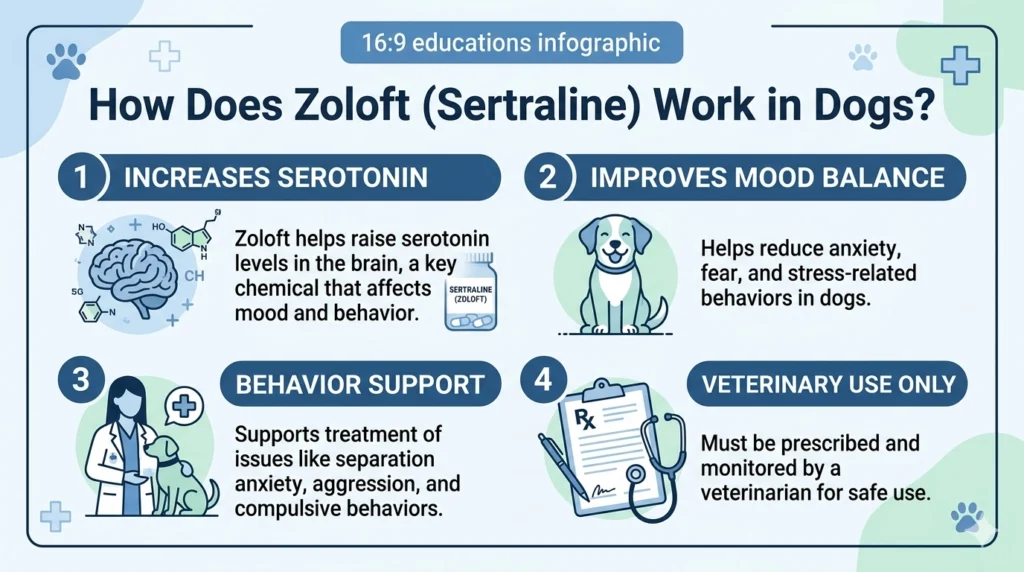
Zoloft for dogs form is a selective serotonin reuptake inhibitor (SSRI), a drug that enhances mood and behavior and boosts the levels of important brain chemicals. It operates in the central nervous system to enable the dogs to better cope with anxiety, stress and compulsive behavior.
- Inhibits serotonin uptake: Blocks the re-absorption of serotonin in the nerve cells, making it available in the brain.
- Increases serotonin: Improves mood, emotional stability and behavior management.
- Enhances dopamine functioning: Has additional effects on dopamine reuptake which can also increase mood stability.
- Calms down nervousness or fear: Helps to calm down nervous or fearful dogs.
- Enhances control of behavior: Helps in controlling compulsive and mood disorders.
On the whole, such a move makes dogs to be less anxious and feel more balanced, as well as respond to training and behavior modification.
Zoloft Dosage for Dogs and How It’s Given
The dose of zoloft (sertraline) to dogs depends on the body weight of the pet, the illness being treated, and the advice of the veterinarian. Dosing usually ranges between 1-4 mg/kg (mg/kg) of body weight with most dogs being typically dosed once a day (and in some cases, twice a day).
Typically, veterinarians begin with a smaller dosage and gradually increase to determine the most effective dose and reduce the side effects. The aim is to administer the lowest dose possible, and a complete response can take several weeks (up to 30 days or more), but some response can be seen sooner.
- Routes: Oral, tabular or liquid.
- On or off: May be administered either, but in case of vomiting or stomach upsets, should be administered with food.
- Consistency: Take at the same time daily in order to have constant levels.
- Missed dose: Take as soon as possible without approaching the next dose--never take two doses.
- Measurement: Liquid, apply proper syringe/dropper and measure carefully (it may be necessary to dilute some solutions)
- Prescription only: Should be administered as per the instructions of a veterinarian.
- Do not quit suddenly: It should be tapered slowly so as to avoid withdrawal.
Zoloft dose is available in human and veterinary compounding pharmacies, and it is crucial to follow the dosing guidelines to be safe and effective.
Common Side Effects of Zoloft (Sertraline) for Dogs
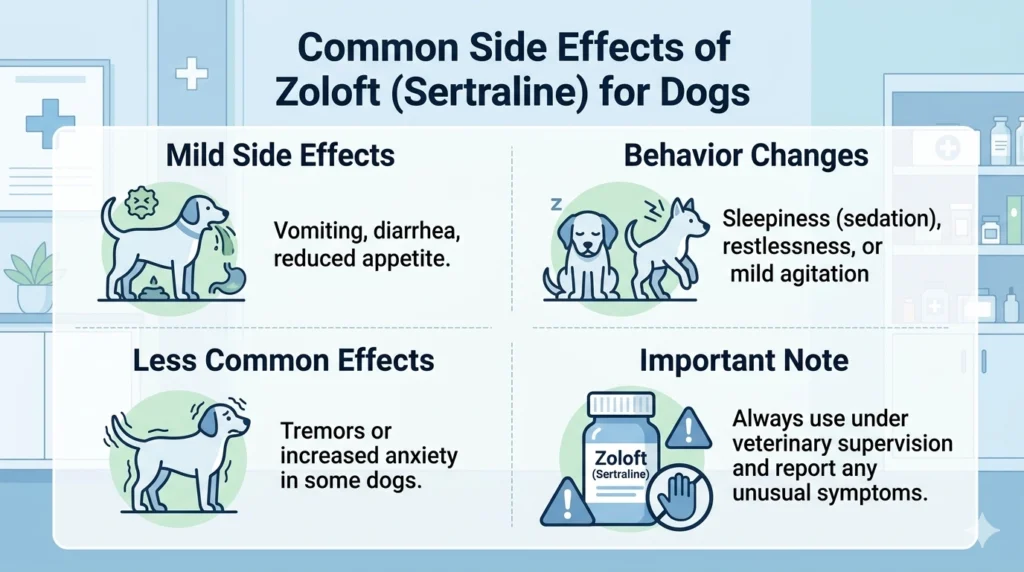
Zoloft (sertraline) is well tolerated in a dog, although a few dogs may have side effects, particularly with the initiation of the drug or with dose changes. The majority of effects are mild, and it is essential to monitor them.
- Gastrointestinal problems: vomiting, diarrhea, nausea, and lack of appetite.
- Low energy: Lethargy, drowsiness or sedation.
- Changes in behavior: Anxiety, irritability, restlessness, agitation, hyperactivity or sleep problems.
- Neurological: Tremors, shaking.
- Respiratory signs: Panting
- Problems with the skin: Itch or dry skin.
- Other potential effects: The alterations in the level of activity or the patterns of elimination.
Severe (infrequent) reactions can be seizures, aggression, irregular heart rate, high body temperature, blood pressure variations or coma-these are life threatening conditions that need urgent treatment by a veterinarian.
The duration of side effects can range a few days or more, particularly in liver or kidney diseased dogs. Sertraline is not recommended in dogs with specific health issues (such as liver disease, blood disorders, or history of seizures) and is likely to interact with other drugs. Always call your veterinary in case you notice any abnormal symptoms.
Most Serious Risks of Zoloft (Sertraline) for Dogs
Serotonin syndrome is the most severe side effect of Zoloft (sertraline) for dogs by weight, a life threatening condition that occurs due to excess amount of serotonin in the brain and which needs an emergency treatment of a veterinarian.
Serotonin syndrome: major symptoms:
- Tremors or twitching
- Seizures
- Hyperactivity, agitation or restlessness.
- Increased body temperature
- Fast heart rate
- Dilated pupils
- Mixed up or bizarre behavior.
- Inability to sleep
- Aggression
- Coma
Situations and precautions of high risk:
- Should not be used with dogs that are allergic to sertraline or other SSRIs.
- Should not be used with monoamine oxidase inhibitors (MAOIs), some flea/tick collars or cisapride.
- Should only be used cautiously in dogs with epilepsy, liver disease, aggression, and in elderly, weak, and frail dogs.
- Extreme caution should be used in pregnant or lactating dogs as their safety is not known.
Veterinary care is an emergency and immediate medical care is much needed in case of a suspected serotonin syndrome.
Does Zoloft Dosage Interact with Other Dog Medications?
Yes, Zoloft (sertraline) medication for dogs may interact with a great number of drugs, which may either increase side effects or cause severe diseases such as serotonin syndrome or heart rhythm issues. Close veterinary care is needed.
- Drugs that put one at risk of serotonin syndrome:
- Other SSRIs, MAO inhibitors (and some flea/tick collars and amitraz)
- Tramadol, trazodone, mirtazapine, buspirone
- Tricyclic antidepressants
- Common drug interactions:
- Antifungals (e.g., itraconazole, fluconazole)
- Antihistamines (e.g., chlorpheniramine)
- Sedatives and opioids
- Seizure drugs (e.g., phenobarbital, levetiracetam)
- Antiar arrhythmacics and heart drugs.
- Metoclopramide, cimetidine, diazepam
- L-thyroxine, isoniazid, mexiletine
- Increased bleeding risk:
- NSAIDs (e.g., carprofen)
- Anticoagulant/antiplatelet medications (e.g., aspirin, clopidogrel, warfarin)
- Other important interactions:
- Cisapride and some antibiotics can cause heart rhythm problems (QT prolongation) to occur.
- Cyproheptadine could decrease the effect of sertraline.
Zoloft dosage for dogs per pound must be used cautiously in dogs with epilepsy, liver disease or bleeding disorders. Never leave out any medications, supplements or herbal products that your dog is taking without telling your veterinarian about them to prevent detrimental interactions.
You May Also Like to Read:
- (SMZ-TMP) Sulfamethoxazole Dosage For Dogs Calculator & Safe Guide
- Fluconazole Dosage For Dogs Calculator: Safe Guide & Chart
FAQs
What is the time lag of Zoloft to dogs?
The effect can start in just a few days, although it normally takes weeks before complete behavioral change.
Does it need to be monitored in treatment?
Yes, follow-ups and regular checks (liver functioning, ECG) may be recommended by veterinarians to determine the effectiveness and safety. At home, observe changes of appetite, mood, energy and changes of behavior.
What is the action in case of a missed dose?
Take it whenever you find yourself remembering. In case it is near the subsequent dose, miss the dose-never take two doses.
Is it possible to use Zoloft in conjunction with behavioral training?
Yes, it best works in conjunction with training, enrichment and procedural routines such as desensitization of anxiety triggers. The changes can be continued depending on the development of your dog.
What is the length of stay of dogs on Zoloft medication?
The length of treatment depends on the dog, with several months of treatment being possible after 4- 6 weeks. In case of withdrawal, the dose should be slowly tapered in weeks to prevent withdrawal symptoms.
What will occur should there be an overdose or an emergency?
Call a doctor at the vet. Symptoms can be vomiting, tremors, agitation, enlarged pupils, irregular temperature or extreme neurological neurological symptoms.
What is the storage of Zoloft?
Keep in room temperature (approximately 25°C) and in a place that is not exposed to the sun, as well as not accessible to children and pets.
Are dog and human Zoloft medication the same?
Yes, it is the same active ingredient (sertraline) just that it is off-label in dogs, and should be administered only under the tutelage of a veterinarian.
Final Thoughts
Zoloft (sertraline) dose for dogs per pound or kg is a selective serotonin reuptake inhibitor (SSRI) antidepressant that is prescribed to dogs to aid in behavioral modification such as anxiety, separation stress, phobias, aggression and compulsive behavior.
It is usually administered as a single daily dose, either orally in tablet or liquid form and works best when used in conjunction with behavior modification training and not alone.
Although it is normally thought to be safe in the care of a veterinary, side effects associated with Zoloft among dogs include vomiting, diarrhea, tremors, sedation, lack of appetite and drug interactions.
This is why before you start treating your dog it is essential to tell your veterinarian about all drugs or supplements that your dog is taking.
Sertraline is not a permanent standalone treatment but a complementary product that can be used temporarily (in a few months) in combination with structured training and behavioral assistance.
Under the right dosage, monitoring and veterinary care, a lot of dogs have seen significant changes in the anxiety-related behaviors and quality of life.
Combined with the enrichment tools, routines, and professional assistance, sertraline will be able to make many dogs calmer, more balanced, and capable of more effectively coping with stress.